
Hops in Beer Brewing: Bitter Gold
Published: December 21, 2025 at 10:17:21 PM UTC
Bitter Gold, an American hop variety, was introduced in 1999. It is celebrated for its high alpha-acid content. As a dual-purpose hop, it plays a crucial role in both bittering and flavoring in many recipes.
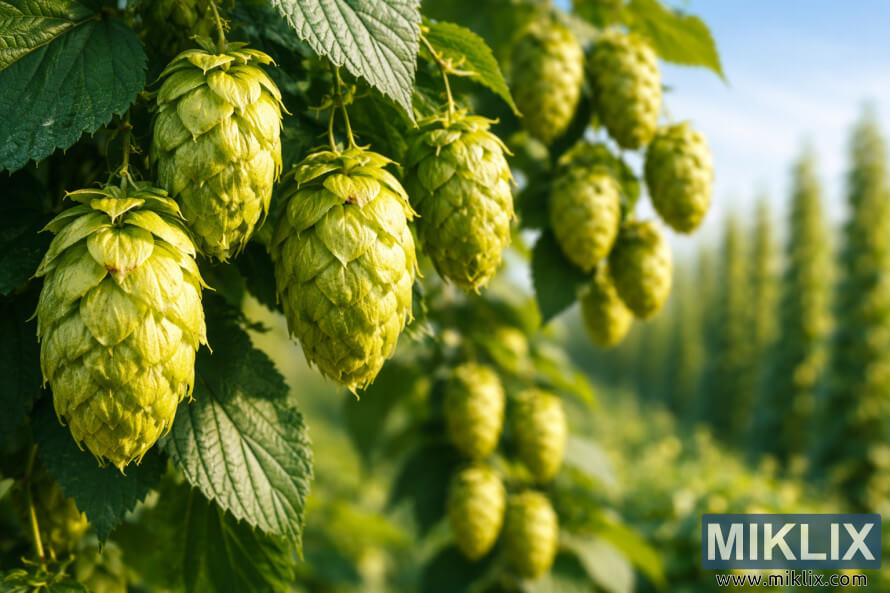
Click or tap the image for more information and higher resolutions.
Its reliable bittering power and clean, neutral profile make Bitter Gold a favorite among brewers. It enhances the malt and yeast character without overpowering them.
Available from specialty hop suppliers and general retailers like Amazon, Bitter Gold's availability can fluctuate. Its international code, BIG, and cultivar ID 7313-083 are listed in hop catalogs and recipe databases. It is frequently used as a primary bittering addition. With alpha values near 14%, Bitter Gold often dominates the hop bill in many brews.
Key Takeaways
- Bitter Gold is a U.S.-origin hop released in 1999 and coded BIG (7313-083).
- It is a dual-purpose hop used for both bittering and subtle flavoring.
- Typical alpha acids are around 14%, making it a strong bittering choice.
- Availability varies by harvest year; sold by hop suppliers and retailers like Amazon.
- Commonly used in American brewing recipes and often represents a large share of the hop bill.
Origin and lineage of Bitter Gold
The origin of Bitter Gold is rooted in the United States. Breeders focused on its high alpha-acid performance. It was released for commercial use in 1999, targeting brewers seeking a potent bittering hop.
The lineage of Bitter Gold showcases a careful selection of parent varieties to enhance alpha levels. It combines the genetics of Brewer’s Gold, Bullion, Comet, and Fuggle. These contributions have shaped Bitter Gold's bittering profile and growth habits.
Brewer’s Gold introduced sharp bitterness and resinous traits. Bullion added drought resistance and compact cone formation. Comet brought bright citrus notes and modern alpha levels. Fuggle, meanwhile, contributed earthy stability and a classic English hop structure.
Records highlight Bitter Gold as a "super-alpha" variety, with alpha-acid percentages surpassing its parents. This makes it comparable to Galena and Nugget in alpha-driven brewing strategies.
- Country of origin: United States, selected and released in 1999
- Confirmed hop parentage: Brewer’s Gold, Bullion, Comet, and Fuggle
- Positioning: primarily a bittering hop with elevated alpha-acid values
Appearance, cone characteristics, and growth traits
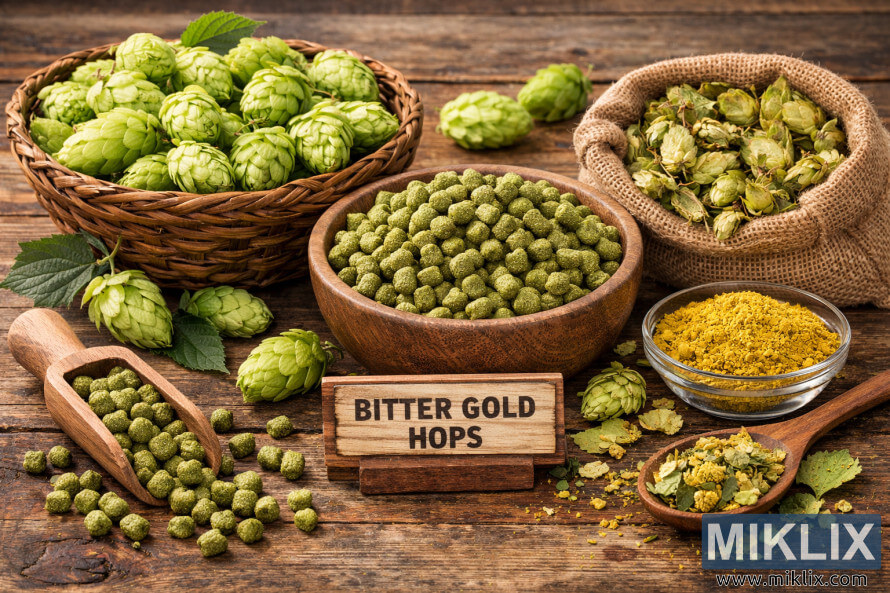
Bitter Gold cones display a classic lupulin color with pale green bracts and bright yellow lupulin pockets. These pockets shimmer in the light. Growers find the cones to be moderate in size and firm to the touch. These traits help identify the hop cone density, crucial for determining harvest readiness.
In the Pacific Northwest, fields provide the latest grower insights. Commercial suppliers like Hop Alliance and Northwest Hop Farms confirm Bitter Gold as a reliable bittering variety. However, hop cone density can vary by year and lot. This variation is due to seasonal conditions and differences in cone appearance from harvest to harvest.
Growers praise Bitter Gold for its dependable growth, steady vine vigor, and predictable maturation. Specific agronomic data, such as yield per acre and disease resistance, is often shared by commercial growers. This data is not always available in public databases. Therefore, growers should consult suppliers for the most current metrics before planting on a large scale.
Timing is key for quality. In the United States, aroma and many bittering varieties are picked in mid-to-late August. Local microclimates can shift the hop harvest season by days or weeks. For Bitter Gold, the timing of harvest directly impacts alpha acids and cone aroma. Thus, monitoring harvest windows is essential.
For brewers and growers needing quick reference, consider these practical points:
- Visual check: pale green bracts with visible lupulin for maturity.
- Feel test: firmer cones usually indicate higher hop cone density.
- Supplier input: rely on current crop notes from commercial suppliers for the best data on Bitter Gold growth traits.
When sourcing Bitter Gold, remember that availability is tied to that year’s cone appearance and harvest timing. Cones harvested earlier may differ from those picked later in the hop harvest season. Inspect samples and request supplier agronomy notes to align crop characteristics with brewing needs.
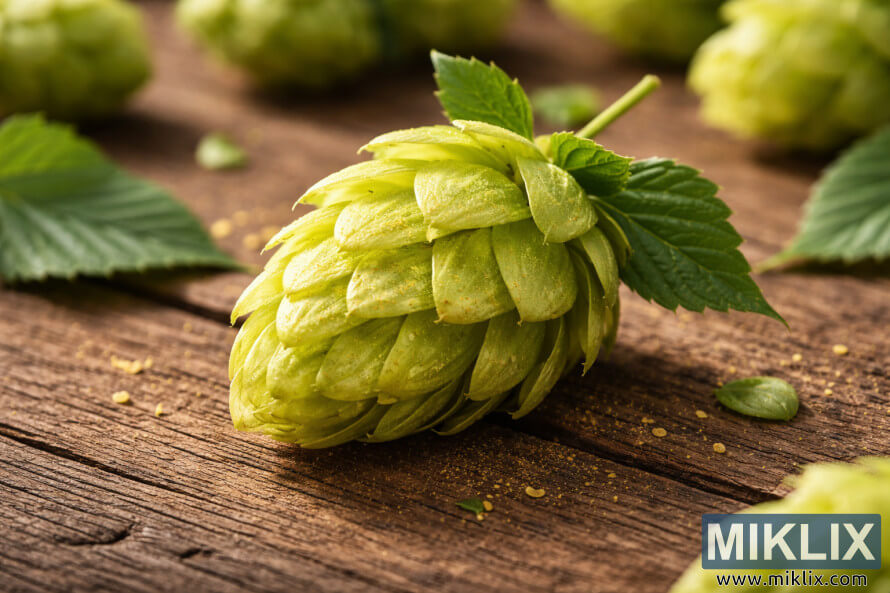
Click or tap the image for more information and higher resolutions.
Chemical profile and brewing values
Bitter Gold alpha acids are notably high, often between 12% and 18.8%. The average is around 15%. Recipe notes sometimes suggest an alpha value of 14% for practical use. This high alpha content is crucial for efficient bittering.
Bitter Gold beta acids range from 4.5% to 8%, averaging 6.3%. Commercial analyses sometimes report a narrower range of 6.1%–8%. The alpha:beta ratio, typically between 2:1 and 4:1, highlights Bitter Gold's alpha-focused nature.
Co-humulone, a key component, is usually between 36% and 41% of the alpha fraction, averaging 38.5%. Brewers use this figure to model bitterness character and balance.
Total oils in Bitter Gold vary widely, from under 1.0 mL/100g to near 3.9 mL/100g. The average is about 2.4 mL/100g. This oil content supports a robust aromatic presence, especially with late additions or dry hopping.
Myrcene dominates the oil profile, making up 45%–68% of total oils, averaging 56.5%. Its presence gives beer ripe, resinous, and piney notes.
Humulene, a smaller but important fraction, is 7%–18% of oils, averaging 12.5%. Caryophyllene, accounting for 7%–11% of oils, averages 9%. These sesquiterpenes add subtle spice and herbal tones, enhancing hop complexity.
Farnesene, present at low levels, is 0%–2% and averages 1%. Even at small percentages, farnesene contributes floral or green top notes, enhancing the beer's aroma.
Practical numbers confirm Bitter Gold's role as a high-alpha bittering hop with significant oil content. When planning additions, use the provided alpha and beta acid ranges. Factor in co-humulone and total oils to predict bitterness clarity and aromatic potential.
Bitter Gold hops
Bitter Gold is a versatile hop, used for both bittering and late additions. It's classified as a dual-purpose hop. Early additions provide a clean bitter backbone, while late additions add a fruity touch.
When used in late additions, Bitter Gold hops reveal bright stone fruit and tropical fruit notes. Expect flavors of pear, watermelon, and light grapefruit. Its aroma impact is modest, unlike some aroma-forward varieties.
- Primary role: bittering hop in many recipes that require a strong bitter backbone.
- Secondary role: flavor and aroma source when added late, showing stone fruit and tropical fruit traits.
- Common pairings: hops with pronounced fruit or floral profiles to highlight its subtle nuances.
Brewers who prioritize predictable alpha acids often choose Bitter Gold. It offers consistent bitterness. At the same time, its dual-purpose nature allows for recipe flexibility. Pairing it with Mosaic, Citra, or Nelson Sauvin enhances tropical and stone-fruit flavors.
Recipe data and breeding notes highlight its role as a bittering workhorse. Yet, thoughtful late additions reveal surprising fruit clarity. This balance makes Bitter Gold ideal for pale ales, IPAs, and hybrid styles seeking both bite and brightness.
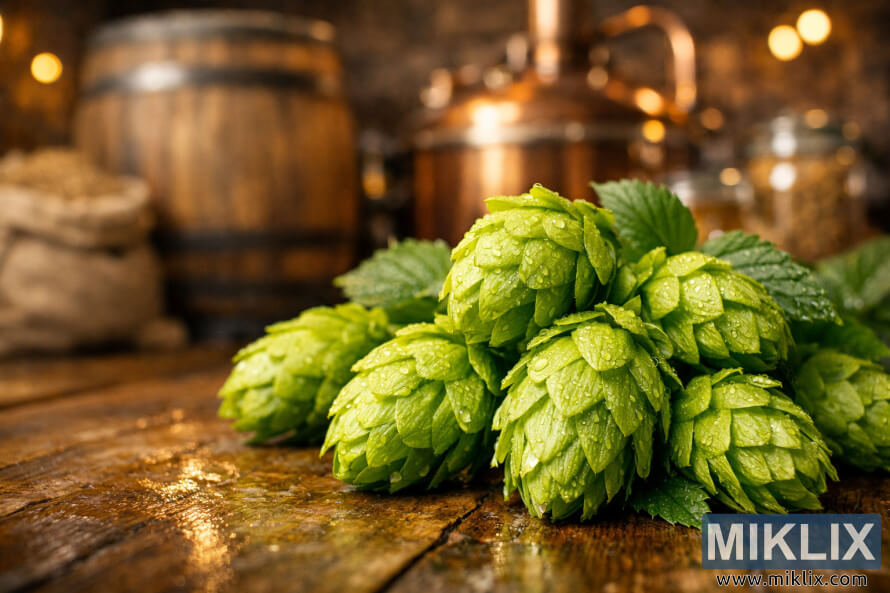
Click or tap the image for more information and higher resolutions.
Flavor and aroma profile in finished beer
The Bitter Gold flavor profile evolves over time. Initially, it provides a clean, firm backbone without much aroma. Brewers rely on its steady bitterness during the early boil stages.
However, late additions and whirlpool hops unveil a new side of the hop. It showcases stone fruit notes, with distinct pear and soft watermelon impressions. These flavors emerge when added near the end of the boil or during the whirlpool phase.
Dry hopping brings out the Bitter Gold's aroma fully. It reveals a blend of tropical fruit and citrus, adding a bright, uplifting quality. Grapefruit and light grassy notes balance the sweeter fruit flavors.
Many tasters find the hop surprisingly expressive, even for a bittering variety. It can deliver pronounced pear and watermelon notes, along with floral and citrus accents. This is especially true when used for flavor or aroma additions.
Utilize this hop to enhance fruit-forward complexity without overpowering yeast character. Its versatility is ideal for ales needing a citrus or stone fruit boost. It also works well in hazy beers, adding tropical fruit notes.
Best beer styles for Bitter Gold
Bitter Gold is a versatile hop, fitting into various brewing traditions. In Belgian ales, it balances malt and esters with its firm bitterness. This highlights its ability to enhance yeast-driven complexity without overpowering delicate flavors.
For American and English pale ales, Bitter Gold is a cornerstone. It offers a clean, sturdy bitterness that supports late additions of citrus or floral hops. This allows hops like Cascade or Fuggle to take center stage.
In IPAs, Bitter Gold acts as a foundational bittering hop. It's best used early in the boil for a stable alpha-acid contribution. Later, aromatic varieties can be added to build a bright hop character. This method ensures a crisp, resinous mouthfeel.
For pilsners, Bitter Gold's versatility extends to lagers. Used sparingly, it provides a straight, dry bitterness that preserves the pilsner malt's sweetness and crisp finish. Minimal late hops can add a subtle aroma.
ESB recipes rely on Bitter Gold for its assertive, rounded bitterness. Paired with caramel malts and English yeasts, it achieves the traditional bitter-sweet balance that many drinkers seek.
- Belgian ale — supports yeast complexity and malt balance
- Pale ale — provides a clean bitter frame
- IPA — reliable bittering base for late-hop layering
- Pilsner — offers dry, restrained bitterness for lagers
- ESB — secures classic English bitterness with malt backbone
Recipe usage data reveals Bitter Gold's versatility in hybrid styles. It's a practical choice for brewers looking to experiment between ales and lagers.
Practical brewing uses and timing of additions
Bitter Gold is a versatile hop, suitable for the boil, whirlpool, and dry hop stages. It excels in early boil additions, providing a clean backbone. Later additions enhance fruit notes.
For achieving the desired IBUs, add a significant amount early in the boil. As a bittering hop, Bitter Gold contributes little aroma. This makes it ideal for maintaining malt character while increasing bitterness.
Adding Bitter Gold late in the boil or to the whirlpool unlocks its stone and tropical fruit flavors. A 5–15 minute late boil addition can soften bitterness. Whirlpool additions at 170–180°F extract watermelon, pear, and apricot notes.
- Early boil: primary bitterness and stability.
- Late boil: gentle flavor and brighter fruit esters.
- Whirlpool: concentrated fruit aromas with low harshness.
- Dry hop: fresh tropical and stone fruit aroma.
In many recipes, Bitter Gold is a significant part of the hop bill. It's often used as the main bittering hop, with other varieties adding top notes. Brewers split the hop bill to ensure Bitter Gold anchors the bitterness and a later hop adds complexity.
Dry hop additions of Bitter Gold are effective for single-hop or simple blends. Use moderate rates to avoid vegetal notes. Pair it with aromatic varieties like Mosaic or Citra for enhanced citrus or resin character.
When planning hop additions, consider Bitter Gold's versatility. Start with a base bittering addition, reserve 20–40% for late additions and whirlpool, and finish with a light dry hop for fruit aroma. This approach balances clean bitterness with the hop's subtle fruit profile.
Pairing Bitter Gold with Other Hops and Yeasts
Bitter Gold is ideal as a bittering base, providing a clean, firm backbone. This allows aroma hops to take center stage. Breweries often layer late additions of Cascade or Citra to enhance citrus and stone fruit notes.
For hop blends, consider a neutral bittering charge of Bitter Gold. Pair it with bright finishing hops for a balanced flavor. Cascade is a classic choice for American pale ales. Adding Citra can intensify tropical and citrus flavors.
- Use Bitter Gold hop pairings with late whirlpool or dry-hop additions of Cascade to add floral and grapefruit tones.
- Combine Bitter Gold hop pairings with Citra for juicy, tropical highlights over a firm bittering base.
- Design hop blends that balance Bitter Gold’s bitterness with modern American varieties for layered aroma and bitterness control.
Yeast choice significantly impacts hop flavors. Standard American ale strains enhance hop brightness. For Bitter Gold yeast pairings, US-05 or Wyeast 1056 are ideal for clarity and hop focus.
For more fruity esters, English or California ale strains are suitable. They blend with Bitter Gold, softening the bitter edge and enhancing hop-derived fruitiness in IPAs and pale ales.
- Start with Bitter Gold as the bittering hop at 60 minutes.
- Add Cascade or Citra late in the boil and in the whirlpool for aroma.
- Dry-hop with Cascade, Citra, or a mix of modern American varieties to taste.
Small adjustments in timing and yeast strain allow brewers to control Bitter Gold's interaction with other hops. This enables them to emphasize citrus, stone fruit, or resinous notes while maintaining a steady bittering backbone.
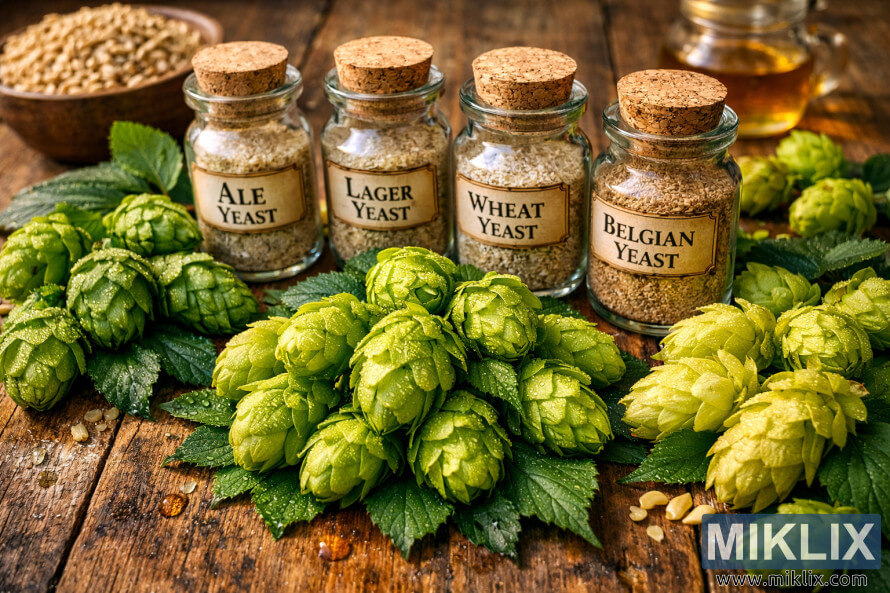
Click or tap the image for more information and higher resolutions.
Substitutes and comparable varieties
When Bitter Gold is not available, brewers often turn to Galena or Nugget. These hops offer similar bittering power and alpha-acid levels. They are ideal for recipes that require precise IBUs.
Recipe databases and substitution tools recommend Galena and Nugget for their alpha-acid contribution. These hops add clean, firm bitterness without altering the beer's flavor profile. Brewers using extract or all-grain systems find it easy to make these swaps.
- Galena — strong bittering hop, dense alpha-acids, reliable for consistent IBUs.
- Nugget — versatile bittering hop with balanced herbal and resin notes that keep recipes stable.
Data-driven substitution tools help brewers choose the right hop when Bitter Gold is out. They compare alpha-acid, oil composition, and typical use timing. This approach minimizes guesswork and ensures the batch's flavor stays true to the original.
When testing a substitute, adjust quantities based on alpha-acid to hit the target IBUs. Small pilot batches can reveal subtle differences in finish and aroma. Many brewers find that Galena and Nugget deliver the expected bitterness while preserving the recipe's character.
Availability, purchasing, and formats
Bitter Gold is available from various suppliers across North America. Retail shops and craft brewing distributors list it, with prices influenced by harvest year, lot size, and shipping options.
Popular stockists include Hop Alliance in the United States and Northwest Hop Farms in Canada. These suppliers ship nationwide, with inventory levels fluctuating throughout the season.
Brewers looking to buy Bitter Gold hops should compare package sizes and harvest dates. Small packs are ideal for home brewers, while larger sacks cater to commercial needs.
Hop formats vary among suppliers. Most offer pellet hops and whole cone hops, with availability based on current stock and demand.
Currently, no lupulin-concentrate versions like Cryo, LupuLN2, or Lupomax are available for Bitter Gold from Yakima Chief Hops, BarthHaas, or Hopsteiner. Thus, pellet hops and whole cone hops remain the primary options.
Recipe databases and usage listings feature Bitter Gold in many recipes. Brewers can check format notes in catalogs to confirm whether a supplier ships pellet hops or whole cone hops for a given lot.
- Where to buy: national distributors and online retailers that list harvest year and alpha values.
- Format choices: pellet hops for convenience and storage, whole cone hops for specialty dry hopping and aroma.
- What to check: lot date, alpha-acid range, and package weight before you buy Bitter Gold hops.
Click or tap the image for more information and higher resolutions.
Storage and alpha-acid retention
Alpha-acid levels in Bitter Gold vary by crop year and handling. Brewers should view published alpha values as historical ranges. Each lot can differ significantly, making it crucial to check the supplier's COA for the exact alpha value of a shipment.
Hop storability is key when planning inventory. At 20°C (68°F), Bitter Gold retains about 55.6% of its alpha acids after six months. This shows moderate retention under warm conditions, highlighting the risk to bitterness and oils if hops are left at room temperature.
To enhance alpha-acid retention, store hops under vacuum or nitrogen and keep them frozen. Cold, sealed storage preserves oils and slows degradation. For aroma-forward late additions, fresh hops or frozen pellets provide stronger aroma. This is because total oil volatility decreases with time and heat.
- Check supplier COA for lot-specific alpha values before scaling recipes.
- Rotate stock by use-by date and prioritize frozen inventory for long-term storage.
- Expect some loss when using hops stored warm; adjust bittering calculations accordingly.
Recipe databases may list analyzed or typical alpha numbers. These should be viewed as a guide rather than a guarantee. Practical adjustments and measured IBUs help brewers when Bitter Gold storage or hop storability is uncertain.
Recipe examples and usage statistics
Bitter Gold recipes showcase its versatility. It's used for early bittering and late additions to add a herbal note. Styles like Belgian Ale, Pale Ale, IPA, ESB, and Pilsner often feature Bitter Gold.
Recipe outlines provide insight into hop usage. For instance, a 5-gallon Pale Ale might use 1.0 to 1.5 ounces of Bitter Gold at 60 minutes. Then, 0.25 to 0.5 ounces at flameout for a subtle flavor. IPAs might use more Bitter Gold for its bittering role.
Recipe databases reveal Bitter Gold's popularity. About 90 recipes list it, with alpha values around 14% in some cases. It typically makes up about 38% of total hop usage in multi-hop blends.
Guidance on hop dosage depends on target IBU and style. For bittering, use alpha-acid values and adjust minutes for desired IBU. For late additions, reduce hop percentage and focus on aroma.
- Quick example: 5 gal Belgian Ale — 1.25 oz Bitter Gold @60 (bittering), 0.4 oz @5 (aroma).
- Quick example: 5 gal ESB — 0.8 oz Bitter Gold @60, 0.2 oz @0.
- Brewhouse note: scale hop dosage to match extract efficiency and target IBU.
Sales channels include commercial suppliers offering whole cone, pellet, and bulk hops. They cater to both breweries and homebrewers. Bitter Gold is mainly sold for its bittering properties, in quantities fitting various brewing scales.
When adapting recipes, keep track of hop percentages and recalculate dosages if alpha-acid changes. This ensures consistent bitterness and maintains the balance between malt and hops in each style.
Common misconceptions and brewing tips
Many brewers mistakenly believe Bitter Gold is only a bittering hop with no aroma. This is a common Bitter Gold misconception. When used solely at 60 minutes, it contributes clean bitterness. However, when added later, it can introduce stone fruit and tropical notes, enhancing a beer's brightness.
Another frequent error is believing lupulin powder versions exist for Bitter Gold. Major lupulin producers do not list a Bitter Gold concentrate. Before planning substitutions or specialty purchases, always check supplier catalogs.
Alpha acids for Bitter Gold vary by lot and supplier. Always request the COA and use the listed value in calculations. Recipe databases often show wide ranges. This step prevents over- or under-bittering and supports accurate bittering hop advice.
Practical hop substitution tips: treat Bitter Gold as a high-alpha bittering hop when swapping for Northern Brewer or Magnum. Adjust quantities for alpha differences. When replacing aroma hops, reduce Bitter Gold’s proportion and add a true aroma variety to preserve intended flavors.
- Use Bitter Gold brewing tips: add a late whirlpool or dry-hop dose to reveal fruit notes.
- For IPA builds, pair with Cascade, Citra, or Mosaic to highlight citrus and stone-fruit interplay.
- When scaling recipes, recalc IBU using the supplier COA instead of database averages.
Keep records of batch alpha values and flavor outcomes. This habit sharpens brewer intuition and refines hop substitution tips over time. Thoughtful pairing and careful COA checks turn common Bitter Gold misconceptions into consistent, repeatable results.
Conclusion
Bitter Gold is a top choice for brewers aiming for a high-alpha, dual-purpose hop. Released in 1999, it stands out as a super-alpha bittering option. It also adds late-addition stone-fruit notes, making it a versatile choice.
Handling Bitter Gold requires careful planning. Its alpha acids decrease with warm storage. Therefore, it's crucial to store it cool to maintain its potency. Many brewers use it as a backbone bittering hop, complemented by American aroma hops like Cascade or Citra. This combination softens its bitterness and adds floral or citric notes.
When Bitter Gold is not available, Galena or Nugget can be used as substitutes. They offer similar bittering performance. In summary, Bitter Gold excels in recipes needing clean bitterness and late-fruit character. It's ideal for American ales and robust lagers, providing both alpha power and subtle fruit complexity.
For the best results, store Bitter Gold cool and pair it with bright aroma hops. Treat it as a primary bittering tool that can also enhance character with thoughtful late additions.
Further Reading
If you enjoyed this post, you may also like these suggestions:
- Hops in Beer Brewing: Riwaka
- Hops in Beer Brewing: Smooth Cone
- Hops in Beer Brewing: Fuggle Tetraploid