
Image: Professional Hop Aroma Sensory Evaluation in a Brewing Laboratory
Published: October 2, 2026 at 8:09:26 PM UTC
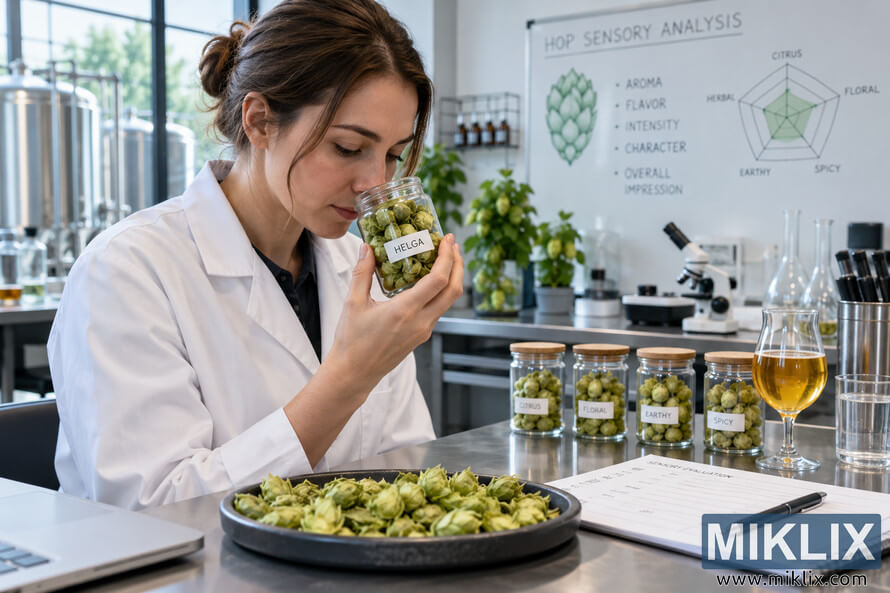
Professional brewing laboratory scene showing sensory evaluation of hop aroma, with green hop samples, aroma descriptors, evaluation notes, analytical equipment, and a focused laboratory professional assessing hop characteristics.
Available versions of this image
The image files available for download below are less compressed and higher resolution - and as a result of that, higher quality - than the images embedded in articles and pages on this website, which are more optimized for file size in order to reduce bandwidth consumption.
Regular size (1,536 x 1,024)
Large size (3,072 x 2,048)
Very large size (4,608 x 3,072)
Extra large size (6,144 x 4,096)
Comically large size (1,048,576 x 699,051)
- Still uploading... ;-)
Image description
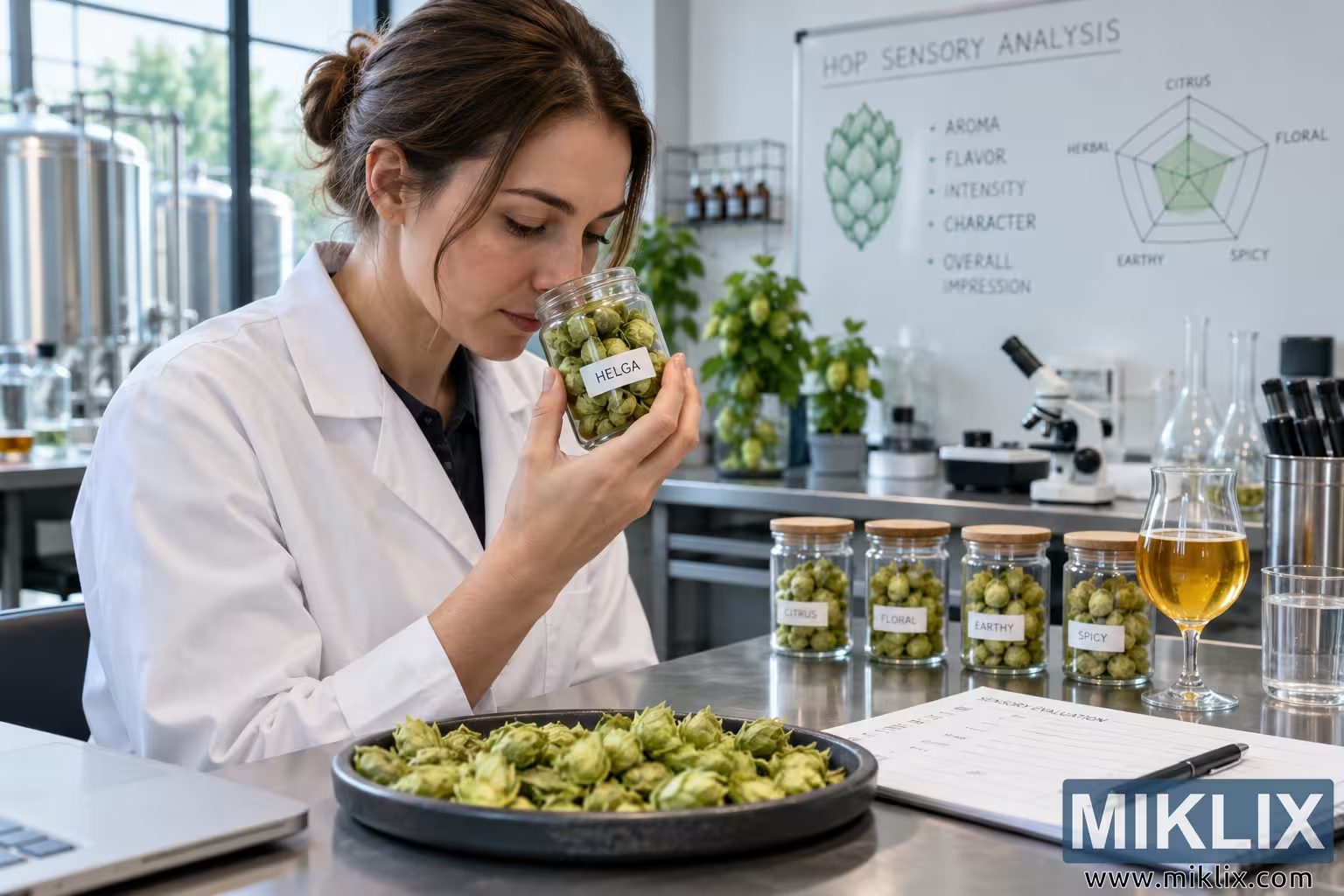
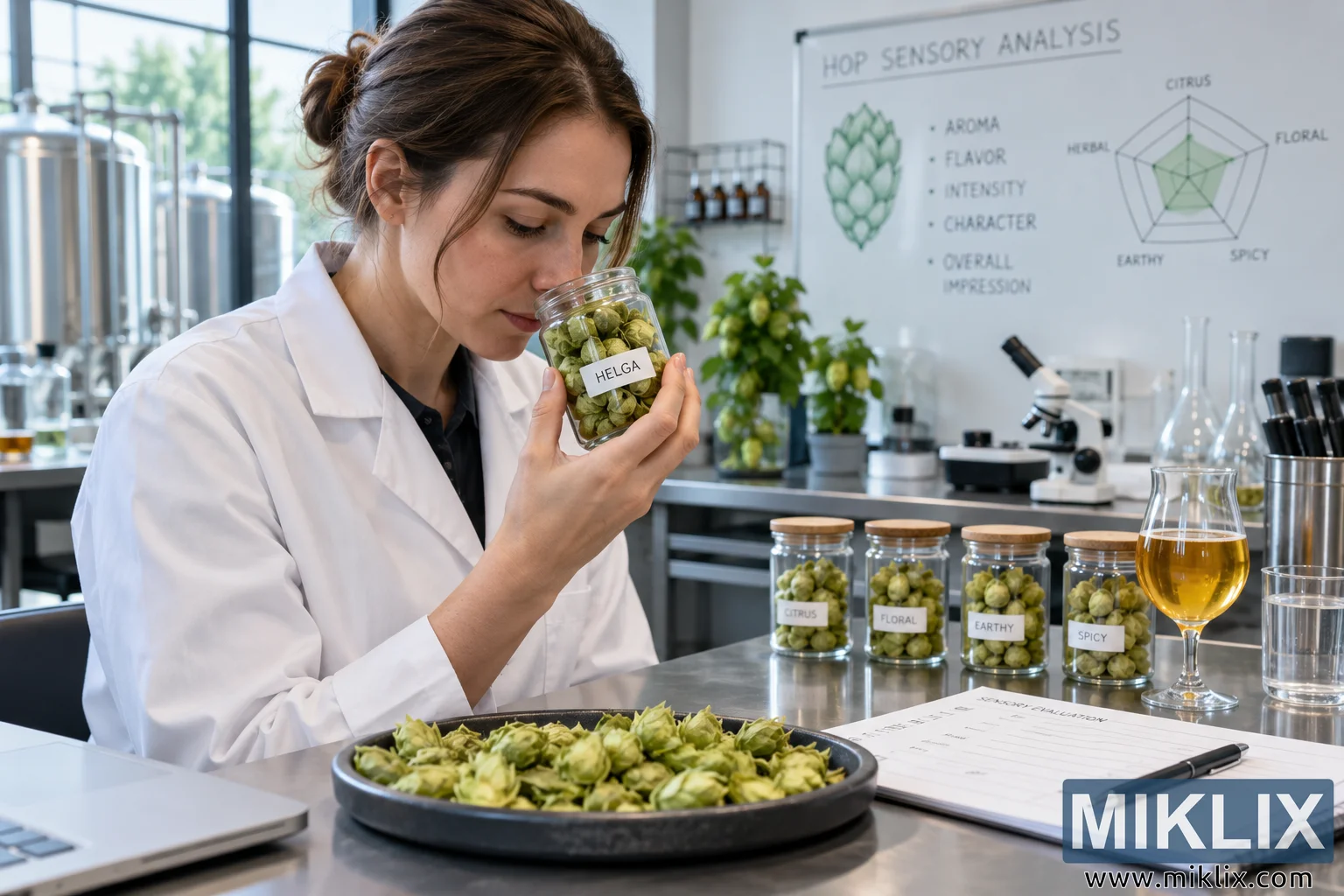
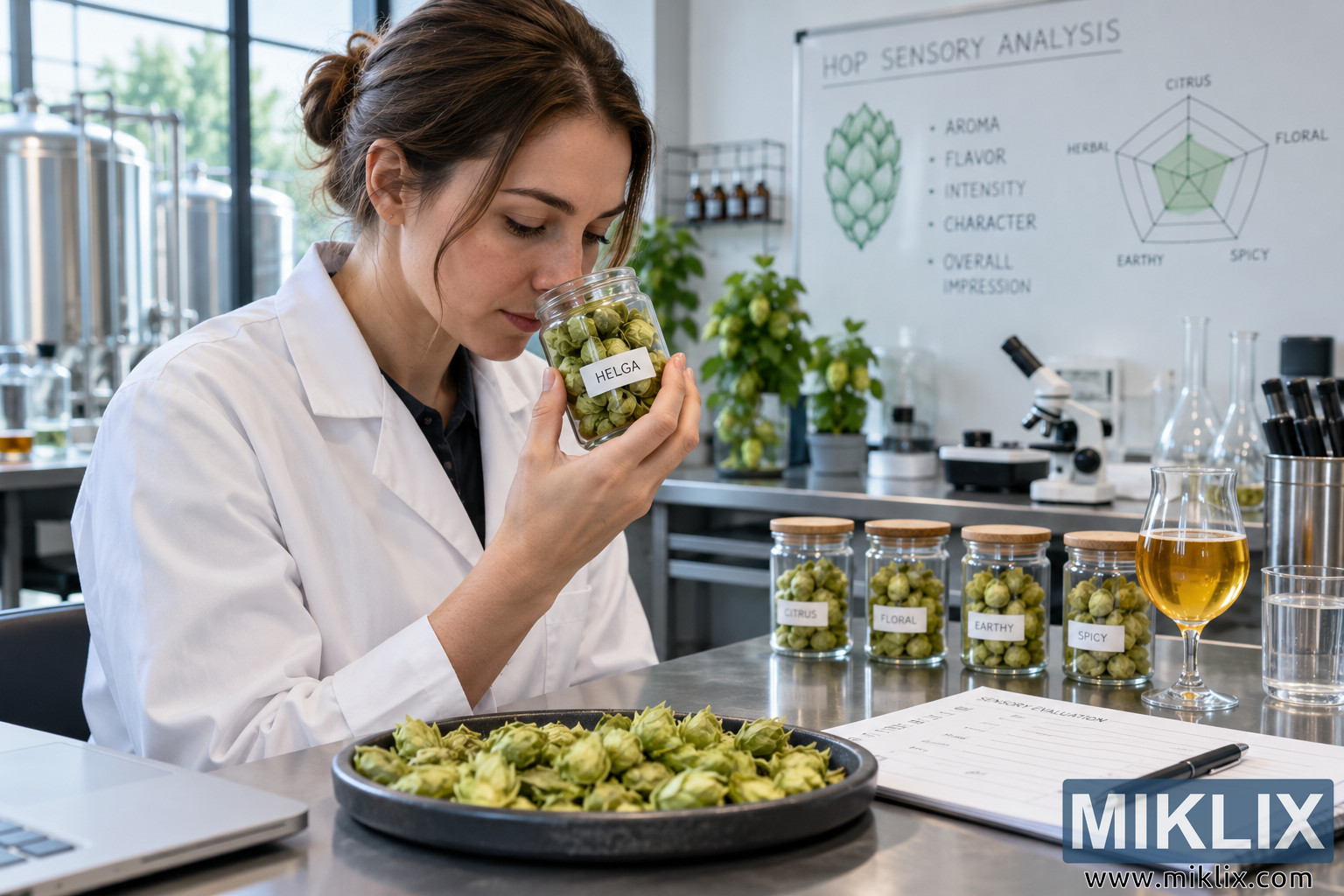
The image presents a professional sensory evaluation session taking place inside a bright, modern brewing laboratory. The composition is a landscape-oriented photographic scene with a clean, highly detailed, realistic appearance. In the foreground and left-center of the frame, a laboratory professional wearing a white lab coat carefully evaluates the aroma of green hop cones. She holds a clear glass sample jar close to her nose and appears focused on assessing the aroma rather than tasting the material. The posture, facial expression, laboratory clothing, and methodical handling of the sample communicate a controlled sensory-analysis procedure rather than a casual brewing activity.
The main subject is surrounded by equipment and materials associated with brewing research and hop evaluation. Several transparent glass jars containing green hop cones are arranged across the stainless-steel work surface. The jars represent different sensory categories and are visibly labeled with descriptors such as citrus, floral, earthy, and spicy. These descriptors reinforce the purpose of the session: identifying, comparing, and recording the aromatic characteristics of hop samples. A shallow dark tray in the foreground contains a larger quantity of loose hop cones, providing a clear close-up view of their pale green, leafy texture and compact flower structure.
On the workbench to the right of the evaluator is a sensory-evaluation worksheet or notebook with printed lines and handwritten or printed assessment fields. A black pen rests across the open document, suggesting that observations are being recorded systematically during the aroma assessment. Nearby, a clear beer glass containing golden liquid adds brewing context without becoming the primary focus. The glass has a small amount of foam or a light head and catches reflections from the surrounding laboratory lighting. Additional clear laboratory vessels and containers are visible around it, reinforcing the scientific and analytical character of the setting.
The background contains stainless-steel brewing or processing tanks, shelves with laboratory bottles, glassware, and analytical equipment. A microscope is positioned on the rear work surface, emphasizing that the facility is designed for technical brewing research and quality evaluation. Green hop plants or hop-bearing botanical material are also visible in the background, connecting the laboratory assessment with the agricultural source of the raw material. The combination of brewing tanks, scientific instruments, glass vessels, hop samples, and documentation creates the impression of a professional research or quality-control environment.
A large whiteboard or presentation board in the upper-right background is headed with a hop sensory-analysis theme. It contains a simple botanical hop illustration, a list of evaluation dimensions, and a radar-style chart representing sensory attributes. The visible concepts include aroma, flavor, intensity, character, and overall impression, while the chart visually communicates comparative sensory scoring. This background element helps establish that the image is not simply a photograph of hops but a structured evaluation of their sensory properties.
The lighting is bright and natural-looking, with daylight entering through large laboratory windows on the left side of the scene. Stainless-steel surfaces and transparent glassware reflect the light, producing a clean, contemporary appearance. The depth of field keeps the evaluator, sample jar, and foreground hop material especially clear while allowing the brewing equipment and analytical instruments in the background to remain recognizable but slightly softer. The overall color palette is dominated by white laboratory surfaces, metallic stainless steel, pale green hop cones, transparent glass, warm golden liquid, and subtle natural greenery.
The image communicates several ideas simultaneously: professional brewing science, sensory methodology, hop aroma characterization, laboratory quality control, raw-material assessment, and documentation of sensory observations. The central action of smelling the hop sample makes aroma assessment the unmistakable focal point. The labeled comparison samples suggest that the evaluator is distinguishing different aroma impressions, while the worksheet and analytical chart indicate that those impressions are being translated into structured sensory data. The environment is orderly and hygienic, with equipment carefully arranged and the evaluator using a deliberate, controlled technique.
The scene is suitable for illustrating professional brewing research, hop quality assessment, sensory science, brewing education, laboratory testing, raw-material evaluation, or technical content about aroma analysis. It emphasizes the sensory side of brewing rather than fermentation or packaging, showing how hop characteristics can be assessed before or alongside their use in beer production. The realistic photographic style, detailed laboratory environment, and clear visual hierarchy make the image appropriate for editorial, educational, scientific, or commercial content concerning hop sensory evaluation. The overall impression is one of precision, concentration, and evidence-based assessment, with the aromatic properties of hop flowers treated as an important measurable component of brewing quality.
The image is related to: Hops in Beer Brewing: Helga