
Image: Laboratory Analysis of Hop Alpha Acids
Published: October 2, 2026 at 8:09:26 PM UTC
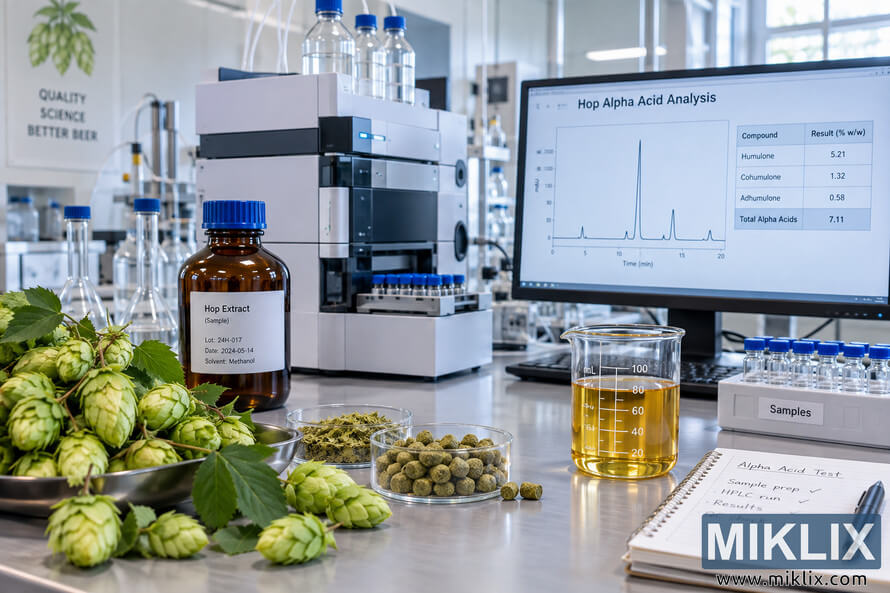
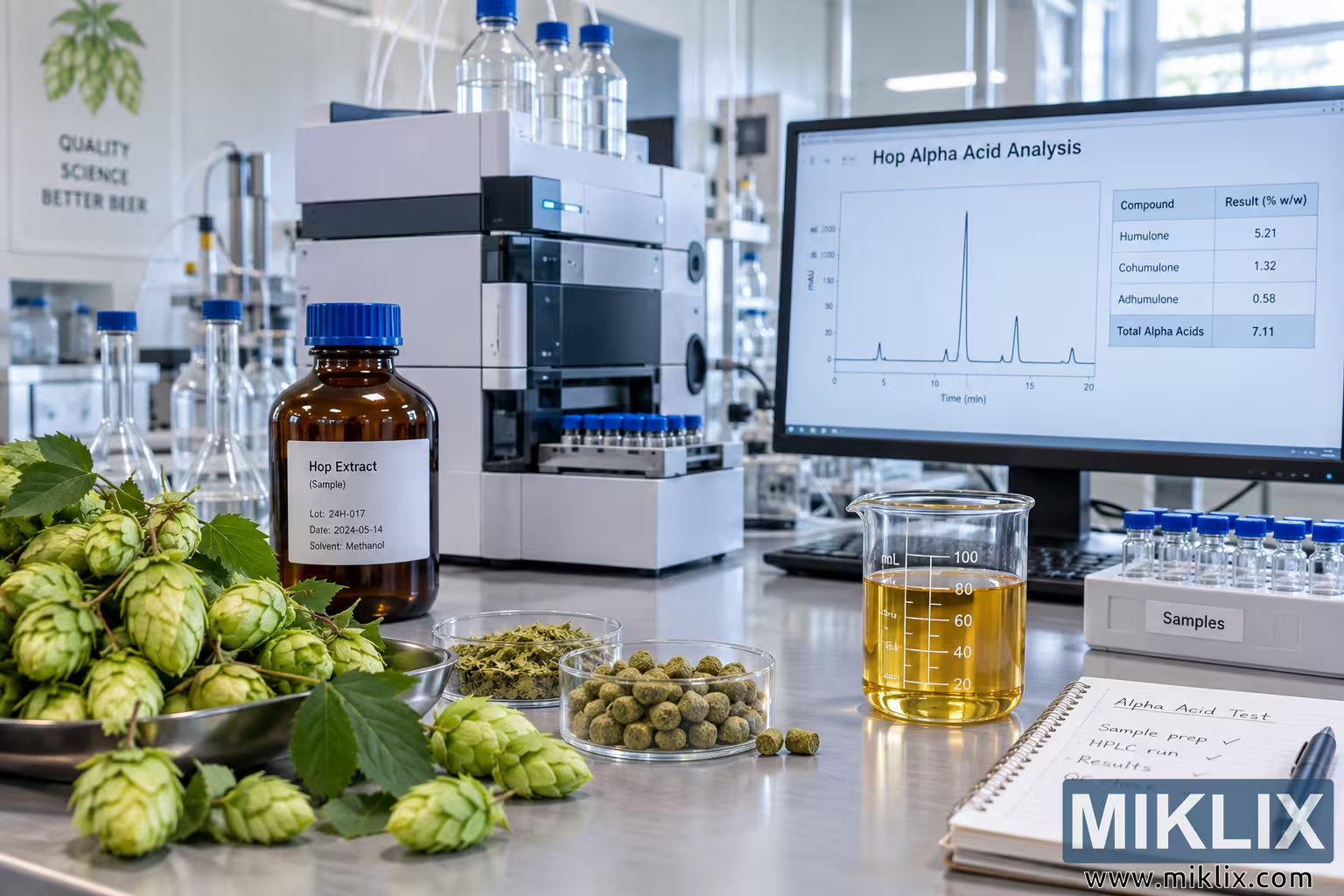
Photorealistic laboratory scene showing hop alpha acid testing with hop samples, extract glassware, analytical chromatography equipment, sample vials, and quantitative analysis results.
Available versions of this image
The image files available for download below are less compressed and higher resolution - and as a result of that, higher quality - than the images embedded in articles and pages on this website, which are more optimized for file size in order to reduce bandwidth consumption.
Regular size (1,536 x 1,024)
Large size (3,072 x 2,048)
Very large size (4,608 x 3,072)
Extra large size (6,144 x 4,096)
Comically large size (1,048,576 x 699,051)
- Still uploading... ;-)
Image description
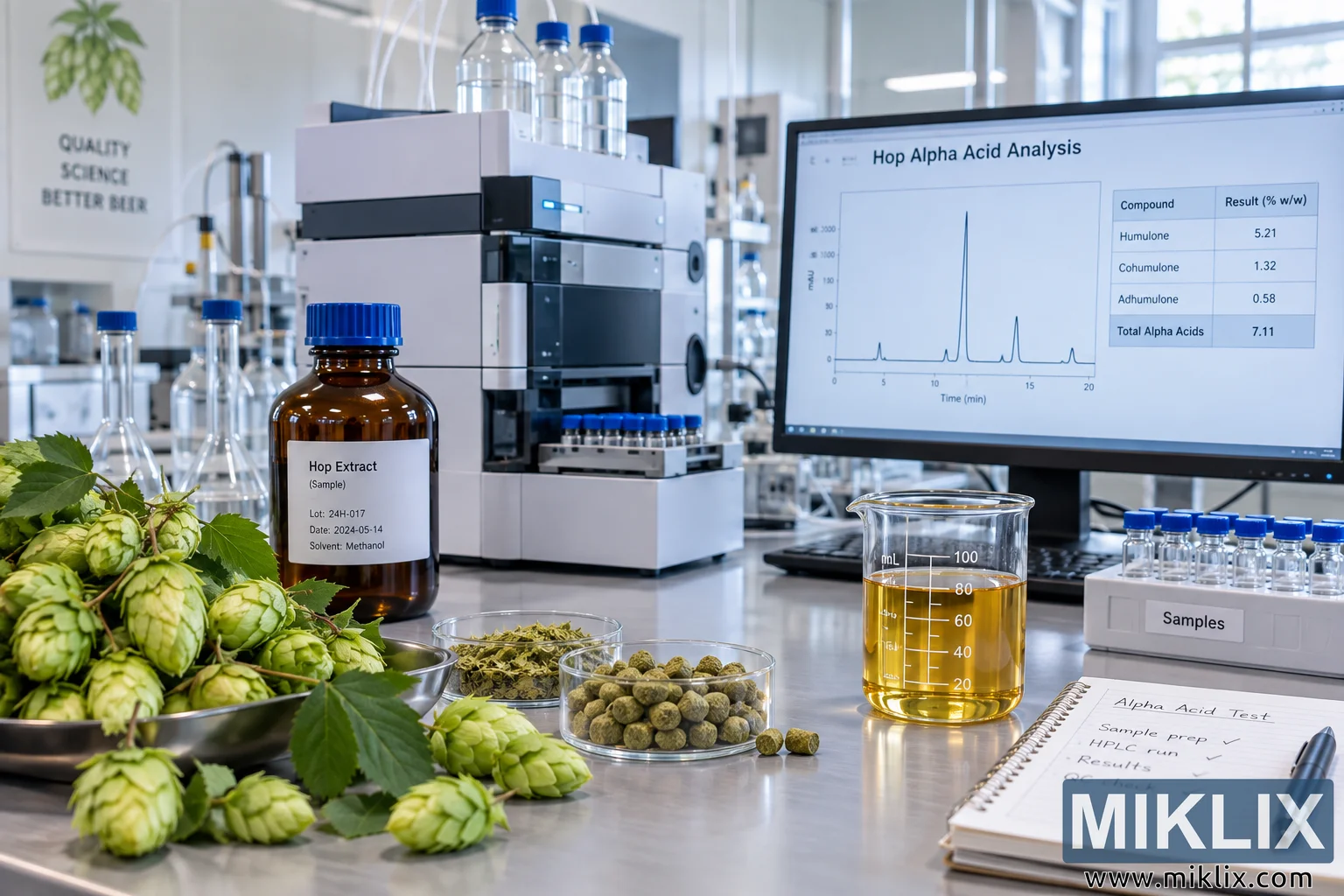
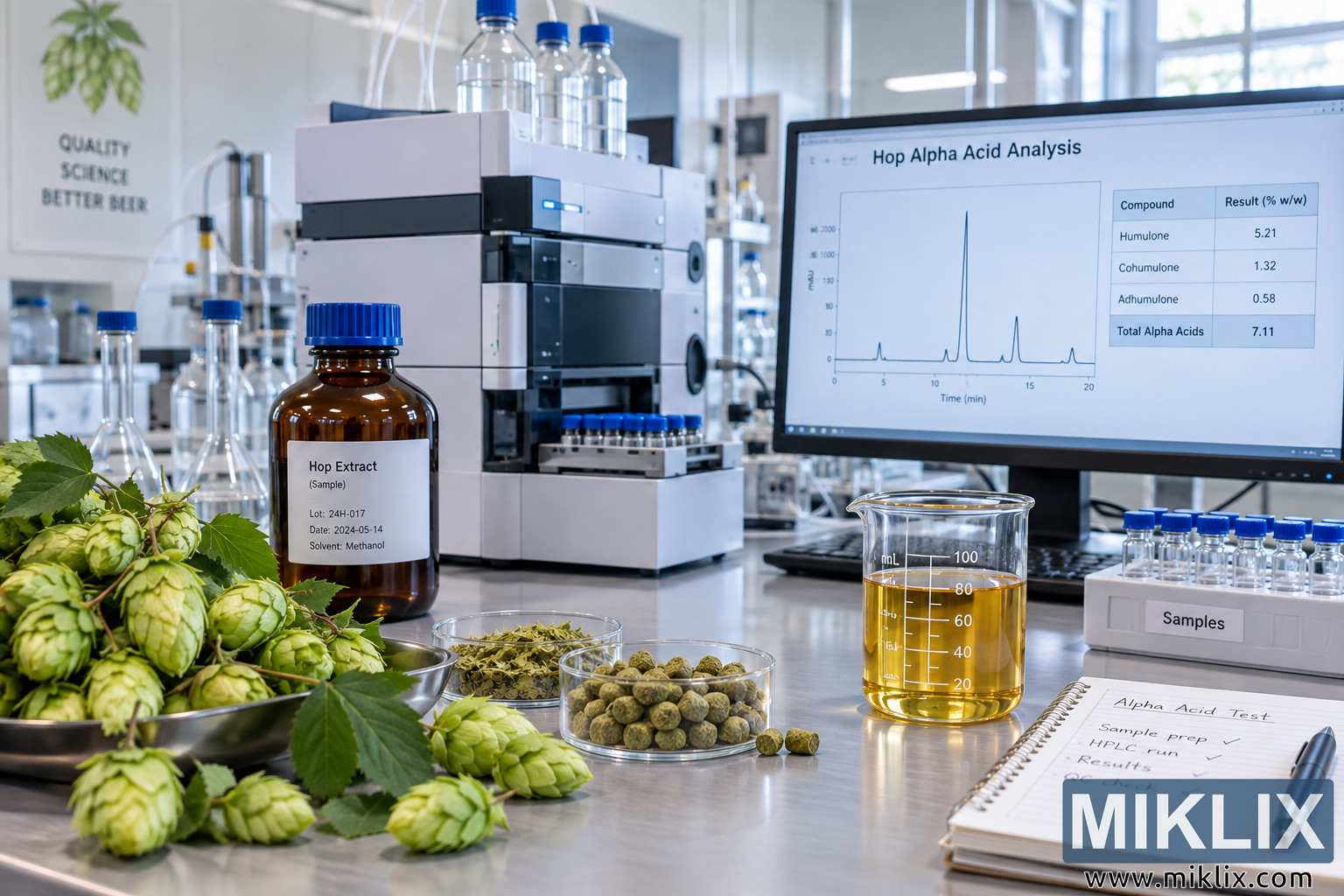
The image presents a photorealistic laboratory environment dedicated to the analysis of hop alpha acids, with a clear emphasis on precision, sample preparation, chromatographic testing, and quality control. The scene is composed in a wide landscape orientation and viewed from approximately bench height, creating the impression of a professional analytical laboratory where brewing ingredients are being evaluated. Bright, cool laboratory lighting illuminates the equipment and work surfaces, while large windows and softly blurred laboratory fixtures in the background give the space a clean, modern, highly controlled appearance. At the center-left of the composition is a sophisticated high-performance liquid chromatography-style analytical instrument. The instrument has a substantial white and dark housing, multiple stacked modules, tubing, sample-handling components, and transparent bottles positioned above it. Its design communicates the type of precision laboratory instrumentation commonly associated with chemical analysis of complex samples. A rack containing multiple small sample vials is positioned near the lower portion of the instrument, reinforcing the impression that prepared hop samples are being processed for instrumental analysis. To the right, a large computer monitor displays a scientific analysis interface titled "Hop Alpha Acid Analysis." The screen contains a chromatographic plot with several distinct peaks distributed across a time axis, visually representing the separation and detection of compounds in the hop extract. Beside the chromatogram is a results table listing several alpha acid components, including Humulone, Cohumulone, Adhumulone, and Total Alpha Acids, with percentage values shown as analytical results. The monitor provides an especially clear visual cue that the laboratory workflow concerns quantitative alpha acid testing rather than general brewing preparation. In the foreground, several types of hop material are arranged naturally across the stainless-steel laboratory bench. Fresh green hop cones with visible leaves and layered bracts occupy the lower-left area, providing an immediate visual connection to the agricultural source of the analytical sample. Nearby are transparent glass dishes containing dried or processed hop material, including small greenish hop particles and compact hop pellets. The different physical forms of the hop material suggest the progression from raw botanical material to processed brewing ingredients suitable for laboratory evaluation. A prominent amber glass laboratory bottle with a blue cap stands in the foreground near the center-left. Its plain sample label identifies it generically as a hop extract sample and includes laboratory-style sample information, reinforcing the analytical context without displaying any actual commercial branding. The amber coloration of the bottle and its contents is visually consistent with a laboratory solvent or plant-extract sample and provides contrast against the neutral laboratory equipment. Several pieces of laboratory glassware are distributed throughout the scene. Behind the hop material are clear flasks, bottles, and sample containers, while a large transparent beaker in the right foreground contains a golden-yellow liquid. The liquid visually suggests a prepared extract or analytical solution derived from hop material. The beaker includes visible measurement markings, adding to the scientific character of the composition. Additional small capped vials are arranged in a white sample rack near the right side of the image, suggesting multiple samples awaiting analysis or already prepared for an analytical run. In the lower-right foreground, an open laboratory notebook is visible on the bench. Its page is headed "Alpha Acid Test" and contains a short checklist indicating stages such as sample preparation, an HPLC run, results, and quality-control checking. A pen rests beside the notebook, adding a practical, human-scale detail to the otherwise equipment-focused scene. The notebook helps communicate that the analytical process is systematic and documented rather than merely observational. On the far-left background wall, a simple decorative laboratory poster includes a hop-related botanical image and the phrase "QUALITY SCIENCE BETTER BEER," reinforcing the relationship between scientific ingredient analysis and brewing quality. The background remains softly focused enough to preserve the sense of depth without distracting from the primary analytical equipment, hop samples, glassware, and computer display. No people are present, allowing the laboratory equipment and materials to remain the central subjects. The overall visual style is realistic and commercially polished, with natural reflections on the stainless-steel workbench, subtle highlights on glass surfaces, realistic transparent and translucent materials, and fine detail across the hop cones and laboratory instruments. The composition balances the raw agricultural character of fresh hops with the technical precision of chromatographic analysis. The image communicates a complete conceptual workflow: hop material is present as the source, an extract is prepared in laboratory glassware, samples are held in capped vials, analytical equipment performs the separation and measurement, and the computer records and displays quantitative alpha acid results. The scene is therefore particularly suitable for illustrating hop quality assessment, brewing ingredient research, laboratory testing, analytical chemistry, HPLC-based hop analysis, alpha acid measurement, quality assurance, and scientific evaluation of brewing raw materials. The image contains no recognizable commercial logos, trademarks, branded equipment markings, or actual company brands, keeping the focus entirely on the scientific process and the visual relationship between hops, laboratory sample preparation, analytical instrumentation, chromatographic data, and documented quality control.
The image is related to: Hops in Beer Brewing: Helga