
Image: Proper Hop Storage in Vacuum-Sealed Freezer Packages
Published: October 2, 2026 at 8:09:26 PM UTC
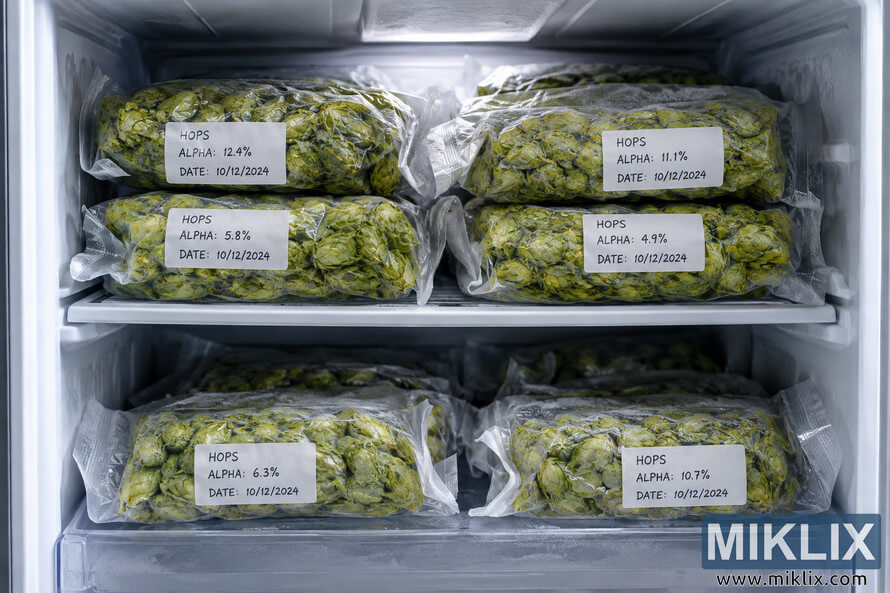
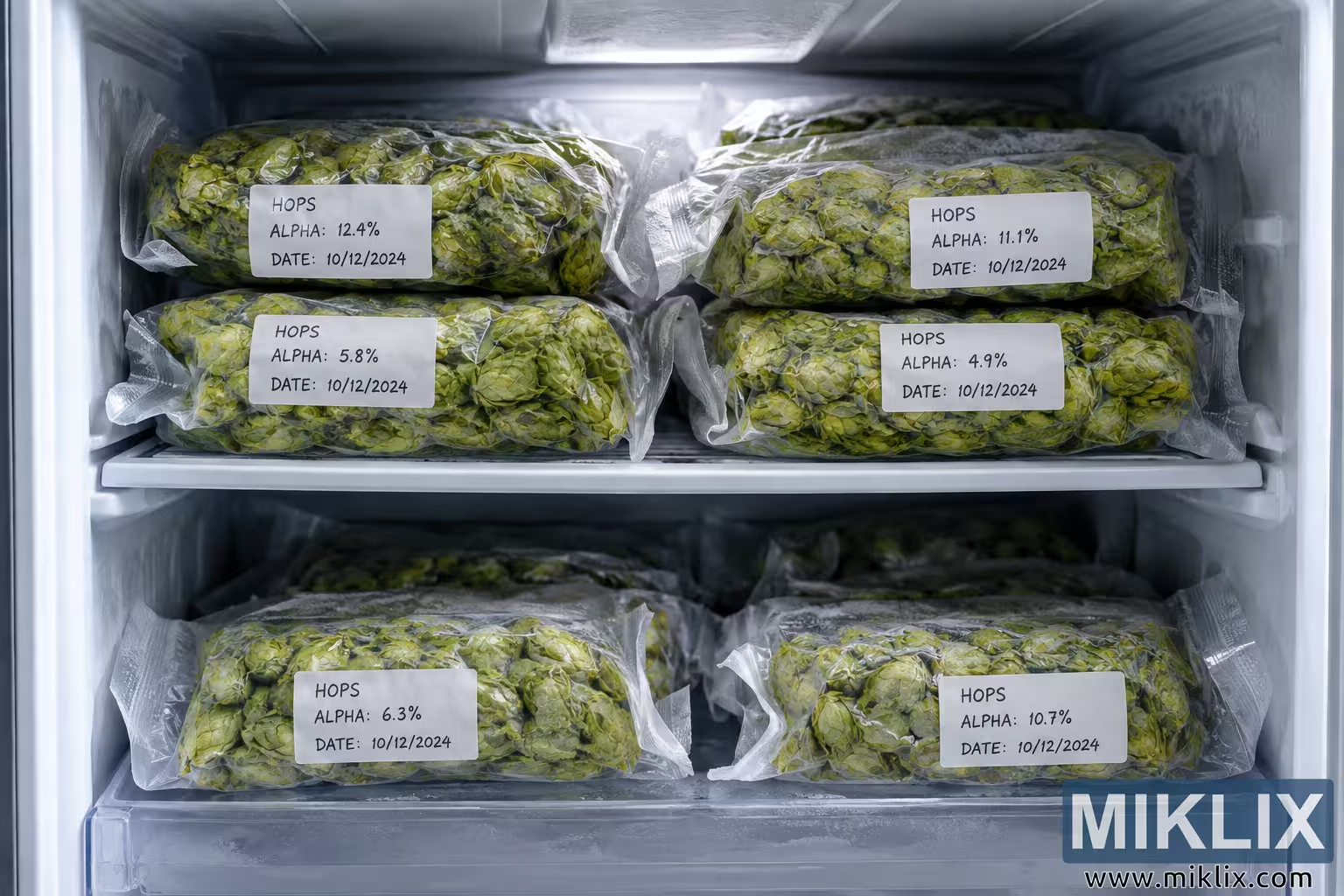
A realistic landscape image showing properly stored whole hops in vacuum-sealed packages, neatly organized and labeled inside a frosty freezer.
Available versions of this image
The image files available for download below are less compressed and higher resolution - and as a result of that, higher quality - than the images embedded in articles and pages on this website, which are more optimized for file size in order to reduce bandwidth consumption.
Regular size (1,536 x 1,024)
Large size (3,072 x 2,048)
Very large size (4,608 x 3,072)
Extra large size (6,144 x 4,096)
Comically large size (1,048,576 x 699,051)
- Still uploading... ;-)
Image description
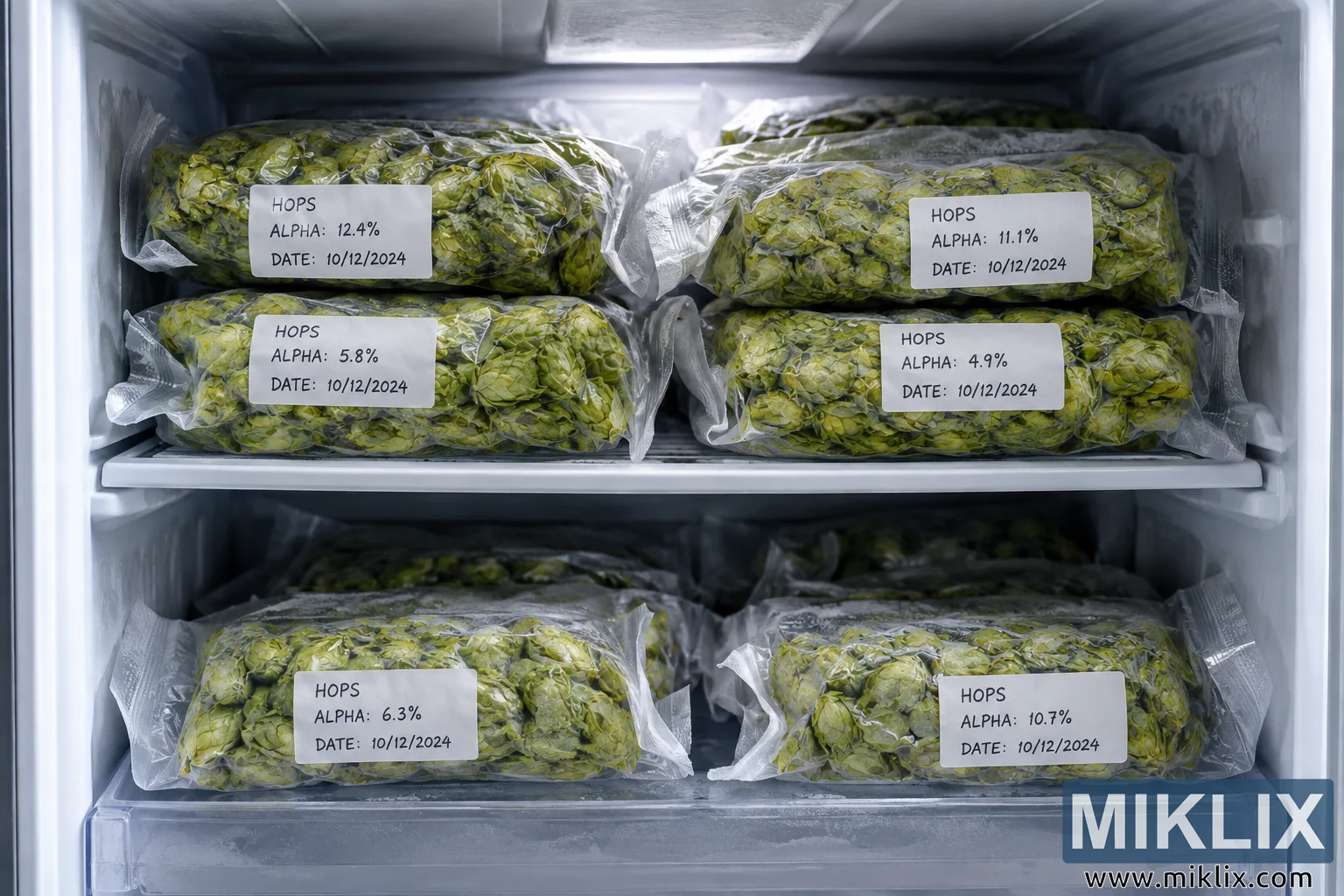
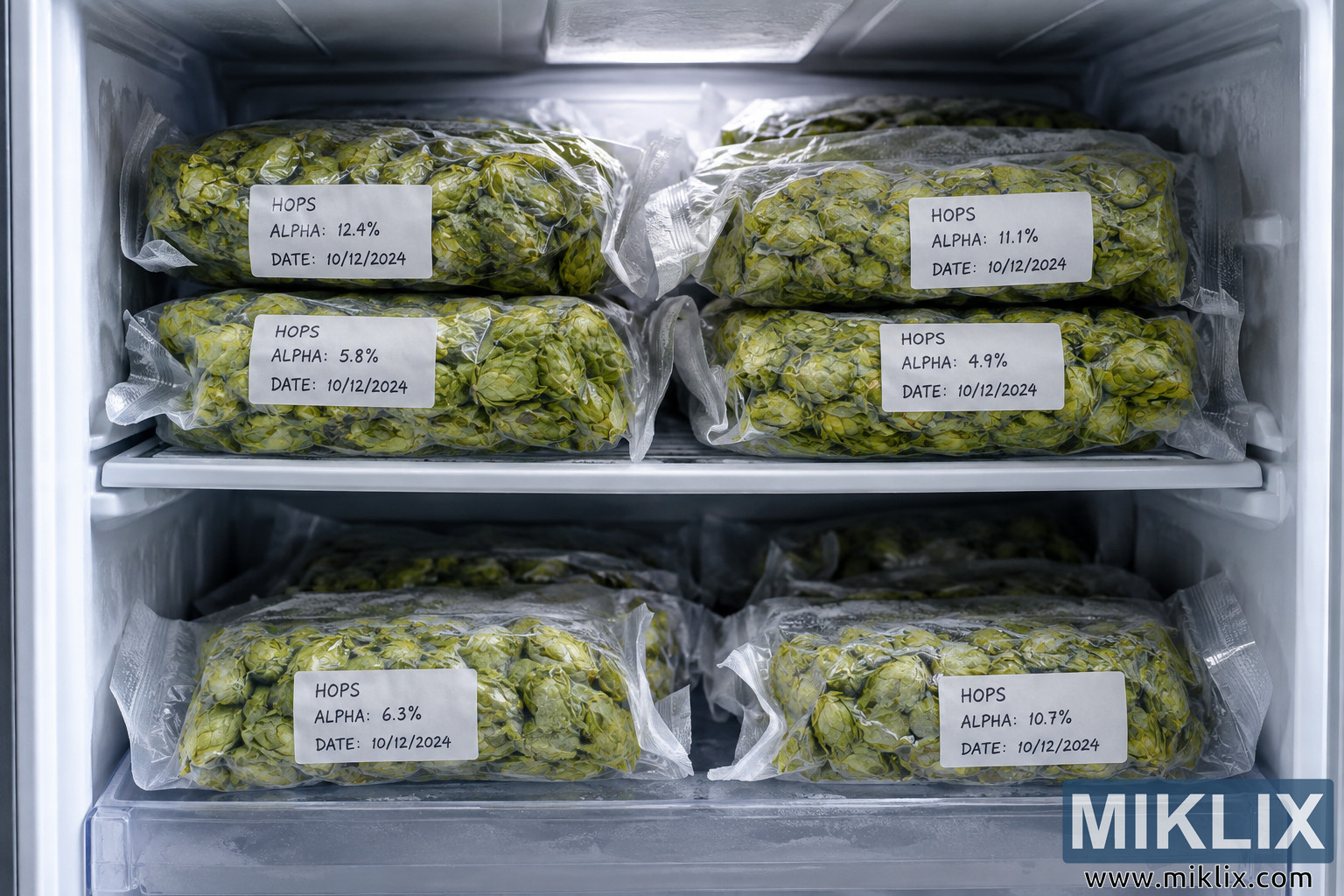
The image presents a clean, organized view inside a domestic freezer, photographed straight on in landscape orientation. The freezer interior is brightly illuminated from above, creating a crisp, cool-toned environment that emphasizes the frozen storage conditions. Multiple transparent vacuum-sealed packages containing whole green hop cones are arranged carefully across two visible shelving levels. The packages are relatively flat and compact because the air has been removed from the bags, and their tightly sealed edges and slightly wrinkled plastic surfaces clearly communicate vacuum packaging. The hop cones inside the bags are dense, leafy, and predominantly pale to medium green, with individual cone shapes and overlapping papery bracts visible through the transparent plastic.
The upper shelf contains several large vacuum-sealed packages arranged in an orderly pattern. Two prominent packages occupy the left and right portions of the upper row, while additional packages are positioned behind and around them. Each of the clearly visible front packages has a plain white rectangular label attached to its surface. The labels use simple dark lettering and identify the contents as HOPS. They also include an alpha acid percentage and a storage date, giving the scene the appearance of a carefully documented ingredient inventory. Visible alpha acid values include 12.4%, 11.1%, 5.8%, and 4.9%, while the labels show the date 10/12/2024. The labels are intentionally generic and contain no commercial branding, logos, trademarks, or recognizable manufacturer names.
A sturdy horizontal freezer shelf separates the upper and lower sections. Its light-colored surface is visible beneath the upper packages and provides a strong visual boundary between the two storage levels. The shelf and surrounding freezer walls have a slightly frosted appearance, reinforcing the low-temperature environment. Subtle ice accumulation and condensation-like textures appear along the interior surfaces without obscuring the contents. The lighting remains bright enough that the vacuum-sealed packages and their labels are easy to distinguish, while the colder, darker areas farther toward the rear of the freezer provide depth.
The lower shelf contains another group of vacuum-sealed hop packages. Several bags are partially recessed toward the back, while two prominent packages sit toward the front. The front-left package has a white label identifying HOPS, with an alpha acid value of 6.3% and the date 10/12/2024. The front-right package is similarly labeled HOPS and shows an alpha acid value of 10.7%, also dated 10/12/2024. These labels reinforce the systematic nature of the storage arrangement, suggesting that different batches have been individually packaged, identified, and preserved. The transparent packaging allows the texture and quantity of the hop cones to remain visible, making it possible to understand the contents without opening the bags.
The freezer itself has a practical, utilitarian appearance rather than a decorative one. Its interior walls are light gray to white, with cool shadows around the corners and rear surfaces. The ceiling of the freezer includes a bright built-in light source that illuminates the packages from above and slightly toward the front. The resulting highlights on the clear plastic make the vacuum-sealed construction especially apparent. Reflections are visible on some of the plastic surfaces, but the contents remain clearly recognizable. The overall photographic treatment is realistic and documentary-like, with a high level of detail in the hop cones, plastic packaging, labels, shelves, and frost.
The composition emphasizes proper storage and organization. The packages are kept together rather than scattered, and their relatively uniform placement makes the freezer look like a deliberately maintained inventory. The arrangement also visually communicates several important storage concepts: the hops are sealed against air exposure, kept at freezing temperatures, protected inside a freezer, and separated into identifiable batches. The image therefore works as a practical visual example of how whole hop cones can be packaged and stored for preservation.
There are no people visible in the scene, and there are no hands, tools, brewing vessels, or other equipment present. The focus remains entirely on the stored hop packages and the freezer environment. No actual commercial brands are depicted. The labels are generic inventory labels rather than branded packaging, keeping attention on the storage method instead of a particular supplier or product. The absence of recognizable branding also gives the image a neutral, instructional quality suitable for educational material, brewing documentation, food-storage guidance, inventory records, or general illustrations of frozen hop preservation.
The perspective is close and direct, as though the viewer is looking into the freezer with the door open. The front edges of the shelves and the inner side walls frame the contents naturally. The upper and lower rows create a balanced horizontal structure, while the varied sizes and positions of the packages prevent the arrangement from appearing unnaturally rigid. The transparent bags, green hop cones, white labels, gray freezer surfaces, and patches of frost create a restrained palette associated with cold storage and fresh botanical ingredients.
Overall, the image conveys a well-maintained freezer containing vacuum-sealed whole hops stored in clearly labeled batches. Its strongest visual messages are preservation, cleanliness, organization, traceability, and protection from air and temperature fluctuations. The realistic close-up presentation makes the vacuum sealing, green hop material, generic batch labels, shelving, and frozen environment readily understandable at a glance. The scene is intentionally practical and photographic rather than stylized, with sufficient visual detail to show both the physical characteristics of the stored hops and the method used to keep them protected in the freezer.
The image is related to: Hops in Beer Brewing: Helga