
Image: Dry Hops Being Added to Beer in a Stainless-Steel Fermenter
Published: October 2, 2026 at 8:09:26 PM UTC
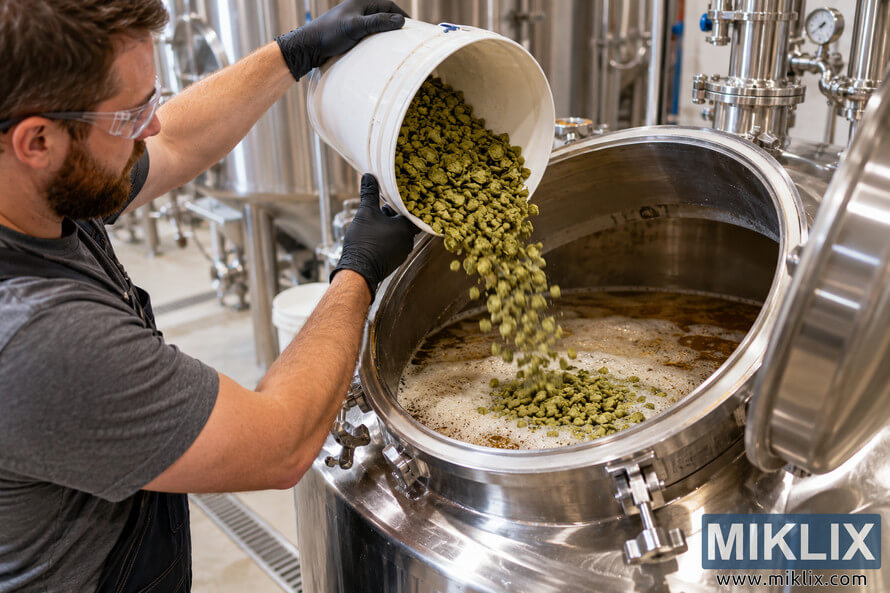
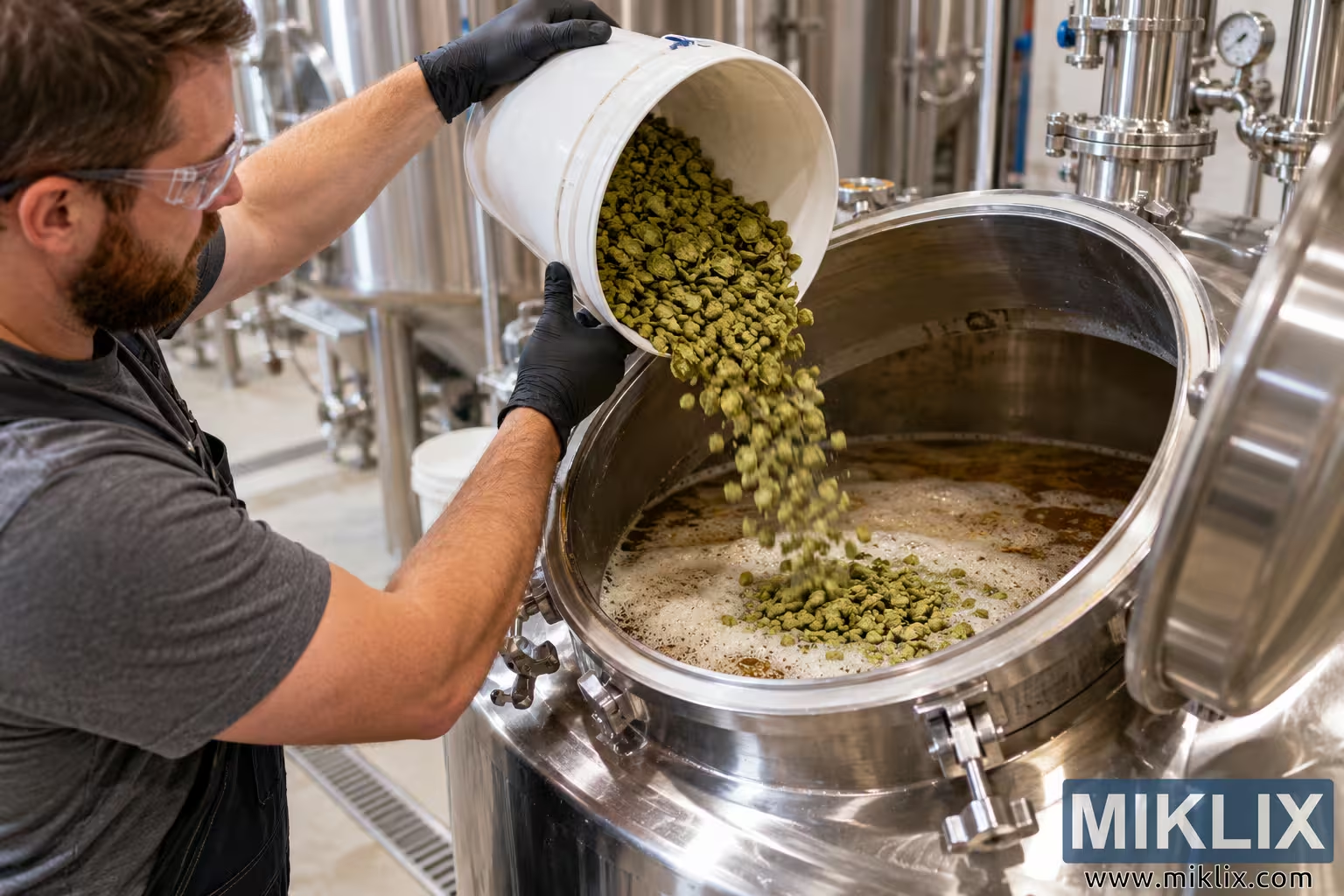
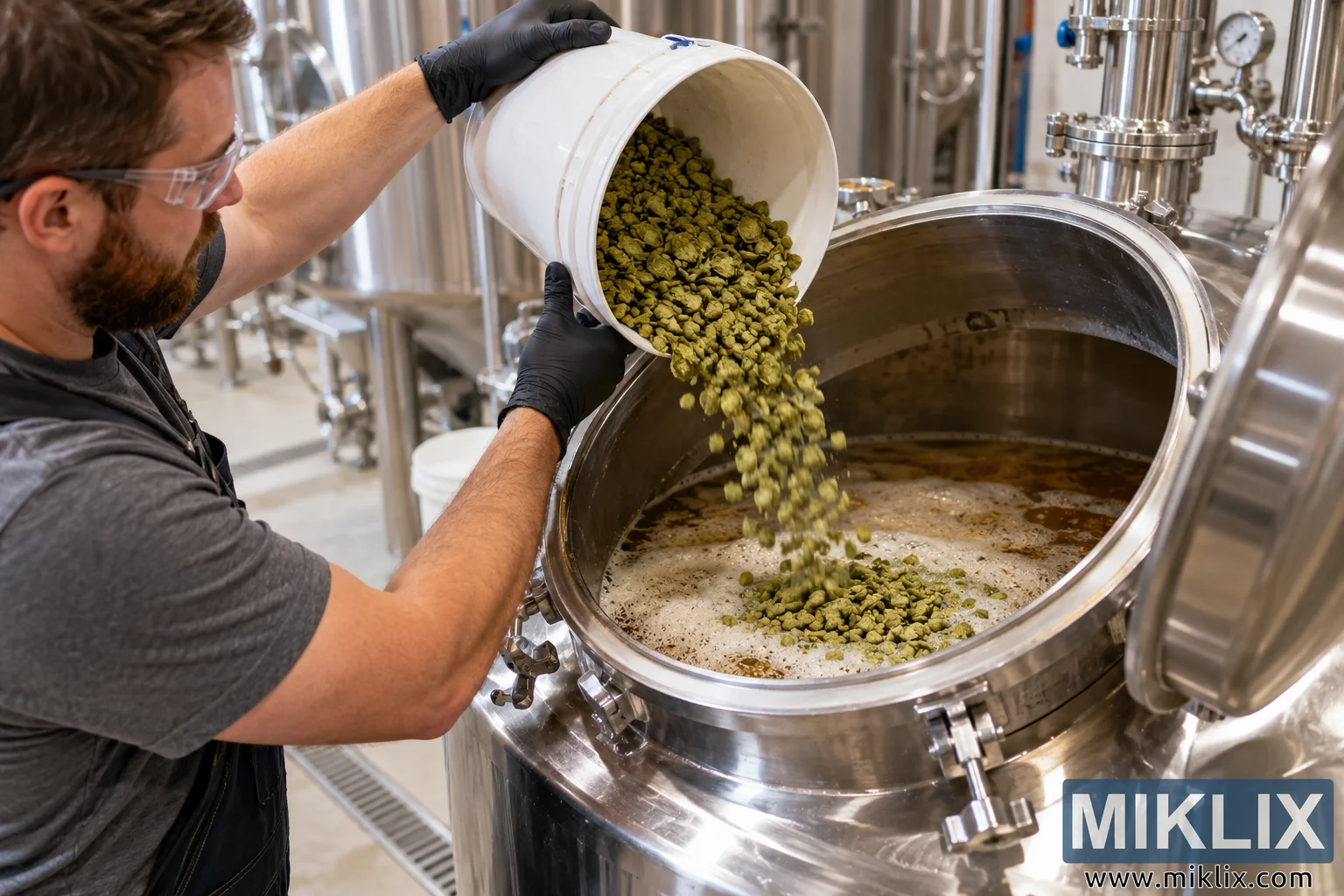
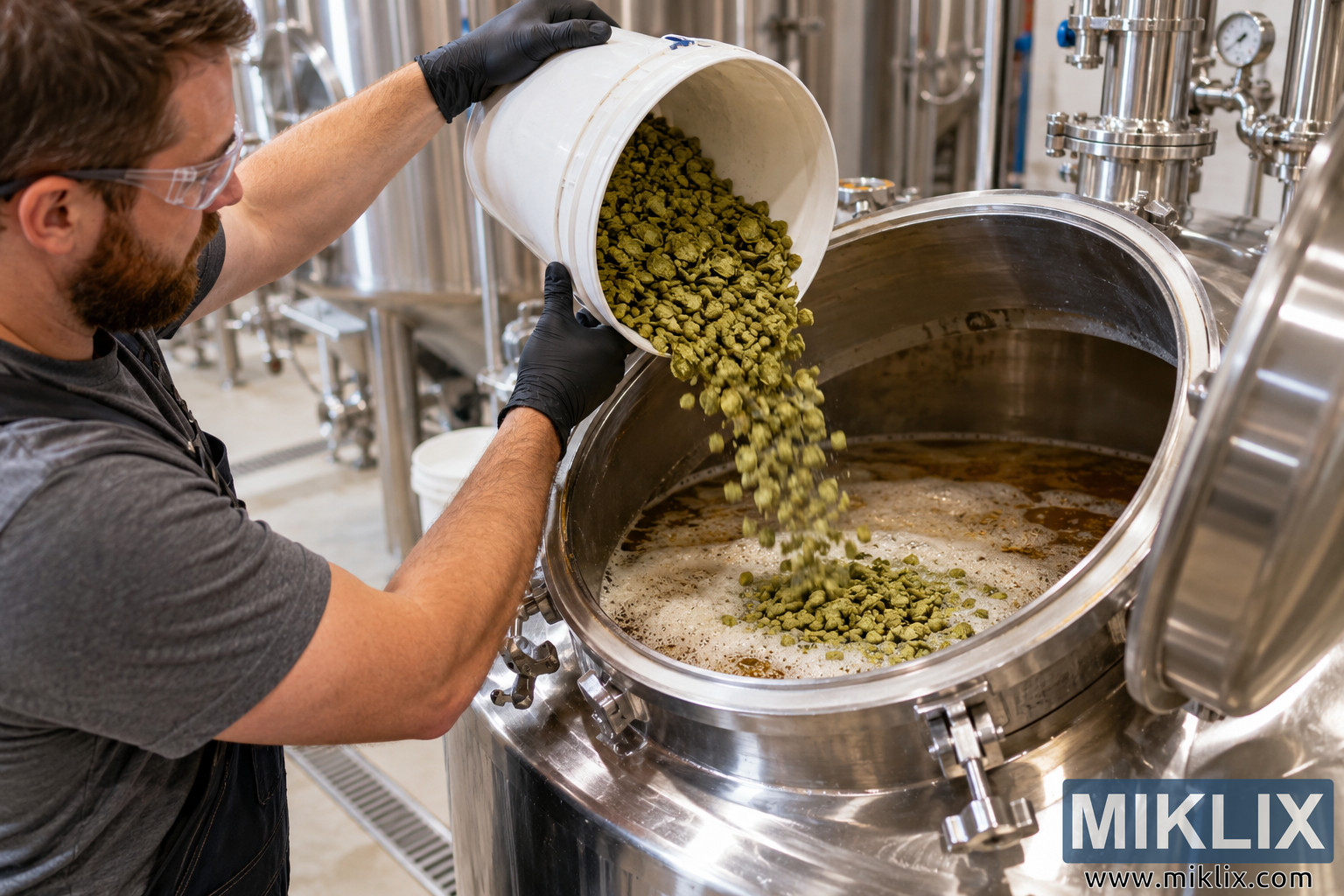
Photorealistic brewery scene showing a brewer adding green dry hop pellets to beer in an open stainless-steel fermenter, surrounded by professional brewing equipment.
Available versions of this image
The image files available for download below are less compressed and higher resolution - and as a result of that, higher quality - than the images embedded in articles and pages on this website, which are more optimized for file size in order to reduce bandwidth consumption.
Regular size (1,536 x 1,024)
Large size (3,072 x 2,048)
Very large size (4,608 x 3,072)
Extra large size (6,144 x 4,096)
Comically large size (1,048,576 x 699,051)
- Still uploading... ;-)
Image description
This high-resolution landscape photograph captures a realistic dry-hopping process inside a bright, modern brewery. The central action shows a brewer adding a large quantity of green hop pellets directly into an open stainless-steel fermentation vessel containing beer. The brewer is positioned prominently on the left side of the composition, leaning toward the fermenter while carefully tipping a plain white plastic bucket. He is wearing dark work clothing, protective clear safety goggles, and black disposable gloves, creating a practical and professional appearance appropriate for a working brewery environment. His face is shown in profile, with his attention directed toward the fermenter and the stream of hops being added. The pose communicates an active hands-on brewing procedure rather than a staged portrait.
The white bucket is held above the wide opening of the stainless-steel vessel and is tilted forward at an angle that allows the hop pellets to pour out naturally. A dense stream of small, irregular green hop pellets is visibly falling from the bucket into the fermenter. Individual pellets can be distinguished throughout the falling stream, with some appearing sharply defined near the bucket and others becoming slightly motion-softened as they descend. The hop pellets collect on the surface of the beer, creating a concentrated mound near the center of the vessel. This makes the dry-hopping action immediately recognizable and provides a strong visual focal point.
Inside the fermenter, the beer appears amber to golden-brown and is partially covered by a layer of pale foam and active-looking bubbles. The liquid surface is visible around the accumulating hops, giving the image a clear sense of depth and showing that the ingredients are being introduced directly into the beer. The contrast between the green hop pellets, warm amber beer, pale foam, and reflective stainless steel makes the brewing process particularly easy to understand visually. The open vessel provides an unobstructed view of the ingredients entering the beer, while the surrounding metal hardware reinforces the industrial character of the setting.
The fermenter itself occupies a large portion of the right and lower areas of the image. Its polished stainless-steel construction reflects the surrounding brewery environment and produces bright highlights along the rim, clamps, fittings, and curved surfaces. The wide circular opening is framed by a thick metallic rim, with mechanical fasteners and hardware visible around the vessel. Additional pipes, valves, gauges, fittings, and vertical stainless-steel tanks appear throughout the background, establishing the photograph as a functioning professional brewery rather than a generic industrial interior.
The background contains numerous vertical stainless-steel surfaces and brewing-system components. Pipes run upward and across the scene, while cylindrical tanks and mechanical fittings create layers of visual detail behind the main subject. A pressure gauge is visible toward the upper-right area, adding another recognizable piece of brewing equipment. The background is somewhat softer than the foreground, allowing the brewer, bucket, hop stream, and fermenter to remain the primary subjects while still communicating the scale and sophistication of the facility. The clean, organized surroundings suggest a controlled production environment designed for brewing and fermentation.
Lighting throughout the scene is bright and naturalistic, with strong illumination falling across the brewer, bucket, fermenter, and surrounding equipment. Highlights on the polished steel create realistic reflections and help define the curved geometry of the brewing vessels. The lighting also reveals subtle textures in the hop pellets, foam, clothing, gloves, and metal surfaces. Shadows remain present but are not excessively dark, preserving detail across the image. The overall visual treatment is photographic and documentary in character, with realistic materials, natural proportions, convincing reflections, and fine environmental detail.
The composition uses a landscape orientation and a close, immersive perspective. The brewer enters from the left side while the fermenter dominates the center and right side, creating a diagonal visual relationship between the bucket, descending hop stream, and beer surface. The falling hops naturally guide the viewer's eye from the elevated bucket downward into the fermenter. The broad horizontal framing also allows enough room to show the surrounding brewery infrastructure, making the image useful for illustrating both the specific dry-hopping procedure and the professional brewing environment in which it takes place.
No recognizable commercial branding, logos, trademarked labels, or branded packaging are present in the scene. The bucket is intentionally plain, and the brewing equipment is presented without visible brand identification. This keeps attention on the brewing activity itself rather than on any particular manufacturer, brewery, or commercial product. The image therefore works as a general representation of dry hopping in a professional brewery.
The photograph conveys several stages of the process simultaneously: the brewer handling the ingredient, the bucket containing the hop pellets, the physical movement of the pellets through the air, and the pellets landing on the surface of the beer. The combination makes the purpose of the image immediately clear. It depicts the addition of dry hops to fermenting beer in a visually direct and realistic way, while emphasizing the tactile nature of brewing and the specialized equipment involved. The visible foam and liquid surface provide context for fermentation, while the green hop pellets identify the specific ingredient being introduced.
Fine visual details further enhance the realism. The brewer's black gloves contrast against the white bucket and metallic equipment. The transparent safety goggles catch highlights from the brewery lighting. The hop pellets vary subtly in shape, size, and orientation as they fall, avoiding the appearance of a perfectly uniform digital pattern. The foam on the beer forms irregular patches and bubbles, while the reflective tank surfaces show changing brightness across their curved contours. Mechanical clamps, joints, pipe connections, and gauges contribute additional authentic detail without distracting from the main action.
Overall, the image presents a crisp, photorealistic view of a professional brewer performing a dry-hopping step by adding green hop pellets to beer inside an open stainless-steel fermenter. Its landscape composition, high level of detail, realistic industrial lighting, visible brewing equipment, and clear depiction of the hop stream make it suitable for educational material, brewing-process documentation, brewery-related editorial content, instructional resources, or general visual communication about beer production. The scene emphasizes craftsmanship, process, ingredients, and professional brewing infrastructure while remaining free of identifiable commercial branding.
The image is related to: Hops in Beer Brewing: Helga