
Image: Water Chemistry Testing Equipment and Mineral Additions for Brewing
Published: October 2, 2026 at 8:09:26 PM UTC
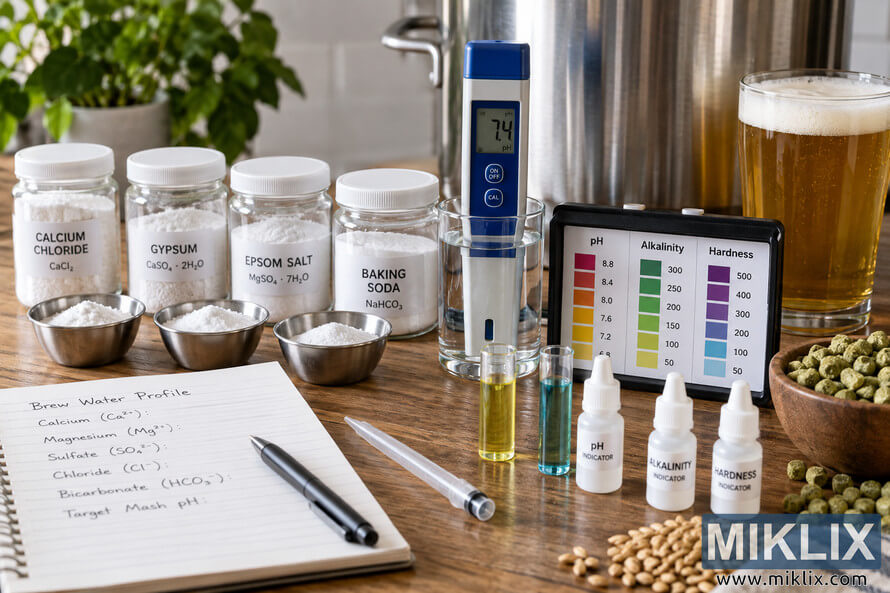
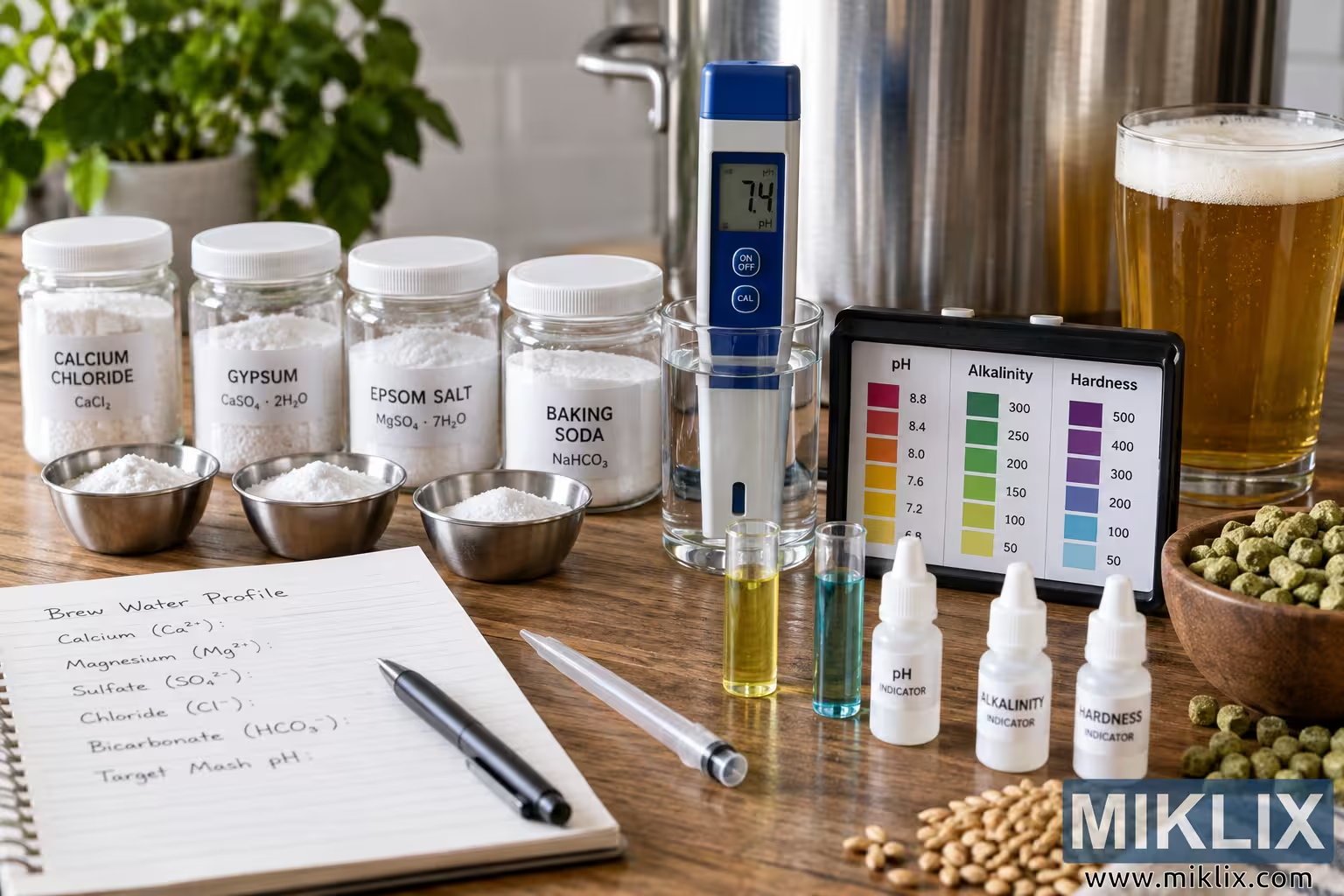
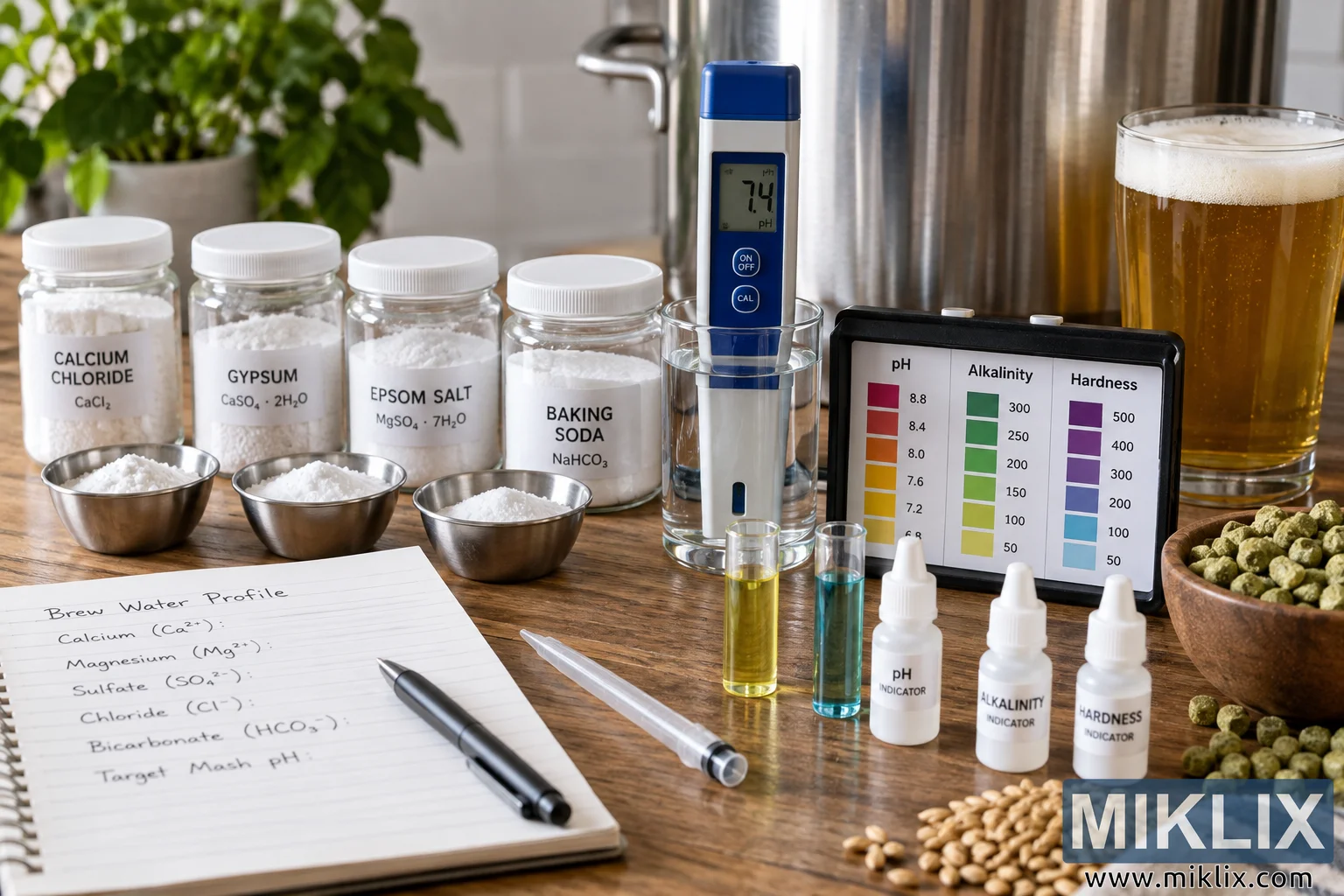
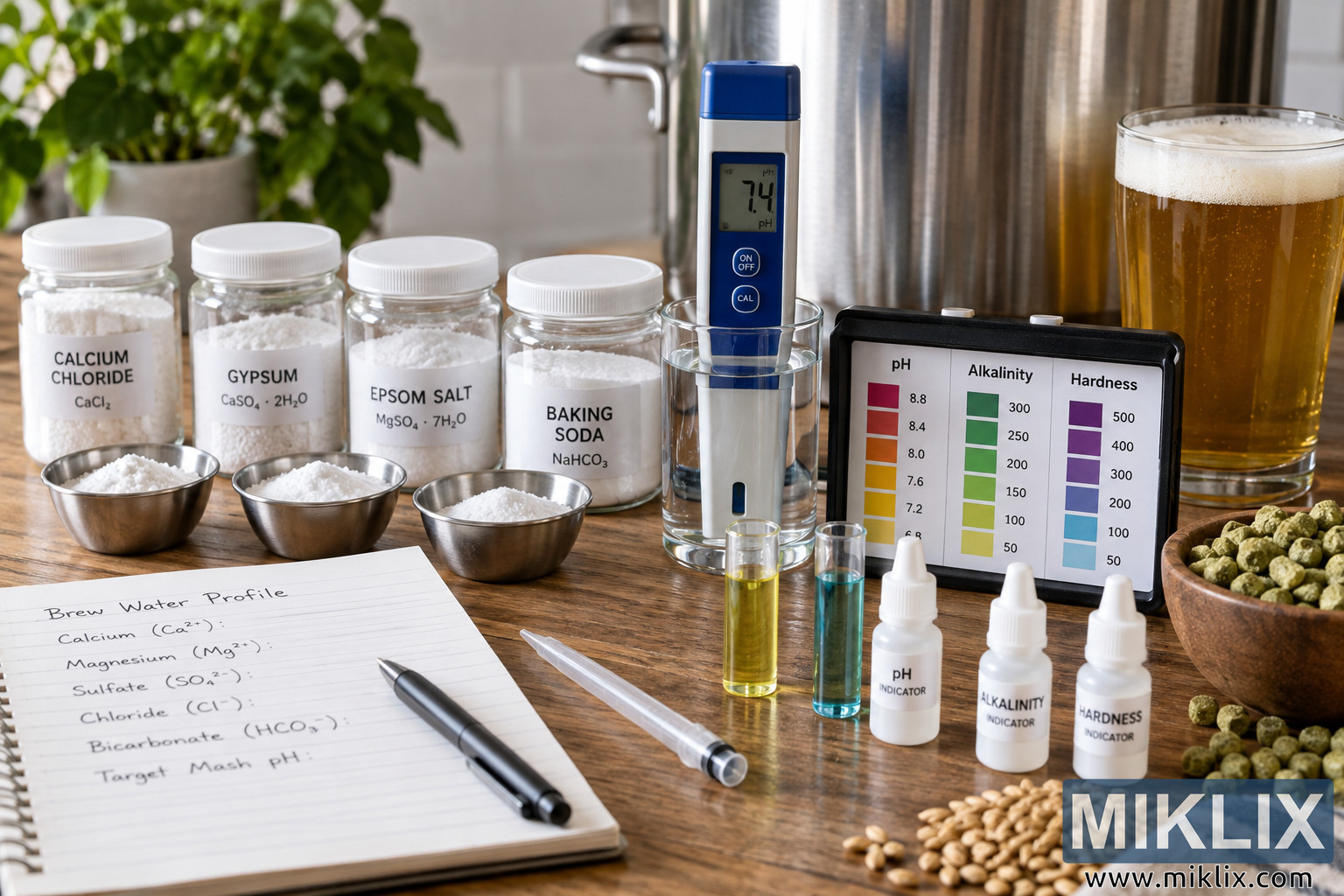
Photorealistic landscape image showing brewing water chemistry testing equipment, mineral additions, pH testing tools, water samples, brewing ingredients, and a finished glass of beer.
Available versions of this image
The image files available for download below are less compressed and higher resolution - and as a result of that, higher quality - than the images embedded in articles and pages on this website, which are more optimized for file size in order to reduce bandwidth consumption.
Regular size (1,536 x 1,024)
Large size (3,072 x 2,048)
Very large size (4,608 x 3,072)
Extra large size (6,144 x 4,096)
Comically large size (1,048,576 x 699,051)
- Still uploading... ;-)
Image description
A photorealistic landscape-oriented still-life scene depicts a carefully organized homebrewing water-chemistry testing station arranged across a warm wooden workbench. The composition focuses on the equipment and mineral additions used to evaluate and adjust brewing water, combining laboratory-style testing tools with familiar brewing ingredients and vessels. Several clear glass jars with plain white lids are positioned prominently toward the left and center of the image. Each jar contains a fine white mineral powder and carries a simple descriptive label identifying calcium chloride, gypsum, Epsom salt, or baking soda, with their chemical formulas shown beneath the names. The labels are generic and contain no recognizable commercial branding. In front of the jars are several small stainless-steel bowls containing measured portions of white mineral salts, emphasizing the practical process of weighing and adding brewing-water minerals. Near the center of the scene, a digital handheld pH meter stands vertically in a clear glass containing water. Its display visibly shows a pH reading of approximately 7.4, while simple control buttons are visible on the front of the device. Beside it is a compact color-reference testing chart divided into sections for pH, alkalinity, and hardness, using graduated color swatches to illustrate the type of visual comparison commonly used during water testing. Several small transparent test vials sit in front of the chart, containing differently colored liquid samples that suggest chemical testing and indicator reactions. Small plain white dropper bottles labeled generically for pH, alkalinity, and hardness indicators are arranged nearby, reinforcing the analytical purpose of the setup. A clear plastic transfer pipette rests diagonally across the work surface, adding another recognizable laboratory-testing detail. In the lower-left foreground, an open lined notebook provides a brewing-water record sheet. The handwritten-style content references a brew water profile and lists parameters such as calcium, magnesium, sulfate, chloride, bicarbonate, and a target mash pH, communicating that the testing equipment is being used to formulate and document a specific brewing-water profile. A pen rests on the notebook, suggesting active measurement and record keeping. In the background, a large stainless-steel brewing vessel rises behind the testing equipment, providing context for the brewing application without dominating the foreground. To the right, a clear pint glass holds a golden amber beer with a substantial pale foam head. The beer is illuminated so that its warm golden color and fine bubbles are visible through the glass. Nearby is a small bowl containing green hop pellets, while loose hop pellets and pale malted grains are scattered naturally across portions of the wooden workbench. These ingredients connect the water-chemistry process to the larger brewing workflow. A folded striped kitchen or brewing towel appears in the lower-right foreground, adding texture and a practical workshop atmosphere. In the upper-left background, a leafy green plant in a neutral pot provides a soft natural element and helps establish a bright home-workshop environment. The background is intentionally shallow in focus, allowing the testing equipment, mineral jars, notebook, samples, and beer to remain the visual priorities. The lighting is bright, crisp, and natural-looking, with soft highlights on the glass jars, stainless-steel bowls, brewing vessel, and water-testing instruments. The wooden workbench provides a warm, tactile foundation that contrasts with the cool metallic and glass surfaces of the laboratory-style equipment. The overall composition is balanced horizontally, with the mineral additions and testing equipment concentrated across the middle of the frame and the finished beer and brewing ingredients providing visual context on the right. The image communicates precision, preparation, experimentation, and hands-on brewing without showing any people. It is designed as a realistic editorial-style photograph rather than an illustration, with natural materials, believable reflections, subtle depth of field, detailed textures, and realistic proportions. All visible containers, labels, instruments, and packaging are generic and unbranded, with no actual company names, logos, trademarks, or recognizable commercial product identities. The scene emphasizes the relationship between brewing-water analysis and mineral adjustment: water is sampled, pH and related characteristics are tested, mineral salts are measured, and the resulting profile is recorded for use in brewing. The combination of chemical formulas, testing vials, indicator solutions, pH instrumentation, mineral powders, brewing ingredients, and finished beer makes the subject immediately recognizable as water chemistry testing equipment and mineral additions for brewing. The landscape framing leaves sufficient visual space around the central equipment while retaining the surrounding brewing environment, making the image suitable for an educational article, brewing guide, technical reference, website header, or editorial feature about water chemistry and beer production.
The image is related to: Hops in Beer Brewing: Helga