
Image: Brewing Journal with Recipe Notes and Tasting Evaluations
Published: October 2, 2026 at 8:09:26 PM UTC
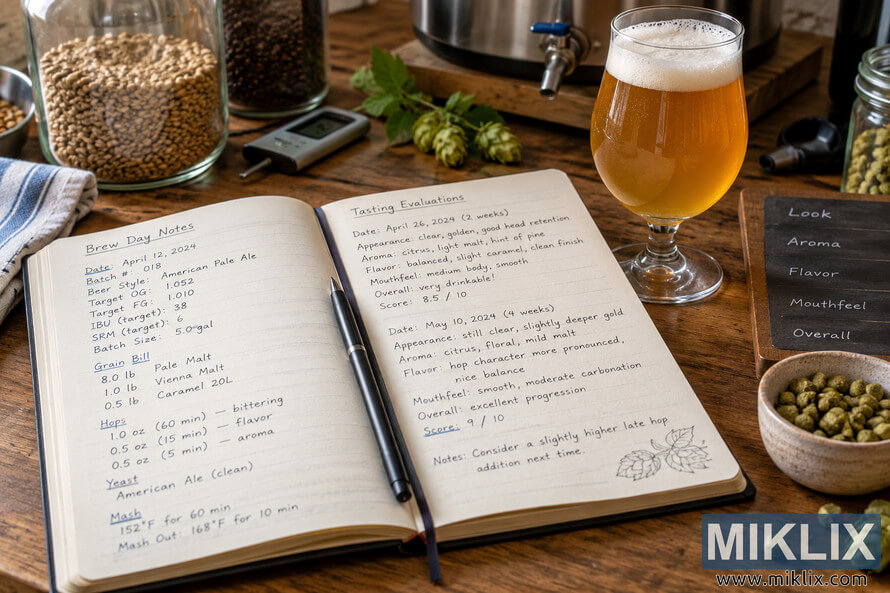
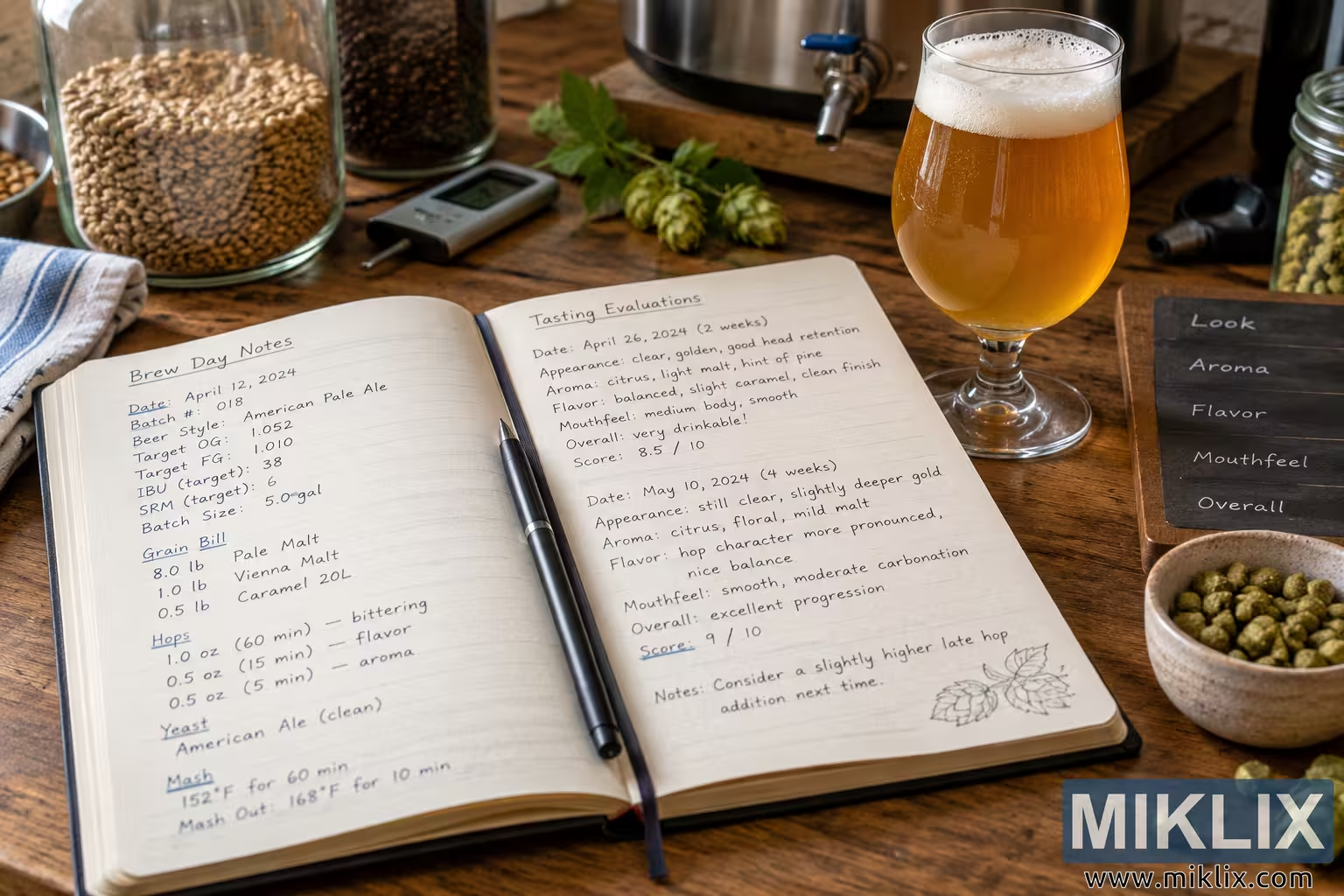
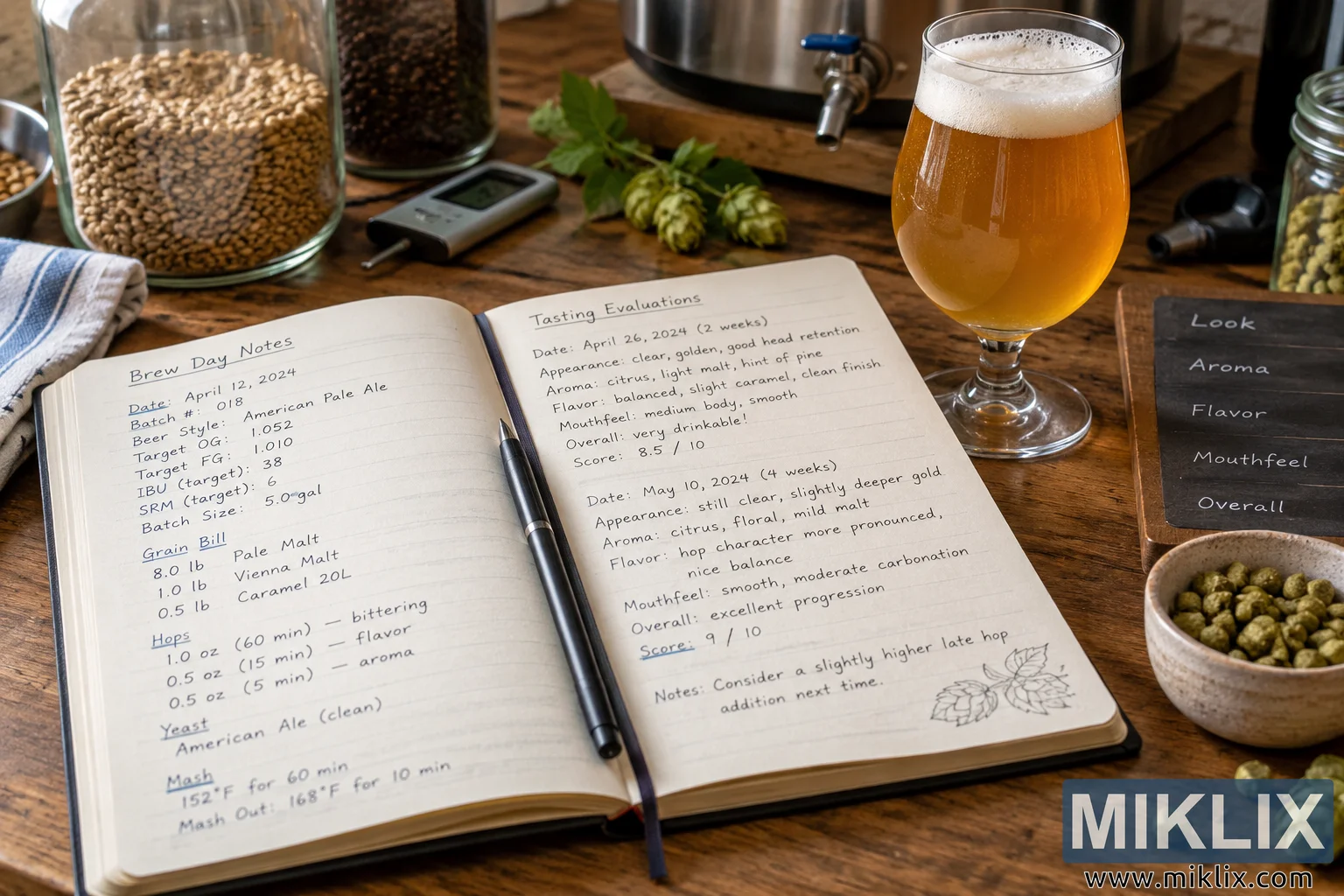
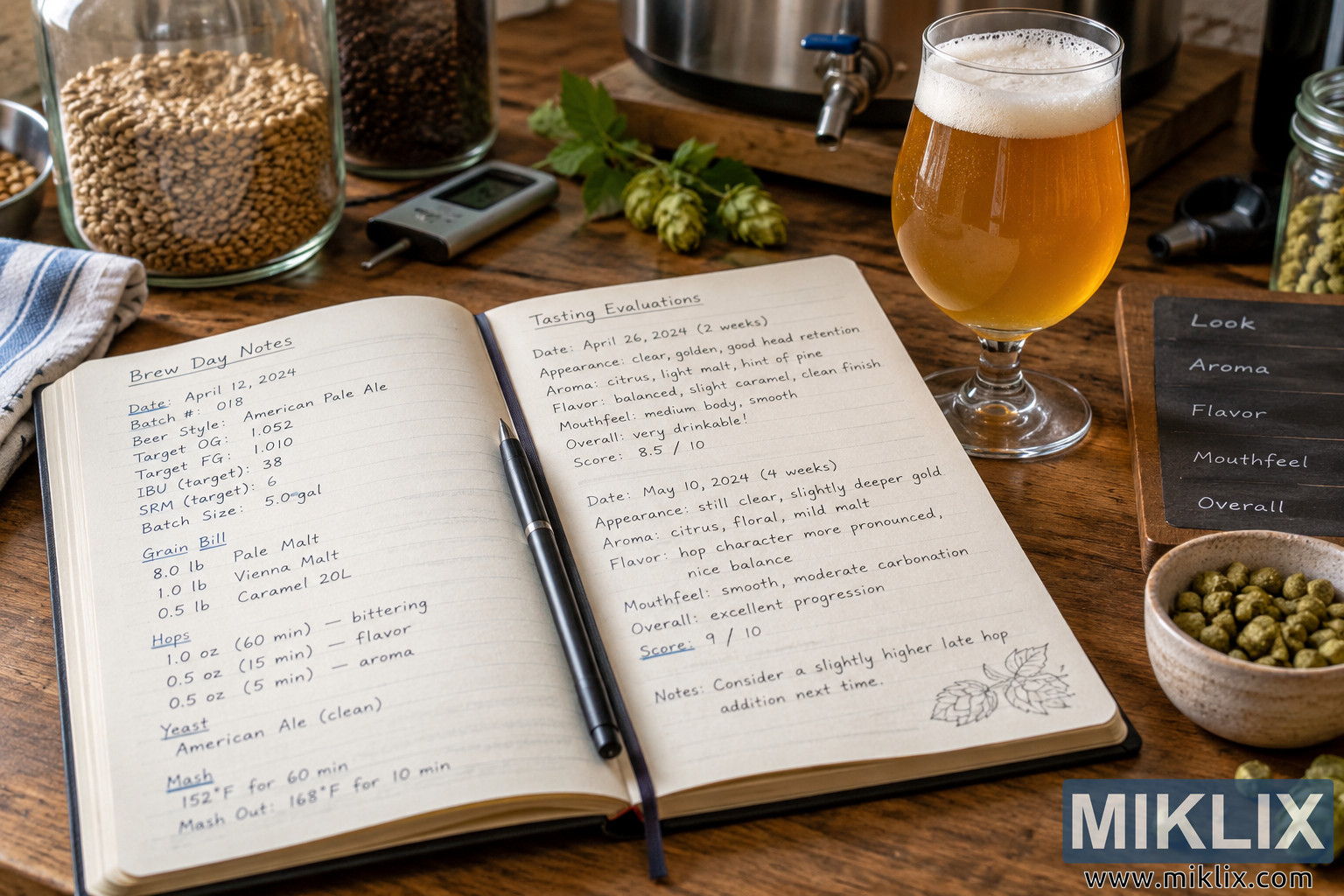
A warm, realistic landscape photograph of a home-brewing journal filled with recipe notes and tasting evaluations, surrounded by golden beer, hops, grains, brewing tools, and stainless-steel equipment on a rustic wooden workbench.
Available versions of this image
The image files available for download below are less compressed and higher resolution - and as a result of that, higher quality - than the images embedded in articles and pages on this website, which are more optimized for file size in order to reduce bandwidth consumption.
Regular size (1,536 x 1,024)
Large size (3,072 x 2,048)
Very large size (4,608 x 3,072)
Extra large size (6,144 x 4,096)
Comically large size (1,048,576 x 699,051)
- Still uploading... ;-)
Image description
A warm, rustic home-brewing scene is arranged on a richly textured wooden workbench, with an open brewing journal serving as the central focal point. The journal has a dark, understated cover and cream-colored lined pages, and it is positioned diagonally across the foreground so that both pages are clearly visible. A dark pen rests vertically along the center fold, while a narrow ribbon bookmark extends from the bottom of the journal. The handwritten pages contain detailed brewing recipe notes and later tasting evaluations, giving the scene the character of a real brewer's working notebook rather than a generic decorative journal. The left-hand page is headed with brew-day information and includes entries for a batch of American Pale Ale, along with measurements, targets, grain-bill information, hop additions, yeast information, and mash temperatures. The page is filled with neatly written notes, numbers, headings, and short annotations that suggest the brewer carefully recorded the process from ingredients through brewing. The right-hand page is devoted to tasting evaluations and includes multiple dated tasting entries. The notes describe visual appearance, aroma, flavor, mouthfeel, overall impressions, and numerical scores, followed by a brief note about a possible adjustment for a future batch. The handwriting is legible enough to communicate the idea of detailed sensory evaluation while remaining naturally handwritten and integrated into the photographic composition. The journal pages have subtle shadows, gentle paper texture, slight curvature, and realistic edges that reinforce the tactile quality of the scene. A few small decorative hop illustrations appear within the journal, adding a personal touch without overwhelming the written information. To the upper right of the notebook sits a tulip-shaped stemmed beer glass containing a clear, luminous golden-amber beer. A creamy white head forms a delicate layer of foam across the top, with small bubbles and subtle variations in the foam giving the drink a freshly poured appearance. The glass catches warm reflections from the surrounding environment and casts a soft shadow onto the wooden surface. Behind and around the journal are several ingredients and pieces of brewing equipment. Glass jars contain pale malted grains and darker roasted or specialty grains, with the individual grains visible through the transparent containers. Loose hop cones and green hop material are arranged near the center background, while additional hop pellets sit in a small rustic bowl in the lower-right area. A stainless-steel brewing vessel or kettle occupies part of the rear background, with a visible spigot and metallic surface reflecting the warm ambient lighting. A small digital brewing instrument lies near the grain jars, suggesting that temperature or another brewing parameter is being monitored. Other unobtrusive brewing tools and containers are scattered naturally around the workspace, creating the impression of an active but organized home-brewing session. A folded striped kitchen towel appears along the left edge of the composition, partially beneath or beside the journal, adding a domestic detail and contrasting textile texture. On the right side of the notebook is a dark tasting board or small slate-like panel. It contains a vertically arranged set of tasting categories such as appearance, aroma, flavor, mouthfeel, and overall impression, visually reinforcing the sensory-evaluation theme of the journal. A small bowl of hop pellets sits nearby, with a few individual pellets and hop materials scattered naturally across the work surface. The lighting is warm, soft, and directional, resembling late-afternoon or cozy indoor workshop illumination. Highlights on the beer glass, stainless-steel equipment, grain jars, and pen provide realistic reflections, while gentle shadows give depth to the tabletop arrangement. The wooden workbench has visible grain, knots, subtle scratches, and tonal variation, contributing to an authentic handmade atmosphere. The overall composition feels intimate, practical, and carefully curated, combining the visual language of a brewer's recipe notebook with the sensory ritual of tasting and evaluating a finished beer. There are no people in the image, allowing the journal and brewing materials to communicate the activity through objects alone. The photographic perspective is a natural tabletop view with the open notebook occupying the foreground and the beer glass and brewing equipment creating layered depth behind it. The focus is strongest around the journal pages and nearby glass, while the background equipment and ingredients become progressively softer without losing their identity. The image is landscape-oriented with a broad horizontal composition, allowing the journal, beer glass, grain jars, brewing kettle, tasting board, and ingredients to coexist within a balanced frame. The color palette is dominated by warm wood browns, creamy paper tones, golden beer, muted green hops, brushed stainless steel, and dark charcoal accents. The result is a detailed, realistic still-life photograph representing brewing documentation, recipe development, sensory analysis, and the personal record-keeping associated with a thoughtful home-brewing practice. No recognizable commercial branding, logos, trademarks, branded packaging, or actual brand identities are visible anywhere in the scene. The emphasis remains on the handwritten brewing journal, recipe notes, tasting evaluations, ingredients, equipment, and finished beer, creating a cohesive visual story about documenting a brew from preparation through sensory review.
The image is related to: Hops in Beer Brewing: Helga