
Image: Vacuum Sealing Hop Packages for Storage
Published: October 2, 2026 at 8:09:26 PM UTC
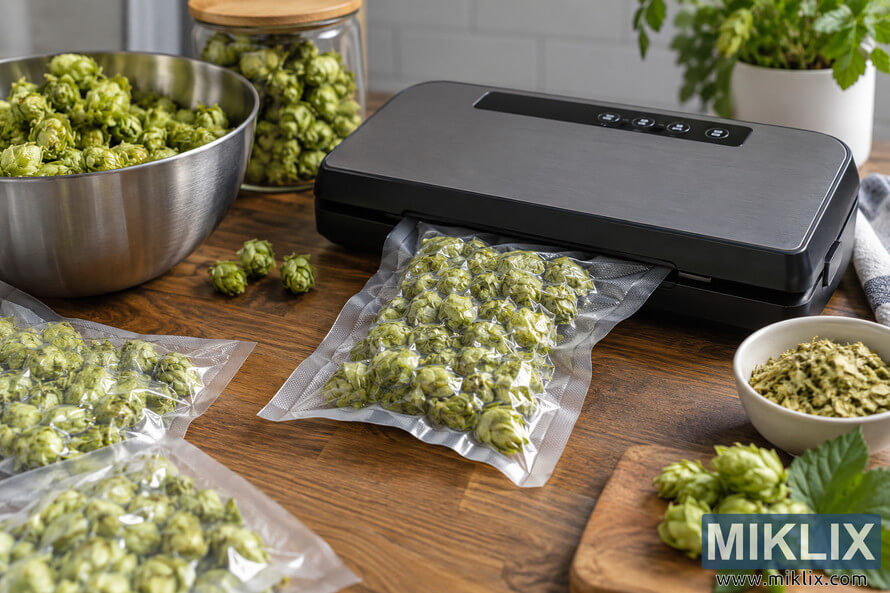
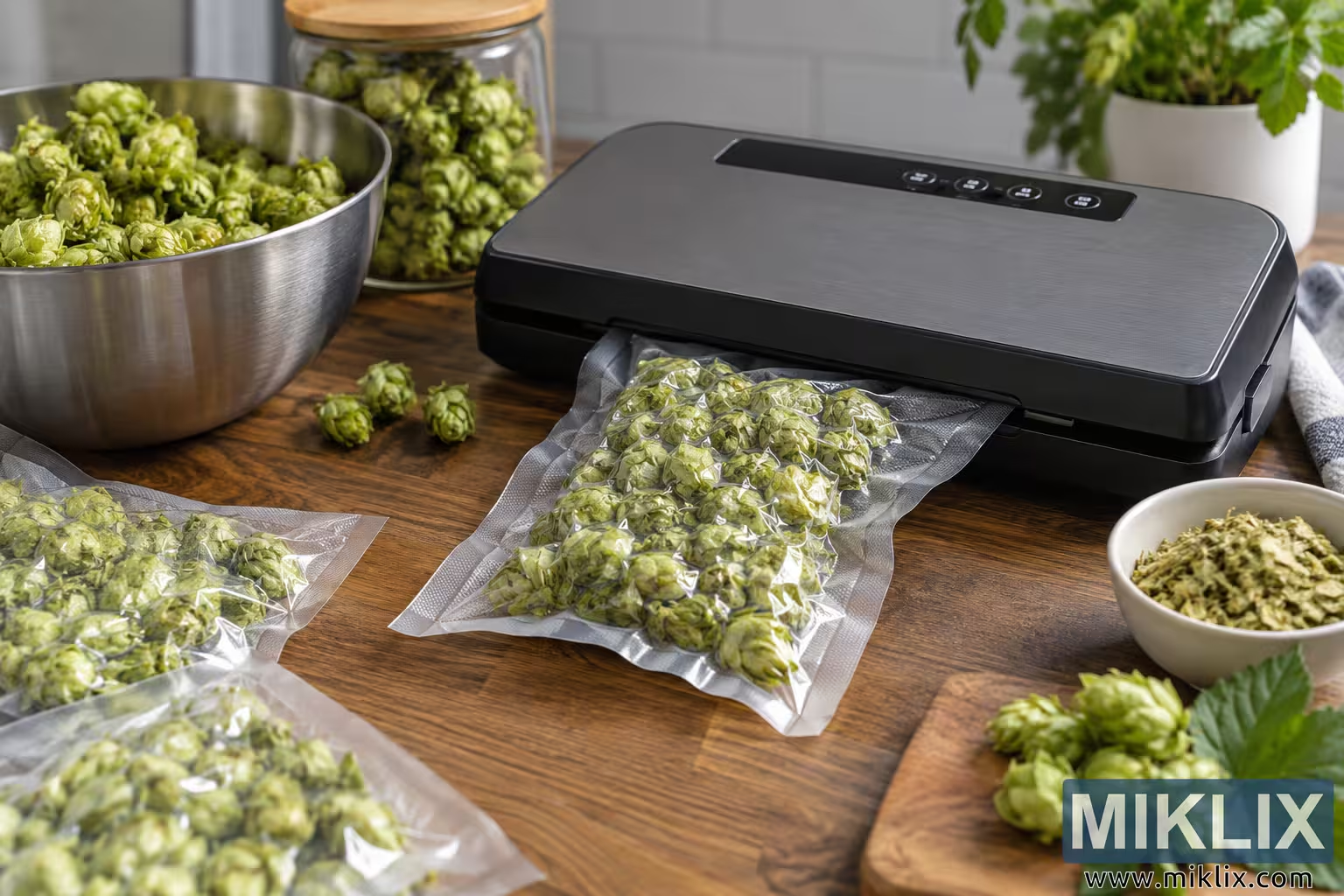
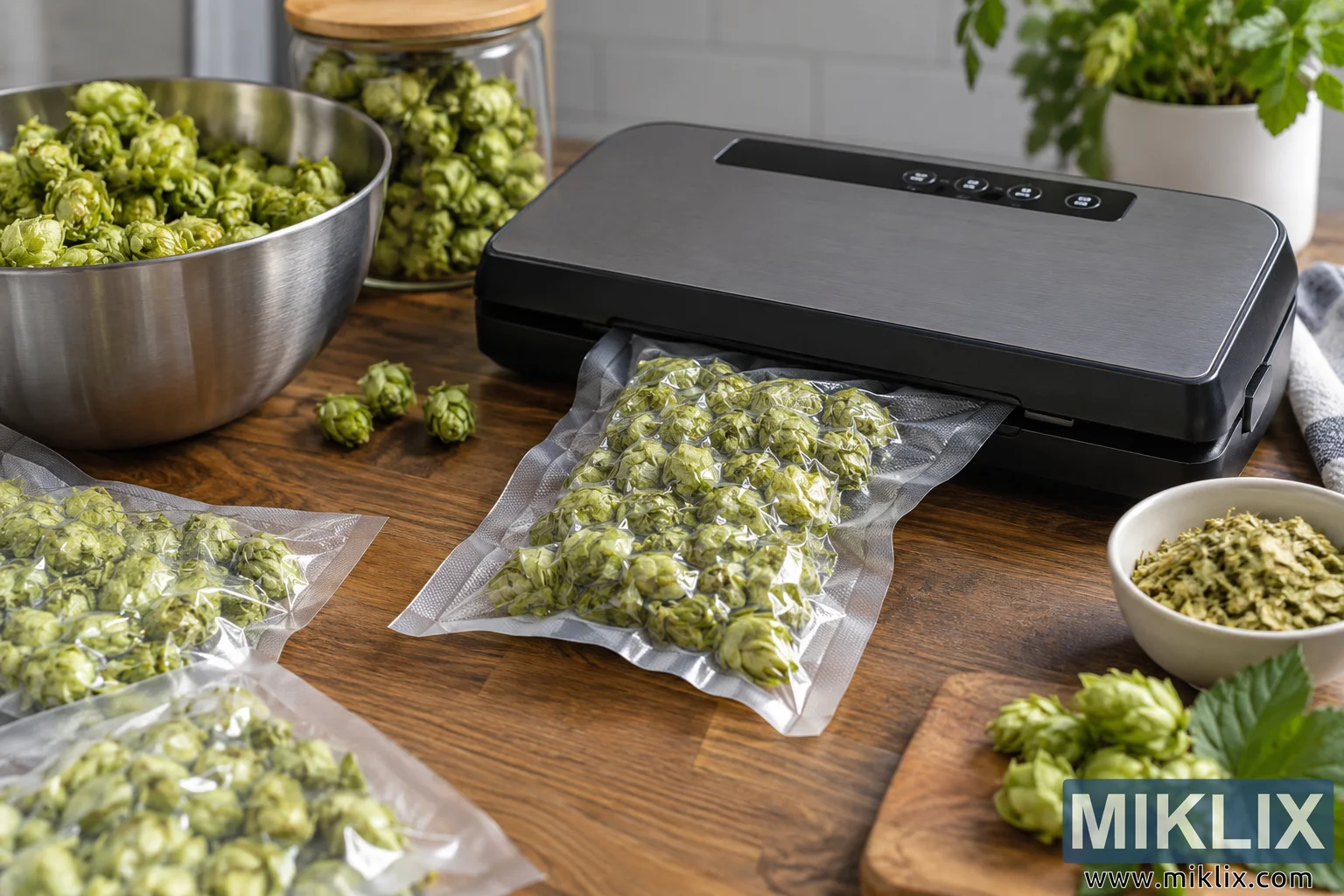
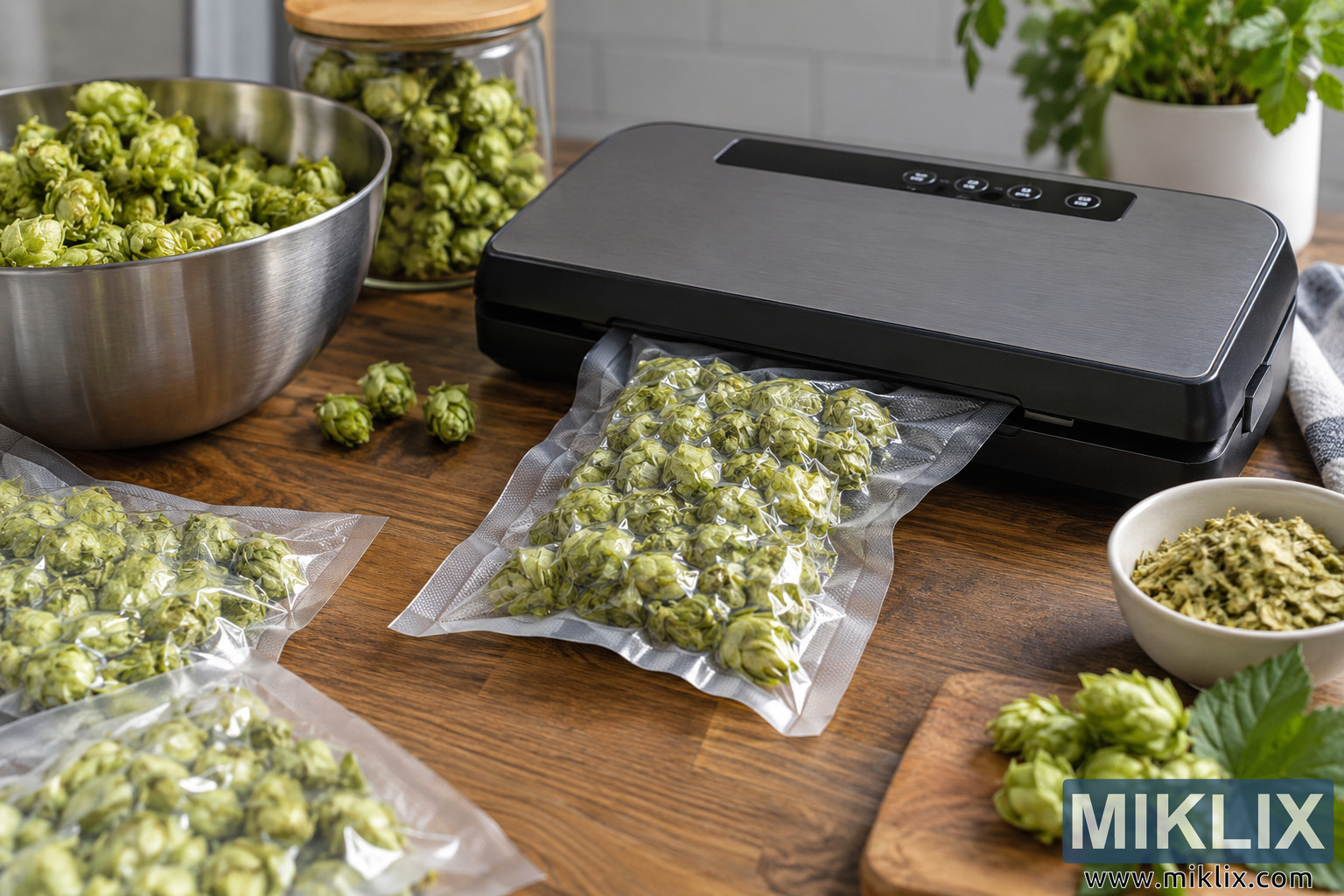
A realistic kitchen scene showing a generic vacuum sealer packaging green hop cones into transparent bags for storage, with loose hops and storage containers arranged around the workspace.
Available versions of this image
The image files available for download below are less compressed and higher resolution - and as a result of that, higher quality - than the images embedded in articles and pages on this website, which are more optimized for file size in order to reduce bandwidth consumption.
Regular size (1,536 x 1,024)
Large size (3,072 x 2,048)
Very large size (4,608 x 3,072)
Extra large size (6,144 x 4,096)
Comically large size (1,048,576 x 699,051)
- Still uploading... ;-)
Image description
The image presents a clean, warmly lit kitchen workspace centered on the process of vacuum sealing fresh green hop cones for storage. A compact, modern vacuum sealing machine occupies the main area of the wooden countertop, positioned at a slight angle so that its broad upper surface, dark housing, control panel, and sealing opening are clearly visible. The appliance has a simple, unbranded appearance with a dark charcoal and brushed-metal finish, rounded edges, and a restrained control interface. A transparent textured vacuum-seal bag extends from the front of the machine toward the viewer. Inside the bag is a generous quantity of pale green hop cones, and the plastic has been drawn tightly around the contents, creating visible folds and highlights that emphasize the vacuum-sealed packaging process. The bag appears to be in the final stages of sealing or has just been sealed, making the purpose of the scene immediately understandable without relying on any labels, logos, or recognizable commercial branding.
Several additional sealed bags containing hop cones are arranged across the foreground of the countertop. These bags vary slightly in size and orientation, suggesting that multiple portions are being prepared for longer-term storage. Their transparent surfaces reveal the densely packed green hop material inside, while the sealed edges are visibly flattened and neatly closed. The arrangement creates a practical food-preparation and storage context rather than a staged product advertisement. Some loose hop cones are scattered naturally around the work area, reinforcing the connection between the loose ingredients and the packaged portions.
On the left side of the scene, a large stainless-steel mixing bowl is filled with fresh green hop cones. The bowl provides a strong visual indication that the packaging process is taking place in real time, with the unsealed hops ready to be divided into storage portions. Behind the bowl is a clear glass storage jar containing additional hop cones. The jar has a simple wooden lid and contains enough green material to make its purpose obvious, while remaining completely generic and free of any recognizable brand markings. Together, the bowl and jar create depth and show different stages of handling and storage.
The countertop itself is made of richly textured warm-toned wood, with visible grain running naturally through the scene. The wooden surface provides contrast against the dark vacuum sealer and the translucent plastic bags, while also contributing to the practical kitchen atmosphere. A few hop cones rest directly on the counter between the mixing bowl and the vacuum sealer, giving the composition an organic, slightly informal quality. On the right side, a small light-colored bowl contains finely broken or processed hop material, adding another textural element and suggesting that the ingredients are being handled carefully before storage.
In the lower-right portion of the composition, a wooden cutting board holds several intact hop cones alongside fresh green leaves and stems. The arrangement helps communicate the natural botanical origin of the ingredient without requiring any text. The hop cones have layered, overlapping scales and a slightly papery appearance, with variations in green and yellow-green tones that make them look tactile and realistic. The leaves provide a complementary natural element and help balance the visual weight of the larger metal bowl on the opposite side of the image.
The background is a bright, neutral kitchen environment with a light tiled backsplash. A leafy potted plant is positioned toward the rear right, adding soft natural greenery and making the setting feel lived-in while remaining uncluttered. A folded light-colored kitchen towel lies near the right edge of the counter beside the sealing machine, reinforcing the domestic food-preparation setting. The background elements are slightly softer than the main subject, creating a natural photographic depth of field that keeps attention on the vacuum sealer and the sealed hop packages.
Lighting is soft and diffuse, resembling natural daylight entering a modern kitchen. Highlights appear across the brushed surface of the vacuum sealer, the stainless-steel bowl, and the glossy plastic packaging, while shadows remain gentle and realistic. The illumination brings out the detailed texture of the hop cones and the wood grain without making the scene look overly dramatic. The overall color palette combines muted charcoal and metallic appliance tones with warm brown wood, pale neutral surfaces, and abundant shades of fresh green from the hops, leaves, and plant.
The composition is landscape-oriented and photographed from a close, slightly elevated countertop perspective. The vacuum sealer acts as the principal visual anchor, while the transparent packages lead the eye from the appliance toward the foreground. The mixing bowl, glass jar, loose hop cones, small bowl, cutting board, and plant create layers of supporting detail around the central action. The image communicates a practical storage workflow: loose hops are gathered, portions are placed into transparent bags, air is removed with a vacuum sealer, and the finished packages are prepared for storage. No people are visible, allowing the tools, ingredients, and packaging process to tell the story entirely through objects and arrangement.
The image contains no actual commercial branding, logos, product names, recognizable trademarks, or branded packaging. All equipment and containers are presented as generic household objects. The absence of labels keeps the focus on the concept of vacuum sealing hop packages rather than on any particular manufacturer or product. The overall result is a realistic, polished photographic depiction of hop storage preparation in a clean kitchen environment, suitable for illustrating food preservation, brewing-ingredient storage, home organization, ingredient preparation, or vacuum-sealing techniques.
The image is related to: Hops in Beer Brewing: Helga