
Image: Various Hop Storage Packaging Options with Vacuum Bags and Foil Pouches
Published: October 2, 2026 at 8:09:26 PM UTC
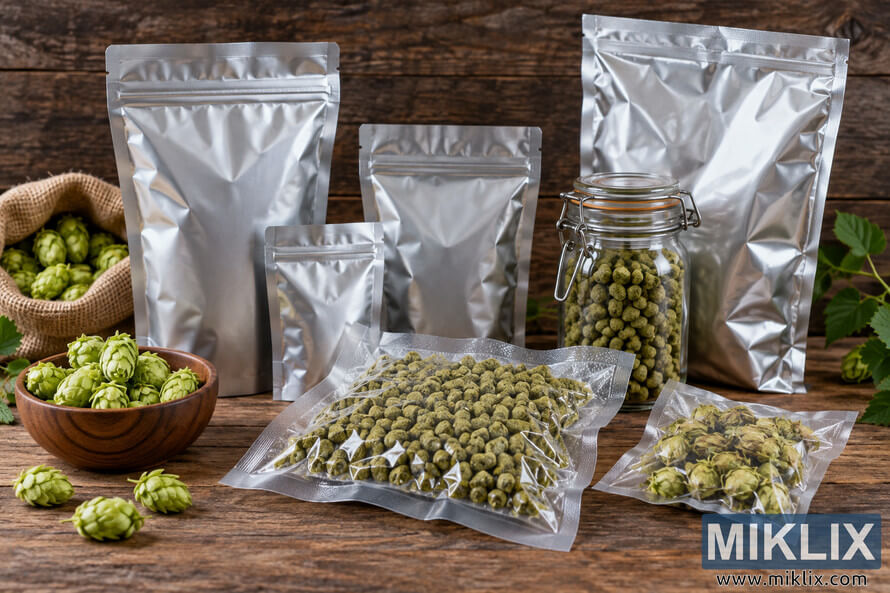
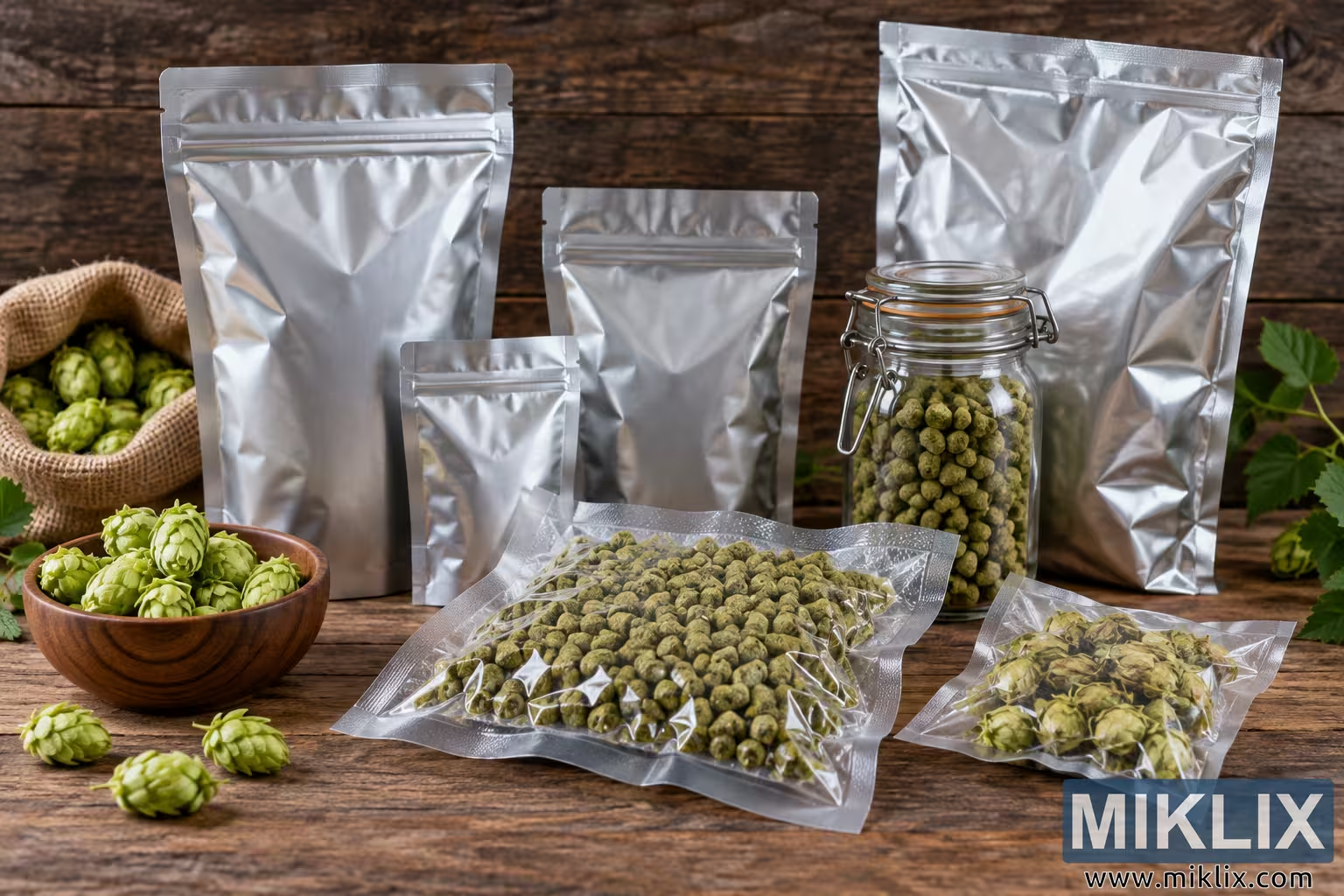
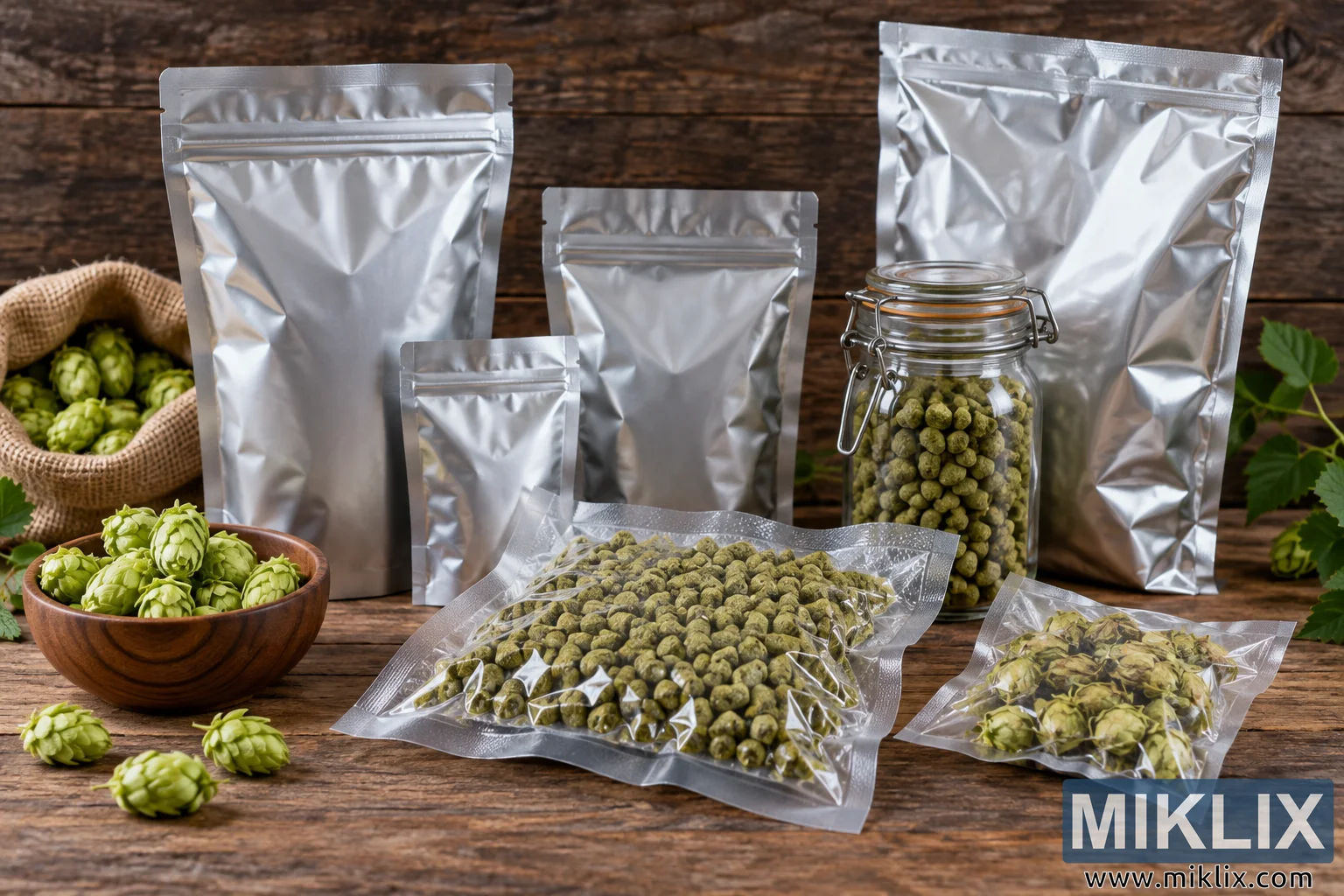
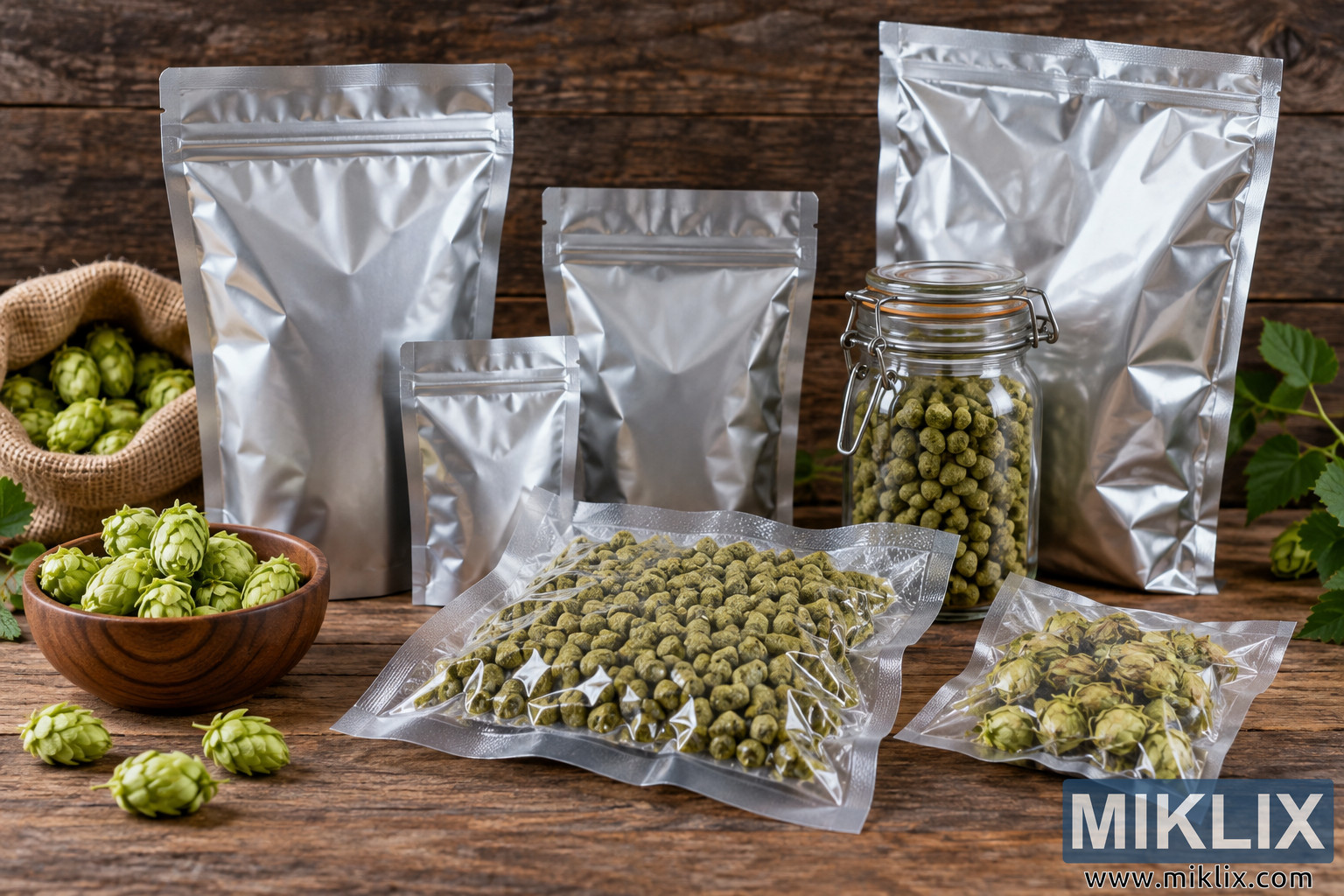
High-resolution landscape image showing various unbranded hop storage options, including vacuum-sealed bags, foil pouches, a glass jar, hop pellets, and whole hop cones in a rustic brewing setting.
Available versions of this image
The image files available for download below are less compressed and higher resolution - and as a result of that, higher quality - than the images embedded in articles and pages on this website, which are more optimized for file size in order to reduce bandwidth consumption.
Regular size (1,536 x 1,024)
Large size (3,072 x 2,048)
Very large size (4,608 x 3,072)
Extra large size (6,144 x 4,096)
Comically large size (1,048,576 x 699,051)
- Still uploading... ;-)
Image description
The image is a high-resolution landscape-oriented rustic product still life showing a variety of packaging and storage options used for preserving hops. The composition is arranged on a broad, weathered wooden tabletop with visible natural grain, knots, and warm brown tones. Behind the products is a dark wooden plank wall that provides a textured, earthy background and helps create a traditional craft-brewing atmosphere. The overall scene is carefully staged to emphasize the different forms that hop storage can take while keeping the packaging itself visually neutral and free of any recognizable commercial branding.
Several metallic foil pouches are positioned prominently toward the back of the composition. These pouches vary in size and height, creating visual depth and demonstrating that hop storage packaging can accommodate different quantities. Their reflective silver surfaces catch the warm ambient light, producing subtle highlights and realistic creases across the foil. The pouches have simple heat-sealed edges and resealable-style closures, but they contain no logos, trademarks, product names, or printed brand elements. Their plain appearance makes them suitable as generic examples of protective packaging for brewing ingredients.
In the foreground are transparent vacuum-sealed bags containing green hop pellets and whole hop cones. The largest clear bag lies diagonally across the wooden surface and contains numerous compact, green pellet-shaped pieces. The plastic is tightly drawn around the contents, illustrating the compressed appearance associated with vacuum storage. Light reflects naturally from the folds and seams of the clear material, making the bag appear physically substantial and sealed. Nearby, a smaller transparent vacuum bag contains whole dried hop cones. The cones are pale green to yellow-green, with layered, papery bracts visible through the plastic. Together, these bags visually distinguish storage of processed hop pellets from storage of whole hop flowers.
A clear glass storage jar with a metal swing-top closure is positioned behind the foreground vacuum bags. The jar contains green hop pellets and provides another visual example of airtight ingredient storage. Its transparent walls allow the contents to remain clearly visible, while the metal clasp and glass lid catch highlights from the surrounding light. The jar is deliberately generic and unbranded, with no labels or identifying markings. Its presence adds variety to the packaging display and reinforces the theme of keeping hops protected in an enclosed container.
On the left side of the scene, a small natural-fiber burlap sack contains several fresh-looking green hop cones. The coarse woven texture of the burlap contrasts with the smooth foil pouches, glossy vacuum bags, and hard glass jar. In front of the sack is a simple wooden bowl filled with additional whole hop cones. A few loose hop cones are scattered naturally across the tabletop, creating a more organic still-life arrangement rather than a sterile commercial product photograph. Green hop foliage and leaves are also visible around the edges of the composition, subtly connecting the packaged ingredients with the hop plant itself.
The lighting is warm, soft, and directional, creating gentle shadows beneath the containers and packaging while producing crisp but natural highlights on the foil, plastic, glass, and wooden surfaces. The metallic pouches show realistic wrinkles and reflections, while the transparent bags reveal the texture and shape of their contents. The green hop material ranges from bright fresh green to muted olive and yellow-green tones, giving the image a natural ingredient-focused appearance. The wooden surroundings introduce complementary warm brown tones and reinforce the handcrafted, rustic character of the scene.
The composition uses a landscape orientation with the main packaging arranged across the horizontal frame. Larger foil pouches form a layered backdrop, while the transparent vacuum bags and wooden bowl establish a stronger foreground. The glass jar provides a vertical focal element toward the center-right, balancing the arrangement. The varying heights, materials, shapes, and degrees of transparency make it easy to distinguish each storage method at a glance. The image has a realistic photographic appearance, with detailed textures, natural depth, and a shallow-to-moderate depth of field that keeps the principal packaging and hop ingredients clearly recognizable.
The overall subject is generic hop storage rather than any specific commercial product. There are no actual brands, logos, trademarks, labels, or identifiable commercial packaging designs in the scene. The unmarked packaging allows the image to function as a neutral visual representation of vacuum bags, foil pouches, glass storage, and other protective containers used for hops. The arrangement communicates themes of preservation, freshness, ingredient protection, brewing supplies, and practical storage. The combination of whole hop cones and pelletized hops also makes the image useful for illustrating the different physical forms in which hops may be stored.
Visually, the image combines product photography with a rustic craft-brewing aesthetic. The reflective foil packaging provides clean, contemporary visual elements, while the wooden table, burlap sack, wooden bowl, hop cones, foliage, and dark timber background create a traditional agricultural atmosphere. The contrast between modern protective packaging and natural brewing ingredients is central to the composition. The result is a detailed, realistic still life that clearly presents multiple hop storage options in a single scene while maintaining an uncluttered, cohesive, and brand-neutral appearance.
The image is related to: Hops in Beer Brewing: Helga