
Image: Fresh vs. Degraded Hop Pellets: Color and Texture Comparison
Published: October 2, 2026 at 8:09:26 PM UTC
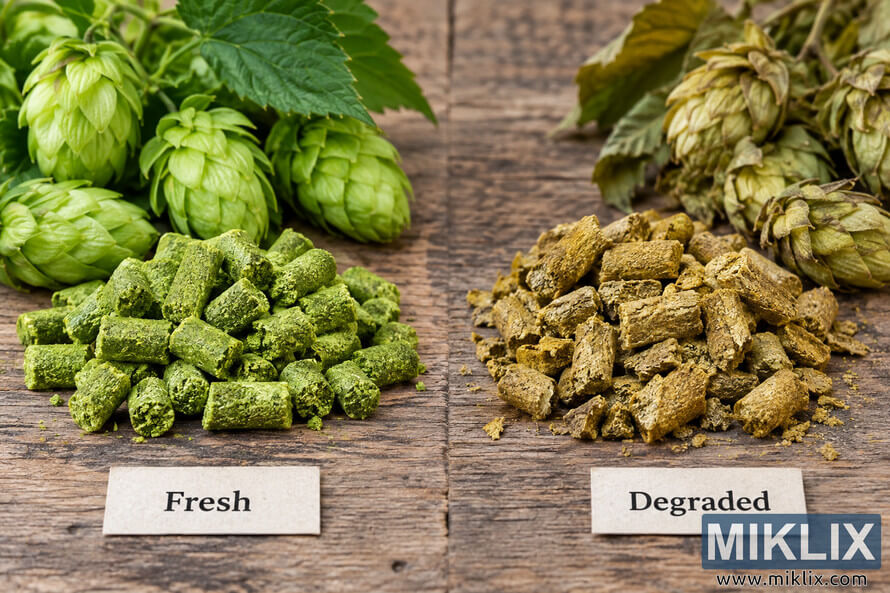
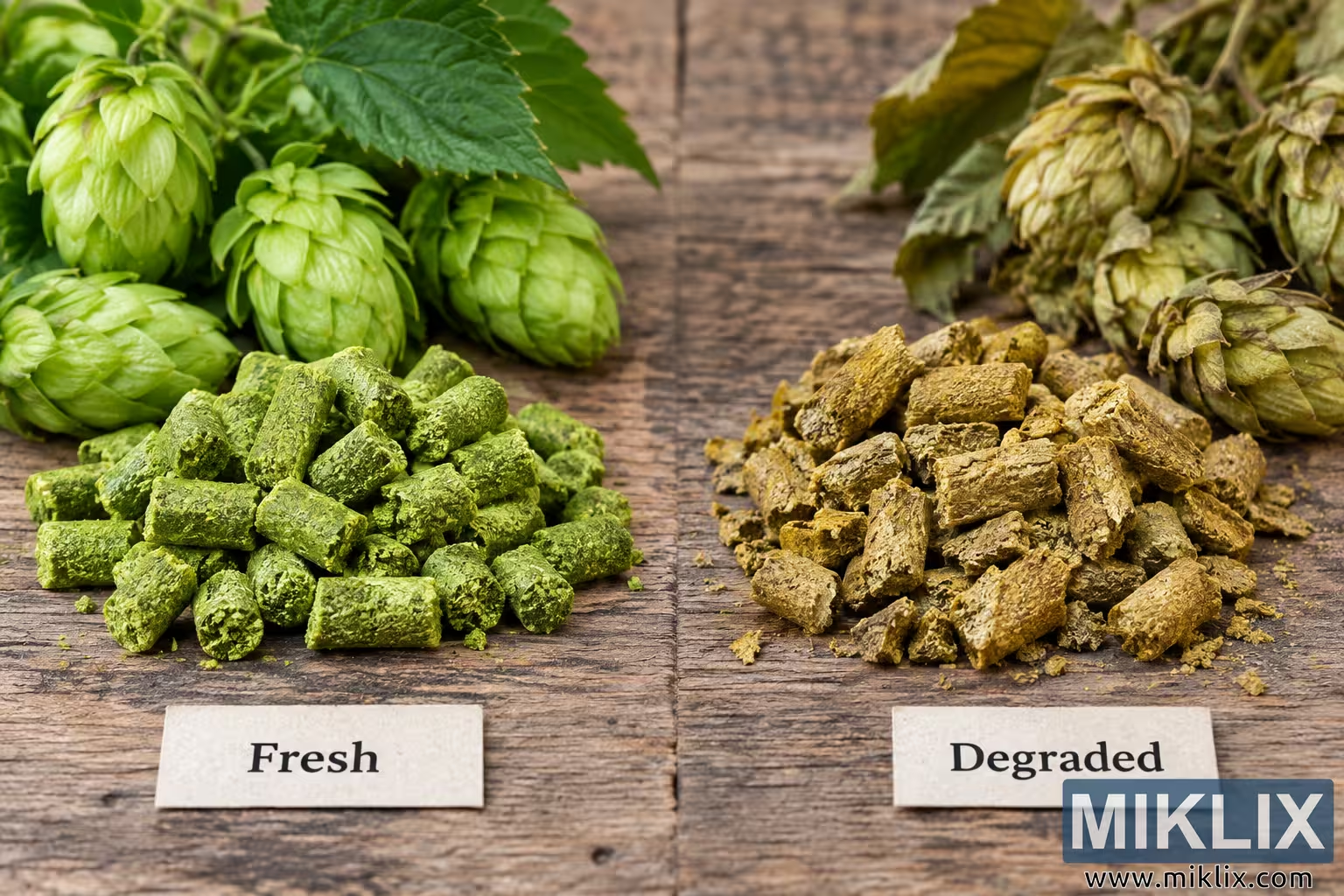
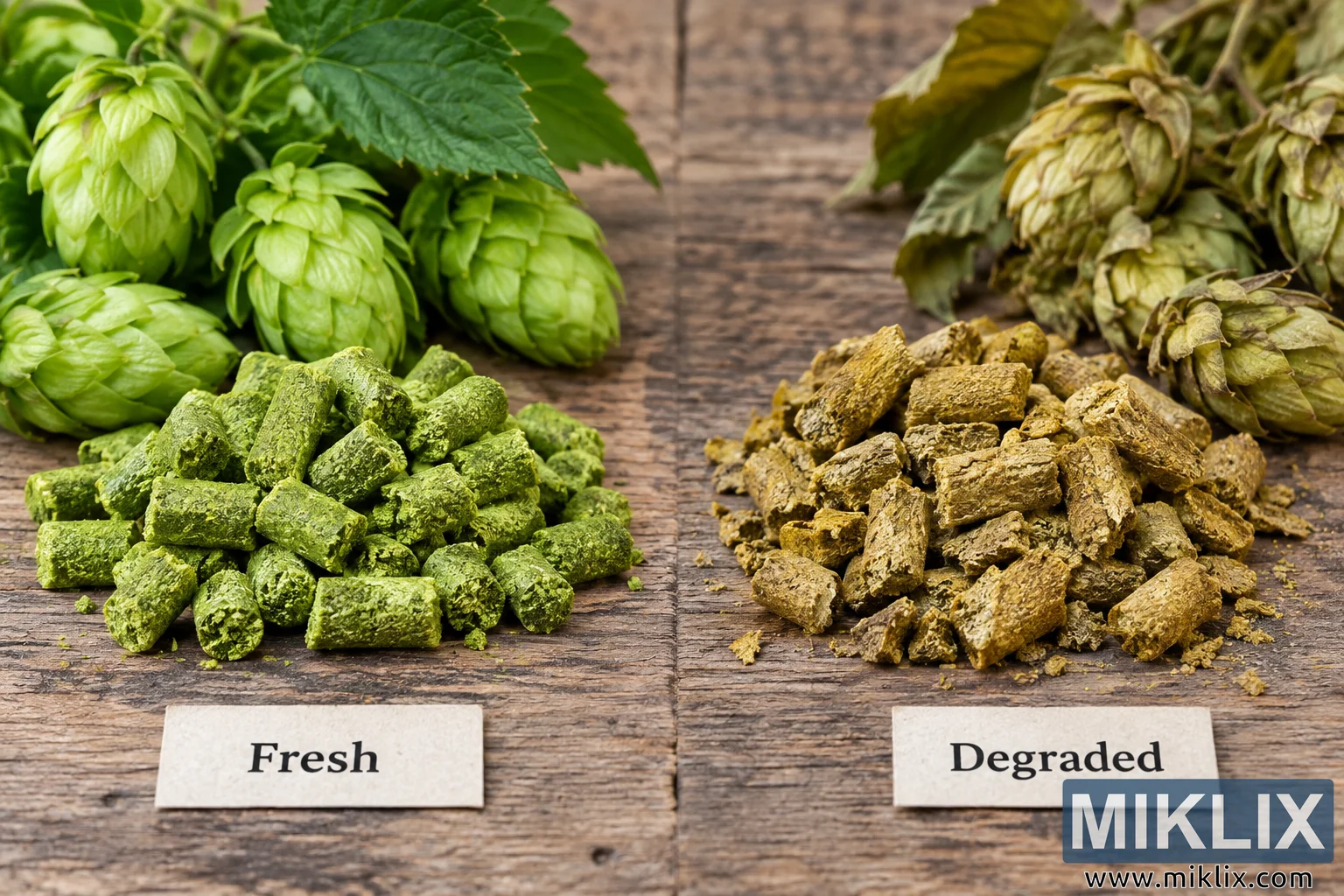
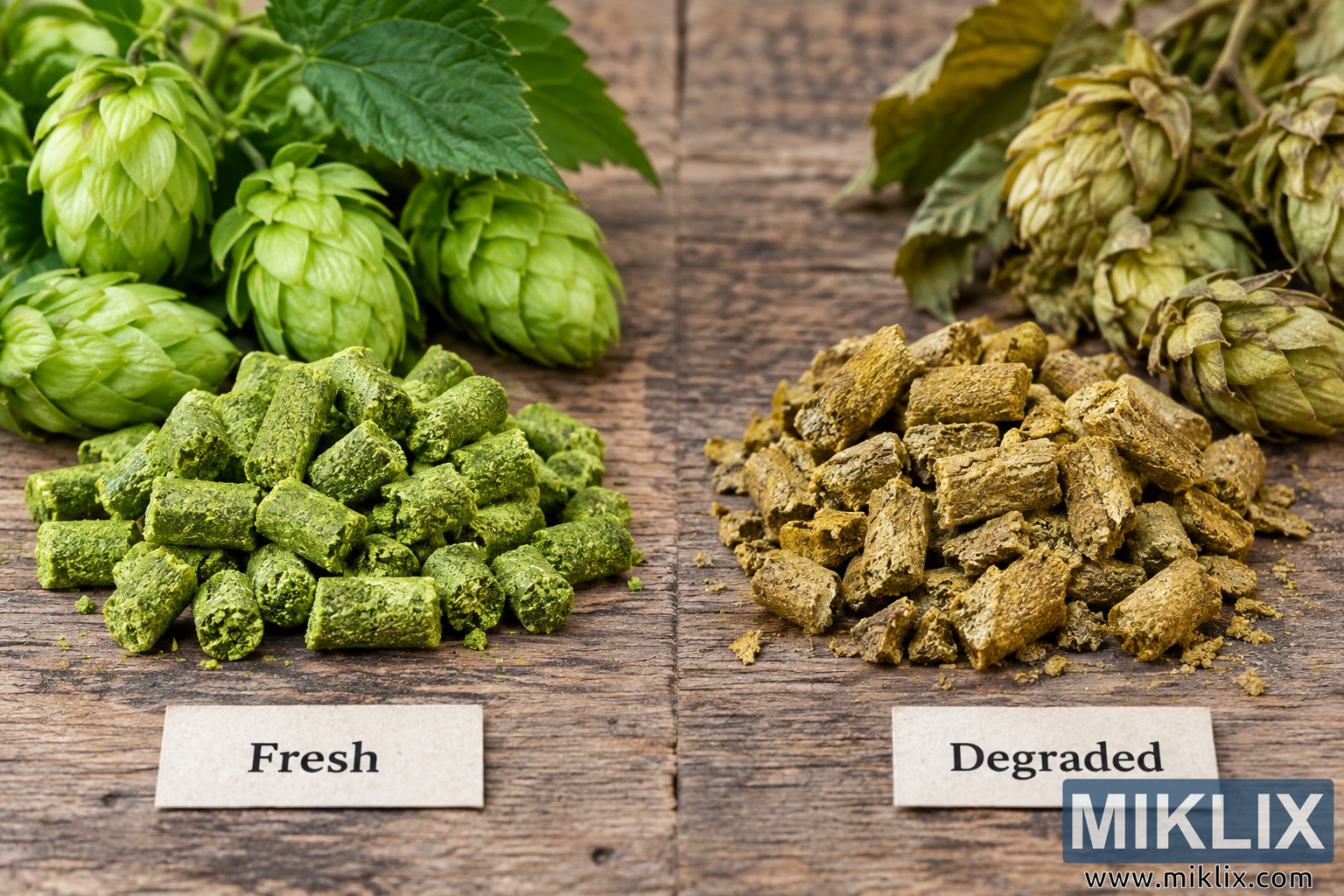
Photographic comparison of fresh and degraded hop pellets, highlighting differences in green color, brown discoloration, texture, dryness, and overall visual freshness.
Available versions of this image
The image files available for download below are less compressed and higher resolution - and as a result of that, higher quality - than the images embedded in articles and pages on this website, which are more optimized for file size in order to reduce bandwidth consumption.
Regular size (1,536 x 1,024)
Large size (3,072 x 2,048)
Very large size (4,608 x 3,072)
Extra large size (6,144 x 4,096)
Comically large size (1,048,576 x 699,051)
- Still uploading... ;-)
Image description
This landscape-oriented comparison image presents fresh and degraded hop pellets side by side on a rustic wooden surface, using a clear visual contrast in color, texture, freshness, and overall appearance. The composition is divided visually into two corresponding areas. On the left, the fresh hop material is represented by a collection of vibrant green hop pellets accompanied by fresh-looking green hop cones and leaves. The pellets have a rich, saturated green color with subtle variations in tone and a compact cylindrical form. Their surfaces appear relatively intact and firm, with a slightly granular texture that suggests recently processed hop material. Behind and around the pellets are several bright green hop cones with overlapping, well-defined bracts. The cones look plump, healthy, and hydrated, while the attached leaves are deep green and visually crisp. This side of the image communicates freshness through its vivid coloration, clean surfaces, intact structure, and strong green appearance.
On the right side, the image depicts degraded hop material in a deliberately contrasting condition. The pellets are noticeably duller and more yellow-brown, olive-brown, and muted in color. They remain recognizable as compressed hop pellets, but their surfaces appear rougher, drier, more weathered, and more crumbly than those on the fresh side. Small fragments and loose particles are scattered around the degraded pellets, reinforcing the impression of deterioration and physical breakdown. Behind the pellets are hop cones and foliage that have lost the vibrant green appearance seen on the opposite side. The cones look faded, yellowed, olive-toned, and somewhat dry, with less visual vitality and less saturated coloration. Together, these changes create an immediate visual distinction between fresh and degraded hop material without relying on brand-specific packaging or commercial identifiers.
The image is photographed from a slightly elevated, close-up perspective that allows the viewer to inspect the pellets and surrounding hop material clearly. The wooden tabletop provides a neutral, organic background with visible grain, knots, and weathered texture. Its warm brown tones create enough contrast for both the vivid green fresh material and the subdued degraded material to remain clearly visible. Soft, natural-looking illumination falls across the scene, revealing the surface texture of the pellets and hop cones while avoiding an overly harsh or artificial appearance. The lighting also helps emphasize the color difference that is central to the comparison. The fresh side appears brighter and more saturated, while the degraded side appears darker, warmer, and more muted.
The composition is intentionally symmetrical in concept, with the two conditions occupying opposite sides of the frame. This side-by-side arrangement makes the comparison immediately understandable. The fresh material occupies the left portion of the image and the degraded material occupies the right portion, creating a straightforward visual progression from vibrant green to faded brown-green tones. The central wooden area functions as a subtle dividing space between the two conditions. This arrangement is suitable for educational, technical, agricultural, brewing, storage, quality-control, or informational contexts where visual recognition of hop degradation is useful.
At the lower portion of the image, simple neutral paper labels identify the two comparison categories. The left label reads "Fresh" and the right label reads "Degraded." The labels are visually understated and do not contain logos, trademarks, commercial packaging, or other recognizable brand elements. They serve only to clarify the intended comparison. The typography is dark and legible against the light paper, allowing the viewer to understand the image even without relying solely on the visual differences in the hop material.
The most prominent visual feature is the difference in pellet color. The fresh pellets are a lively green with yellow-green highlights and darker green shadows, suggesting relatively well-preserved hop material. The degraded pellets shift toward ochre, tan, olive, and brown shades, producing a visibly aged and less vibrant appearance. The contrast is reinforced by the accompanying hop cones: fresh cones are green and visually robust, while the degraded cones are yellowed and subdued. The image therefore communicates the concept of deterioration primarily through observable changes in hue, saturation, surface condition, and structural integrity rather than through any specific commercial product reference.
The photograph has a realistic, high-resolution still-life appearance, with fine detail visible in the hop bracts, pellet surfaces, scattered fragments, leaves, and wooden tabletop. The depth of field is sufficient to keep the principal comparison subjects recognizable and detailed while allowing some background elements to recede naturally. The overall visual style is photographic rather than illustrative, making the image suitable as a realistic reference for explaining how hop pellets can appear different when fresh compared with material that has undergone degradation or aging. No actual brands are present in the scene, and there is no commercial packaging or branded identity competing with the central subject.
Overall, the image communicates a simple but visually strong message: fresh hop pellets tend to present a vivid green appearance and relatively intact, compact surfaces, while degraded pellets can become visibly duller, browner, more yellowed, dry-looking, and crumbly. The side-by-side presentation makes these differences easy to observe at a glance while still providing enough close-up detail for a more careful examination. The combination of natural hop material, contrasting colors, rustic wooden surroundings, neutral labels, and realistic lighting creates a clear visual comparison focused specifically on the change from fresh to degraded hop pellets.
The image is related to: Hops in Beer Brewing: Helga