
Image: Comparison of Helga Hops and Noble Hop Varieties
Published: October 2, 2026 at 8:09:26 PM UTC
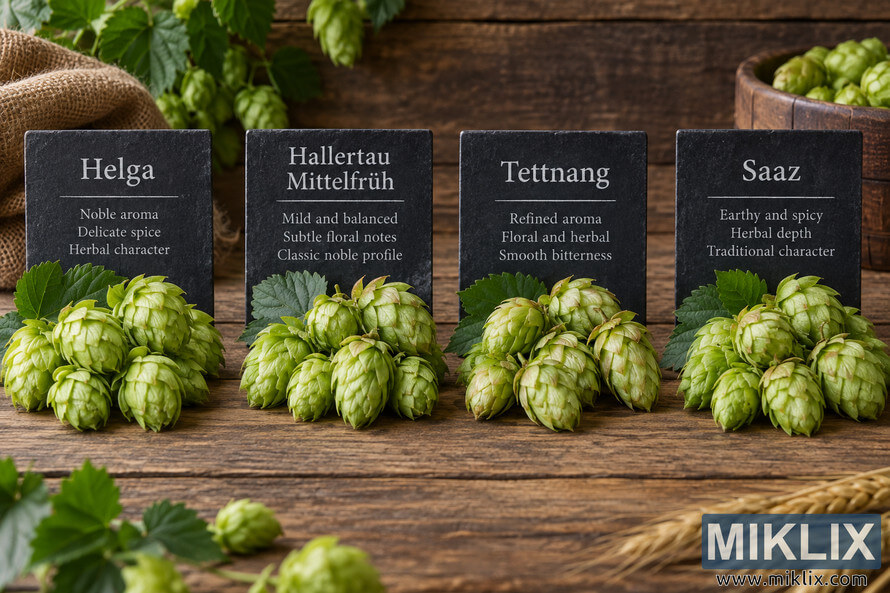
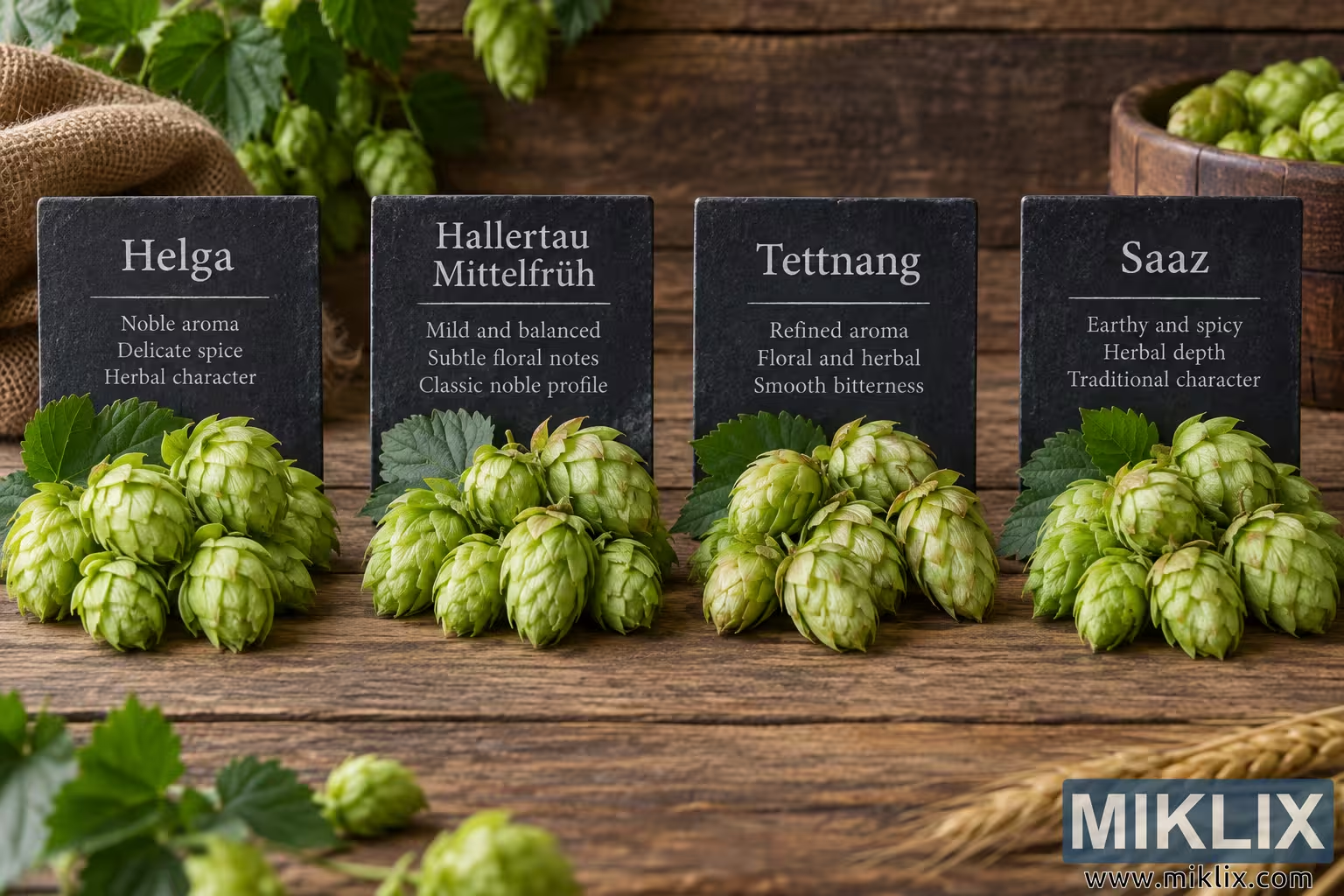
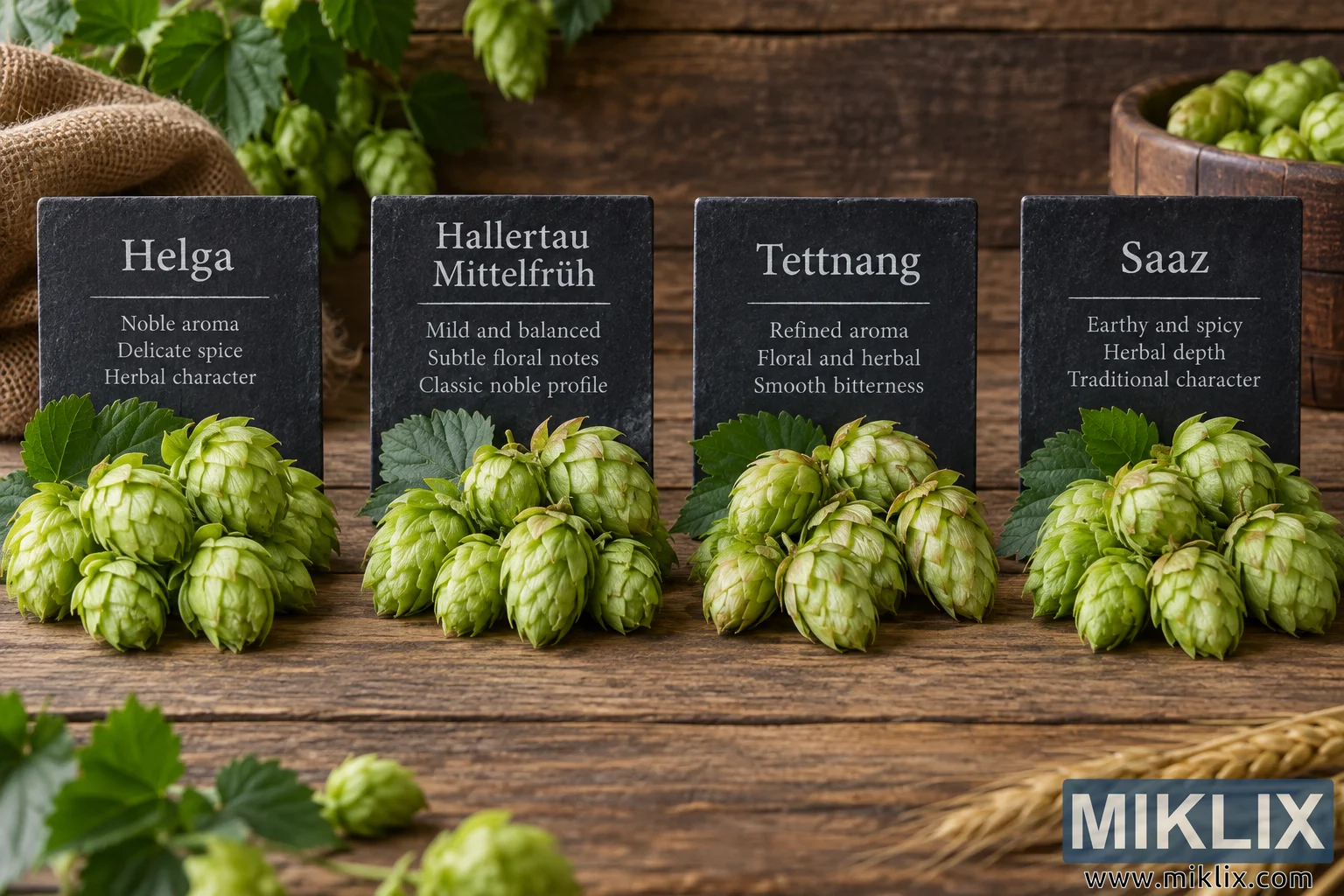
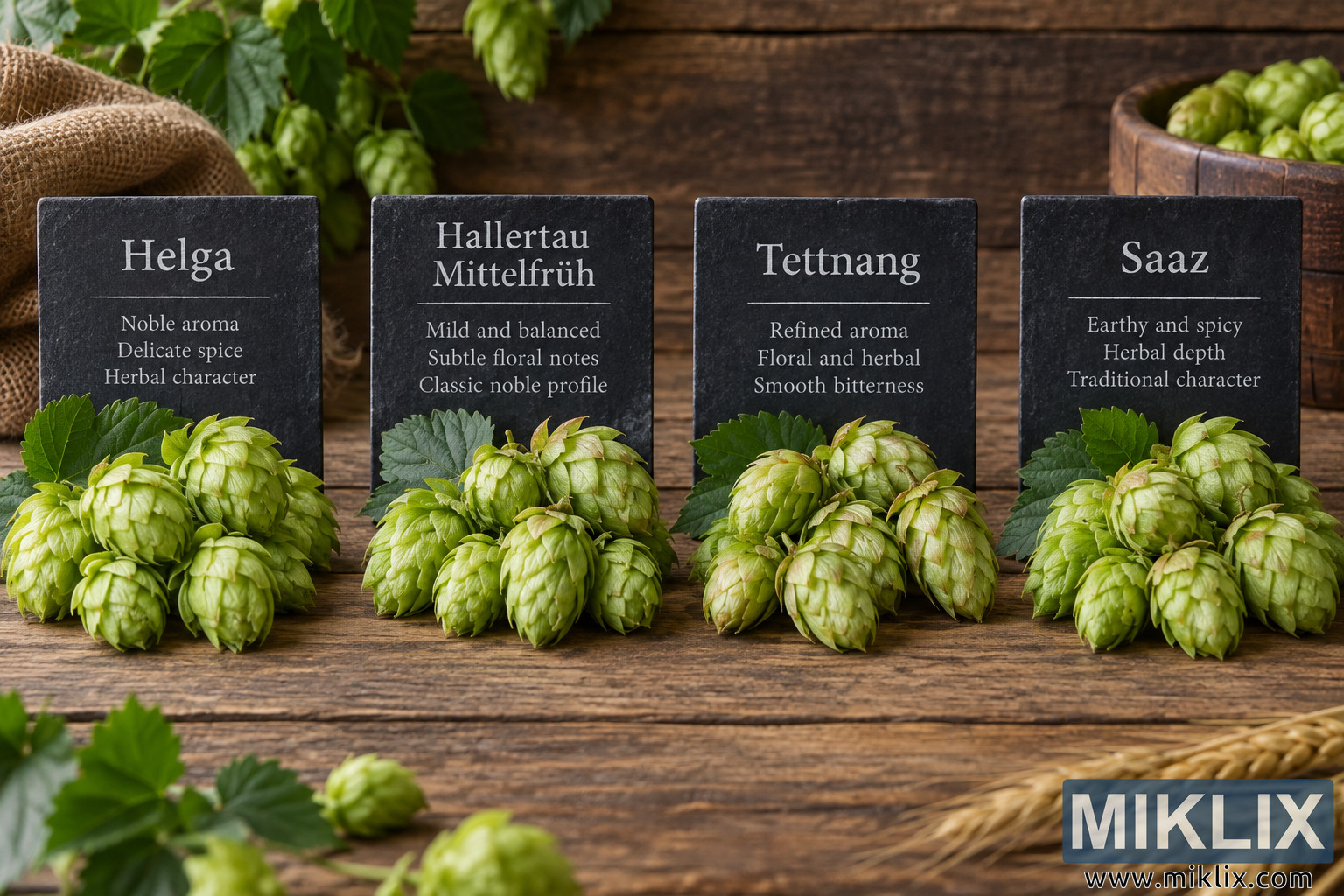
A rustic botanical comparison of Helga, Hallertau Mittelfrüh, Tettnang, and Saaz hops, showing fresh green cones, foliage, and concise noble-hop aroma descriptions.
Available versions of this image
The image files available for download below are less compressed and higher resolution - and as a result of that, higher quality - than the images embedded in articles and pages on this website, which are more optimized for file size in order to reduce bandwidth consumption.
Regular size (1,536 x 1,024)
Large size (3,072 x 2,048)
Very large size (4,608 x 3,072)
Extra large size (6,144 x 4,096)
Comically large size (1,048,576 x 699,051)
- Still uploading... ;-)
Image description
This landscape-oriented comparison image presents four distinct noble hop varieties arranged side by side in a rustic, warmly lit still-life setting. The composition is designed as a visual comparison display, with each hop variety represented by a generous cluster of fresh green hop cones and leafy botanical material positioned in front of its own dark slate identification panel. From left to right, the panels identify Helga, Hallertau Mittelfrüh, Tettnang, and Saaz, allowing the viewer to compare their presentation and associated aromatic characteristics at a glance. The image combines the appearance of a high-quality botanical photograph with the structure of an educational product comparison, making the subject immediately recognizable as a study of brewing hops and noble hop varieties.
The Helga section occupies the left side of the composition. Several plump, pale-green hop cones are grouped naturally on the wooden surface, accompanied by broad green hop leaves. Behind them is a charcoal-colored slate sign carrying the variety name and a short set of descriptive phrases referring to a noble aroma, delicate spice, and herbal character. The cones have a layered, papery appearance, with overlapping bracts and subtle variations in green and yellow-green tones that create convincing botanical texture. The arrangement is intentionally natural rather than perfectly symmetrical, giving the display the feeling of freshly harvested hops placed on a traditional worktable.
Next to Helga is Hallertau Mittelfrüh, represented by another substantial cluster of green hop cones and leaves. Its slate panel uses the full variety name and describes a mild and balanced profile, subtle floral notes, and a classic noble character. The cones in this section are similarly detailed, with tightly overlapping scales, slightly pointed tips, and nuanced highlights from the surrounding natural light. Their placement provides a useful visual separation from the neighboring Helga cluster while maintaining a consistent photographic style across the entire comparison. The repeated format of slate panel, hop foliage, and cone cluster creates a coherent visual system that makes the four varieties easy to distinguish.
The third section features Tettnang. Its slate sign describes a refined aroma, floral and herbal notes, and smooth bitterness. The hop cones are arranged in a loose group across the tabletop, with several individual cones prominently visible in the foreground. Their pale green surfaces are illuminated from above and slightly from the front, revealing the intricate scale-like structure of the bracts. Leaves behind and around the cones add darker green tones and reinforce the botanical identity of the subject. The Tettnang section occupies the central-right portion of the image and serves as a visual bridge between the two neighboring varieties.
On the far right is Saaz, shown with a similarly abundant collection of fresh green hop cones and leafy material. The corresponding slate panel describes an earthy and spicy character, herbal depth, and traditional character. The Saaz cones appear slightly varied in size and orientation, with some facing the viewer directly and others angled naturally toward the tabletop. This variation prevents the composition from appearing artificially repetitive while preserving the overall comparison format. Together, the four clusters create a horizontal sequence of botanical specimens, with enough visual similarity to communicate that they belong to the same broad category while retaining individual labels and descriptive notes.
The background establishes a traditional brewing and agricultural atmosphere without introducing any actual commercial branding. Behind the slate panels is a dark, weathered wooden wall with visible horizontal grain and natural imperfections. Fresh hop vines and leaves extend across the upper background, adding depth and creating a connection between the harvested cones in the foreground and the growing hop plant. On the left, coarse burlap fabric is partially visible, reinforcing the agricultural and craft-oriented setting. In the upper-right background, a wooden container holds additional green hop cones, providing another layer of depth and suggesting a larger harvest beyond the four featured samples.
The foreground is dominated by a broad, aged wooden tabletop with pronounced grain, knots, subtle scratches, and warm earthy tones. A few loose hop cones and leaves are scattered toward the lower edge, creating a sense of abundance and making the scene feel like a carefully arranged botanical workbench rather than a sterile studio. Golden grain stalks appear in the lower-right foreground, adding a complementary agricultural texture and warm contrast to the green hops. These supporting elements help communicate the relationship between brewing ingredients, farming, and traditional craft without distracting from the four principal varieties.
Lighting is soft, warm, and directional, producing gentle highlights on the hop cones while retaining detail in the darker wooden and slate surfaces. The illumination brings out the pale yellow-green highlights of the cones, the deeper green of the leaves, and the brown tones of the wood. Subtle depth of field separates foreground botanical elements from the darker background, while the main identification panels remain sufficiently clear and visually prominent. The overall color palette consists of natural greens, muted yellow-greens, charcoal gray, brown wood, warm tan burlap, and golden grain, creating an earthy and authentic agricultural aesthetic.
The four slate panels function as the central informational element. Their dark surfaces contrast strongly with the bright hop cones and provide a visually consistent space for the variety names and short descriptive phrases. The typography is light against the dark slate and has a traditional, chalk-like character that complements the rustic surroundings. The labels are arranged in a clear left-to-right sequence, allowing the viewer to scan the image as a comparison chart while still experiencing it as a photographic still life. The absence of recognizable commercial logos, packaging, branded containers, or corporate marks keeps the focus entirely on the hop varieties themselves.
Overall, the image communicates a comparison of Helga hops with three established noble hop varieties through a combination of botanical detail, rustic brewing imagery, and concise descriptive labeling. It is visually suited to educational material about hop varieties, brewing ingredients, agricultural references, brewing articles, flavor-profile comparisons, or informational content about noble hop characteristics. The landscape format gives each variety enough horizontal space to remain visually distinct while allowing the four clusters to read as one unified composition. The result is a richly textured, high-resolution photographic scene that balances educational clarity with the atmosphere of a traditional European hop-growing and brewing environment.
The image is related to: Hops in Beer Brewing: Helga