
Image: Dual-Purpose Hop Varieties: A Visual Comparison of Bitterness, Aroma, and Brewing Uses
Published: October 2, 2026 at 8:09:26 PM UTC
Explore a visual comparison of dual-purpose hop varieties, showing alpha-acid ranges, aroma profiles, brewing uses, flavor intensity, and typical beer styles in a natural hop-growing landscape.
Available versions of this image
The image files available for download below are less compressed and higher resolution - and as a result of that, higher quality - than the images embedded in articles and pages on this website, which are more optimized for file size in order to reduce bandwidth consumption.
Regular size (1,536 x 1,024)
Large size (3,072 x 2,048)
Very large size (4,608 x 3,072)
Extra large size (6,144 x 4,096)
Comically large size (1,048,576 x 699,051)
- Still uploading... ;-)
Image description
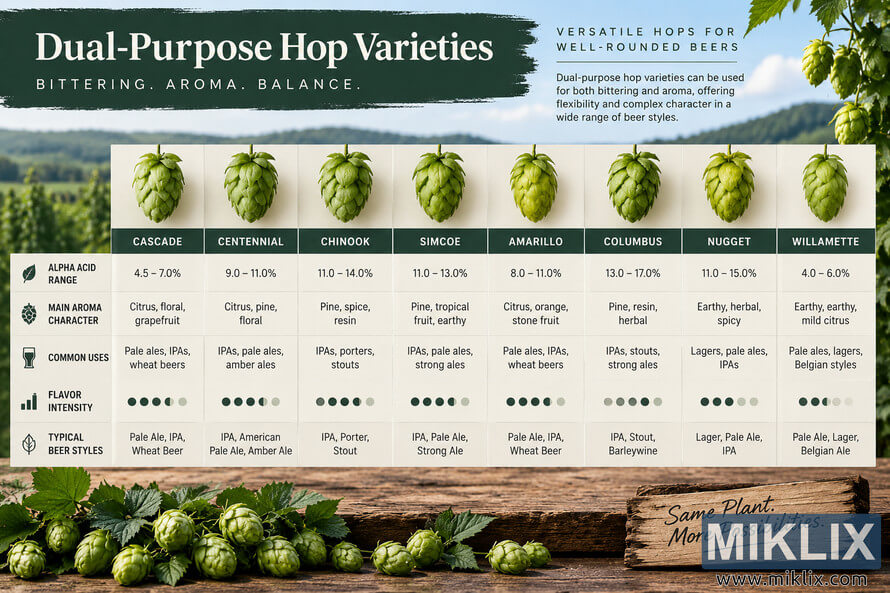
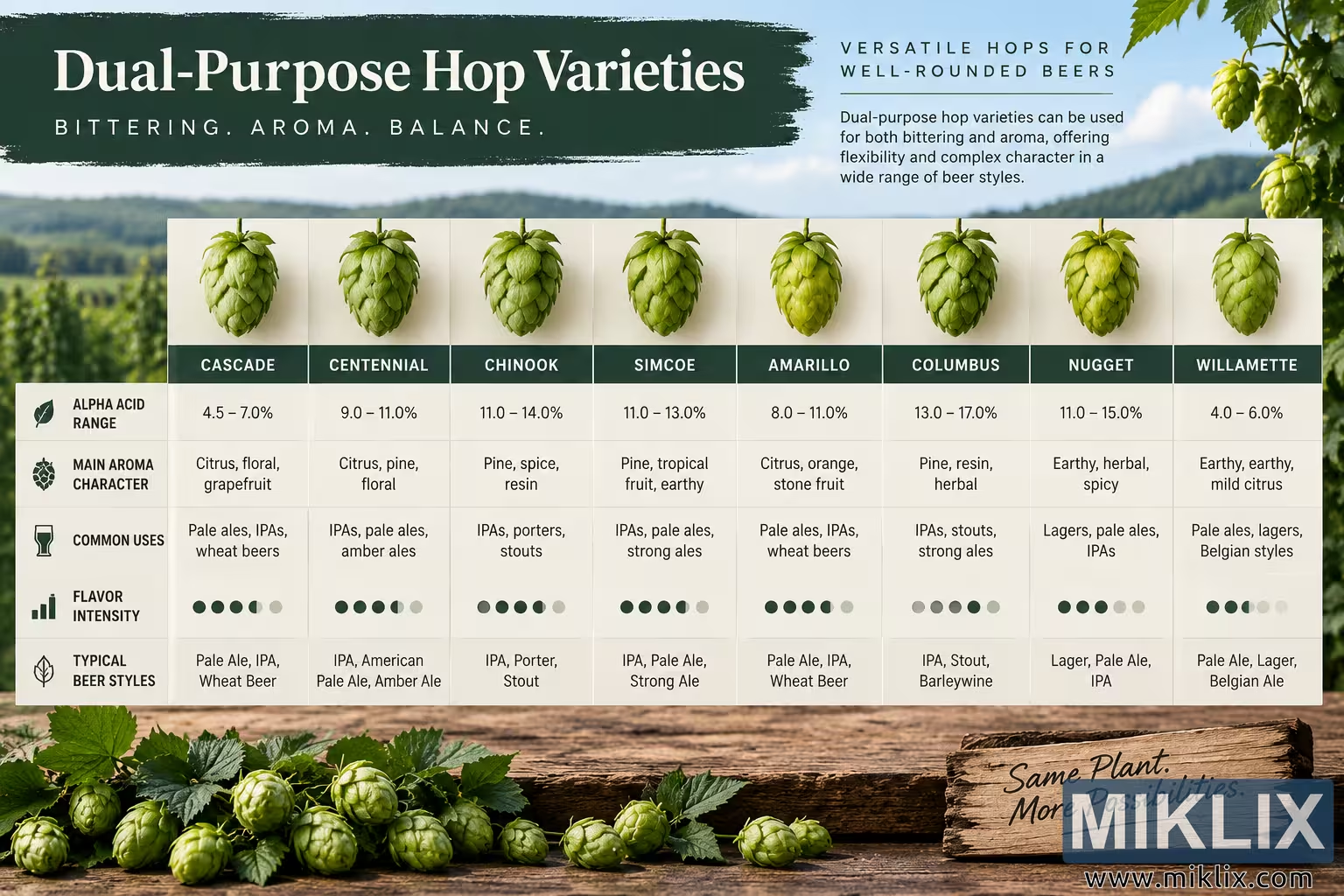
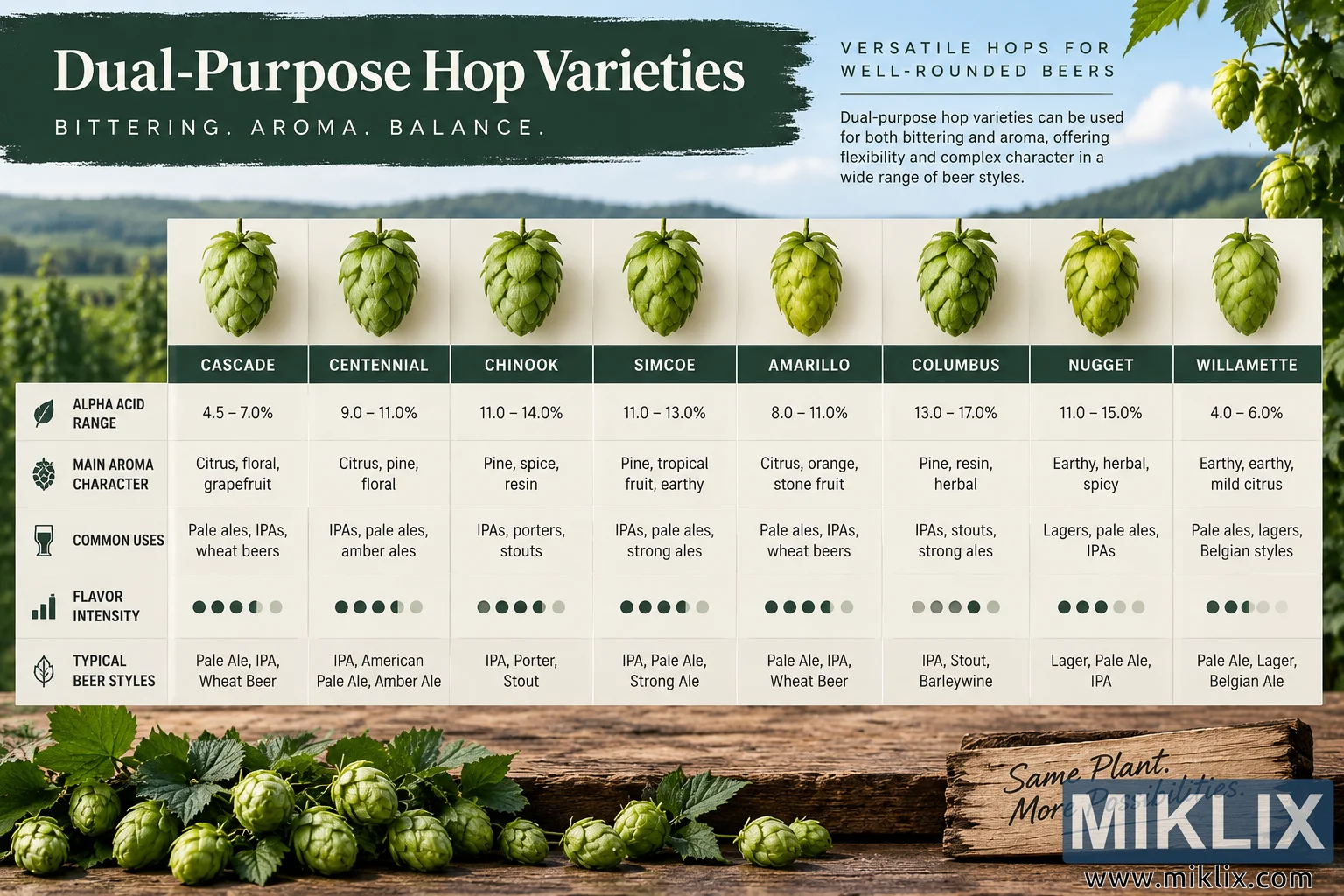
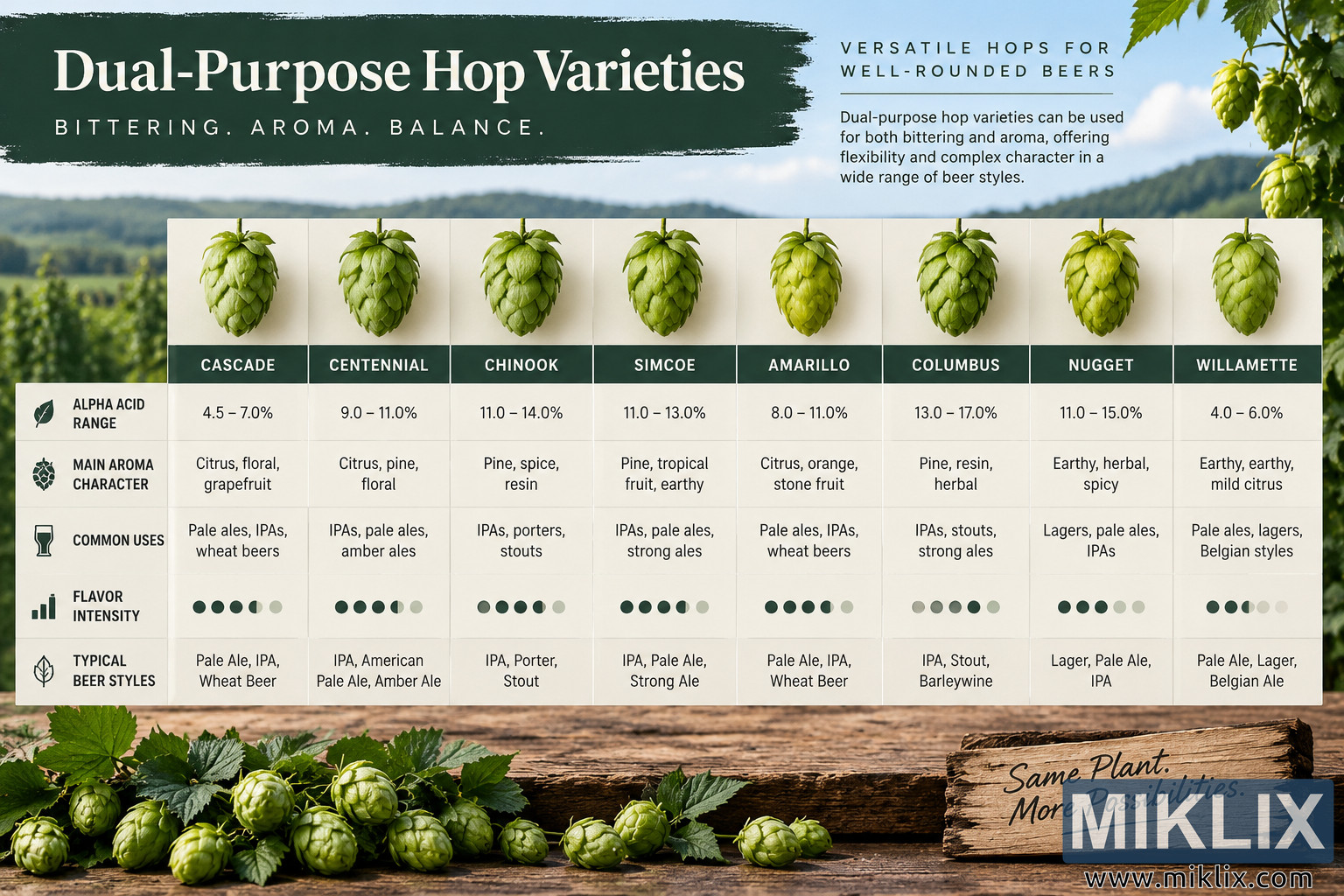
A wide, landscape-oriented educational infographic compares several dual-purpose hop varieties in a clear, highly structured visual format. The composition combines a realistic agricultural setting with a detailed comparison chart, creating a balance between photographic realism and informative reference-guide design. The overall subject is the use of hop varieties for both bittering and aroma in brewing, with the central message emphasizing versatility, balance, and the range of possibilities offered by different hops.
Across the upper portion of the image, a large headline reads “Dual-Purpose Hop Varieties,” establishing the subject immediately. Beneath the main heading is the concise thematic phrase “BITTERING. AROMA. BALANCE.” The typography is bold, clean, and highly legible, with a natural, rustic visual character that complements the agricultural theme. In the upper-right portion, a secondary heading describes the subject as versatile hops for well-rounded beers, accompanied by a short explanatory paragraph explaining that dual-purpose hop varieties can be used for both bittering and aroma and can provide flexibility and complex character across a wide range of beer styles.
The central and most prominent element is a large comparison table extending horizontally across the image. It contains multiple columns representing different hop varieties and several rows of brewing characteristics. Each variety is presented with a realistic green hop cone at the top of its column, followed by a dark green label containing the variety name. The varieties shown are Cascade, Centennial, Chinook, Simcoe, Amarillo, Columbus, Nugget, and Willamette. The presentation is designed as a general educational comparison rather than a brand advertisement, and there are no commercial logos, package designs, branded products, or recognizable corporate marks anywhere in the composition.
The first information row compares alpha-acid ranges, giving the viewer a quick sense of the typical bitterness potential associated with each variety. The values shown vary between lower and higher alpha-acid ranges, illustrating why some varieties may be used more heavily for bitterness while still contributing meaningful aroma. A small botanical-style leaf icon appears beside the row heading, reinforcing the agricultural and brewing theme.
The next row compares the principal aroma characteristics associated with each hop. The chart uses concise descriptors such as citrus, floral, grapefruit, pine, spice, resin, tropical fruit, earthy, herbal, orange, and stone fruit. These descriptors help communicate the sensory diversity among dual-purpose varieties. The text is arranged compactly within each column so that the chart remains readable while allowing the viewer to compare aroma profiles across all of the varieties at a glance.
A third row identifies common brewing uses. It describes examples such as pale ales, IPAs, wheat beers, amber ales, porters, stouts, strong ales, lagers, and other beer categories. This section emphasizes that the same general category of hop can be useful in different brewing applications depending on the desired balance of bitterness and aroma. A stylized brewing-glass icon accompanies the row label, visually connecting the agricultural raw material to the finished beverage without depicting any branded beer.
Another row represents flavor intensity using a series of circular indicator marks. The dots provide a simple visual scale, with filled and muted circles suggesting relative intensity. This makes the chart easier to scan visually and provides a quick comparison without requiring the viewer to interpret long descriptions. A small bar-chart-style icon appears beside the flavor-intensity label, reinforcing the quantitative comparison concept.
The final chart row lists typical beer styles associated with each variety. Examples include pale ale, IPA, wheat beer, amber ale, porter, stout, strong ale, lager, barleywine, and Belgian-style beers. The descriptions are concise and arranged within the table cells so that each hop can be compared directly with the others. The overall table design uses light cream and off-white panels, thin dividing lines, dark green headings, and restrained natural tones to maintain a cohesive botanical aesthetic.
Behind the chart is a softly focused hop-growing landscape. Rows of hop plants extend into the distance beneath a bright sky, with rolling green hills visible on the horizon. The agricultural background provides environmental context without competing with the information in the foreground. In the upper-right corner, hanging hop cones and green leaves frame the composition, while additional hop foliage and cones appear along the lower foreground. The realistic hop cones have layered, overlapping bracts and natural variations in green coloration, giving the image a photographic rather than purely illustrated appearance.
The bottom section includes a rustic wooden surface or weathered wooden beam running horizontally beneath the comparison chart. Several fresh green hop cones and leafy stems are arranged in the foreground, reinforcing the connection between the crop and brewing. On the lower-right side is a small rustic wooden sign carrying the handwritten-style phrase “Same Plant. More Possibilities.” The sign acts as a visual conclusion to the comparison, summarizing the idea that dual-purpose hops can serve multiple brewing functions and contribute different characteristics depending on how they are selected and used.
The color palette is dominated by natural greens, warm cream, muted beige, brown wood tones, and soft sky blue. Dark forest green is used for major headings and table labels, providing strong contrast against the pale information panels. The overall lighting is bright but natural, resembling a clear day in a hop-growing region. The photographic elements have realistic texture and depth, while the chart itself remains crisp and organized for educational use.
The image is deliberately composed in landscape orientation so that the eight hop-variety columns can be displayed side by side without forcing the comparison into a cramped vertical layout. The wide aspect ratio also allows the agricultural background to extend naturally from left to right and provides enough room for the title, explanatory text, chart, hop imagery, and rustic sign to coexist within a single cohesive scene. The visual hierarchy directs the viewer from the large title, through the explanatory introduction, toward the main comparison table and finally to the photographic hop cones and concluding message at the bottom.
Overall, the image functions as an accessible visual reference for understanding dual-purpose hop varieties. It combines botanical imagery, brewing terminology, comparative data, and rustic agricultural aesthetics into one unified landscape infographic. The chart is intended to help viewers quickly recognize differences in alpha-acid range, aroma character, common uses, flavor intensity, and typical beer styles while reinforcing the broader concept that hops can contribute both bitterness and aroma. The presentation is suitable for educational, editorial, brewing-reference, agricultural, or general informational contexts and contains no actual commercial branding or recognizable brand identity.
The image is related to: Hops in Beer Brewing: Helga