
Image: Measured Hop Varieties Prepared for Brewing Blend
Published: October 2, 2026 at 8:09:26 PM UTC
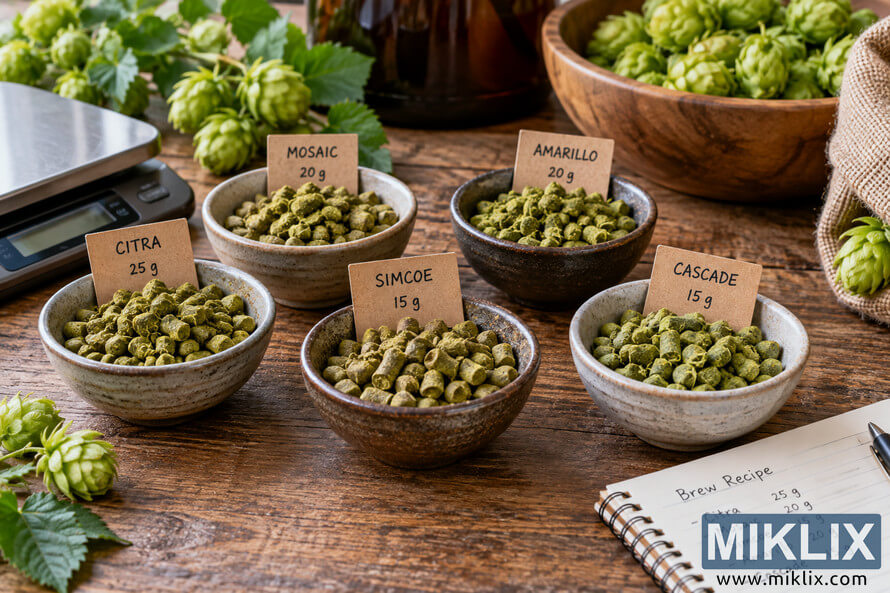
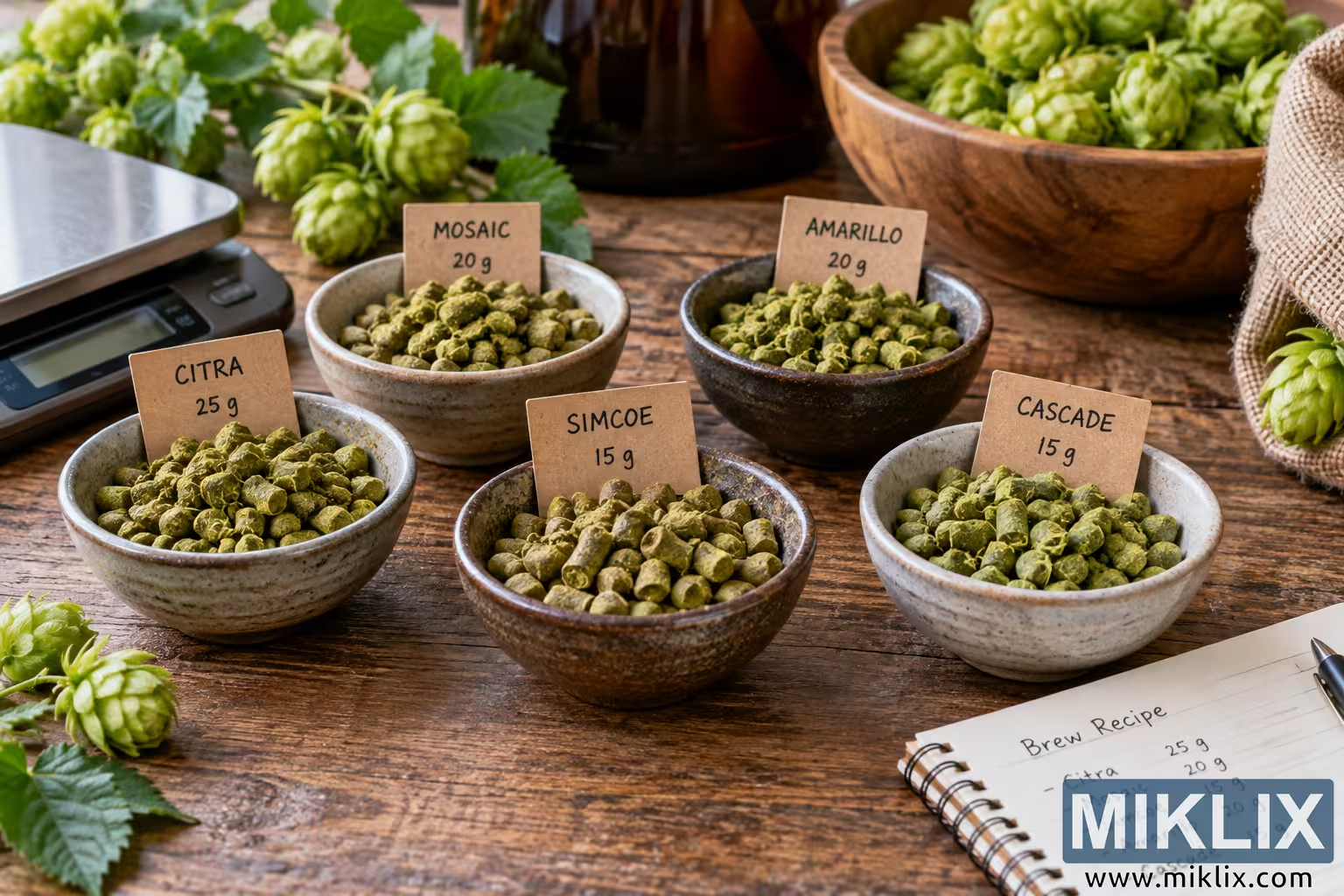
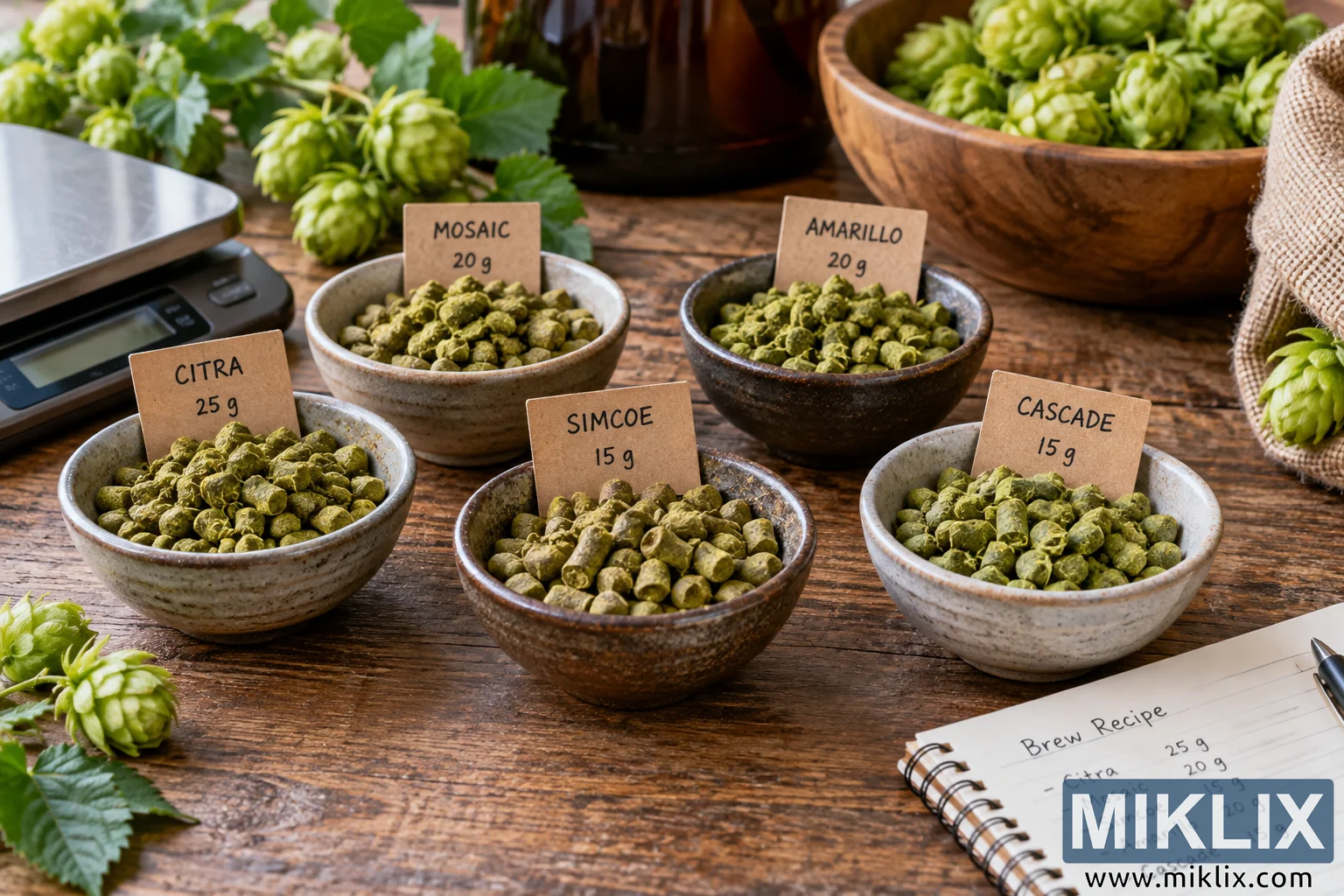
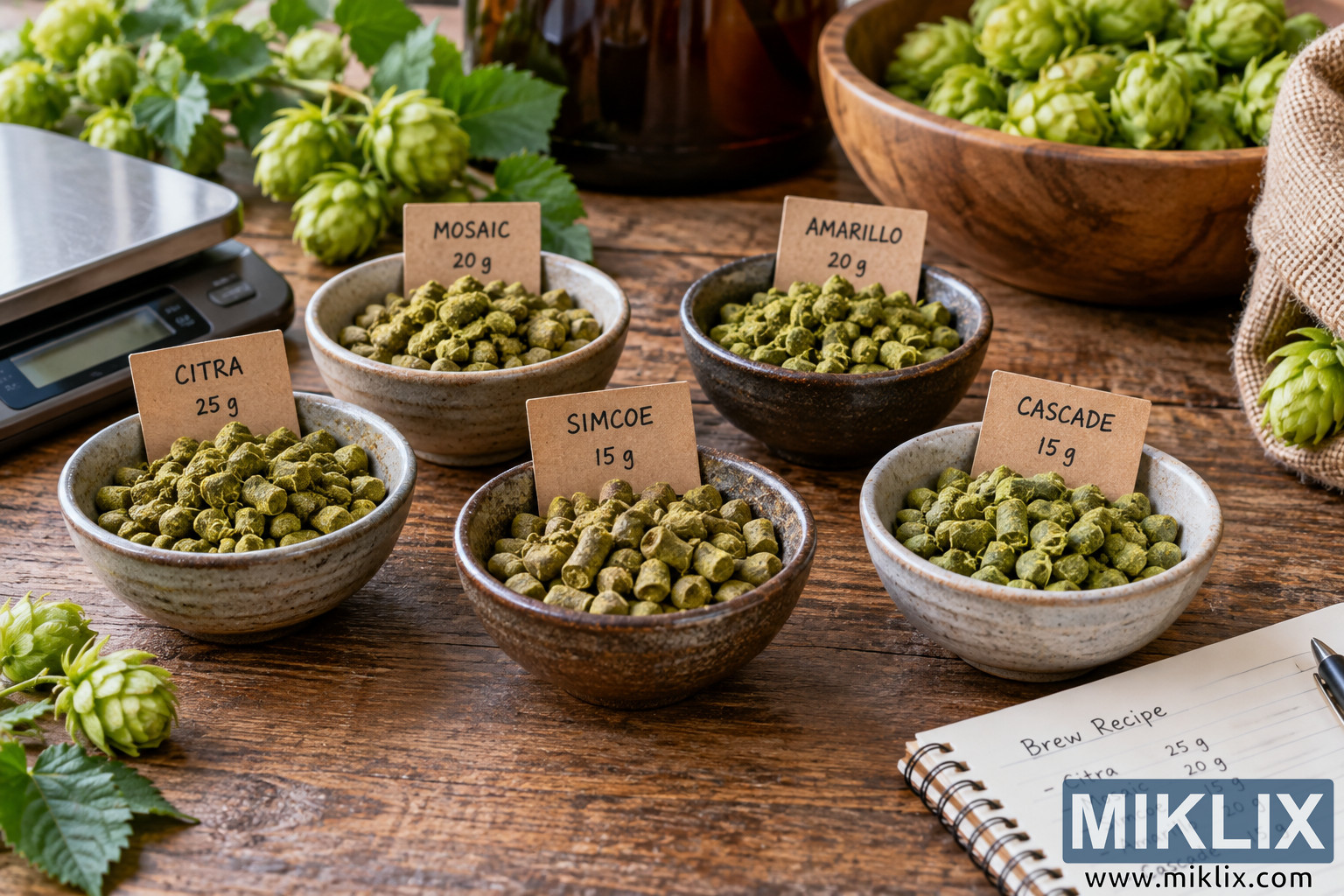
A high-resolution landscape still life showing measured hop varieties prepared for a brewing blend, with hop pellets, fresh cones, weighing equipment, brewing vessels, and recipe notes arranged on a rustic wooden worktable.
Available versions of this image
The image files available for download below are less compressed and higher resolution - and as a result of that, higher quality - than the images embedded in articles and pages on this website, which are more optimized for file size in order to reduce bandwidth consumption.
Regular size (1,536 x 1,024)
Large size (3,072 x 2,048)
Very large size (4,608 x 3,072)
Extra large size (6,144 x 4,096)
Comically large size (1,048,576 x 699,051)
- Still uploading... ;-)
Image description
A high-resolution landscape photograph presents a carefully arranged brewing workspace on a rustic wooden tabletop. The composition focuses on several small ceramic bowls filled with measured quantities of green hop pellets, each portion separated so that the different ingredients can be examined and combined as part of a brewing recipe. Small handwritten-style cards stand behind the bowls and identify the measured hop portions using generic variety names and quantities, reinforcing the practical, recipe-oriented purpose of the scene without showing any commercial branding, logos, trademarks, or branded packaging. The pellets vary subtly in shape, size, density, and green coloration, giving each bowl a distinct tactile appearance while maintaining a cohesive natural palette. Some of the measured portions appear finely compressed into short cylindrical pellets, while others show irregular broken pieces and small fragments, suggesting the physical texture of dried brewing hops.
The foreground contains multiple bowls distributed across the wooden surface rather than being arranged in a perfectly symmetrical pattern. This creates a natural working-table appearance, as though a brewer has paused during the process of weighing ingredients and preparing a blend. A compact digital kitchen scale is visible toward the left side of the scene, providing visual context for the precise measurements. The scale is positioned near the ingredients rather than dominating the composition, making it clear that accurate weighing is an important part of the preparation process. The surrounding tabletop shows subtle grain, knots, tonal variation, and signs of ordinary use, contributing to a handcrafted workshop atmosphere.
Behind the measured hop portions, a larger wooden bowl contains fresh green hop cones. Additional fresh hop cones and leafy stems are scattered around the rear and edges of the workspace, providing a visual connection between the whole plant and the processed pellets in the foreground. The fresh cones have layered, overlapping bracts and a soft, botanical texture, while their varied positions prevent the background from appearing overly staged. A burlap or natural-fiber sack is partially visible along the right side, adding another tactile brewing-related element without introducing any recognizable commercial identity. Dark glass brewing vessels are softly visible in the background, but they remain secondary elements and carry no labels, logos, or recognizable brand markings.
In the lower-right portion of the composition, an open spiral-bound notebook contains handwritten brewing notes and a simple ingredient list. The notebook visually connects the measured bowls to the idea of recipe development and blending, suggesting that the ingredients have been weighed according to a planned formulation. The writing is intentionally presented as informal brewing notes rather than as branded packaging or advertising. A pen rests nearby, reinforcing the impression of an active preparation session in which measurements can be adjusted and recorded. The notebook occupies only part of the frame so that the measured hop portions remain the principal subject.
The lighting is warm and natural-looking, with soft highlights falling across the ceramic bowls, hop pellets, fresh cones, wood grain, and notebook. Gentle shadows help separate the objects and give the scene dimensionality without creating a harsh or dramatic effect. The color palette is dominated by natural greens, warm brown wood, muted cream ceramics, earthy paper tones, and subtle dark glass. The overall appearance is realistic and photographic, with detailed surface textures and believable material properties. The fresh hop leaves and cones provide organic shapes that contrast with the geometric forms of the bowls, scale, notebook, and measured cards.
The camera angle is approximately tabletop height with a slightly elevated perspective, allowing the viewer to see both the contents of the bowls and the surrounding brewing equipment. The primary measured portions are sharply rendered, while some background objects gradually soften through depth of field. The focus arrangement guides attention from the measured hop pellets in the foreground toward the fresh hop cones and brewing vessels in the background. Fine details such as pellet fragments, ceramic glazing, paper fibers, handwritten marks, wood grain, and botanical textures contribute to the sense of realism.
The landscape orientation provides enough horizontal space to show the entire working arrangement at once, including the scale, multiple measured bowls, fresh ingredients, brewing vessels, natural-fiber sack, and recipe notebook. The composition feels balanced but not artificially symmetrical, resembling a real brewer's preparation area photographed during recipe formulation. There are no people in the frame, allowing the ingredients and tools themselves to communicate the process. The scene is suitable for illustrating hop blending, brewing recipe preparation, ingredient measurement, craft brewing, recipe development, or the organization of multiple hop varieties before they are combined.
No actual commercial branding is visible anywhere in the intended textual interpretation of the scene. The emphasis is entirely on generic brewing ingredients, measured quantities, natural hop materials, weighing equipment, handwritten recipe planning, and a warm craft-workshop setting. The photograph communicates precision and experimentation at the same time: each bowl represents a separately measured component, while the complete arrangement suggests that these components are being evaluated as parts of a larger blend. The result is an inviting, detailed, realistic still life that combines practical brewing preparation with the visual character of a carefully maintained artisanal workspace.
The image is related to: Hops in Beer Brewing: Helga