
Hops in Beer Brewing: Hersbrucker Red-Stem
Published: July 21, 2026 at 7:58:43 PM UTC
Hersbrucker Red-Stem hops originate from the renowned hop gardens of Franconia and the Hallertau. Their history is deeply rooted in the traditional Bavarian brewing methods. This heritage has earned them a quiet acclaim among German noble hops for their subtle, refined aroma.
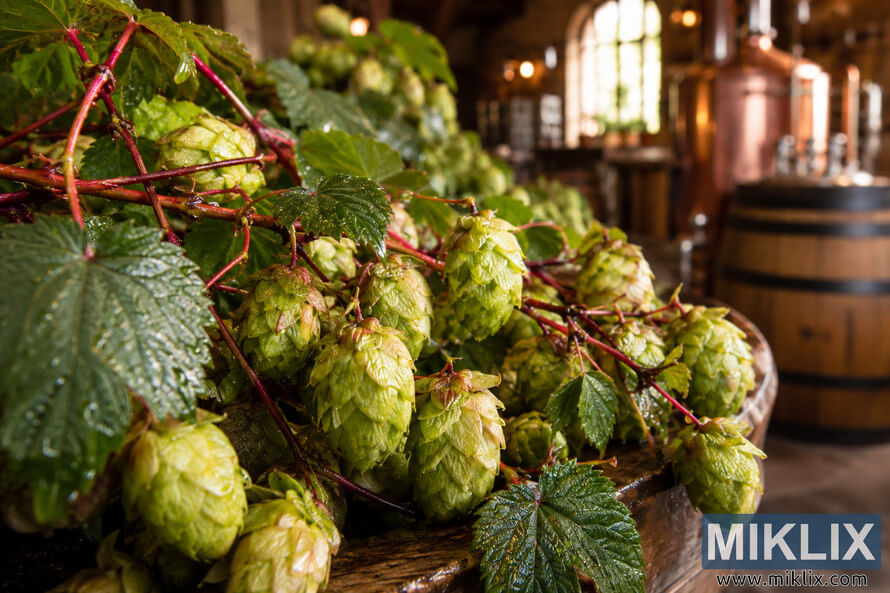
Click or tap the image for more information and higher resolutions.
Key Takeaways
- Hersbrucker Red-Stem hops offer floral, spicy, and herbal notes suited to aroma-forward beers.
- Use supplier COAs and sources like Hopsteiner or Yakima Chief Hops to verify alpha-acid ranges.
- Employ late additions and careful dry hopping to highlight aroma in single-hop beers.
- Pair Hersbrucker with light malt bases and restrained estery yeasts for clarity.
- Mind storage, oxygen, and temp control to protect hop character during craft brewing.
Introduction to Hersbrucker Red-Stem hops and their brewing appeal

Click or tap the image for more information and higher resolutions.
Hersbrucker Red-Stem hops originate from the renowned hop gardens of Franconia and the Hallertau. Their history is deeply rooted in the traditional Bavarian brewing methods. This heritage has earned them a quiet acclaim among German noble hops for their subtle, refined aroma.
The history of Hersbrucker hops is closely tied to Hallertau Mittelfrüh and Tettnang. They are recognized as an aroma hop, highly valued in classic lagers and Rauchbiers. The Red-Stem variety is distinguished by its reddish bine stems and consistent floral, spicy notes.
In the United States, craft brewers are increasingly interested in Hersbrucker Red-Stem. They seek alternatives to the citrus-forward American varieties. Brewers at Sierra Nevada and Brooklyn Brewing have incorporated traditional European hops to balance their bold modern styles. Hersbrucker Red-Stem is ideal for brewers aiming for restraint and authenticity in their aromas.
Beer styles that showcase Hersbrucker hops include Munich Helles, Bavarian Pilsner, Kölsch, and classic Pilsners. It is also used in saisons, amber ales, and English-style bitters. These styles benefit from the floral and herbal notes that Hersbrucker Red-Stem provides.
- Brief history and origin of the variety: rooted in Franconia and Hallertau, linked to German noble hops.
- Why craft brewers in the United States are interested: offers subtlety and a classic European aroma for modern recipes.
- Overview of typical beer styles that showcase these hops: Helles, Pilsner, Kölsch, saisons, and amber ales.
Botanical profile and agronomy of Hersbrucker Red-Stem hops
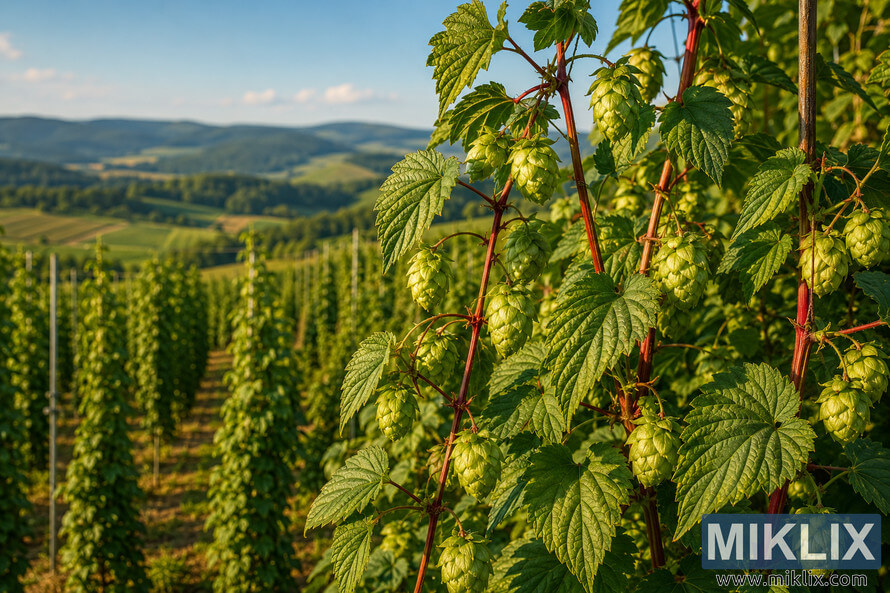
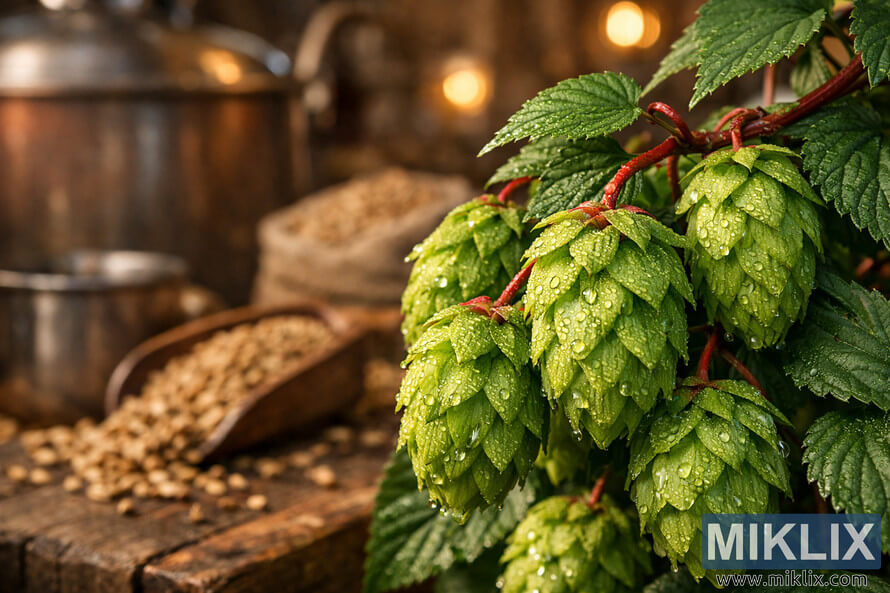
Hersbrucker Red-Stem hops are part of the Humulus lupulus family, showcasing typical aroma-hop morphology. Their cones are found in medium-sized clusters, with a firm, aromatic lupulin core. The variety is distinguished by its reddish tinges on the bine and stems, aiding in identification among mixed plantings.
Vine vigor is moderate to strong. The choice of rootstock and trellis training influences canopy density and cone exposure. Growers find that lupulin density and oil profiles are ideal for aroma hops, making them perfect for late-stage additions and dry hopping.
Plant characteristics and growing regions
Hersbrucker thrives in temperate climates with distinct seasons. Traditionally, it is grown in Germany, particularly in Franconia and Hallertau. It also grows in other European areas and select North American hop yards. In the U.S., it is often imported from Europe or grown in small domestic contracts.
Yield, harvest timing, and drying/storage considerations
Yield and harvest timing are influenced by terroir and management practices. In Germany, harvest usually occurs from mid-August to September. Weather conditions at maturity can affect cone quality; rain increases rot risk and lowers yield. Farmers closely monitor cones in the final weeks.
- Harvest timing: staggered picks may protect quality.
- Post-harvest handling: quick field transfer reduces degradation.
- Supplier COAs: check oil and moisture figures before purchase.
Proper hop drying is crucial for preserving volatile oils responsible for aroma. Thin-layer kiln drying to 8–10% moisture is recommended. After drying, immediate pelletizing or vacuum-packed whole-cone storage with oxygen scavengers helps retain aroma. Cold-chain storage at 0–4°C and low-oxygen packaging extend shelf life for both commercial brewers and homebrewers.
Sustainability and organic growing notes
Hersbrucker adapts well to integrated pest management and benefits from disease-resistant rootstocks that reduce fungicide needs. Certified organic plantings exist but are limited. Brewers seeking certified lots should check suppliers such as Yakima Chief or established German organic hop houses for available organic hops.
Organic production often requires careful site selection and rigorous crop rotation. When organic lots are unavailable, growers can still improve sustainability through targeted irrigation, reduced-chemical disease control, and cover-cropping to support soil health.
Click or tap the image for more information and higher resolutions.
Aroma and flavor profile of Hersbrucker Red-Stem hops
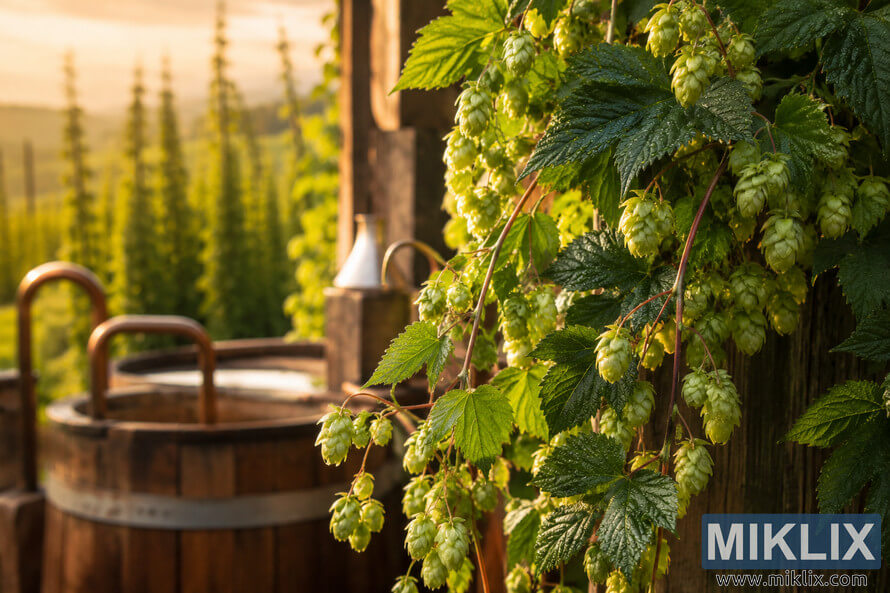
Hersbrucker Red-Stem hops are celebrated for their subtle, refined aroma. They offer soft floral notes, gentle spice, and a clear herbal character. This variety is particularly valued by brewers who prefer a delicate touch in their beers.
Primary aroma descriptors
The aroma is characterized by delicate chamomile and rose-petal florals. A faint clove-like spice and a mild peppery bite add depth. Fresh sage and mint leaf bring a green, herbal clarity, balancing the floral notes. The profile is rounded out by light earthiness and noble hop traits.
Flavor nuances in finished beer
In beer, the hop flavor is more aromatic than punchy. Late-boil or whirlpool additions enhance the floral, spicy, herbal qualities. Dry hopping intensifies the grassy-herbal bouquet, keeping bitterness in check. This suits lagers and delicate ales perfectly.
How terroir and processing affect aroma
Terroir impacts the hop's oil composition, altering myrcene, humulene, caryophyllene, and farnesene levels. Cooler European climates preserve noble characteristics and gentle florals. Processing methods, like pelletizing, can mute volatile topnotes, while cryo or freeze-dried formats retain more scent.
Storage conditions and oxygen exposure can reduce monoterpenes, softening the floral character. Brewers aiming for the best Hersbrucker aroma should opt for fresh whole cones or cryo formats. Plan your additions to maximize the delicate volatiles.
Click or tap the image for more information and higher resolutions.
Alpha acids, beta acids, and bittering properties
Hersbrucker Red-Stem hops have a mild bittering profile, focusing on aroma. Expect aroma-class alpha acids to range from 3–5%. However, crop year and supplier COA can alter this range. Beta acids are at moderate levels. The essential oil mix, including humulene, caryophyllene, and farnesene, enhances floral and herbal notes more than alpha acids do.
Compared to classic noble varieties, Hersbrucker has lower alpha than Hallertau Mittelfrüh and Tettnang in some years. Its bittering power is milder than high-alpha hops like Magnum or Northern Brewer. Brewers often choose Hersbrucker for late additions to achieve noble hop bitterness without high IBUs.
Understanding hop bittering properties is crucial for IBU outcomes. For high-IBU beers, use a dedicated high-alpha bittering hop early. Then, add Hersbrucker later to preserve its delicate aromatics. If Hersbrucker is used early, increase its quantity to hit target IBUs.
- Typical alpha range: 3–5% for aroma-class picks; check supplier COA for each lot.
- Bittering role: mild; pair with a high-alpha bittering hop for backbone bitterness.
- Aroma impact: essential oils provide floral, spicy, and herbal character more than bittering.
- IBU adjustments: increase addition weight or combine with higher-alpha hops to meet IBU goals.
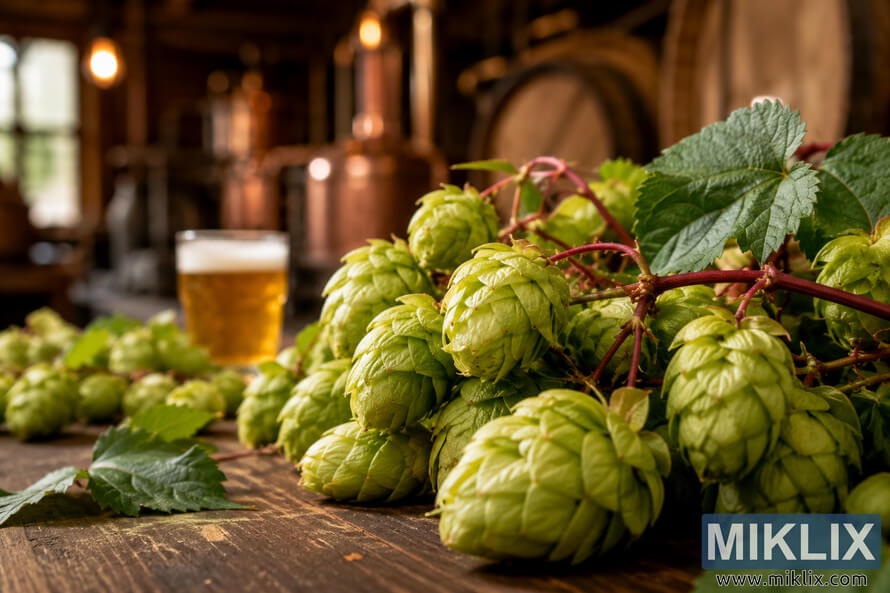
To achieve balance, calculate IBU adjustments before brew day. Plan split additions for a balanced approach. Early boil additions provide necessary alpha for structure. Reserve Hersbrucker for whirlpool or late hop stages to showcase its aroma. This maintains measured bitterness and classic noble hop bitterness in the finished beer.
Click or tap the image for more information and higher resolutions.
Using Hersbrucker Red-Stem hops for bittering
Hersbrucker Red-Stem hops provide a solid bitterness while maintaining a soft, floral taste. They are ideal for creating a gentle backbone bitterness that enhances malt without overpowering delicate aromas. Below, we explore when to use Hersbrucker, how to calculate IBUs, and offer a few recipe examples to begin with.
- When to choose Hersbrucker
- Opt for Hersbrucker in traditional styles with low IBUs, such as Bavarian Helles and Kölsch. These beers benefit from a balanced bitterness that complements malt and hop florals. For session ales with lighter bodies, Hersbrucker adds a soft finish without the sharpness of high-alpha hops.
- Adjustment of IBU calculations and efficiency
- Always use the supplier's COA alpha value for accurate IBU calculations. Hersbrucker shows moderate utilization compared to high-alpha hops. Expect variable utilization based on mash pH and boil vigor.
- If Hersbrucker is your only bittering hop, increase hop weight to reach the target IBU. Alternatively, pair Hersbrucker with a neutral high-alpha hop like Magnum or Warrior. This approach helps control IBUs while preserving Hersbrucker's aroma.
- Recipe frameworks and bittering recipe examples
- Bavarian-style Helles: Target 18–22 IBU with early Hersbrucker additions. Scale hop weight according to supplier alpha, maintain mash pH ~5.2, and add a late flameout pinch of 5–10 g/L for aroma enhancement.
- Session single-hop ale: Aim for 20–25 IBU from early Hersbrucker additions. Use a light Munich or Maris Otter base for body. Adjust hop mass if the COA alpha is low to hit the desired bitterness.
- Hybrid approach: Use 70–80% of bittering IBUs from a neutral high-alpha hop and 20–30% from Hersbrucker to preserve delicate character while maintaining precise IBU control.
These examples illustrate how to balance target IBUs with hop character. Adjust based on test brews and lab-verified alpha values to refine results.
Click or tap the image for more information and higher resolutions.
Using Hersbrucker Red-Stem hops for aroma and flavor additions
Hersbrucker shines when added late in brewing, highlighting floral and herbal notes without increasing bitterness. Brewers employ short boil additions and warm rests to extract essential oils. This method limits alpha acid isomerization, aiming for a bright, delicate hop presence that complements malt and yeast.
- Best practices for late boil and whirlpool additions
- Introduce Hersbrucker late in the boil, during the last 5–10 minutes, to preserve volatile aromatics. For fuller extraction, add in the whirlpool at 170–180°F (77–82°C) and hold for 10–30 minutes. Gentle recirculation ensures even distribution of oils without harsh oxidation.
- Recommended addition timing and amounts
- For homebrew batches, late-boil additions typically range from 0.5–2.0 oz per 5 gallons (14–57 g/L) based on desired intensity. Commercial whirlpool hops use 1–3 g/L. Adjust these aroma hop dosages according to beer style and batch size.
- Examples of aroma-forward recipes
- Kölsch or Session Ale: 0.5–1 oz (14–28 g) at 10 minutes, then 1–2 oz (28–56 g) in whirlpool for a soft floral lift.
- Saison: modest early bittering hop, followed by 1–2 oz Hersbrucker in the whirlpool to add herbal edges and gentle spice.
- Pale Ale single-hop focus: increase late-boil addition toward 2 oz per 5 gallons and hold in the whirlpool to layer complexity without adding harsh bitterness.
Keep a close eye on Hersbrucker late additions and whirlpool hops in your recipe log. Small adjustments to aroma hop dosages can significantly impact bouquet and drinkability. Through tasting trials with varied amounts, you'll find the perfect balance for each style.
Dry hopping with Hersbrucker Red-Stem hops
Dry hopping introduces Hersbrucker Red-Stem hops late in the brewing process. This method enhances the beer's aroma, allowing brewers to focus on floral, spicy, and herbal notes. It's crucial to avoid vegetal tones. Below, we explore practical methods for both home and commercial brewers.
Cold vs. warm dry hop techniques
Cold dry hopping, conducted at temperatures between 36–50°F (2–10°C), preserves the delicate floral esters. This technique ensures a clean, fresh aroma and minimizes the extraction of heavier waxy compounds.
On the other hand, warm dry hopping at 60–70°F (15–21°C) extracts more of the heavier oils. This approach can enhance the aroma and mouthfeel, but it also increases the herbal presence and the risk of grassy notes.
Typical dosages and contact times
Homebrewers should aim for 0.5–2 oz per 5 gallons (14–57 g) based on desired intensity. Commercial recipes often use 1–3 g/L for a clear yet prominent hop profile.
Contact times vary: 2–7 days are typical for most ales. Lagers might require longer contact or slightly warmer temperatures to achieve similar extraction. However, extended contact can lead to a loss of topnotes and an increase in vegetal character.
Managing grassy or vegetal notes
- Limit warm contact time to avoid excessive extraction of leaf waxes. Short, warm bursts can give punch without vegetal overload.
- Use pellets when you want less green, leafy character. Pellets tend to break down plant matter and reduce hop grassy notes compared with whole cones.
- Consider CO2 purging and tight oxygen control during transfers. Less oxygen exposure preserves delicate floral aromatics from Hersbrucker dry hopping.
- Try hop extracts or cryo products for concentrated aroma with lower risk of vegetal compounds. These options can provide clean floral lift while minimizing hop grassy notes.
Pairing Hersbrucker Red-Stem hops with malt profiles
Hersbrucker Red-Stem hops offer a floral, herbal character. They benefit from a restrained, supportive malt bill. Opt for a clean malt canvas to highlight delicate hop notes. Below are practical options for brewers seeking balance and clarity.
Malt bases that complement floral and herbal hops
Pilsner malt, light Maris Otter, pale two-row, Vienna, and Munich are good choices. A pilsner or pale base offers subtle sweetness and low roast. This keeps Hersbrucker’s floral and herbal traits prominent.
For lagers and light ales, a pilsner base is perfect. For English-style ales, light Maris Otter or pale two-row adds a touch of biscuit without overpowering aroma.
Specialty malts to enhance complexity
Small percentages of specialty malts add depth. Cara-crystal, biscuit, and light honey malts at 5–10% enhance mouthfeel and complexity. They do so without obscuring hop perfume.
Add 5–15% Vienna or Munich for a continental backbone. Low roast malts can create amber interpretations while preserving floral top notes.
Adjusting mash schedules for balance
Single infusion mashes from 148–152°F (64–67°C) offer balanced fermentability and medium body. This supports hop delicacy. If you need more fullness, raise mash temperatures to 152–156°F (67–69°C).
Traditional German methods like decoction or step mashes are optional for deeper malt complexity. Use mash schedule adjustments sparingly. This ensures the malt enhances rather than competes with Hersbrucker’s aroma.
- Keep specialty malts low to protect hop clarity.
- Tweak mash temps to match desired mouthfeel and hop presence.
- Pair a clean malt base for floral-forward late additions and dry hopping.
Yeast selection and fermentation considerations
Choosing the right yeast and managing fermentation are crucial for showcasing Hersbrucker Red-Stem hops. The yeast you pick can enhance the hop's floral and herbal notes or overshadow them with fruity esters. By controlling fermentation temperature, you can either emphasize hop clarity or encourage a complex yeast-hop interaction.
For those aiming to highlight Hersbrucker, clean lager strains like Wyeast 2206 or Saccharomyces pastorianus W-34/70 are ideal. These yeasts allow the noble character of Hersbrucker to shine in pilsners and delicate lagers. Lager strains ferment cooler, resulting in fewer esters, which keeps the hop profile sharp and distinct.
Neutral ale strains, such as Safale US-05 or Wyeast 1056, are perfect when you want to keep hop aroma in the forefront of pale ales. They offer minimal fermentation phenotypes, ensuring Hersbrucker's floral notes remain prominent. For those seeking spice and fruit complexity, saison or Belgian strains are excellent. They add phenolic and estery nuances that complement the herbal hop tones.
- Choose restrained ester producers to let delicate hop aromatics shine.
- Pick estery or phenolic strains to create layered interactions for hybrid styles.
- Match yeast attenuation and body to the malt bill so hops sit in the right balance.
The impact of fermentation temperature on hops is evident. Cooler fermentations, typically at the lower end for ales (60–64°F / 15–18°C), preserve hop aromatics and reduce ester formation. Warmer fermentations, on the other hand, increase esters, potentially overshadowing Hersbrucker's subtle floral and herbal notes. For lagers, traditional cold rests and extended lagering enhance clarity and allow hop nuances to emerge.
Practical steps for consistent results:
- Set target temps based on yeast phenotype and desired hop prominence.
- Use a starter or proper pitching rate to avoid stressed yeast that produce off-esters.
- Monitor and control fermentation to prevent temperature swings that alter hop perception.
By considering yeast pairing Hersbrucker and fermentation temperature, brewers can select strains and schedules that either emphasize the hop or create intriguing yeast-hop synergy. Thoughtful choices enable Hersbrucker Red-Stem hops to contribute their best qualities to a variety of beer styles.
Stylistic suggestions: beers that highlight Hersbrucker Red-Stem hops
Hersbrucker Red-Stem hops add a subtle floral and herbal touch. They work best when recipes allow the hop to shine without overpowering adjuncts. Here are some style ideas to showcase this delicate noble character. These range from classic German styles to U.S. craft interpretations and seasonal experiments.
Traditional lagers keep malt profiles clean and grain-forward. This allows the hop's delicate notes to stand out. Use soft water, moderate attenuation yeast strains, and restrained late hopping. This approach presents the classic noble aroma associated with many German beers Hersbrucker excels in.
- Pilsner: Bright, dry pilsners highlight floral top notes when Hersbrucker is used for late kettle and whirlpool additions.
- Munich Helles: A soft malt base lets herbal accents come through without harsh bitterness.
- Märzen / Oktoberfest: Slightly richer malts pair with modest Hersbrucker additions for a refined noble backdrop.
- Kölsch: Light body and subtle esters let the hop’s softness frame the beer’s cleanliness.
American craft brewers often adapt these traits into versions that favor aroma nuance. Single-hop pale ales and amber ales using Hersbrucker reward gentle dry hopping and lower hopping rates for balance.
- Single-hop pale ale: Emphasize floral and herbal complexity with straight-forward malt and a neutral ale yeast.
- Session amber: Lower ABV, toasted caramel malt and measured Hersbrucker additions create approachability.
- Hybrid saison-ale: Farmhouse yeast character plus restrained Hersbrucker aromatics forms a pleasing cross-style experiment.
Hybrid styles Hersbrucker pairs well with include saison-ales and lager-ales. These hybrids reward subtlety and careful fermentation to preserve hop nuance.
Seasonal and specialty brews can lean into botanical pairings and lighter bodies. This celebrates floral facets. Spring and summer releases benefit from soft pilsners and saisons. Fall beers can use Hersbrucker to add refinement rather than punch.
- Spring pilsners and saisons: Crisp, floral-forward beers that accentuate fresh hop aromas.
- Oktoberfest Märzen: Use Hersbrucker for a noble aroma that complements toasty malts.
- Herbal-seasonal brews: Chamomile, lavender or lemon balm combine well with Hersbrucker’s floral profile.
When developing recipes, aim for balance. Keep hopping levels modest, choose yeast strains that preserve delicate aromatics, and match malt sweetness to the hop’s soft character. These choices help Hersbrucker beer styles shine without overpowering the beer’s base.
Recipe templates featuring Hersbrucker Red-Stem hops
Below are three compact, testable templates that highlight Hersbrucker Red-Stem hops in distinct styles. Each template lists core grains, target gravities, bitterness, hop timing, and yeast choices. This allows brewers to adapt volumes and alpha differences. These Hersbrucker recipes focus on simplicity and aroma clarity.
Single-hop Pale Ale template (5 gal / 19 L)
- Grain bill: 90% Pale Two-Row or Maris Otter, 10% Light Crystal 10L.
- Targets: OG ~1.048, FG ~1.010.
- Bitterness: 25–30 IBU. Use Hersbrucker for the early bittering addition, adjusting weight for alpha acid.
- Aroma & dry hop: Add a late kettle charge and dry hop with Hersbrucker for a total of 1–2 oz per 5 gal.
- Yeast: Neutral ale yeast such as Fermentis US-05 to let hop character shine.
Light Pilsner / Lager template (5 gal / 19 L)
- Grain bill: Pilsner malt base, 5–8% Vienna or Munich optional for slight malt depth.
- Targets: OG ~1.046.
- Bitterness: 28–34 IBU. Consider a high-alpha hop for the early bittering addition, then use Hersbrucker in whirlpool and for light dry hopping to showcase floral-herbal notes.
- Yeast & conditioning: Lager yeast such as Wyeast 2124 or W-34/70 with cold conditioning to smooth esters.
- This Hersbrucker lager recipe aims for a delicate, clean hop presence that complements pilsner malt.
Herbal-Seasoned Saison template (5 gal / 19 L)
- Grain bill: Pale ale malt with 5–7% Caramalt or small specialty malt for body.
- Targets: OG ~1.055.
- Bitterness: 20–30 IBU from a neutral early hop to support fermentation character.
- Hop schedule: Late kettle additions and dry hop with Hersbrucker totaling 1.5–3 oz per 5 gal to lift herbal and floral notes.
- Yeast: Saison strains like Wyeast 3724 or Belle Saison for spicy, phenolic esters that interact with Hersbrucker.
- This Hersbrucker saison approach balances yeast-driven spice with hop herbaceousness.
Use these templates as starting points. Adjust hop weights for alpha acid variance, tweak mash temps to alter body, and tailor fermentation profiles by yeast and temperature to refine the intended expression. Each entry is meant to make Hersbrucker recipes approachable for homebrewers and small craft brewers seeking a clear hop signature.
Practical brewing tips to maximize hop character
To maximize Hersbrucker Red-Stem hop character, focus on freshness, gentle handling, and smart pairings. Small steps during storage, transfer, and blending keep floral and herbal notes vivid in the finished beer.
Hop storage and freshness management
Store hops vacuum-sealed or in nitrogen-flushed pouches to slow oxidation. Keep them cold at 32–40°F (0–4°C) away from light. Check the supplier COA for harvest date and oil analysis before use.
Rotate stock on a first-in, first-out basis. For longer shelf life, whole-cone hops and T-90 pellets both perform well when frozen. Note that cryo products often retain intensity with less vegetal matter.
Transfer, oxygen, and temperature control to preserve aroma
Minimize oxygen pickup after fermentation to preserve hop aroma. Cold crash when appropriate and transfer under CO2 to reduce exposure. Avoid warm storage of finished beer to keep fresh floral notes intact.
When kegging or bottling, purge vessels and lines with CO2. Use gentle racking and low-shear pumps to stop aromatics from stripping away during handling.
Blending with other hop varieties for complexity
Use hop blending to add depth without masking Hersbrucker’s character. Pair with noble hops like Hallertau Mittelfrüh or Saaz for classic profiles. Low-citrus US varieties such as Willamette or Tettnang add subtle dimension.
Consider cryo or T-90 pellets to boost intensity without pulling grassy compounds. Start with small pilot batches and adjust ratios until the mix highlights floral notes while giving balanced complexity.
- Check COA oil percentages when planning blends.
- Keep blends small and test across multiple fermentation temperatures.
- Document storage dates and use FIFO to protect freshness.
Sourcing Hersbrucker Red-Stem hops in the United States
Locating high-quality Hersbrucker Red-Stem hops for your recipe involves understanding where to search and what to inquire about. Both small-batch homebrewers and commercial brewers need to compare the product format, supplier transparency, and lab data before making a purchase.
- Reliable suppliers: Major merchants like Yakima Chief Hops and Hopsteiner sometimes offer heritage or import varieties. US homebrew retailers, such as MoreBeer and Northern Brewer, may carry small lots or imported cones during the season. Additionally, independent German hop houses occasionally ship limited runs, which can be found through specialty distributors.
- Whole cone vs pellet: Opt for pellets (T-90) for their ease of storage, higher utilization, and reduced grassy character. Whole cones are better for delicate topnotes and visual appeal in small batches. Commercial operations might prefer cryo or concentrated extracts for intense aroma and cleaner handling.
- Buying small quantities: Homebrewers should seek out sealed pouches with harvest date and a hop COA. Local homebrew shops often sell split packs or run co-ops to lower minimums. It's crucial to ask the retailer for alpha acid and oil analysis before purchasing.
- Evaluating crop year and test results: Compare supplier COA values for alpha acids and key oil markers such as myrcene, humulene, and farnesene. A recent crop with cold-chain storage will preserve floral and herbal character. It's best to choose Hersbrucker suppliers who publish batch analytics for repeatable results.
When purchasing Hersbrucker hops in the US, request the hop COA and confirm the harvest date. If you're experimenting, start with a small sealed pack from a known Hersbrucker supplier. Then, compare whole cone vs pellet in parallel brews to determine which form best suits your recipe.
Common pitfalls and troubleshooting when using Hersbrucker hops
Working with Hersbrucker Red-Stem hops brings delicate floral and herbal notes to your brews. However, small errors can lead to unwanted flavors. This guide will help you identify common issues and provide solutions. This way, you can make adjustments without uncertainty.
Overusing Hersbrucker can result in vegetal notes and imbalance. Too much late boil or extended dry-hop contact can introduce grassy, astringent flavors. These overpower the malt. For lagers and light ales, use late additions sparingly. Shorten dry-hop time and use it conservatively in delicate styles.
- Reduce dry-hop grams per liter for single-hop showcases.
- Favor short cold-contact periods over long warm rests.
- Use cryo or concentrated products when you need bold aroma without volume.
Hop processing and storage can lead to off-flavors. Oxidized pellets smell like cardboard. Old whole cones may have hay or grassy notes. Poor pellet compression or heat exposure can increase vegetal husk character. Always smell and test hops before using them to catch issues early.
- Inspect aroma of hops on opening; reject stale smells.
- Ask suppliers for COAs or recent lab results when practical.
- Store hops frozen in vacuum-sealed bags to limit oxidation.
If your beer already has off-flavors, there are ways to fix it. Cold conditioning and lagering can soften vegetal notes. Blending with fresh beer dilutes faults without major recipe changes. For specialty beers, a touch of citrus zest or gentle spice can balance grassy edges.
- Place suspect kegs in cold storage for two to four weeks to mellow harshness.
- Blend up to 10–20% with a fresh, neutral base beer to dilute off-notes.
- Use light adjuncts—lemon peel or coriander sparingly—to complement Hersbrucker character.
To avoid these issues in the future, incorporate preventive measures into your brewing routine. Use fresher hops, control oxygen during transfers, and prefer pellets or cryo products if cone storage is a risk. Track dry-hop times and tastes to adjust your beer confidently.
Conclusion
Hersbrucker Red-Stem hops offer delicate floral, spicy, and herbal aromas. They are perfect for traditional German lagers, nuanced ales, and hybrid craft beers. Their subtlety is key, requiring careful handling to showcase their aroma without overpowering malt or yeast.
For the best results, use clean malt bases and neutral yeast strains. This approach allows the hop's profile to shine through. Late additions, whirlpool work, or cold dry hopping are essential to preserve the volatile oils.
Always refer to supplier COAs for alpha and oil data. This information is crucial for planning IBUs and making bittering adjustments. Store pellets or whole cones in a cold, oxygen-free environment. Even small losses in freshness can mute the hop's distinctive notes.
Begin with single-hop test batches and small purchases from trusted U.S. suppliers. This will help you find the right dosage and timing. Keep detailed records of your additions, contact time, and fermentation variables. With careful planning and attention to storage and handling, Hersbrucker Red-Stem hops will reward your experimentation. They add a refined, floral-herbal character to a wide range of beer styles.
FAQ
What flavor and aroma characteristics define Hersbrucker Red-Stem hops?
Hersbrucker Red-Stem hops are celebrated for their delicate floral top notes, reminiscent of rose petals and chamomile. They also offer subtle spice, such as clove-like and peppery notes, alongside fresh herbal tones like sage and mint. The hops present a light earthiness and a restrained noble hop character. Compared to many American varieties, they have lower citrus or tropical fruit notes.
Can Hersbrucker Red-Stem be used as a primary bittering hop?
Yes, Hersbrucker Red-Stem can be used as a primary bittering hop in low-IBU or traditional styles. This includes Munich Helles or Kölsch. With low to moderate alpha acids (often 3–5%), you may need to use larger weights or pair it with a higher-alpha neutral bittering hop. This approach helps achieve higher IBU targets without sacrificing aroma.
What additions and timing best showcase Hersbrucker’s aroma?
Late-kettle additions, typically made in the last 5–10 minutes, are best for showcasing Hersbrucker's aroma. Whirlpool additions at 170–180°F (77–82°C) for 10–30 minutes also preserve the floral-herbal notes. Cold dry hopping is another effective method. It's crucial to keep late additions modest and prefer whirlpool contact or cold dry hop to avoid excessive bitterness and vegetal extraction.
How should I dose Hersbrucker for dry hopping in homebrew and commercial batches?
For 5-gallon homebrew batches, dry-hop dosages range from 0.5–2 oz (14–57 g) with contact times of 2–7 days for ales. Commercial dosages typically range from 1–3 g/L. Monitor for diminishing returns and reduce contact time or temperature if vegetal characters appear.
Does pelletizing or using whole cones change Hersbrucker’s aroma?
Yes, pelletizing T-90 hops increases utilization and can reduce grassy character, making them practical for consistent results. Whole cones may preserve some delicate topnotes but require strict cold, low-oxygen storage. Cryo or concentrated products can intensify aroma while minimizing vegetal extraction.
What malts and recipes pair best with Hersbrucker hops?
Clean continental bases, such as Pilsner malt, Vienna, Munich, or pale two-row, allow Hersbrucker's floral-herbal tones to shine. Small additions (5–10%) of light crystal or biscuit malts add complexity without masking aroma. Use neutral yeast strains for lagers or ales when you want the hop to be front-and-center.
Which yeast strains work well with Hersbrucker Red-Stem hops?
Clean lager strains like W-34/70 or Weihenstephan-style yeasts and neutral ale strains such as Safale US-05 or Wyeast 1056 highlight Hersbrucker's noble character. Saison or Belgian strains can create a complex interplay, but higher ester production may compete with delicate hop notes.
How does terroir and processing affect Hersbrucker hop character?
Growing region influences oil composition—cool European climates favor noble aromatics. Pelletizing or long storage can mute topnotes. Oxidation and heat reduce monoterpenes and floral freshness, so check supplier COAs, prefer recent harvests, and insist on cold-chain storage.
What are common pitfalls when brewing with Hersbrucker and how do I avoid them?
Overuse, long warm dry-hop contact, old or oxidized hops, and oxygen exposure can cause grassy, vegetal, or stale notes. Avoid excessive dosages, limit warm contact times, use pellets or cryo if vegetality is a concern, store hops cold and vacuum-sealed, and minimize oxygen pickup during transfers.
How should I store Hersbrucker hops to preserve aroma?
Store vacuum- or nitrogen-flushed pouches with oxygen scavengers at 32–40°F (0–4°C), away from light. Use FIFO inventory rotation and check COAs for harvest date and oil analysis. For commercial operations, maintain a cold chain from supplier to brew to protect delicate volatiles.
Where can US brewers source Hersbrucker Red-Stem hops and what should they request?
Reliable sources include major merchants such as Yakima Chief Hops, Hopsteiner, and specialty German hop houses, plus homebrew retailers like MoreBeer and Northern Brewer. Request COAs showing alpha acids and oil composition, harvest date, and storage conditions. Consider small packs, split lots, or co-ops for limited runs.
How do I calculate IBUs and adjust for Hersbrucker’s lower alpha acids?
Use the supplier COA alpha value in your IBU calculator and account for expected utilization (mash pH and boil vigor affect it). If Hersbrucker's alpha is low, either increase hop weight or pair with a neutral, higher-alpha bittering hop early in the boil to reach target IBUs while reserving Hersbrucker for late additions.
What fermentation temperatures best preserve Hersbrucker’s delicate aromas?
Cooler fermentations—lager temps or ale lower end (60–64°F / 15–18°C)—help preserve floral-herbal aromatics by minimizing ester production. Warmer fermentations increase yeast esters and phenols that can mask or compete with Hersbrucker's subtle character.
Are there recommended recipe templates to test Hersbrucker in single-hop beers?
Yes. Simple templates include a single-hop pale ale (5 gal) with ~90% pale two-row, OG ~1.048, IBUs 25–30 using Hersbrucker for bittering and late additions; a light lager pilsner with Hersbrucker whirlpool and dry-hop and neutral lager yeast; and an herbal-seasoned saison with late Hersbrucker additions to complement saison yeast phenolics.
How can I prevent grassy or vegetal off-flavors during dry hopping?
Use conservative dosages and shorter contact times, dry hop at colder temps (36–50°F / 2–10°C) to favor volatile floral esters, choose pellets or cryo products when appropriate, purge vessels with CO2 to limit oxygen, and avoid extended warm contact that extracts heavier vegetal compounds.
Can Hersbrucker be blended with other hops for more complexity?
Absolutely. It blends well with other noble varieties like Hallertau Mittelfrüh or Saaz for classic profiles and with low-citrus US varieties such as Willamette or Tettnang to add dimension without overwhelming floral character. Cryo or T-90 pellets can help balance intensity and extraction.
Further Reading
If you enjoyed this post, you may also like these suggestions:
- Hops in Beer Brewing: Outeniqua
- Hops in Beer Brewing: Cluster (United States)
- Hops in Beer Brewing: Keyworth’s Midseason