
Hops in Beer Brewing: Simcoe
Published: December 10, 2025 at 9:29:55 PM UTC
Simcoe hops have become a cornerstone in American craft brewing. Introduced in 2000 by Yakima Chief Hops, they are celebrated for their bittering and aromatic qualities.
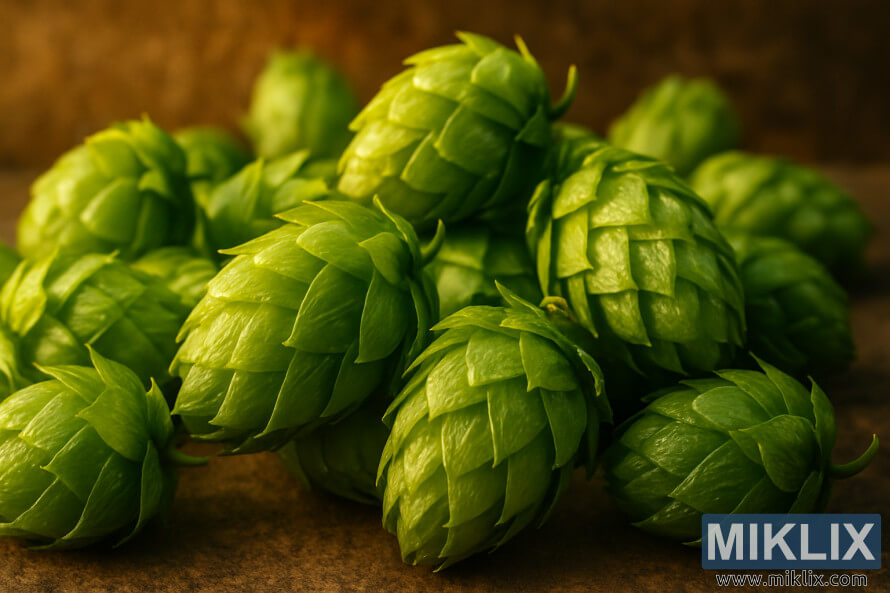
Click or tap the image for more information and higher resolutions.
Key Takeaways
- Simcoe hops serve dual roles: reliable bittering and bold aromatic contributions.
- Expect piney, resinous, and fruity tones in the Simcoe hop profile.
- Simcoe alpha acids typically offer stable bittering for a wide range of beers.
- Simcoe aroma shines in whirlpool and dry-hop additions for IPAs and pale ales.
- The article provides practical brewing schedules and pairing advice for homebrewers and commercial brewers.
Overview of Simcoe®: Origin and Development
Simcoe® emerged in the hop world as YCR 14, an experimental variety. Developed by Select Botanicals Group, it was introduced to the public in 2000 by Yakima Chief Ranches. A patent filed in 1999 credits Charles Zimmermann as the inventor, highlighting its formal breeding and commercial release.
The exact lineage of Simcoe is a trade secret, with its parentage undisclosed. It's believed to have been bred through open pollination, but the trademarked status restricts detailed information. This secrecy is why the public lacks access to its full genealogy.
Following its release, Simcoe quickly gained popularity in craft and homebrewing circles. Growers expanded U.S. acreage to meet the demand, while brewers celebrated its versatility. Its unique blend of bittering and aromatic qualities cemented its place in modern American ales.
- Original tag: YCR 14
- Developer: Select Botanicals Group
- Patent inventor: Charles Zimmermann
- Released through: Yakima Chief Ranches in 2000
The tale of Simcoe intertwines formal breeding with commercial success. Select Botanicals Group bred it, Yakima Chief Ranches distributed it, and Charles Zimmermann is tied to the patent. This blend of effort and innovation has made Simcoe a topic of interest for both growers and brewers.
Simcoe hops
Simcoe hops are a cornerstone of American craft brewing. Yakima Chief Ranches owns the cultivar, listed as YCR 14, with the international SIM hop code. Charles Zimmermann is credited as the breeder and inventor behind its development.
Brewers value Simcoe as a Simcoe dual-purpose hop. It performs well for bittering and late additions. Typical alpha acids range between 12% and 14%, which gives reliable bittering power without overwhelming aroma contributions.
Aroma and flavor notes lean toward pine resin, passionfruit, and apricot. These descriptors help explain why Simcoe hop characteristics are prized in IPAs and aromatic pale ales. The hop brings both resinous depth and bright fruit top notes.
Common formats include whole cone and pellet forms. Cryo or lupulin concentrates are used by some brewers to intensify aroma while reducing vegetal material. These options make Simcoe versatile in recipe design and handling.
- Ownership: Yakima Chief Ranches (Yakima Valley Ranches)
- Purpose: Dual; often listed as Simcoe dual-purpose hop
- International code: SIM; cultivar ID YCR 14
Simcoe serves as a staple hop in U.S. craft brewing. Its balance of alpha acids and distinctive aromas lets brewers use it across a wide range of styles. That mix of utility and character keeps Simcoe in frequent rotation.
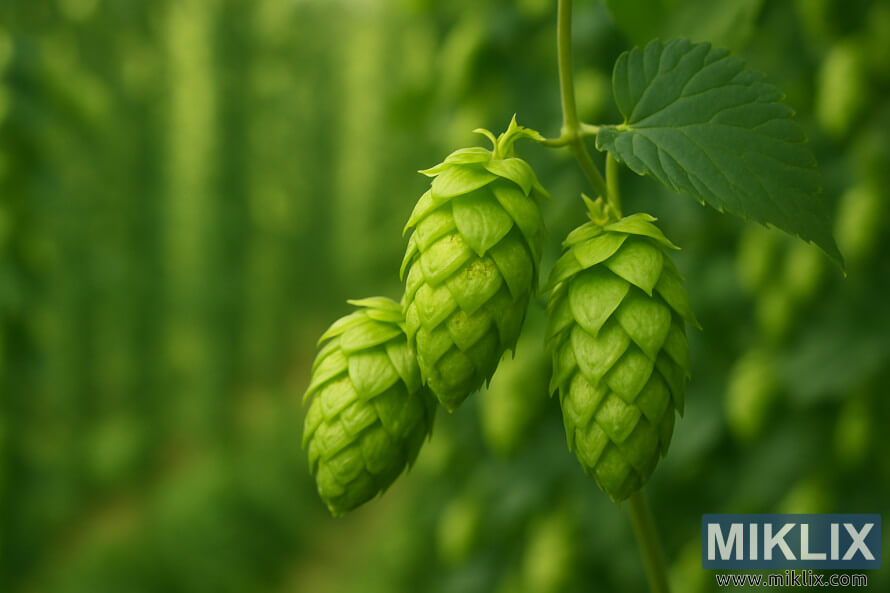
Click or tap the image for more information and higher resolutions.
Aroma and flavor profile of Simcoe hops
Simcoe hops are celebrated for their unique blend of resinous pine and vibrant fruity notes. They are often used in single-hop ales, where their grapefruit zest and woody pine backbone shine. This combination creates a distinctive flavor profile.
The Simcoe flavor profile is characterized by passionfruit and tropical fruit notes, making IPAs juicy and fruit-forward. Even small amounts reveal apricot and berry tones, maintaining the hop's resinous edge. This balance is key to its appeal.
When added late in the boil or as a dry hop, Simcoe's passionfruit and grapefruit notes become more pronounced. This method enhances tropical fruit esters while preserving pine resin and a hint of spice. It's a nuanced approach that highlights the hop's complexity.
Commercial brewers like Great Lakes Brewing and Rogue incorporate Simcoe into blends to intensify fruit flavors. Homebrewers, on the other hand, rely on late additions to achieve the perfect balance between pine, citrus, and stone fruit. This allows for a more personalized touch in their creations.
Simcoe is ideal for adding an orange-crush citrus lift or deepening the resinous pine in hoppy ales. Its layered profile, featuring grapefruit brightness, passionfruit sweetness, apricot nuance, and tropical fruit depth, makes it a staple in modern IPA recipes. It offers versatility and depth, catering to a wide range of brewing preferences.
Brewing values and analytical specifications
Simcoe's brewing numbers are reliable for planning bittering and aroma. Alpha acids range from 11% to 15%, with an average of 13%. This makes it ideal for primary bittering, maintaining a clean hop character.
Beta acids are lower, between 3% and 5%, averaging 4%. The alpha:beta ratio is typically 2:1 to 5:1, often 4:1. This balance is great for malt-forward beers.
Cohumulone in Simcoe is moderate, 15% to 21% of total alpha acids, averaging 18%. This affects bitterness bite and hop harshness at high rates.
Total essential oils range from 0.8 to 3.2 mL per 100 g, averaging 2 mL. This supports a strong hop character, best used late in the boil or in dry hopping.
Myrcene dominates the essential oils, making up 40% to 50% of total oils. It contributes resinous, fruity notes. These notes are preserved when added late or used in dry hopping.
Humulene and caryophyllene are significant secondary aromatics. Humulene is 15% to 20%, while caryophyllene is 8% to 14%. They add woody, herbal, and spicy dimensions to beers.
Minor components like farnesene and trace terpenes complete the profile. Farnesene is near 0%–1%. Other terpenes like β-pinene, linalool, and geraniol make up 15%–37% of the oil mix, adding floral and citrus notes.
Simcoe's HSI averages 0.268, placing it in a "good" stability class. Yet, storage is critical. A measured HSI suggests a 27% loss in alpha activity after six months at 68°F. Fresh hops are essential for the brightest aromatics.
Practical takeaways are clear. High Simcoe alpha acids are perfect for bittering. The strong myrcene fraction supports juicy or resinous aromas when added late or used for dry hopping. Always monitor HSI and store pellets in cool, dark places to preserve essential oils like myrcene, humulene, and caryophyllene for the best sensory results.
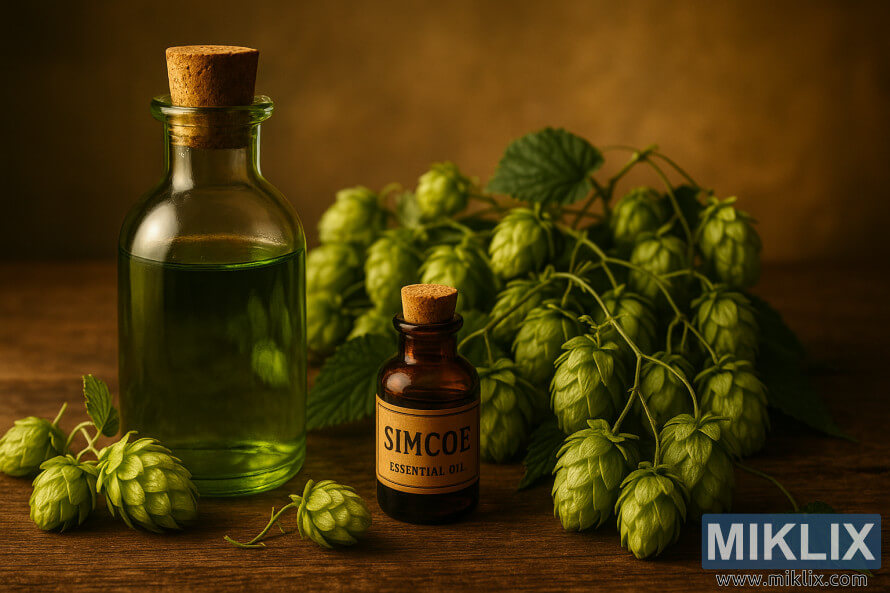
Click or tap the image for more information and higher resolutions.
How to use Simcoe in the boil and whirlpool
Simcoe is a versatile hop, valued for its bittering and aromatic qualities. It boasts 12–14% alpha acids, making it ideal for bittering. Early additions during the boil enhance the isomerization of these acids, creating a balanced flavor. Adjust the amount based on the desired IBU and local hop utilization curves.
Consider the alpha% and hop storage index for each year. Fresh hops or recent lab data are essential for precise planning. When switching between cryo or lupulin products, convert the weights to maintain accuracy.
Late additions preserve the volatile oils that contribute citrus, pine, and stone fruit notes. Adding hops in the last 5–15 minutes of the boil helps retain more aroma while adding flavor. Timing is critical as prolonged boiling can reduce total oils, affecting the final aroma.
At flameout, use a controlled whirlpool to extract aroma without excessive loss. A 10–30 minute rest at 160–180°F (70–82°C) balances extraction and retention. This method ensures vibrant hop character with minimal isomerization.
Consider hop utilization when scheduling additions later in the process. As boil time shortens, utilization decreases, so increase the weight of late additions for measurable bitterness. Utilization charts help estimate isomerization from each addition.
Whirlpool techniques and product choice significantly impact outcomes. Whole-cone Simcoe offers classic complexity, while cryo or lupulin concentrates are more efficient for aroma in whirlpool and dry-hop stages. Test small batches and scale quantities based on lab-provided alpha and HSI values for consistent results.
- For bittering: early boil additions, use alpha% and utilization curves.
- For flavor: add at 10–20 minutes left in the boil.
- For aroma: flameout or Simcoe whirlpool at 160–180°F for 10–30 minutes.
- For concentrated aroma: consider lupulin/cryo products for whirlpool hopping Simcoe.
Track hops by alpha acid, HSI, and lot notes. Small adjustments in timing and weight can significantly alter perceived bitterness and aroma. Keep records to refine future brews and translate theoretical hop utilization into real-world results.
Dry hopping with Simcoe
Simcoe is a top choice for dry hopping in American IPAs and double IPAs. It's used alone for single-hop experiments or blended with others to enhance pine, citrus, and resin notes. This variety can add bright fruit aromas while maintaining a faint dank, spicy undertone.
The choice of format depends on desired intensity and budget. Pellet hops ensure consistent extraction. Cryo and lupulin Simcoe, on the other hand, concentrate aroma and reduce vegetal matter. Use half the weight of cryo or lupulin compared to pellets for similar aromatic impact.
Establish a detailed dry hopping schedule, considering beer style and tank temperature. Short rests of 24–72 hours are suitable for delicate pale ales. For robust IPAs, extended contact up to 7 days is recommended. Regularly check the aroma to prevent grassy or vegetal off-flavors.
- Single-stage dry hop: add hops near transfer to bright tank for a clean burst.
- Staged additions: split into two additions (for example day 3 and day 7) to build complexity.
- Simcoe DDH: double dry-hopping can intensify fruit and resin when used judiciously.
Adjust quantities when using lupulin Simcoe or products like Cryo/LupuLN2 and Lupomax. These concentrates offer more oil per gram. Begin with a conservative amount, taste at 48–72 hours, and add more as needed during a staged schedule.
Balance Simcoe with complementary hops to tame dank or spicy edges. Citrus-forward varieties like Citra or El Dorado can soften resinous notes. When Simcoe is the primary dry hop, keep whirlpool additions minimal to preserve volatile aromatics.
Packaging quality is critical for aroma retention. Fresh, vacuum-sealed hops preserve oils during storage and shipping. For consistent results, source hops from trusted suppliers and adhere to a dry hopping schedule that aligns with your target beer style.
Hop pairings and blending with Simcoe
Simcoe is versatile, pairing well with a variety of hops. In both homebrew and commercial recipes, it's often combined with Citra, Amarillo, Centennial, Mosaic, Chinook, and Cascade. These pairings allow brewers to craft beers with a focus on citrus, tropical fruit, resin, or pine.
For IPAs that are juicy and fruit-forward, Simcoe is a great choice when paired with Citra, Mosaic, and Amarillo. This combination enhances tropical and stone-fruit flavors while Simcoe contributes a piney-resin character. The pairing of Citra and Simcoe is often highlighted to emphasize the beer's bright, fruity hop profile.
To achieve a classic West Coast IPA, blend Simcoe with Chinook, Centennial, and Cascade. These hops emphasize resin, grapefruit, and pine. Brewers should use higher late additions and dry hop doses to intensify bitterness and aroma.
In blends where complexity is desired, use Simcoe sparingly. Combining it with Willamette or noble-style hops adds subtle spice and wood notes without overpowering the malt. This approach is ideal for amber ales and saisons that require a delicate touch of citrus or pine.
- Juicy IPA strategy: Citra + Mosaic + Simcoe.
- Resinous West Coast: Chinook + Centennial + Simcoe.
- Complexity with restraint: Simcoe + Willamette or noble-style hops.
When selecting hops to blend with Simcoe, consider alpha acid, oil composition, and timing. Early kettle additions contribute bitterness, while whirlpool hops enhance depth. Dry hopping with Citra Simcoe blends produces the most vibrant aroma. Adjusting the ratio of these hops can alter the balance between citrus and resin.
Test small pilot batches to refine new Simcoe blends. This approach allows brewers to understand how hops interact in their specific water profile and yeast strain. Keeping detailed records of rates and timing can streamline future recipe development and ensure the desired character is achieved.
Beer styles that showcase Simcoe
Simcoe excels in hop-forward ales, where its pine, grapefruit, and resin notes can take center stage. Classic American pale ales provide a clear canvas for Simcoe pale ale recipes. These recipes balance malt crispness with bold hop character.
Pale ale and IPA are the core styles that highlight Simcoe in IPA. Brewers at Great Lakes, Rogue, and Full Sail often use it in flagship beers. This showcases its citrus and pine aromatics.
Double IPAs and New England styles benefit from heavy dry hopping. A Simcoe DDH IPA emphasizes juicy, resinous layers and soft bitterness. Other Half and Hill Farmstead offer examples where Simcoe leads the hop bill for bright, sticky profiles.
Single-hop trials work well when you want to study an individual hop. A Simcoe single-hop brew makes it easy to evaluate its tropical, dank, and citrus facets. This is without masking from other varieties.
- Best fits: Simcoe pale ale, American IPA, Double IPA.
- Dry-hop focus: Simcoe DDH IPA and hop-forward New England styles.
- Experimental uses: single-hop ales, fresh-hop saisons, and dry-lagged lagers.
Use Simcoe selectively in lagers or mixed-fermentation beers when you need a bright pine or citrus contrast. This contrast is against clean malt or wild yeast funk. Small additions can lift complexity without overwhelming the base beer.
When designing a recipe, set Simcoe as a dominant late or dry-hop addition for aromatic impact. This approach helps craft beers where Simcoe in IPA or pale ale roles remain distinct and memorable.
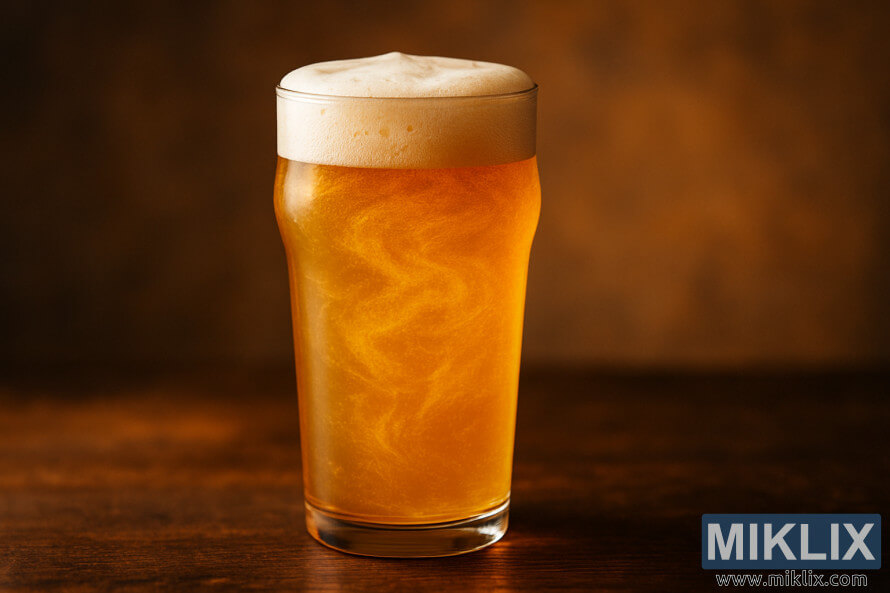
Click or tap the image for more information and higher resolutions.
Substitutions and alternatives for Simcoe
When Simcoe is out of reach, choose substitutes that match the hop's intended role in the recipe. For bittering and a clean alpha-acid profile, Magnum substitute choices work well. Brewers often pick Magnum for its neutral, high-alpha character and predictable extraction.
For resinous, piney backbone and firm bitterness, Summit as Simcoe alternative can be effective. Summit shares some sharp, citrusy top notes and strong bittering power, making it a practical swap when a similar structural element is needed.
To recreate fruity, tropical, and citrus-forward aromas, turn to hops like Citra, Mosaic, or Amarillo. These hops mimic the bright, fruit-driven side of Simcoe and provide big aroma impact when used in late kettle or dry hop additions.
If you need hops like Simcoe for pine and classic American character, Chinook and Centennial are reliable. Cascade can supply a lighter grapefruit note that overlaps with parts of Simcoe's profile, useful in lighter ales and American pale ales.
- Role: bittering — consider Magnum substitute or Summit as Simcoe alternative, adjust for alpha acids.
- Role: fruity aroma — use Citra, Mosaic, Amarillo for stronger tropical and citrus notes.
- Role: pine/resin — pick Chinook, Centennial, or Columbus for backbone and resinous tone.
Commercial blends and many recipes swap or pair Simcoe with Mosaic, Citra, and Ekuanot to reach a similar fruit-forward or resinous balance. When replacing Simcoe, scale additions by alpha acid and aroma intensity to maintain balance.
Practical guidance: match your substitute to the hop's job. Use bittering hops for early additions and high-alpha hops for IBUs. Use aromatic, low-alpha varieties for late additions and dry hopping. Small test batches help tune quantities before scaling up.
Availability, formats, and purchasing tips
Simcoe hops are available from numerous suppliers in the U.S. and online. You can find them as Simcoe pellets, Simcoe lupulin, or Simcoe Cryo. Crop years, alpha acid numbers, and prices differ by seller. It's wise to check listings for 2024, 2023, 2022, and earlier harvests.
Package sizes vary from small homebrew lots to bulk quantities. Yakima Valley Hops offers 2 oz, 8 oz, 16 oz, 5 lb, and 11 lb options. Standard packaging includes Mylar foil bags, vacuum-sealed packs, and nitrogen-flushed containers to maintain freshness.
Cryo and lupulin are ideal for aroma-forward beers, providing concentrated oils with less vegetal matter. They are used at roughly half the mass of pellets for similar impact. Lupulin excels in whirlpool and dry hop additions, adding intense aroma and clarity to the beer.
- Check crop year and lab-tested alpha acids before you buy Simcoe hops.
- Prefer vacuum-sealed or nitrogen-flushed packs to extend shelf life.
- Store hops cold and dark immediately after receipt to preserve oils.
When ordering large quantities, ensure the supplier's reputation and shipping speed are reliable. Trusted names include Yakima Valley Hops, Yakima Chief Ranches, and Hopsteiner. Look for clear policies on payment, security, and returns to avoid quality or transit delays.
For aroma-heavy additions, compare the cost per effective ounce between Simcoe pellets and concentrated formats. Simcoe Cryo or lupulin can lower vegetal drag in dry hops, providing a cleaner aromatic lift. This makes them cost-effective for many brewers.
Inspect packaging upon arrival. Intact Mylar bags that are vacuum or nitrogen sealed indicate good hop packaging. If alpha acid numbers are provided, record them for recipe adjustments and aging forecasts.
Small purchases on general retail sites and direct buys from suppliers both work. Match your selection to your brew scale, storage capability, and desired aromatic concentration when buying Simcoe hops.
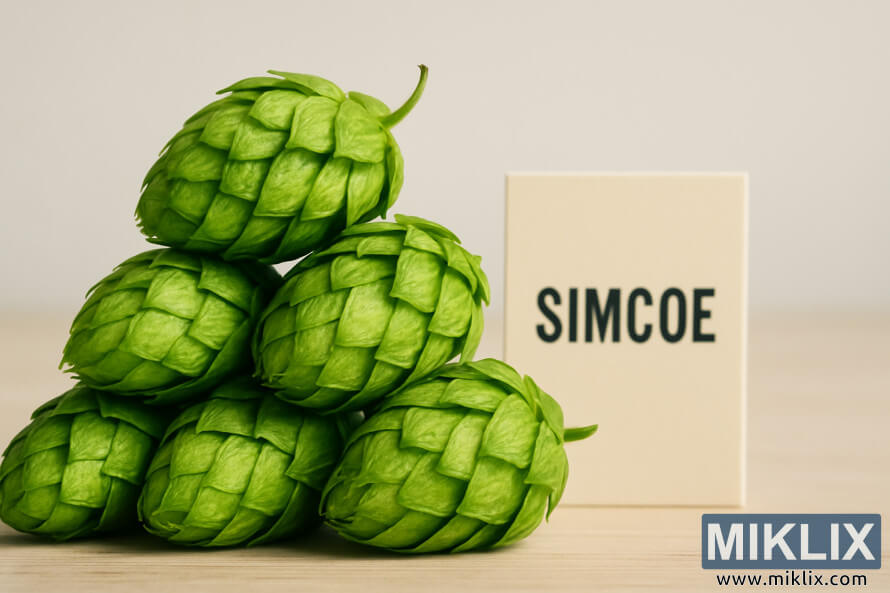
Click or tap the image for more information and higher resolutions.
Agronomy and hop growing notes for Simcoe
Simcoe is an early to mid-season variety, aligning well with U.S. hop production schedules. Growers can initiate harvest operations in mid-to-late August for most aroma blocks. This timing is critical to capture peak oil profiles during the Simcoe harvest.
Commercial performance indicates Simcoe yield ranges from 1,040–1,130 kg per acre (2,300–2,500 lb/acre). These figures have contributed to its rise in acreage across the Pacific Northwest. By the early 2020s, Simcoe became one of the top U.S. plantings.
Simcoe exhibits moderate mildew resistance, which reduces disease pressure compared to highly susceptible varieties. Standard integrated pest management and canopy practices are essential. They help protect bines and cones during wet periods.
Post-harvest behavior of Simcoe is favorable for storage stability, with a good HSI. This supports longer shelf life when hops are processed promptly. Proper handling, quick kilning, and cold storage further enhance aroma retention and oil preservation post-harvest.
Protective management by Select Botanicals Group and Yakima Chief Ranches ensures Simcoe remains a trademarked variety. Licensing and certified plant material guarantee genetic consistency for growers planting Simcoe USA hops.
- Planting note: early–mid maturity aids scheduling and fits double-crop rotations.
- Disease control: moderate Simcoe mildew resistance reduces risk but does not remove the need for scouting.
- Post-harvest: fast processing and cold storage preserve quality and maximize Simcoe yield value.
Recipe examples and practical brew schedules using Simcoe
Simcoe can carry an entire beer on its own. Commercial single-hop beers like Temescal Simcoe IPA, Hill Farmstead Simcoe Single Hop Pale Ale, and Other Half DDH Simcoe Chroma show its expressiveness. For homebrewers, a Simcoe single hop recipe simplifies tuning alpha acids and hop timing. It highlights pine, resin, and tropical fruit notes.
Use these practical schedules as starting points. Adjust to measured alpha acid (AA) and product format. Check lab values and recalc bitterness when switching suppliers.
Single-hop Simcoe APA — target 5.5% ABV
- Bittering: 60 min using Simcoe at adjusted AA to hit target IBUs (12–14% AA common).
- Flavor: 10 min late hop addition to retain citrus and resin notes.
- Whirlpool: 10–20 min at about 170°F; follow a clear Simcoe whirlpool schedule to push aroma without stripping oils.
- Dry hop: 3–5 g/L for 3–5 days; use pellets or Cryo at ~half weight for lupulin concentrates.
DDH Simcoe IPA — target 7.0% ABV
- Bittering: minimal early addition; use a neutral bittering hop if you want cleaner bitterness, or a small Simcoe charge for continuity.
- Whirlpool: 20 min at 165–175°F using heavy Simcoe Cryo for strong aromatic lift; follow a precise Simcoe whirlpool schedule to protect delicate terpenes.
- Double dry hop: 1st charge on day 3 at 2–3 g/L, 2nd charge on day 7 at 2–3 g/L; total contact 3–5 days. This Simcoe dry hop schedule layers bright and dank notes.
- When using cryo or lupulin, cut weight roughly in half versus pellets for similar aroma impact.
When converting pellets to cryo or lupulin, reduce the whirlpool and dry-hop weights by about 50%. This accounts for higher alpha concentration and oil content in concentrated products.
Pay attention to equipment and process. Hop utilization varies with kettle geometry, boil vigor, and wort pH. Keep temperature control during whirlpool and steep to follow the Simcoe whirlpool schedule and protect aromatic oils.
- Measure alpha acid for each batch and recalc IBUs before additions.
- Use a hop utilization calculator that factors your vessel size and boil intensity.
- Record wet and dry hop weights, contact times, and temperatures so repeated batches match.
These templates fit many Simcoe recipes and can be tweaked when pairing with Citra, Mosaic, Cascade, Ekuanot, or Willamette. Adjust additions by measured AA, desired bitterness, and whether you use pellets or concentrated lupulin to get consistent results.
Conclusion
Simcoe hops, a trademarked U.S. variety (YCR 14) introduced in 2000, offer a unique blend of high alpha acids—typically 12–14%—and a complex aroma. This includes notes of pine, grapefruit, passionfruit, apricot, and tropical flavors. Their dual-purpose nature makes them ideal for both bittering and late additions, providing brewers with flexibility in recipe styles.
When brewing, it's essential to consider alpha acid and hop storage stability index (HSI) when purchasing. Cryo or lupulin preparations can enhance aroma without introducing vegetal flavors. Pairing them with hops like Citra, Mosaic, Amarillo, Centennial, Chinook, and Cascade can guide the beer towards citrus, tropical, or pine-forward profiles.
Simcoe hops are best used for early boil bittering and late boil/whirlpool or dry-hop additions. They shine in IPAs, double IPAs, pale ales, and single-hop showcases. Adhering to whirlpool timing and double dry-hopping schedules is key to capturing volatile esters and maximizing their benefits in the final beer.
In the market and agronomy sectors, Simcoe is widely cultivated in the United States and gaining popularity among commercial growers and homebrewers. Its good storage stability and moderate disease resistance ensure a consistent supply. This makes Simcoe hops a reliable choice for brewers seeking bold, complex hop character in their beers.
Further Reading
If you enjoyed this post, you may also like these suggestions: