
Image: Brewing Scientist Analyzing Hop Compounds in a Modern Laboratory
Published: October 8, 2026 at 10:08:48 PM UTC
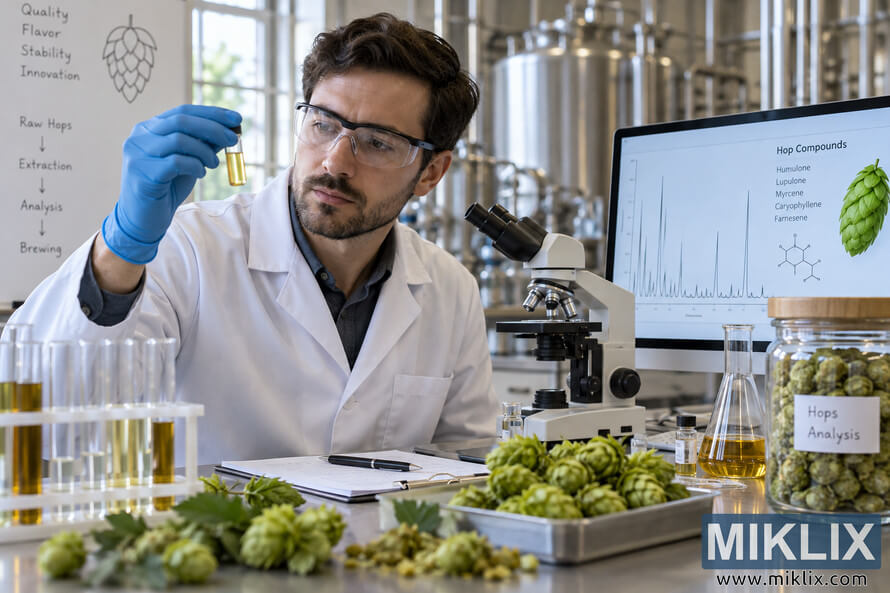
A brewing scientist analyzes hop compounds in a modern laboratory using hop samples, glassware, microscopy, and chemical data alongside brewery equipment.
Available versions of this image
The image files available for download below are less compressed and higher resolution - and as a result of that, higher quality - than the images embedded in articles and pages on this website, which are more optimized for file size in order to reduce bandwidth consumption.
Regular size (1,536 x 1,024)
Large size (3,072 x 2,048)
Very large size (4,608 x 3,072)
Extra large size (6,144 x 4,096)
Comically large size (1,048,576 x 699,051)
- Still uploading... ;-)
Image description
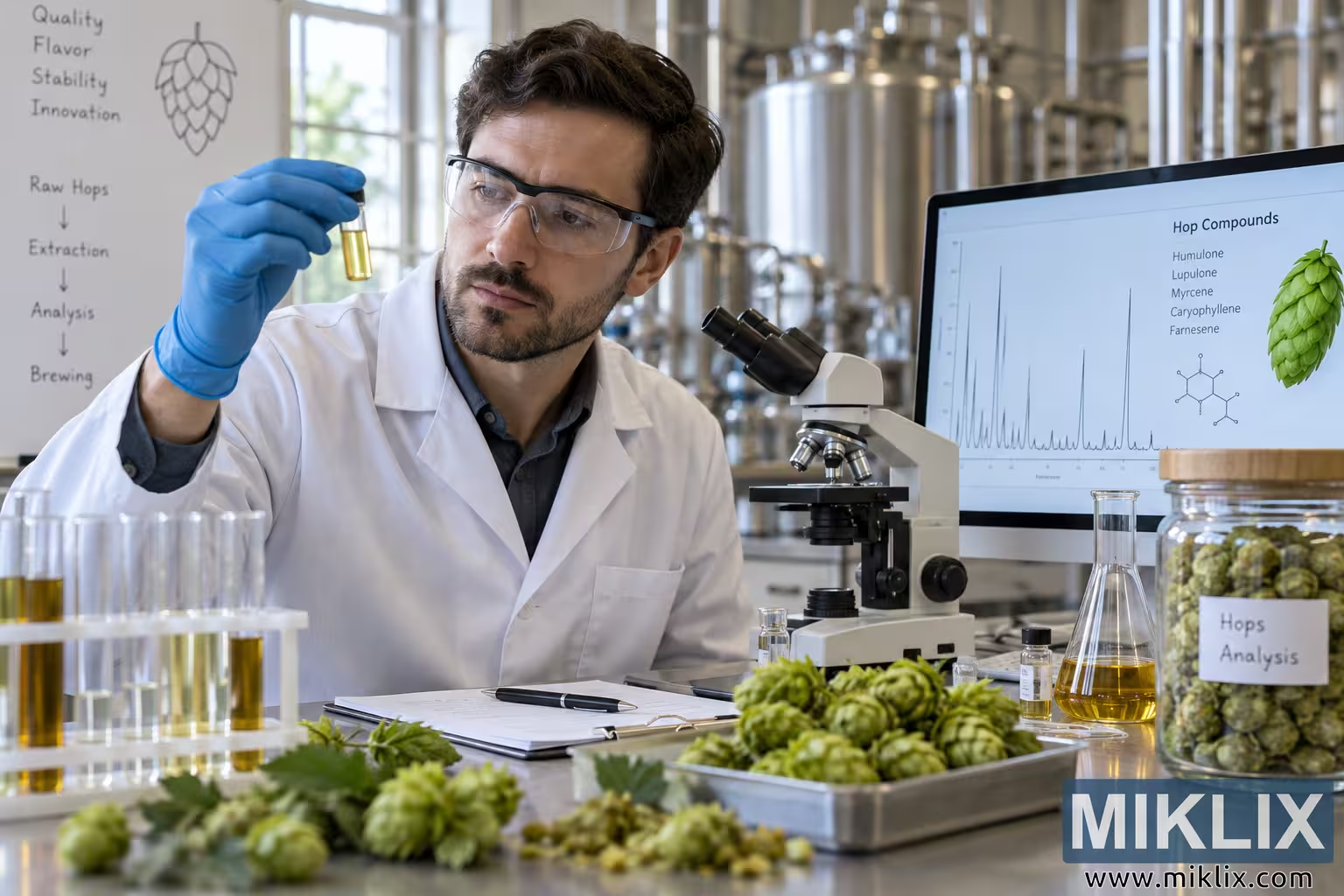
A high-resolution, landscape-oriented photograph depicts a brewing scientist conducting a detailed analysis of hop compounds in a bright, modern laboratory that blends the visual characteristics of a scientific research facility with those of a small experimental brewery. The central subject is an adult male scientist positioned slightly left of center. He has short, dark brown hair, neatly trimmed facial hair, and wears clear protective safety glasses, a white laboratory coat over a dark collared shirt, and bright blue disposable laboratory gloves. His expression is serious, concentrated, and analytical. Rather than looking toward the camera, he directs his attention toward a small transparent sample vial held carefully between the fingers of his raised gloved hand. The vial contains a clear golden-yellow liquid, suggesting an extracted hop compound, brewing sample, essential oil fraction, or other laboratory preparation associated with hop chemistry. The scientist holds the vial up toward the ambient light, visually inspecting its clarity, color, and appearance.
The laboratory bench in front of the scientist contains numerous objects associated with both analytical chemistry and brewing research. On the left side of the foreground is a white test-tube rack containing several transparent glass tubes. Some of the tubes contain golden or pale yellow liquid at varying levels, reinforcing the impression that multiple samples or experimental fractions are being compared. Nearby, loose green hop cones and leafy plant material are distributed across the stainless-steel work surface. The hops have a fresh, textured appearance, with overlapping green bracts and natural variations in size and color. Their presence immediately establishes hops as the primary botanical material under investigation.
Near the center foreground, a clipboard or laboratory notebook rests on the bench with papers, handwritten or printed research notes, and a dark pen. This detail suggests that the scientist is documenting observations or recording experimental measurements as part of a structured research process. In front of and beside the notes are additional hop cones, including a shallow metal laboratory tray filled with green hops. Some plant material appears partially broken apart or separated, suggesting that samples may be prepared for extraction, chemical analysis, or sensory evaluation.
A laboratory microscope occupies a prominent position in the middle of the composition, immediately to the right of the scientist. It has a conventional binocular viewing head, objective lenses, mechanical stage, focusing controls, and a sturdy light-colored body. Although the scientist is currently examining the vial rather than looking through the microscope, the instrument communicates a broader analytical environment and suggests microscopic inspection may form part of the research workflow. Several small transparent sample bottles and laboratory containers are positioned around the microscope.
On the right side of the image, a large computer monitor displays scientific information related to hop chemistry. The screen is headed with the words “Hop Compounds” and contains a chromatogram-like graph consisting of numerous narrow peaks of different heights. This visual resembles analytical output from techniques used to separate and characterize chemical constituents. Alongside the graph is a list of hop-associated compound names, including terms resembling humulone, lupulone, myrcene, caryophyllene, and farnesene. A simplified molecular structure is displayed below the list, while a large green illustration of a hop cone appears on the far right of the screen. Together, these elements visually connect the physical hop samples on the laboratory bench with their chemical composition and analytical data.
In front of the monitor is a clear Erlenmeyer flask containing another golden-yellow liquid. Its narrow neck and conical body catch reflections from the laboratory lighting. A small sample vial stands nearby. Farther to the right, a large transparent glass storage jar with a natural-looking wooden lid is packed with dried green hop cones. A simple white label on the jar identifies the contents as material for hop analysis. The absence of commercial logos, branded packaging, or recognizable product marks gives the scene a neutral scientific and research-focused character.
The background expands the setting beyond a conventional chemistry laboratory and establishes a clear connection to brewing. Several large stainless-steel vessels, tanks, pipes, fittings, and pieces of processing equipment are visible behind the scientist. Their polished metallic surfaces reflect the bright natural and artificial light in the room. The equipment is softly out of focus because of the photograph’s depth of field, keeping visual attention on the scientist and the foreground samples while still communicating the scale and industrial context of brewing research. Tall windows admit generous daylight, producing a clean, airy atmosphere and highlighting the glassware, liquids, hops, and stainless-steel surfaces.
On the far left side of the background is a whiteboard containing handwritten research concepts and a simple drawing of a hop cone. Words associated with quality, flavor, stability, and innovation appear near the top. Below them is a basic workflow beginning with raw hops and proceeding through extraction and analysis toward brewing. This whiteboard provides a visual summary of the experimental process represented in the photograph: botanical raw material is collected, compounds are extracted and studied, analytical results are interpreted, and the resulting knowledge can inform brewing decisions.
The overall composition balances human expertise, natural ingredients, laboratory instrumentation, digital analysis, and brewing equipment. The scientist serves as the visual focal point, while the raised golden sample creates a direct connection between his gaze and the chemistry being studied. The microscope and computer form a secondary analytical zone, and the numerous hop cones in the foreground establish the agricultural origin of the compounds under investigation. The stainless-steel brewery equipment in the background completes the progression from plant material to scientific analysis and practical brewing application.
The photograph uses realistic lighting, shallow-to-moderate depth of field, and highly detailed textures. The green hop cones contrast naturally with the white laboratory coat, blue gloves, transparent glassware, amber and golden sample liquids, and silver brewing equipment. The overall mood is professional, precise, innovative, and research-driven. It conveys the idea of modern brewing science, in which traditional ingredients such as hops are examined using laboratory techniques to better understand their aromatic, bittering, flavor, stability, and quality-related properties. No actual commercial brands or identifiable branded products are visible in the scene.
The image is related to: Hops in Beer Brewing: Kohatu