
Image: Dry Hopping a Stainless-Steel Brewery Fermenter with a Hop Bag
Published: October 8, 2026 at 10:08:48 PM UTC
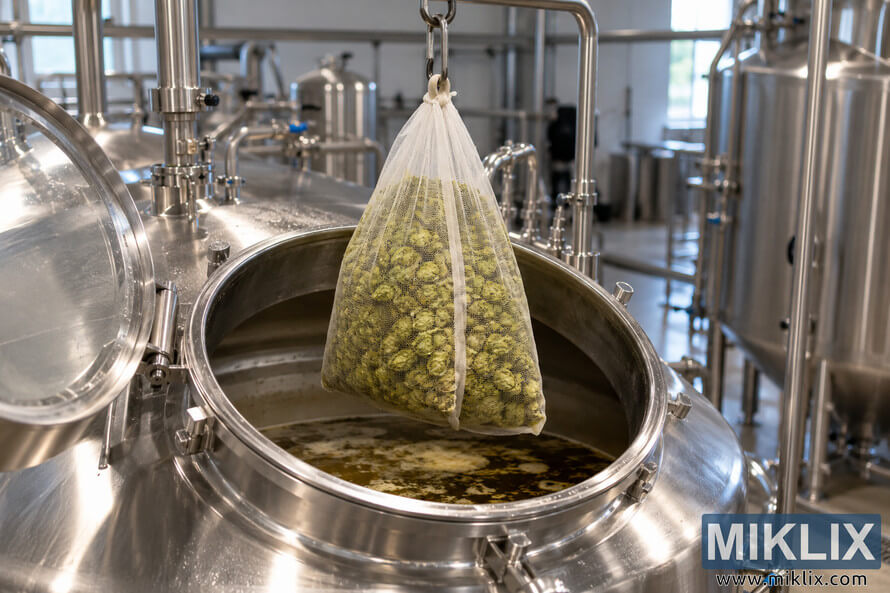
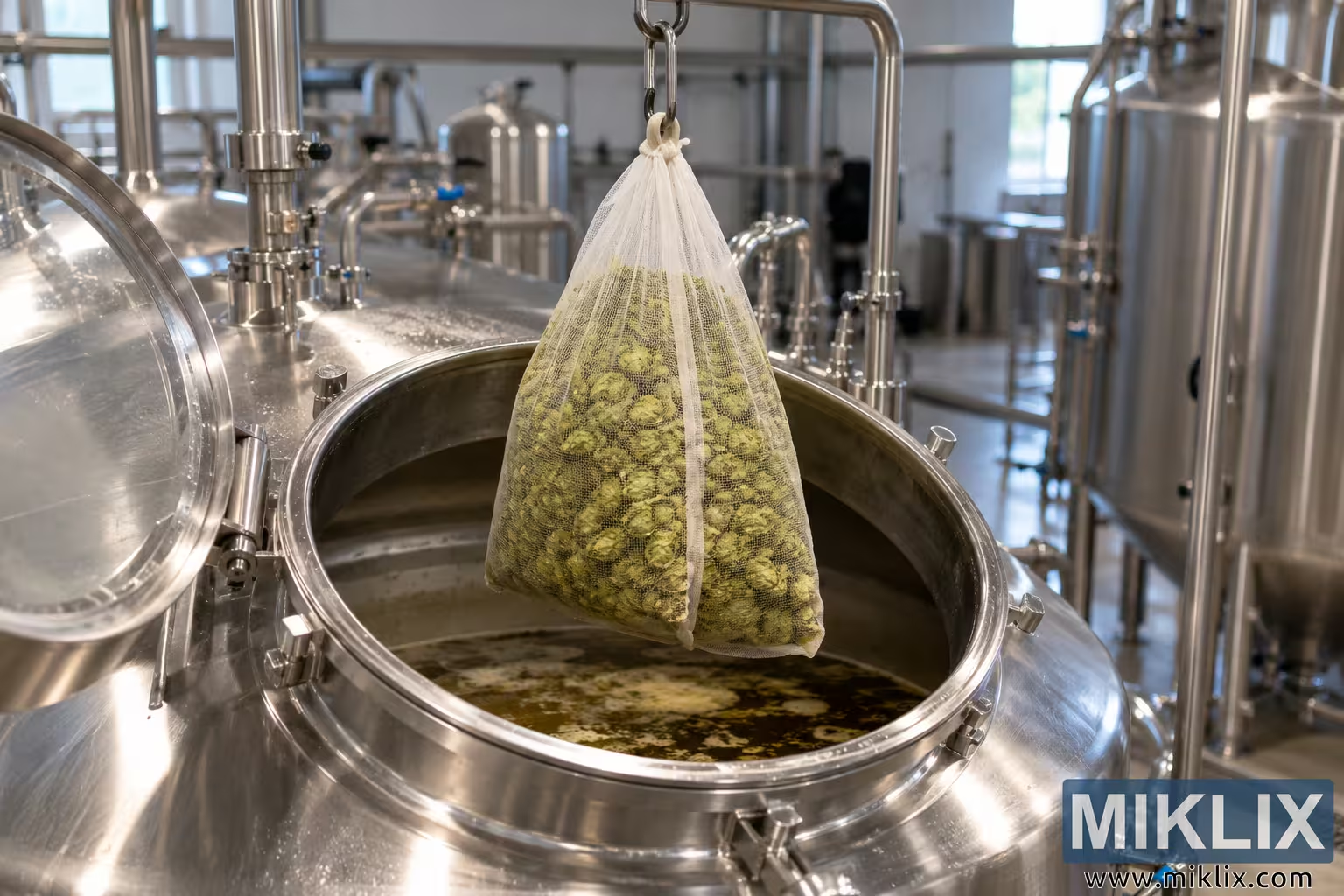
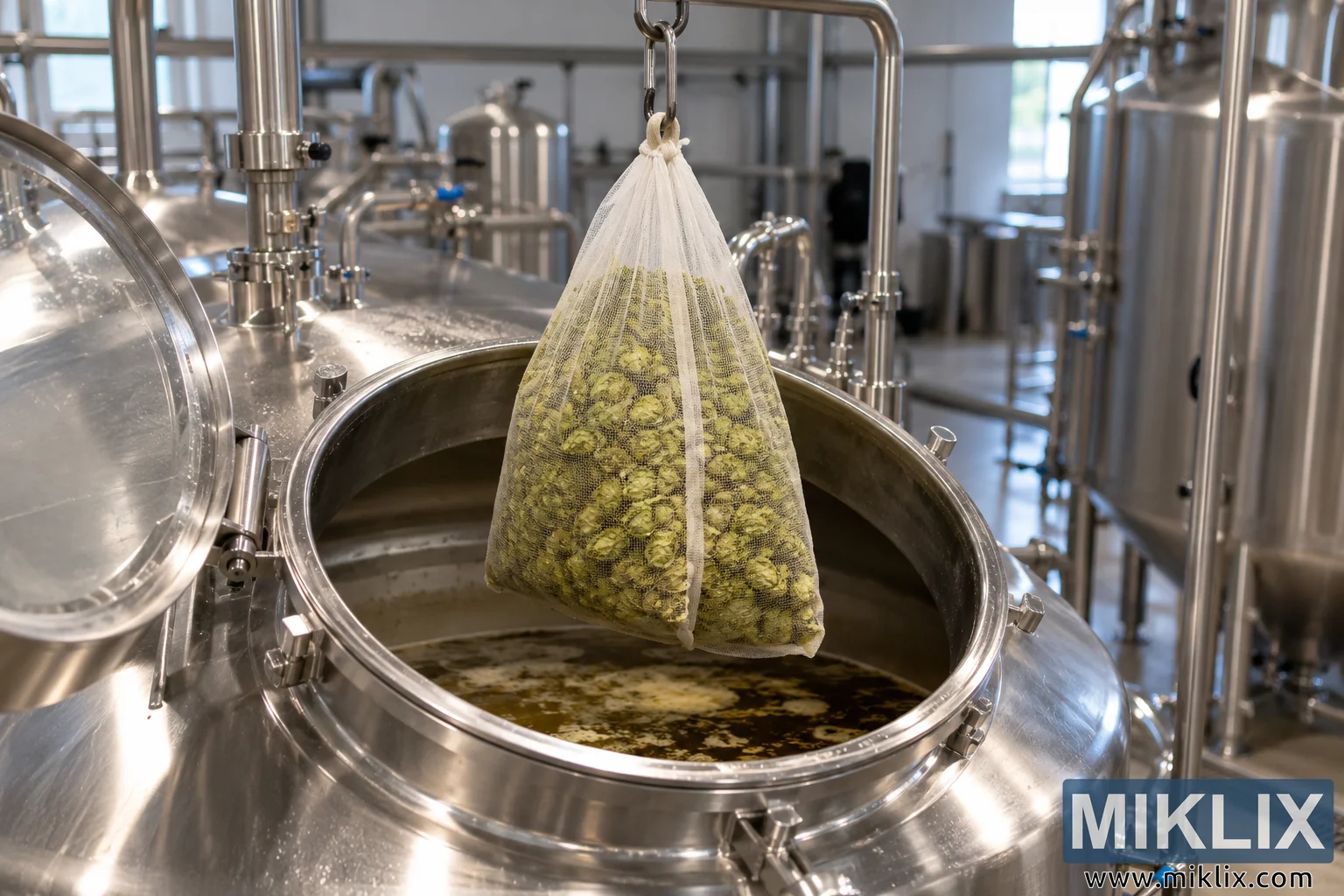
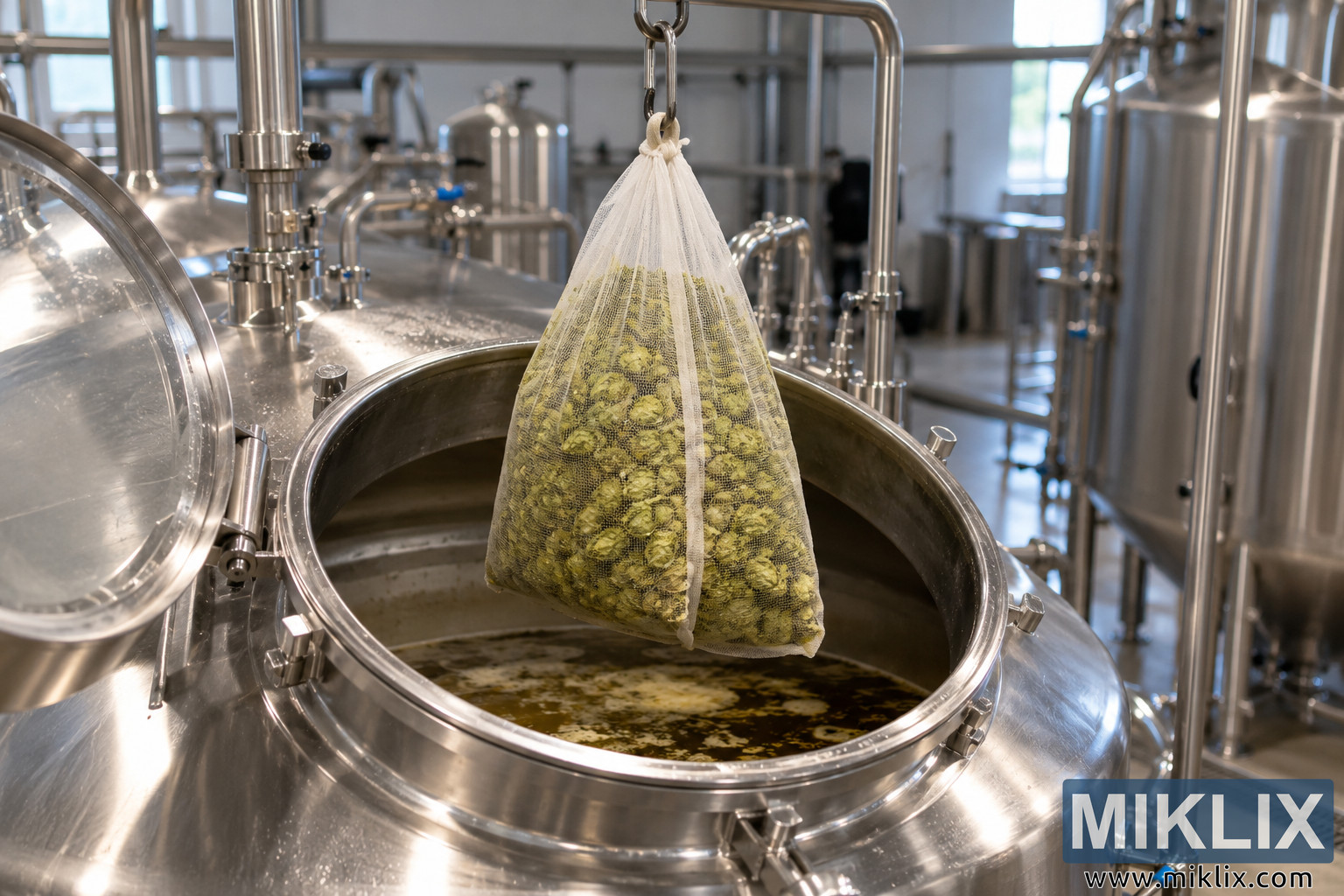
Photorealistic brewery scene showing a mesh bag filled with green hops suspended above an open stainless-steel fermenter during the dry-hopping process.
Available versions of this image
The image files available for download below are less compressed and higher resolution - and as a result of that, higher quality - than the images embedded in articles and pages on this website, which are more optimized for file size in order to reduce bandwidth consumption.
Regular size (1,536 x 1,024)
Large size (3,072 x 2,048)
Very large size (4,608 x 3,072)
Extra large size (6,144 x 4,096)
Comically large size (1,048,576 x 699,051)
- Still uploading... ;-)
Image description
The image presents a crisp, photorealistic view inside a modern brewery, focusing on the process of dry hopping beer in a stainless-steel fermenter. The composition is horizontal and places the open top of the fermenter prominently in the foreground and center of the frame. The vessel is constructed from polished stainless steel, with a broad circular opening surrounded by a substantial metal rim. Its reflective surface catches the soft ambient light of the brewery, producing bright highlights and subtle reflections that emphasize the clean, industrial character of the equipment. The fermenter's large circular lid has been opened and is visible on the left side of the image. It remains attached to the vessel by a robust metal hinge and is tilted away from the opening, providing unobstructed access to the liquid inside.
Suspended directly above the open fermenter is a large white mesh hop bag filled with green hop material. The bag forms the principal visual subject of the photograph. It is elongated and somewhat triangular in shape, becoming narrower toward its securely tied top and wider toward the bottom where the hops have accumulated. The fine woven mesh is translucent enough for the individual pieces of hop material to remain clearly visible through the fabric. The hops appear in numerous compact green pieces with natural variations in shape and tone, ranging from muted yellow-green to deeper olive green. Their irregular texture contrasts strongly with the smooth, polished stainless-steel surfaces surrounding them. The weight of the hops causes the lower portion of the bag to bulge naturally, giving the suspended sack a convincing sense of mass.
At the top of the hop bag, the fabric has been gathered tightly and secured beneath a metal hanging point. The bag is attached to a hook or loop connected to an overhead stainless-steel support structure. This arrangement positions the hops immediately above the exposed beer in the fermenter, visually communicating the dry-hopping stage of brewing. The suspension hardware and surrounding pipework appear sturdy and sanitary, consistent with equipment found in a professional brewing environment. No logos, labels, brand names, packaging, or other identifiable commercial markings are visible anywhere in the scene.
Inside the fermenter, a dark amber to brownish-gold liquid can be seen beneath the hanging bag. The surface is not perfectly clear or still. Pale patches of foam and fermentation residue float across portions of the liquid, creating an organic, irregular pattern. These lighter areas stand out against the deeper color of the beer and suggest that the vessel is actively being used as part of the brewing or fermentation process rather than displayed as empty equipment. The liquid sits below the upper rim, leaving a visible band of stainless steel along the interior wall of the vessel. The interior metal surface is comparatively dark because it receives less direct light, which helps visually frame the liquid and the suspended hops.
The foreground is dominated by the rounded body of the fermenter. Its metallic exterior displays realistic reflections, minor surface variations, and scattered traces of moisture or condensation. Around the circular opening are several mechanical fittings and clamps that secure the hatch during normal operation. Their angular forms and precise construction add technical detail to the scene. The open hatch on the left contains a circular metal panel with a reflective surface and visible hinge components, reinforcing the impression of substantial industrial brewing equipment designed to withstand pressure and repeated cleaning.
The middle ground and background reveal a larger brewery production area filled with additional stainless-steel tanks, pipes, valves, fittings, and processing equipment. Vertical and horizontal pipe runs create a structured network throughout the room. Several pipes curve smoothly at right angles, while smaller valves and connectors appear at junction points. Some valve handles and small fittings introduce restrained blue accents among the otherwise neutral metallic equipment. A tall cylindrical tank occupies much of the right side of the background, while additional rounded vessels can be seen toward the left and center. The repetition of polished metal surfaces establishes a cohesive professional brewery setting without drawing attention away from the central hop bag.
The background is rendered with a moderately shallow depth of field. Equipment close to the fermenter remains relatively detailed, while objects farther away gradually become softer and less distinct. This optical treatment creates depth and naturally directs attention toward the hanging hop bag and open vessel. The brewery appears spacious and orderly, with enough separation between the tanks and pipework to suggest working aisles and access areas. A smooth industrial floor is visible in portions of the background, including a narrow drainage or grating feature near the equipment on the right.
Natural-looking illumination enters through large windows in the background, supplemented by the bright ambient lighting of the production facility. The windows appear as soft rectangular areas of daylight rather than sharply defined exterior views. This lighting produces cool highlights on the stainless steel while retaining warmer tones in the beer and hops. Reflections on the tanks and pipes are controlled rather than mirror-like, preserving visible surface detail and contributing to the realistic photographic appearance. The balance between bright metallic highlights and darker interior areas gives the scene dimensionality without creating excessively harsh shadows.
The image contains no people, allowing the brewing equipment and dry-hopping process to remain the exclusive focus. The central positioning of the hop bag makes the intended activity immediately understandable: aromatic hops are prepared to be lowered into or otherwise exposed to beer contained in the fermenter. The combination of the open vessel, visible beer, suspended mesh sack, overhead support, and surrounding brewery infrastructure provides clear visual context for this brewing technique. Although the photograph depicts an industrial environment, the abundant stainless steel, orderly equipment, uncluttered working space, and bright illumination create an impression of cleanliness and controlled production.
Overall, the scene is a detailed visual representation of dry hopping in a professional brewery. The suspended green hops provide the strongest natural color in an environment otherwise dominated by silver-gray stainless steel, while the amber-brown beer provides a second warm organic element. The contrast between agricultural brewing ingredients and precision industrial machinery captures the relationship between raw materials and modern beer production. The landscape composition provides enough surrounding context to establish the brewery setting while keeping the hop-filled mesh bag and open fermenter as the unmistakable focal points.
The image is related to: Hops in Beer Brewing: Kohatu