
Image: Multiple Hop Varieties Arranged on a Rustic Wooden Table
Published: October 8, 2026 at 10:08:48 PM UTC
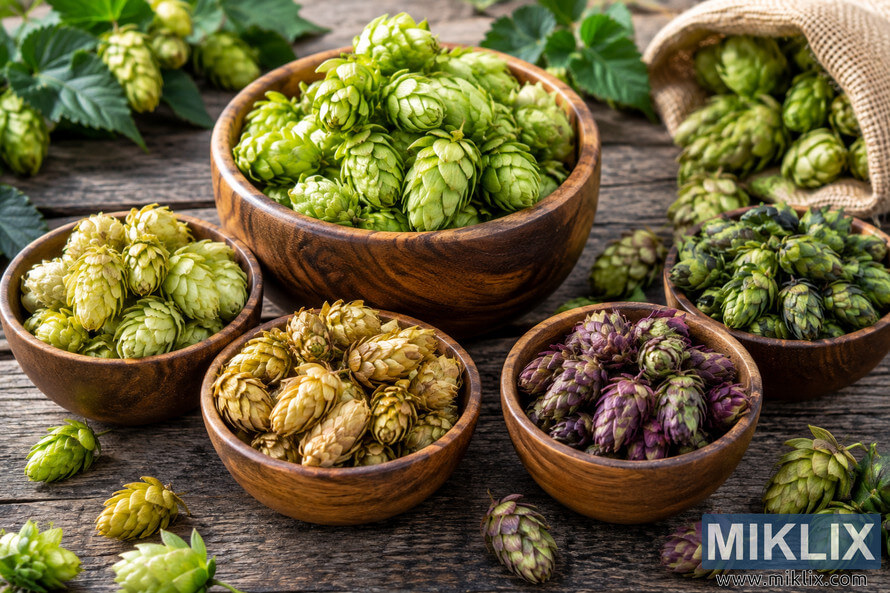
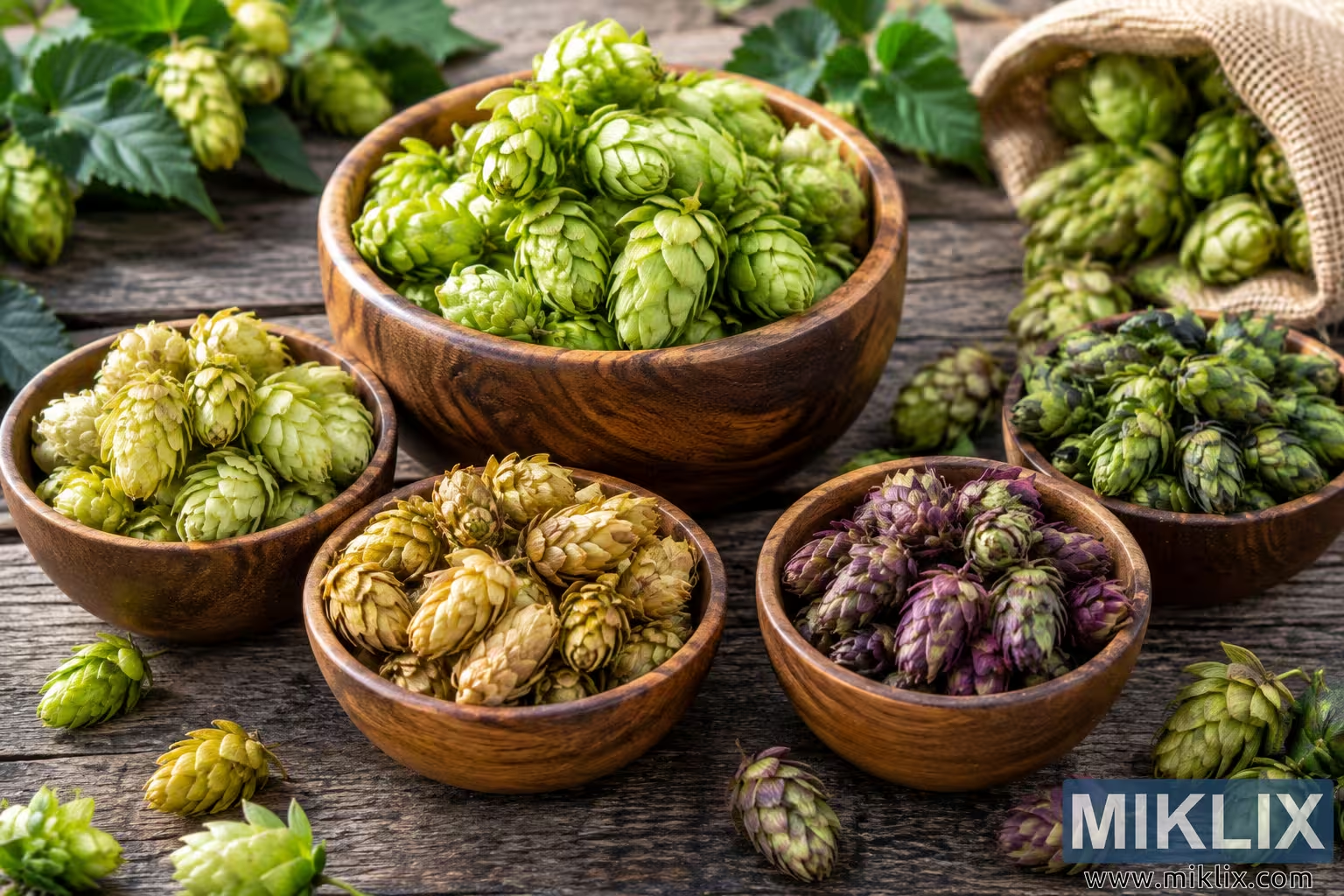
A detailed rustic still life featuring multiple hop varieties in shades of green, gold, and purple, arranged in wooden bowls with loose cones, hop leaves, and burlap.
Available versions of this image
The image files available for download below are less compressed and higher resolution - and as a result of that, higher quality - than the images embedded in articles and pages on this website, which are more optimized for file size in order to reduce bandwidth consumption.
Regular size (1,536 x 1,024)
Large size (3,072 x 2,048)
Very large size (4,608 x 3,072)
Extra large size (6,144 x 4,096)
Comically large size (1,048,576 x 699,051)
- Still uploading... ;-)
Image description
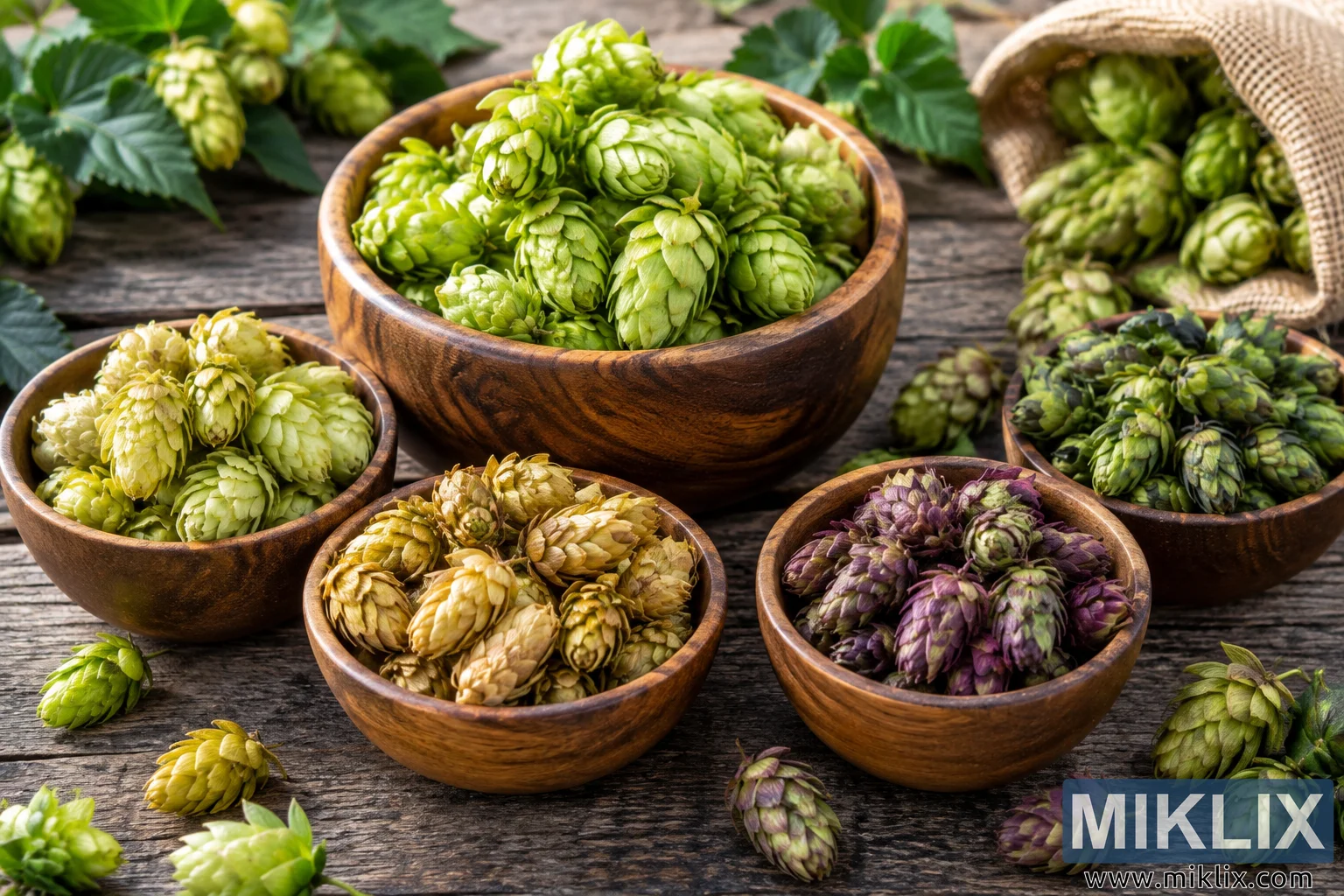
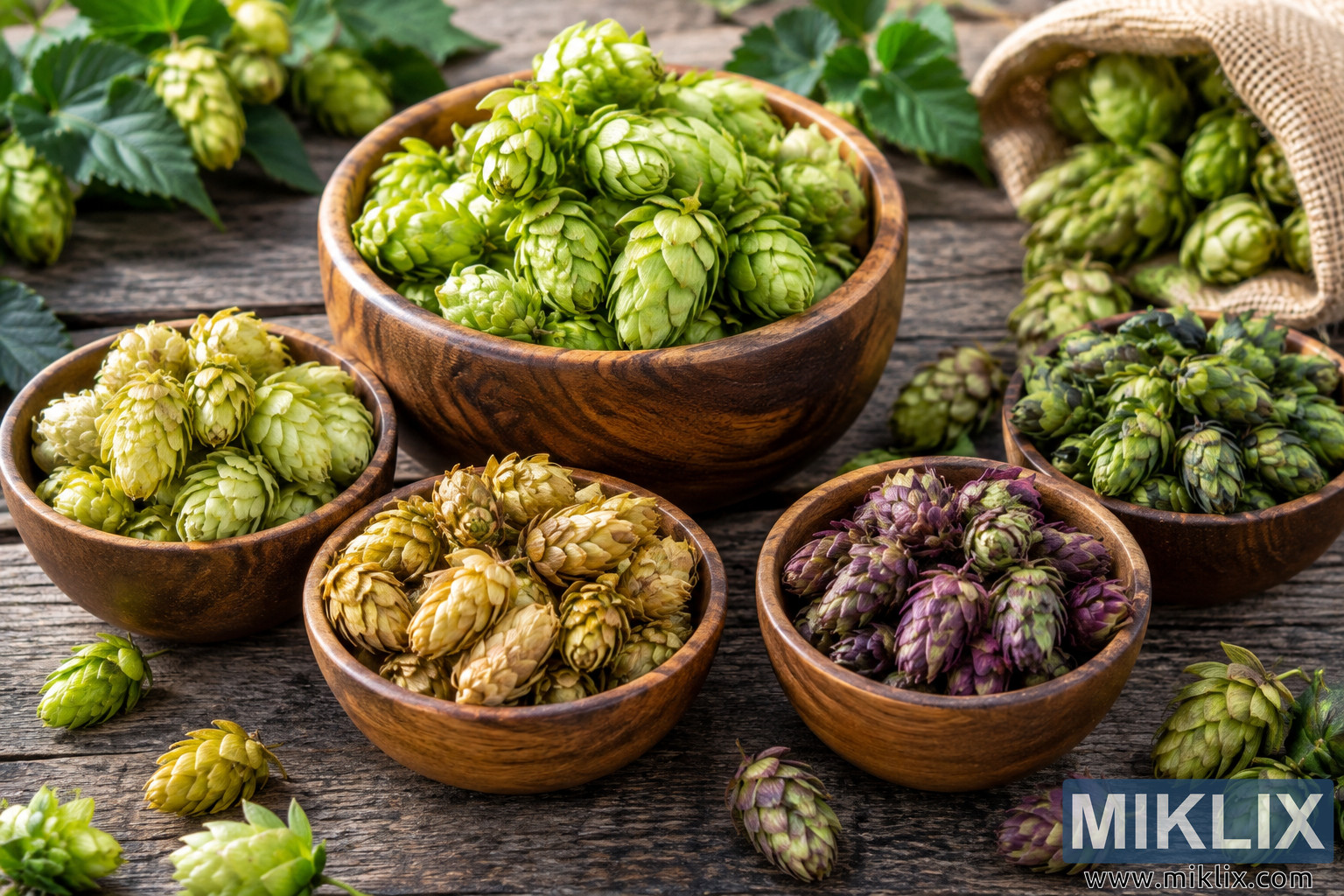
A wide, landscape-oriented still-life photograph presents an abundant arrangement of multiple hop varieties displayed together on a rustic wooden surface. The composition is centered around a large, rounded wooden bowl filled generously with fresh, vivid green hop cones. This central bowl is the dominant visual element and sits slightly toward the back of the main arrangement, creating a natural focal point. The hop cones inside it vary subtly in size, shape, and shade, ranging from bright yellow-green to richer leafy green. Their overlapping, scale-like bracts are sharply defined, giving the hops a tactile, layered appearance and emphasizing their characteristic cone-shaped structure.
Surrounding the large central bowl are several smaller wooden bowls, each containing hops with a noticeably different appearance. On the left, a bowl holds pale green and yellow-green cones. These hops are considerably lighter than those in the central bowl, with creamy highlights and delicate, almost translucent-looking edges where the light catches their overlapping leaves. In the foreground near the center-left, another wooden bowl contains golden and warm yellow-brown hops. Their muted, dried appearance contrasts strongly with the fresher green varieties nearby, suggesting differences in variety, maturity, drying, processing, or presentation. The warm tones of these hops also complement the rich brown grain of the wooden bowls and tabletop.
On the right side of the foreground is another bowl containing an especially distinctive group of hops with deep purple, burgundy, green, and muted violet coloration. The individual cones retain the recognizable layered structure of hops, but their darker coloration provides a dramatic contrast against the brighter green and golden cones around them. Behind this bowl, farther to the right, an additional wooden container is filled with dark green hop cones. Some of these cones include subtle bluish, olive, and shadowed tones, giving this portion of the arrangement a denser and more subdued appearance. Together, the different bowls create an illustrative visual survey of hops with a broad range of colors and characteristics.
Several loose hop cones have been deliberately scattered across the wooden tabletop in the foreground. Bright green, yellow-green, olive, and purple-tinged cones lie individually between and in front of the bowls, helping connect the separate groups into one cohesive arrangement. Their placement also provides a clear view of individual hop shapes without the visual overlap found inside the bowls. Some cones rest on their sides, revealing their elongated profiles, while others are angled toward the viewer. The foreground is rendered with substantial detail, making the rough texture of the wood, the fine veins of the hop bracts, and the natural irregularities of the plant material clearly visible.
In the upper-right portion of the image, a coarse burlap or hessian sack lies partially open and spills additional green hop cones onto the tabletop. Its woven fibers introduce another rustic texture and reinforce the agricultural, harvest-inspired character of the scene. The neutral tan color of the fabric provides a soft contrast with the saturated greens of the hops. Around the back and edges of the composition are leafy hop vines with broad, serrated green leaves and additional cones. These botanical elements make the display feel connected to the living hop plant rather than presenting the cones solely as an isolated ingredient.
The tabletop itself consists of dark, weathered wooden planks with clearly visible grain, cracks, grooves, knots, and tonal variations. Its aged surface provides an earthy background that complements the natural subject matter. The wooden bowls are smoother and warmer in tone, with polished surfaces and swirling grain patterns that distinguish them from the rougher table beneath. This combination of raw wood, finished wood, burlap, leaves, and hop cones gives the photograph a strongly tactile quality.
Lighting appears to come from soft natural daylight, illuminating the arrangement from above and slightly from the left. Highlights fall across the upper surfaces of the hop cones and bowls while gentle shadows form beneath them, producing convincing depth without obscuring important details. The central green hops receive particularly bright illumination, making their fresh coloration stand out immediately. The light also accentuates the dimensional structure of each cone, with alternating highlights and shadows defining the overlapping bracts.
The composition uses a relatively shallow depth of field while retaining substantial sharpness across the principal bowls and foreground ingredients. Background foliage becomes progressively softer, helping separate the main arrangement from its surroundings. Despite the abundance of objects, the image remains visually organized: the largest green bowl establishes the center, while the smaller bowls form a loose arc across the lower half of the frame. The scattered hops and foliage extend the composition toward the edges and prevent the arrangement from appearing overly formal or symmetrical.
Overall, the image communicates variety, natural abundance, harvest, agriculture, and the diversity of hops as a botanical ingredient. The differences in color between pale green, vivid green, golden, dark green, and purple-toned cones are the defining feature of the scene. The rustic presentation evokes traditional hop cultivation, brewing ingredients, farm harvests, and artisanal food or beverage production without displaying any logos, packaging, labels, text, or recognizable commercial branding. The landscape framing allows all of the varieties to be viewed together in a single cohesive scene, while the detailed photographic treatment emphasizes the texture, color, and distinctive layered form of the hop cones.
The image is related to: Hops in Beer Brewing: Kohatu