
Image: Homebrewer Planning a Hop Schedule
Published: October 8, 2026 at 10:08:48 PM UTC
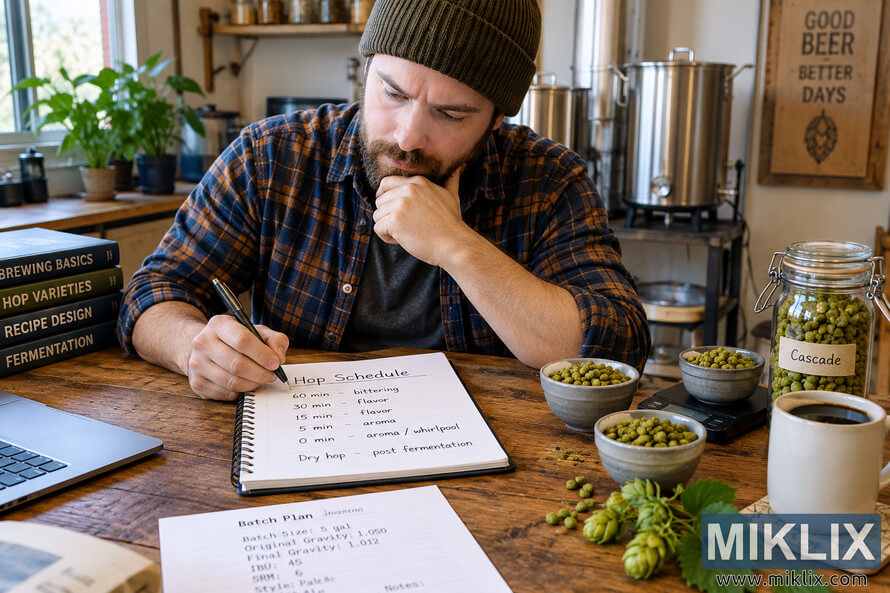
A homebrewer carefully plans hop additions at a rustic table surrounded by hops, brewing notes, reference books, a scale, and home brewing equipment.
Available versions of this image
The image files available for download below are less compressed and higher resolution - and as a result of that, higher quality - than the images embedded in articles and pages on this website, which are more optimized for file size in order to reduce bandwidth consumption.
Regular size (1,536 x 1,024)
Large size (3,072 x 2,048)
Very large size (4,608 x 3,072)
Extra large size (6,144 x 4,096)
Comically large size (1,048,576 x 699,051)
- Still uploading... ;-)
Image description
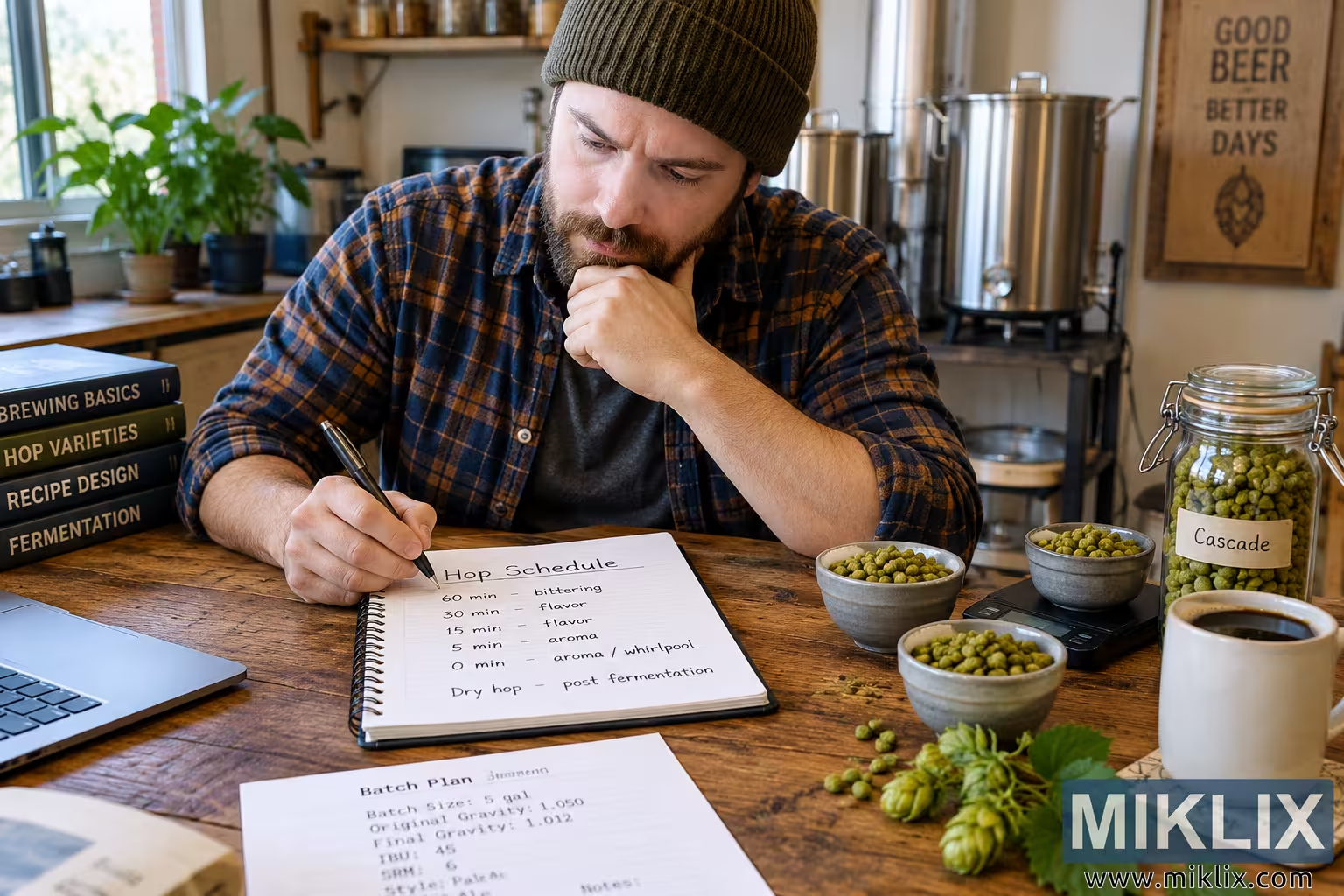
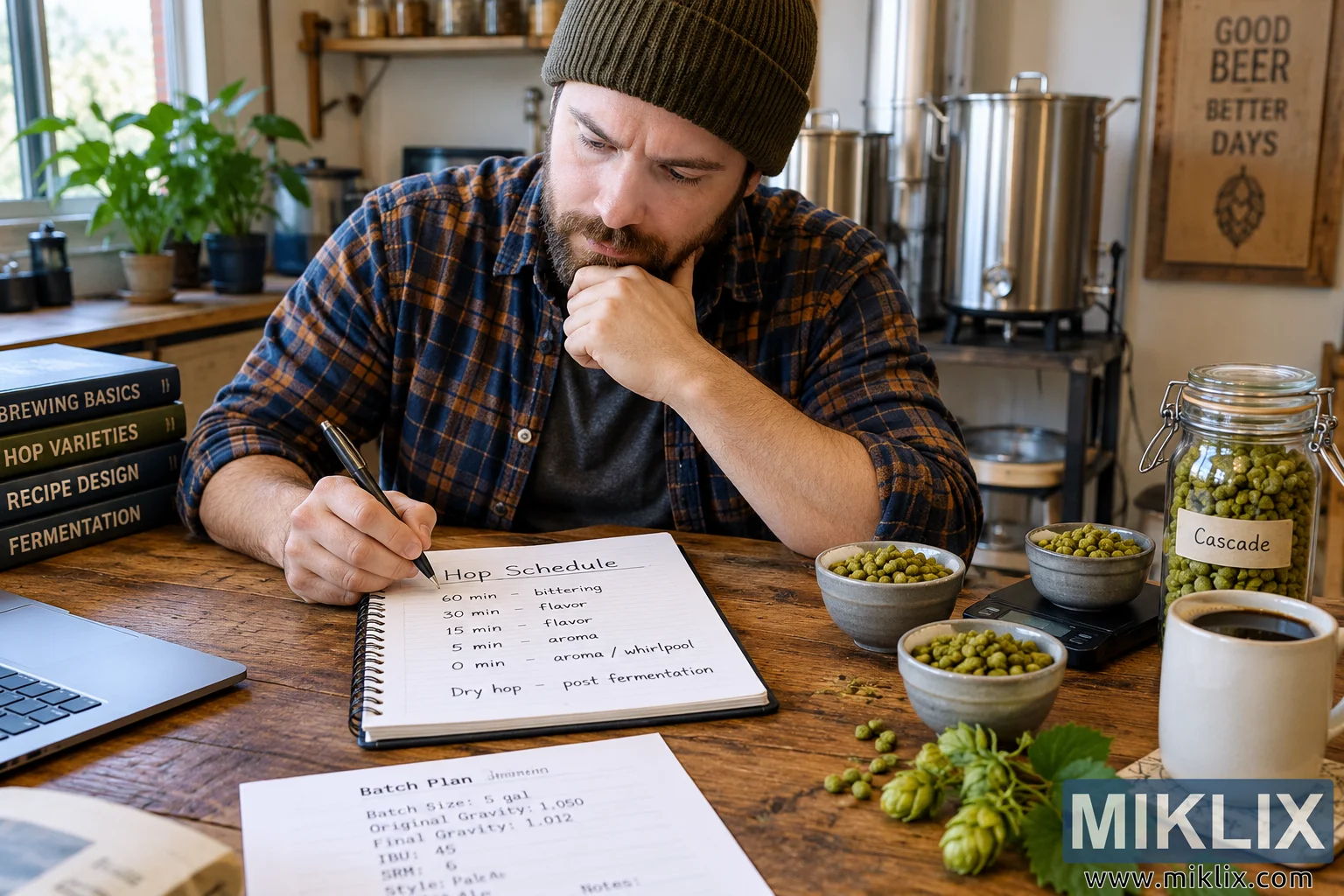
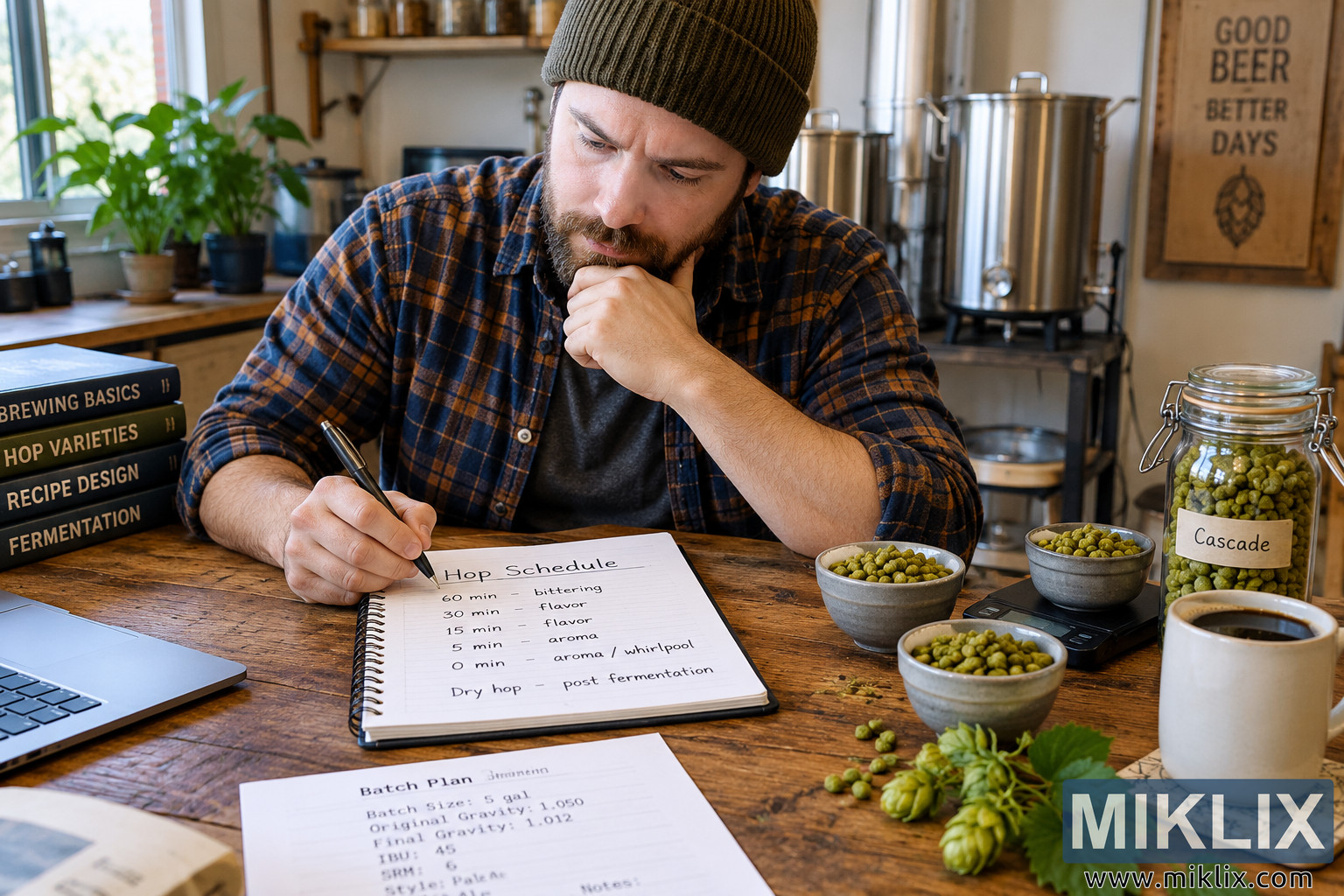
A warm, highly detailed landscape photograph depicts a homebrewer carefully planning a hop schedule at a rustic wooden table in a bright, comfortable home brewing workspace. The central figure is an adult man with a full brown beard, wearing a dark knitted beanie and a blue-and-brown plaid flannel shirt over a dark T-shirt. He is seated at the table and leans forward with a concentrated, thoughtful expression. One hand supports his chin while the other holds a black pen over an open spiral-bound notebook. His posture and facial expression suggest that he is working through the timing and purpose of several hop additions before beginning or finalizing a batch of beer.
The notebook is prominently positioned near the center of the composition and is headed "Hop Schedule." Beneath the heading is a handwritten sequence of brewing additions organized by time. The notes associate additions at different stages of the boil and brewing process with purposes such as bitterness, flavor, and aroma. Later additions include a whirlpool stage, while a separate dry-hop note indicates an addition after fermentation. The notebook acts as the visual focal point of the image and immediately communicates the subject of recipe planning and hop scheduling.
Several small ceramic bowls filled with green hop pellets surround the notebook. Their placement suggests that the brewer may be separating or measuring different hop additions in advance. A compact digital kitchen scale sits on the right side of the table beneath one of the bowls, reinforcing the sense of precision involved in recipe preparation. Beside the scale is a clear glass storage jar filled with additional green hop pellets. The jar carries a simple handwritten label reading "Cascade," identifying a hop variety without displaying any commercial branding. A few loose hop pellets are scattered naturally across the wooden tabletop, giving the workspace a practical, actively used appearance rather than the polished look of a commercial laboratory.
Fresh green hop cones and leafy hop stems lie across the lower-right foreground. These provide a visual contrast to the processed hop pellets in the bowls and jar and help connect the brewing ingredients with the plant from which they originate. A plain light-colored ceramic mug filled with dark coffee sits nearby on a square coaster. The coffee adds to the relaxed home-workshop atmosphere and suggests that the brewer is taking time to think through the recipe rather than rushing directly into production.
Additional brewing paperwork appears in the foreground. A printed or handwritten batch-planning sheet contains recipe-related information such as batch size, original gravity, final gravity, bitterness measurements, and beer style. Although some of this text is partially outside the primary focus area, it contributes to the overall impression of a carefully organized brewing session. The edge of an open laptop is visible on the left side of the table, suggesting that digital brewing tools, calculations, recipe software, or reference information may also be part of the planning process.
A stack of brewing reference books sits at the left edge of the scene. Their generic titles relate to brewing fundamentals, hop varieties, recipe design, and fermentation. The books contain no visible commercial logos or real-world branding. Together with the laptop, notebook, scale, and batch sheet, they establish the scene as one of deliberate research and recipe development. The homebrewer appears to be combining reference material with his own notes and measurements to decide exactly when each hop addition should occur.
The background reveals a compact but well-equipped home brewing area that blends elements of a kitchen, workshop, and hobby space. Large stainless-steel brewing vessels stand behind the brewer, including tall cylindrical kettles with lids, handles, and fittings. Their metallic surfaces catch the soft daylight and provide an industrial counterpoint to the warm wood of the table. Shelves above and around the brewing area hold plain jars and other practical equipment. Nothing in the scene displays an actual commercial brand.
Natural daylight enters through a window on the left side of the image. Several healthy green houseplants sit near the window, softening the workshop environment and introducing additional natural color. The lighting is bright but gentle, producing a welcoming atmosphere with realistic highlights and shadows. Warm brown wood tones, muted blue and orange clothing, green hops and plants, neutral ceramics, and silver brewing equipment create a balanced, earthy color palette associated with craft, ingredients, and hands-on work.
On the right side of the background, a rustic framed sign reads "GOOD BEER BETTER DAYS" and includes a simple hop-cone illustration. The sign is decorative and generic rather than branded, reinforcing the homebrewing theme without referencing a real brewery or product. The background remains sufficiently detailed to establish the setting while the shallower visual emphasis keeps attention on the brewer, his notebook, and the hop ingredients in the foreground.
Overall, the image presents homebrewing as a thoughtful combination of creativity, technical planning, measurement, and experimentation. Rather than showing the dramatic action of boiling wort or pouring finished beer, the photograph focuses on the quieter preparation stage that comes before brewing: determining quantities, selecting hop varieties, deciding when hops should be added, and considering how each addition will affect bitterness, flavor, and aroma. The homebrewer's concentrated pose, surrounded by brewing books, recipe notes, hop pellets, fresh hop cones, a digital scale, brewing vessels, and a laptop, conveys careful recipe development in an approachable home setting. The wide landscape composition provides ample environmental context while maintaining a clear narrative focus on the handwritten hop schedule at the center of the table.
The image is related to: Hops in Beer Brewing: Kohatu