
Image: Kohatu Tropical Pale Ale Homebrewing Recipe and Ingredients
Published: October 8, 2026 at 10:08:48 PM UTC
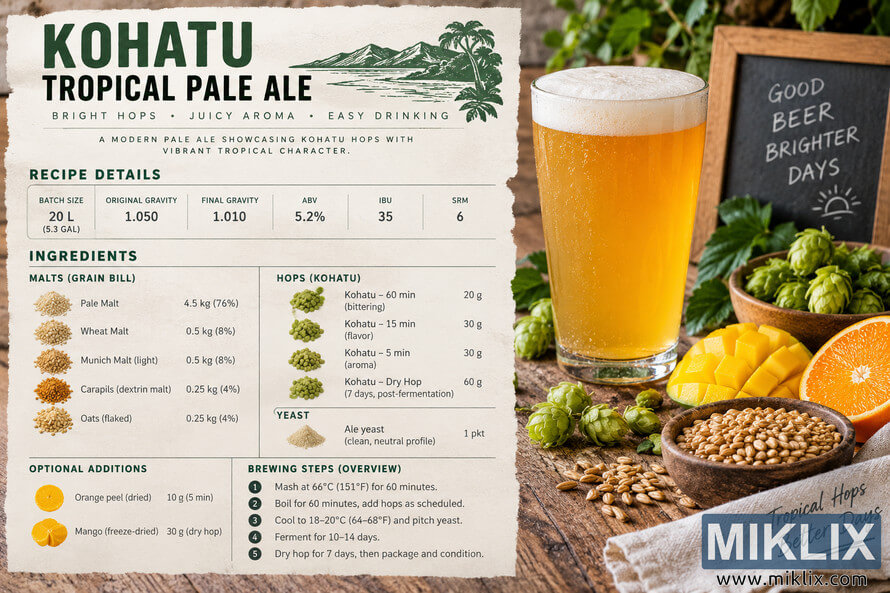
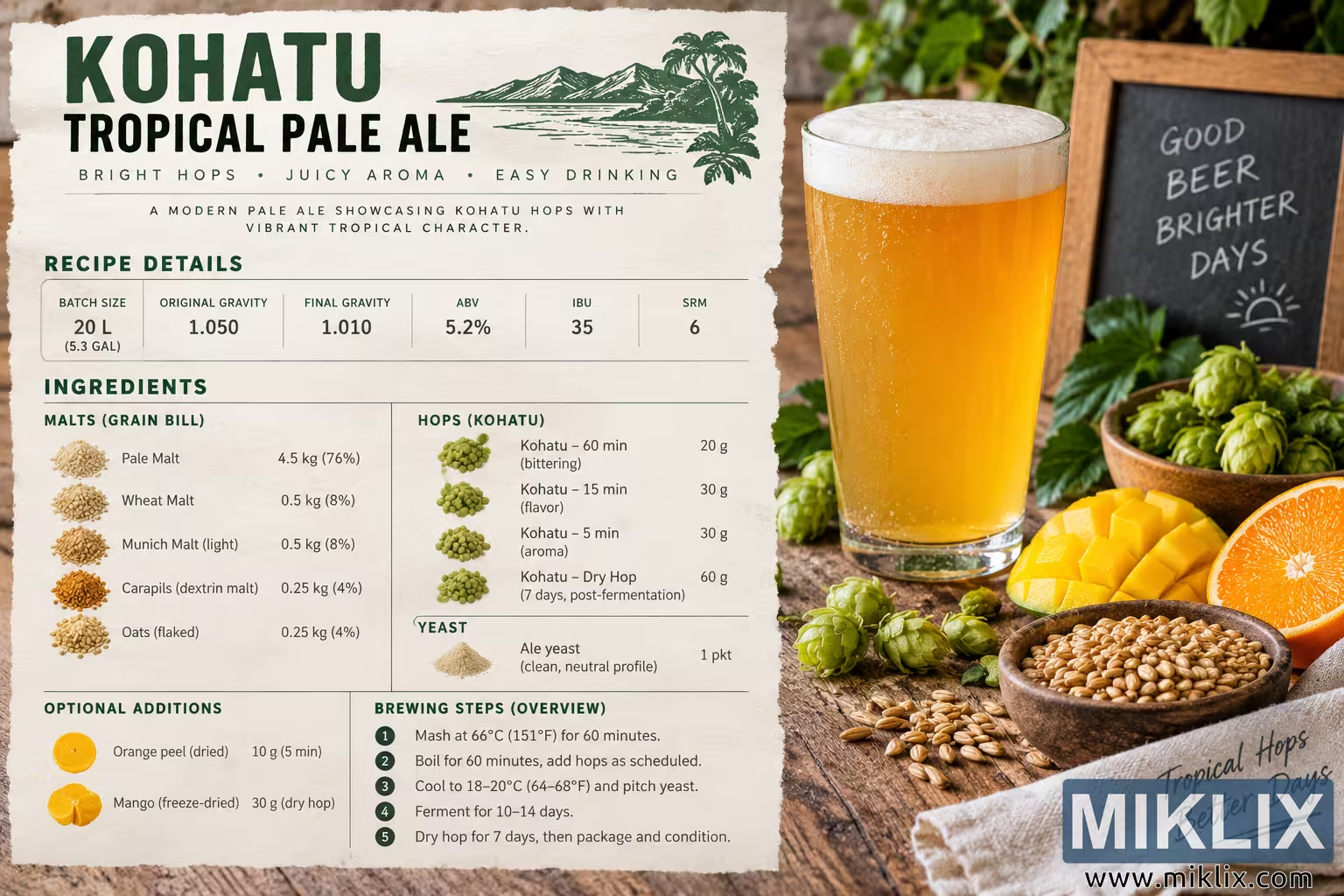
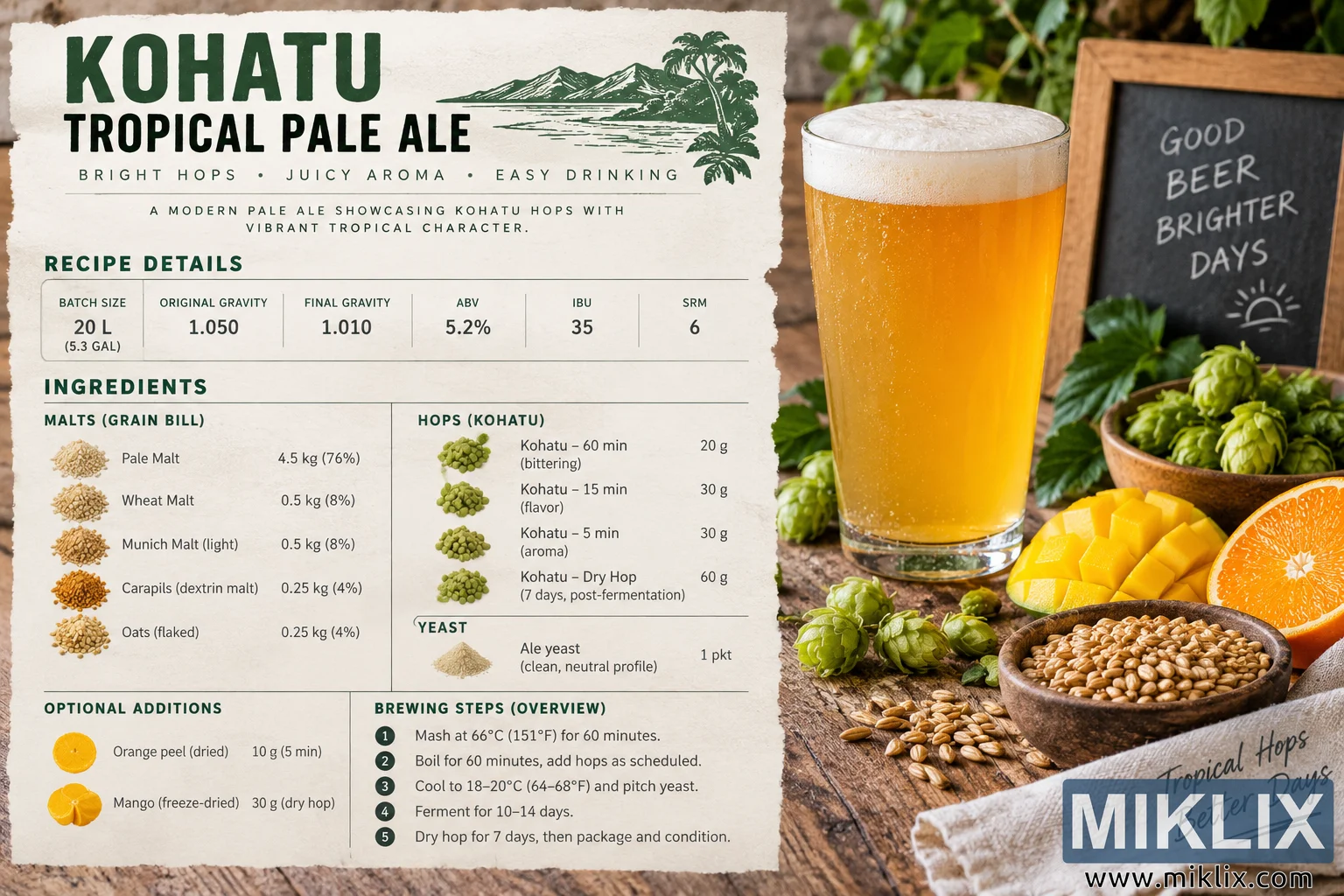
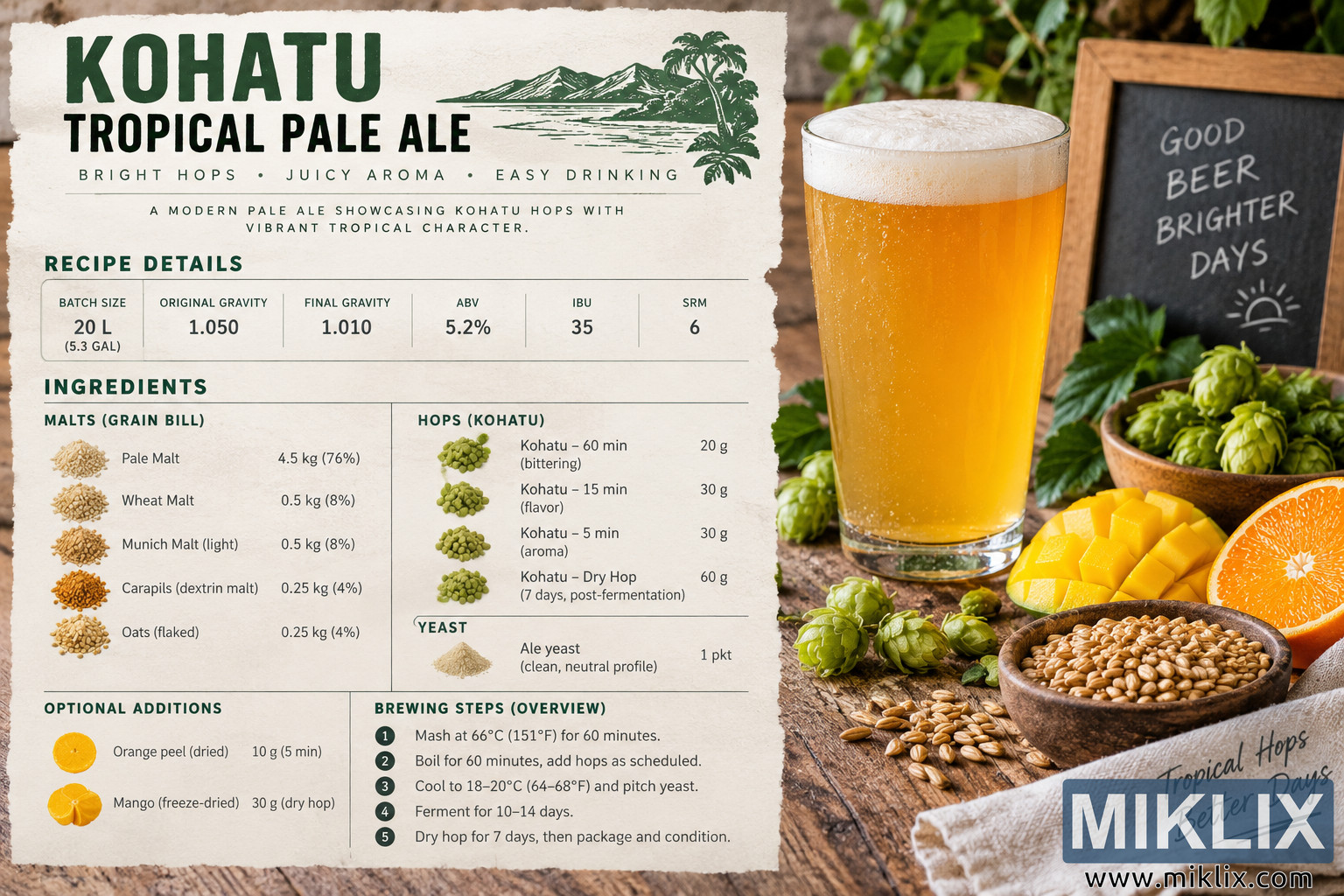
Kohatu Tropical Pale Ale homebrewing recipe displayed with a golden pale ale, hops, grains, mango and orange in a warm rustic tropical setting.
Available versions of this image
The image files available for download below are less compressed and higher resolution - and as a result of that, higher quality - than the images embedded in articles and pages on this website, which are more optimized for file size in order to reduce bandwidth consumption.
Regular size (1,536 x 1,024)
Large size (3,072 x 2,048)
Very large size (4,608 x 3,072)
Extra large size (6,144 x 4,096)
Comically large size (1,048,576 x 699,051)
- Still uploading... ;-)
Image description
A wide, landscape-oriented editorial food-and-beverage image presents a complete homebrewing recipe concept for Kohatu Tropical Pale Ale. The composition is divided into two complementary areas: a large, carefully designed recipe sheet occupies roughly the left half of the scene, while the right half contains a photographic still life of a freshly poured pale ale and ingredients associated with the recipe. The overall setting is warm, rustic, inviting, and distinctly tropical, combining the practical appearance of a brewer's recipe card with the atmosphere of a craft-beer lifestyle photograph. No commercial beer, brewing, food, or equipment brands are visible.
The recipe sheet has an off-white, lightly textured paper surface with irregular, deckled-looking edges. At the top, the large dark-green word "KOHATU" dominates the design, followed immediately by the bold black heading "TROPICAL PALE ALE." Beneath the heading is the tagline "BRIGHT HOPS • JUICY AROMA • EASY DRINKING." A simple dark-green line illustration of tropical mountains, water, palm trees, and vegetation appears near the upper-right portion of the sheet, reinforcing the tropical theme. A short introductory line describes the beer as a modern pale ale showcasing Kohatu hops with vibrant tropical character.
A section labeled "RECIPE DETAILS" summarizes the principal brewing targets in a clean horizontal grid. The displayed batch size is 20 L (5.3 gal), with an original gravity of 1.050, final gravity of 1.010, alcohol by volume of 5.2%, bitterness of 35 IBU, and a color value of 6 SRM. The restrained typography, thin divider rules, green headings, and neutral background give this portion the appearance of a professionally laid-out brewing reference card.
Below, a large "INGREDIENTS" heading introduces two main columns. The left column, labeled "MALTS (GRAIN BILL)," lists pale malt at 4.5 kg (76%), wheat malt at 0.5 kg (8%), light Munich malt at 0.5 kg (8%), Carapils or dextrin malt at 0.25 kg (4%), and flaked oats at 0.25 kg (4%). Small illustrations of differently colored grain piles accompany the malt entries, visually distinguishing the ingredients while preserving the practical recipe-sheet format. The right column is headed "HOPS (KOHATU)" and shows several hop additions with small green hop illustrations. The schedule includes 20 g of Kohatu at 60 minutes for bittering, 30 g at 15 minutes for flavor, 30 g at 5 minutes for aroma, and a 60 g dry-hop addition for seven days after fermentation. Beneath the hop schedule, a yeast subsection specifies one packet of clean, neutral-profile ale yeast.
The lower portion of the recipe sheet contains an "OPTIONAL ADDITIONS" area and a "BREWING STEPS (OVERVIEW)" area. The optional ingredients are illustrated with bright yellow-orange fruit graphics and include dried orange peel and freeze-dried mango, suggesting additional citrus and tropical-fruit character. The brewing overview is presented as five numbered steps. It instructs the brewer to mash at approximately 66°C (151°F) for 60 minutes, boil for 60 minutes while adding hops according to the schedule, cool the wort to roughly 18–20°C (64–68°F) and pitch the yeast, ferment for approximately 10–14 days, and finally dry hop for seven days before packaging and conditioning. The structured presentation makes the sheet appear both decorative and genuinely usable as a concise homebrewing reference.
On the right side of the image, a tall clear pint glass filled with brilliant golden-orange pale ale forms the main photographic focal point. The beer has a lightly hazy appearance, visible carbonation, and a substantial creamy white foam cap. Warm light passing through the glass makes the liquid glow in rich shades of gold and amber, contrasting strongly with the deep greens of the surrounding foliage and hops. The pint sits directly on a weathered wooden tabletop whose grain, scratches, and natural imperfections contribute to the handcrafted homebrewing atmosphere.
Around the glass is a generous arrangement of brewing ingredients and tropical fruit. Fresh green hop cones are scattered across the tabletop and collected in a small rustic bowl behind the glass. A wooden bowl in the foreground contains pale golden brewing grain, with additional kernels casually scattered around it. Nearby are vivid pieces of ripe mango and a freshly cut orange half, providing saturated yellow and orange accents that visually communicate the tropical and citrus flavor profile suggested by the recipe. Green leaves and plants fill portions of the background, giving the scene a lush garden-like character without distracting from the recipe sheet or beer.
Behind the pint is a small wood-framed black chalkboard bearing the handwritten phrase "GOOD BEER BRIGHTER DAYS" along with a simple rising-sun doodle. In the lower-right foreground, a folded natural-colored cloth rests on the wooden surface and carries a handwritten-style phrase referring to tropical hops and better days. These informal handwritten elements contrast with the more systematic typography of the recipe card and make the overall composition feel like a styled homebrewing workbench rather than a purely technical diagram.
The lighting is bright but warm, resembling soft daylight entering a rustic kitchen, brewing space, or outdoor-adjacent workspace. Shadows are gentle and natural, while highlights on the beer glass, fruit, hops, and grain give the ingredients convincing texture and dimensionality. The background is somewhat softer than the main subjects, helping the recipe sheet and glowing pint remain immediately legible as the two principal visual elements. The image combines infographic design, food photography, botanical styling, and craft-brewing aesthetics in a single cohesive landscape composition. Its palette is dominated by off-white paper, dark forest green typography and foliage, warm brown timber, pale tan grain, and vibrant golden-yellow and orange tones from the beer and fruit. The result communicates a fresh, tropical, hop-forward homebrewing recipe with a relaxed handmade character, while avoiding identifiable commercial branding.
The image is related to: Hops in Beer Brewing: Kohatu