
Image: Vacuum-Sealed Hop Packages Stored in a Frosty Freezer
Published: October 8, 2026 at 10:08:48 PM UTC
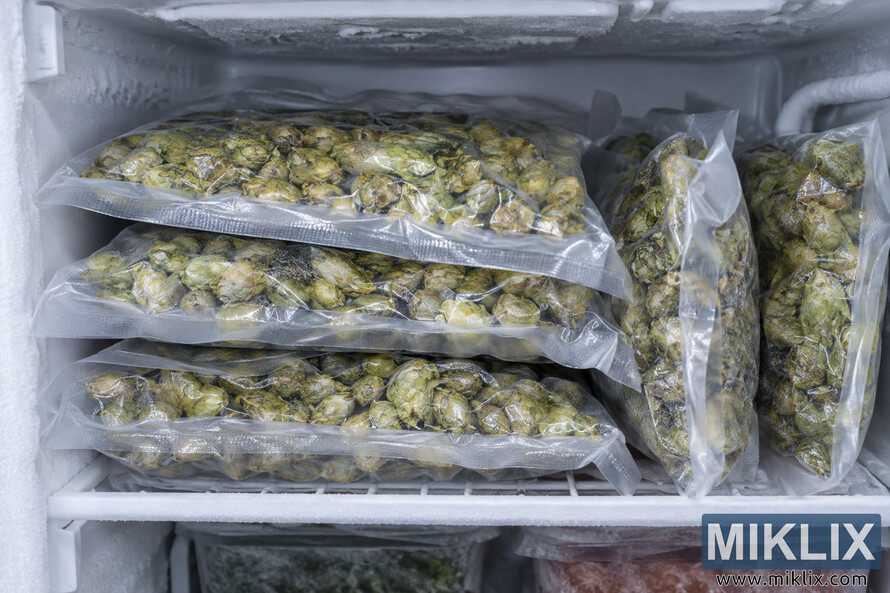
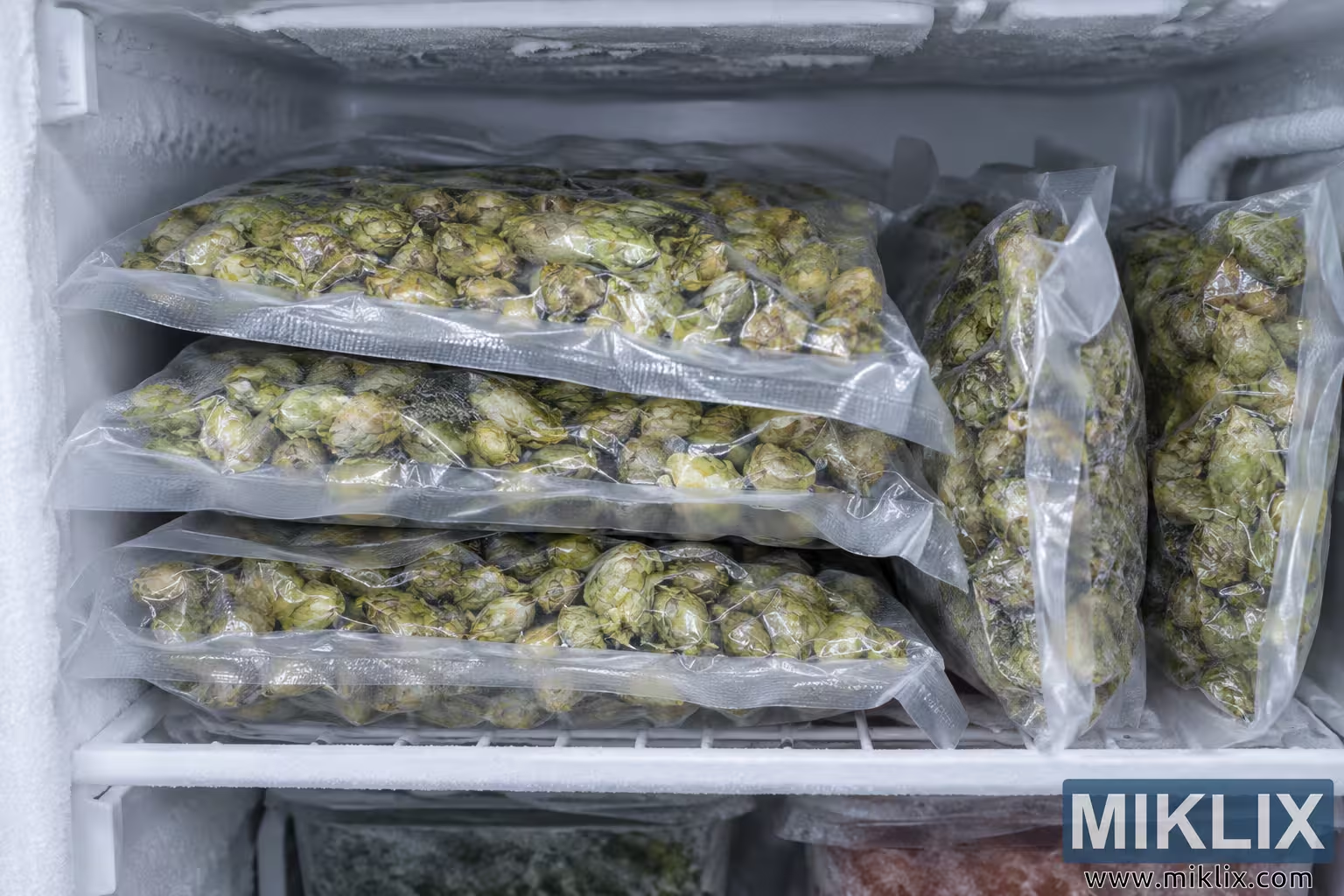
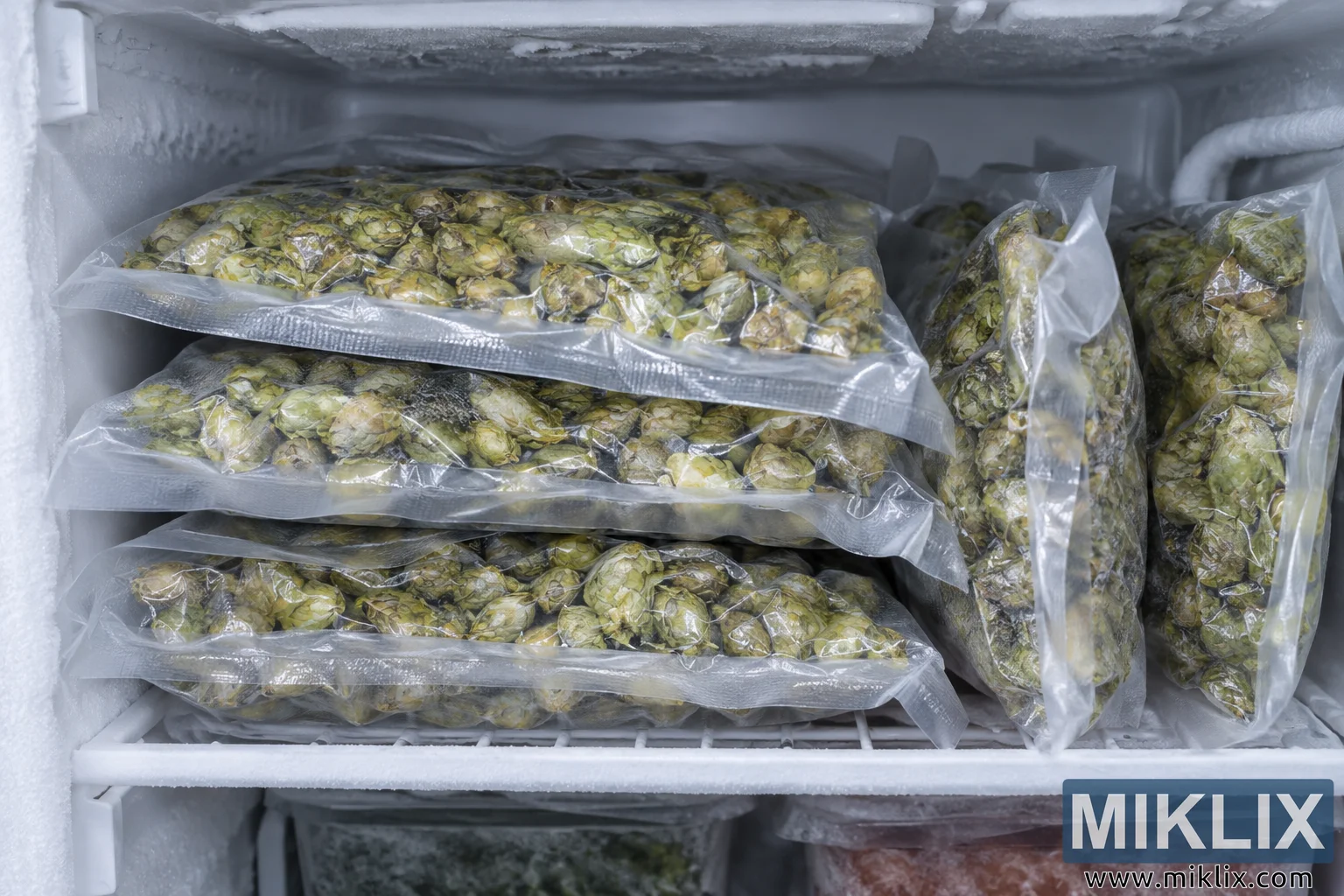
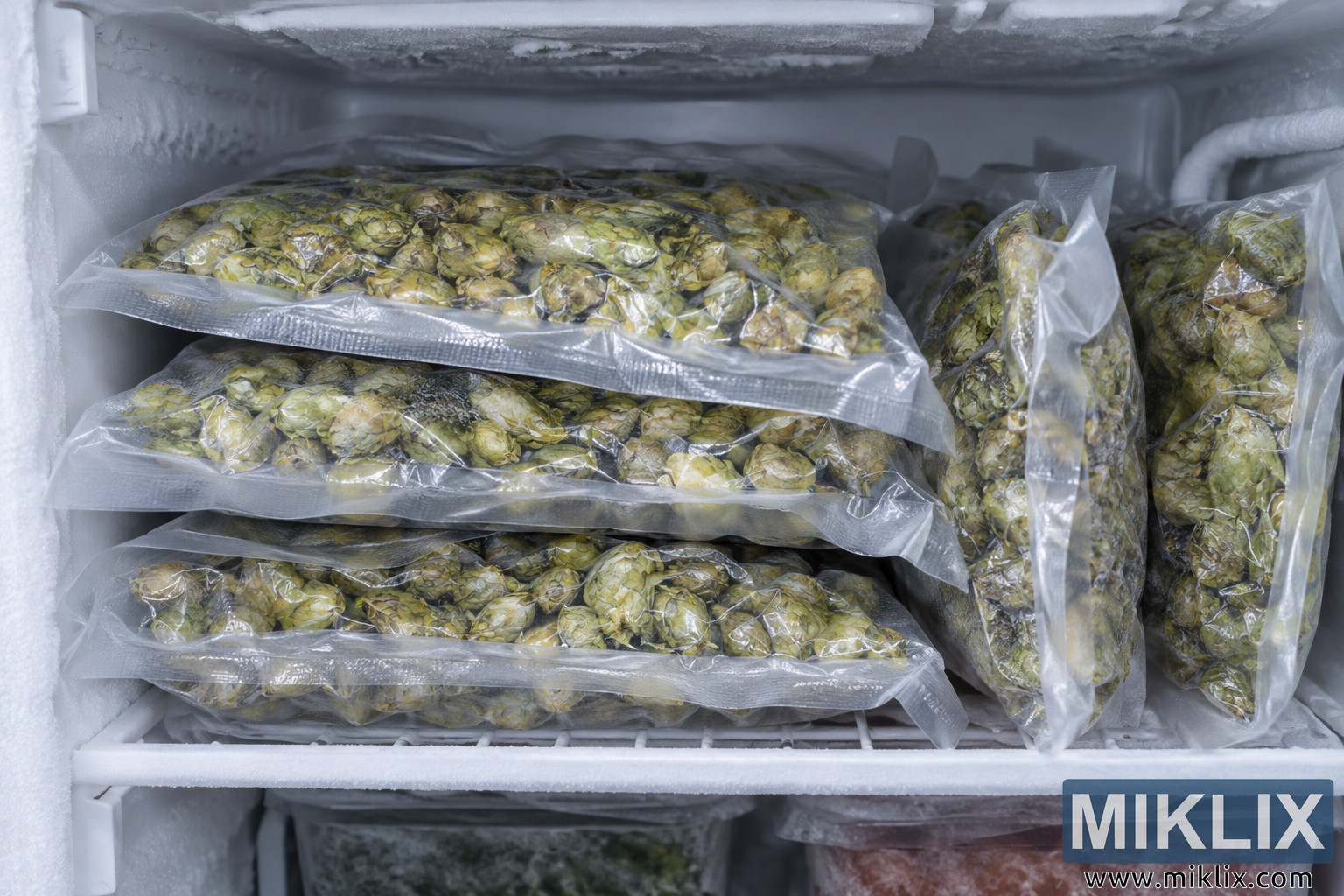
Detailed photo of vacuum-sealed dried hop cones stored in transparent, unbranded packages inside a frosty freezer, illustrating compact cold storage and preservation.
Available versions of this image
The image files available for download below are less compressed and higher resolution - and as a result of that, higher quality - than the images embedded in articles and pages on this website, which are more optimized for file size in order to reduce bandwidth consumption.
Regular size (1,536 x 1,024)
Large size (3,072 x 2,048)
Very large size (4,608 x 3,072)
Extra large size (6,144 x 4,096)
Comically large size (1,048,576 x 699,051)
- Still uploading... ;-)
Image description
The image presents a close-up, landscape-oriented view directly into the interior of a household or small commercial freezer filled with vacuum-sealed packages of dried hop cones. The composition is dominated by a collection of transparent plastic bags containing tightly packed, pale green to yellow-green hops. Most of the packages occupy the upper freezer shelf and are arranged in a practical, space-efficient manner, suggesting that the hops have been carefully prepared for long-term cold storage. The clear vacuum-sealed material conforms closely to the irregular shapes of the individual hop cones, making their layered, leafy structure readily visible through the plastic. The absence of air inside the packages gives the bags a compressed, slightly wrinkled appearance, while their sealed edges form smooth, flattened borders around the contents.
On the left and central portions of the image, several large rectangular packages are stacked horizontally on top of one another. The uppermost bag rests at a slight angle, with its front sealed edge extending across much of the frame. Beneath it are additional flattened packages, each containing numerous hop cones pressed together by the vacuum sealing process. Their colors range from muted olive green and sage to pale yellow and light brown, producing subtle natural variation throughout the stored plant material. Individual cones remain identifiable by their overlapping bracts and compact flower-like shapes. Some areas appear darker where the hops overlap or where the transparent plastic creates reflections and shadows.
The right side of the freezer contains several packages stored vertically or at steep angles. These upright bags are narrower in profile because the vacuum has compressed their contents into dense layers. Their orientation contrasts with the horizontal stack on the left, helping fill the available freezer space efficiently. One tall package near the center-right leans slightly toward the viewer, while another package is positioned closer to the freezer wall. The transparent plastic catches the cool interior light, producing soft highlights along folds, seams, and creases. No labels, logos, printed branding, product names, or other identifying marks are visible on any of the packages.
The freezer itself has a distinctly cold, frosted appearance. White frost and accumulated ice coat the ceiling, shelf edges, side walls, and other exposed surfaces. A thick band of frost is especially noticeable along the upper interior edge, where uneven crystalline buildup creates a rough white texture. Additional frost follows the horizontal shelf near the bottom of the main stack. The freezer walls are predominantly white, but the cold lighting and shadows introduce subtle bluish-gray tones. These cooler colors contrast with the warmer green and yellow shades of the hops and make the stored botanical material stand out clearly against its surroundings.
A white wire shelf runs horizontally beneath the vacuum-sealed packages. The thin metal bars of the shelf are partially obscured by frost and by the weight of the bags resting on top of them. Through the gaps beneath this shelf, the lower section of the freezer can be seen. Several additional frozen containers or packages are partially visible there, although they are not the primary subject and remain somewhat obscured by the shelf and foreground items. One container toward the lower right has a muted reddish or brownish coloration visible through its frosted exterior, while darker greenish material can be seen farther back on the lower left. These secondary objects add depth and reinforce the impression of a functioning freezer used for practical food or ingredient storage.
The photograph is framed tightly around the freezer interior, with no people, hands, kitchen counters, appliances, or surrounding room visible. This close framing concentrates attention on the vacuum-sealed hops and the conditions in which they are being stored. The camera appears to be positioned approximately level with the upper shelf and pointed straight into the open freezer. This viewpoint creates a documentary, inventory-like quality, allowing the viewer to inspect both the packaging method and the frosty environment. Most of the foreground is in clear focus, revealing fine details in the plastic, hop cones, frost, and shelf structure. Areas deeper inside the freezer are slightly less prominent because of shadow and overlapping packages, but the overall scene remains sharp and easy to interpret.
Lighting is cool, diffuse, and relatively even, resembling illumination from a freezer light or a neutral photographic light source positioned near the open door. Reflections on the clear plastic are controlled enough that the contents remain visible. The brightest regions occur on the white frost, the freezer walls, and the glossy edges of the vacuum bags. Shadows are soft and predominantly blue-gray rather than deep black, preserving detail throughout the interior. The hops provide the principal color in the scene, with their subdued green, yellow, olive, and occasional brown tones creating an organic contrast to the icy white environment.
The image communicates careful storage and preservation. Vacuum sealing minimizes the visible amount of air surrounding the hops, while the heavily frosted freezer establishes an unmistakably cold storage setting. Together, these visual elements suggest an effort to keep the dried hops protected and compact over time. The stacked and upright arrangement also conveys efficient use of limited freezer space rather than a staged decorative presentation. The scene feels utilitarian and realistic: the packages have natural wrinkles and varying shapes, the frost is uneven, and the freezer contains other stored items beneath the main shelf. Despite this practical character, the photograph remains visually organized because the repeated transparent packages form a consistent pattern across the frame.
Overall, the image is a detailed photographic representation of multiple unbranded, transparent vacuum-sealed packages of whole dried hops stored inside a frosty freezer. The hops are clearly visible through tightly fitted plastic, with horizontally stacked bags filling most of the left and center of the frame and vertically positioned bags occupying the right. Frost-covered white surfaces surround the packages on all sides, and a frozen wire shelf separates them from partially visible items below. The landscape composition, close camera position, cool lighting, sharp botanical detail, and absence of branding keep the visual emphasis firmly on vacuum packaging, hops, freezer storage, and preservation.
The image is related to: Hops in Beer Brewing: Kohatu