
Image: Vacuum Sealing Fresh Hops at Home
Published: October 8, 2026 at 10:08:48 PM UTC
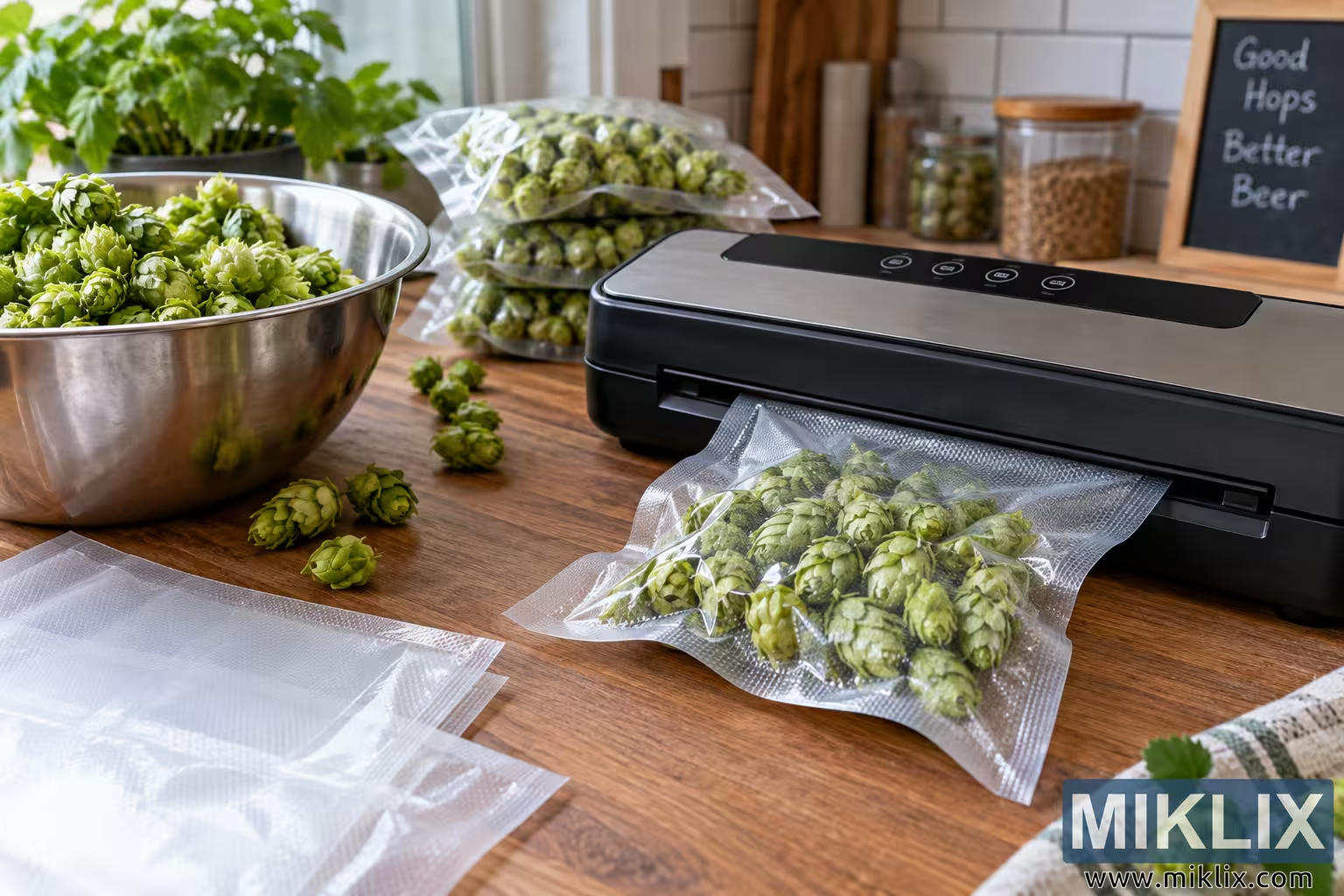
Photorealistic home kitchen scene showing fresh green hops being portioned and vacuum sealed in clear bags for organized storage and future home brewing.
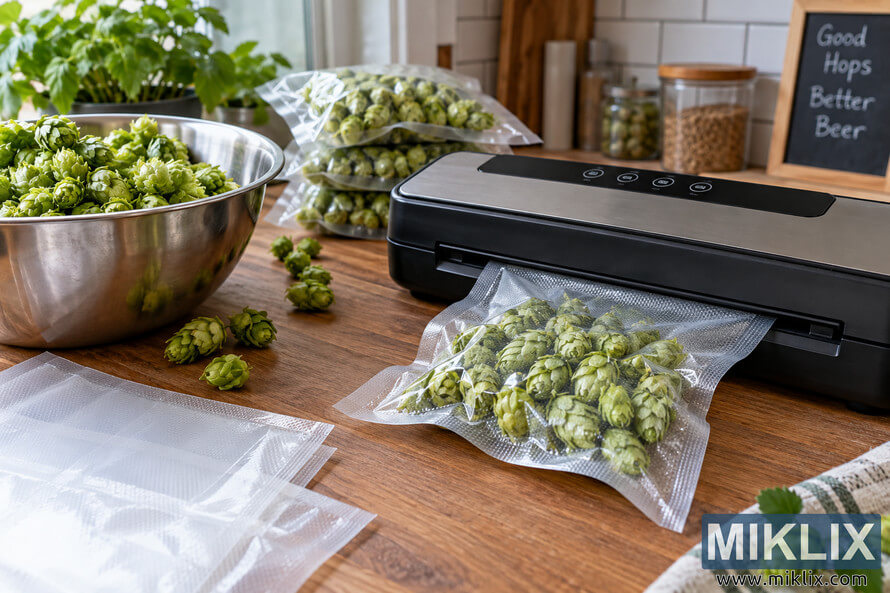
Available versions of this image
The image files available for download below are less compressed and higher resolution - and as a result of that, higher quality - than the images embedded in articles and pages on this website, which are more optimized for file size in order to reduce bandwidth consumption.
Regular size (1,536 x 1,024)
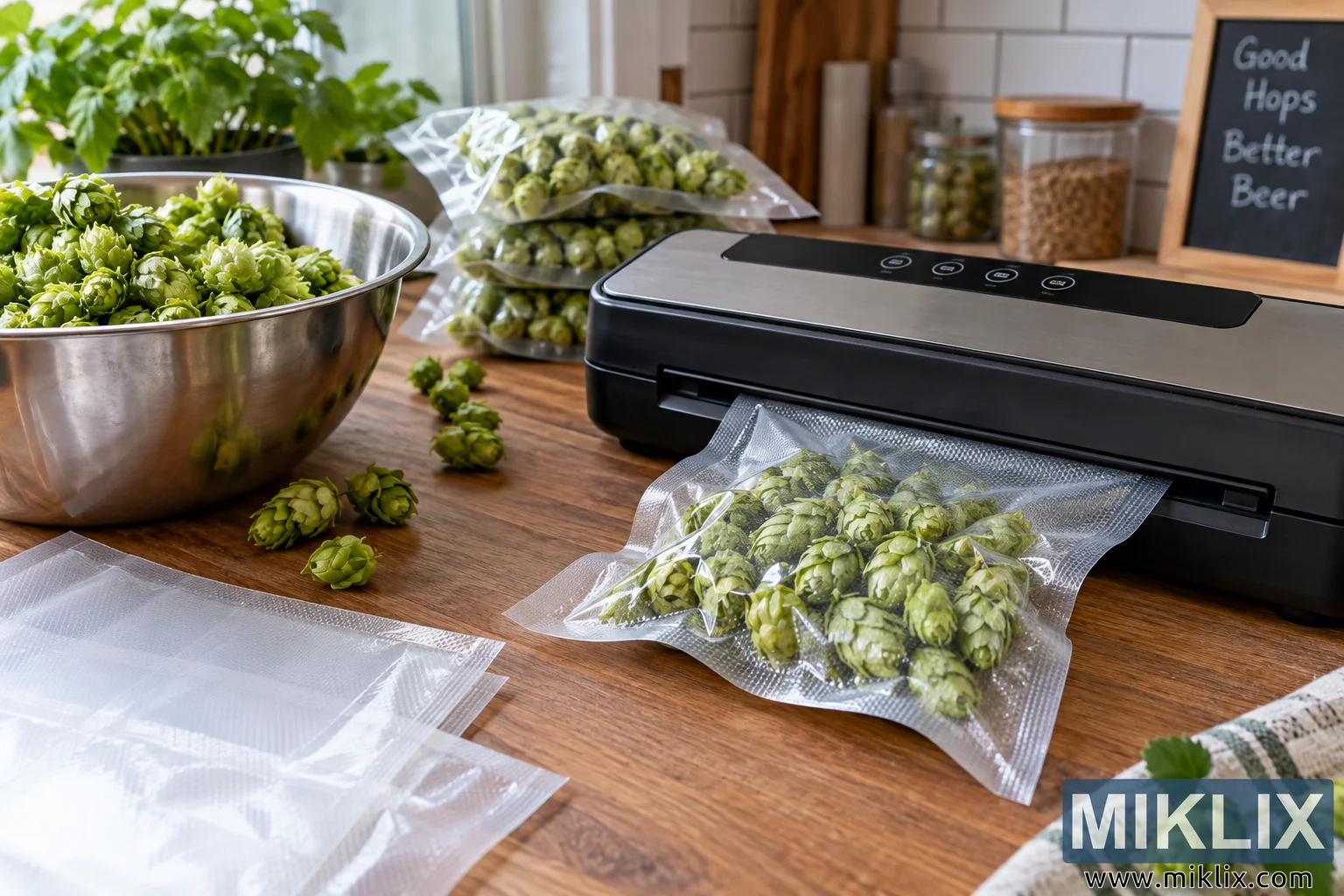
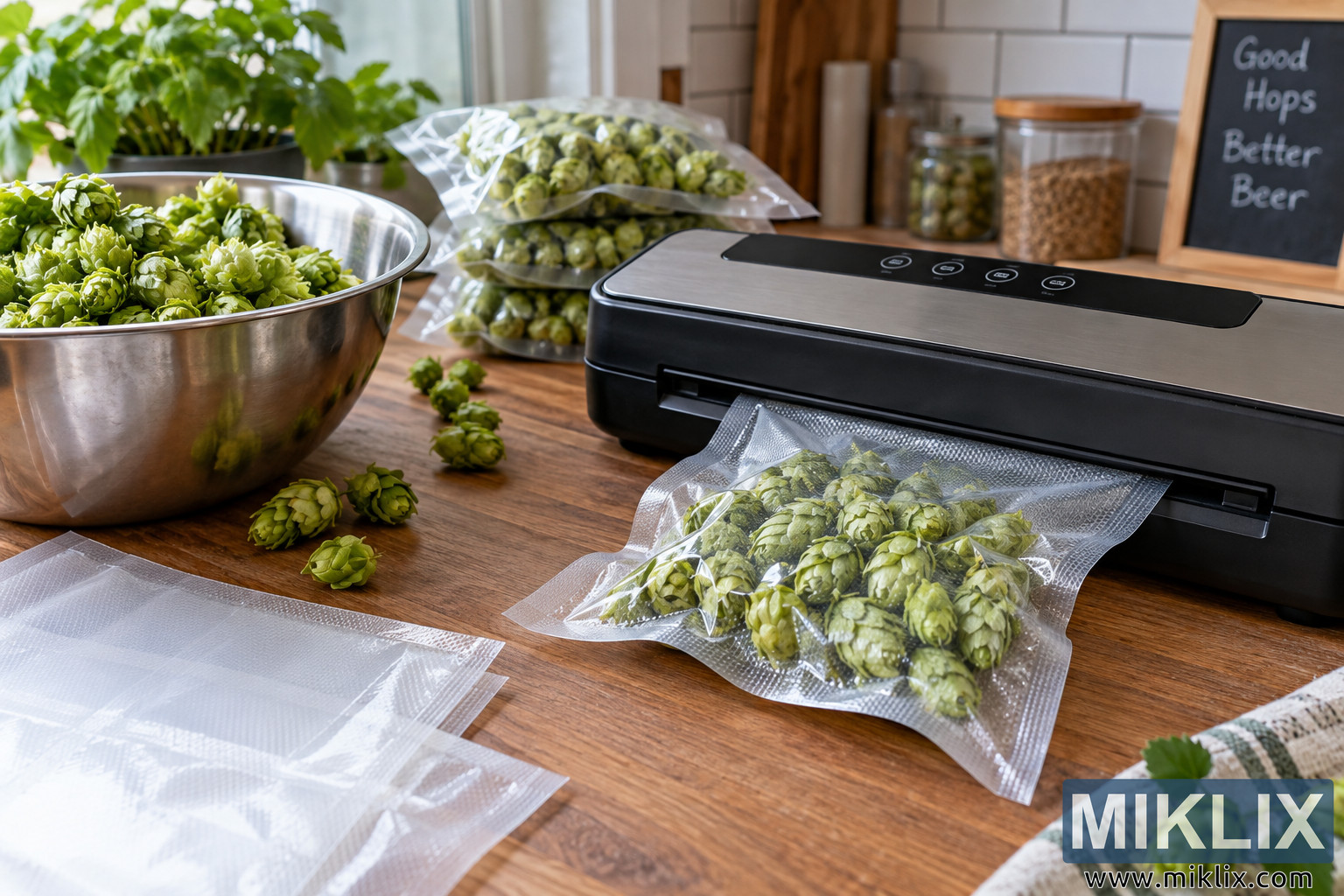
Large size (3,072 x 2,048)
Very large size (4,608 x 3,072)
Extra large size (6,144 x 4,096)
Comically large size (1,048,576 x 699,051)
- Still uploading... ;-)
Image description
The image presents a detailed, photorealistic home kitchen scene centered on the process of vacuum sealing fresh hops for storage and home brewing. The composition is shown in a wide landscape orientation, with a warm wooden countertop extending across the foreground and middle of the frame. Natural-looking daylight enters from the left side, illuminating the fresh green hop cones and creating soft reflections on the metal and plastic surfaces. The overall atmosphere is clean, practical, welcoming, and distinctly domestic, suggesting a home brewer preserving freshly harvested or recently acquired hops for later use.
The main object in the scene is a countertop vacuum sealing machine positioned slightly right of center. It has a modern, streamlined rectangular design with a predominantly black body and a broad brushed-metal panel across the upper surface. A dark control strip runs along the top, containing several simple circular control icons. There are no visible commercial logos or recognizable brand names on the appliance. The front edge of the vacuum sealer is open around a clear textured vacuum bag, making the sealing process visually understandable. The bag extends from the machine toward the viewer and contains a generous quantity of green hop cones. The transparent plastic has a patterned, embossed texture typical of vacuum-sealing material and forms tight folds and reflective highlights around the hops inside. The hop cones remain clearly visible through the plastic, with their layered leaves and pale-to-medium green coloring providing the principal visual focus.
To the left of the vacuum sealer is a large stainless-steel mixing bowl filled almost to the rim with loose fresh hops. The polished bowl reflects the warm brown tones of the wooden worktop as well as some of the surrounding greenery and light. The hop cones in the bowl vary slightly in size and orientation, giving the arrangement a natural, freshly handled appearance rather than a perfectly staged pattern. Several individual hop cones have spilled or been deliberately placed on the countertop between the bowl and the vacuum sealer. These loose hops help connect the different stages of the preservation process: unprocessed hops in the bowl, individual cones on the work surface, and hops already enclosed in vacuum bags.
In the lower-left foreground, a stack of unused transparent vacuum-sealing bags lies partially spread across the countertop. Their translucent surfaces catch the light, revealing fine embossed patterns and overlapping edges. This detail reinforces the practical, instructional character of the scene by showing the supplies required for preparing additional portions. The filled bag emerging from the vacuum sealer occupies much of the lower center of the image. Its irregular shape follows the contours of the compressed hops, while glossy highlights on the plastic communicate the tight, sealed nature of the package.
Behind the main work area, several additional clear bags filled with hops are stacked against the backsplash. These packages appear to represent completed portions that have already been prepared for storage. Their presence suggests an organized workflow in which a larger harvest or batch of hops is being divided into manageable quantities before refrigeration or freezing. The repeated green hop shapes visible through the clear packaging add depth to the scene and reinforce the central subject without introducing distracting objects.
The kitchen background is softly detailed but remains secondary to the vacuum-sealing activity. White rectangular subway-style tiles form the backsplash, creating a neutral surface that contrasts with the warm wooden counter and green hops. Upright wooden cutting boards lean against the wall near the center of the background, contributing natural brown tones and a familiar home-kitchen character. A small cylindrical container and several glass storage jars are also visible. One jar contains green plant material or hops, while a larger jar with a wooden lid contains tan or brown dry ingredients. These containers suggest a space used for food preparation, ingredient storage, or brewing-related activities while remaining generic and unbranded.
On the far left in the background, a healthy green potted herb plant stands near a bright window. Its foliage is slightly out of focus compared with the hops in the foreground, helping establish depth while maintaining the green, botanical theme of the image. The daylight from this area provides a soft directional illumination across the countertop. Highlights are particularly visible on the stainless-steel bowl, the transparent vacuum bags, and the metallic surface of the sealing machine. Shadows remain gentle rather than dramatic, producing an approachable instructional or lifestyle-photography aesthetic.
On the right side of the background, a small framed chalkboard stands on the counter. Written in light-colored chalk-like lettering are the words “Good Hops Better Beer.” The sign provides contextual information connecting the fresh hops and preservation process with home brewing. It has the informal appearance of a decorative kitchen or hobby-room message rather than commercial advertising. No actual brewery, appliance manufacturer, hop supplier, or other commercial brand is displayed anywhere in the scene.
The lower-right corner includes part of a folded or draped kitchen towel with a light base and narrow green stripes. A few additional hop cones and leaves appear near this area, extending the botanical subject toward the edge of the frame. The towel adds texture and a sense of everyday use to the otherwise orderly workspace. Across the image, materials are rendered distinctly: the hops look leafy and slightly papery, the wooden counter shows visible grain, the stainless-steel bowl has smooth reflective surfaces, the vacuum bags appear glossy and textured, and the appliance combines matte black areas with brushed metal.
The composition communicates the complete idea of vacuum sealing hops at home without requiring a person to appear in the frame. The arrangement itself implies an ongoing process. Fresh hops are collected in the metal bowl, empty sealing bags are ready in the foreground, a filled bag is positioned in the vacuum sealer, and several completed packages are stacked behind it. This visual progression makes the subject immediately recognizable as home preservation of hops. The image would be suitable for illustrating an article, tutorial, guide, or informational page about storing hops, preparing homegrown hops for longer-term preservation, organizing brewing ingredients, or using a household vacuum sealer as part of a home-brewing workflow. The realistic lighting, detailed textures, uncluttered arrangement, and absence of visible commercial branding give the scene a broadly applicable editorial and educational quality.
The image is related to: Hops in Beer Brewing: Kohatu