
Image: Water Chemistry Testing and Adjustment for Homebrewing
Published: October 8, 2026 at 10:08:48 PM UTC
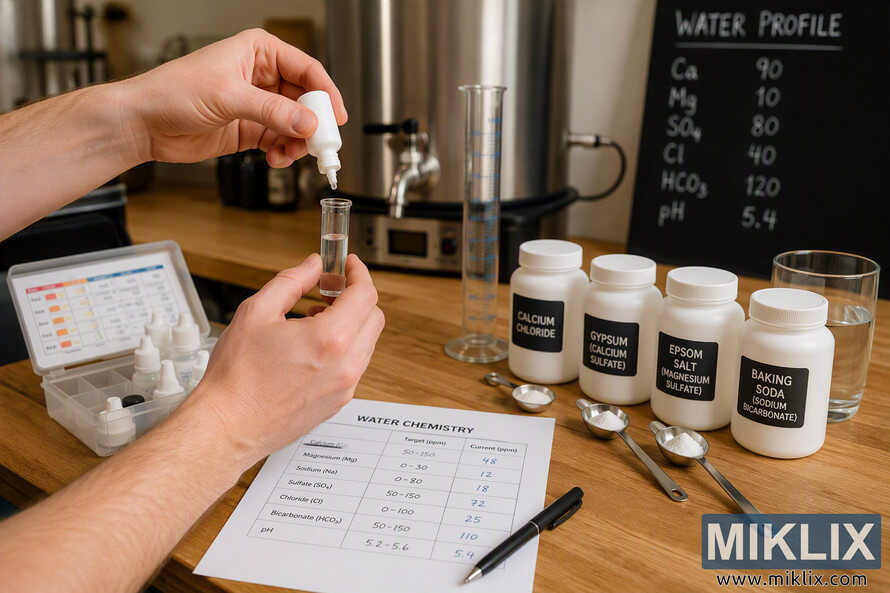
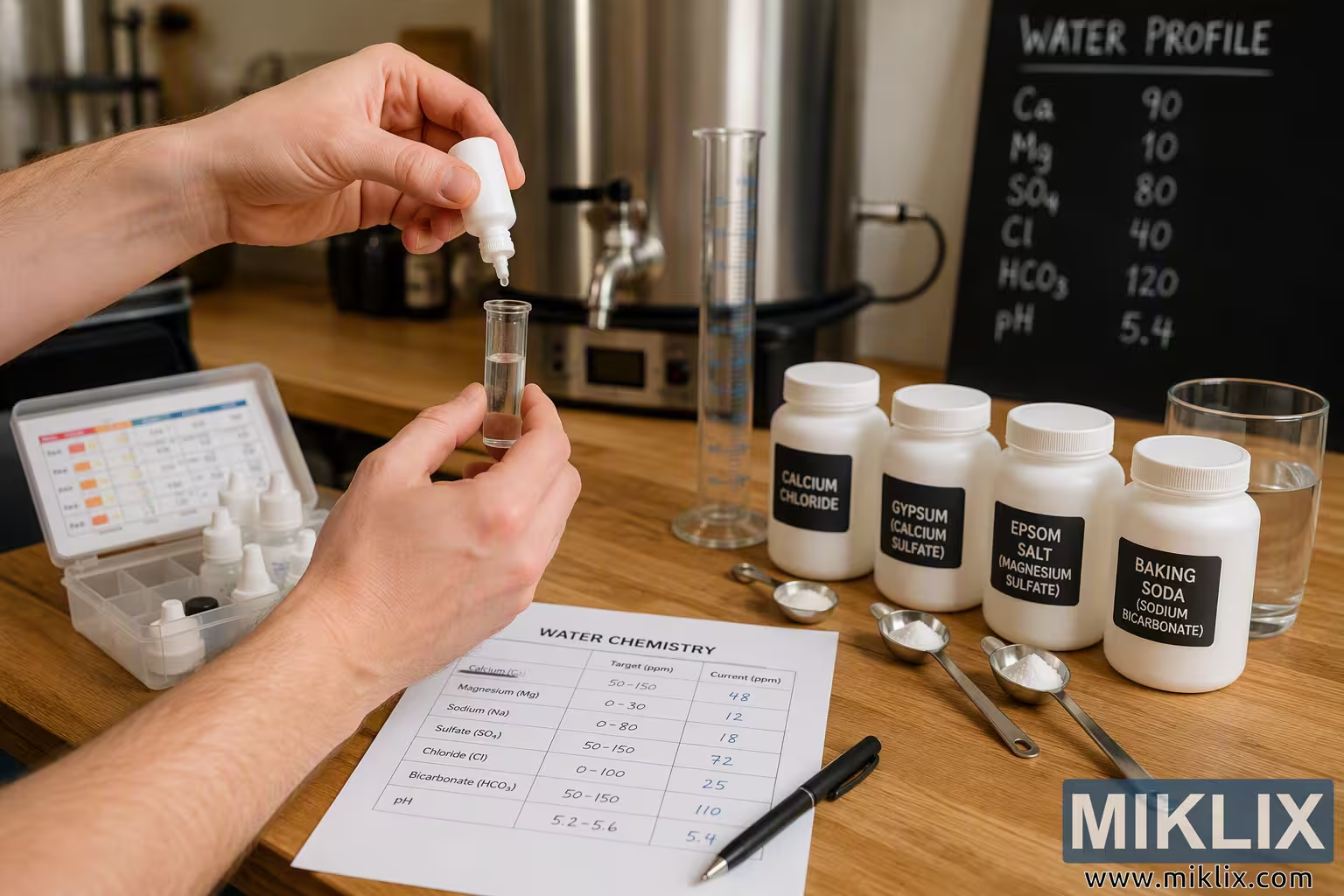
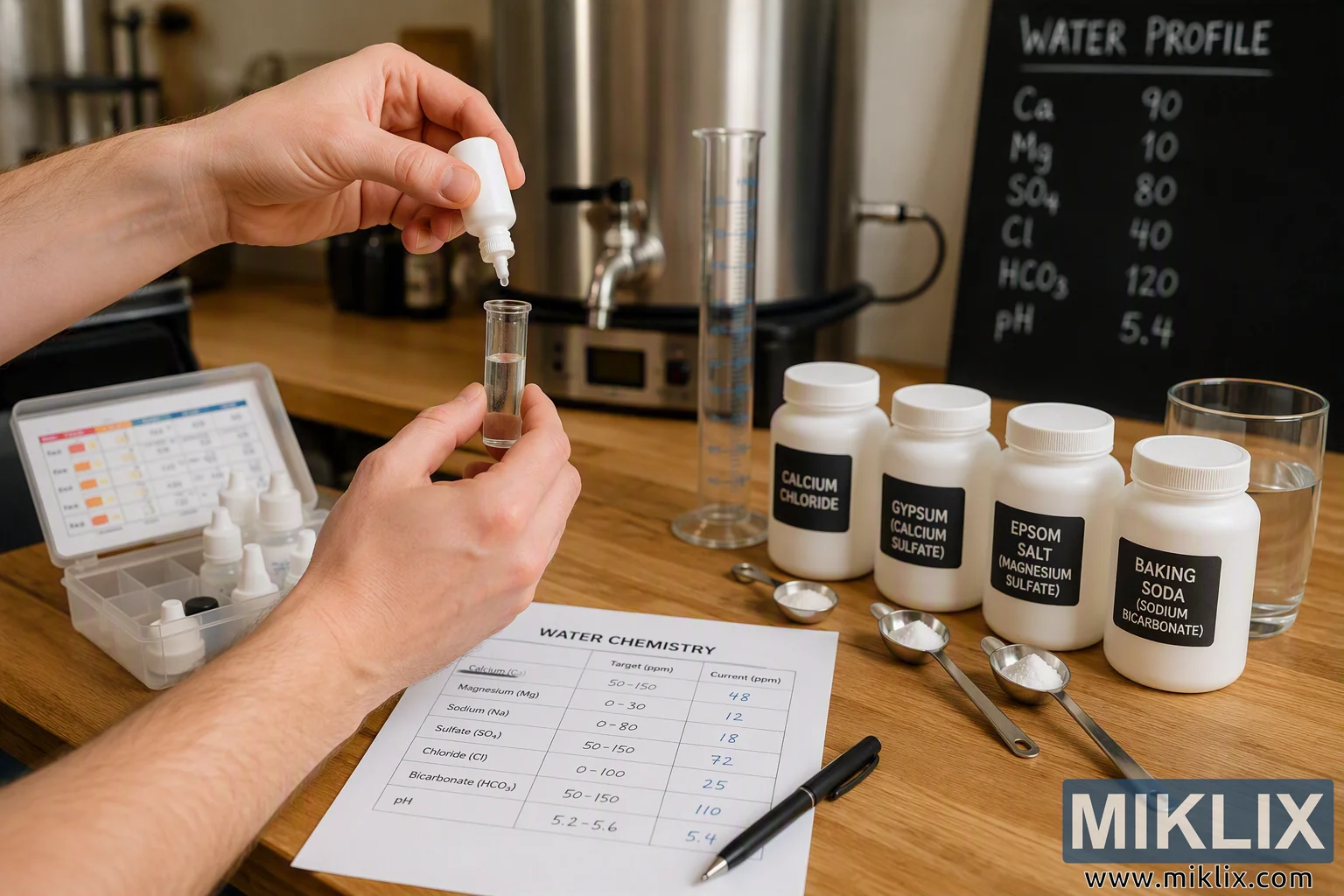
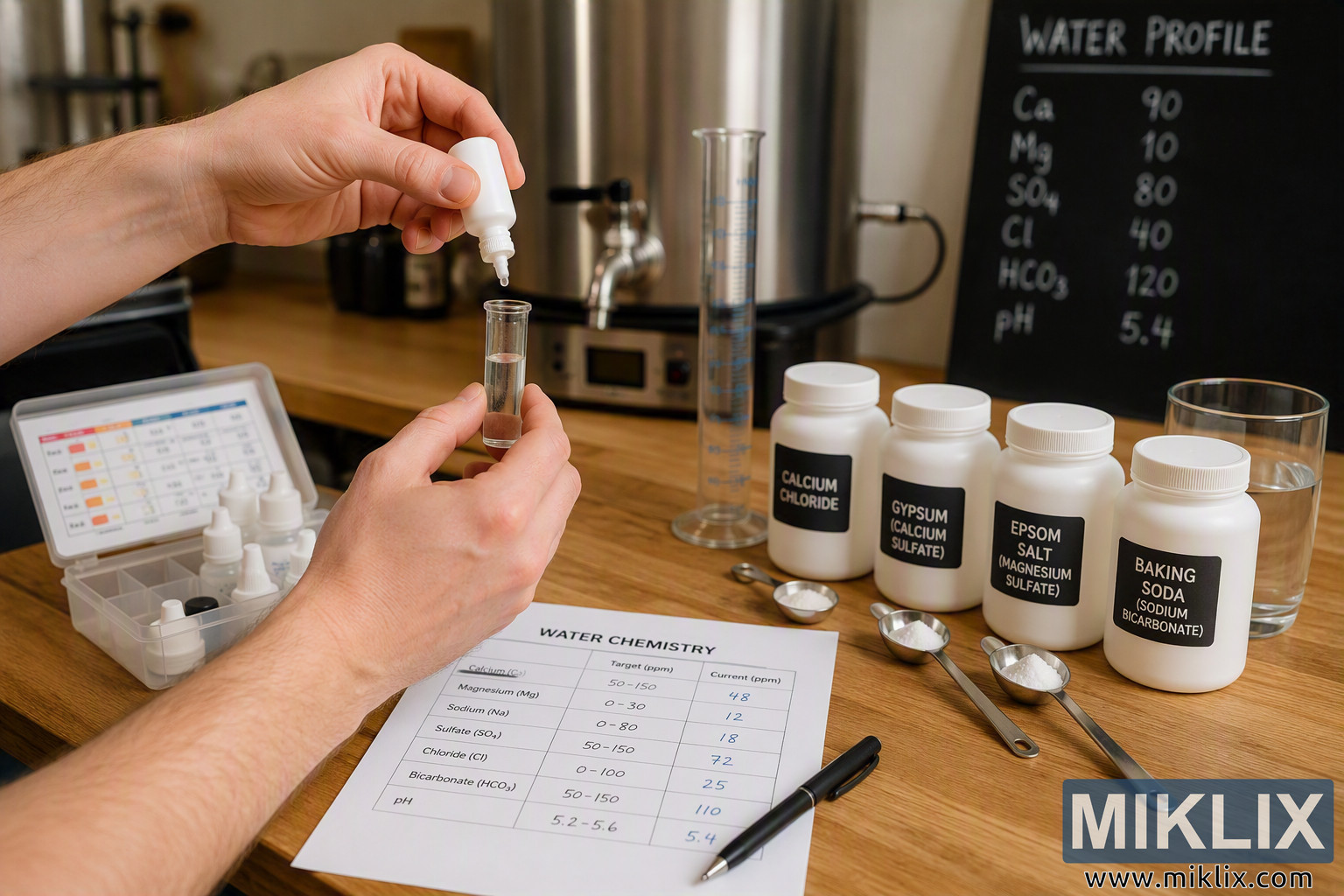
Detailed homebrewing water chemistry scene featuring water testing, mineral additions, sample analysis, brewing equipment, and a documented water profile used to adjust brewing water before beer production.
Available versions of this image
The image files available for download below are less compressed and higher resolution - and as a result of that, higher quality - than the images embedded in articles and pages on this website, which are more optimized for file size in order to reduce bandwidth consumption.
Regular size (1,536 x 1,024)
Large size (3,072 x 2,048)
Very large size (4,608 x 3,072)
Extra large size (6,144 x 4,096)
Comically large size (1,048,576 x 699,051)
- Still uploading... ;-)
Image description
A high-resolution landscape-oriented photograph depicts a detailed homebrewing water chemistry testing and adjustment procedure taking place on a wooden workbench in a brewing environment. The composition focuses on the technical process of analyzing and modifying brewing water before use in beverage production. The foreground contains two hands engaged in a testing operation. One hand holds a small transparent test tube containing a clear liquid sample, while the other hand holds a white plastic dropper bottle positioned directly above the test tube. A droplet is visible at the tip of the dropper, emphasizing the precise and careful nature of the testing process. The positioning of the hands directs attention toward the analytical procedure and creates a strong focal point near the center-left portion of the image.
The clear liquid inside the test tube appears colorless, suggesting a water sample being evaluated for chemical characteristics. Behind the test tube stands a tall transparent graduated cylinder with blue measurement markings. The graduated cylinder contains a small quantity of liquid near the bottom and serves as additional evidence of a measurement-focused workflow. The laboratory-style glassware contrasts with the surrounding brewing equipment and highlights the intersection of scientific analysis and hobbyist brewing.
The background includes a large stainless-steel brewing vessel positioned near the center of the frame. The brewing vessel features a metallic finish, a dispensing spigot, and a control panel located on the lower front section. The reflective stainless-steel surface catches the warm ambient lighting present throughout the scene. Although the brewing vessel is slightly out of focus due to depth of field, it clearly establishes the setting as a brewing workspace rather than a conventional laboratory.
On the left side of the workbench sits an open water-testing kit. Inside the kit are multiple compartments containing small bottles and testing supplies. The inside cover displays a printed color comparison chart featuring numerous colored squares and tabular information. The chart suggests that water quality measurements are being compared against reference values. Several additional small reagent bottles are visible in and around the kit, reinforcing the analytical nature of the process.
Occupying the right side of the image are several large white containers used for water adjustment. Each container carries a black label with white lettering identifying various brewing minerals and water-treatment compounds. Visible labels include calcium chloride, gypsum identified as calcium sulfate, Epsom salt identified as magnesium sulfate, and baking soda identified as sodium bicarbonate. These compounds are commonly used to alter water mineral content and influence brewing characteristics. The containers are arranged in an orderly row, creating a visual connection between water analysis and subsequent water correction or adjustment.
In front of the containers lie several metal measuring spoons. The measuring spoons contain small portions of white powdered substances corresponding to the mineral additions shown in the containers. Their placement suggests that measured quantities are being prepared for controlled addition to brewing water. The metallic surfaces of the spoons reflect the warm light and contribute to the technical appearance of the workspace.
A clear drinking glass partially filled with water is positioned near the far right of the image. The glass introduces another visual reference to the water-focused subject matter. Adjacent to the glass and containers is a dark vertical board displaying a water profile. The board contains white handwritten-style text listing various water chemistry parameters. Visible entries include calcium, magnesium, sulfate, chloride, bicarbonate, and pH values. The water profile serves as a summary of target or measured water characteristics and reinforces the educational and analytical theme of the photograph.
Near the bottom center of the image rests a printed document titled "Water Chemistry." The document contains a structured table with columns for target values and current values. Several brewing-water parameters appear within the table, accompanied by numerical measurements. A black pen lies nearby, indicating that measurements may be actively recorded or reviewed as part of the testing procedure. The document links the physical testing activities to documentation and process control.
The color palette of the photograph consists primarily of warm wood tones, neutral whites, metallic silvers, and subtle blue accents from measurement markings and handwritten numerical entries. Soft, warm lighting illuminates the scene, creating gentle shadows and revealing texture in the wooden countertop, plastic containers, metallic equipment, and glass surfaces. The lighting contributes to a professional yet approachable atmosphere.
Depth of field is used effectively throughout the composition. The hands, test tube, and dropper are sharply focused, while elements farther into the background become progressively softer. This selective focus draws attention to the precise moment of reagent addition while still preserving sufficient detail to understand the broader brewing context. The image communicates accuracy, measurement, preparation, and process control.
Overall, the photograph presents a comprehensive depiction of homebrewing water chemistry management. Visible elements include water testing equipment, analytical glassware, mineral additives, measurement tools, brewing hardware, documentation, and water profile references. The scene illustrates the practical application of chemistry within a homebrewing workflow, showing how water quality can be measured, documented, and adjusted through controlled additions of minerals to produce desired brewing conditions. The image combines scientific methodology with craft brewing practices, conveying a detailed and organized approach to water preparation and quality control.
The image is related to: Hops in Beer Brewing: Kohatu