
Image: Beer Sensory Evaluation Setup with Tasting Flight and Assessment Sheet
Published: October 8, 2026 at 10:08:48 PM UTC
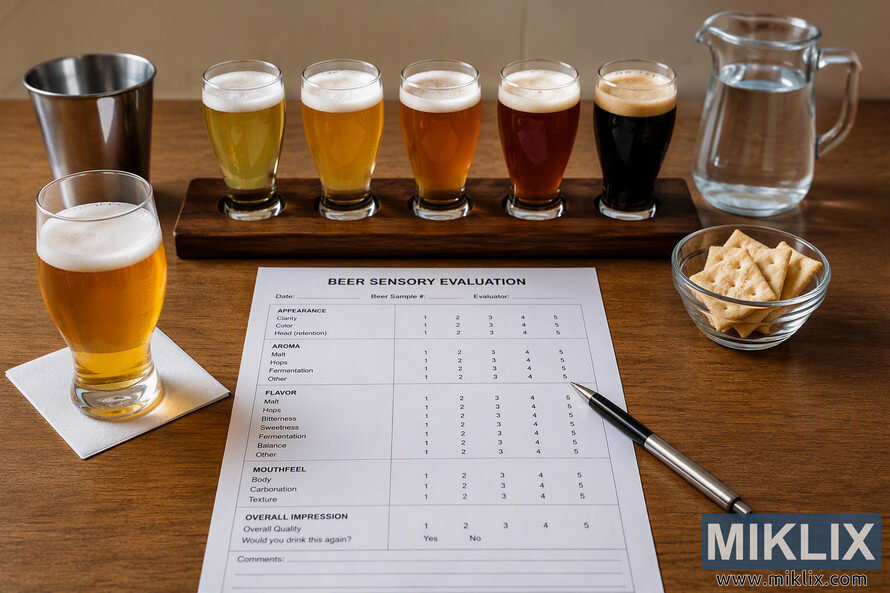
Professional beer sensory evaluation setup displayed on a wooden table with multiple beer samples, tasting materials, score sheet, water, crackers, and evaluation tools designed for structured aroma, flavor, appearance, and mouthfeel assessment.
Available versions of this image
The image files available for download below are less compressed and higher resolution - and as a result of that, higher quality - than the images embedded in articles and pages on this website, which are more optimized for file size in order to reduce bandwidth consumption.
Regular size (1,536 x 1,024)
Large size (3,072 x 2,048)
Very large size (4,608 x 3,072)
Extra large size (6,144 x 4,096)
Comically large size (1,048,576 x 699,051)
- Still uploading... ;-)
Image description
This landscape-oriented photograph depicts a carefully organized beer sensory evaluation setup arranged on a warm-toned wooden table. The image presents a professional tasting environment designed for the systematic assessment of beer characteristics, with all sensory evaluation components clearly visible and positioned in an orderly composition. The overall scene is photographed from a slightly elevated front-facing perspective, allowing a clear view of both the tasting materials in the foreground and the beer flight in the background.
The most prominent element in the center background is a wooden tasting paddle holding five small beer glasses. The beers are arranged in a sequence that progresses visually from lighter to darker colors. From left to right, the first sample appears pale gold with a bright, translucent appearance and a white foamy head. The second sample is a slightly deeper golden color, also topped with a creamy layer of foam. The third sample displays a richer amber-orange hue, suggesting a more malt-forward profile. The fourth sample is a dark amber to copper-brown color with a dense white head. The fifth and final sample is nearly black, creating a sharp visual contrast with the lighter beers positioned earlier in the flight. Each tasting glass has a similar shape and size, creating visual consistency and emphasizing comparative sensory evaluation.
In the left foreground, there is a larger serving glass filled with golden beer. This glass stands on a neatly folded white napkin and contains a substantial layer of white foam at the top. Condensation and light reflections on the glass contribute to a realistic photographic appearance. The larger beer glass appears separate from the tasting flight and may represent a reference sample or an example pour associated with the evaluation session.
Centered in the foreground is a printed evaluation sheet titled "BEER SENSORY EVALUATION." The document is positioned vertically and occupies a significant area of the composition. The sheet is designed as a structured tasting form with organized sections intended for recording observations and scores. Visible categories include appearance, aroma, flavor, mouthfeel, and overall impression. Rows and columns provide numerical scoring areas and spaces for comments. The form appears intended to support a methodical assessment process by guiding evaluators through specific sensory attributes. The paper is clean, flat, and well lit, making it immediately recognizable as the focal documentation element within the scene.
Resting on the right side of the evaluation form is a metallic and black pen angled diagonally across the table surface. The pen is positioned as though ready for use, reinforcing the active evaluation theme. Its reflective metallic components catch ambient light and contrast with the matte texture of the paper beneath it.
To the far left of the image sits a metallic dump bucket. The cylindrical container has a brushed metal appearance and an open top. Such a container is commonly associated with tasting environments where samples may be discarded after evaluation. Its placement adjacent to the tasting area contributes to the professional and organized nature of the setup.
On the far right side of the image is a transparent glass pitcher filled with water. The pitcher features a curved handle and broad opening. The water appears clear, and reflections on the glass surface emphasize its transparency. Water serves as an important palate-cleansing component during sensory analysis, and the presence of the pitcher visually reinforces the tasting-focused purpose of the setting.
In front of the water pitcher is a small transparent bowl containing several plain square crackers. The crackers are light beige in color and stacked casually within the bowl. Their simple appearance suggests a neutral palate cleanser intended to minimize flavor carryover between beer samples. The bowl adds texture and balance to the right side of the composition while supporting the broader sensory evaluation context.
The wooden tabletop extends across the entire image and provides a rich, warm background texture. Subtle variations in wood grain and natural coloration create visual interest without distracting from the primary tasting materials. The background beyond the table surface appears softly blurred, drawing attention toward the tasting setup and helping establish depth. The neutral backdrop allows the colors of the beer samples and evaluation materials to stand out prominently.
Lighting within the photograph is soft, even, and natural in appearance. Highlights are visible on the glassware, metallic surfaces, and water pitcher, while shadows remain gentle and controlled. The illumination enhances the transparency and color differences among the beers, making the visual progression from pale gold to dark black especially noticeable. Foam layers on each beer sample are clearly defined and contribute texture to the image.
The overall composition communicates a structured sensory analysis session focused on evaluating beer characteristics through observation, aroma assessment, flavor analysis, mouthfeel examination, and overall quality judgment. Every object in the frame contributes to this purpose. The tasting flight provides the samples under evaluation, the form enables documentation, the pen supports note taking, the water and crackers facilitate palate cleansing, and the dump bucket offers practical sample management. Together, these components create a complete, professional beer sensory evaluation environment suitable for educational, training, judging, quality control, or guided tasting activities. The image contains no visible commercial branding on the glasses, tasting equipment, pitcher, crackers, pen, or evaluation materials, resulting in a neutral and universally applicable depiction of beer sensory analysis.
The image is related to: Hops in Beer Brewing: Kohatu