
Image: Closed Transfer Brewing System with Stainless Steel Fermentation and Process Vessels
Published: October 8, 2026 at 10:08:48 PM UTC
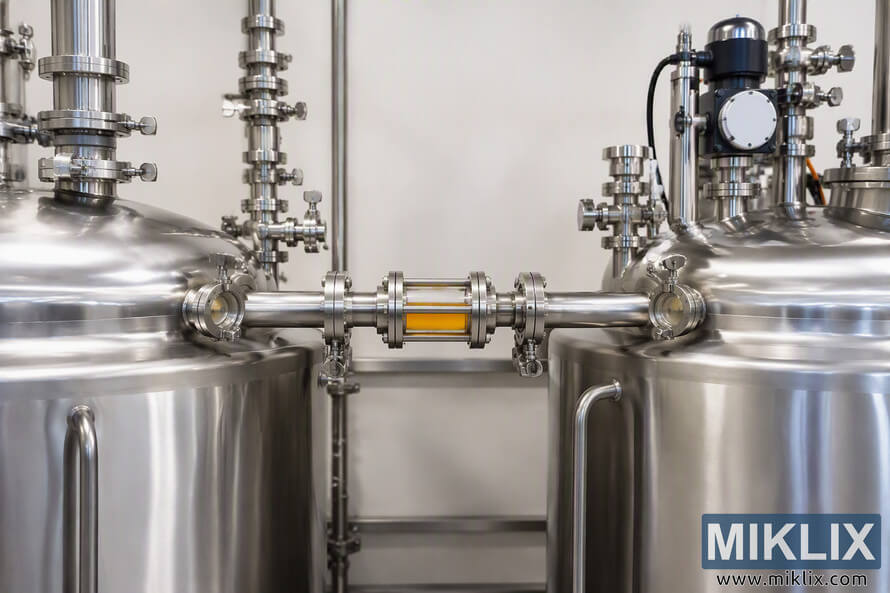
Professional image of a closed transfer brewing system featuring stainless steel tanks, sanitary process piping, and a sight glass with amber liquid. The clean industrial setup emphasizes hygienic brewing operations, contamination prevention, controlled product movement, and modern process engineering.
Available versions of this image
The image files available for download below are less compressed and higher resolution - and as a result of that, higher quality - than the images embedded in articles and pages on this website, which are more optimized for file size in order to reduce bandwidth consumption.
Regular size (1,536 x 1,024)
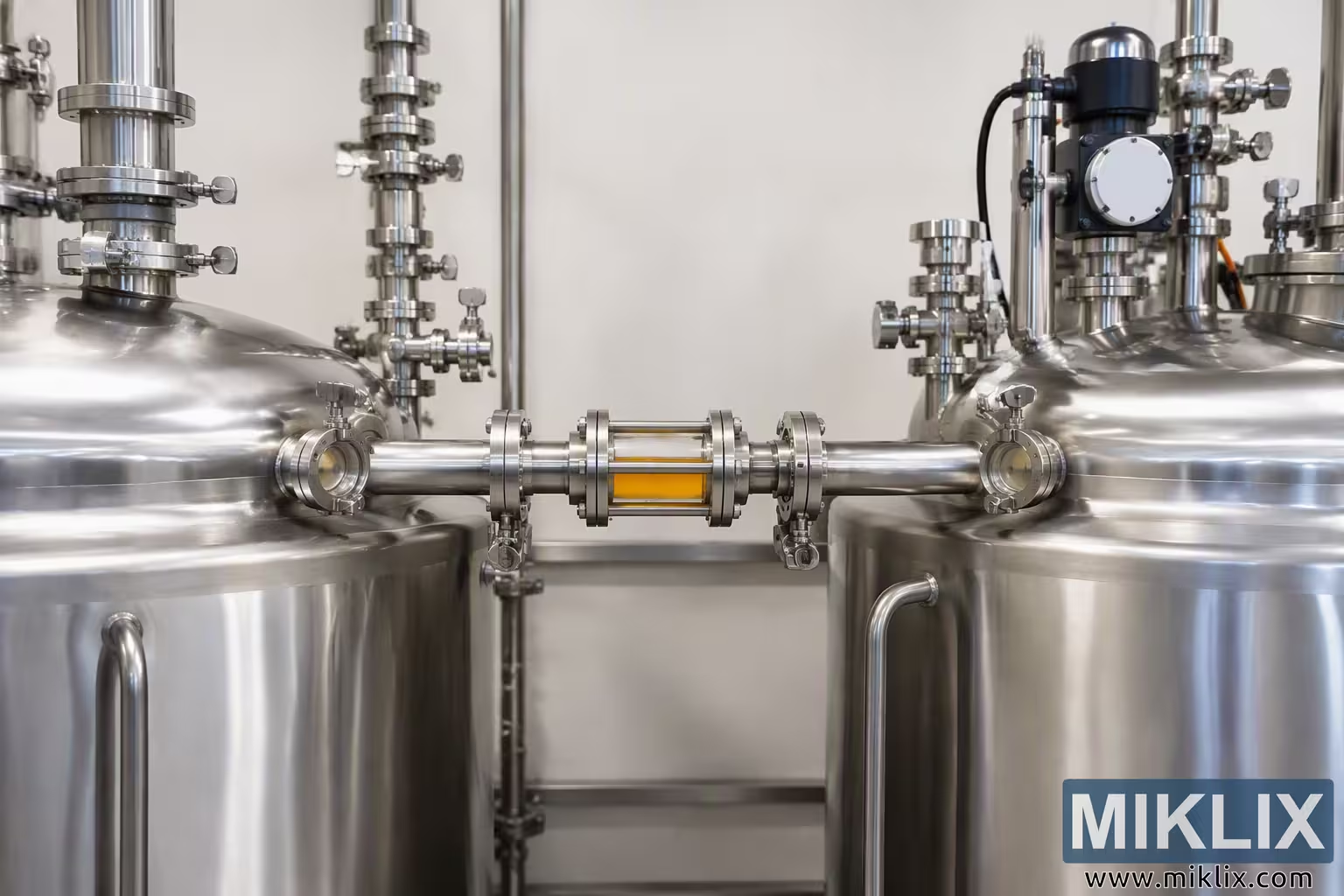
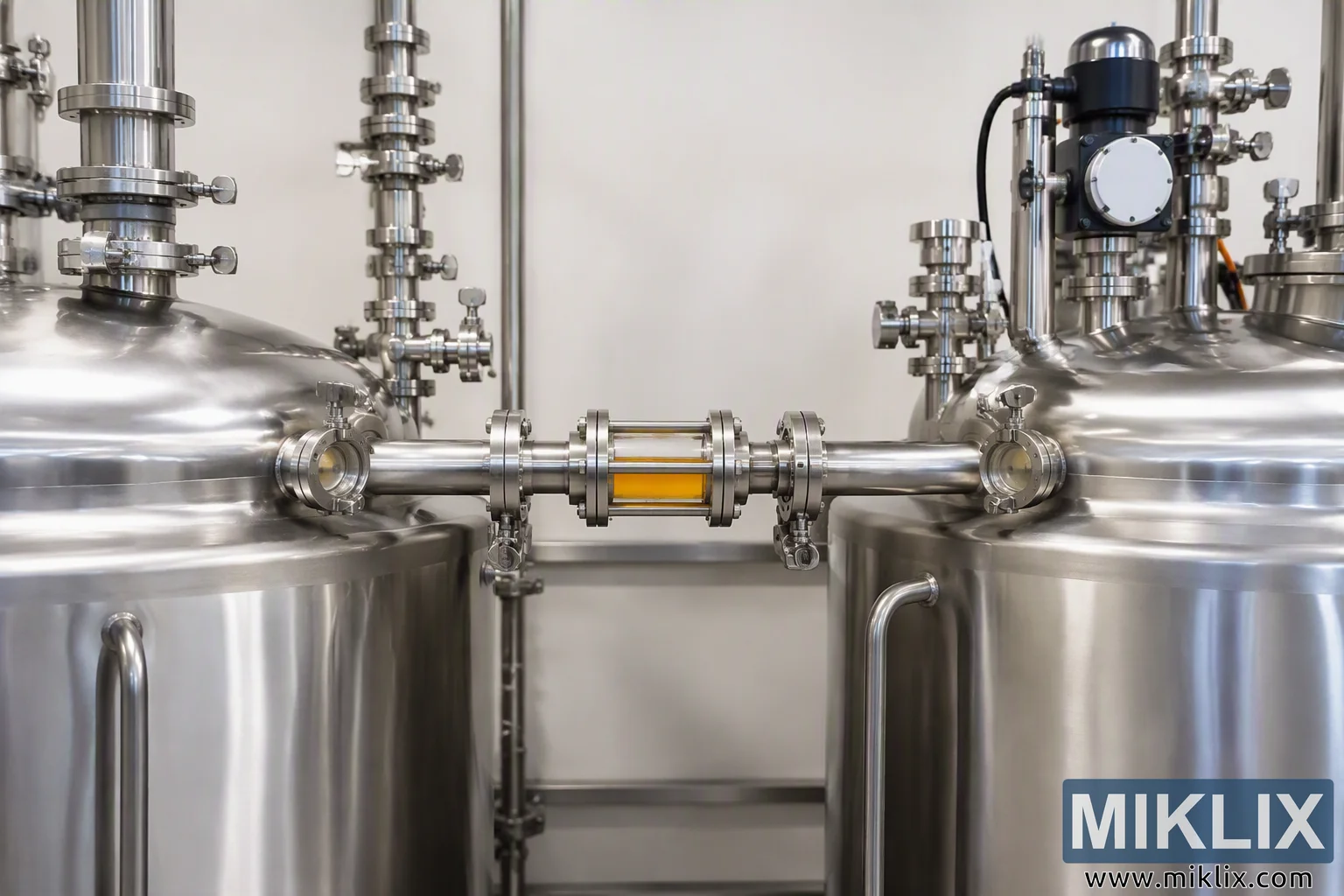
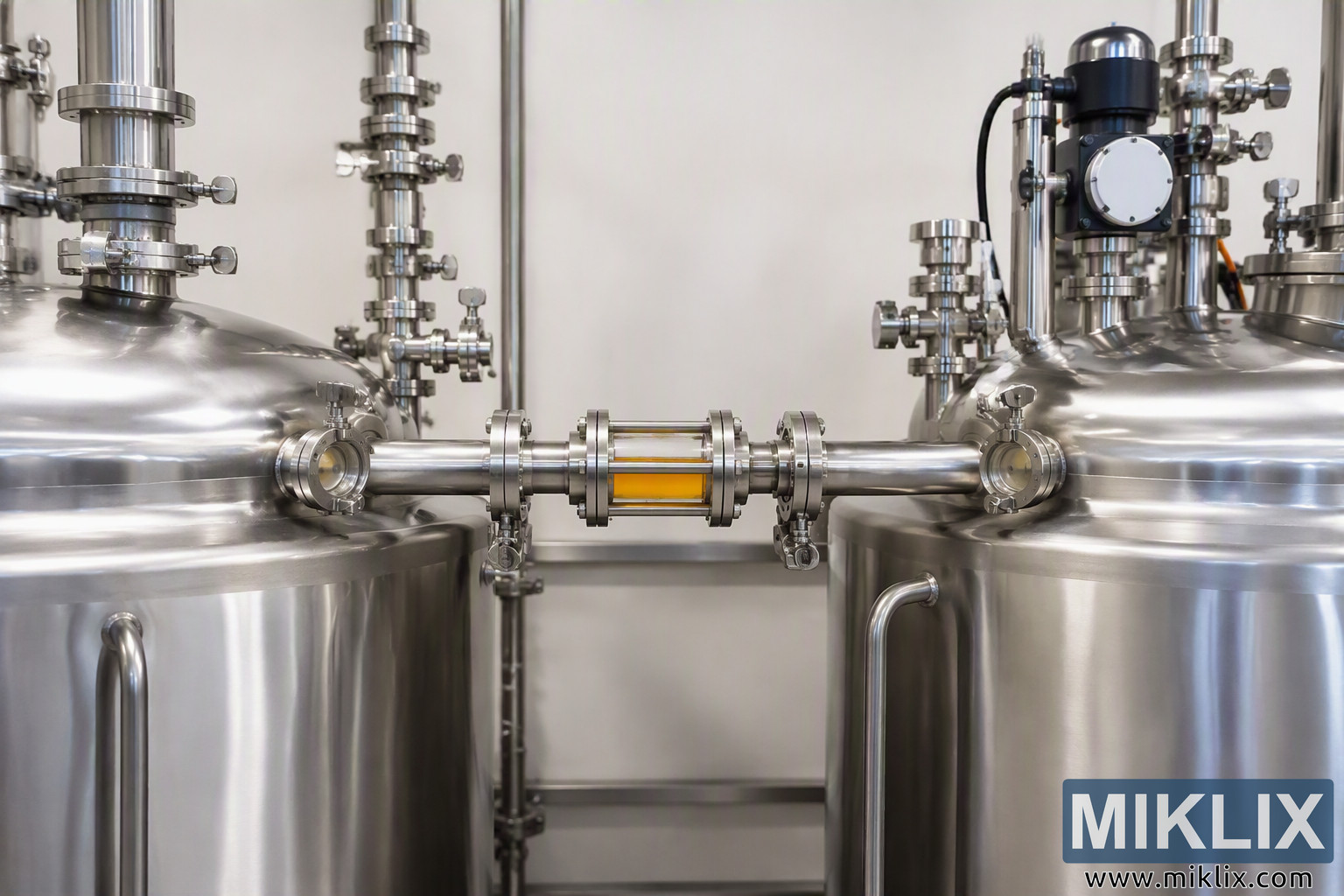
Large size (3,072 x 2,048)
Very large size (4,608 x 3,072)
Extra large size (6,144 x 4,096)
Comically large size (1,048,576 x 699,051)
- Still uploading... ;-)
Image description
This high-resolution landscape photograph presents a detailed view of a closed transfer brewing system installed within a clean and well-maintained industrial processing environment. The image is dominated by two large stainless steel process vessels positioned symmetrically on opposite sides of the frame. One vessel occupies the left foreground while a second vessel occupies the right foreground. Both vessels exhibit a highly polished metallic finish that reflects the surrounding environment and overhead lighting. The reflective surfaces create smooth gradients of light and shadow while emphasizing the sanitary construction and premium finish of the equipment.
The primary focal point of the image is the horizontal transfer assembly that bridges the gap between the two vessels. This assembly consists of sanitary stainless steel tubing and precision-engineered clamp fittings designed to facilitate the controlled movement of liquid products from one vessel to another while minimizing exposure to the outside environment. The transfer line runs directly through the center of the composition, creating strong visual balance and guiding the viewer's attention toward the middle of the scene.
At the exact center of the transfer line is a transparent sight glass section enclosed within multiple stainless steel flanges. The sight glass contains a visible volume of amber-colored liquid, introducing a warm golden hue into an otherwise monochromatic industrial palette. The amber liquid appears suspended within the enclosed pathway, suggesting product visibility during a controlled transfer operation. The transparent section allows operators to observe fluid presence without opening the system, making it a visually distinct and functionally important element. The color contrast between the amber liquid and the surrounding metallic surfaces immediately attracts attention and reinforces the concept of contained product movement.
The vessel on the left side of the image features a rounded upper dome with numerous sanitary ports, fittings, and process connections extending vertically from the top surface. Several polished cylindrical assemblies rise upward from the vessel, each connected through clamp-based sanitary junctions. Additional valves and mechanical connections are visible around the upper perimeter. The vessel body displays smooth contours and subtle reflections that reveal the high-quality finish of the stainless steel construction. The lower portion of the vessel extends beyond the bottom edge of the frame, emphasizing the large scale of the equipment.
The vessel on the right side mirrors many characteristics of the left vessel but includes additional mechanical components mounted near the upper section. Prominent vertical process tubes extend from the vessel top and connect to a dark-colored control or drive assembly. Electrical cables or flexible process lines route around the equipment, contributing visual complexity while maintaining an orderly appearance. Multiple polished fittings surround these components, reinforcing the impression of a sophisticated processing installation designed for controlled and repeatable operations.
Throughout the image, numerous sanitary clamps, ferrules, valves, junctions, and connection points are visible. These precision-machined components exhibit clean surfaces and consistent finishes, indicating strict hygienic design principles. Every visible connection appears tightly integrated into the system, supporting the interpretation that the equipment is intended for sealed processing applications where contamination prevention is a high priority.
The background contains additional vertical piping structures, support assemblies, and process lines extending toward the upper edges of the frame. Many of these background elements are partially out of focus, creating depth while helping maintain emphasis on the central transfer connection. The vertical lines formed by the piping provide visual contrast to the horizontal alignment of the transfer tube. Multiple valves and fittings are distributed throughout the background, suggesting the presence of a larger interconnected processing system beyond the immediately visible equipment.
The facility itself appears exceptionally clean and organized. Light-colored walls create a neutral backdrop that enhances the visibility of the stainless steel components. No signage, labels, branding, logos, warning placards, digital displays, or product markings are visible anywhere within the image. The absence of commercial identifiers allows the equipment to serve as a generic representation of industrial brewing and liquid-processing technology. No workers, technicians, or operators are present, which further emphasizes the machinery and engineered environment rather than human activity.
Lighting within the scene is bright, even, and professionally controlled. Reflections on the vessel surfaces reveal diffuse illumination rather than direct harsh light sources. Highlights are distributed smoothly across the curved metal surfaces, preserving fine details and avoiding excessive glare. The uniform lighting helps reveal construction details such as clamp geometry, pipe intersections, gasket housings, valve handles, and polished weld areas.
The composition demonstrates strong symmetry. The two vessels act as visual anchors on either side of the frame, while the transfer assembly forms a central bridge connecting both structures. This arrangement creates a sense of precision, balance, and engineering discipline. The photograph appears to have been captured using a moderate depth of field, ensuring that the central transfer line remains sharp while allowing distant background elements to soften slightly. The resulting image combines technical clarity with visual depth.
Textures throughout the photograph are dominated by smooth polished metal, transparent glass, machined fittings, and clean industrial surfaces. The stainless steel exhibits subtle variations in reflection depending on curvature and viewing angle. The sight glass provides optical transparency and highlights the movement or presence of processed liquid within the otherwise sealed environment. Small mechanical details such as bolt heads, clamp hinges, connection collars, and valve bodies contribute to the technical realism of the image.
Overall, the photograph serves as a comprehensive visual representation of a modern closed transfer brewing system. The image communicates themes of hygiene, process control, contamination prevention, product integrity, operational efficiency, and engineered precision. The polished process vessels, sanitary transfer piping, transparent inspection section, visible amber liquid, orderly industrial setting, and balanced composition collectively portray a sophisticated liquid-processing installation designed around cleanliness, reliability, and controlled product handling.
The image is related to: Hops in Beer Brewing: Kohatu