
Image: Over-Carbonated Bottle Rupture on Tile Floor
Published: October 8, 2026 at 10:08:48 PM UTC
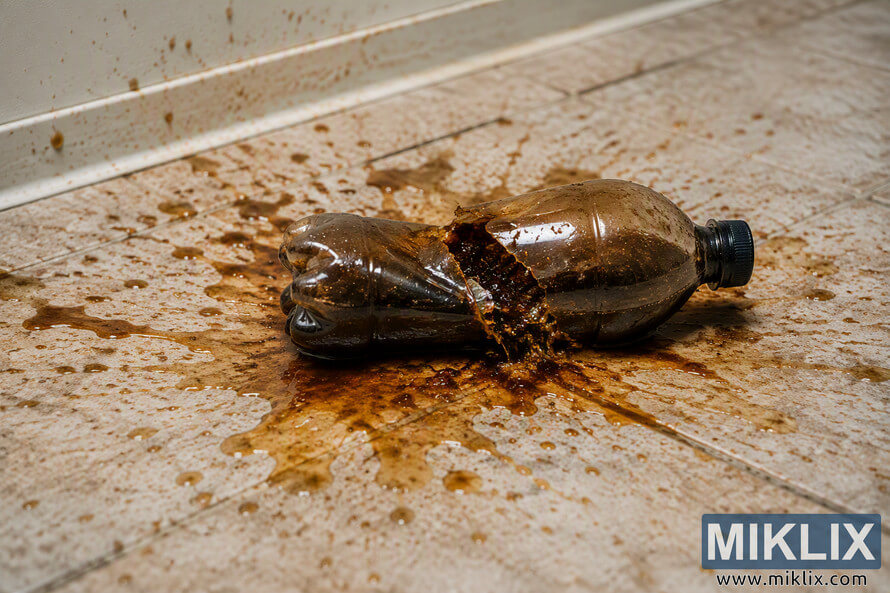
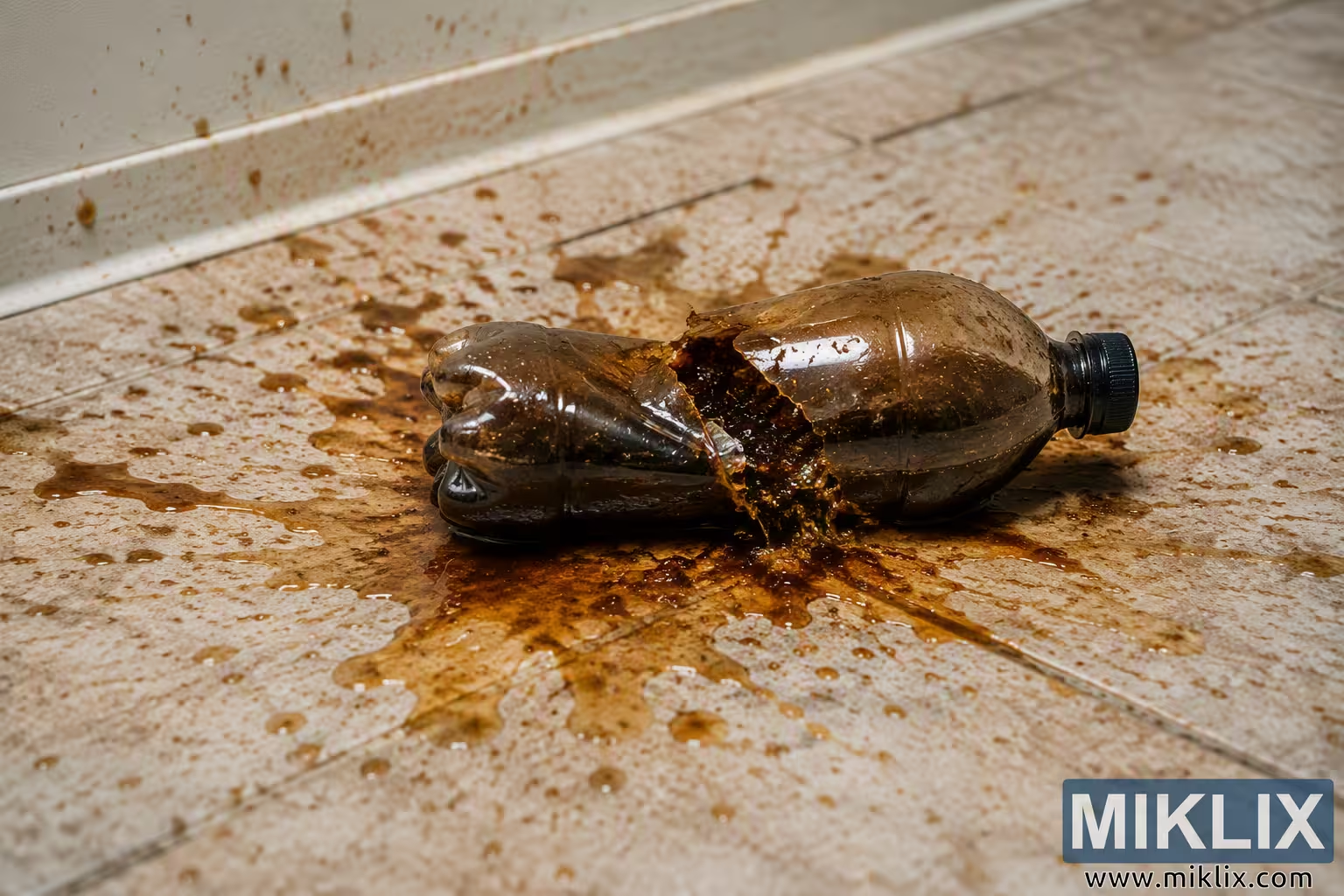
Detailed photograph of a plastic bottle that has burst from excessive internal pressure caused by over-carbonation, leaving spilled liquid and droplets across a tiled indoor floor.
Available versions of this image
The image files available for download below are less compressed and higher resolution - and as a result of that, higher quality - than the images embedded in articles and pages on this website, which are more optimized for file size in order to reduce bandwidth consumption.
Regular size (1,536 x 1,024)
Large size (3,072 x 2,048)
Very large size (4,608 x 3,072)
Extra large size (6,144 x 4,096)
Comically large size (1,048,576 x 699,051)
- Still uploading... ;-)
Image description
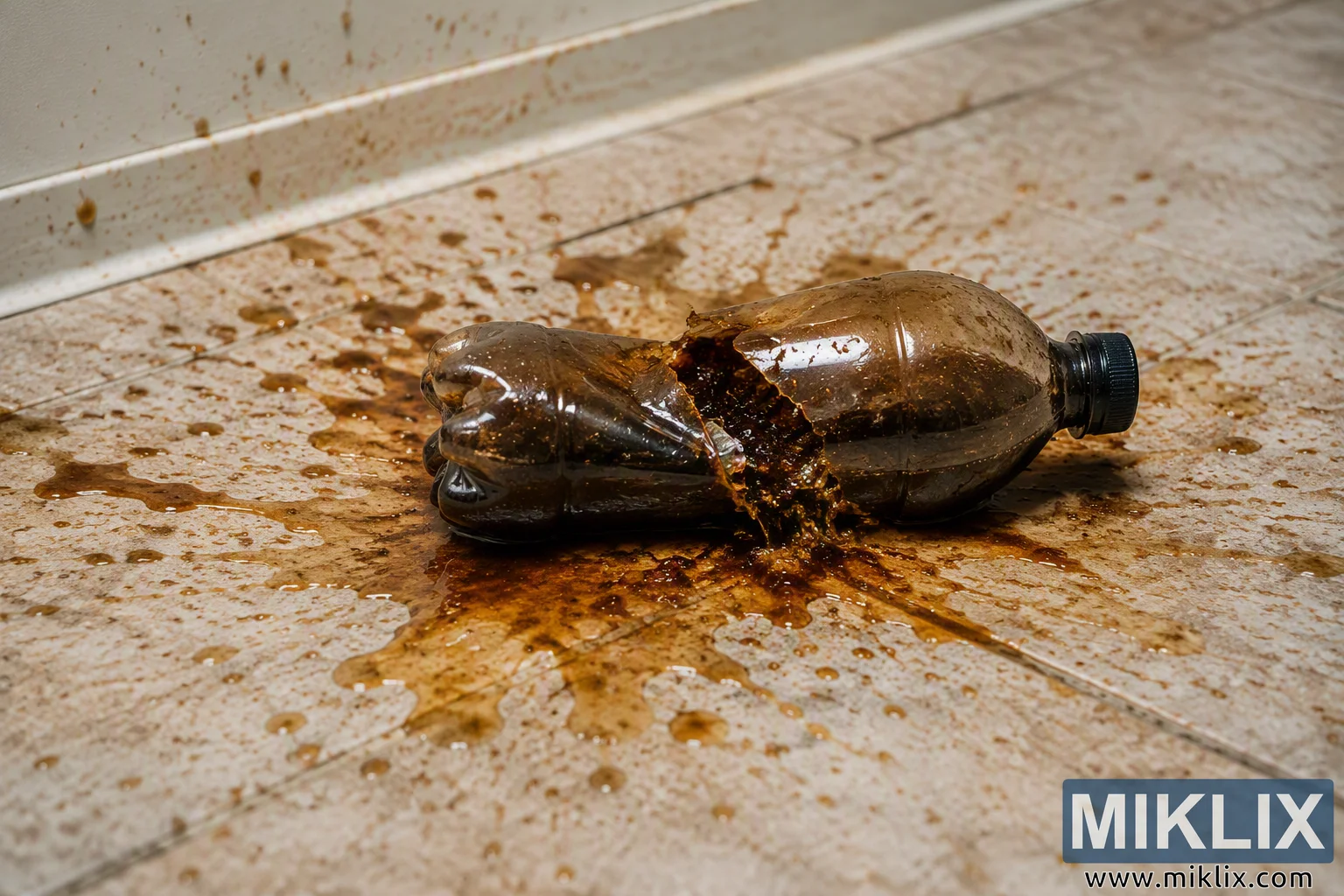
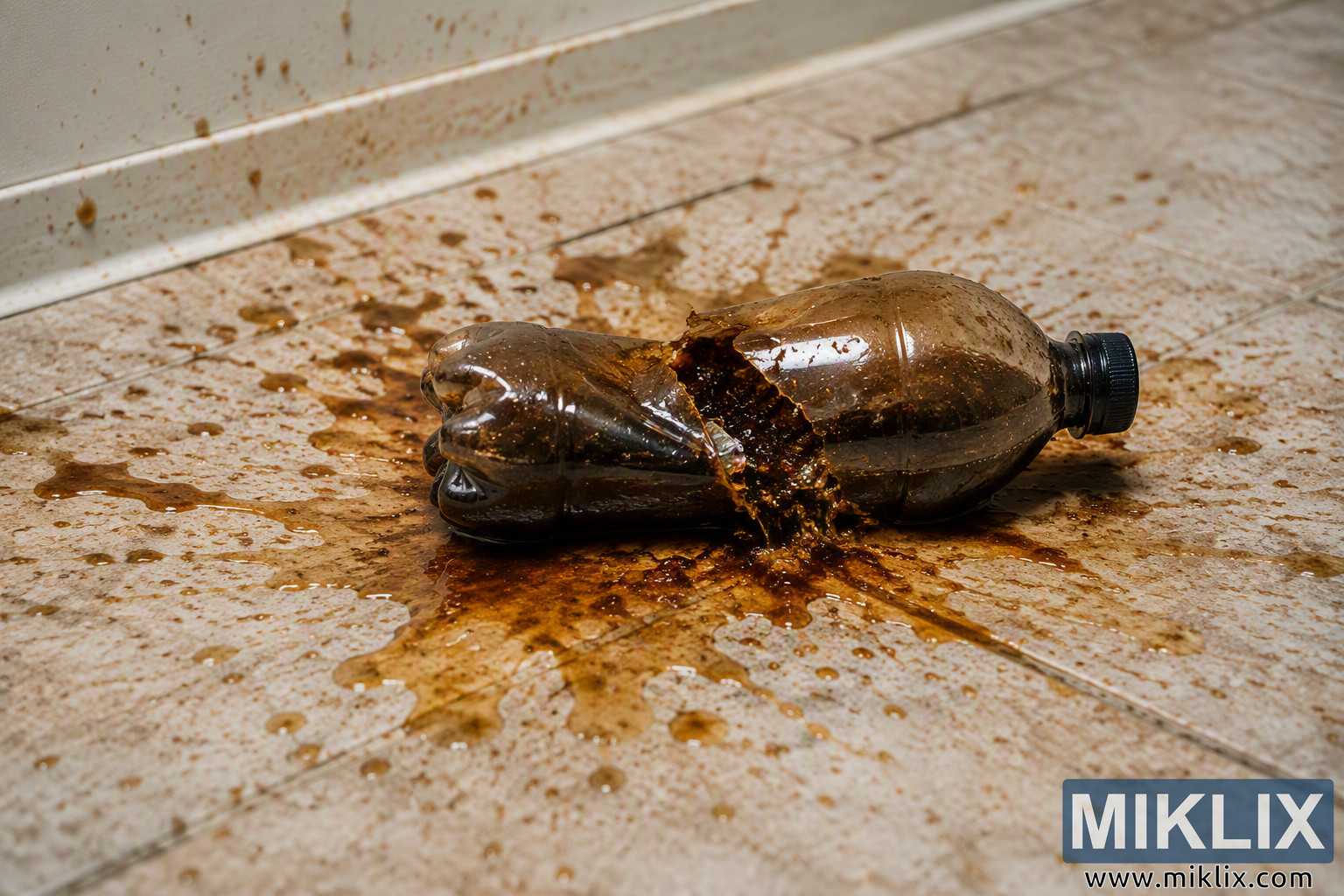
This landscape-oriented photograph depicts the aftermath of a container failure caused by excessive internal pressure commonly associated with over-carbonation. The central subject is a dark-colored plastic bottle positioned horizontally across a light-toned tiled floor. The bottle occupies the foreground and midground of the composition and immediately draws attention due to a large rupture located near the central section of the container. The damaged area appears torn open rather than cleanly cut, revealing the point at which the bottle structure could no longer withstand the pressure contained inside. The image captures a static moment after the release of pressure, focusing on the physical consequences rather than the actual rupture event.
The bottle rests diagonally from the lower left to the upper right area of the frame, with the capped neck section visible on the right side. The cap remains attached, indicating that pressure likely escaped through structural failure of the bottle body instead of through an opened container. The plastic material exhibits a dark brown or nearly black translucent appearance, with reflective highlights visible along the curved exterior surfaces. These reflections suggest indoor lighting and a relatively glossy bottle finish. The crushed and deformed appearance around the rupture provides visual evidence of the substantial forces involved in the failure.
Surrounding the bottle is a significant volume of spilled liquid distributed across the tiled floor. Numerous droplets, splashes, streaks, and irregular pools extend outward from the damaged bottle in multiple directions. The liquid appears dark brown in color and varies in thickness from fine droplets to larger puddle-like accumulations. The spread pattern suggests a sudden release of pressurized contents, resulting in liquid being propelled away from the bottle before settling onto surrounding surfaces. Small droplets are visible not only on the floor but also on the vertical baseboard and lower wall area in the background. This distribution supports the impression that the contents were expelled with considerable force.
The floor consists of rectangular ceramic or stone-like tiles arranged in a grid pattern. Fine grout lines separate the tiles, adding geometric structure to the scene. The pale coloration of the floor creates strong contrast with both the dark bottle and the darker liquid, making the spill pattern highly visible. Reflections and wet patches indicate that the liquid remains fresh and has not yet evaporated or been cleaned. Surface texture on the tiles contributes visual detail and helps convey a domestic or utility-room interior setting.
In the background, a white or off-white baseboard runs horizontally along the wall. The baseboard serves as a visual boundary between the wall and floor while also displaying scattered droplets from the expelled liquid. The wall itself is largely plain and uncluttered, providing minimal distraction from the primary subject. The simplicity of the background increases emphasis on the damaged bottle and the resulting mess. Shallow depth of field effects create a gradual softening of distant areas, helping guide attention toward the ruptured container in the center of the image.
Lighting appears warm and even, likely originating from indoor illumination. Highlights are visible on wet surfaces, the bottle exterior, and individual droplets. The combination of reflections and shadows contributes depth while preserving clear visibility of details. Color tones throughout the image are dominated by beige, cream, brown, black, and amber hues. These colors reinforce the contrast between the clean tile surface and the dark liquid spread across it.
The photograph functions as a visual example of physical consequences associated with over-carbonation in a sealed beverage container. Internal gas pressure can accumulate to levels exceeding the design tolerance of the container, resulting in deformation, rupture, or bursting. The image does not depict the explosion itself but rather the immediate aftermath. Evidence for the pressure-related failure includes the central bottle rupture, widespread distribution of liquid, droplets reaching distant surfaces, and the continued attachment of the bottle cap. These visual elements collectively communicate the forceful nature of the event.
No people are present in the scene, and no visible branding, logos, labels, product names, or readable text appear anywhere in the image. The composition remains focused entirely on the damaged container, expelled liquid, surrounding floor surface, and nearby wall structures. The photograph presents a clear and detailed documentation-style view of a bottle that has failed under pressure, emphasizing the resulting spill pattern, material damage, environmental context, and physical evidence of over-carbonation.
The image is related to: Hops in Beer Brewing: Kohatu