
Image: Legacy Hop Bines on Traditional Trellis Systems in Yakima Valley
Published: October 10, 2026 at 8:23:05 AM UTC
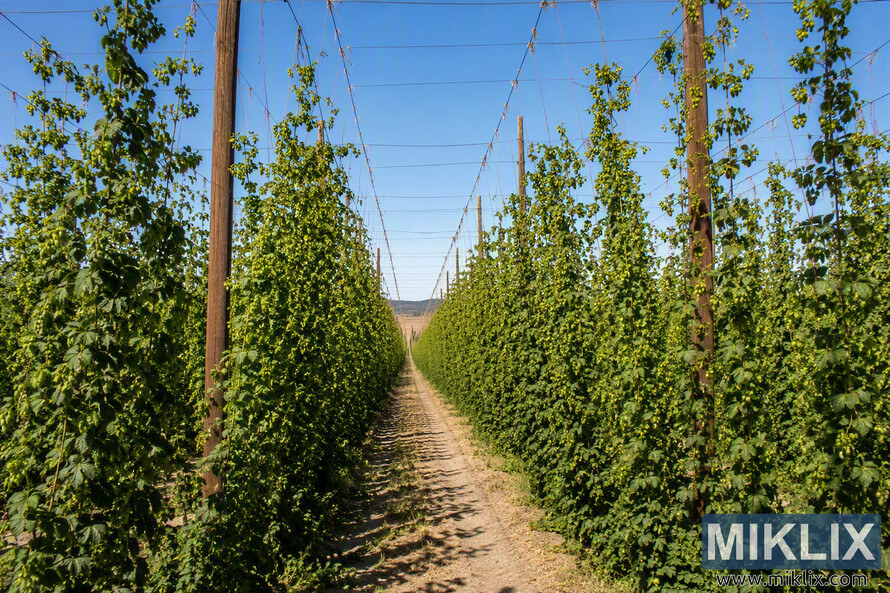
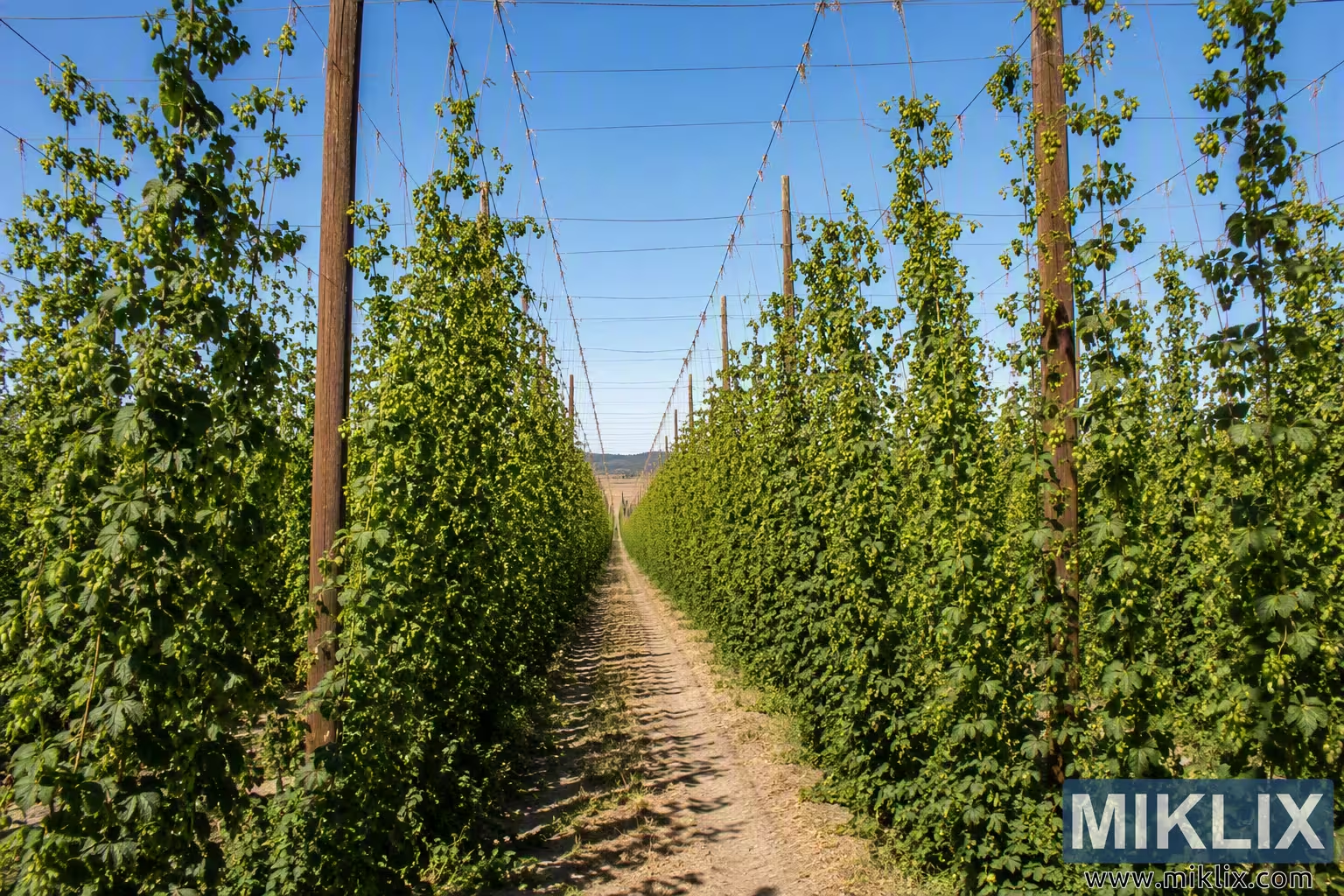
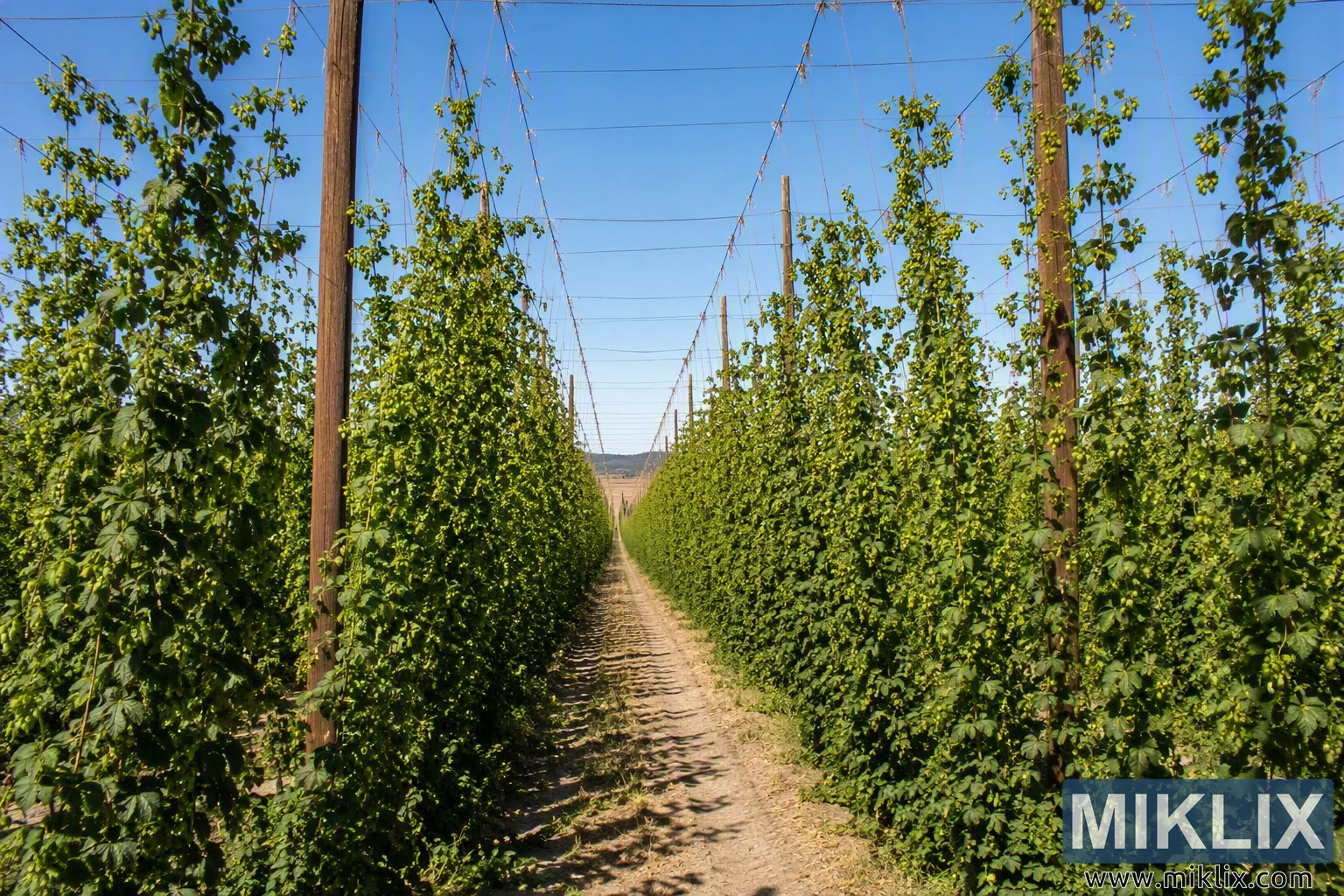
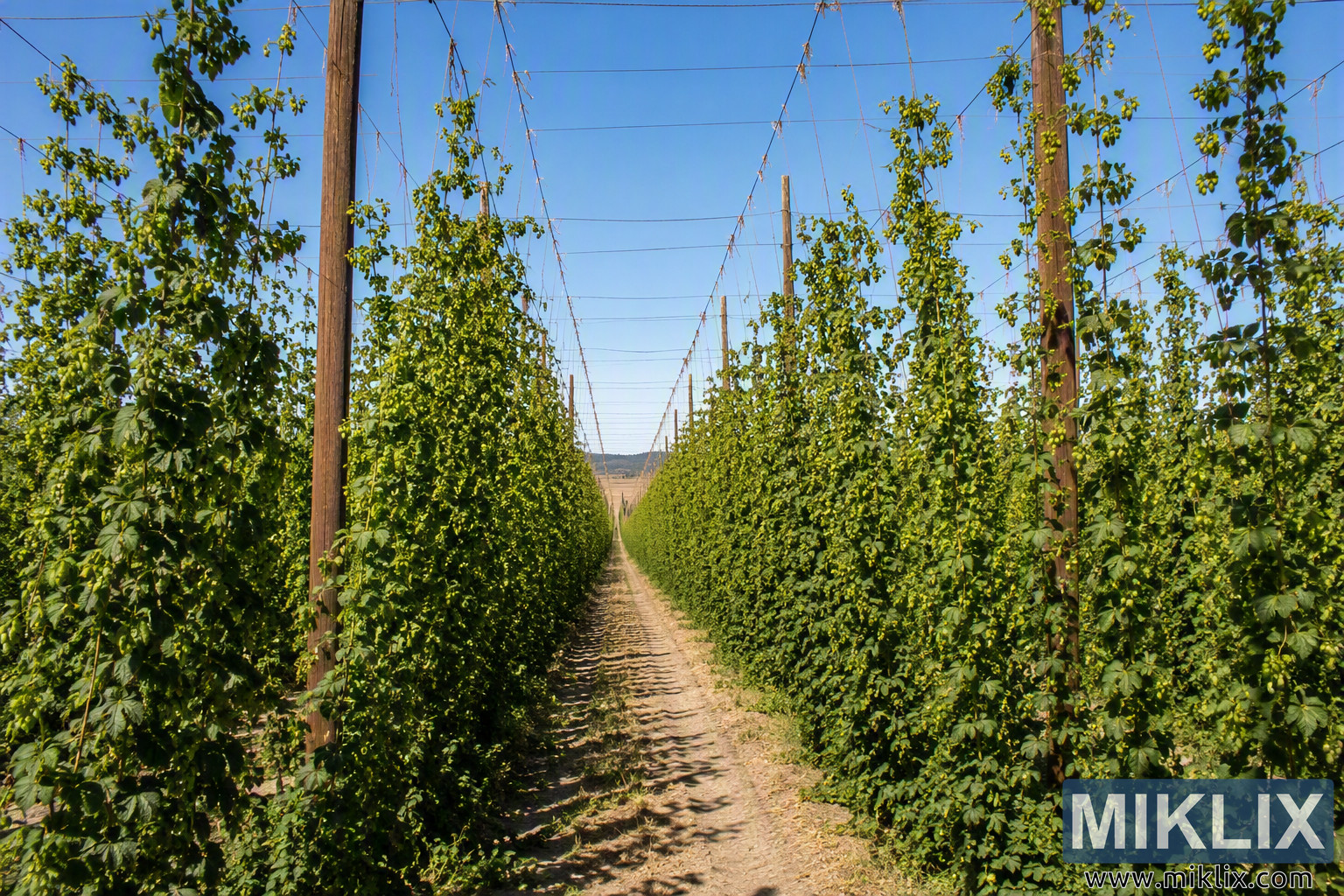
High-resolution landscape image of Legacy hops growing on traditional trellis systems in Yakima Valley. Dense green hop bines climb tall wooden poles and overhead wire supports beside a central farm road beneath a clear blue sky.
Available versions of this image
The image files available for download below are less compressed and higher resolution - and as a result of that, higher quality - than the images embedded in articles and pages on this website, which are more optimized for file size in order to reduce bandwidth consumption.
Regular size (1,536 x 1,024)
Large size (3,072 x 2,048)
Very large size (4,608 x 3,072)
Extra large size (6,144 x 4,096)
Comically large size (1,048,576 x 699,051)
- Still uploading... ;-)
Image description
This landscape-oriented photograph depicts a hop farm in Yakima Valley, a region widely recognized for commercial hop cultivation. The image is composed from a central vantage point looking straight down a long agricultural lane that divides two extensive rows of hop plants. The perspective creates a strong visual corridor, drawing the viewer's eye toward a distant vanishing point near the horizon. The central dirt roadway extends from the foreground into the background, providing access between the cultivated rows and serving as the dominant compositional element.
On both sides of the roadway, dense hop bines identified as Legacy hops grow vertically along a traditional trellis system. The hop plants display abundant green foliage with broad, textured leaves and numerous visible hop cones distributed throughout the vegetation. The cones appear in clusters attached along the climbing stems, indicating a productive growing season. The foliage is thick and healthy, creating nearly continuous green walls on either side of the lane.
The traditional trellis infrastructure is a major visual feature of the scene. Tall wooden utility-style poles are positioned at regular intervals along the rows. Heavy wire supports extend horizontally and vertically between the poles, forming a structural grid above and alongside the plants. Numerous strings or training lines hang downward from the overhead support wires, allowing the hop bines to climb upward. The trellis system creates a repeating pattern of geometric lines that contrasts with the organic shapes of the leaves and cones. The poles show natural wood coloration and weathering, reinforcing the agricultural character of the landscape.
The image exhibits strong symmetry. The rows on the left and right sides of the frame mirror one another in height, density, and spacing. This symmetry emphasizes the organized nature of commercial hop production and creates a visually balanced composition. In the foreground, shadows cast by the trellis system fall across the dirt path, producing rhythmic alternating bands of light and shade. The shadows also reveal the position of the sun, which appears to be relatively high in the sky.
Lighting conditions suggest a bright, clear day. The sky occupies the upper portion of the image and displays a rich blue color with no visible clouds. Direct sunlight illuminates the leaves, highlighting variations in green tones ranging from deep forest green in shaded areas to bright yellow-green on sunlit surfaces. The sunlight also accentuates the texture of the hop leaves, the contours of the hop cones, and the grain of the wooden poles.
The photograph contains no visible people, vehicles, buildings, signs, logos, trademarks, or commercial branding. The focus remains entirely on the agricultural landscape and the hop cultivation system. The absence of human activity contributes to a sense of stillness and emphasizes the scale and productivity of the farm environment.
Moving deeper into the scene, the converging lines of the road, trellis wires, and rows of vegetation create substantial depth. The repeating poles gradually diminish in apparent size as they recede into the distance. This effect establishes a clear sense of perspective and conveys the considerable length of the hop rows. Beyond the cultivated area, a faint landscape can be seen near the horizon, including low terrain and distant agricultural landforms that provide additional environmental context without dominating the composition.
The visual emphasis on vertical growth is especially notable. The hop bines rise several meters into the air, supported by the trellis framework. Their height, density, and uniform training demonstrate the agricultural techniques commonly employed for commercial hop production. The overhead wire network and hanging support lines contribute an architectural quality to the scene, transforming the field into a structured environment where plant growth and engineered support systems coexist.
Color relationships throughout the image are simple yet striking. Vibrant greens dominate the vegetation, warm brown tones characterize the wooden poles and exposed soil, and the clear blue sky provides a contrasting backdrop. These natural colors create a visually clean and highly readable agricultural image. Texture is equally important, with rough wooden surfaces, leafy vegetation, compacted dirt, and clustered hop cones providing numerous layers of visual detail.
Overall, the photograph presents a detailed and visually balanced view of a Yakima Valley hop farm. Legacy hop plants grow vigorously on a traditional trellis system composed of tall wooden poles, tensioned wires, and climbing supports. The central dirt road, symmetrical planting arrangement, abundant foliage, visible hop cones, bright sunlight, and cloudless sky combine to create a clear representation of large-scale hop cultivation in a productive agricultural setting.
The image is related to: Hops in Beer Brewing: Legacy