
Image: Legacy Hops Aroma Wheel Featuring Fruit, Floral, and Earthy Flavor Descriptors
Published: October 10, 2026 at 8:23:05 AM UTC
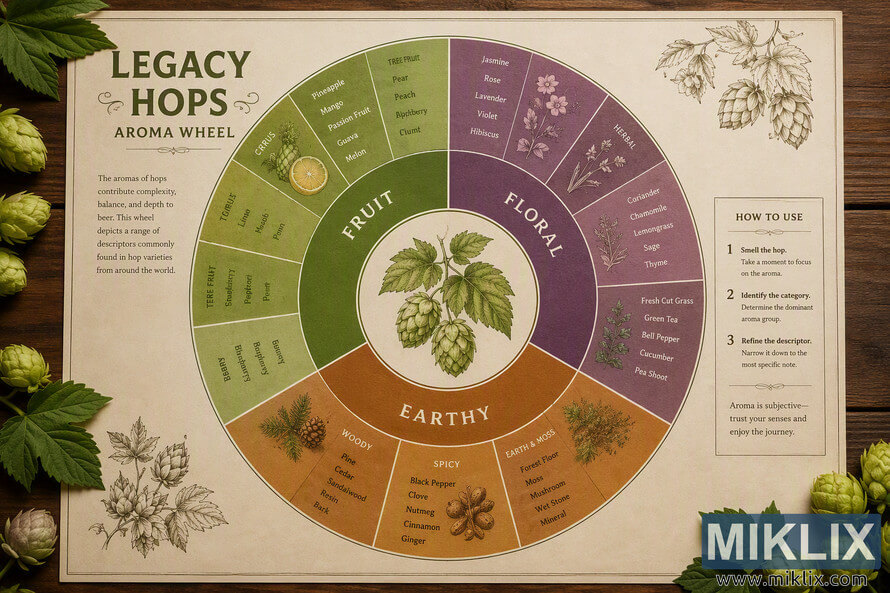
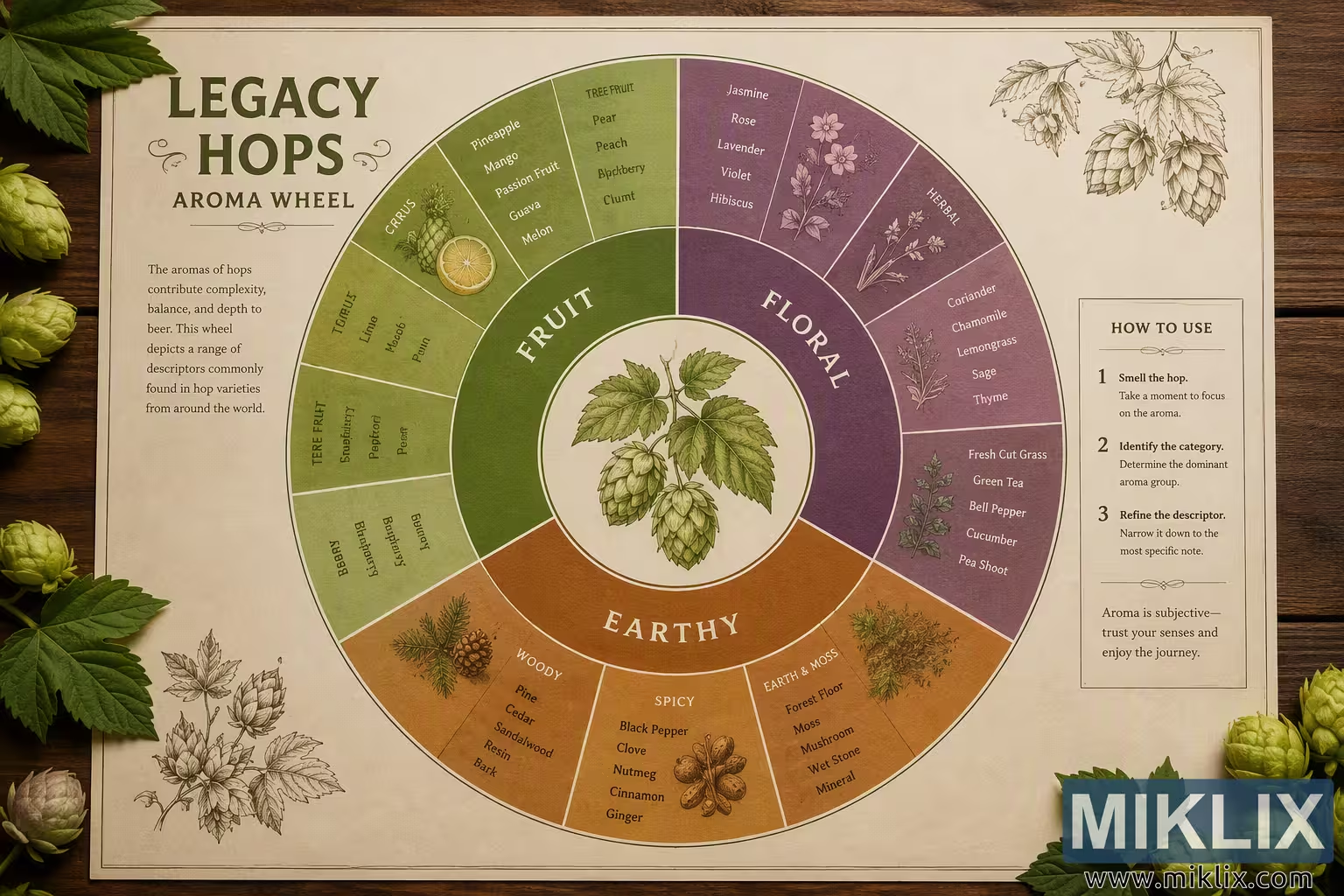
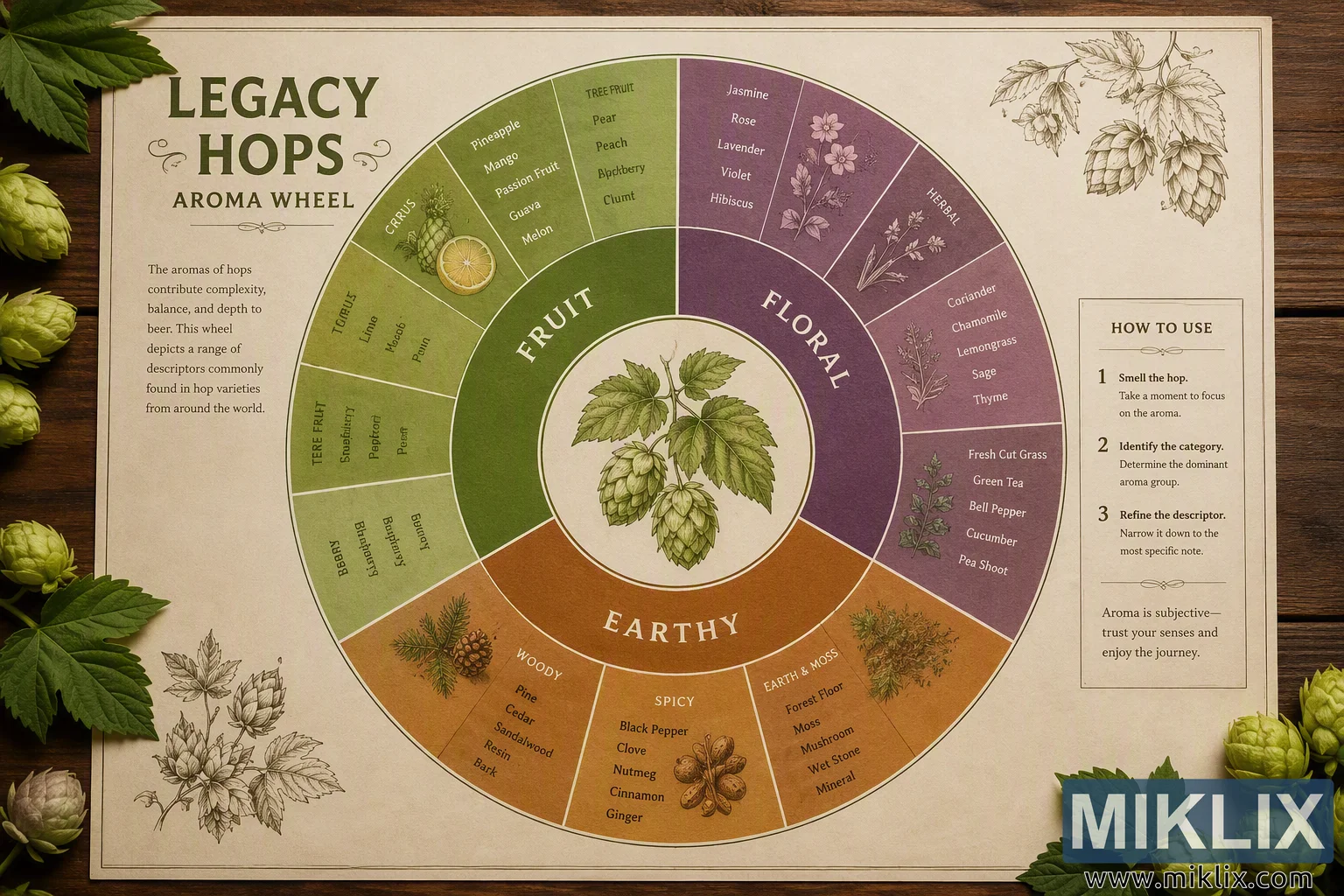
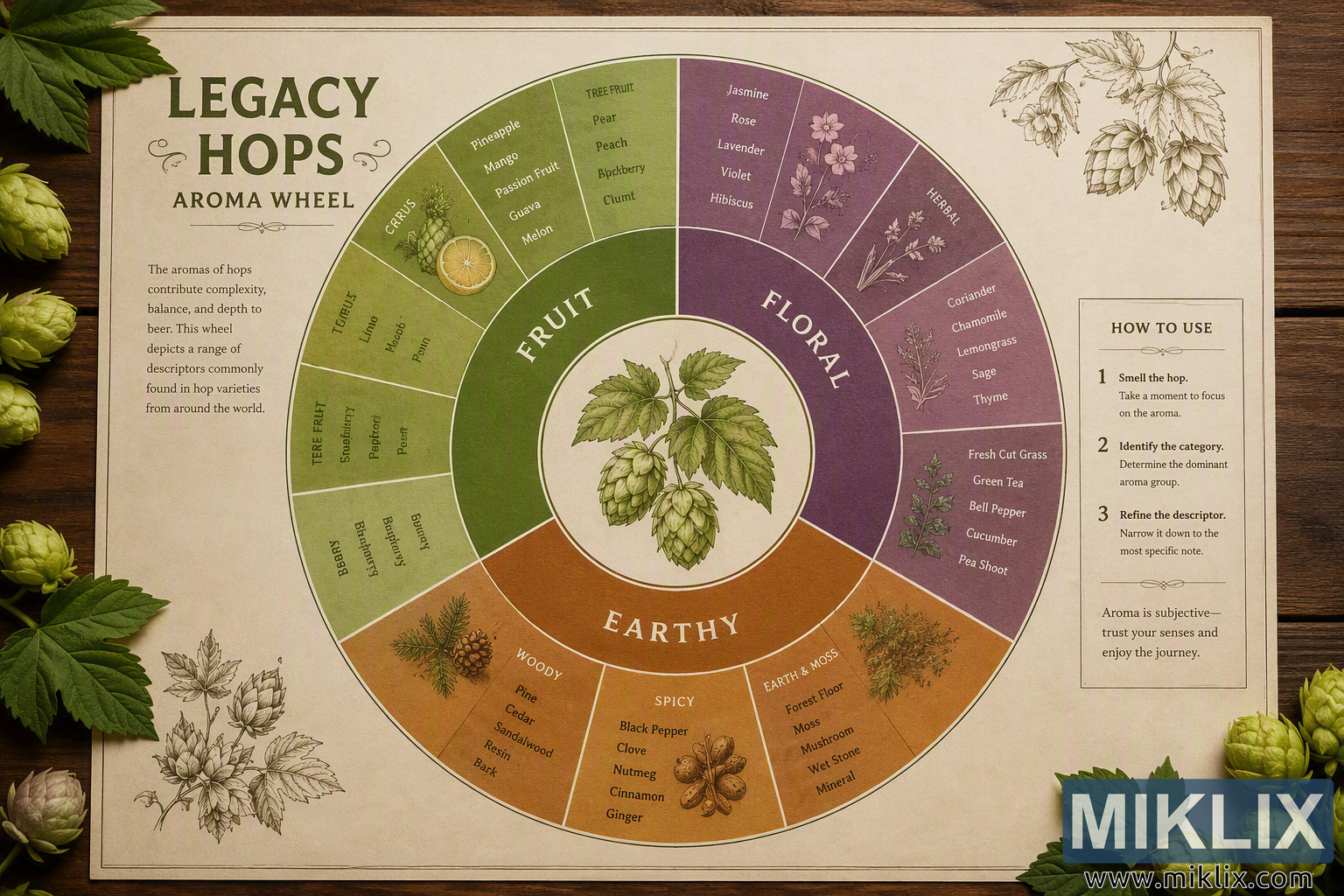
Detailed vintage-style hops aroma wheel infographic illustrating fruit, floral, and earthy hop characteristics. The educational brewing reference chart includes botanical artwork, flavor descriptors, hop cone illustrations, and sensory evaluation guidance for beer and hop aroma analysis.
Available versions of this image
The image files available for download below are less compressed and higher resolution - and as a result of that, higher quality - than the images embedded in articles and pages on this website, which are more optimized for file size in order to reduce bandwidth consumption.
Regular size (1,536 x 1,024)
Large size (3,072 x 2,048)
Very large size (4,608 x 3,072)
Extra large size (6,144 x 4,096)
Comically large size (1,048,576 x 699,051)
- Still uploading... ;-)
Image description
The image is a high-resolution landscape-oriented illustration designed as an educational aroma reference chart for hops used in brewing. The composition is presented as a vintage-inspired infographic printed on a large cream-colored sheet resting on a richly textured wooden tabletop. The visual style combines botanical illustration, infographic design, muted earth-tone color palettes, and traditional scientific chart aesthetics.
The central element of the image is a large circular aroma wheel labeled "LEGACY HOPS AROMA WHEEL." The wheel occupies most of the composition and is surrounded by decorative botanical drawings and real-looking hop cones positioned around the edges of the page. The overall design resembles a premium brewing guide or sensory analysis poster.
At the center of the wheel is a detailed botanical illustration depicting green hop cones attached to a stem with multiple serrated hop leaves. The illustration is rendered with fine linework and soft shading, creating the appearance of a traditional botanical plate. Surrounding the central illustration is a circular band divided into three major sensory categories. These categories are labeled in large capital letters: "FRUIT," "FLORAL," and "EARTHY."
The FRUIT section occupies the left side of the wheel and is primarily rendered in shades of green. This category is subdivided into multiple flavor families and descriptors. A CITRUS segment contains references to citrus-related aromas and includes an illustration of a sliced citrus fruit. Additional fruit-oriented segments feature descriptors such as pineapple, mango, passion fruit, guava, melon, pear, peach, blackberry, plum, and other orchard or tropical fruit references. A berry subsection includes berry-related descriptors, while a tree-fruit subsection groups orchard fruit characteristics. The organization suggests progressive sensory categorization from broad fruit notes into more specific aroma descriptors.
The FLORAL section occupies the upper-right portion of the wheel and is colored in muted purple and lavender tones. This region includes numerous floral aroma descriptors such as jasmine, rose, lavender, violet, and hibiscus. Several delicate botanical illustrations are integrated into the segment, depicting stylized flowering plants and herbs. Additional subsections include herbal and green characteristics. Visible descriptor examples include coriander, chamomile, lemongrass, sage, thyme, fresh cut grass, green tea, bell pepper, cucumber, and pea shoot. The layout communicates the broad spectrum of floral and botanical aromas that may be perceived in hop varieties.
The EARTHY section occupies the lower-right and bottom portions of the wheel and is rendered in warm amber, orange, and brown tones. This category is subdivided into woody, spicy, and earth-and-moss families. The woody subsection includes descriptors such as pine, cedar, sandalwood, resin, and bark, accompanied by illustrations of evergreen foliage and pinecones. The spicy subsection contains descriptors including black pepper, clove, nutmeg, cinnamon, and ginger. Nearby illustrations of spice-like plant forms reinforce the theme. The earth-and-moss subsection includes descriptors such as forest floor, moss, mushroom, wet stone, and mineral, highlighting deeper earthy sensory characteristics often associated with traditional hop profiles.
To the left of the wheel, a column of explanatory text discusses hops aromas and their contribution to flavor complexity, balance, and depth in beer. The text is arranged in a traditional editorial layout that resembles content from a brewing handbook or sensory evaluation guide. The typography throughout the image uses serif fonts that contribute to the vintage educational appearance.
On the right side of the composition is a rectangular instructional panel titled "HOW TO USE." This panel presents a three-step guide for evaluating hop aromas. The numbered instructions suggest smelling the hop, identifying the aroma category, and refining the descriptor selection. Decorative ornamental flourishes appear above and below the instructional content, reinforcing the classic printed-poster aesthetic.
The outer regions of the image contain additional visual details that enrich the composition. Realistic green hop cones and hop leaves are positioned around the perimeter, partially overlapping the paper surface and creating visual depth. Fine monochrome botanical sketches of hop vines and clusters appear in the corners of the page. These sketches resemble illustrations from historical botanical reference books.
The color palette is deliberately restrained and harmonious. Cream, olive green, moss green, lavender, plum, amber, copper, tan, and brown tones dominate the design. Soft, even lighting illuminates the entire scene without harsh shadows, allowing every section of the wheel and all accompanying illustrations to remain legible. The wooden tabletop provides warmth and contrast while emphasizing the artisanal and agricultural origins of hops.
Overall, the image functions as a comprehensive visual reference for hop aroma classification. It combines educational information with decorative botanical artwork, helping viewers understand relationships among fruit, floral, and earthy sensory descriptors. The design evokes craftsmanship, brewing tradition, sensory analysis, and botanical study, making the image suitable for beer education, hop evaluation training, brewing publications, tasting guides, ingredient marketing materials, or agricultural reference resources.
The image is related to: Hops in Beer Brewing: Legacy