
Image: Legacy Hop Pellets and Whole Leaf Hops Physical Characteristics Comparison
Published: October 10, 2026 at 8:23:05 AM UTC
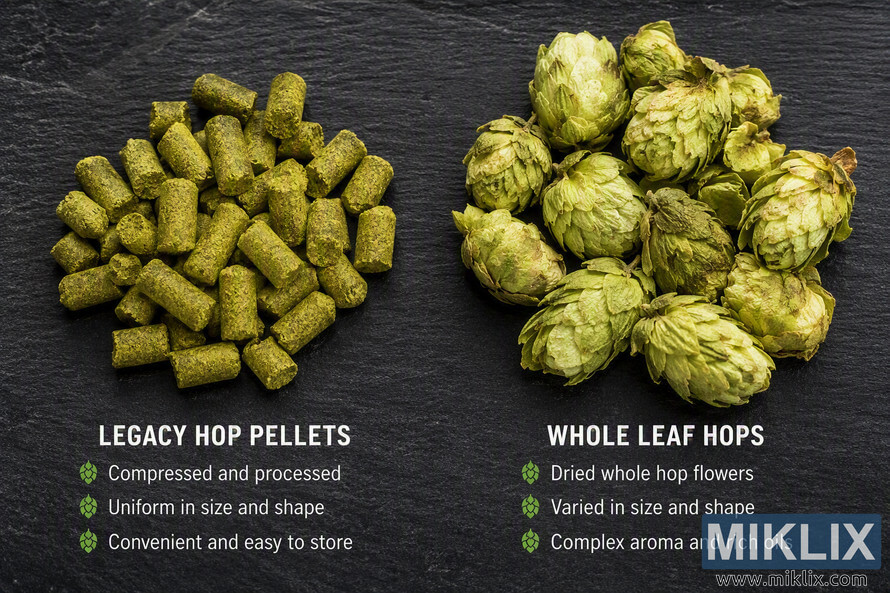
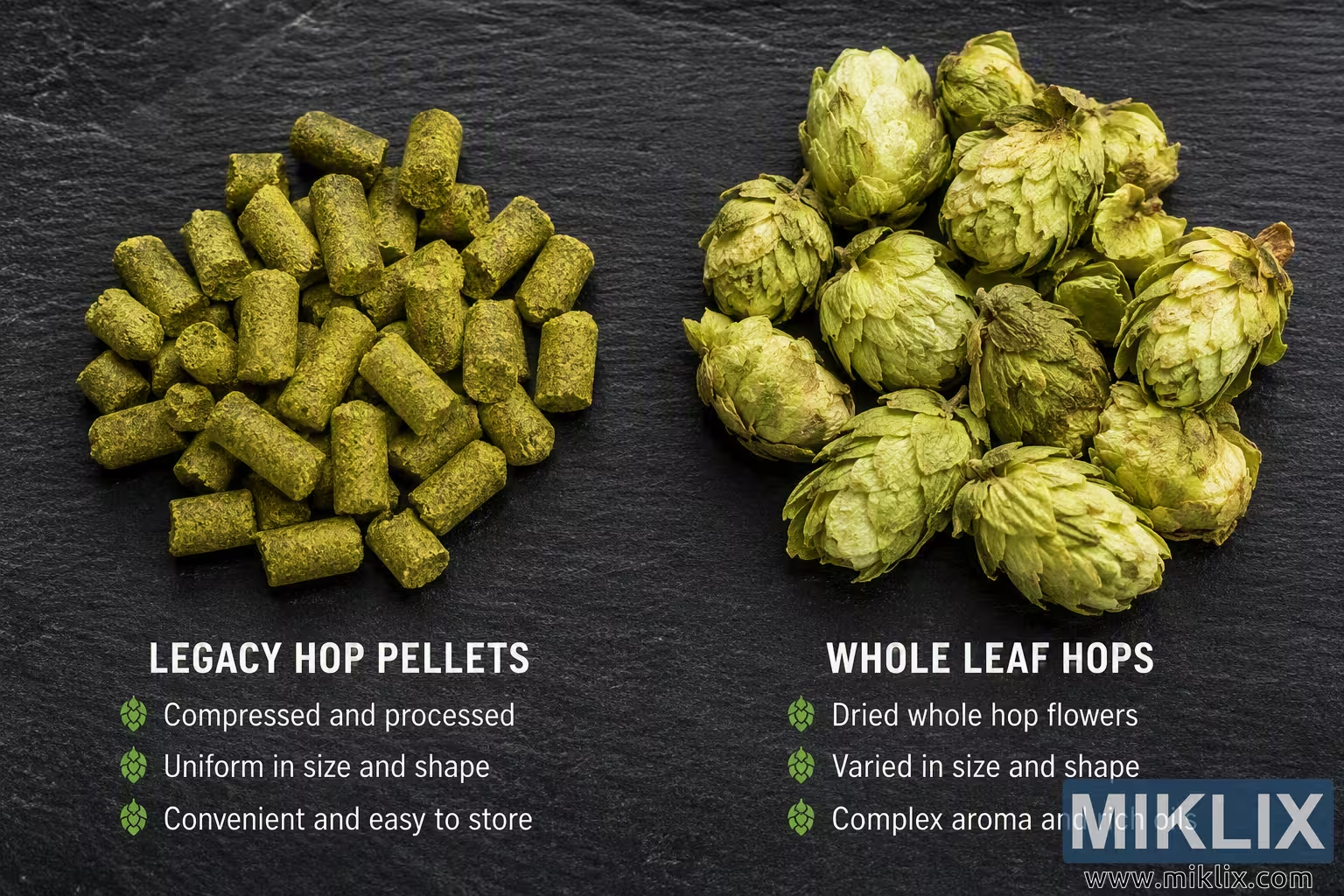
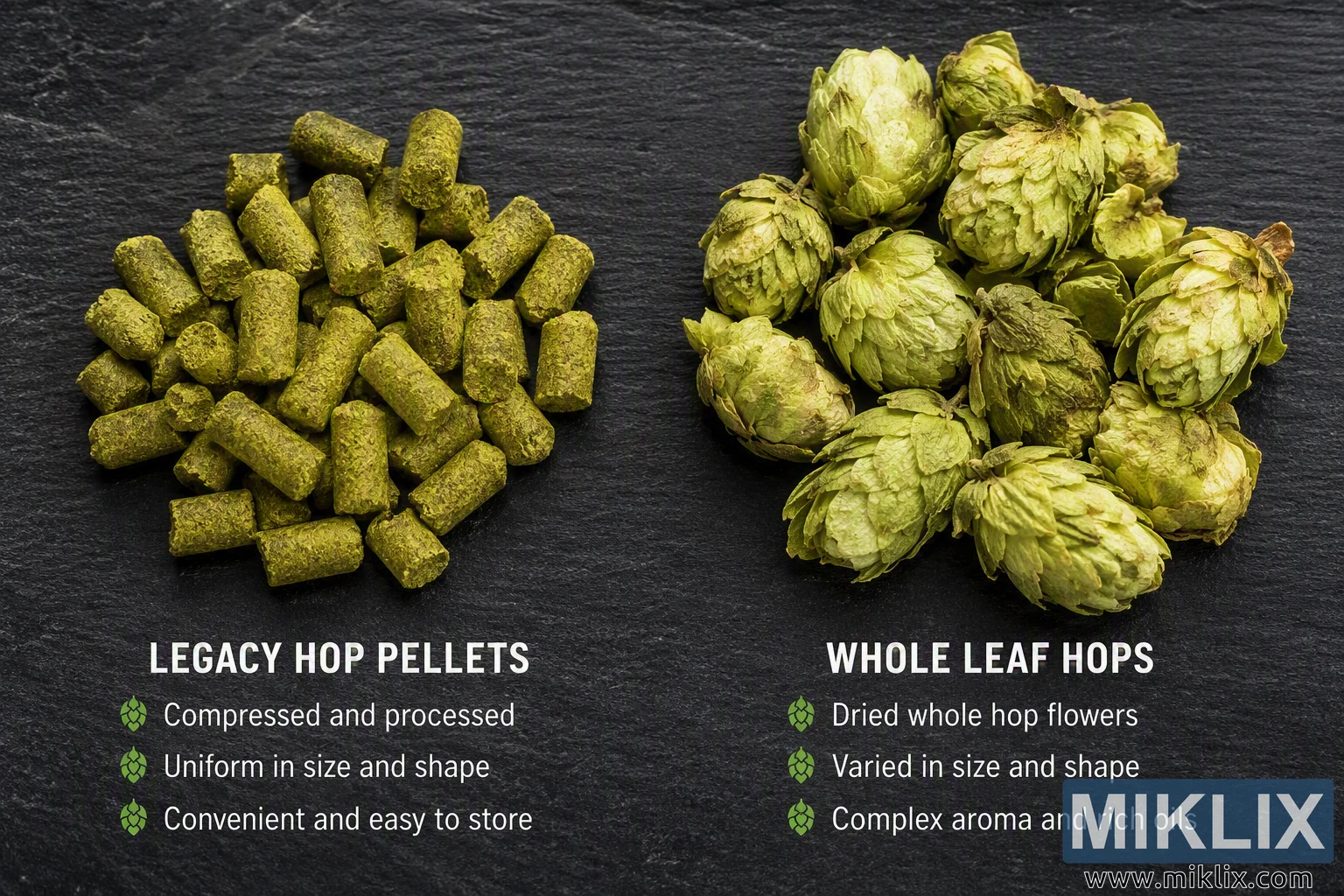
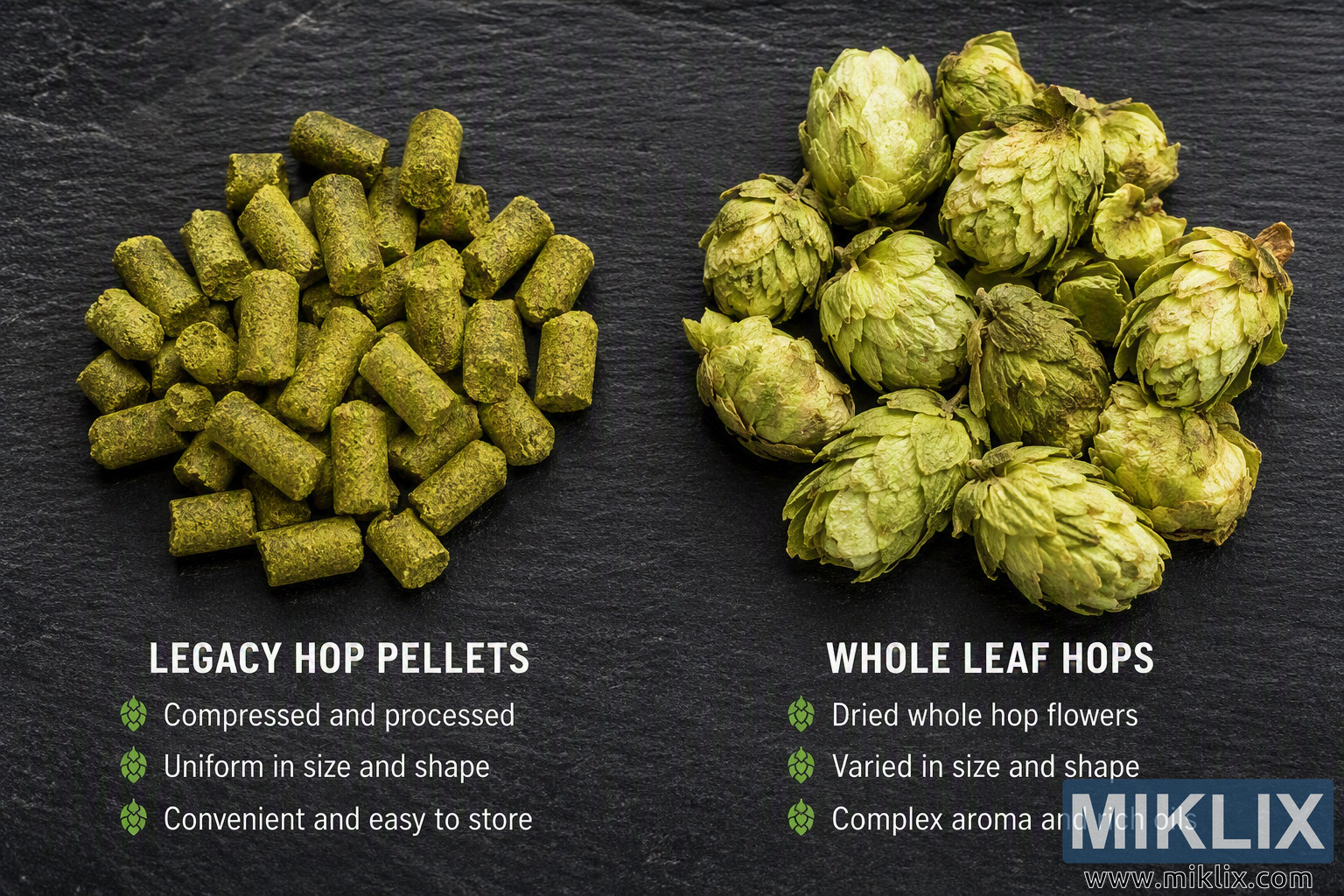
Detailed visual comparison of legacy hop pellets and whole leaf hops, highlighting differences in form, texture, processing, uniformity, storage characteristics, and overall physical appearance in a side-by-side educational layout.
Available versions of this image
The image files available for download below are less compressed and higher resolution - and as a result of that, higher quality - than the images embedded in articles and pages on this website, which are more optimized for file size in order to reduce bandwidth consumption.
Regular size (1,536 x 1,024)
Large size (3,072 x 2,048)
Very large size (4,608 x 3,072)
Extra large size (6,144 x 4,096)
Comically large size (1,048,576 x 699,051)
- Still uploading... ;-)
Image description
The image presents a side-by-side visual comparison between two forms of brewing hops: legacy hop pellets and whole leaf hops. The composition is arranged horizontally in a landscape format and is designed as an educational infographic that emphasizes the distinct physical characteristics of each hop format. The background consists of a dark charcoal-gray to nearly black textured surface that resembles slate, painted wood, or a matte industrial tabletop. The dark background provides strong contrast against the green hues of the hops, making the subject matter highly visible and visually distinct.
On the left half of the image, a large pile of legacy hop pellets is displayed. The pellets are compact, cylindrical pieces that have been compressed into a highly uniform form. Most of the pellets exhibit a muted green coloration, ranging from olive green to darker moss-green tones. The pellets are arranged in a loose pile, with individual pieces overlapping and resting on one another. Each pellet appears relatively consistent in diameter and length, illustrating the manufactured and processed nature of pelletized hops. Their surfaces display a slightly rough texture with visible compressed plant particles, yet the overall shapes remain highly standardized. The visual presentation communicates uniformity, processing efficiency, and compact storage characteristics.
Beneath the pellet pile is a bold heading rendered in large white uppercase lettering reading "LEGACY HOP PELLETS." The typography is clean, modern, and highly legible against the dark background. Below the heading appears a vertically arranged list of descriptive statements accompanied by small green hop-cone icons. The listed characteristics communicate that the pellets are compressed and processed, uniform in size and shape, and convenient for storage. The text reinforces the visual impression provided by the cylindrical pellets themselves and serves as an educational annotation explaining the appearance and practical qualities associated with pelletized hops.
On the right half of the image, a collection of whole leaf hops is displayed. The hop cones are noticeably larger and less uniform than the pellets on the opposite side. Each hop cone resembles a layered flower-like structure composed of overlapping scales or bracts. The coloration varies across the collection, ranging from pale green to medium green and slightly yellow-green hues. Some cones have darker shadowed areas and subtle brownish accents near the edges of the leaves, reflecting the natural variation commonly observed in dried agricultural products. The individual hop cones differ in size, orientation, and shape, creating a more organic and natural appearance than the standardized pellets.
The whole leaf hops are arranged in a clustered grouping that fills much of the right section of the image. The layered leaves create visual depth and texture, with visible folds, contours, and overlapping surfaces. Unlike the pellets, which appear dense and compact, the whole leaf hops look lightweight, airy, and structurally intricate. The details of the leaves communicate the botanical origin of the material and highlight the minimally processed nature of whole cone hops.
Directly beneath the cluster appears another bold white uppercase heading reading "WHOLE LEAF HOPS." Similar to the left side, a list of descriptive points follows beneath the heading, each preceded by a green hop icon. The statements describe the hops as dried whole hop flowers, varied in size and shape, and possessing complex aroma characteristics and rich oils. These annotations support the visual differences evident in the hop cones and help viewers quickly understand how whole leaf hops differ physically from pelletized hops.
The overall design creates a balanced comparison between processed and natural hop forms. The left side emphasizes consistency, compression, and efficiency through the repeated cylindrical geometry of the pellets. The right side emphasizes natural structure, complexity, and variation through the detailed appearance of the hop cones. Both subject groups occupy roughly equal visual space, making the comparison objective and easy to understand.
Lighting throughout the image is even and controlled, with soft highlights that reveal texture without creating harsh reflections. Shadows are subtle and help separate individual hops from one another. The color palette is dominated by green tones contrasted against the dark gray background, while white typography provides strong readability. The composition follows a clean educational layout commonly used in brewing, agriculture, or food-production reference materials.
No people are present in the image. No commercial logos, trademarks, product packaging, or identifiable brands are visible. The focus remains entirely on the physical appearance, texture, shape, and processing differences between hop pellets and whole leaf hops. The infographic-style arrangement combines photographic subject matter with explanatory text, making the image suitable for educational content, brewing guides, brewing ingredient comparisons, agricultural presentations, product documentation, training materials, articles about hops, and reference resources discussing the characteristics of different hop formats used in brewing and related applications.
The image is related to: Hops in Beer Brewing: Legacy