
Image: Fresh vs. Degraded Legacy Hops: Visual Comparison of Hop Quality and Condition
Published: October 10, 2026 at 8:23:05 AM UTC
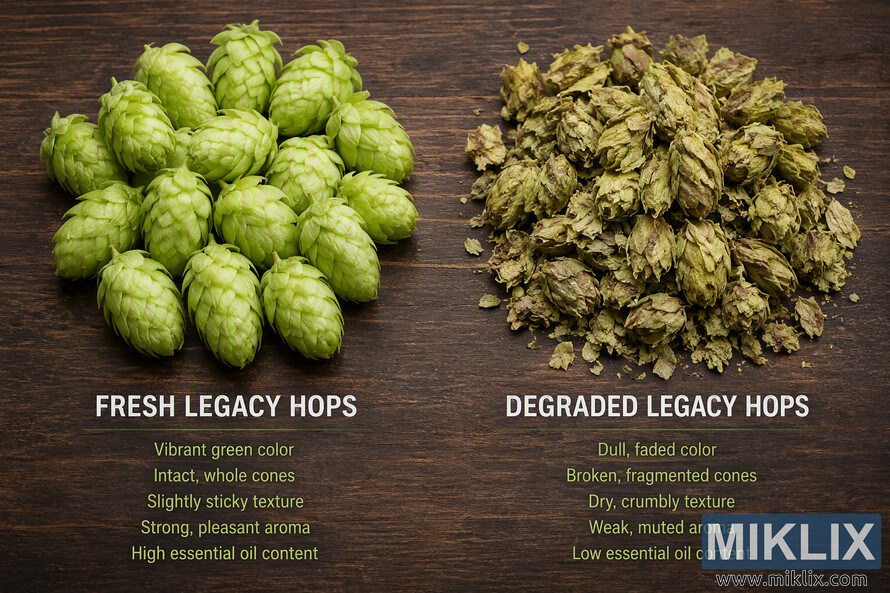
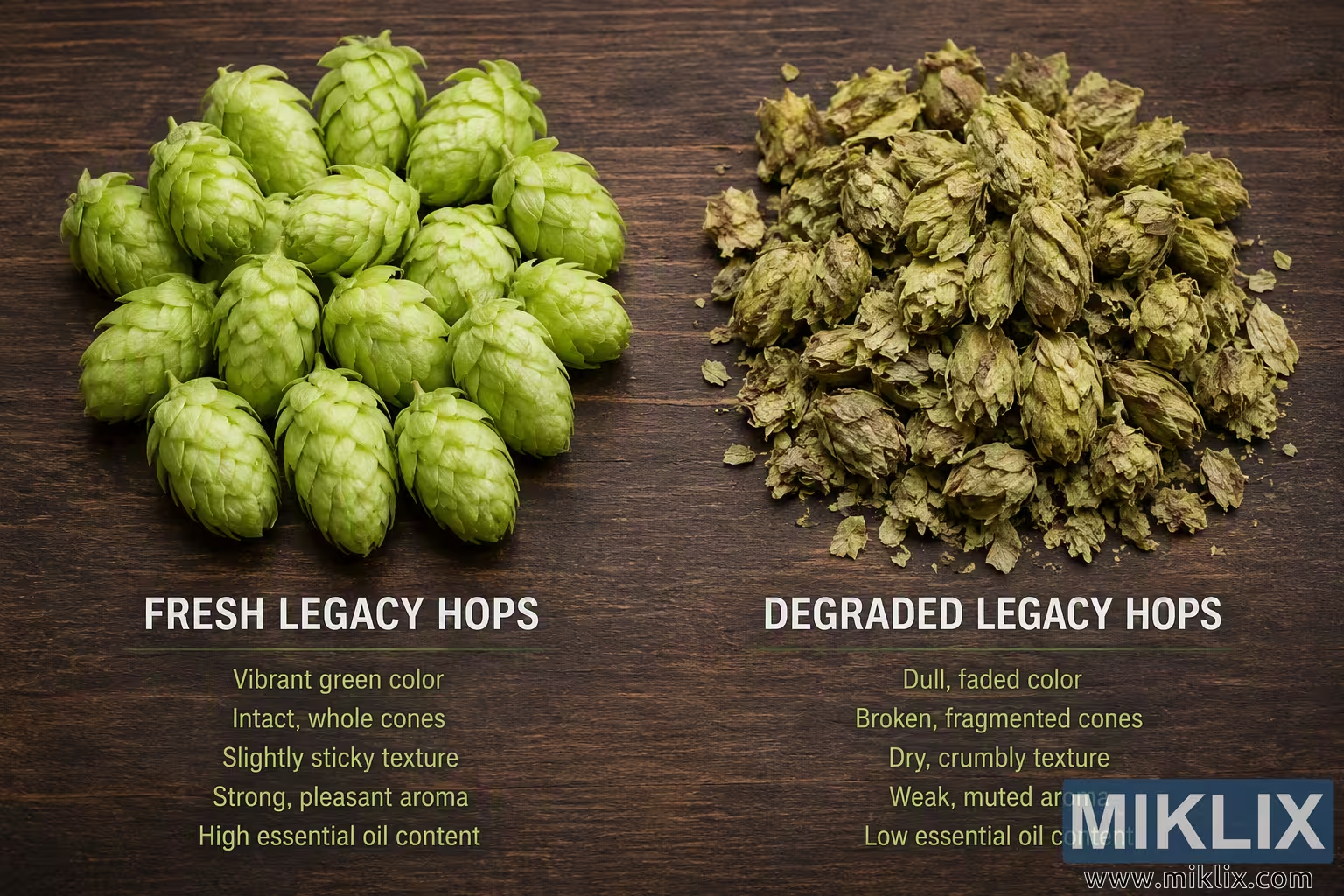
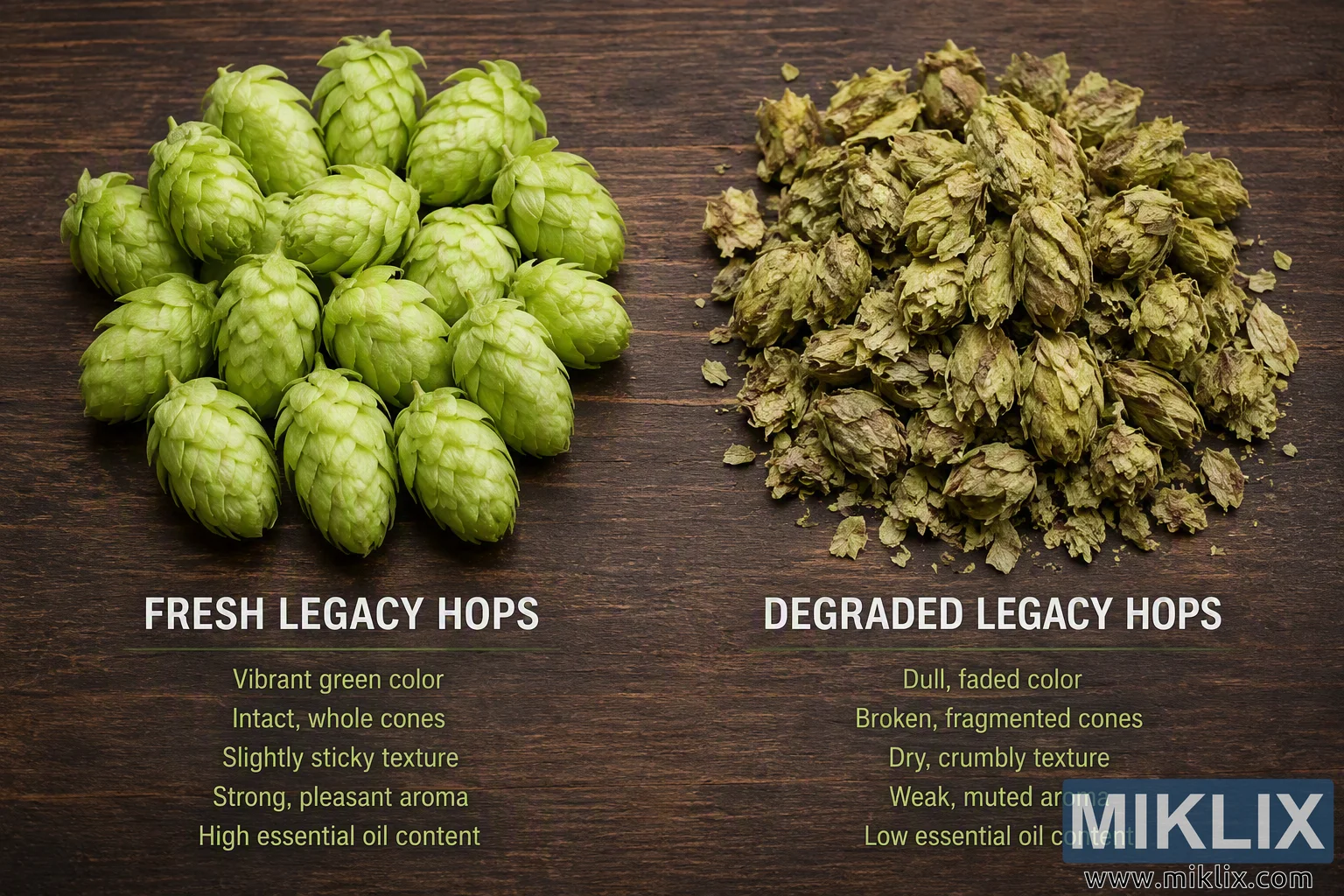
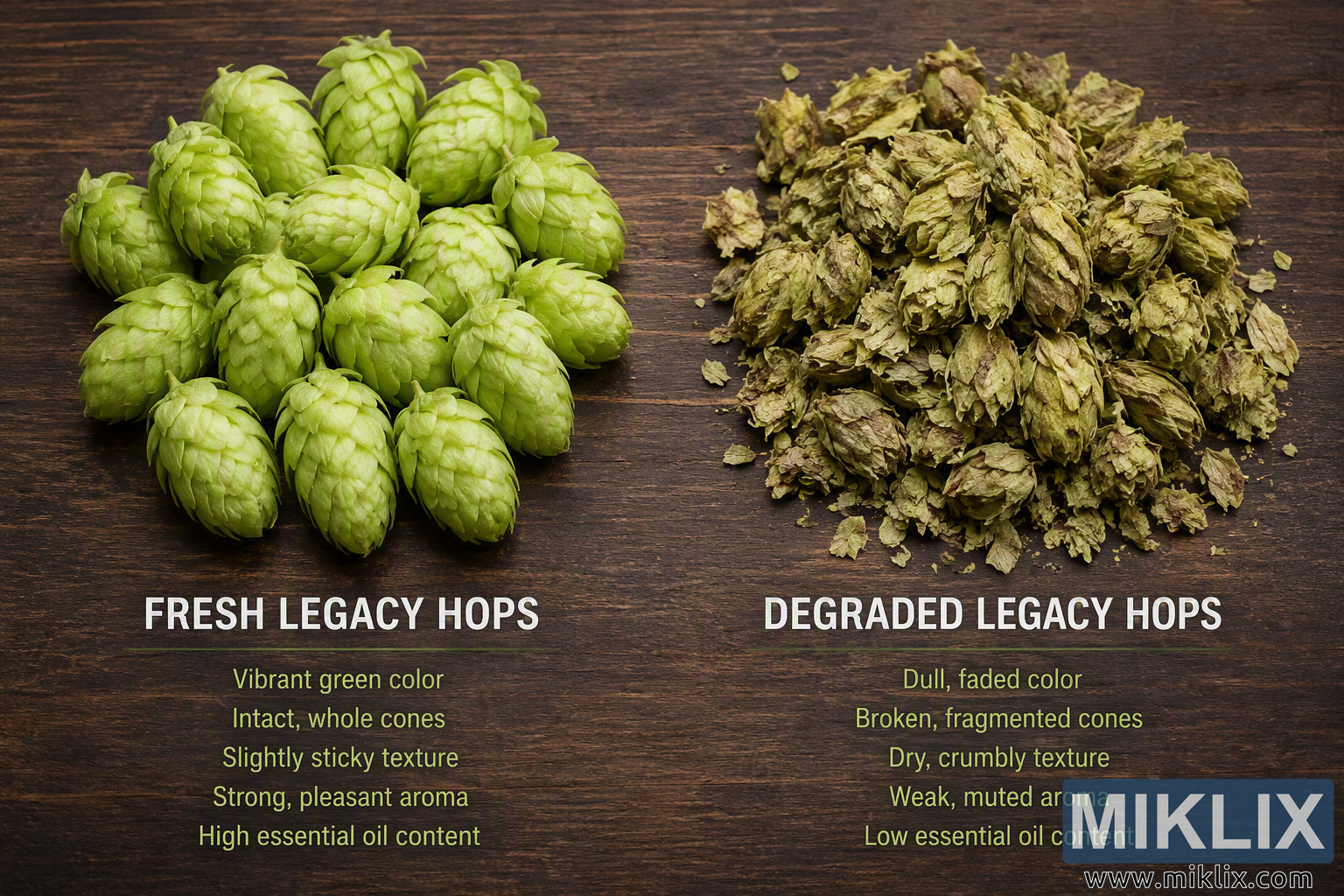
Detailed visual comparison of fresh and degraded Legacy hops. The image contrasts vibrant green, intact hop cones with faded, fragmented, aged hop cones, illustrating differences in appearance, texture, aroma characteristics, and perceived essential oil retention.
Available versions of this image
The image files available for download below are less compressed and higher resolution - and as a result of that, higher quality - than the images embedded in articles and pages on this website, which are more optimized for file size in order to reduce bandwidth consumption.
Regular size (1,536 x 1,024)
Large size (3,072 x 2,048)
Very large size (4,608 x 3,072)
Extra large size (6,144 x 4,096)
Comically large size (1,048,576 x 699,051)
- Still uploading... ;-)
Image description
The image presents a clear educational side-by-side comparison designed to illustrate the visual differences between fresh Legacy hops and degraded Legacy hops. The composition is arranged horizontally in a landscape format and is divided into two distinct sections. Both samples are placed on the same dark brown wooden tabletop, providing a consistent background that allows the characteristics of the hop cones to stand out clearly.
On the left side of the image, a large pile of fresh Legacy hops is displayed. The hop cones are bright, vibrant green and appear well preserved. Individual cones are clearly visible and maintain a plump, symmetrical shape. The cone scales are tightly layered, giving the hops a dense and healthy appearance. The fresh sample contains numerous intact cones stacked together in an organized mound. The coloration ranges from light green to slightly yellow-green highlights, creating a lively and visually appealing appearance. Small droplets or reflective highlights can be seen on parts of the surface, contributing to the impression of freshness. The overall texture appears supple and resilient rather than brittle. The fresh hop pile occupies the left half of the composition and serves as a visual representation of high-quality, recently harvested or properly stored hops.
Beneath the fresh hop sample is a prominent heading that reads "FRESH LEGACY HOPS" in large uppercase text. Below the heading, several descriptive points explain the expected characteristics of fresh hops. The listed attributes are: "Vibrant green color," "Intact, whole cones," "Slightly sticky texture," "Strong, pleasant aroma," and "High essential oil content." These descriptions reinforce the visual cues already presented by the appearance of the hop cones. The typography is large enough to be easily readable and is positioned to directly associate the text with the fresh sample above.
On the right side of the image, a second pile demonstrates degraded Legacy hops. In contrast to the fresh sample, the hop cones appear faded, aged, and visibly deteriorated. The coloration has shifted away from bright green and toward muted olive, tan, and brownish-green tones. The cones look fragmented and less structurally sound. Many of the cone scales appear separated, curled, broken, or chipped. Loose plant material and flakes are scattered around the pile, emphasizing the fragile condition of the degraded hops. The overall shape of the cones is less defined than in the fresh sample, and the pile appears more irregular and compressed. The texture suggested by the image is dry, brittle, and crumbly, conveying the effects of aging, oxidation, storage degradation, or prolonged exposure to unfavorable conditions.
Below the degraded sample is another large uppercase heading that reads "DEGRADED LEGACY HOPS." Under the heading, a set of descriptive bullet-style statements identifies key characteristics associated with deteriorated hops. These include: "Dull, faded color," "Broken, fragmented cones," "Dry, crumbly texture," "Weak, muted aroma," and "Low essential oil content." The text directly supports the visual differences shown in the hop pile above. Together, the imagery and captions create an educational comparison that highlights the progression from a healthy, high-quality hop sample to one that has lost important quality attributes over time.
The dark wooden background spans the entire width of the image and provides visual consistency between both samples. The wood grain runs horizontally and introduces texture without distracting from the primary subject matter. Lighting is relatively even across the scene, with both hop samples receiving sufficient illumination to reveal color, shape, and surface detail. Shadows are soft and understated, keeping attention focused on the condition of the hops rather than dramatic photographic effects.
The image uses a straightforward comparative layout often found in educational materials, brewing references, agricultural resources, and quality-control guides. The fresh sample and the degraded sample occupy approximately equal visual space, encouraging direct comparison. The viewer can immediately observe contrasts in color saturation, structural integrity, cone completeness, and overall appearance. Bright green coloration and intact cone morphology characterize the fresh sample, while faded coloration, fragmented structure, and visible dryness characterize the degraded sample.
No people, animals, logos, commercial brands, or unrelated objects appear in the image. The sole focus is on the two hop samples and the accompanying explanatory text. The visual communication is clear and descriptive, making the image useful for illustrating hop freshness, storage effects, ingredient quality assessment, brewing education, agricultural training, or discussions related to hop handling and preservation. The composition effectively demonstrates how aging or degradation can alter the physical appearance of hop cones, helping viewers recognize the visual indicators associated with fresh versus deteriorated hop material.
The image is related to: Hops in Beer Brewing: Legacy