
Image: Homebrewing Equipment with Hop Spiders, Brewing Bags and Fermenter Options
Published: October 10, 2026 at 8:23:05 AM UTC
Explore a detailed homebrewing setup featuring stainless-steel hop spiders, reusable brewing bags, hops, brewing accessories, and multiple glass, plastic, and metal fermenter options.
Available versions of this image
The image files available for download below are less compressed and higher resolution - and as a result of that, higher quality - than the images embedded in articles and pages on this website, which are more optimized for file size in order to reduce bandwidth consumption.
Regular size (1,536 x 1,024)
Large size (3,072 x 2,048)
Very large size (4,608 x 3,072)
Extra large size (6,144 x 4,096)
Comically large size (1,048,576 x 699,051)
- Still uploading... ;-)
Image description
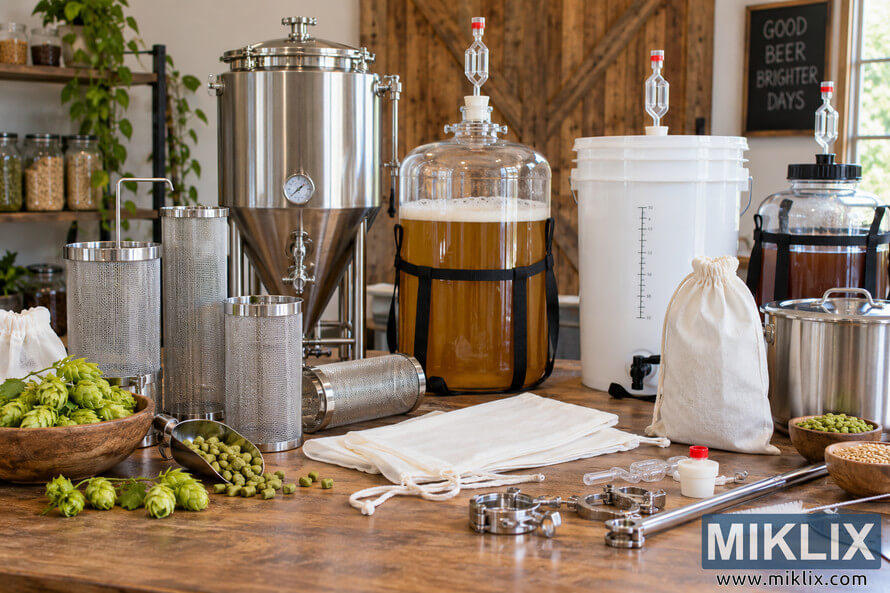
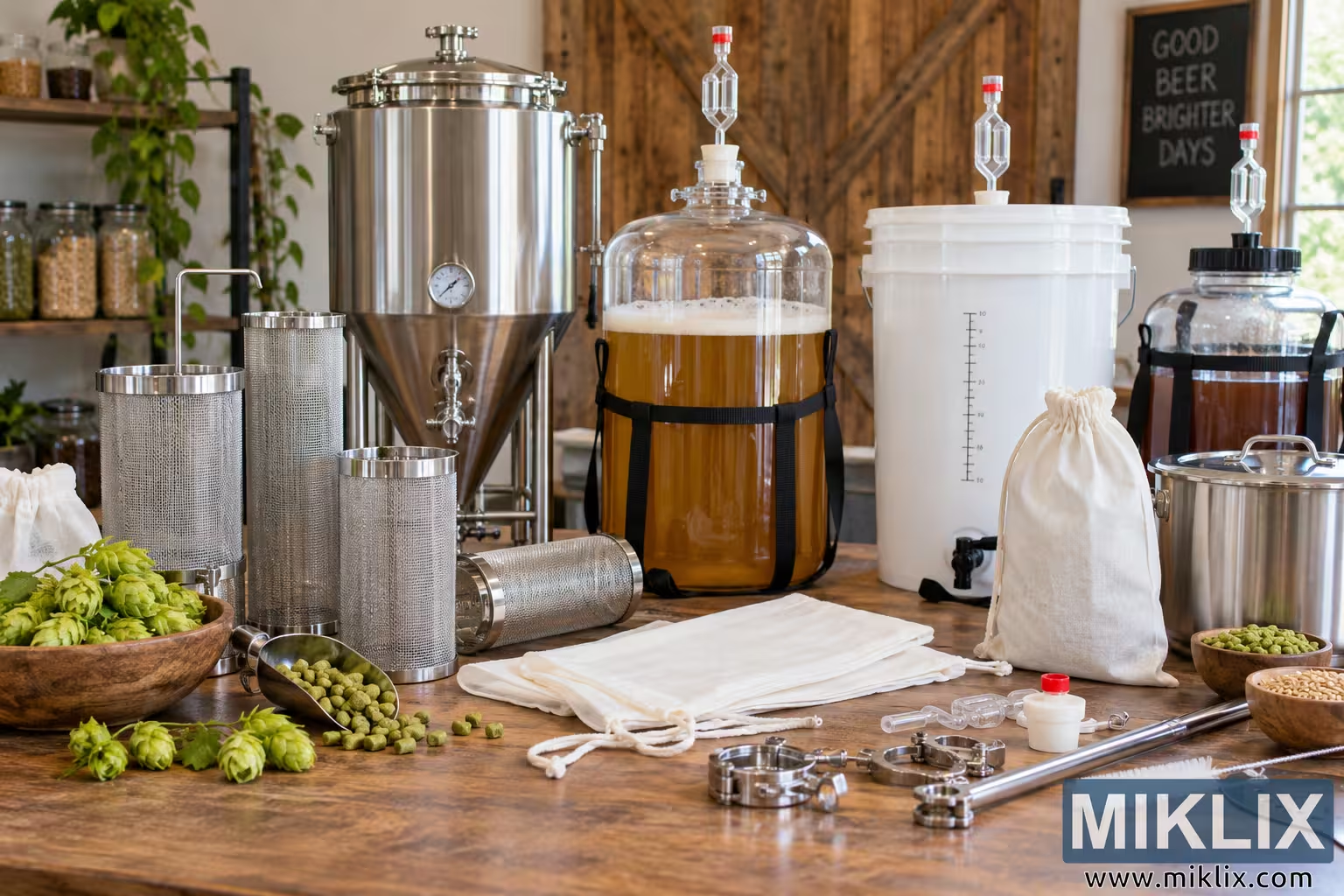
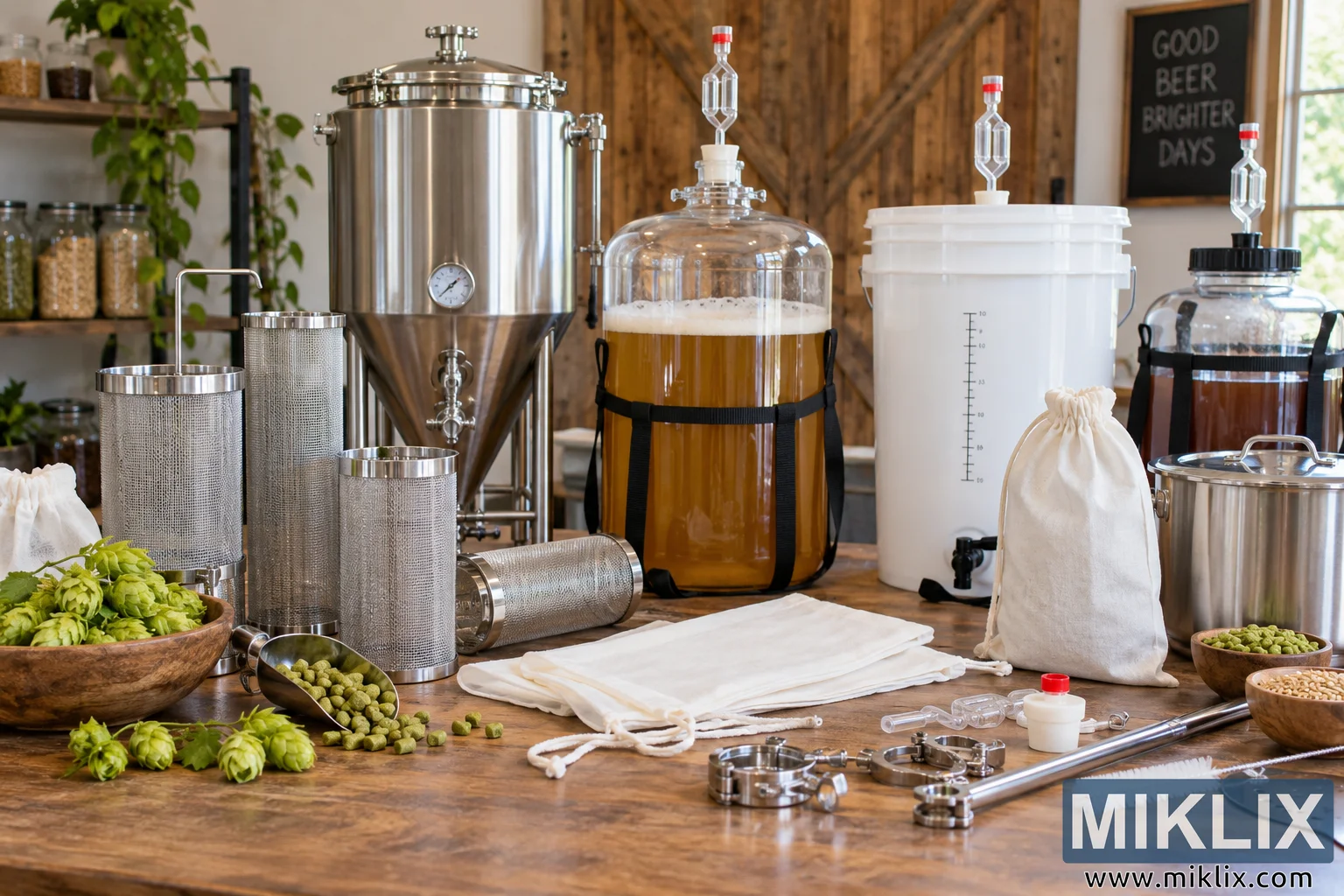
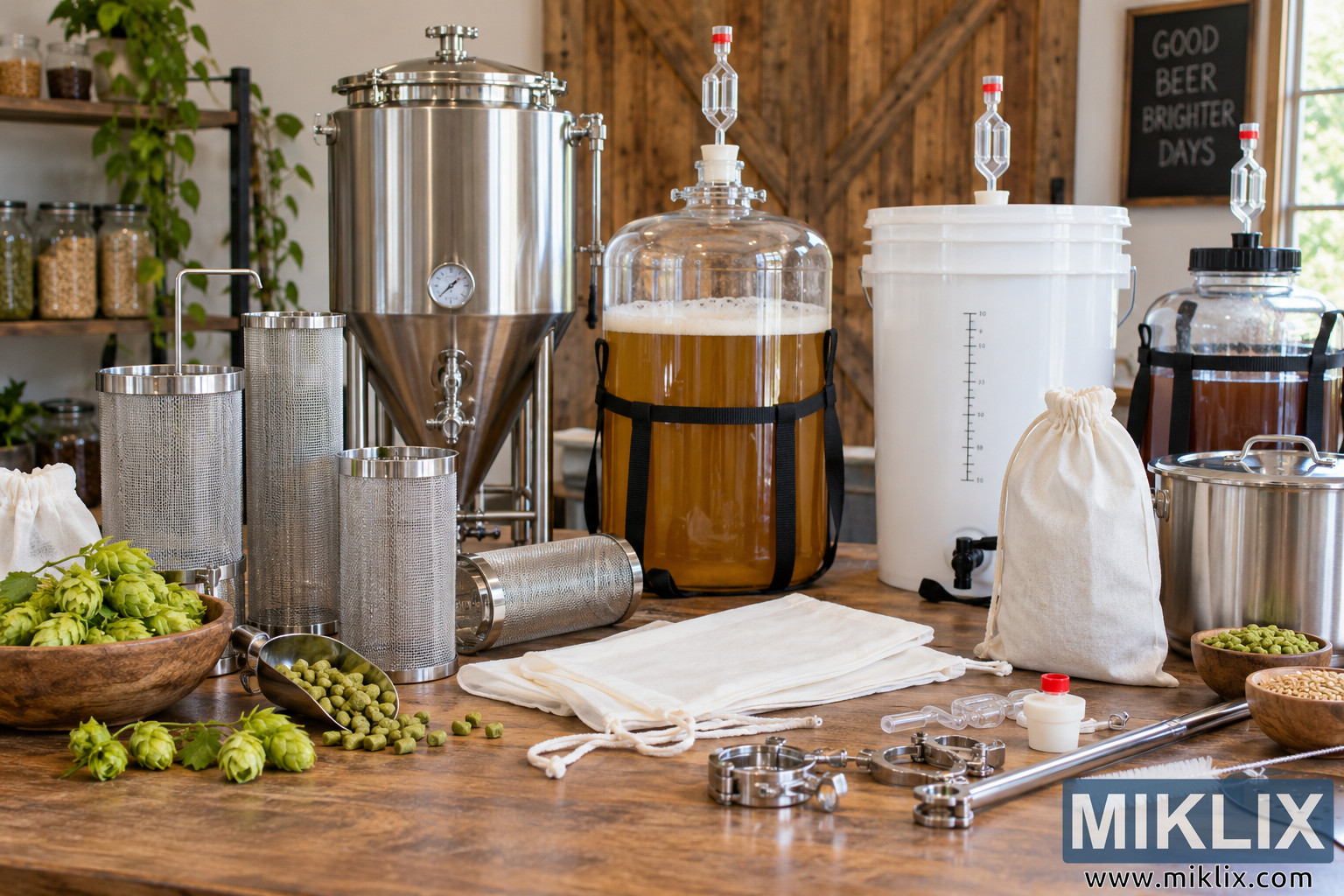
A wide, landscape-oriented photograph presents an extensive collection of homebrewing equipment arranged across a large rustic wooden worktable in a bright, welcoming indoor brewing space. The scene has the character of a well-organized home workshop, combining polished stainless steel, transparent fermentation vessels, white food-grade containers, natural fabric brewing bags, fresh hops, hop pellets, grain, and an assortment of small brewing accessories. Warm wooden barn-style doors form much of the background, while daylight enters through a window on the right. Shelving, glass ingredient jars, and leafy green plants add a domestic, handcrafted atmosphere to the otherwise equipment-focused setting.
The foreground prominently displays several different options for containing hops during the brewing process. On the left side of the table are multiple cylindrical stainless-steel mesh hop spiders or hop filters in different sizes and proportions. Their extremely fine perforated or woven metal surfaces are clearly visible, emphasizing how these devices can hold hop material while allowing wort to circulate through them. One tall, narrow mesh cylinder stands upright near the center-left, accompanied by shorter and wider versions. Another cylindrical mesh filter rests horizontally on the tabletop, making its construction and shape particularly easy to inspect. Metal rims and supporting hardware give the hop spiders a sturdy, reusable appearance. Their placement together visually communicates that brewers can choose among different capacities and dimensions depending on the brewing vessel, batch size, or amount of hops being used.
Alongside the metal hop spiders are several examples of fabric brewing bags. Pale, natural-colored drawstring bags appear at both sides of the composition, including a large upright bag near the right foreground. In the middle of the table, several clean white fabric or mesh bags are folded into a neat stack, with drawstrings extending across the wood surface. These bags provide a clear visual contrast to the rigid stainless-steel hop spiders and illustrate another common method of containing hops, grain, or other brewing ingredients. The combination of reusable metal baskets and flexible textile bags makes the image especially suitable for illustrating different homebrew filtering and ingredient-containment options.
Fresh green hop cones are displayed prominently in a wooden bowl at the lower left, with several additional hop cones scattered naturally across the tabletop. Nearby, a metal scoop contains compact green hop pellets, with more pellets spilling from the scoop onto the table. Another small wooden bowl of green hop material appears on the right. A separate bowl contains pale brewing grain. These ingredients provide immediate visual context for the equipment and help establish that the scene is specifically about beer brewing rather than general food preparation or laboratory work.
The background demonstrates several fermenter options. Near the center is a large transparent glass carboy containing golden amber liquid. A pale layer of foam is visible near the surface, suggesting active or recent fermentation. The vessel is fitted with a stopper and a clear fermentation airlock at the top and is secured within a dark carrying harness. To its right stands a large white plastic fermentation bucket with a lid, measurement markings on its side, a lower dispensing valve, and another clear airlock extending from the top. Farther right is an additional transparent fermentation vessel containing darker amber-brown liquid. It has a broad dark lid, an airlock, and a supportive carrying harness. Together, these vessels demonstrate several familiar fermenter formats, including glass, transparent rigid containers, and opaque food-grade plastic buckets.
Behind the fermenters, a substantial stainless-steel conical brewing vessel dominates the left-center background. It has a cylindrical upper body, a conical lower section, a polished lid, clamps, fittings, valves, a temperature gauge, and supporting legs. Its reflective metal surfaces catch the soft indoor light and give the scene a professional brewing character while still fitting naturally into the homebrew environment. On the far right, a smaller polished stainless-steel kettle with a fitted lid provides another example of brewing hardware.
Numerous smaller components are distributed across the front of the worktable. These include shiny stainless-steel clamps and fittings, transparent plastic airlock components, a stopper, a long metal brewing component, and a white cleaning brush. Their inclusion reinforces the practical workshop quality of the image and suggests the supporting hardware involved in assembling, cleaning, transferring, and maintaining a homebrew system. The objects are arranged carefully enough to remain visually understandable without looking unnaturally sterile or catalog-like.
The room itself is warmly styled. Natural wood textures in the table and large doors create an earthy background for the metallic brewing equipment. Shelves at the left hold transparent jars filled with grains, hops, or other ingredients, while trailing green plants soften the industrial appearance of the stainless steel. A bright window on the right introduces natural daylight and a glimpse of greenery outside. A small chalkboard hangs nearby with decorative brewing-themed writing. There are no people in the image, allowing the equipment, ingredients, hop-containment methods, and fermenter choices to remain the sole focus.
Overall, the photograph functions as a comprehensive visual overview of homebrewing equipment, with particular emphasis on hop spiders, brewing bags, hop ingredients, and alternative fermentation vessels. The composition moves from loose ingredients and filtering accessories in the foreground to larger fermenters and brewing vessels in the background, creating a clear sense of scale and process. The warm lighting, natural materials, polished metal, transparent vessels, and visible brewing ingredients combine to create an inviting but technically informative homebrew setting. No recognizable commercial product branding or brand logos are visible on the brewing equipment, keeping the scene generic and focused on equipment types rather than manufacturers.
The image is related to: Hops in Beer Brewing: Legacy