
Image: Multiple Hop Varieties Including Legacy Arranged for a Blending Experiment
Published: October 10, 2026 at 8:23:05 AM UTC
Rustic hop-blending experiment featuring Legacy and multiple other hop varieties, with labeled samples, fresh hops, weighing equipment, tasting notes, and sensory evaluation materials.
Available versions of this image
The image files available for download below are less compressed and higher resolution - and as a result of that, higher quality - than the images embedded in articles and pages on this website, which are more optimized for file size in order to reduce bandwidth consumption.
Regular size (1,536 x 1,024)
Large size (3,072 x 2,048)
Very large size (4,608 x 3,072)
Extra large size (6,144 x 4,096)
Comically large size (1,048,576 x 699,051)
- Still uploading... ;-)
Image description
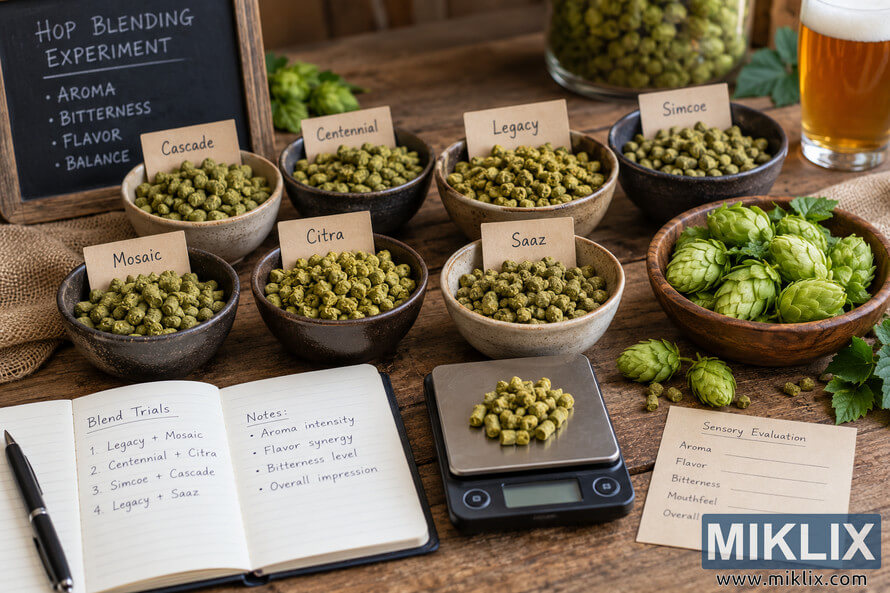
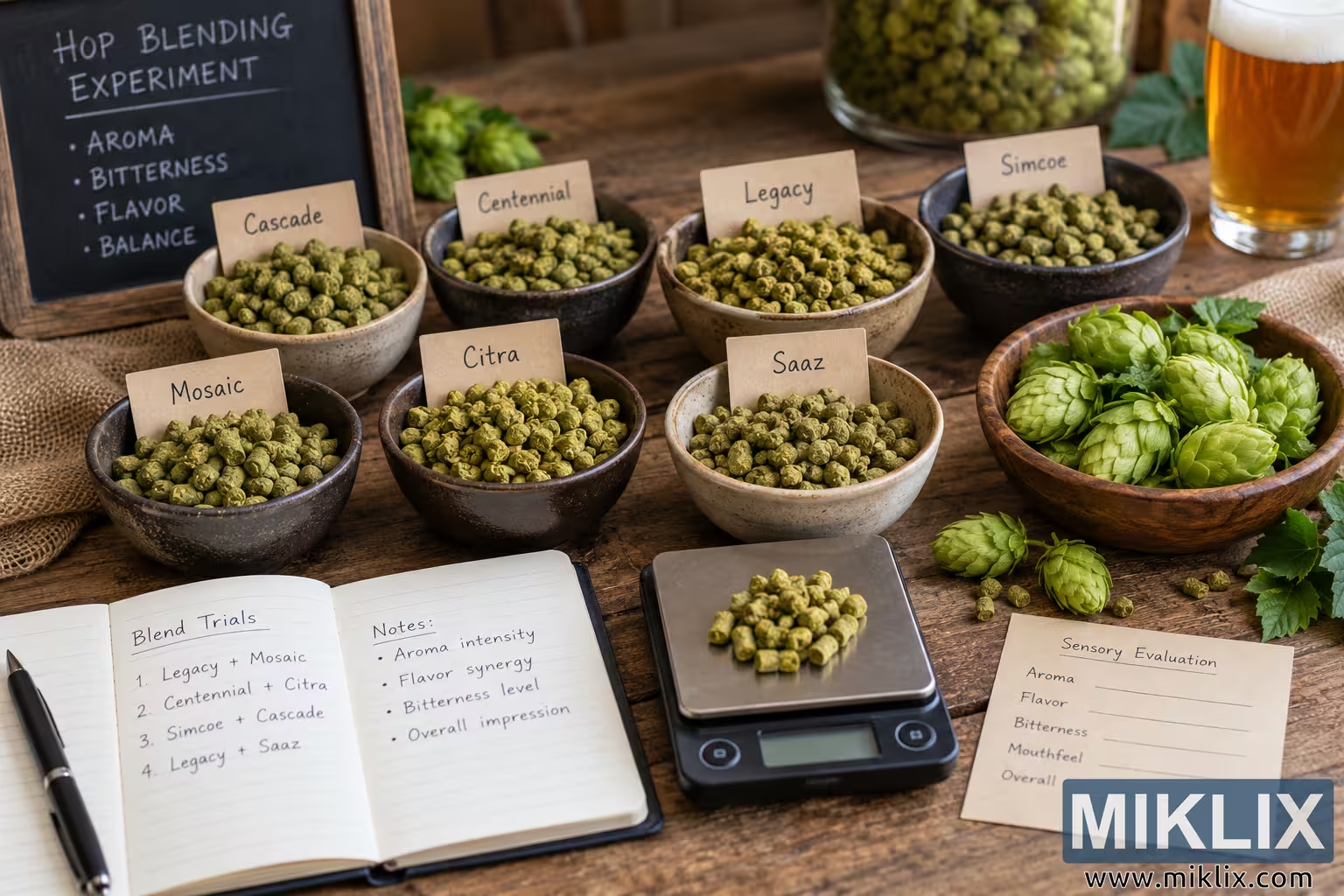
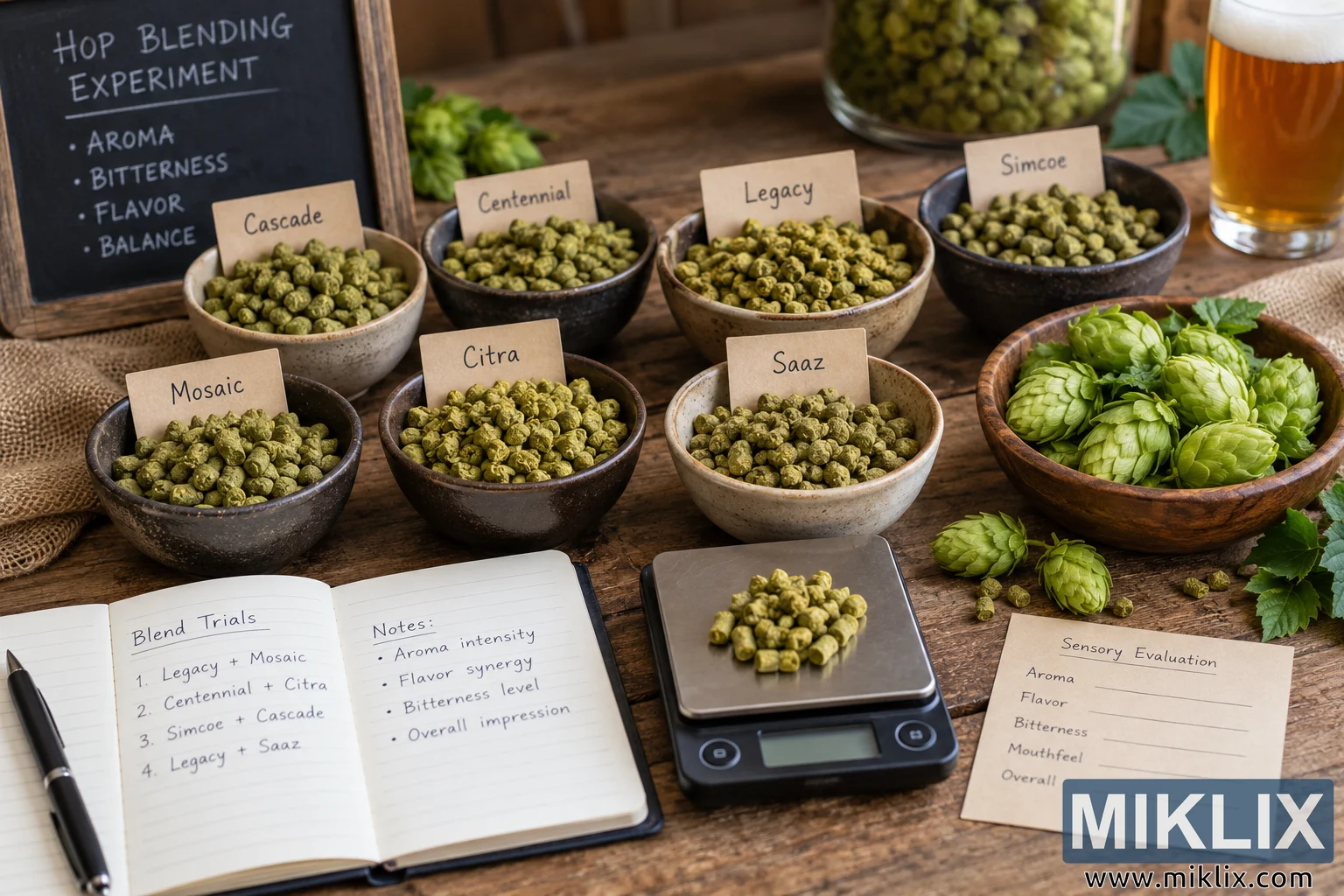
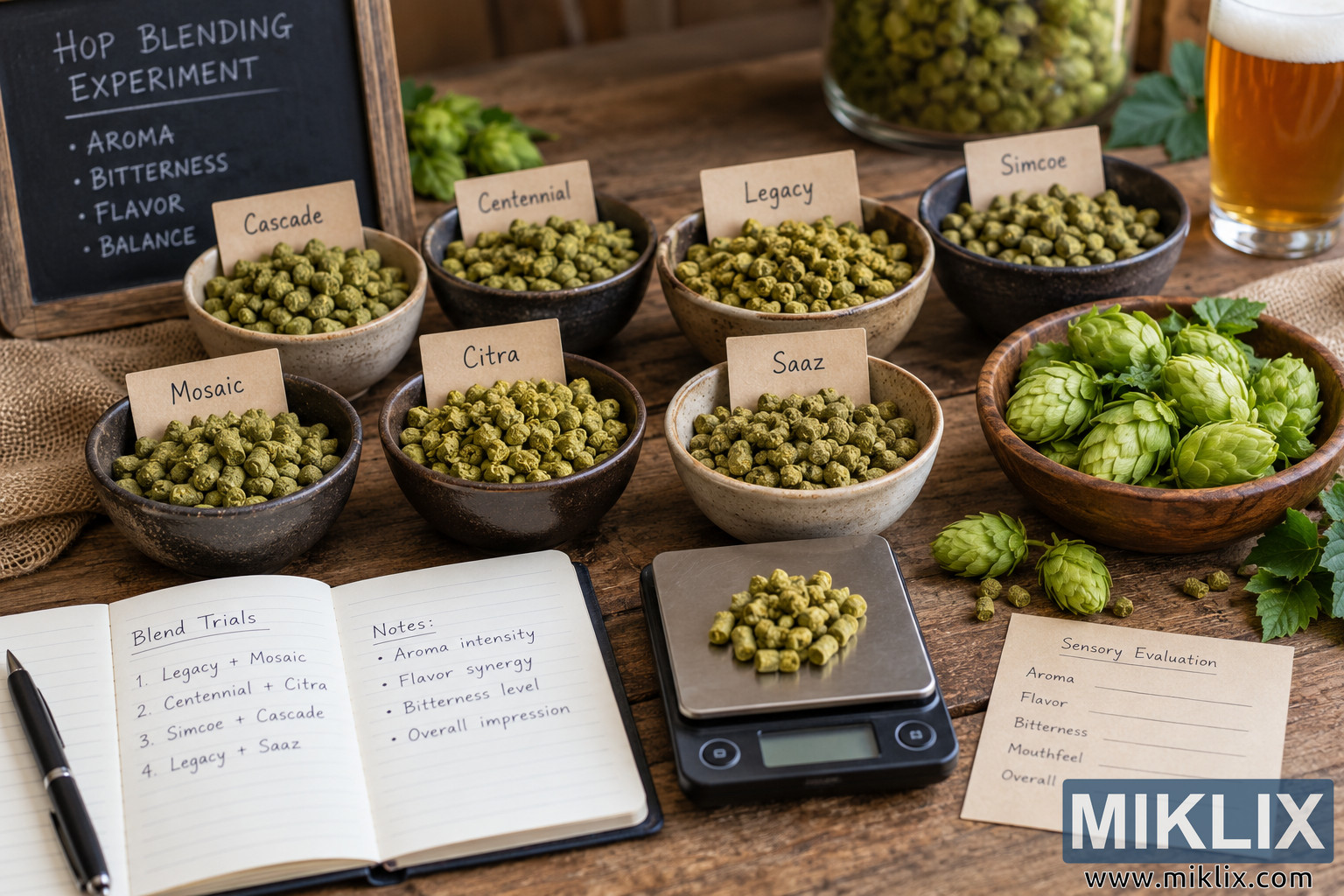
A high-resolution landscape photograph presents a carefully arranged hop-blending experiment on a rustic wooden tabletop, creating the atmosphere of a small craft-brewing laboratory or sensory evaluation station. The scene is photographed from a slightly elevated, front-facing perspective, allowing the viewer to see both the individual hop samples and the handwritten experimental materials spread across the work surface. Warm, natural-looking illumination falls across the table and emphasizes the earthy green colors of the hops, the varied ceramic textures of the bowls, and the grain and imperfections of the wood. The composition feels organized and purposeful while retaining a relaxed, handcrafted character.
Seven small ceramic bowls containing green hop pellets form the main visual focus. Each sample is identified by a simple handwritten card positioned upright behind or inside its bowl. The visible labels read Cascade, Centennial, Legacy, Simcoe, Mosaic, Citra, and Saaz. Legacy occupies a particularly prominent position near the center of the upper row, reinforcing its importance within the blending experiment. The hop pellets vary subtly in shape, size, and shade, ranging from muted olive and yellow-green tones to somewhat deeper botanical greens. Their rough, compressed surfaces are clearly visible, giving the image a tactile quality and communicating that these are physical brewing ingredients being examined and combined rather than decorative objects.
The upper row contains bowls labeled Cascade, Centennial, Legacy, and Simcoe. Legacy is positioned centrally in a light-colored ceramic bowl, while neighboring varieties sit in bowls with different neutral glazes and darker finishes. In the row below are Mosaic, Citra, and Saaz, creating a second tier of samples and making it easy to visually compare the different varieties. The arrangement suggests that the brewer or experimenter is evaluating how distinct hop varieties might interact when combined in different proportions. Although the pellet samples look broadly similar at first glance, their individual labels and separate containers communicate the controlled, comparative nature of the exercise.
At the right side of the scene, a larger wooden bowl is filled with fresh whole hop cones. Their bright green overlapping bracts provide a striking textural contrast to the compact pellets in the ceramic bowls. Several loose hop cones rest directly on the wooden tabletop nearby, accompanied by green hop leaves and a scattering of pellets. This section introduces the recognizable natural form of the hop plant and visually connects the processed brewing pellets with their botanical origin. Additional hop material can be seen softly in the background, including a glass container filled with green hop cones. The shallow depth of field keeps these background details slightly subdued so that attention remains on the experimental samples in the foreground.
On the left side of the composition stands a small framed blackboard with the handwritten heading 'HOP BLENDING EXPERIMENT.' Beneath the heading is a short list of evaluation concepts: aroma, bitterness, flavor, and balance. The chalkboard immediately establishes the purpose of the scene and frames the samples as part of a deliberate sensory and formulation exercise. Its dark surface contrasts strongly with the pale green hops and warm brown tabletop, while the handwritten lettering complements the informal, practical character of the experiment.
Across the lower portion of the photograph, an open notebook records blend trials and observations. A dark pen lies beside the notebook, suggesting that notes are being taken as the experiment progresses. The left page is headed 'Blend Trials' and lists combinations involving the displayed varieties, including Legacy with Mosaic, Centennial with Citra, Simcoe with Cascade, and Legacy with Saaz. The facing page contains notes related to aroma intensity, flavor synergy, bitterness level, and overall impression. These handwritten details transform the arrangement from a simple ingredient display into a convincing working experiment in which different hop combinations are being systematically considered and documented.
A compact digital kitchen scale occupies the lower center-right portion of the image. A small quantity of hop pellets rests on its metallic weighing platform, indicating that precise amounts are being measured before blending. The scale's dark body and metallic surface add a functional, contemporary element to the otherwise rustic scene. Its placement beside the notebook establishes a visual relationship between measurement and documentation: hop quantities can be weighed, blended, evaluated, and then recorded as part of a repeatable experimental process.
To the right of the scale lies a separate sensory evaluation sheet made from warm, natural-colored paper. The sheet includes spaces for assessing aroma, flavor, bitterness, mouthfeel, and overall impression. Its presence expands the apparent scope of the experiment beyond recipe formulation alone, suggesting that resulting blends or brewed samples may be compared using structured sensory criteria. The handwritten typography throughout the image gives the materials a workshop-like quality rather than the appearance of commercial packaging or branded laboratory equipment.
In the upper-right corner, a clear glass containing amber-colored beer with a pale foamy head is partially visible. The beer introduces the likely end product of the hop experiment without overwhelming the ingredient-focused composition. Its golden-orange hue complements the warm wooden table and contrasts with the green hops. Because the glass is positioned near the edge and partly cropped, it functions as contextual detail rather than the primary subject. The image therefore remains focused on experimentation, ingredient selection, and blending rather than on a finished beverage presentation.
The background consists primarily of warm wooden surfaces and softly blurred brewing ingredients. Burlap fabric appears along the left and right edges of the tabletop, adding another natural texture and reinforcing the artisanal setting. There are no people in the frame, yet the open notebook, pen, scale, evaluation sheet, carefully labeled samples, and measured pellets imply that someone has recently been working at the station. This gives the photograph a sense of active experimentation while keeping all attention on the materials and process.
The overall visual style is crisp, realistic, inviting, and editorial in character. Fine details are visible in the compressed hop pellets, fresh hop cones, ceramic glazes, notebook paper, chalkboard, burlap, and weathered timber. The lighting produces gentle shadows that define the bowls and other objects without making the scene harsh. The warm color temperature balances the dominant greens and browns, giving the photograph a comfortable craft-brewing aesthetic. No recognizable commercial branding or branded packaging is visible; identification is limited to generic hop-variety names and descriptive experimental notes.
Conceptually, the image communicates comparison, experimentation, sensory analysis, and recipe development. The prominent inclusion of Legacy alongside Cascade, Centennial, Simcoe, Mosaic, Citra, and Saaz illustrates a process in which multiple hop varieties are kept separate before being combined into trial blends. The central placement of Legacy and its appearance in the notebook's blend combinations make it a clear component of the experiment. Together, the bowls, natural hop cones, measurement equipment, sensory form, handwritten records, and beer sample tell a coherent visual story about exploring how different hop varieties can be blended and evaluated in a controlled yet approachable craft-brewing environment.
The image is related to: Hops in Beer Brewing: Legacy