
Image: Hop Breeding Research Facility and Trellised Hop Bines in Oregon
Published: October 11, 2026 at 7:07:47 PM UTC
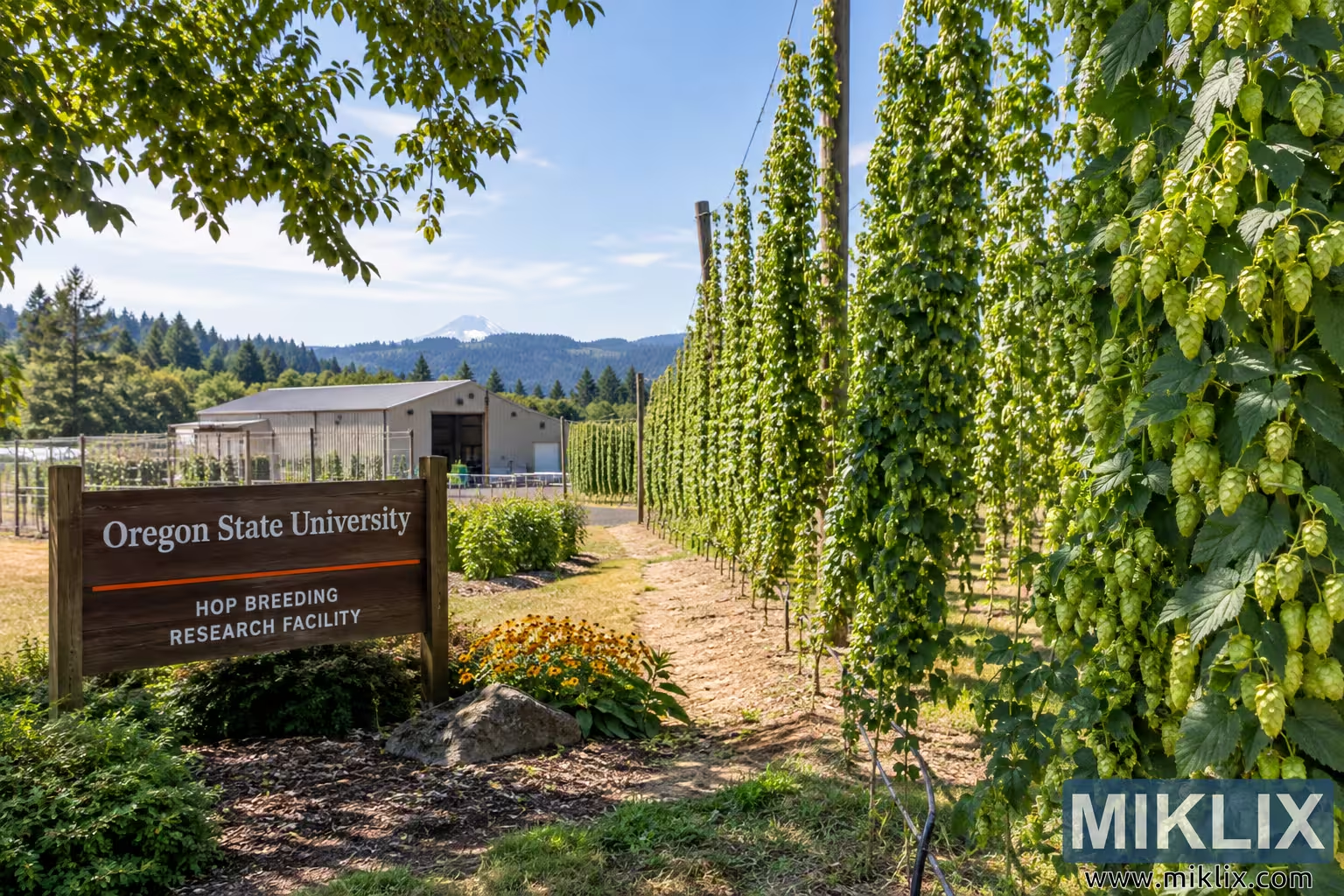
Landscape view of an Oregon university hop breeding research facility featuring lush trellised hop bines, research plots, an agricultural building, forested hills, and a distant mountain.
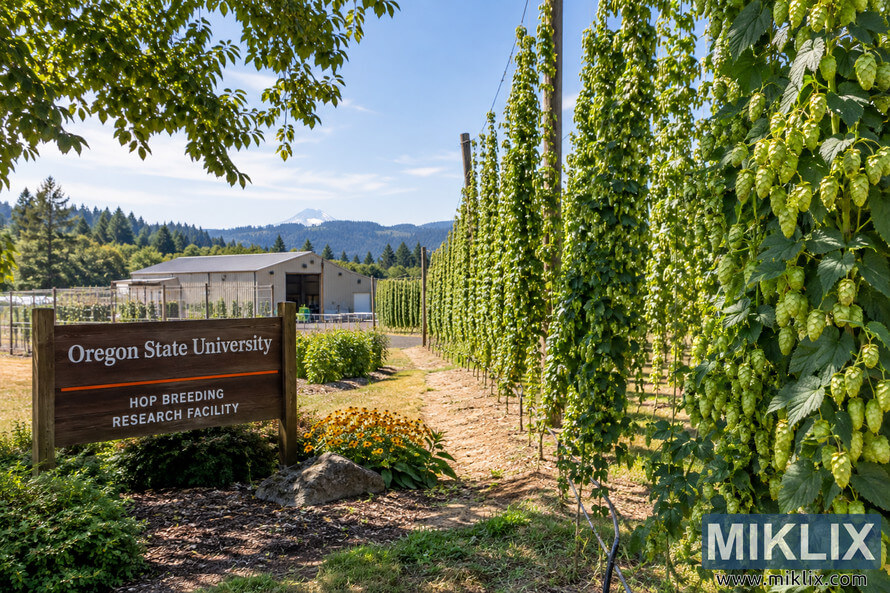
Available versions of this image
The image files available for download below are less compressed and higher resolution - and as a result of that, higher quality - than the images embedded in articles and pages on this website, which are more optimized for file size in order to reduce bandwidth consumption.
Regular size (1,536 x 1,024)
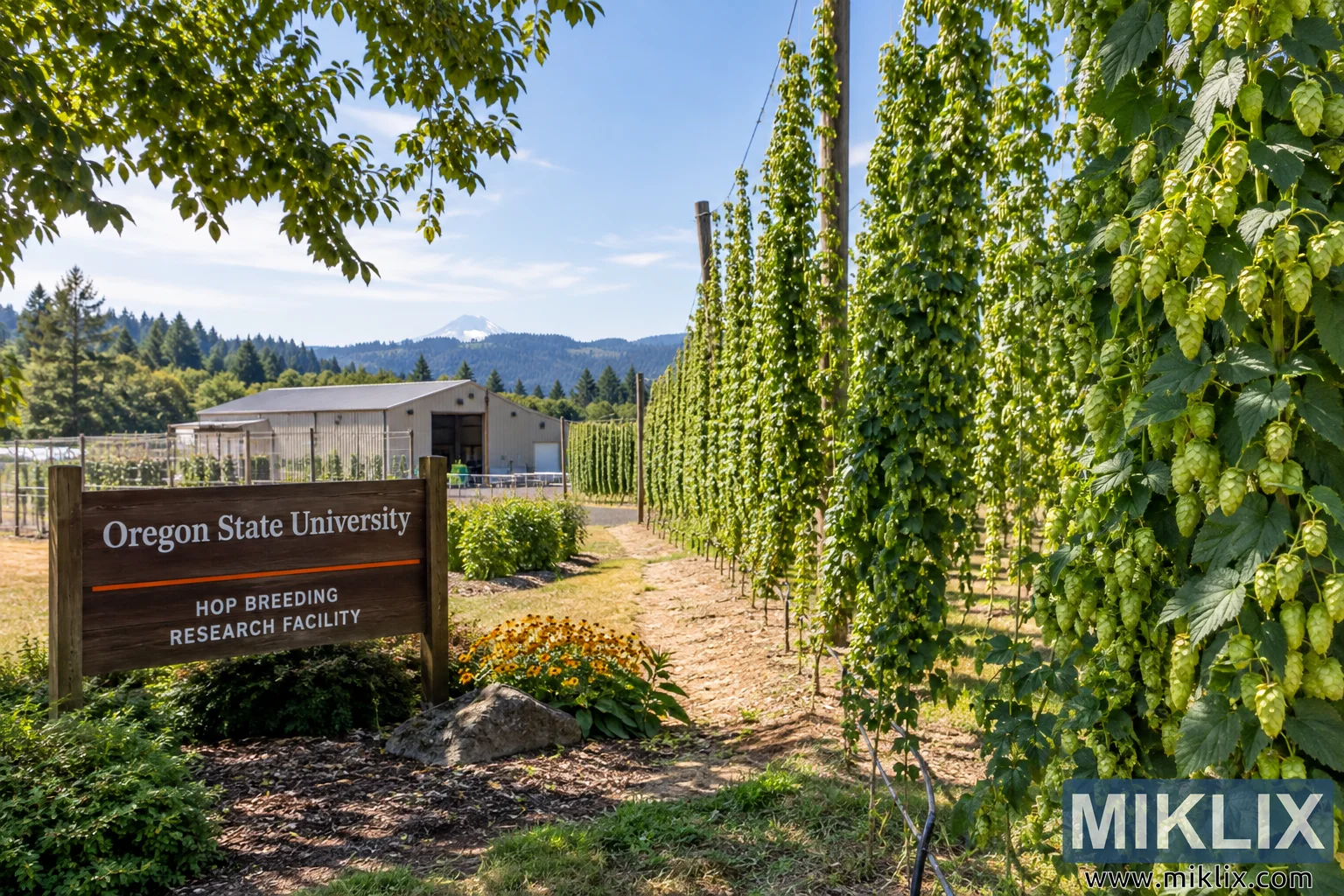
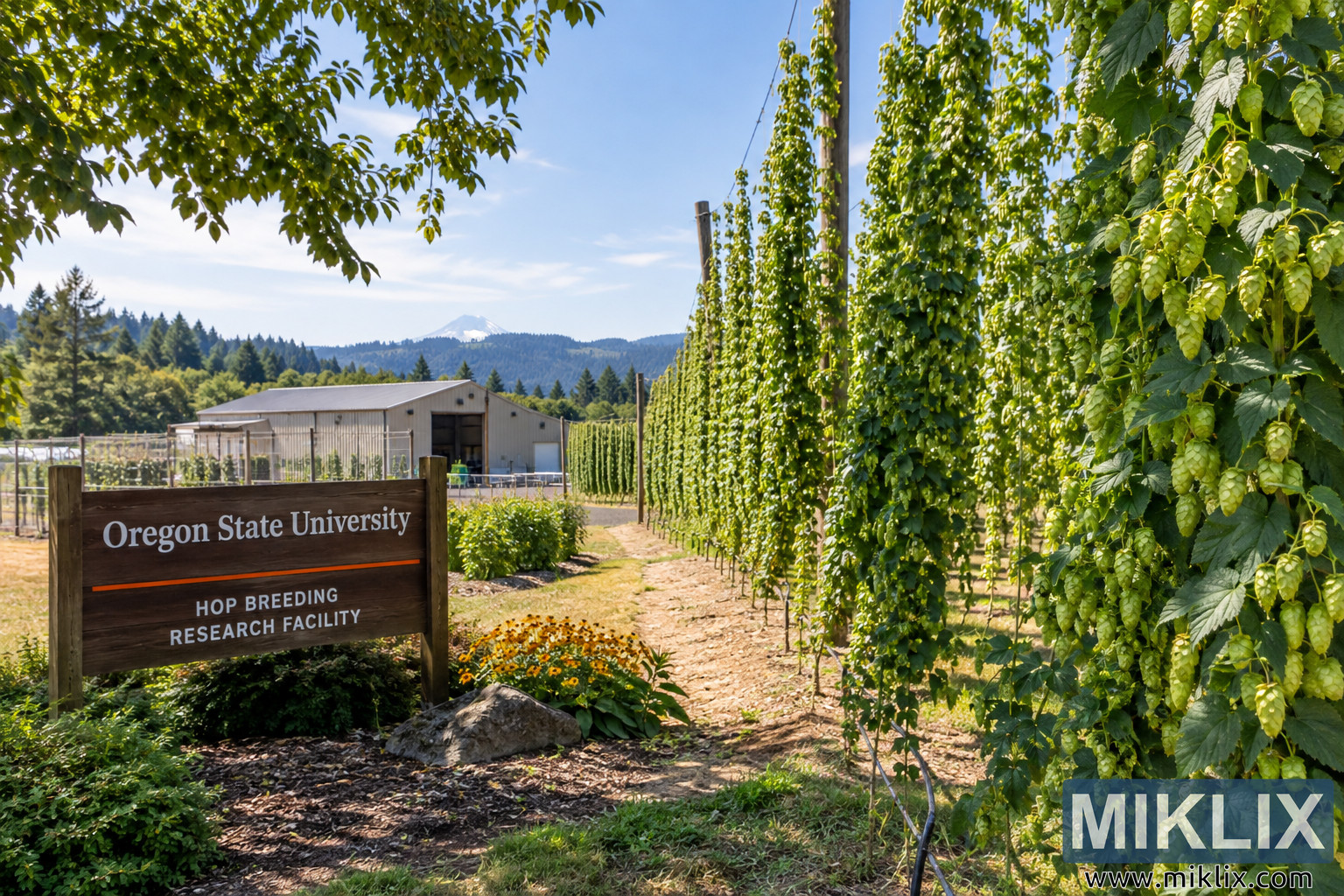
Large size (3,072 x 2,048)
Very large size (4,608 x 3,072)
Extra large size (6,144 x 4,096)
Comically large size (1,048,576 x 699,051)
- Still uploading... ;-)
Image description
A wide, sunlit landscape photograph depicts an agricultural hop breeding research facility in a lush rural setting. The composition is dominated by tall rows of vigorous hop bines trained vertically on an extensive trellis system. On the right side of the image, the nearest hop plants fill much of the foreground, creating a dense wall of deep green, serrated leaves and numerous pale green hop cones. The cones hang in clusters from the climbing plants and are rendered with enough detail to show their layered, papery bracts. The hop bines rise high above the ground along vertical strings supported by substantial wooden poles and overhead wires. Additional rows continue toward the center and background, creating strong lines of perspective that emphasize the scale and orderly structure of the research planting.
In the lower left foreground stands a large rustic wooden sign supported by two vertical timber posts. The dark-stained sign identifies the location as an Oregon State University hop breeding research facility. Light-colored lettering contrasts against the dark wood, while a narrow orange horizontal accent separates the university name from the facility designation below. The sign is integrated into a landscaped planting bed containing low green foliage, small flowering plants, dark mulch, and a prominent gray-brown rock. Yellow and orange flowers bloom immediately beside the sign, adding warm points of color against the surrounding greenery. Although the sign provides contextual identification, there are no separate commercial product logos or consumer brands visible in the scene.
A narrow, dry pathway extends from the foreground into the research hop yard, running alongside the trellised plants. The ground is a mixture of pale soil, dry vegetation, and patches of grass, suggesting warm, dry summer conditions. Near the bases of the hop plants, thin black irrigation tubing is visible, indicating a managed watering system used to support the research crop. The repeated vertical lines of the poles, strings, and climbing bines establish a highly organized agricultural environment while the abundant foliage gives the scene a natural, productive character.
Beyond the sign and hop rows, a functional agricultural research building occupies the middle distance. The building has light-colored corrugated siding, a broad low-pitched metal roof, and large dark openings or doors facing the field. Smaller structures, fencing, trellises, and experimental planting areas are visible around it, reinforcing the impression of an active research station rather than a purely commercial farm. The architecture is simple and practical, allowing the vegetation and research plots to remain the visual focus. The building is partly framed by the converging rows of hops and sits comfortably within the rural landscape.
The background opens into a broad view of forested hills covered with evergreen trees in varying shades of green. Above the tree line, a distant mountain with a pale, snow-covered summit rises near the center-left portion of the horizon. Atmospheric perspective softens the distant mountain and hills, creating a sense of depth and geographic scale. The combination of cultivated hop fields, forested slopes, and a snow-touched mountain evokes the Pacific Northwest landscape and gives the agricultural research setting a strong regional character.
The sky is bright blue with a few delicate, wispy white clouds. Clear daylight illuminates the scene from above and to the side, producing crisp highlights on the hop leaves and cones while casting gentle shadows across the path and landscaped foreground. The nearest hop cones catch the sunlight particularly well, standing out in yellow-green tones against darker leaves. Overhanging deciduous branches and leaves frame the upper left corner of the image, providing a natural canopy effect and adding another layer of depth. Their darker shaded foliage contrasts with the open blue sky and brightly lit field beyond.
The overall composition balances scientific agriculture with an inviting pastoral atmosphere. The sign in the lower left immediately establishes the research context, while the large hop bines on the right provide a close, detailed view of the crop being studied. The central path guides the eye toward the research building and then farther into the rows, hills, and distant mountain. Repetition in the trellis structures communicates methodical cultivation and experimentation, whereas flowers, mature trees, forests, and mountain scenery soften the technical setting. The image conveys a productive summer day at a university agricultural research site devoted to hop breeding, plant selection, and field experimentation. It emphasizes healthy hop growth, carefully maintained research plots, and the relationship between agricultural science and the surrounding Oregon landscape. The landscape orientation provides enough width to show both intimate botanical detail in the foreground and the broader environmental context in the distance, making the scene suitable for illustrating university agricultural research, hop cultivation, plant breeding, crop science, or Pacific Northwest farming.
The image is related to: Hops in Beer Brewing: Mount Rainier