
Hops in Beer Brewing: Mount Rainier
Published: October 11, 2026 at 7:07:47 PM UTC
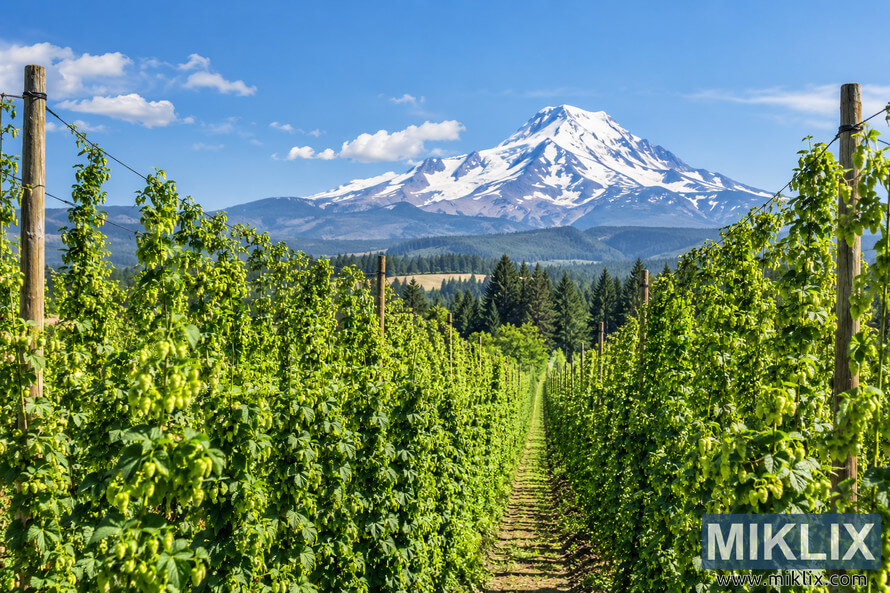
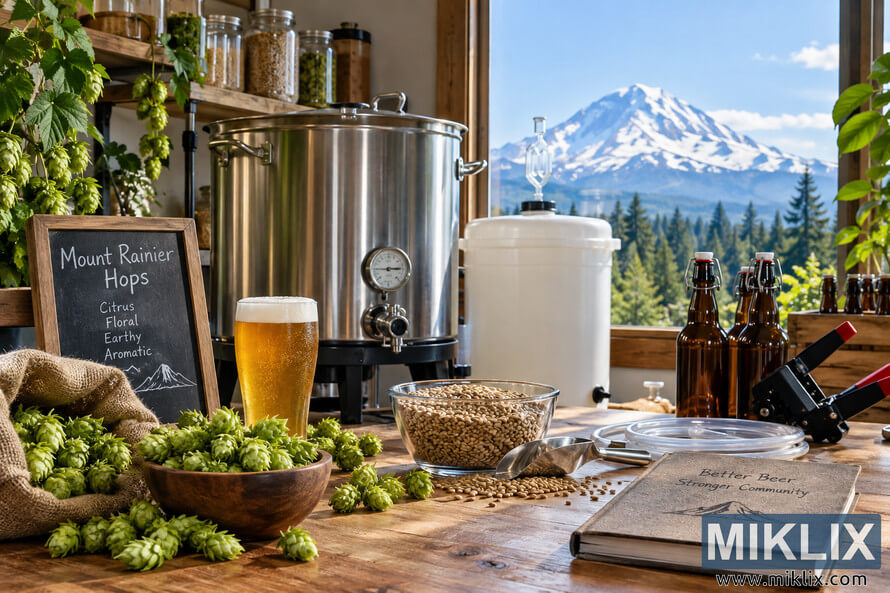
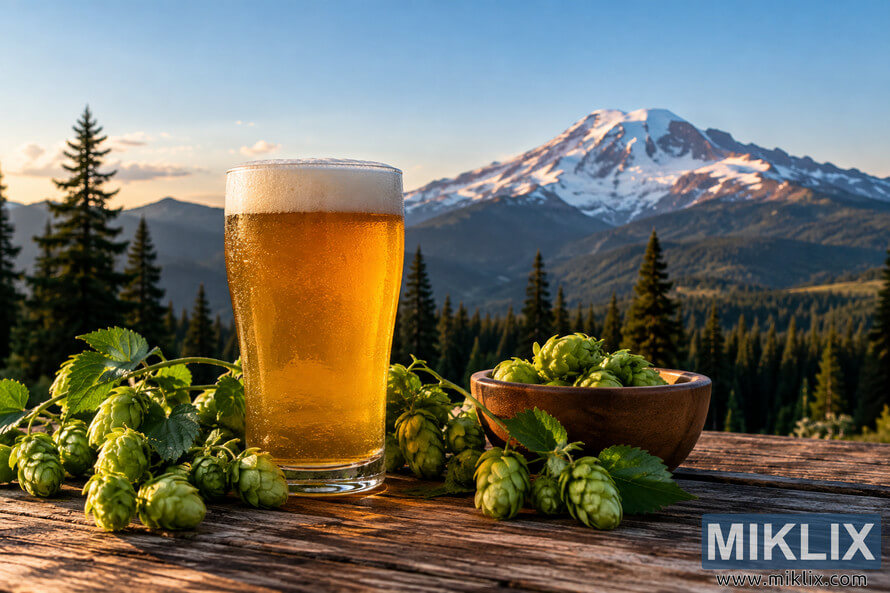
Mount Rainier is an American aroma hop bred from Hallertau and other German-derived varieties, offering a smooth blend of floral, herbal, and spicy notes with a subtle citrus character—well suited to lagers, wheat beers, and balanced ales.
Click or tap the image for more information and higher resolutions.
Mount Rainier hops represent one of the most versatile and approachable hop varieties available to homebrewers today. Developed by Oregon State University breeding programs, this noble-type hop brings traditional European character with an American twist. Whether you are crafting your first pale ale or refining a complex lager recipe, understanding Mount Rainier hops opens doors to exceptional brewing possibilities.
This comprehensive guide walks you through everything you need to know about brewing with Mount Rainier hops. You will discover the unique flavor aroma profile that makes this variety special. You will learn which beer styles showcase these hops best. You will master the brewing techniques that extract maximum character from every addition.
The journey from hop selection to finished beer becomes simpler when you understand the tools at your disposal. Mount Rainier hops offer homebrewers a reliable, cost-effective option that performs consistently across multiple applications. Let us explore how this remarkable hop variety can elevate your brewing game.
Click or tap the image for more information and higher resolutions.
The Origins of Mount Rainier Hops
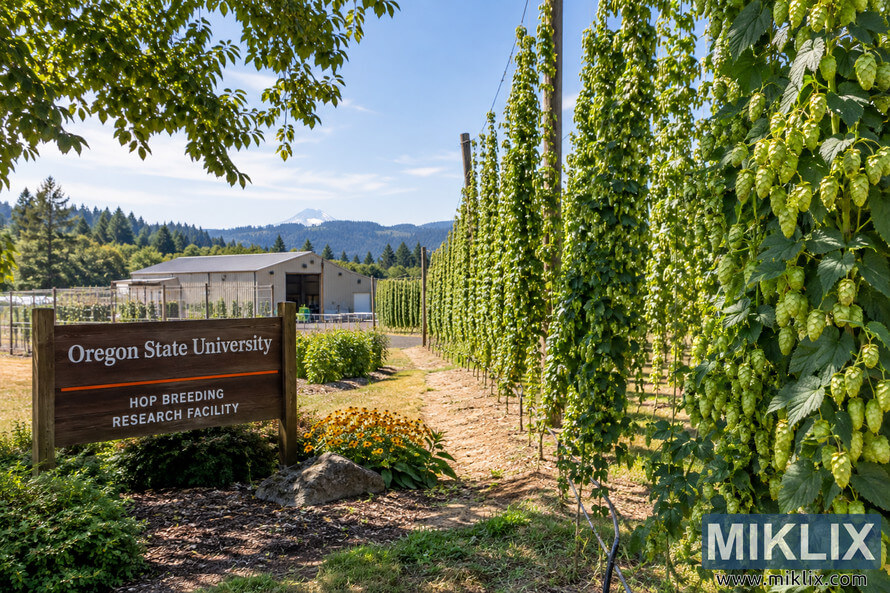
Mount Rainier hops emerged from the prestigious breeding program at Oregon State University. This program has produced numerous successful hop varieties over the decades. Researchers developed Mount Rainier as a daughter of the German Hallertau Magnum variety crossed with American breeding lines.
The variety received its release in the mid-1990s. Oregon State University aimed to create a hop that combined noble hop character with improved yield and disease resistance. The result exceeded expectations. Mount Rainier brought together the best qualities of European noble hops with the agricultural advantages American growers needed.
Yakima Chief Hops became the primary commercial producer of this variety. The Yakima Valley in Washington State provides ideal growing conditions. The region offers the perfect combination of soil quality, climate, and agricultural expertise. Today, most Mount Rainier hops come from this renowned hop-growing region.
Click or tap the image for more information and higher resolutions.
Yakima Chief Hops Leadership
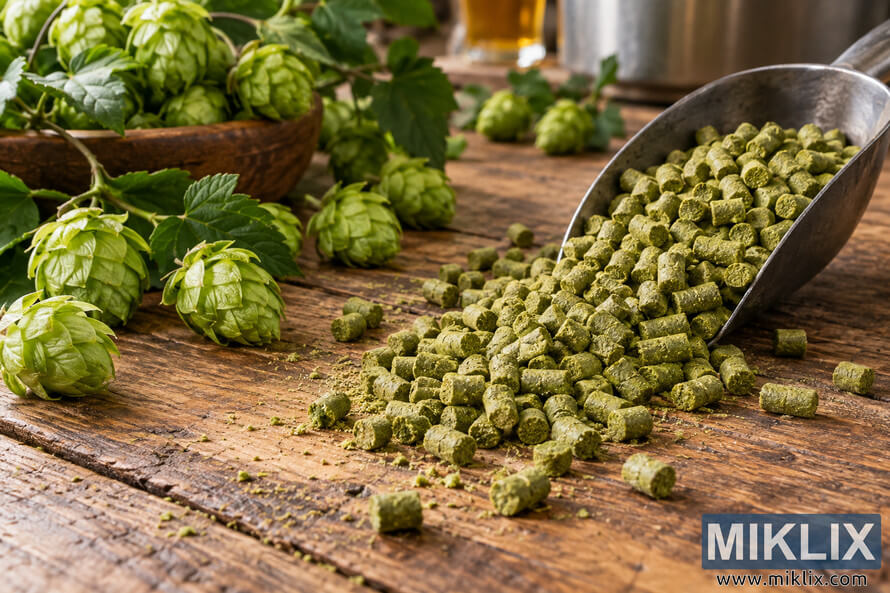
Yakima Chief Hops maintains the highest quality standards for Mount Rainier hop production. Their facilities process hops immediately after harvest to preserve freshness. The company offers Mount Rainier in multiple forms including whole cone and T-90 pellets.
Working directly with growers ensures consistency year after year. Each lot receives testing for alpha acids, beta acids, and essential oil content. This quality control gives brewers confidence in every purchase.
Development Goals and Achievements
Oregon State University researchers had specific objectives when developing Mount Rainier hops. They wanted a variety that could replace expensive imported noble hops. The breeding program focused on creating similar flavor profiles with better agricultural performance.
The achievement speaks for itself. Mount Rainier hops deliver classic noble character at a more accessible price point. Growers appreciate the improved yield and disease resistance. Brewers value the consistent quality and versatile brewing applications.
Mount Rainier Hops Flavor and Aroma Profile
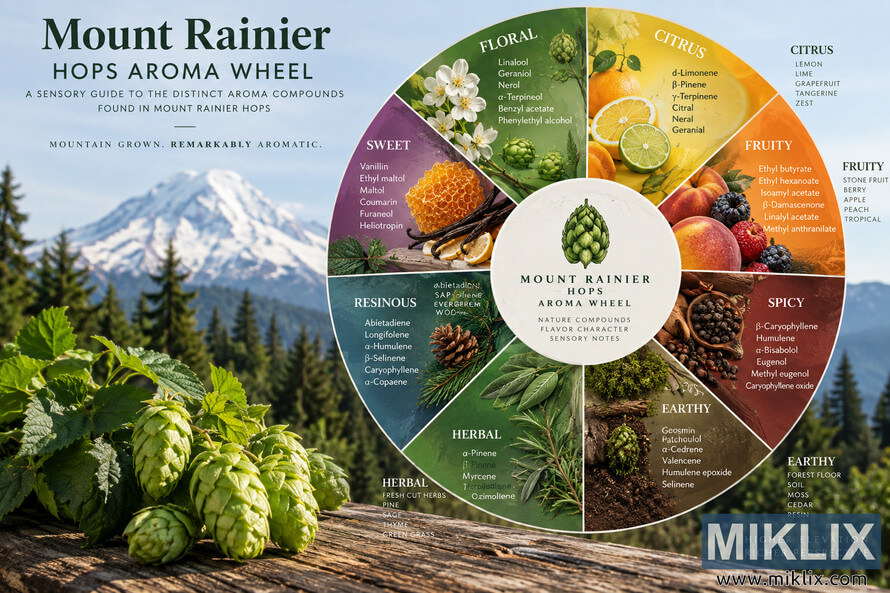
The flavor aroma profile of Mount Rainier hops sets this variety apart in the brewing world. These hops deliver a sophisticated blend of floral, spicy, and citrus notes. The profile leans toward traditional noble hop character while offering unique American touches.
Primary aroma characteristics include distinct floral notes reminiscent of fresh flowers and herbs. You will detect subtle spice elements that add complexity without overwhelming the palate. Light citrus undertones provide brightness. Some brewers also note gentle licorice and earthy qualities that round out the profile.
Chemical Composition and Oil Content
Understanding the chemical makeup helps brewers predict how Mount Rainier hops will perform. The alpha acids content typically ranges from six to eight percent. This moderate level makes the variety suitable for both bittering and aroma applications.
Beta acids content usually falls between five and seven percent. This balanced ratio contributes to the smooth bitterness character. The cohumulone percentage stays relatively low, which many brewers prefer for creating refined bitterness without harsh edges.
Essential oil content provides the aromatic magic. Mount Rainier hops contain a well-balanced oil profile with notable contributions from myrcene, humulene, and caryophyllene. These compounds create the signature floral and spicy character that defines the variety.
Click or tap the image for more information and higher resolutions.
Comparing Mount Rainier to Similar Hop Varieties
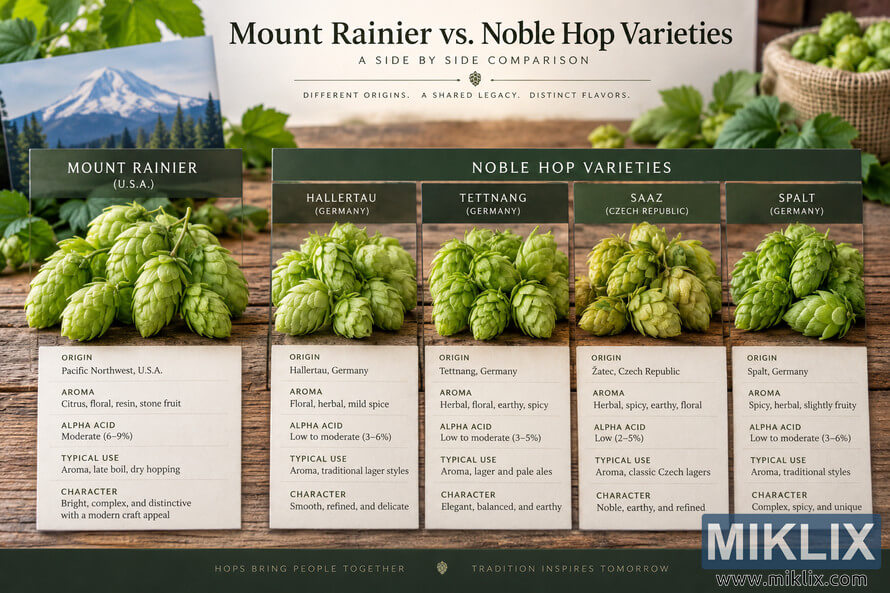
Many brewers compare Mount Rainier hops to traditional noble varieties like Hallertau Mittelfrüh or Czech Saaz. The comparison makes sense given the breeding lineage. Mount Rainier offers similar elegance and refinement at a more competitive price.
The key differences emerge in subtle ways. Mount Rainier tends toward slightly more pronounced citrus notes than traditional German hops. The spice character presents differently, with licorice undertones that European varieties do not typically display. These distinctions give Mount Rainier its own identity while maintaining noble hop appeal.
Click or tap the image for more information and higher resolutions.
Best Beer Styles for Mount Rainier Hops
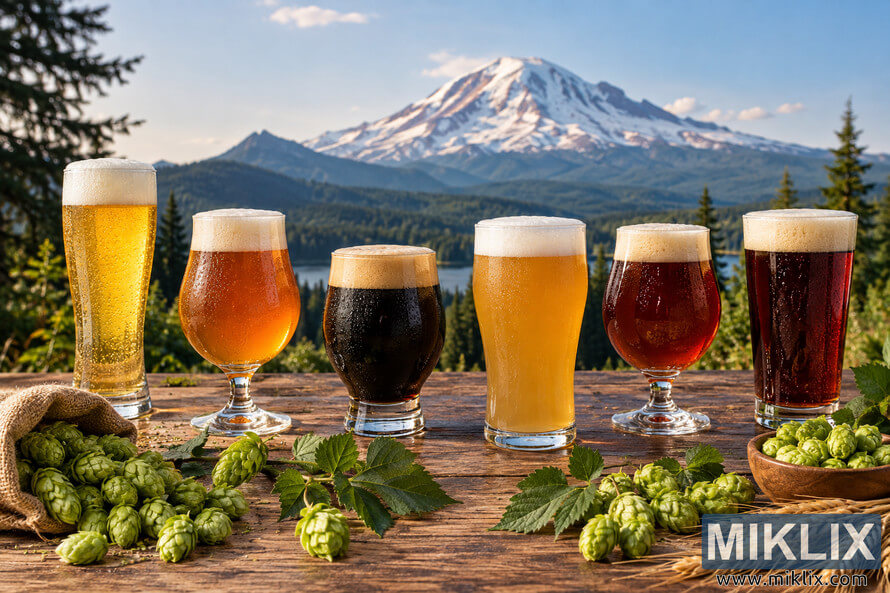
Mount Rainier hops shine across a remarkable range of beer styles. The versatility of this hop variety makes it valuable for both traditional and modern brewing approaches. Understanding which styles work best helps you plan successful recipes.
Click or tap the image for more information and higher resolutions.
American Pale Ale Applications
American pale ale represents an ideal showcase for Mount Rainier hop character. The style allows the floral and citrus notes to take center stage. You can use Mount Rainier as a single-hop pale ale or blend it with complementary varieties.
The moderate alpha acids content provides sufficient bittering without overwhelming malt character. Late additions and dry hopping bring out the aromatic qualities that make pale ales memorable. Many homebrewers report excellent results using Mount Rainier throughout the entire hop schedule.
Consider using Mount Rainier for sixty-minute bittering additions at a rate of point five to one ounce per five-gallon batch. Add another half ounce at fifteen minutes for flavor. Finish with a dry hop addition of one to two ounces for maximum aroma impact.
Lager and Pilsner Excellence
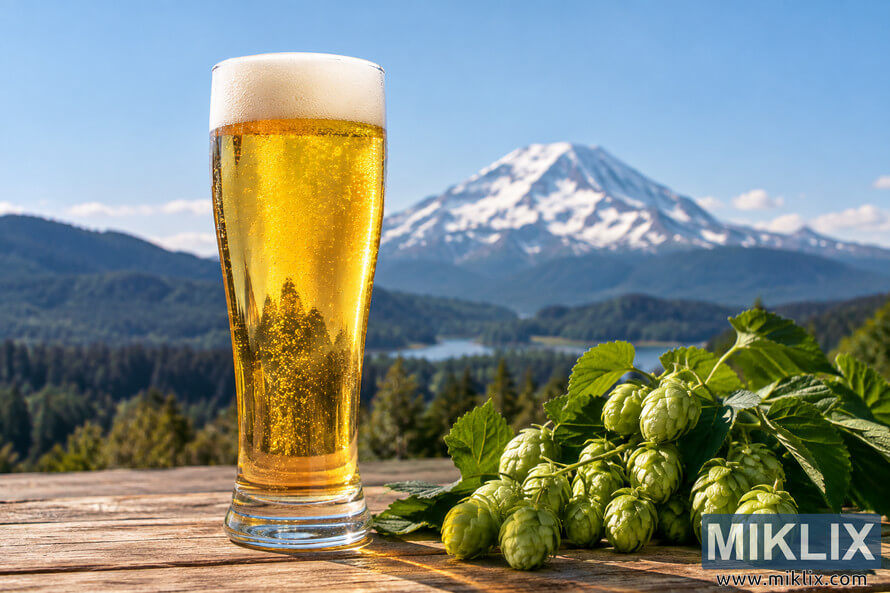
Traditional lager and pilsner styles benefit enormously from Mount Rainier hops. The noble character complements the clean malt profiles these beers require. Yakima Chief Hops specifically recommends Mount Rainier for lager applications due to its refined bitterness quality.
German-style pilsners work particularly well. The spice and floral notes mirror classic Czech and German hop profiles. American craft lagers also benefit from the clean bitterness and subtle complexity Mount Rainier provides.
Lager brewing typically requires less hop material than ales. Start with half ounce additions for bittering in a five-gallon batch. Small late additions of a quarter ounce can enhance aroma without overpowering the delicate malt character.
Click or tap the image for more information and higher resolutions.
Wheat Beer and Hefeweizen Styles
Wheat beers and hefeweizens gain elegance when brewed with Mount Rainier hops. These styles traditionally use noble hop varieties in modest amounts. Mount Rainier fits this requirement perfectly while adding unique American character.
The floral notes complement the fruity esters that wheat yeast strains produce. The spicy elements work harmoniously with the clove and banana flavors characteristic of hefeweizens. Keep hopping rates low to maintain proper style balance.
Use Mount Rainier sparingly in wheat beers. A single addition of half to three quarters of an ounce at sixty minutes provides adequate bitterness. Avoid late additions unless you specifically want to emphasize hop character over yeast-derived flavors.
English and American Brown Ales
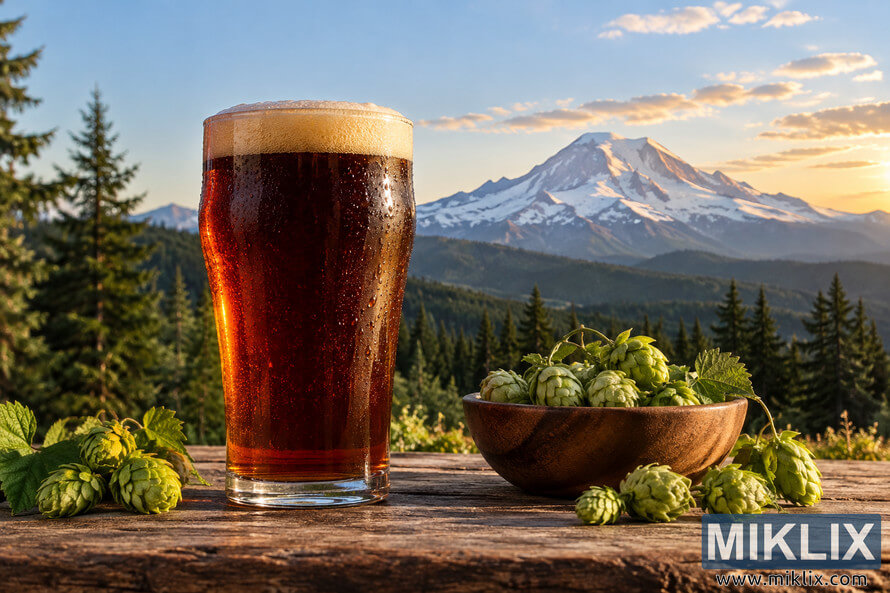
Brown ales showcase a different side of Mount Rainier hop character. The earthy and licorice notes complement the nutty, toasted malt flavors these beers feature. Both English and American interpretations work well.
English brown ales benefit from the noble hop background. The refined bitterness supports the malt without creating aggressive hop presence. American brown ales can handle slightly higher hop rates while maintaining balance.
Try one ounce of Mount Rainier for bittering in brown ales. Add a half ounce at twenty minutes to build flavor complexity. The results will surprise you with how well the hops integrate with darker malts.
Click or tap the image for more information and higher resolutions.
Porter and Stout Considerations
Porters and stouts can utilize Mount Rainier hops for clean bittering contributions. The hop character largely disappears behind robust malt flavors in these styles. This makes Mount Rainier an economical choice for the bittering additions that darker beers require.
The smooth bitterness quality works especially well in these applications. You get necessary IBU contributions without harsh edges. The subtle spice notes can add interesting complexity in the background.
Use Mount Rainier primarily for sixty-minute additions in porters and stouts. Calculate quantities based on desired bitterness levels rather than aroma contributions. Save more expensive or aromatic hops for styles that showcase those qualities.
Light Lagers
Mount Rainier provides the refined character light lagers demand.
- American light lager
- Munich helles
- Czech premium pale lager
- Dortmunder export
Pale Ales
Versatile applications across the pale ale spectrum.
- American pale ale
- Blonde ale
- Cream ale
- Kölsch
Wheat Beers
Noble character complements wheat and yeast flavors.
- American wheat beer
- Hefeweizen
- Witbier
- Dunkelweizen
Darker Ales
Clean bittering for malt-forward styles.
- English brown ale
- American brown ale
- Porter
- Mild ale
Brewing Techniques and Timing for Mount Rainier Hops
Mastering the brewing techniques specific to Mount Rainier hops elevates your beer quality. The timing of hop additions determines which characteristics shine through in the finished beer. Strategic planning during brew day makes all the difference.
Bittering Additions and IBU Calculations
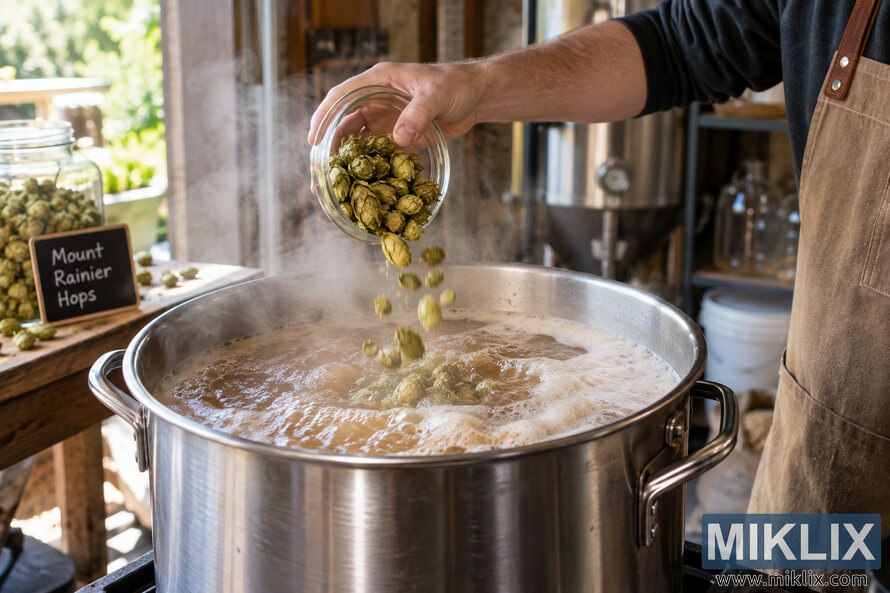
Bittering additions occur early in the boil when you want to extract alpha acids for IBU contributions. Mount Rainier hops work efficiently for this purpose. Add them at the sixty-minute mark for maximum isomerization of alpha acids into soluble bitter compounds.
Calculate your additions based on the alpha acids percentage of your specific lot. Yakima Chief Hops provides detailed analysis with each harvest. Use brewing software or online calculators to determine exact quantities for your target IBU level.
A typical five-gallon pale ale targeting thirty to forty IBUs might use one to one point five ounces of Mount Rainier at sixty minutes. Adjust based on your lot analysis and desired bitterness intensity. The T-90 pellets form dissolves quickly and provides consistent results.
Pro Tip: Always verify the alpha acids content on your specific lot before calculating bittering additions. Hop chemistry varies between harvest years, and using outdated numbers can throw off your IBU targets significantly.
Click or tap the image for more information and higher resolutions.
Flavor and Aroma Hop Additions
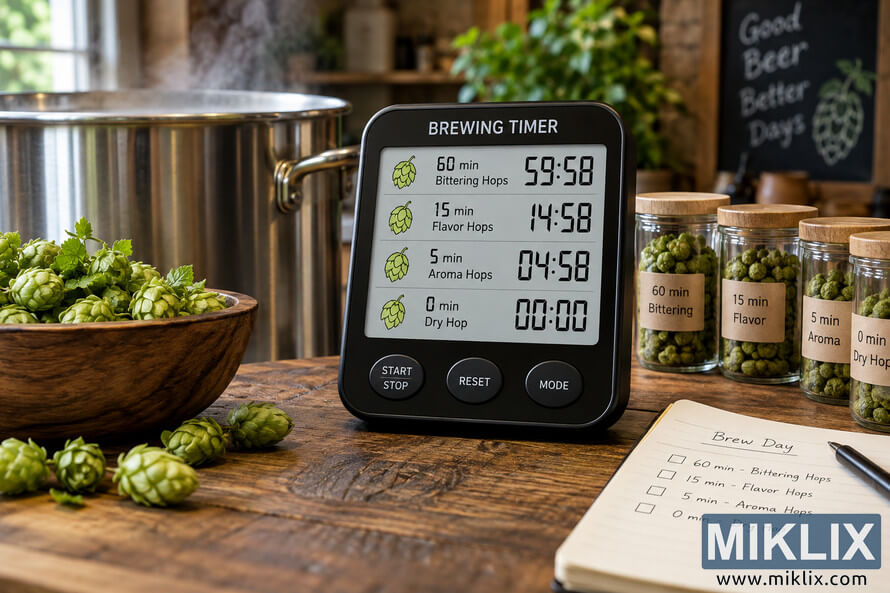
Flavor additions happen during the final thirty minutes of the boil. These later additions preserve more aromatic compounds while still extracting some bitterness. Mount Rainier performs beautifully in the fifteen to twenty minute addition window.
Add half to one ounce at fifteen to twenty minutes to build hop character without excessive bitterness. The floral and citrus notes emerge prominently at this timing. The spicy elements integrate smoothly with the developing beer profile.
Aroma additions occur in the final ten minutes of the boil or at flameout. These preserve the most delicate volatile compounds. Consider adding three quarters to one ounce at five minutes or at flameout. Some brewers perform a hop stand at reduced temperature to maximize aroma extraction.
The hop stand technique involves turning off the heat after the boil completes. Allow the wort to cool to around one hundred seventy degrees Fahrenheit. Add hops and let them steep for twenty to thirty minutes. This method captures incredible aroma while minimizing additional bitterness.
Click or tap the image for more information and higher resolutions.
Dry Hopping with Mount Rainier
Dry hopping adds hop aroma after fermentation completes. This technique has become standard practice for hoppy beer styles. Mount Rainier responds well to dry hop applications, though its character differs from more aggressively aromatic American varieties.
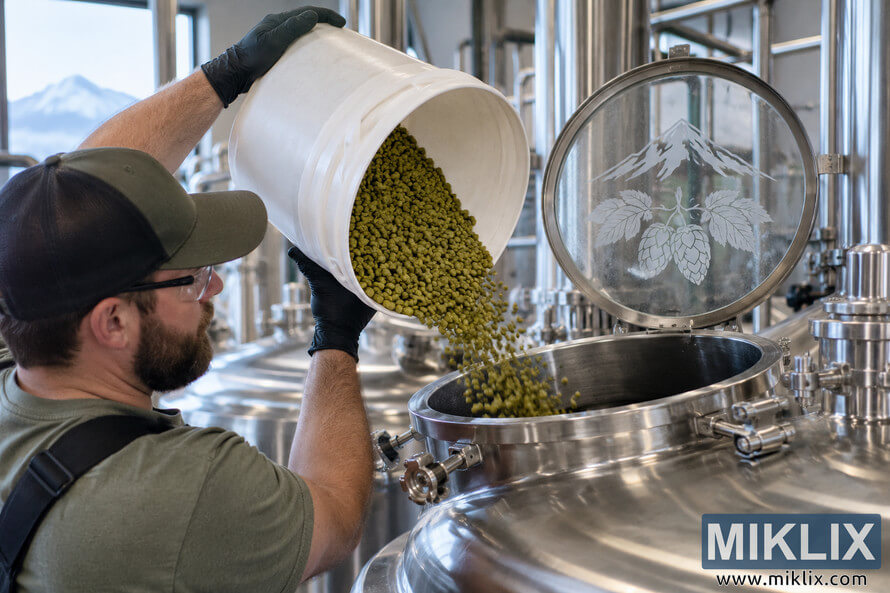
Add dry hops when fermentation finishes and the beer has reached terminal gravity. Use one to three ounces per five-gallon batch depending on desired intensity. The pellet form works perfectly for dry hopping as the pellets break apart easily and settle well after a few days.
Contact time matters for dry hopping results. Three to five days typically provides optimal extraction without grassy or vegetal flavors. Some brewers prefer shorter contact times of two to three days to maintain the cleanest hop character.
Temperature also affects dry hop extraction. Room temperature dry hopping extracts more aggressively than cold conditioning. Consider your goals when choosing dry hop temperatures. Cold side hopping can provide more delicate results in lagers and lighter beer styles.
Click or tap the image for more information and higher resolutions.
Hop Bursting and Single Hop Brewing
Hop bursting concentrates additions late in the boil. This technique emphasizes flavor and aroma over bitterness. Replace traditional sixty-minute bittering hops with larger quantities at twenty minutes and later. Mount Rainier adapts well to hop bursting approaches.
A hop burst pale ale might use zero hops until twenty minutes remain in the boil. Add two ounces at twenty minutes, one and a half ounces at ten minutes, one ounce at flameout, and two ounces for dry hopping. The results showcase hop character with moderate bitterness levels.
Single hop brewing uses only one hop variety throughout the entire recipe. This approach highlights the unique character of Mount Rainier hops. You gain deep understanding of the variety flavor profile. Single hop beers also help you learn how different additions affect the finished product.
Blending Mount Rainier with Other Hop Varieties
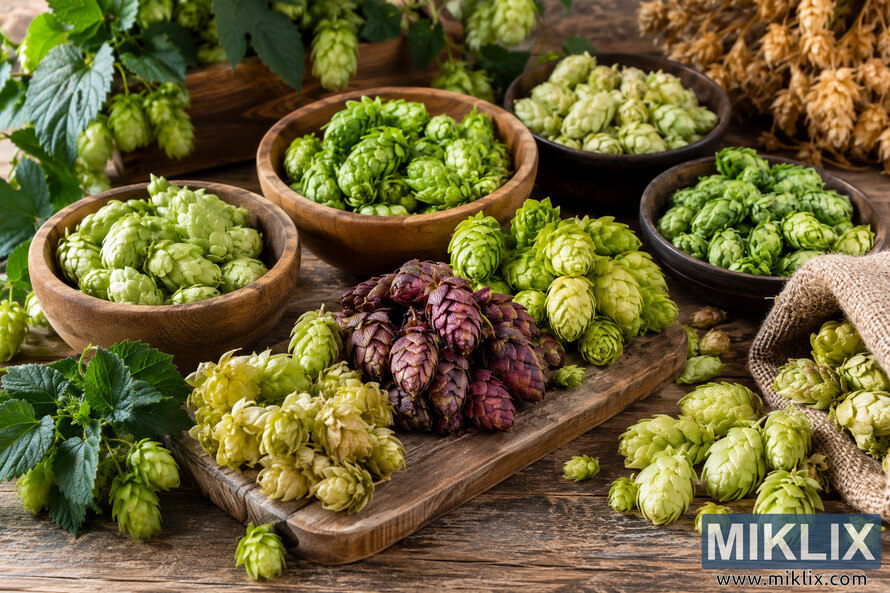
Blending hops creates complexity beyond what single varieties achieve. Mount Rainier pairs beautifully with many complementary hops. Consider these combinations for enhanced character in your beers.
Cascade hops blend well with Mount Rainier in American pale ales. The citrus notes from Cascade amplify the subtle citrus in Mount Rainier. Use equal parts of each for balanced results, or emphasize one variety for directional character.
German noble hops like Tettnang or Hallertau Mittelfrüh enhance the traditional aspects of Mount Rainier. These combinations work perfectly in lagers and wheat beers. The similar profiles create harmonious rather than competing flavors.
Willamette hops offer another excellent pairing option. Both varieties share noble hop heritage. The combination provides depth while maintaining the refined character appropriate for European-inspired beer styles.
Click or tap the image for more information and higher resolutions.
Essential Tips for Homebrewers Using Mount Rainier Hops
Homebrewers gain specific advantages when working with Mount Rainier hops. Understanding the practical aspects of using this variety at home scale improves your success rate. These tips come from experienced brewers who have mastered Mount Rainier applications.
Selecting Quality Mount Rainier Hops
Quality starts with proper hop selection. Purchase Mount Rainier hops from reputable suppliers who store inventory correctly. Yakima Chief Hops and authorized distributors maintain cold chain management from harvest to your door.
Check the packaging date and lot number when hops arrive. Fresh hops deliver superior results compared to old inventory. Most suppliers include harvest year information on packaging. Aim for hops from the most recent harvest when possible.
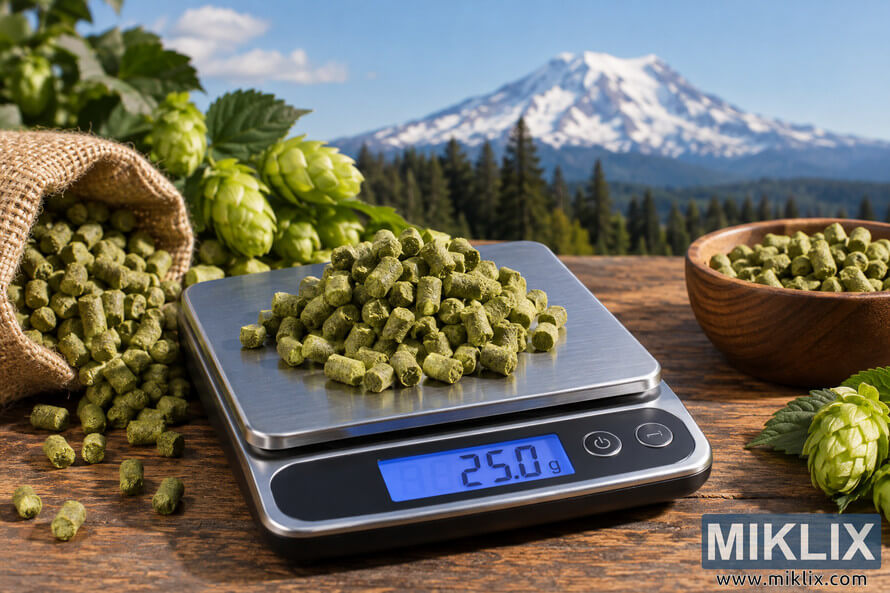
The pellet form offers the best value and convenience for homebrewers. T-90 pellets contain the whole hop cone compressed into pellet form. This format stores well, measures easily, and performs consistently in home brewing equipment.
Whole cone Mount Rainier hops appeal to some traditionalist brewers. The whole form requires more storage space and can be harder to measure accurately. However, some brewers prefer whole hops for certain applications like cask conditioning or low-tech dry hopping methods.
Click or tap the image for more information and higher resolutions.
Measuring and Scaling Recipes
Accurate measurement ensures recipe consistency. Invest in a quality digital scale that measures in tenth-ounce or gram increments. Weigh all hop additions rather than using volume measurements. Hop density varies too much for volume to be reliable.
Scale recipes properly when adjusting batch sizes. The relationship between hops and wort volume affects utilization and flavor intensity. Brewing software helps calculate correct hop quantities when moving from five-gallon to ten-gallon batches or scaling down for experimental one-gallon brews.
Document your hop additions meticulously during brew day. Record actual weights used, addition times, and wort temperature at each addition. These notes become invaluable when replicating successful batches or troubleshooting disappointing results.
Click or tap the image for more information and higher resolutions.
Water Chemistry Considerations
Water chemistry impacts how hop character expresses in finished beer. The minerals in your brewing water interact with hop compounds during the boil and fermentation. Understanding these interactions helps you optimize Mount Rainier hop performance.
Sulfate emphasizes hop bitterness and perceived dryness. Increase sulfate levels in your brewing water to accentuate the crisp bitterness Mount Rainier provides. Target sulfate concentrations between one hundred fifty and three hundred parts per million for hop-forward beers.
Chloride promotes malt flavor and fuller body perception. Balance chloride against sulfate based on your beer style goals. Lagers and wheat beers benefit from lower sulfate-to-chloride ratios. Pale ales can handle higher sulfate levels that push hop character forward.
Avoid excessive chlorine in your brewing water. Chlorine combines with hop compounds to create unpleasant medicinal flavors. Use carbon filtration or campden tablets to remove chlorine before brewing. This simple step dramatically improves hop character in the finished beer.
Fermentation Temperature and Hop Expression
Fermentation temperature influences how hop flavors integrate with beer. Yeast produces different compounds at various temperatures. These compounds interact with the hop character from Mount Rainier additions.
Cooler fermentation temperatures preserve delicate hop aromatics. Lagers fermented at fifty to fifty-five degrees Fahrenheit maintain the refined floral and spice notes Mount Rainier offers. The clean yeast character allows hop nuances to shine through clearly.
Ale fermentation at moderate temperatures produces complementary esters. Target sixty-five to sixty-eight degrees Fahrenheit for American ales using Mount Rainier. This range promotes clean fermentation while developing subtle fruity notes that harmonize with hop citrus character.
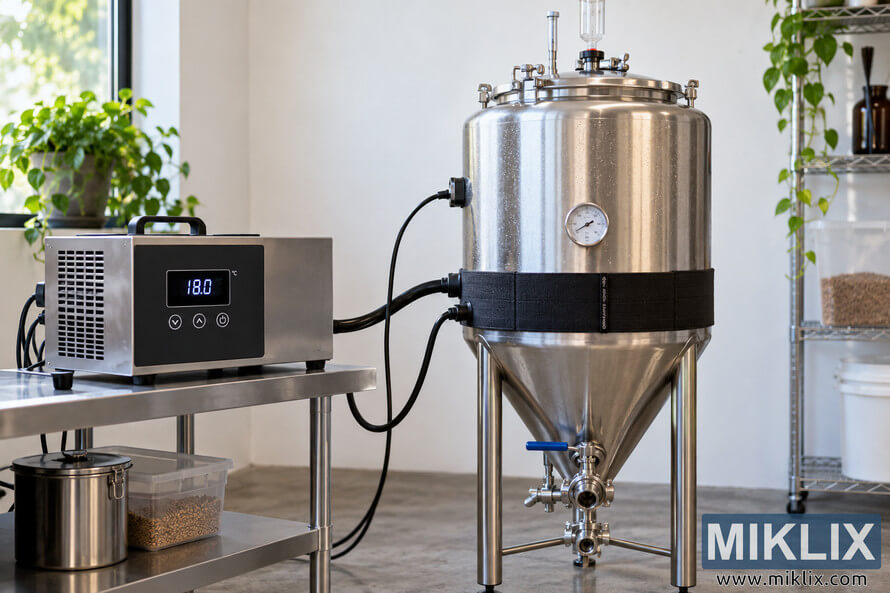
Avoid excessive fermentation temperatures above seventy-two degrees. Hot fermentation creates fusel alcohols and harsh flavors that mask hop subtleties. Temperature control represents one of the most impactful investments homebrewers can make for hop-forward beers.
Click or tap the image for more information and higher resolutions.
Recipe Development Strategies
Developing recipes around Mount Rainier hops requires thoughtful planning. Start with established recipes that use similar hop varieties. Substitute Mount Rainier for noble hops or moderate-alpha American varieties in proven formulas.
Keep malt bills relatively simple when showcasing Mount Rainier hop character. Base malts like American two-row, Pilsner malt, or pale ale malt provide clean backgrounds. Add small amounts of specialty malts for color and complexity without overwhelming hop expression.
Consider yeast strain selection carefully. Clean American ale yeasts like Safale US-05 or Wyeast 1056 allow hop character to dominate. German lager yeasts produce the crisp profiles that complement Mount Rainier noble characteristics. Avoid highly expressive Belgian or English strains unless you specifically want yeast and hop competition.
Beginner Mount Rainier Recipe
This simple pale ale recipe showcases Mount Rainier as a single hop variety. Perfect for learning the hop character.
- Ten pounds American two-row malt
- Eight ounces Crystal forty malt
- One ounce Mount Rainier at sixty minutes
- Half ounce Mount Rainier at fifteen minutes
- One ounce Mount Rainier dry hop
- American ale yeast strain
Click or tap the image for more information and higher resolutions.
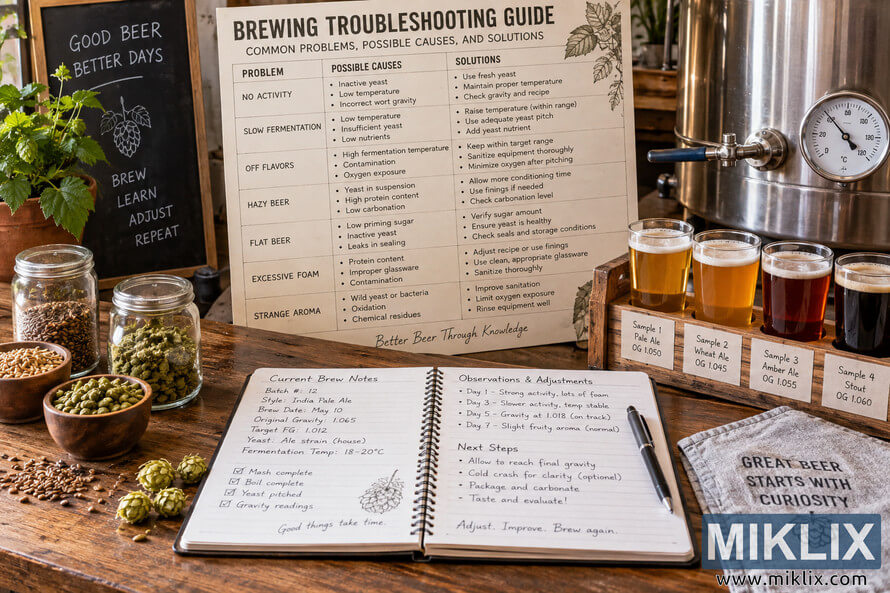
Troubleshooting Common Issues
Even experienced brewers encounter challenges when working with new hop varieties. Understanding common issues with Mount Rainier helps you diagnose and correct problems quickly.
Weak hop aroma often results from old or improperly stored hops. Verify your Mount Rainier hops came from recent harvest and stayed refrigerated. Increase dry hop quantities if you prefer more aggressive aroma intensity.
Harsh bitterness despite moderate IBU calculations may indicate high cohumulone sensitivity. While Mount Rainier has relatively low cohumulone, some palates perceive bitterness more intensely. Reduce sixty-minute additions and shift hop schedule toward later additions.
Grassy or vegetal flavors typically come from excessive dry hop contact time. Reduce dry hopping duration to three days maximum. Lower dry hop temperatures to minimize extraction of undesirable compounds.
Insufficient hop character might require adjusting your hop schedule. Increase late addition and dry hop quantities. Consider hop bursting techniques to emphasize flavor and aroma over bitterness contributions.
Click or tap the image for more information and higher resolutions.
Storage and Handling Considerations for Mount Rainier Hops
Proper storage protects your investment in quality hops. Mount Rainier hops maintain their character best when stored under optimal conditions. Understanding storage requirements extends hop shelf life and preserves brewing performance.
Temperature Control and Freezer Storage
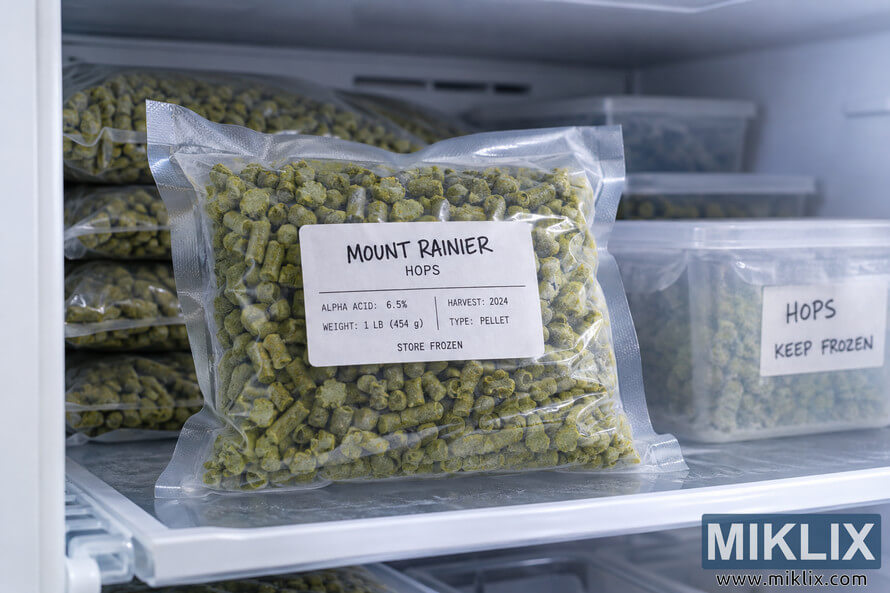
Temperature represents the most critical storage factor for hops. Heat degrades hop acids and essential oils rapidly. Store Mount Rainier hops in a freezer at zero degrees Fahrenheit or below for maximum preservation.
Freezer storage prevents the oxidation and degradation that room temperature causes. Hops stored at freezing temperatures maintain quality for years when properly packaged. Many homebrewers keep a dedicated freezer for hop and yeast storage.
Refrigerator storage works for short-term needs. Keep unopened hop packages in the coldest part of your refrigerator if freezer space is limited. Use refrigerated hops within three to six months for best results. The warmer temperature compared to freezing accelerates degradation over time.
Avoid temperature fluctuations that create condensation. Moisture exposure damages hops quickly. Allow frozen hops to reach room temperature before opening packages. This prevents condensation from forming on the cold hops when exposed to humid air.
Click or tap the image for more information and higher resolutions.
Packaging and Oxygen Barrier Methods
Oxygen exposure causes rapid hop degradation. The alpha acids and aromatic oils that make Mount Rainier valuable oxidize when exposed to air. Proper packaging creates an oxygen barrier that extends storage life significantly.
Original packaging from Yakima Chief Hops and other quality suppliers uses oxygen barrier materials. Keep hops in original packaging until ready to use. The foil-lined bags prevent oxygen penetration while maintaining proper moisture barriers.
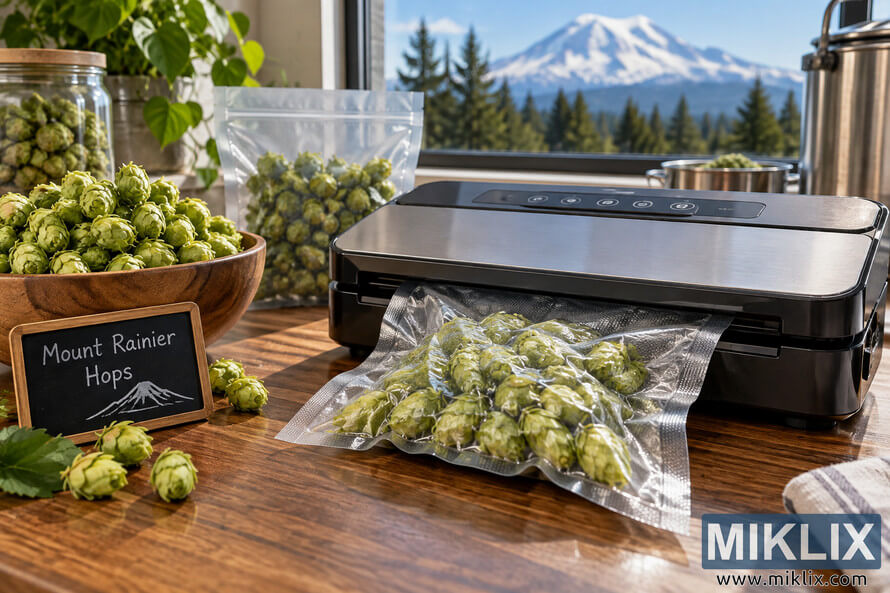
Vacuum sealing provides excellent protection for bulk hop purchases. Divide large quantities into smaller portions for individual brew days. Vacuum seal each portion separately. This approach minimizes how often you expose your entire hop stock to air.
Mylar bags with oxygen absorbers offer another effective storage solution. Place hops in appropriately sized mylar bags. Add an oxygen absorber packet rated for the bag volume. Seal the bag completely using a heat sealer or iron. The oxygen absorber removes residual oxygen from the package.
Mason jars work for very short-term storage but allow oxygen exposure. Only use jars when you will consume the hops within a few weeks. Fill jars completely to minimize headspace. Store jars in the freezer to slow oxidation.
Click or tap the image for more information and higher resolutions.
Monitoring Hop Freshness and Quality
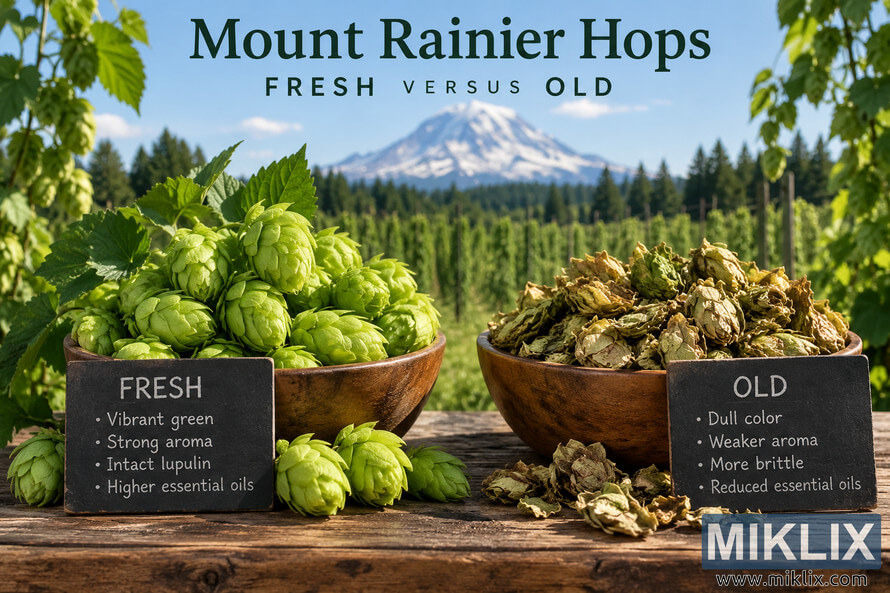
Regular quality checks help you identify when hops have degraded. Fresh Mount Rainier hops display vibrant green color and strong aromatic presence. Degraded hops lose color and develop cheesy or stale aromas.
Perform smell tests periodically on stored hops. Open the package briefly and inhale the aroma. Fresh Mount Rainier should smell floral, spicy, and citrusy. Any cheese-like or musty odors indicate oxidation and quality loss.
Visual inspection reveals oxidation through color changes. Fresh hops maintain bright green color. Oxidized hops turn brown or tan. Discard severely oxidized hops as they will contribute off-flavors to beer.
Track purchase and harvest dates on all hop packages. Write the purchase date on packages that do not include harvest year information. Prioritize using older inventory first to minimize waste from degradation.
Click or tap the image for more information and higher resolutions.
Bulk Purchasing and Long-Term Planning
Bulk hop purchases offer significant cost savings. Buying Mount Rainier hops in one-pound quantities reduces per-ounce costs substantially. However, bulk purchases require excellent storage practices to maintain quality until use.
Calculate your annual hop needs before bulk purchasing. Consider which beer styles you brew most frequently. Factor in the quantity of Mount Rainier each recipe requires. Multiply by your expected brewing frequency to estimate total annual needs.
Purchase bulk quantities during harvest season for best pricing and freshness. Hop suppliers offer new crop sales each fall. These sales provide access to the freshest hops at competitive prices. Plan ahead to take advantage of these annual opportunities.
| Package Size | Average Price | Cost Per Ounce | Best For | Storage Duration |
| One ounce | Three to five dollars | Three to five dollars | Testing new varieties | Use within three months |
| Four ounces | Eight to twelve dollars | Two to three dollars | Single batch brewing | Six months frozen |
| Eight ounces | Twelve to eighteen dollars | One fifty to two twenty-five | Regular use varieties | One year frozen |
| One pound | Twenty to thirty dollars | One twenty-five to one eighty-five | Frequent brewing | Two years frozen |
| Five pounds | Eighty to one hundred twenty dollars | One to one fifty | Brewing clubs or high volume | Two plus years frozen |
Divide bulk purchases immediately upon arrival. Portion hops into brew day quantities before freezing. This preparation saves time during brewing and limits oxygen exposure from repeatedly opening large packages.
Consider group purchases with brewing club members. Splitting a five-pound bag between multiple brewers reduces individual costs while preventing excess inventory. Coordinate storage responsibilities to ensure all members maintain proper freezer conditions.
Handling Hops During Brew Day
Proper handling during brewing protects hop quality until the moment of addition. Remove only the hops you need from freezer storage. Keep the remaining inventory frozen while you brew.
Measure hop additions in advance when possible. Prepare all additions before starting the brew day. Place measured hops in small containers labeled with addition times. This organization prevents rushed measurements during the boil.
Add hops directly from the measuring container to the boiling wort. Avoid exposing hops to steam or moisture before addition. Pellets that absorb moisture before use can clump and provide inconsistent results.
Close hop packages immediately after measuring. Minimize air exposure time to just seconds rather than minutes. Return unused hops to freezer storage as soon as possible after completing your brewing session.
Storage Warning: Never store hops in a frost-free freezer without proper oxygen barrier packaging. Frost-free freezers cycle temperatures, causing condensation that will rapidly degrade hop quality even in freezing conditions.
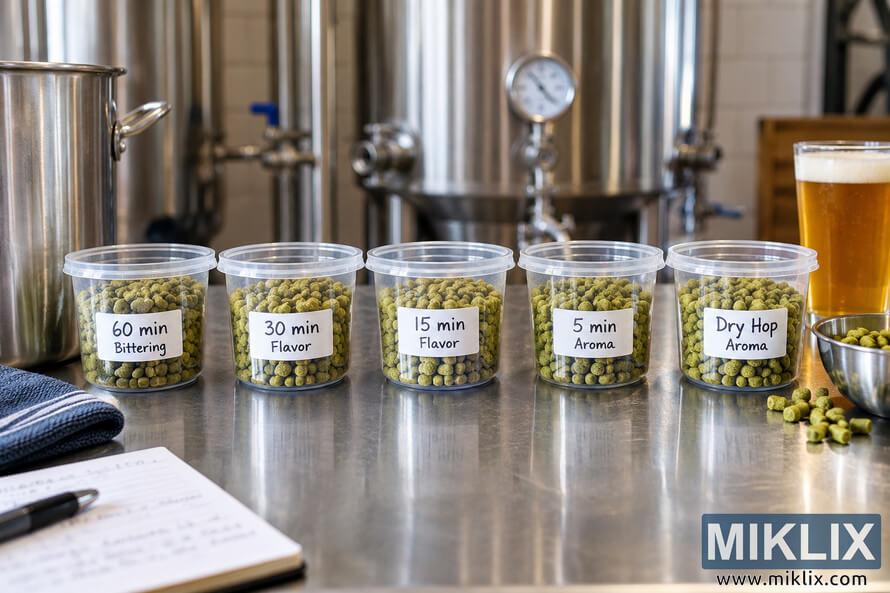
Click or tap the image for more information and higher resolutions.
Advanced Mount Rainier Hop Applications
Experienced brewers push beyond basic applications to explore advanced techniques with Mount Rainier hops. These methods extract maximum potential from the variety while creating unique beer characteristics. Mastering advanced applications separates good beers from exceptional ones.
First Wort Hopping Technique
First wort hopping adds hops to the kettle before the boil begins. As wort runs from the mash tun into the boil kettle, hops steep in the hot wort. This extended contact time creates unique flavor and aroma contributions that traditional boil additions cannot replicate.
Mount Rainier performs exceptionally well with first wort hopping. The technique emphasizes the noble hop characteristics while creating smoother perceived bitterness. Many brewers report that first wort hopping produces more integrated hop flavor compared to traditional sixty-minute additions.
Use one to two ounces of Mount Rainier for first wort hopping in five-gallon batches. Add the hops as soon as the first runnings enter the kettle. Allow them to steep during the entire runoff process. Count the full boil time for IBU calculations, though actual bitterness may seem softer than calculations predict.
First wort hopping works particularly well in German-style lagers and pilsners. The technique originated in traditional German brewing practices. Mount Rainier noble character aligns perfectly with these applications. Consider replacing half of your planned bittering addition with first wort hops.

Click or tap the image for more information and higher resolutions.
Hop Stands and Whirlpool Additions
Hop stands maximize aroma extraction while controlling bitterness contributions. After completing the boil, cool the wort to between one hundred sixty and one hundred eighty degrees Fahrenheit. Add hops and maintain temperature for twenty to forty-five minutes. This extended contact time extracts aromatic compounds efficiently.
Temperature selection during hop stands affects extraction patterns. Higher temperatures around one hundred eighty degrees extract more bitterness along with aroma. Lower temperatures near one hundred sixty degrees emphasize aroma while minimizing additional IBU contributions.
Mount Rainier responds beautifully to hop stand techniques. The floral and citrus aromatics intensify during extended contact with hot wort. Plan for two to four ounces per five-gallon batch depending on desired aroma intensity.
Combine hop stands with whirlpool techniques for clarity benefits. Create a whirlpool by stirring the wort in one direction. Allow it to settle for ten to fifteen minutes. The whirlpool action collects trub and hop material in the kettle center, improving wort clarity when transferring to the fermenter.
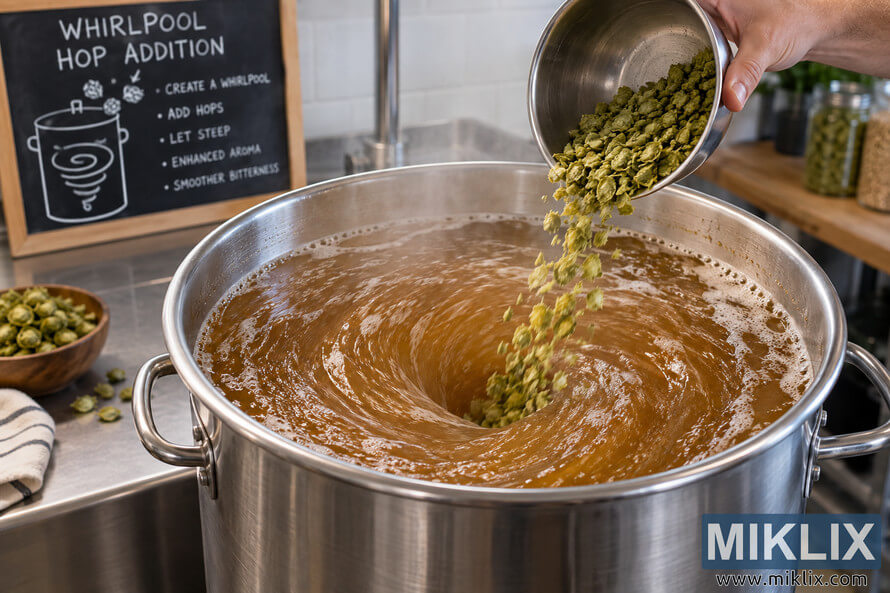
Click or tap the image for more information and higher resolutions.
Biotransformation and Dry Hopping Timing
Biotransformation describes chemical changes that occur when hops contact active yeast. Adding dry hops during active fermentation allows yeast enzymes to modify hop compounds. The process creates unique aroma profiles different from standard dry hopping.
Add Mount Rainier hops when fermentation reaches high krausen for maximum biotransformation. The vigorous yeast activity during peak fermentation transforms hop compounds into new aromatic molecules. Some brewers report enhanced tropical fruit character from biotransformation dry hopping.
Traditional post-fermentation dry hopping emphasizes the natural hop character. Add hops after fermentation completes and the beer has dropped clear. This timing produces cleaner, more recognizable Mount Rainier characteristics without yeast-driven modifications.
Split dry hopping combines both approaches. Add half the dry hops during active fermentation. Add the remaining quantity after fermentation completes. This method captures biotransformation benefits while preserving recognizable hop variety character.
Experiment with contact times to find your preference. Short contact times of two to three days produce cleaner results. Extended contact beyond five days can introduce grassy notes. Track your results to determine optimal timing for your system and preferences.
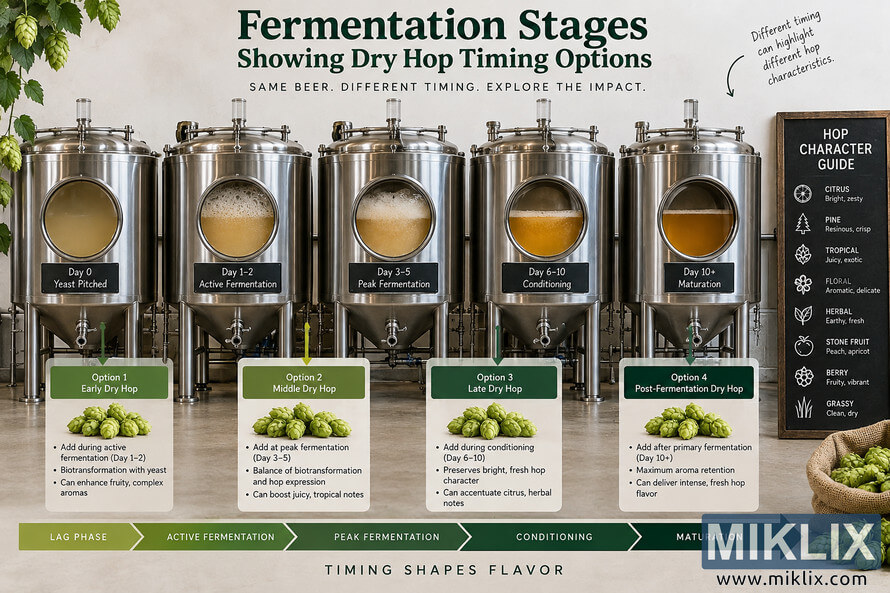
Click or tap the image for more information and higher resolutions.
Hop Creep Management
Hop creep describes renewed fermentation activity caused by enzymes in dry hops. These enzymes break down complex sugars that yeast previously could not ferment. The result includes additional alcohol, carbonation, and potentially over-carbonated bottles.
Mount Rainier hops contain diastatic enzymes like all hop varieties. Heavy dry hopping can trigger hop creep in finished beers. Monitor gravity readings after dry hop additions. Watch for unexpected gravity drops that indicate renewed fermentation.
Prevent hop creep issues by raising beer temperature during dry hopping. Warm the beer to sixty-five to seventy degrees Fahrenheit during dry hop contact. This temperature allows any hop creep fermentation to complete before packaging. Cold crash after removing dry hops to drop yeast and hop material.
Account for hop creep in your carbonation calculations. If gravity drops during dry hopping, the beer has produced additional CO2. Reduce priming sugar quantities for bottle conditioning. Adjust keg carbonation pressures based on current dissolved CO2 levels.
Advanced Technique Benefits
- Enhanced aroma complexity and intensity
- Smoother bitterness perception
- Unique flavor profiles unavailable through basic methods
- Better hop utilization and efficiency
- Greater control over final beer characteristics
- Ability to create distinctive house styles
Advanced Technique Challenges
- Requires precise temperature control equipment
- More complex brew day procedures
- Increased risk of hop creep and carbonation issues
- Higher hop usage increasing ingredient costs
- Steeper learning curve for beginners
- Additional time investment in brewing process
Experimental Hop Processing Methods
Innovative brewers experiment with alternative hop processing approaches. These methods aim to extract different characteristics from Mount Rainier hops. While not necessary for great beer, experimentation drives brewing knowledge forward.
Hop tea preparation involves steeping hops in hot water separately from the main boil. Brew a concentrated hop tea using one to two ounces in one quart of water at one hundred seventy degrees. Steep for fifteen to twenty minutes. Add the strained tea at packaging time for pure hop aroma without additional bitterness.
Hop water creates non-alcoholic hop beverages or can be used for blending. Steep Mount Rainier hops in cold water overnight. The cold extraction pulls different compounds than hot methods. Use hop water as a base for hop-infused cocktails or blend small amounts into finished beer.
Hop extracts and oils offer intense aroma potential but require careful handling. Commercial hop extracts provide concentrated alpha acids or aromatic oils. Use these products sparingly as they deliver extreme potency. Start with minimal quantities measured in drops rather than ounces.
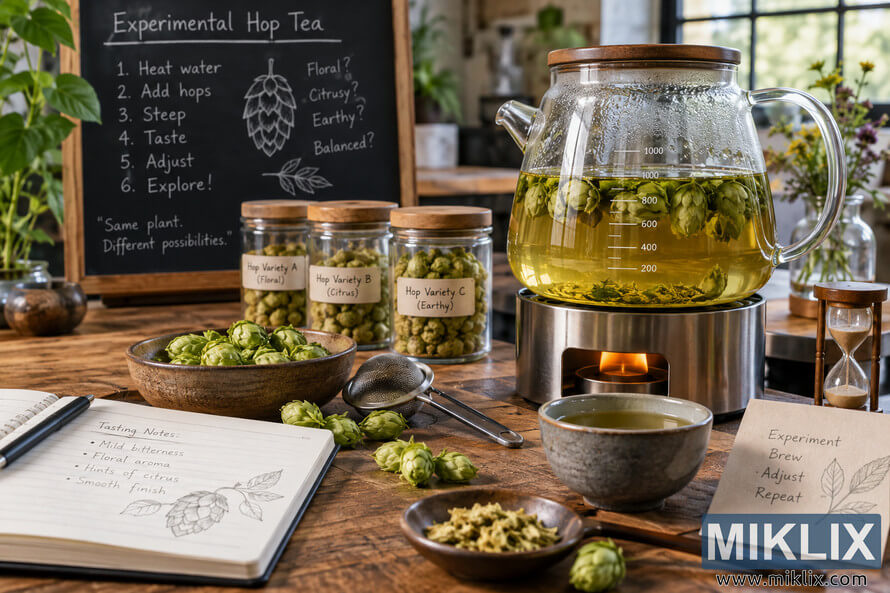
Click or tap the image for more information and higher resolutions.
Recipe Formulation and Food Pairing with Mount Rainier Beers
Creating successful recipes requires understanding how Mount Rainier hops interact with other ingredients. The variety works across numerous styles when properly formulated. Thoughtful recipe design showcases hop character while maintaining overall beer balance.
Malt Selection for Mount Rainier Beers
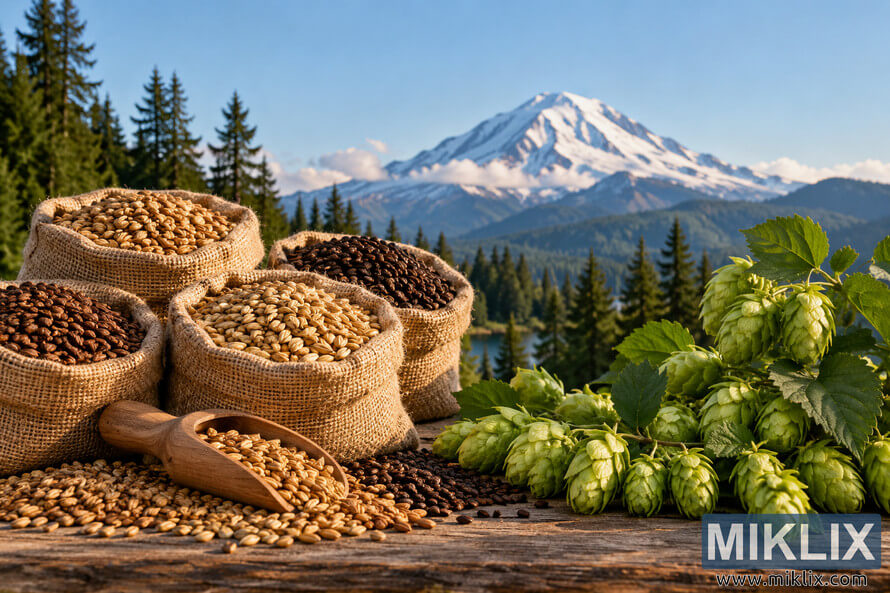
Base malt selection provides the foundation for hop character expression. Light-colored base malts allow Mount Rainier subtleties to shine through. Pilsner malt creates the cleanest backdrop for noble hop characteristics. American two-row offers slightly more body while maintaining neutral flavor.
Pale ale malt adds gentle biscuit notes that complement Mount Rainier floral character. The slightly higher color and flavor work well in American pale ales and amber beers. Vienna malt contributes soft bread-crust flavors that pair nicely with the spicy hop elements.
Specialty malt additions require restraint when showcasing hops. Limit crystal malts to ten percent or less of the grain bill. Higher percentages create excessive sweetness that competes with hop character. Choose lighter crystal malts like Crystal twenty or forty that add body without heavy caramel flavors.
Click or tap the image for more information and higher resolutions.
Munich malt provides malty backbone without excessive sweetness. Use five to fifteen percent Munich in recipes where you want more malt presence. The combination of Munich malt and Mount Rainier creates excellent German-style lagers and märzen beers.
Wheat malt integrates seamlessly in appropriate beer styles. Ten to fifty percent wheat malt suits American wheat beers and hefeweizens. The protein contribution from wheat enhances head retention. The light flavor allows Mount Rainier hop character to remain prominent.

Click or tap the image for more information and higher resolutions.
Yeast Strain Recommendations
Yeast selection dramatically impacts how Mount Rainier character presents in finished beer. Clean-fermenting strains highlight hop subtleties. Expressive yeasts add complexity but can overshadow delicate hop notes.
American ale yeasts like Safale US-05 or Wyeast 1056 provide neutral backgrounds. These workhorses ferment clean and fast while allowing hop character to dominate. Use these strains when you want Mount Rainier as the star of the show.
German lager yeasts suit Mount Rainier noble character perfectly. Wyeast 2124 Bohemian Lager or Saflager W-34/70 create the crisp profiles traditional European styles demand. The clean fermentation emphasizes hop refinement and subtle complexity.
Wheat beer yeasts add appropriate character for hefeweizen styles. Wyeast 3068 or White Labs WLP300 produce the classic banana and clove esters. Balance yeast expression with hop character by using modest Mount Rainier quantities that support rather than compete with yeast flavors.
American Pale Ale Recipe
A straightforward pale ale that showcases Mount Rainier as the primary hop variety.
- Ten pounds pale ale malt
- Twelve ounces Crystal forty malt
- Eight ounces Munich malt
- One ounce Mount Rainier sixty minutes
- Half ounce Mount Rainier fifteen minutes
- One ounce Mount Rainier five minutes
- One and a half ounces Mount Rainier dry hop
- US-05 or equivalent yeast
German Pilsner Recipe
Traditional pilsner highlighting noble hop character with American efficiency.
- Ten pounds Pilsner malt
- One pound Munich malt
- One ounce Mount Rainier first wort
- Half ounce Mount Rainier twenty minutes
- Half ounce Mount Rainier five minutes
- Half ounce Mount Rainier whirlpool
- German lager yeast
American Wheat Beer Recipe
Refreshing wheat beer with subtle hop presence supporting wheat character.
- Five pounds pale ale malt
- Five pounds wheat malt
- Eight ounces Crystal ten malt
- Three quarters ounce Mount Rainier sixty minutes
- Half ounce Mount Rainier ten minutes
- Half ounce Mount Rainier dry hop
- American ale yeast
English Brown Ale Recipe
Malt-forward brown ale where Mount Rainier provides supporting hop character.
- Nine pounds Maris Otter malt
- One pound Crystal sixty malt
- Eight ounces Chocolate malt
- One ounce Mount Rainier sixty minutes
- Half ounce Mount Rainier twenty minutes
- English ale yeast
Water Profile Adjustments
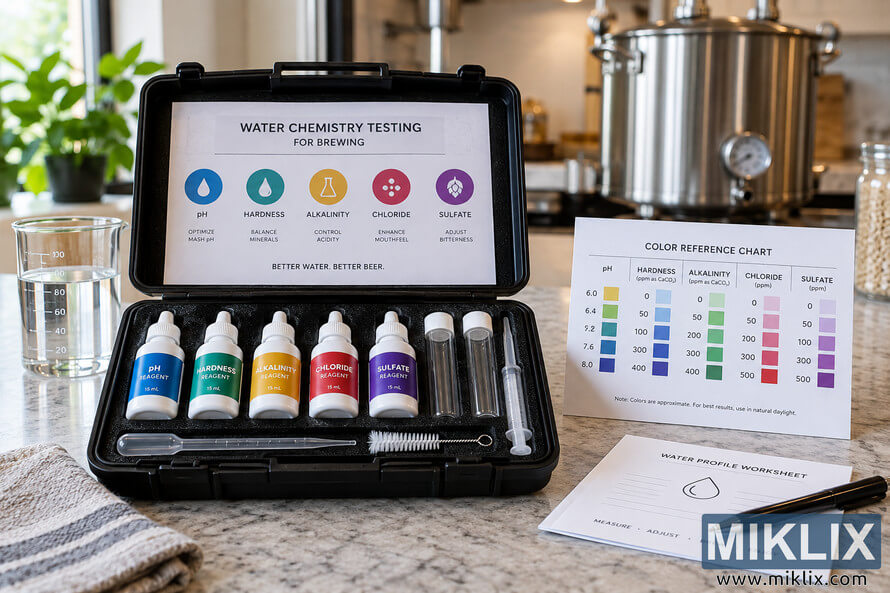
Water chemistry adjustments optimize Mount Rainier performance in specific beer styles. Build water profiles that emphasize the characteristics you want to showcase. Different mineral balances create distinctly different results from the same hop variety.
Pilsner water profiles suit Mount Rainier well in lager applications. Target low mineral content with sulfate below fifty parts per million. Chloride around fifty parts per million supports malt character without suppressing hops. This soft water profile creates the delicate balance pilsners require.
Pale ale water emphasizes hop character through elevated sulfate. Increase sulfate to one hundred fifty to two hundred fifty parts per million. Keep chloride around seventy-five to one hundred parts per million. The two-to-one sulfate to chloride ratio accentuates hop bitterness and aromatics.
Balanced water suits brown ales and darker beers. Maintain roughly equal sulfate and chloride levels around one hundred parts per million each. This balance allows both malt and hop character to express without one dominating. The neutral profile works for many beer styles.
Click or tap the image for more information and higher resolutions.
Food Pairing Recommendations
Beers brewed with Mount Rainier hops pair wonderfully with various cuisines. The floral and spice notes complement foods that traditional noble hop beers match. Understanding pairing principles helps you recommend appropriate combinations.
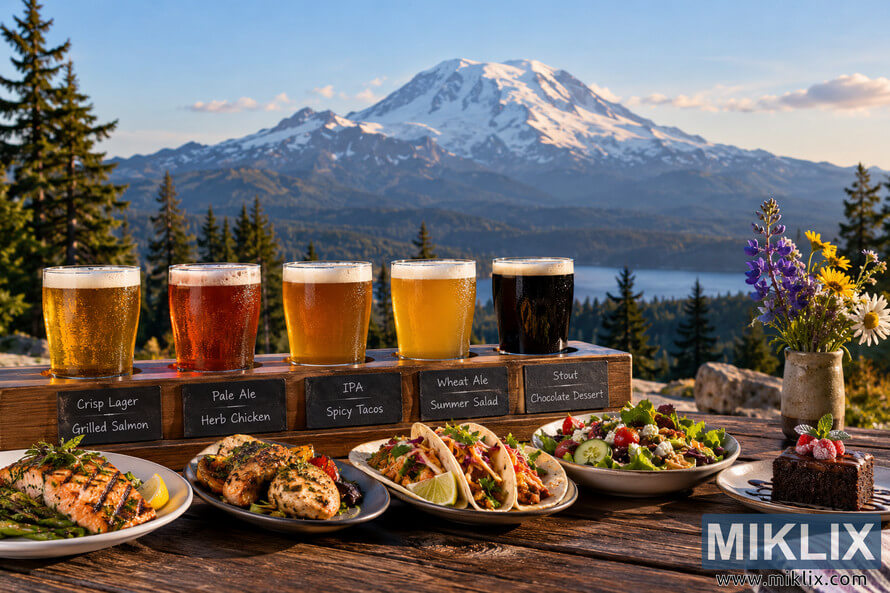
Mount Rainier pale ales pair excellently with grilled chicken and lighter proteins. The citrus notes brighten poultry dishes while the moderate bitterness cuts through mild seasonings. Try pale ales with herb-roasted chicken or grilled fish tacos.
German-style lagers brewed with Mount Rainier complement traditional European fare. Serve pilsners with schnitzel, bratwurst, or soft pretzels. The crisp character and refined bitterness refresh the palate between bites of rich foods.
Wheat beers work beautifully with salads and light summer dishes. The refreshing quality suits warm weather dining. Pair American wheat beers with citrus-dressed salads, seafood, or fresh goat cheese.
Brown ales brewed with Mount Rainier match hearty comfort foods. The malt and hop balance handles roasted vegetables, meat pies, or aged cheddar cheese. The moderate alcohol and hop presence avoid overwhelming food flavors.
Click or tap the image for more information and higher resolutions.
What makes Mount Rainier hops different from other noble hop varieties?
Mount Rainier hops combine traditional European noble hop character with American breeding advantages. While similar to German Hallertau varieties, Mount Rainier offers more pronounced citrus notes and subtle licorice undertones. The variety also provides better yield and disease resistance for growers while maintaining the refined bitterness and floral character that defines noble hops.
How long can I store Mount Rainier hops in my freezer?
Properly stored Mount Rainier hops maintain excellent quality for two years or longer in freezer storage at zero degrees Fahrenheit. Use oxygen barrier packaging like vacuum-sealed bags or original foil packaging. Avoid temperature fluctuations and minimize air exposure when accessing stored hops. Always smell test hops before use to verify freshness regardless of storage duration.
Can I substitute Mount Rainier hops for other varieties in existing recipes?
Mount Rainier works as an excellent substitute for noble hop varieties like Hallertau Mittelfrüh, Czech Saaz, or Tettnang in most recipes. Adjust quantities based on alpha acids differences between varieties. The flavor profile aligns well with traditional European hops while offering cost advantages. For American hop varieties like Cascade or Centennial, Mount Rainier provides different character but can work in styles where floral and spice notes suit the beer.
What is the ideal dry hop quantity for Mount Rainier in a five-gallon pale ale?
Most brewers find success with one to two ounces of Mount Rainier for dry hopping five-gallon pale ale batches. Start with one and a half ounces for moderate aroma presence. Increase to two or three ounces if you prefer more intense hop character. Contact time of three to five days at fermentation temperature provides optimal extraction without grassy flavors.
Do I need to adjust my water chemistry when brewing with Mount Rainier hops?
Water chemistry adjustments depend on your beer style rather than the specific hop variety. For hop-forward beers like pale ales, increase sulfate to one hundred fifty to two hundred fifty parts per million to emphasize hop character. For traditional lagers and pilsners where Mount Rainier excels, maintain softer water profiles with sulfate below seventy-five parts per million. The refined bitterness of Mount Rainier works well across various water profiles.
What temperature should I use for hop stand additions with Mount Rainier?
Hop stand temperature between one hundred sixty and one hundred eighty degrees Fahrenheit works best for Mount Rainier. Lower temperatures around one hundred sixty degrees emphasize aroma extraction while minimizing additional bitterness. Higher temperatures near one hundred eighty degrees extract more bitterness along with aroma compounds. Most brewers prefer one hundred seventy degrees as a balanced middle ground for twenty to thirty minute hop stands.
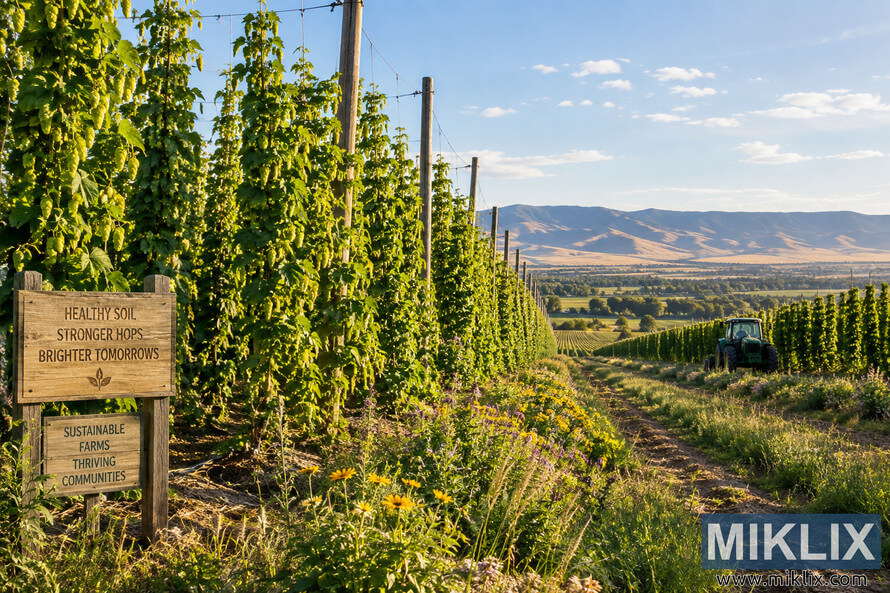
Sustainability and the Future of Mount Rainier Hops
The brewing industry increasingly focuses on sustainable agricultural practices. Mount Rainier hops benefit from modern growing techniques that reduce environmental impact. Understanding these practices helps you make informed purchasing decisions aligned with your values.
Sustainable Hop Farming Practices
Yakima Chief Hops implements numerous sustainability initiatives across their growing network. Water conservation programs reduce irrigation needs while maintaining crop quality. Drip irrigation and soil moisture monitoring optimize water usage efficiency.
Integrated pest management reduces chemical pesticide applications. Beneficial insects and targeted treatments replace broad-spectrum pesticides. These practices protect local ecosystems while producing cleaner hops for brewing.
Renewable energy investments power processing facilities. Solar panels and wind energy reduce the carbon footprint of hop processing and cold storage. These efforts make Mount Rainier a more environmentally responsible choice.
Supporting Hop Research and Development
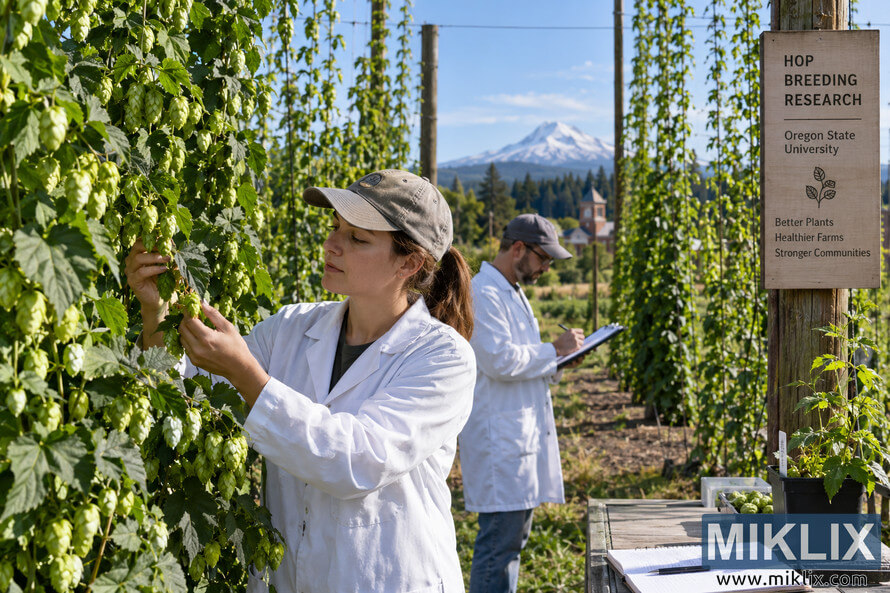
Oregon State University continues breeding programs that produced Mount Rainier. Supporting suppliers who contribute to research funding helps develop future hop varieties. Your purchasing decisions indirectly fund agricultural innovation.
Click or tap the image for more information and higher resolutions.
New disease-resistant varieties reduce pesticide requirements industry-wide. Improved yields make hop farming more economically sustainable. Climate-adapted varieties ensure hop availability as growing conditions change. Your ingredient purchases support this vital work.
The Economic Impact of Hop Choices
Choosing American-grown Mount Rainier hops supports domestic agriculture. The Yakima Valley hop industry employs thousands of workers during harvest season. Your purchases contribute to regional economic stability.
Local economies benefit when brewers source ingredients domestically. Transportation costs decrease with shorter supply chains. The environmental impact of shipping reduces when using regional ingredients.
Consider the full cost of ingredients beyond just price per ounce. Imported hops carry environmental costs from international shipping. Supporting sustainable domestic producers aligns purchasing with environmental values.
Click or tap the image for more information and higher resolutions.
Conclusion
Mount Rainier hops offer homebrewers an exceptional combination of quality, versatility, and value. The variety noble character makes it suitable for traditional European styles. The American breeding provides agricultural advantages that keep prices competitive. Understanding how to use Mount Rainier effectively expands your brewing capabilities significantly.
This comprehensive guide has explored every aspect of brewing with Mount Rainier hops. You now understand the flavor aroma profile that makes this variety special. You know which beer styles showcase Mount Rainier best. You have learned the brewing techniques that extract maximum character from each addition.
The practical tips for homebrewers help you avoid common mistakes while developing your own approach. Storage and handling knowledge protects your ingredient investment. Advanced techniques provide pathways for continued exploration as your skills grow.
Start your Mount Rainier journey with simple applications. Brew a straightforward pale ale using the variety throughout the hop schedule. Taste the results carefully and take detailed notes. Each batch teaches you more about how these hops perform in your brewing system.
Experiment with different beer styles as you gain confidence. Try a crisp lager that highlights noble character. Brew a wheat beer that balances yeast and hop flavors. Explore darker styles where Mount Rainier provides supporting bitterness.
Join the broader brewing community to share experiences and learn from others. Your contributions help collective knowledge grow. The collaborative spirit of homebrewing makes the hobby rewarding beyond just the beer itself.
Mount Rainier hops reward brewers who take time to understand their unique characteristics. The variety deserves a place in every serious homebrewer ingredient inventory. Your journey with these hops has just begun. Each batch you brew deepens your appreciation for what makes Mount Rainier special.
Click or tap the image for more information and higher resolutions.
Further Reading
If you enjoyed this post, you may also like these suggestions: