
Image: Mount Rainier Hops vs. Noble Hop Varieties: Side-by-Side Comparison
Published: October 11, 2026 at 7:07:47 PM UTC
Explore a visual side-by-side comparison of Mount Rainier hops and noble Hallertau, Tettnang, Saaz, and Spalt hops, including origins, aromas, alpha acids, brewing uses, and character.
Available versions of this image
The image files available for download below are less compressed and higher resolution - and as a result of that, higher quality - than the images embedded in articles and pages on this website, which are more optimized for file size in order to reduce bandwidth consumption.
Regular size (1,536 x 1,024)
Large size (3,072 x 2,048)
Very large size (4,608 x 3,072)
Extra large size (6,144 x 4,096)
Comically large size (1,048,576 x 699,051)
- Still uploading... ;-)
Image description
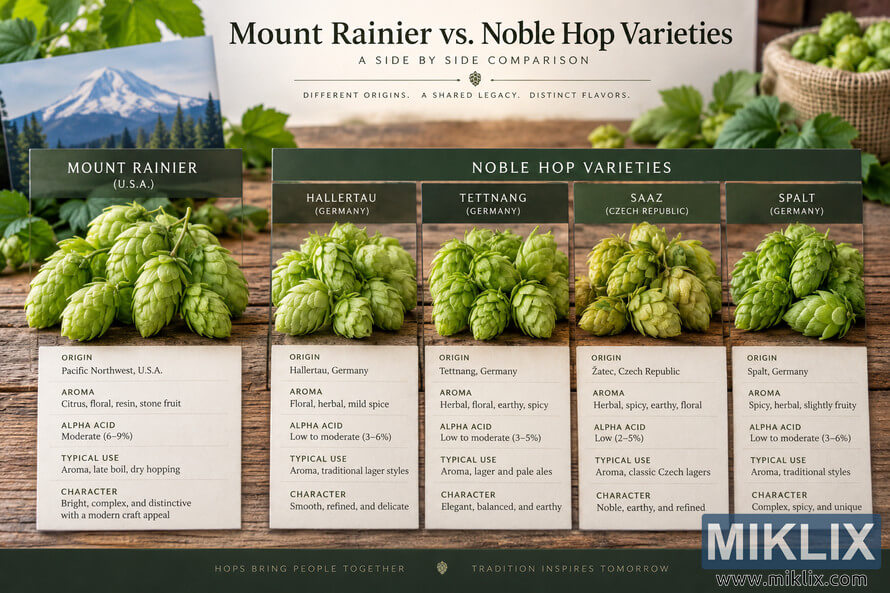
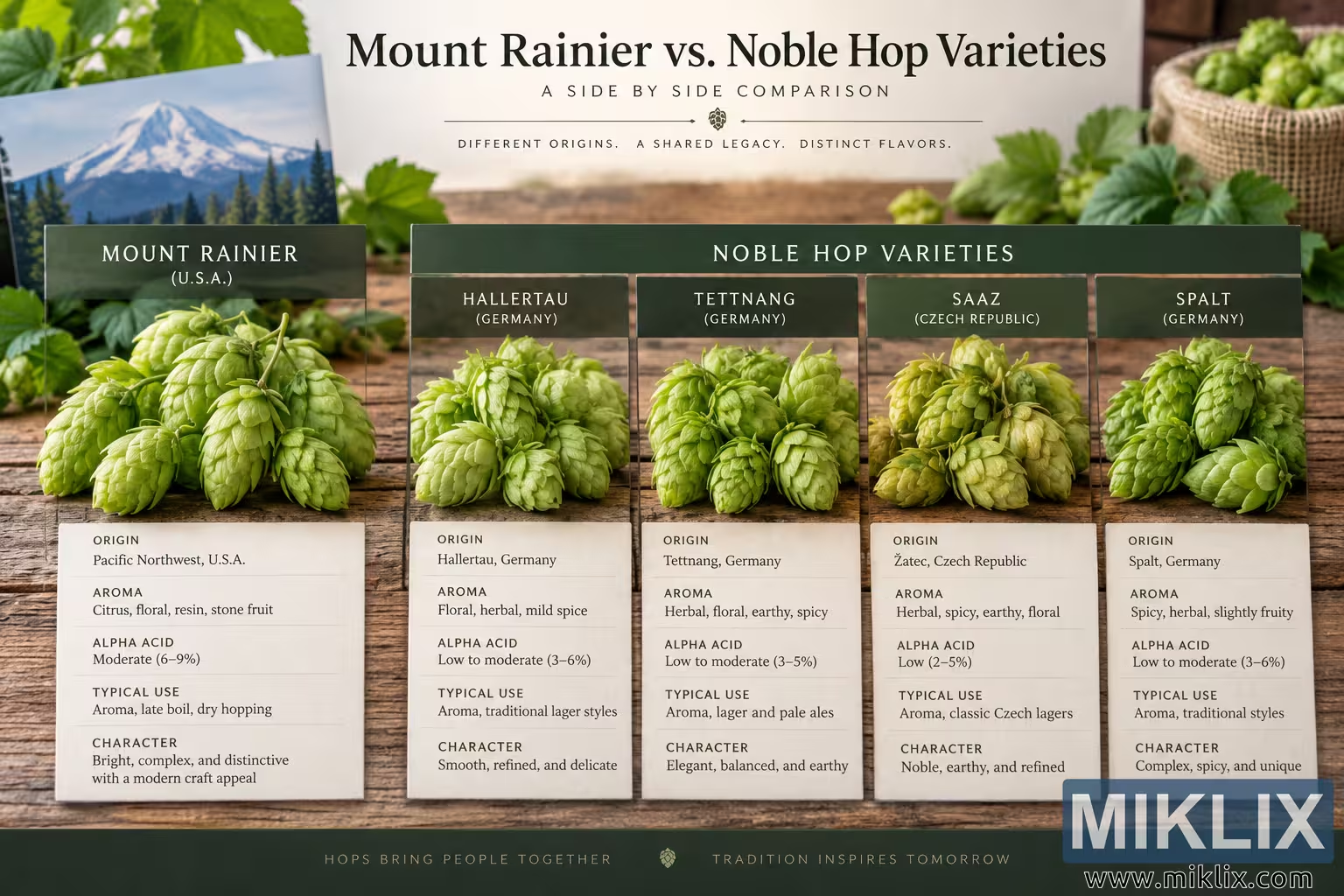
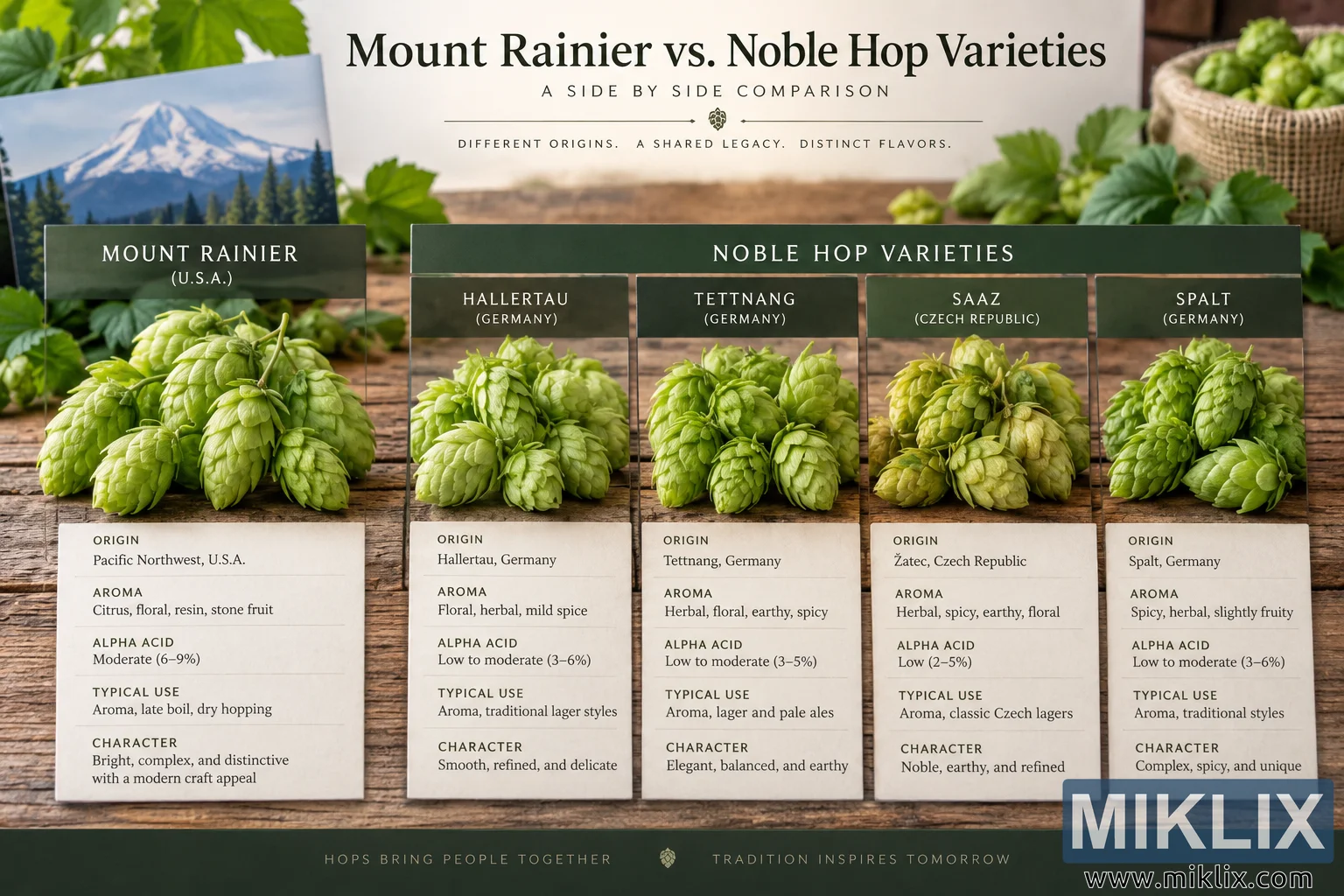
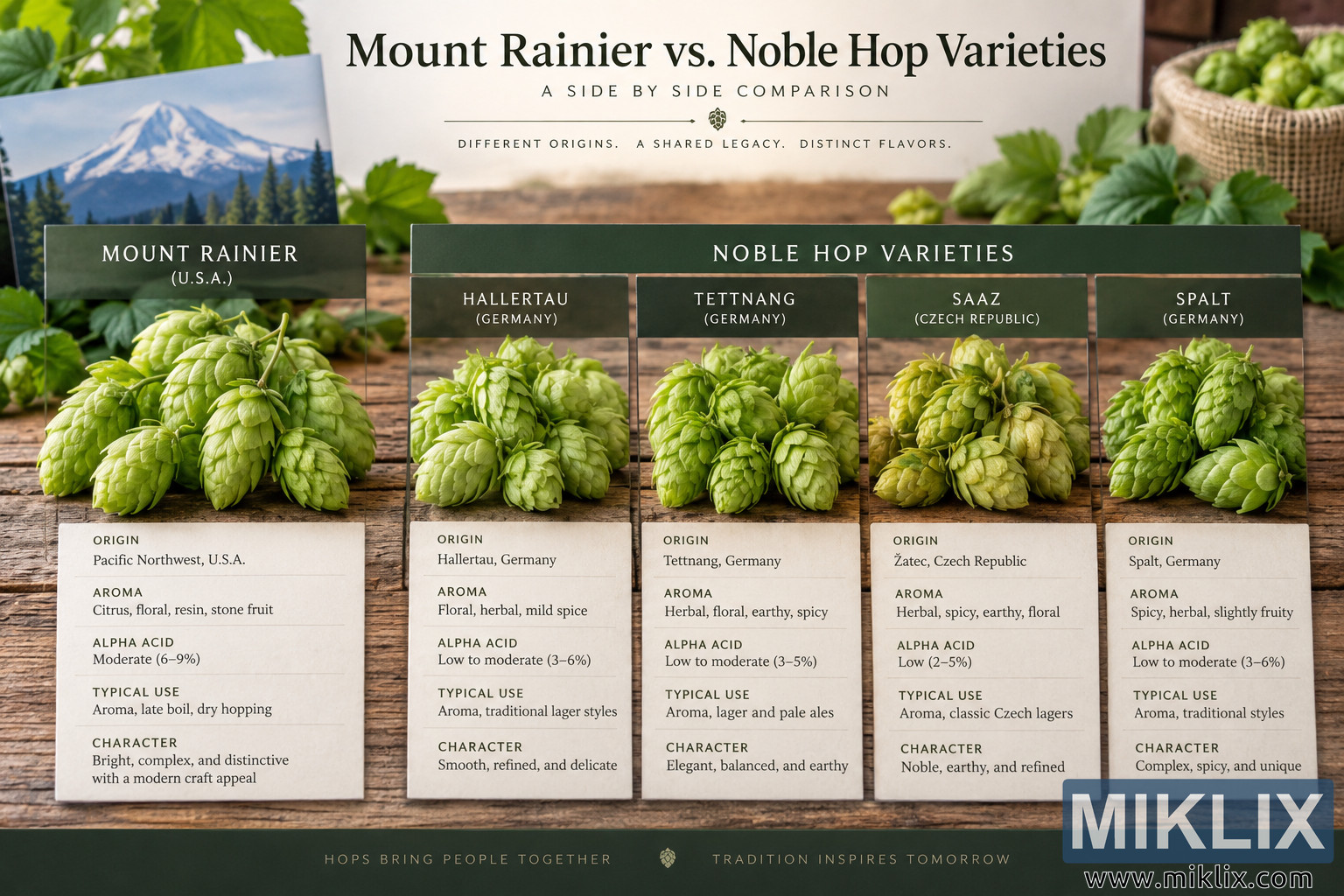
A wide, landscape-oriented editorial infographic photograph presents a side-by-side comparison of Mount Rainier hops from the United States and four traditional noble hop varieties from Europe. The composition is arranged on a weathered wooden tabletop and combines realistic hop photography with clean, structured information panels. The overall visual style is natural, agricultural, warm, and refined, using deep forest greens, fresh hop-cone greens, muted cream paper, earthy brown wood, and restrained dark typography. No commercial branding, product logos, packaging, or recognizable brand marks appear anywhere in the image.
Across the upper center of the image, a large cream-colored header panel displays the title “Mount Rainier vs. Noble Hop Varieties” in an elegant dark serif typeface. Immediately underneath is the subtitle “A SIDE BY SIDE COMPARISON,” set in widely spaced uppercase letters. A thin decorative horizontal rule and a small hop-cone emblem separate this subtitle from another centered line reading “DIFFERENT ORIGINS. A SHARED LEGACY. DISTINCT FLAVORS.” The header has the visual character of a premium educational poster or brewing reference guide.
The background establishes the agricultural theme. Fresh green hop leaves and vines frame the scene along the top and sides, while a loosely woven natural-fiber basket filled with green hop cones appears in the upper-right corner. In the upper-left area, behind the Mount Rainier section, a small scenic photograph or printed card depicts a snow-covered mountain rising above a dark evergreen forest beneath a pale blue sky. This landscape image visually reinforces the Pacific Northwest origin of the Mount Rainier variety without displaying a brand or commercial identity.
Five primary comparison columns dominate the center and lower portion of the composition. The Mount Rainier column is larger and positioned at the far left, visually separating the American hop from the four noble varieties grouped together on the right. A dark green translucent heading panel identifies “MOUNT RAINIER (U.S.A.).” Below it is a generous pile of fresh, realistic green hop cones, with overlapping papery bracts and subtle yellow-green highlights. Beneath the hops, a cream information card lists several characteristics. Its origin is described as the Pacific Northwest, U.S.A. The aroma profile is given as citrus, floral, resin, and stone fruit. Alpha acid is presented as moderate, approximately 6–9 percent. Typical uses include aroma additions, late-boil additions, and dry hopping. The character is summarized as bright, complex, distinctive, and possessing a modern craft appeal.
The remaining four columns sit beneath a single dark green banner labeled “NOBLE HOP VARIETIES.” Each column follows the same visual system: a dark green variety heading, a photographically rendered pile of hop cones, and a cream reference card containing origin, aroma, alpha-acid range, typical use, and character. The consistent format makes the image easy to scan horizontally and encourages direct visual comparison.
The first noble variety is Hallertau from Germany. Its hop cones are pale to medium green and appear soft, leafy, and freshly harvested. The information panel identifies Hallertau, Germany as its origin and describes its aroma as floral, herbal, and mildly spicy. Its alpha-acid level is shown as low to moderate, approximately 3–6 percent. The suggested use emphasizes aroma and traditional lager styles, while its overall character is described as smooth, refined, and delicate.
Next is Tettnang, also from Germany. Its hop cones are arranged in a compact mound and have a lively medium-green appearance. The origin is listed as Tettnang, Germany. The aroma is characterized as herbal, floral, earthy, and spicy. Alpha acid is indicated as low to moderate, approximately 3–5 percent. Typical applications include aroma additions, lagers, and pale ales. Its character is summarized as elegant, balanced, and earthy.
The fourth column presents Saaz from the Czech Republic. These hop cones are noticeably more yellow-green or olive-toned than some of the neighboring varieties, creating a subtle visual distinction. The origin is identified as Žatec in the Czech Republic. Its aroma is described as herbal, spicy, earthy, and floral. Alpha acid is shown as low, approximately 2–5 percent. The panel associates Saaz with aroma use and classic Czech lagers, describing its overall character as noble, earthy, and refined.
At the far right is Spalt from Germany. A dense cluster of fresh green hop cones fills the photographic portion of the column. The origin is listed as Spalt, Germany. Its aroma profile is described as spicy, herbal, and slightly fruity. Alpha acid is presented as low to moderate, approximately 3–6 percent. Typical use centers on aroma and traditional beer styles, while the character is described as complex, spicy, and unique.
The wooden tabletop remains visible between and around the cards, giving the structured infographic an organic, tactile quality. The hops appear freshly picked rather than processed into pellets, helping emphasize their botanical differences and shared agricultural heritage. Shallow depth-of-field effects in the surrounding foliage contrast with the relatively crisp central comparison panels, directing attention toward the five hop varieties and their attributes.
A dark forest-green footer spans the entire bottom edge of the image. Widely spaced gold or muted tan lettering reads “HOPS BRING PEOPLE TOGETHER” on the left and “TRADITION INSPIRES TOMORROW” on the right, with a small stylized hop-cone symbol positioned between the two statements. This footer reinforces the image’s theme of comparing an American hop with established European noble varieties while acknowledging both brewing tradition and contemporary hop character.
Overall, the image functions as a visually polished educational comparison chart for brewers, beer enthusiasts, agricultural audiences, or readers learning about hop varieties. Mount Rainier is deliberately given a larger standalone presentation, while Hallertau, Tettnang, Saaz, and Spalt are visually grouped under the noble-hop category. The balanced landscape layout, realistic botanical imagery, rustic wood surface, restrained typography, and consistent information cards create the impression of a premium brewing reference poster photographed in a natural hop-growing environment.
The image is related to: Hops in Beer Brewing: Mount Rainier