
Image: Various Beer Styles with Mount Rainier Hops in a Mountain Setting
Published: October 11, 2026 at 7:07:47 PM UTC
Photorealistic landscape showing six varied beer styles in glassware with fresh green hops and grain on a rustic table, framed by a snow-covered Mount Rainier-inspired mountain landscape.
Available versions of this image
The image files available for download below are less compressed and higher resolution - and as a result of that, higher quality - than the images embedded in articles and pages on this website, which are more optimized for file size in order to reduce bandwidth consumption.
Regular size (1,536 x 1,024)
Large size (3,072 x 2,048)
Very large size (4,608 x 3,072)
Extra large size (6,144 x 4,096)
Comically large size (1,048,576 x 699,051)
- Still uploading... ;-)
Image description
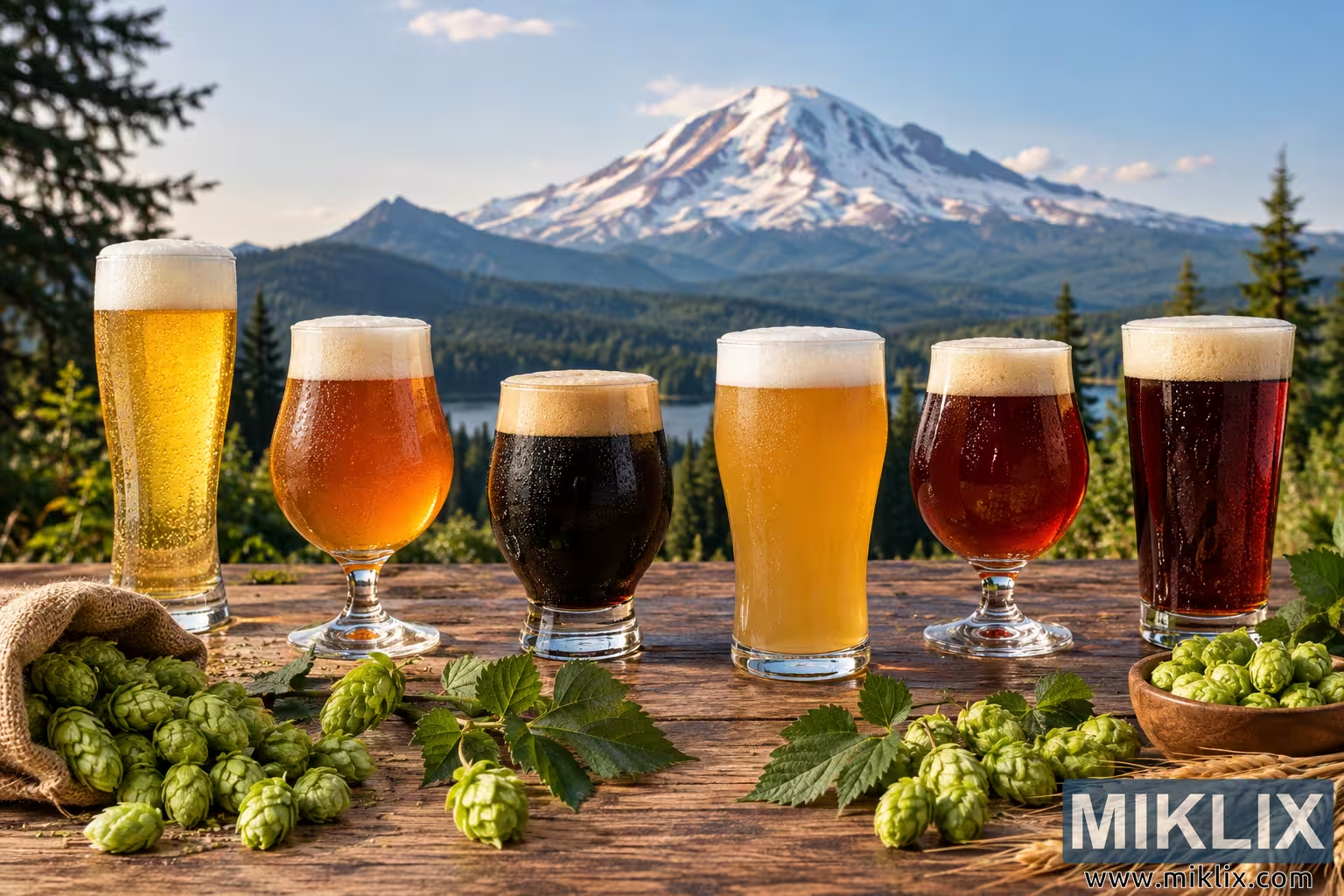
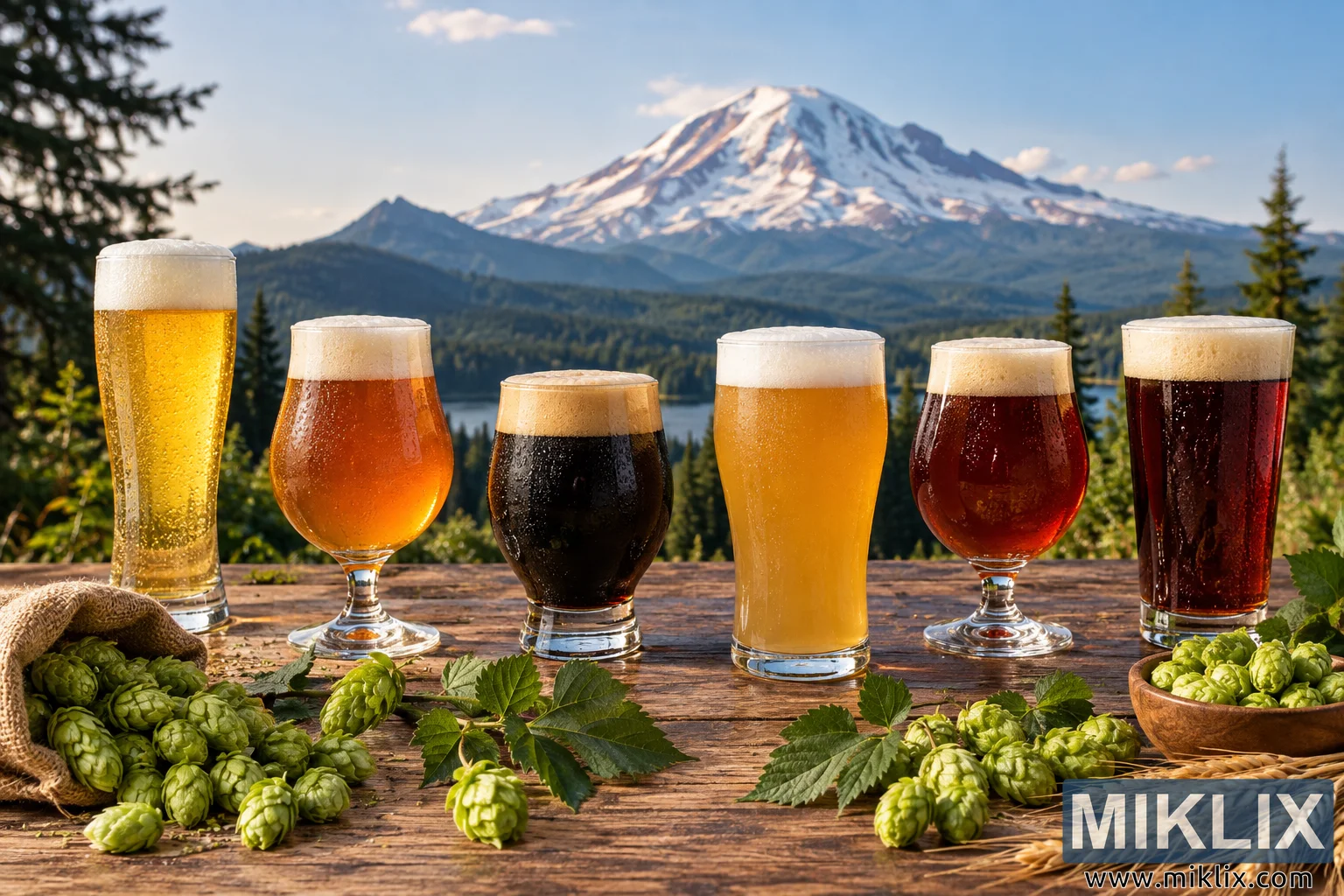
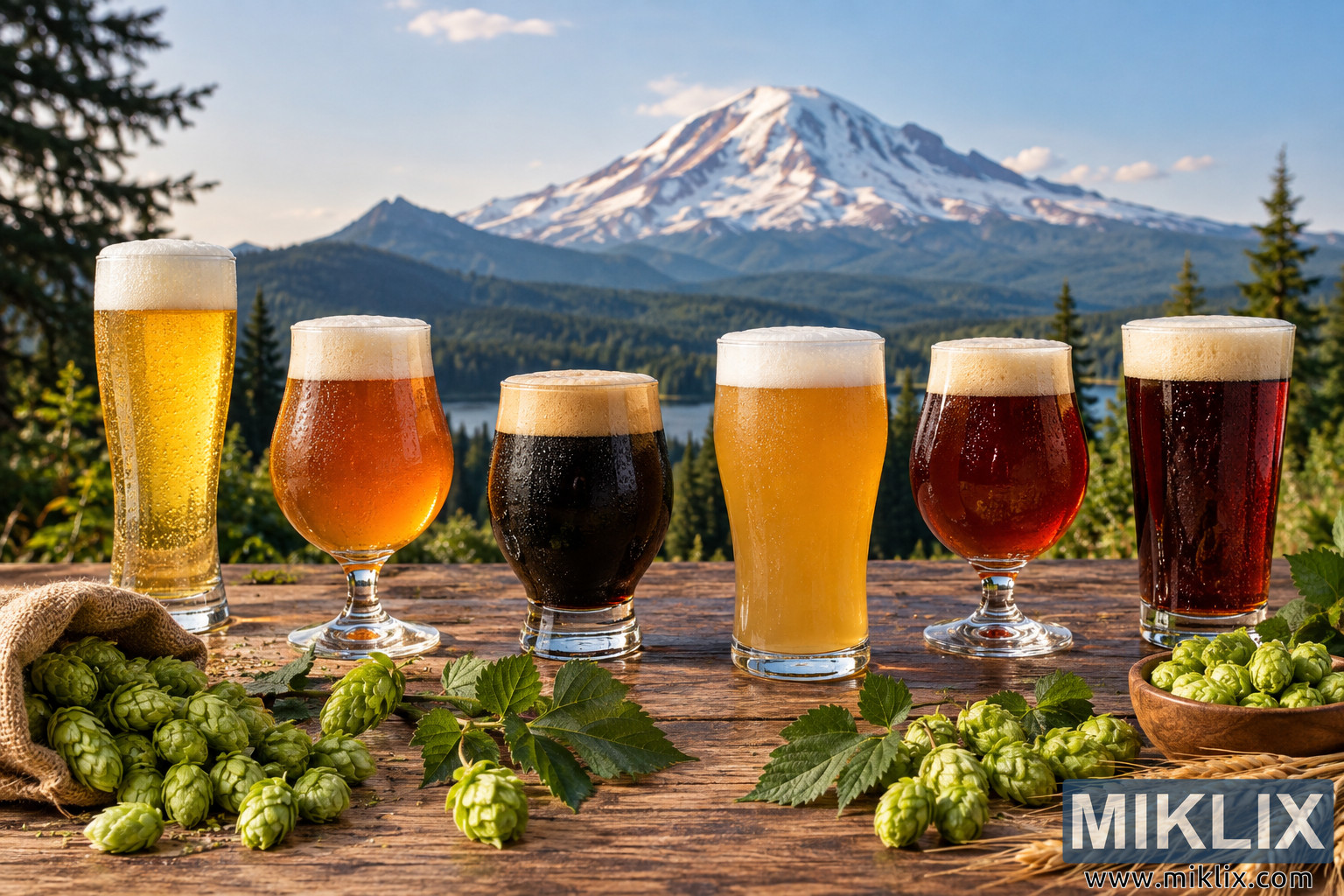
A wide, photorealistic outdoor still-life scene presents six different styles of beer arranged across a rustic, weathered wooden table, with fresh green hop cones, hop leaves, and golden grain surrounding the glassware. The composition is set against a spectacular Pacific Northwest-inspired mountain landscape. A massive snow-covered volcanic peak resembling Mount Rainier rises prominently in the center of the background, its broad white summit and rugged slopes illuminated by warm, low-angle sunlight. Darker forested ridges extend outward beneath the mountain, while a calm blue lake is partially visible between dense stands of evergreen trees. The sky above is clear and pale blue, with just a few small, soft white clouds drifting near the mountain. The overall atmosphere suggests a crisp, sunny day in the mountains and connects the beers visually with the agricultural ingredients and landscape associated with their hop character.
The six beers form the main horizontal row across the middle of the image. Each is served in a different style of glass and displays a noticeably different color, clarity, and head, emphasizing the variety of beers that can be produced using hops associated with the Mount Rainier theme. At the far left stands a tall, narrow pilsner-style glass filled with a brilliant, transparent golden beer. Fine carbonation bubbles can be seen rising through the liquid, and a thick cap of creamy white foam rests at the top. Tiny droplets of condensation cover the exterior of the glass, giving it a freshly poured, chilled appearance. Warm sunlight passes through the golden liquid, making this beer one of the brightest elements in the foreground.
Immediately to its right is a rounded, stemmed beer glass containing a clear amber-orange beer. The liquid ranges visually from deep copper near the shaded portions to glowing orange-gold where sunlight penetrates the glass. It is topped with a compact layer of pale foam. The curved glass catches reflections from the landscape and surrounding light, while beads of moisture on its surface add texture and realism. Beside it, near the center-left of the arrangement, is a shorter rounded glass filled with an extremely dark beer. The liquid appears nearly black through most of the vessel, with subtle dark brown highlights near the edges. A dense tan-colored head crowns the beer, creating a strong tonal contrast with the dark body below. This glass suggests a stout, porter, or similarly dark beer style.
The central-right portion of the composition features a tall pint glass containing a hazy golden-yellow beer. Unlike the transparent beer on the far left, this beer has a distinctly opaque, softly glowing appearance. Its cloudy body is illuminated by the warm sunlight, producing shades of yellow, orange, and pale gold. A substantial white foam head sits above the liquid. The simple cylindrical form of the pint glass and the vivid haziness of the beer make it especially prominent in the lineup. To the right of this glass is another stemmed, rounded vessel containing a rich reddish-brown or deep amber beer. Light passing through the liquid creates ruby, mahogany, and copper highlights, particularly around the lower and outer edges of the glass. A creamy beige foam head covers the surface. At the far right stands a tall straight-sided pint glass filled with the darkest reddish beer in the arrangement. Its body appears deep garnet, brown, and almost black in shaded areas, while transmitted sunlight reveals red highlights around the edges. A thick pale tan head rests on top, and condensation droplets sparkle across the exterior.
Fresh hop cones dominate the lower foreground and reinforce the brewing theme. On the lower left, a coarse burlap sack lies open on the table, spilling numerous bright green hop cones onto the wooden surface. The cones have clearly defined overlapping bracts and a fresh, slightly glossy appearance. More hop cones are scattered individually across the center of the table, accompanied by broad green serrated hop leaves and trailing stems. On the lower right, another generous cluster of hop cones lies beside a small rustic wooden bowl filled with additional hops. The abundance of hops frames the beers without obscuring the glassware and creates a visual connection between raw brewing ingredients and the finished drinks.
Golden heads of barley or brewing grain occupy the lower-right corner, their long awns extending diagonally into the composition. The warm straw color of the grain complements the golden and amber tones of several beers and contrasts with the saturated greens of the hop cones and leaves. The rough texture of the aged wooden tabletop, including visible grain patterns, cracks, scratches, and irregular coloration, contributes to the handcrafted, agricultural character of the scene. The burlap sack, wooden bowl, fresh hops, and grain collectively evoke small-scale brewing and traditional brewing ingredients rather than industrial production.
The lighting is warm and directional, resembling late-afternoon or early-evening sunlight. Highlights illuminate the foam, condensation, glass edges, hops, grain, and wooden table, while gentle shadows create depth beneath the glasses and ingredients. The beers are rendered with convincing differences in transparency and color: bright straw gold, coppery amber, near-black brown, hazy yellow-gold, ruby amber, and deep reddish brown. Their individual glass shapes also help distinguish the styles. Despite the abundance of detail in the foreground, the mountain landscape remains clearly recognizable in the background. A moderate depth-of-field effect keeps the beers and brewing ingredients especially crisp while allowing the distant trees, lake, and mountain to appear slightly softer, producing a natural photographic sense of distance.
The composition contains no visible commercial branding, logos, labels, packaging, or written text. Instead, it communicates the concept entirely through the beer styles, fresh hops, grain, rustic presentation, and mountain setting. The snow-covered peak serves as a strong visual anchor above the beer lineup and provides a geographic and thematic association with Mount Rainier, while the hops in the foreground directly reference the brewing ingredient. Taken together, the scene resembles polished editorial or advertising photography for craft beer ingredients: inviting, outdoors-oriented, richly detailed, and focused on the diversity of beer that can be brewed around a shared hop theme.
The image is related to: Hops in Beer Brewing: Mount Rainier