
Image: Organized Brew Day Hop Additions
Published: October 11, 2026 at 7:07:47 PM UTC
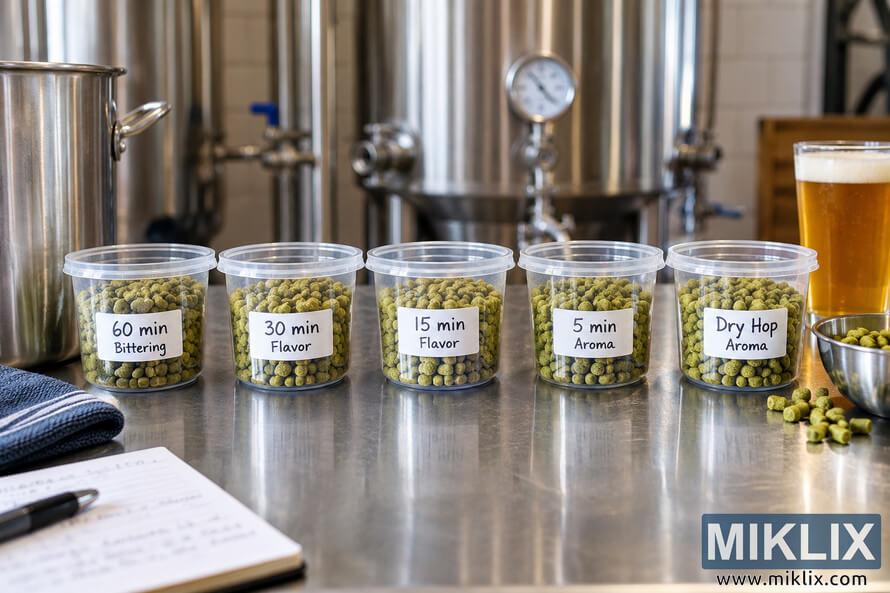
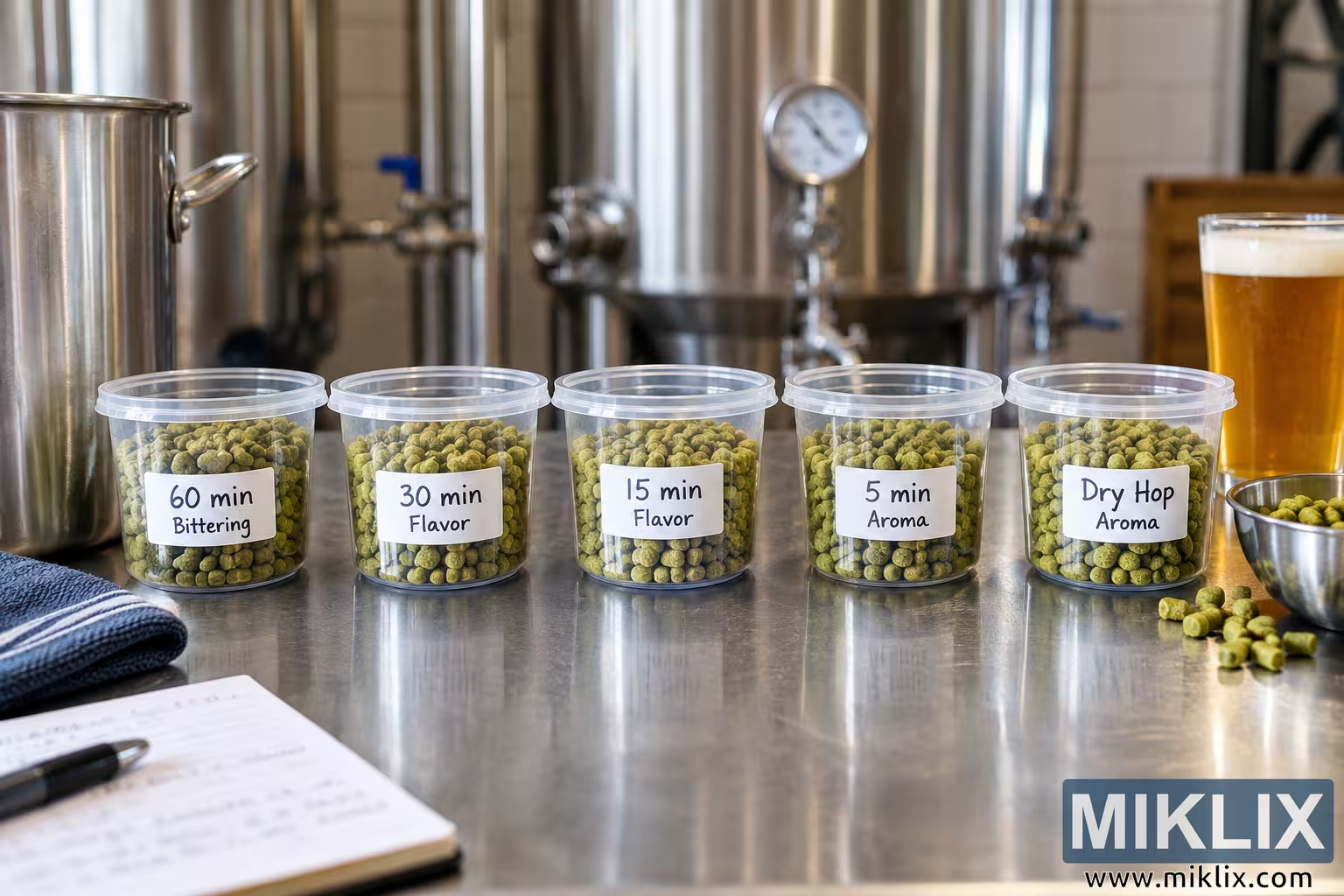
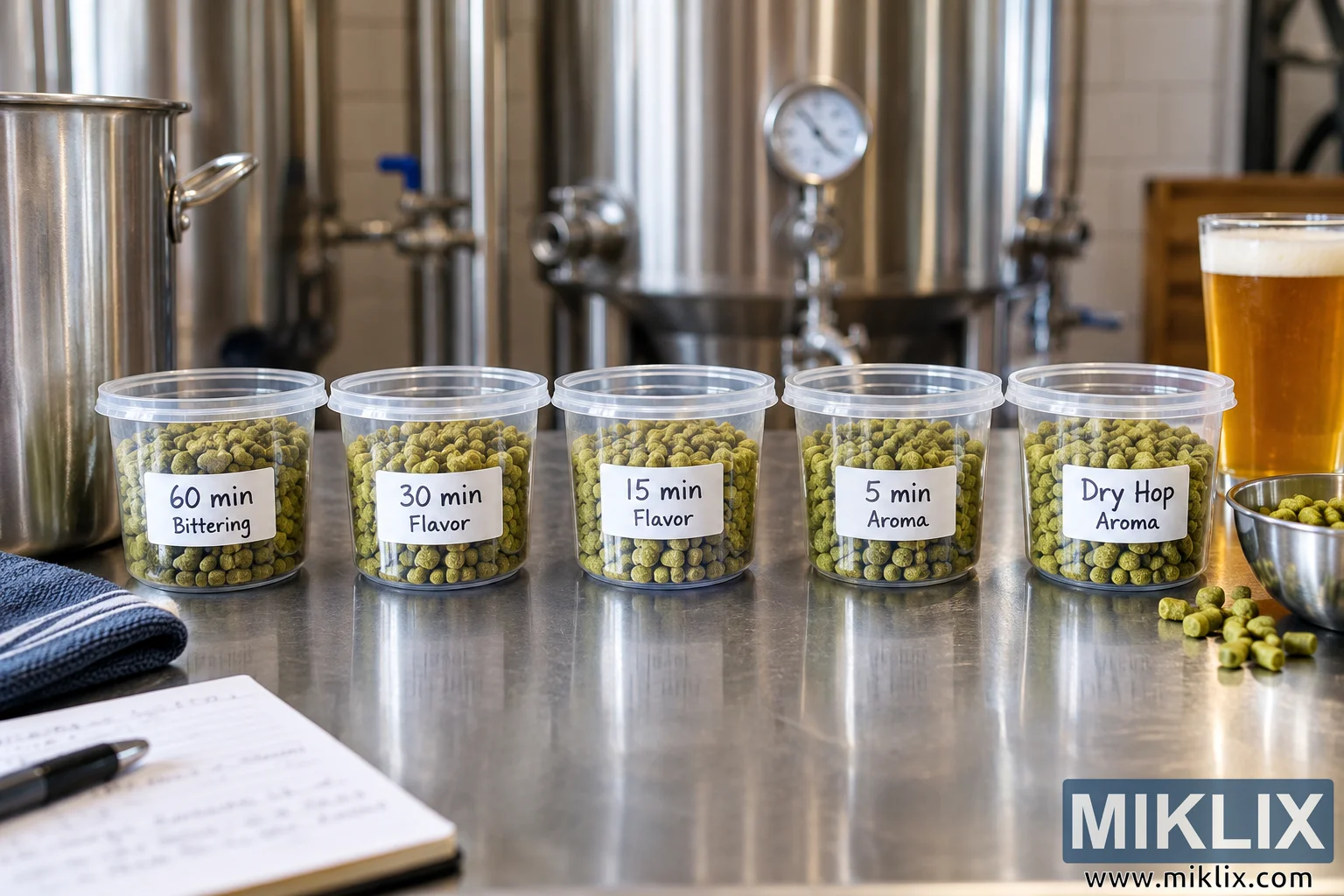
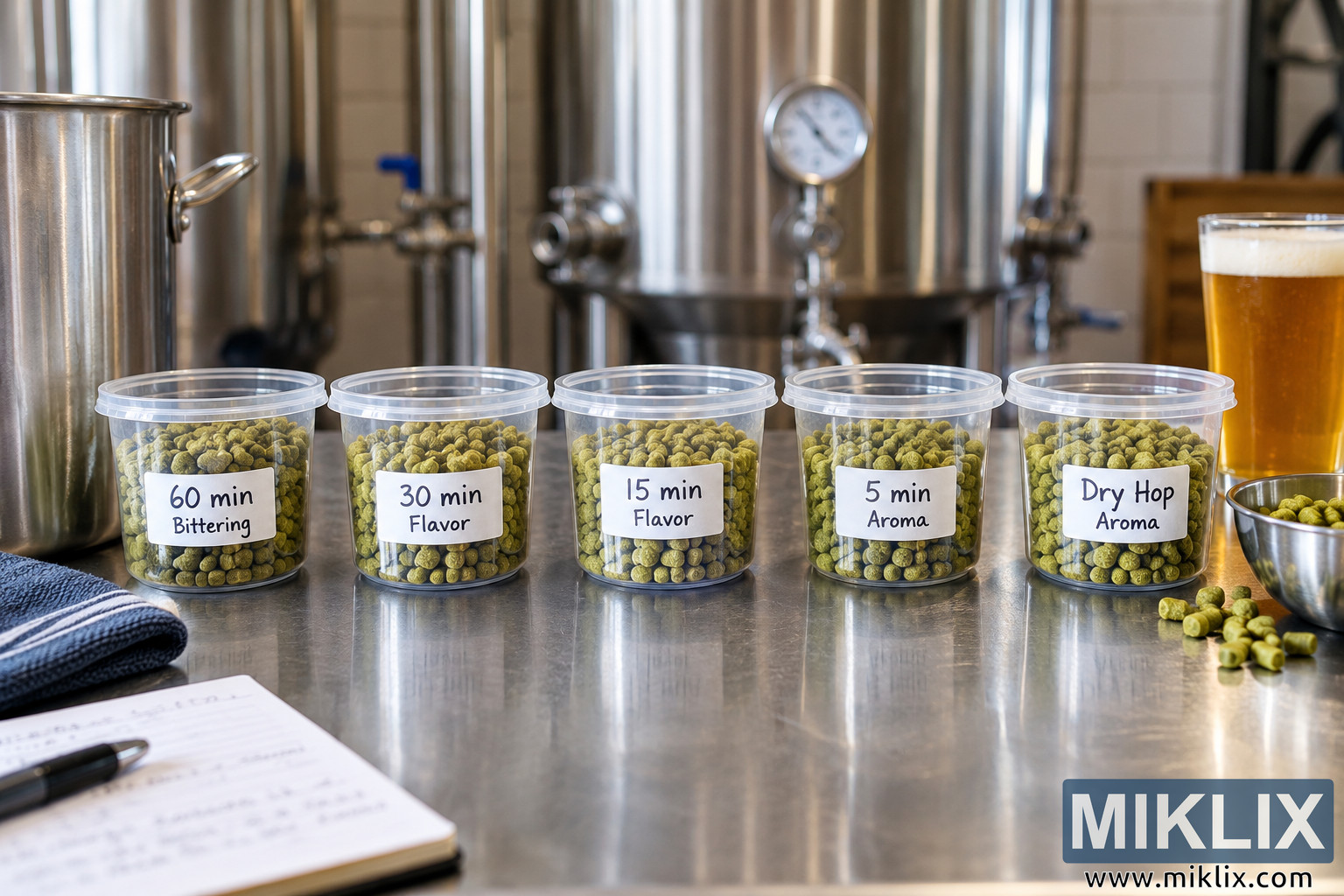
Organized craft beer brew day with five labeled containers of hop pellets prepared for timed bittering, flavor, aroma, and dry-hop additions on a stainless-steel brewery worktable.
Available versions of this image
The image files available for download below are less compressed and higher resolution - and as a result of that, higher quality - than the images embedded in articles and pages on this website, which are more optimized for file size in order to reduce bandwidth consumption.
Regular size (1,536 x 1,024)
Large size (3,072 x 2,048)
Very large size (4,608 x 3,072)
Extra large size (6,144 x 4,096)
Comically large size (1,048,576 x 699,051)
- Still uploading... ;-)
Image description
A crisp, realistic landscape photograph shows an organized set of hop additions prepared for a craft beer brew day. The composition is centered on a clean, reflective stainless-steel work surface in a small professional or enthusiast brewing environment. Across the middle foreground, five transparent cylindrical plastic containers are arranged neatly in a straight horizontal row. Each container is filled with compact green hop pellets and carries a simple white handwritten label indicating when or how the hops are intended to be added during the brewing process. From left to right, the labels read “60 min Bittering,” “30 min Flavor,” “15 min Flavor,” “5 min Aroma,” and “Dry Hop Aroma.” This progression gives the image a clear sense of brewing workflow, with the ingredients visibly organized according to the stages at which they will be introduced to the beer.
The hop pellets are the primary visual subject. They have a muted olive-green to yellow-green color and a dry, compressed texture. Individual pellets are clearly visible through the transparent walls of the containers, creating a tactile contrast with the smooth plastic and polished metal surrounding them. The containers are similar in size and shape, reinforcing the impression of careful preparation and consistency. Their open tops and transparent rims catch the ambient light, while subtle reflections and shadows beneath the containers help anchor them to the stainless-steel surface. The handwritten labels add an approachable, practical character to the otherwise precise and industrial-looking setting. They suggest that the brewer has measured and separated the additions in advance so that each portion can be used quickly at the correct point in the brewing schedule.
The first container is labeled “60 min Bittering,” indicating an early hop addition intended primarily to contribute bitterness during a long boil. Beside it, the second container is marked “30 min Flavor,” followed by another container labeled “15 min Flavor.” These intermediate additions visually represent the gradual transition from bitterness toward hop flavor. The fourth container reads “5 min Aroma,” suggesting a late-boil addition designed to preserve more aromatic qualities. The fifth and final container is labeled “Dry Hop Aroma,” representing an addition associated with emphasizing hop aroma after the main boiling stage. Together, the five containers form a simple visual timeline of hop usage during the brewing process.
Several secondary objects provide additional brew-day context without distracting from the organized hop additions. On the far left, a large stainless-steel brewing pot rises partially out of the frame. Its brushed metal surface reflects the bright room light, and a sturdy loop-shaped handle is visible on its side. In the lower-left foreground, a folded dark blue towel with narrow light-colored stripes rests on the table. Next to it is a partially visible notebook or brewing worksheet with handwritten notes and a dark pen lying diagonally across the page. These details suggest active recipe tracking, timing, measurements, or record keeping during the brewing session.
On the right side of the image, a clear pint glass contains golden amber beer topped by a shallow layer of pale foam. The beer catches the light and introduces a warm golden color that contrasts with the cooler silver tones of the equipment and the green hop pellets. Near the glass is a small stainless-steel bowl containing additional hop pellets. Several loose pellets have spilled onto the work surface nearby, adding a natural, slightly informal detail to an otherwise highly organized scene. The scattered pellets also make the texture and scale of the ingredient especially easy to recognize.
The background consists of substantial stainless-steel brewing equipment rendered with a shallow depth of field. Large cylindrical vessels occupy much of the upper half of the photograph. Their polished surfaces, fittings, valves, pipes, and connections establish the setting as a dedicated brewing space. A round analog gauge is visible near the center of the background, mounted on or in front of one of the larger vessels. Although its markings are softened by the focus, its recognizable shape reinforces the technical nature of the brewing environment. Additional metal fittings and blue-handled components appear around the vessels, but they remain subdued and slightly blurred so that attention stays on the hop containers in the foreground.
Lighting is bright, soft, and naturalistic, producing clean highlights on the stainless steel without creating harsh shadows. The reflective worktop mirrors portions of the containers and surrounding objects, giving the photograph a polished commercial quality while preserving the practical atmosphere of an active brewery. The shallow depth of field separates the sharply rendered ingredients from the softer brewing hardware behind them. The camera appears to be positioned approximately at tabletop height, giving the viewer a direct view of the labels and hop pellets rather than looking down from above. This perspective makes the containers feel prominent and immediately understandable.
The overall composition communicates preparation, organization, process, and craft. The evenly spaced containers create strong horizontal rhythm across the frame, while their labels explain the sequence of hop additions without requiring additional visual annotation. The scene balances the precision of brewing equipment with small human touches such as handwritten labels, recipe notes, a folded towel, and a few loose hop pellets. There are no visible people and no identifiable commercial brands or logos. Instead, the photograph focuses entirely on the brewing process and its ingredients. It presents hop scheduling as a deliberate part of brew-day preparation, illustrating how measured portions can be staged before brewing begins so that bittering, flavor, aroma, and dry-hop additions are ready at the appropriate moments. The combination of green hops, silver brewing equipment, transparent containers, handwritten labels, and a finished glass of golden beer creates a clear visual narrative connecting raw brewing ingredients, careful preparation, professional equipment, and the finished beverage.
The image is related to: Hops in Beer Brewing: Mount Rainier