
Image: Advanced Beer Brewing Science and Fermentation Laboratory
Published: October 11, 2026 at 7:07:47 PM UTC
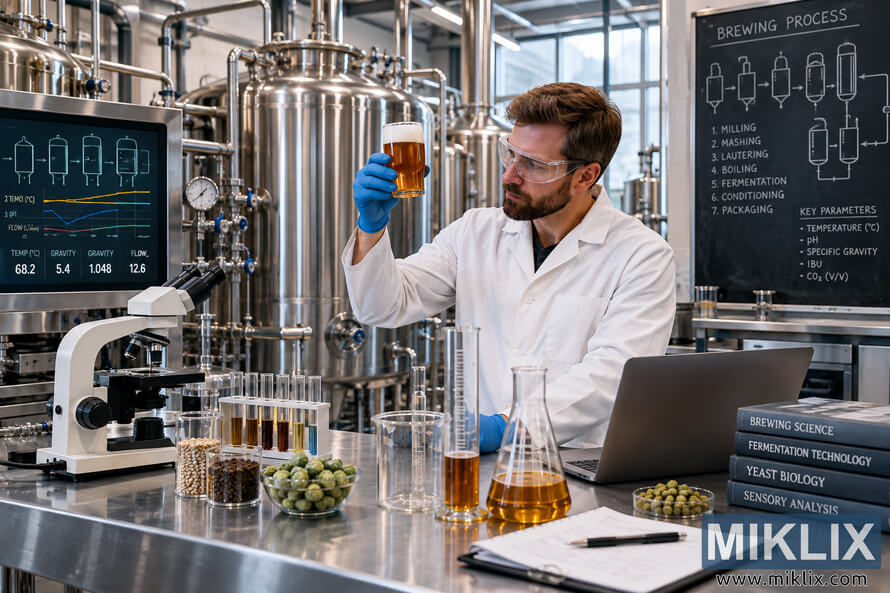
Advanced beer brewing laboratory with a scientist analyzing an amber beer sample among fermentation tanks, scientific instruments, brewing ingredients, process monitors, and laboratory glassware.
Available versions of this image
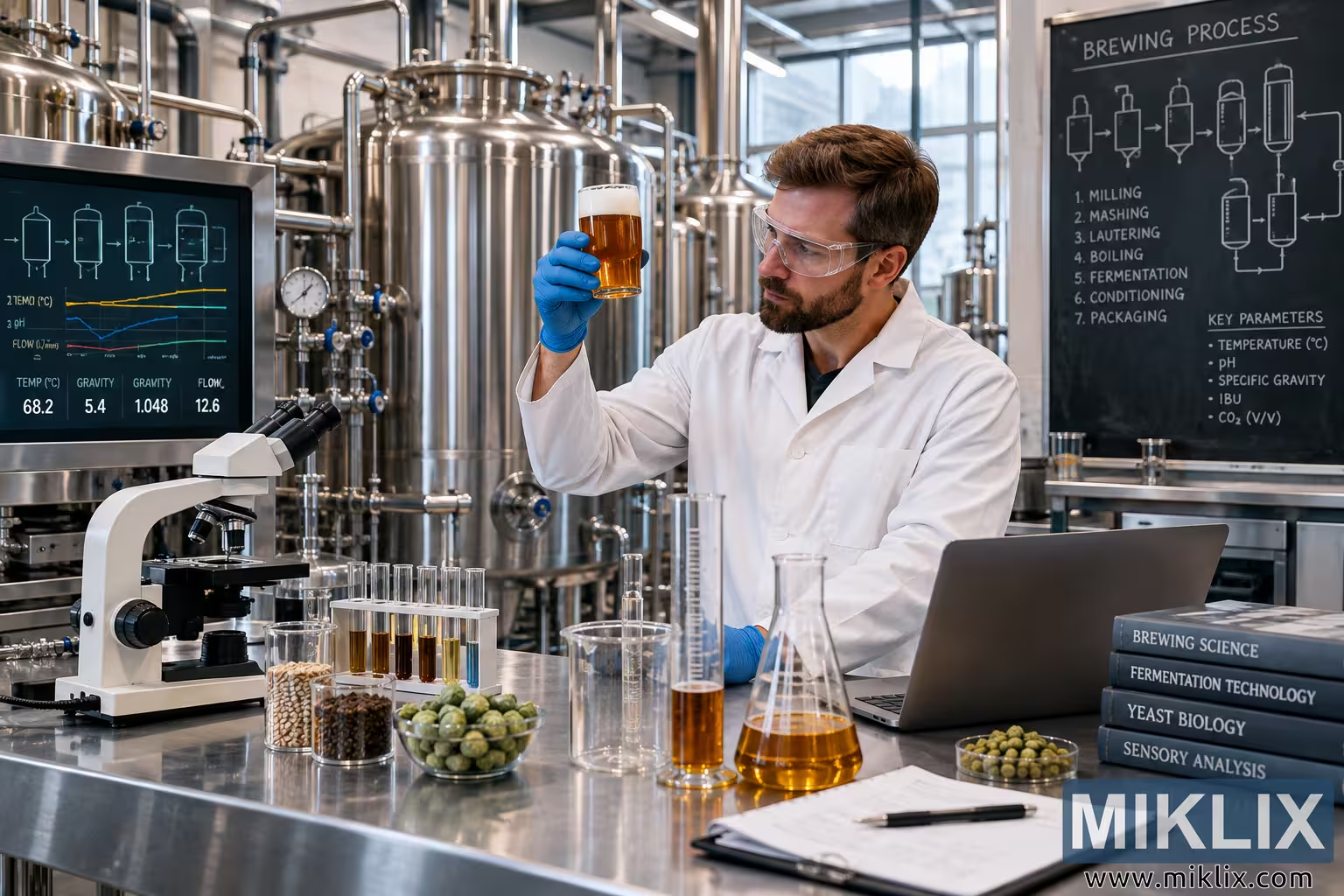
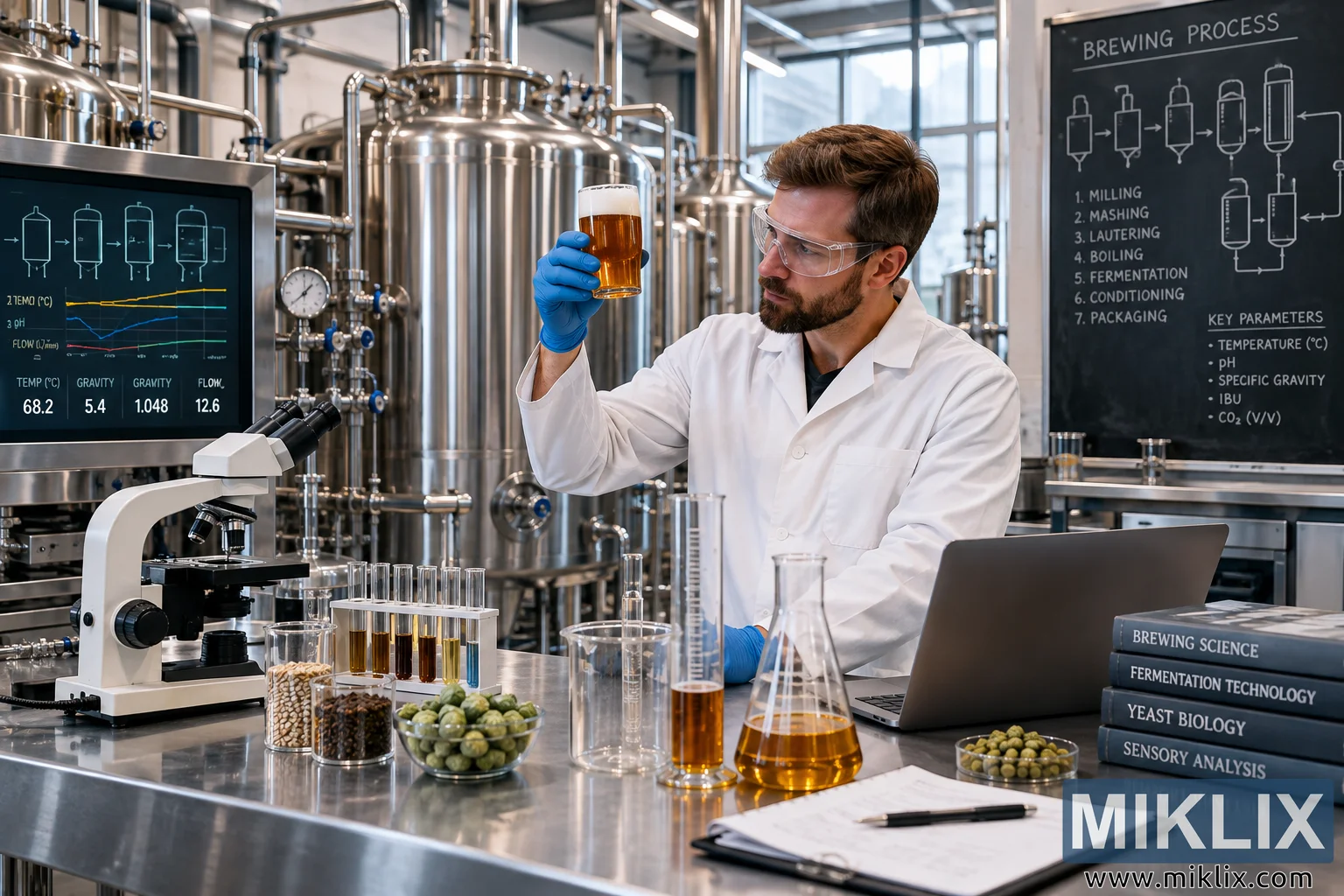
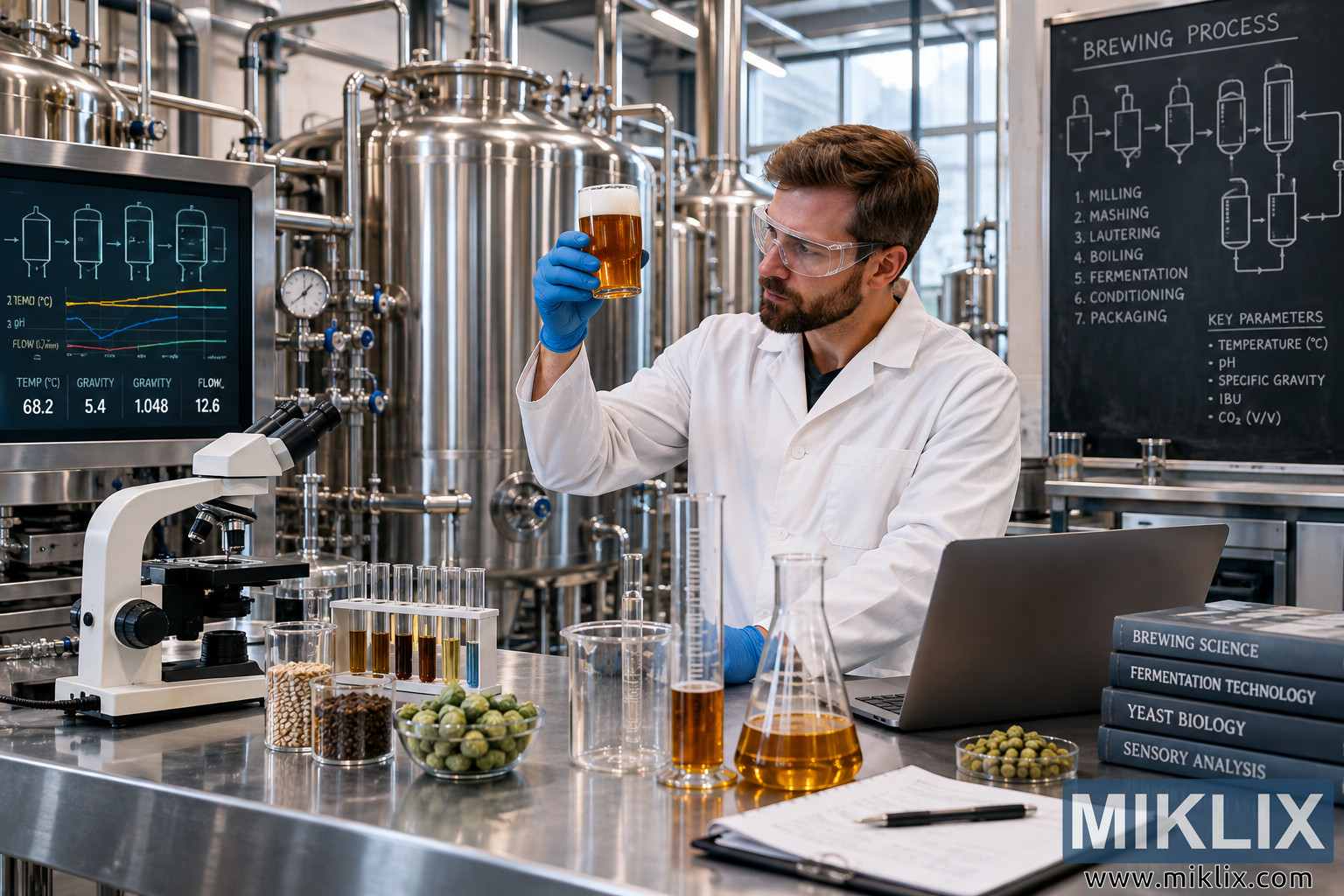
The image files available for download below are less compressed and higher resolution - and as a result of that, higher quality - than the images embedded in articles and pages on this website, which are more optimized for file size in order to reduce bandwidth consumption.
Regular size (1,536 x 1,024)
Large size (3,072 x 2,048)
Very large size (4,608 x 3,072)
Extra large size (6,144 x 4,096)
Comically large size (1,048,576 x 699,051)
- Still uploading... ;-)
Image description
A wide, landscape-oriented photograph depicts an advanced beer brewing laboratory that combines the polished industrial environment of a modern brewery with the analytical equipment of a scientific research facility. At the center of the composition, a male brewing scientist stands behind a stainless-steel laboratory workbench. He has short brown hair and a neatly trimmed beard and is dressed in a clean white laboratory coat, transparent protective safety goggles, and bright blue disposable gloves. His expression is concentrated and analytical as he holds a clear cylindrical glass containing an amber-colored beer sample up toward the ambient light. The liquid has a rich golden to copper tone and is topped by a compact layer of pale foam. He studies the sample closely, suggesting that he is evaluating properties such as clarity, color, carbonation, foam stability, or other characteristics relevant to brewing quality control and experimental fermentation.
The surrounding environment emphasizes the technical and scientific nature of advanced brewing. Behind the scientist are several large cylindrical stainless-steel brewing and fermentation vessels. Their highly reflective surfaces catch the bright laboratory lighting and create a clean, professional industrial appearance. A network of polished metal pipes, fittings, valves, gauges, and connections extends between the vessels, illustrating the complex fluid-handling infrastructure associated with contemporary brewing systems. An analog pressure or process gauge is visible among the pipes, while additional valves and instrumentation suggest that variables throughout the brewing process can be carefully measured and controlled.
On the left side of the image, a large digital monitoring display presents stylized brewing-process information. The screen contains schematic representations of connected vessels along with line graphs and numerical measurements. Visible categories include temperature, gravity, and flow, reinforcing the idea that the brewer is monitoring multiple physical parameters during production and experimentation. The display contributes to the impression of a data-driven brewing facility in which traditional fermentation methods are combined with precise process engineering and digital analysis.
The foreground workbench contains a dense arrangement of laboratory and brewing equipment. A white compound microscope occupies the left side, indicating the possibility of examining yeast cells, microorganisms, or other microscopic components involved in fermentation. Nearby, a rack holds several transparent test tubes containing liquids of different amber, brown, yellow, and pale tones. Graduated cylinders, beakers, narrow sample vessels, and an Erlenmeyer flask are distributed across the reflective stainless-steel surface. Some vessels contain golden or amber liquid, visually connecting the laboratory analysis with the beer sample being inspected by the scientist. The variety of glassware suggests experimental measurement, sampling, comparative testing, and quality-control procedures.
Several brewing ingredients are also displayed prominently on the workbench. Small transparent containers hold pale cereal grains and darker roasted grain or malt, demonstrating how different raw materials can contribute to beer composition, flavor, aroma, and color. A larger glass bowl contains green hop cones or hop-like brewing material, while another shallow dish near the right side contains additional green botanical material. These ingredients provide a visual connection between agricultural brewing inputs and the sophisticated scientific equipment surrounding them. Their placement beside test tubes, graduated glassware, and analytical instruments highlights the relationship between brewing chemistry, ingredient selection, fermentation biology, and sensory characteristics.
A dark laptop sits open on the right side of the workbench, facing the scientist. Its presence suggests that experimental observations, recipes, fermentation data, laboratory measurements, or production records may be documented digitally. Beside it is a stack of dark technical books with brewing-related titles referring to brewing science, fermentation technology, yeast biology, and sensory analysis. In the immediate foreground, a clipboard or writing pad with white paper and a black pen provides another means of recording observations and measurements. Together, the computer, books, and notes reinforce the research-oriented character of the scene.
A large black chalkboard occupies the upper-right portion of the background. It is headed with the words 'BREWING PROCESS' and contains a simplified process-flow diagram made from outlined vessels connected by arrows and lines. A numbered sequence identifies major stages including milling, mashing, lautering, boiling, fermentation, conditioning, and packaging. A separate section labeled 'KEY PARAMETERS' lists brewing measurements such as temperature, pH, specific gravity, IBU, and carbon dioxide volume. The chalkboard functions as an educational and technical reference, making the brewing workflow and its measurable variables visually explicit without referring to any commercial producer or branded product.
The brewery itself appears spacious, bright, hygienic, and technologically sophisticated. Large windows in the background allow cool daylight to enter, while overhead linear lights provide additional illumination. Stainless steel dominates the architecture and equipment, producing reflections across tanks, pipes, and the work surface. The warm amber hues of the beer samples contrast with the silver industrial machinery, white laboratory clothing, dark monitoring displays, and green brewing ingredients. The scientist forms the clear focal point of the image, with his raised glass positioned against the metallic brewing equipment so that its transparency and color are easy to see.
Overall, the image presents beer brewing as a technically advanced discipline involving chemistry, microbiology, process engineering, sensory evaluation, digital monitoring, and precise laboratory measurement. Rather than depicting a casual bar, pub, or traditional craft-brewing scene, it portrays a controlled research and production environment where brewing ingredients and fermentation processes are investigated scientifically. The combination of fermentation tanks, laboratory glassware, microscope, process displays, ingredient samples, technical references, and careful visual inspection communicates themes of experimentation, quality assurance, process optimization, yeast and fermentation research, and advanced brewing technology. No recognizable commercial beer labels, brewery logos, product packaging, or actual brand identities are visible, keeping the scene generic and focused entirely on the science and technology of brewing.
The image is related to: Hops in Beer Brewing: Mount Rainier