
Image: Water Chemistry Testing Kit for Brewing
Published: October 11, 2026 at 7:07:47 PM UTC
Photorealistic brewing water chemistry testing kit with pH, hardness, alkalinity, chloride and sulfate reagents, laboratory tools, reference chart and brewing equipment.
Available versions of this image
The image files available for download below are less compressed and higher resolution - and as a result of that, higher quality - than the images embedded in articles and pages on this website, which are more optimized for file size in order to reduce bandwidth consumption.
Regular size (1,536 x 1,024)
Large size (3,072 x 2,048)
Very large size (4,608 x 3,072)
Extra large size (6,144 x 4,096)
Comically large size (1,048,576 x 699,051)
- Still uploading... ;-)
Image description
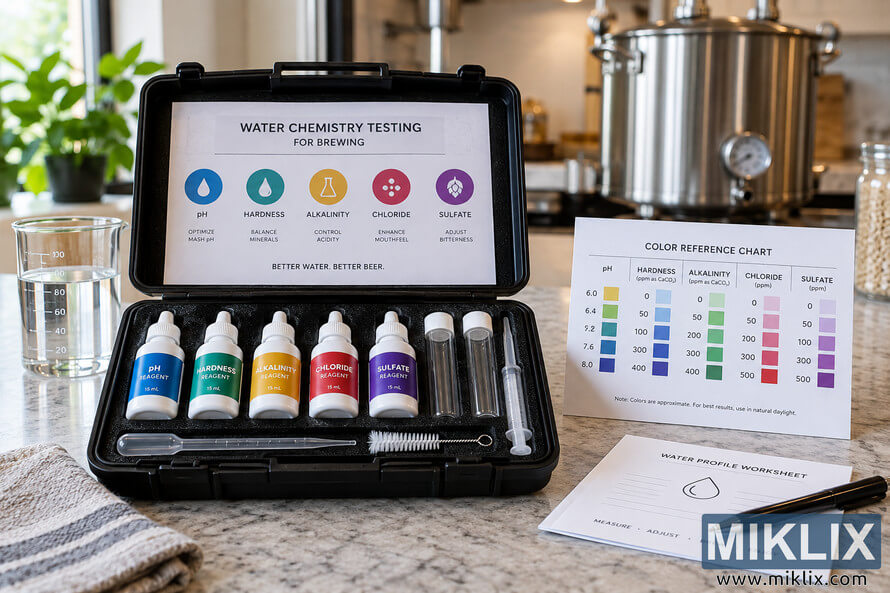
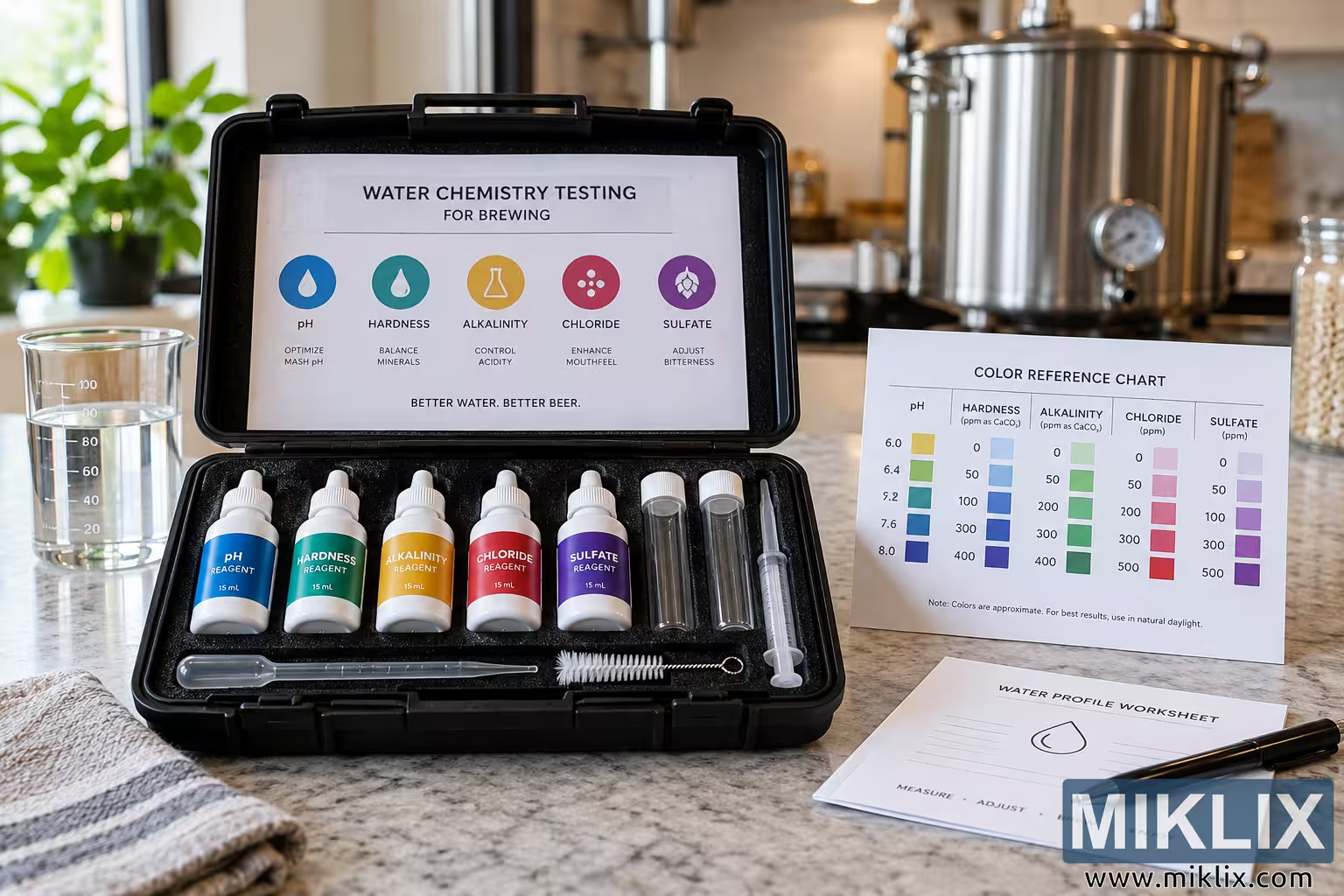
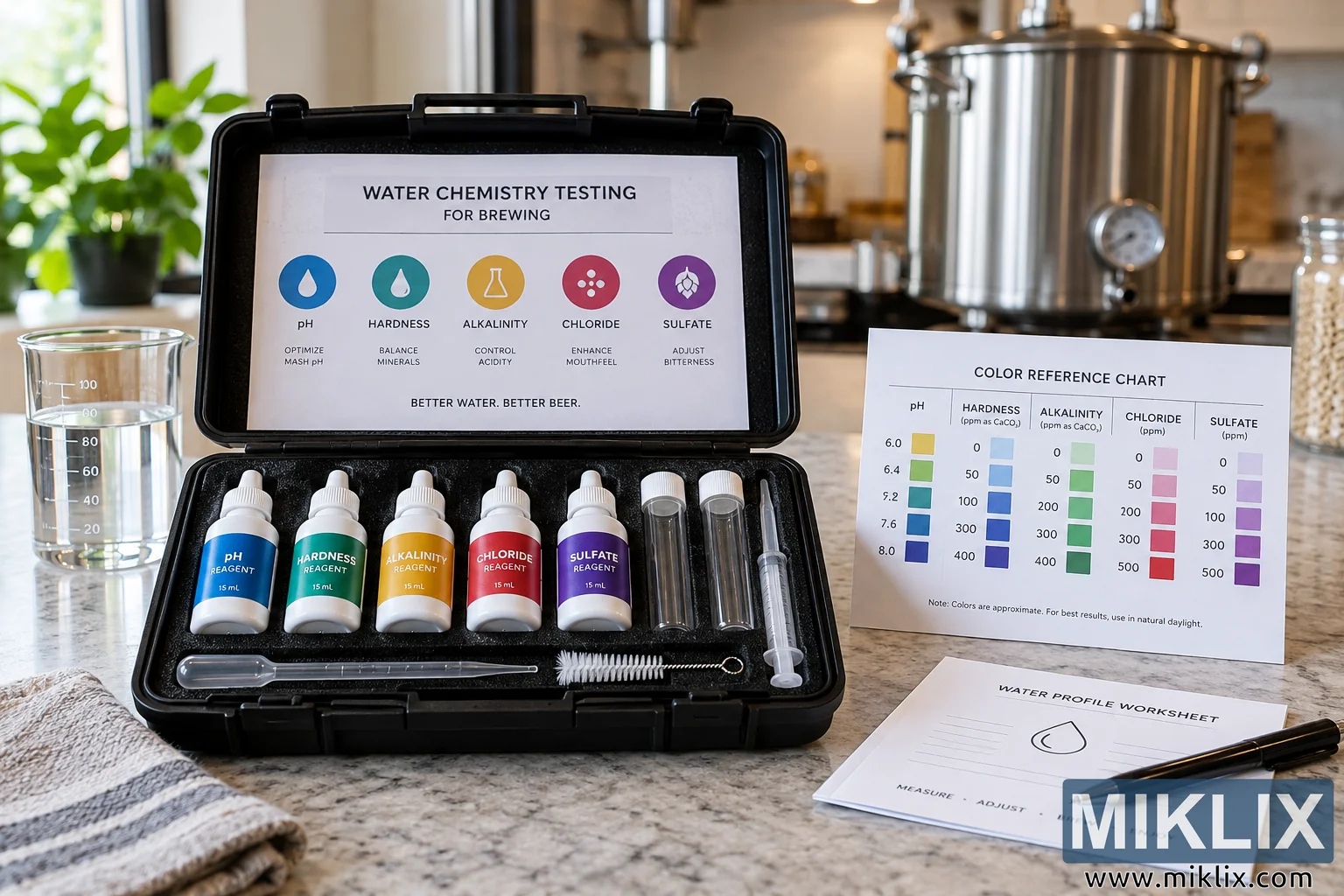
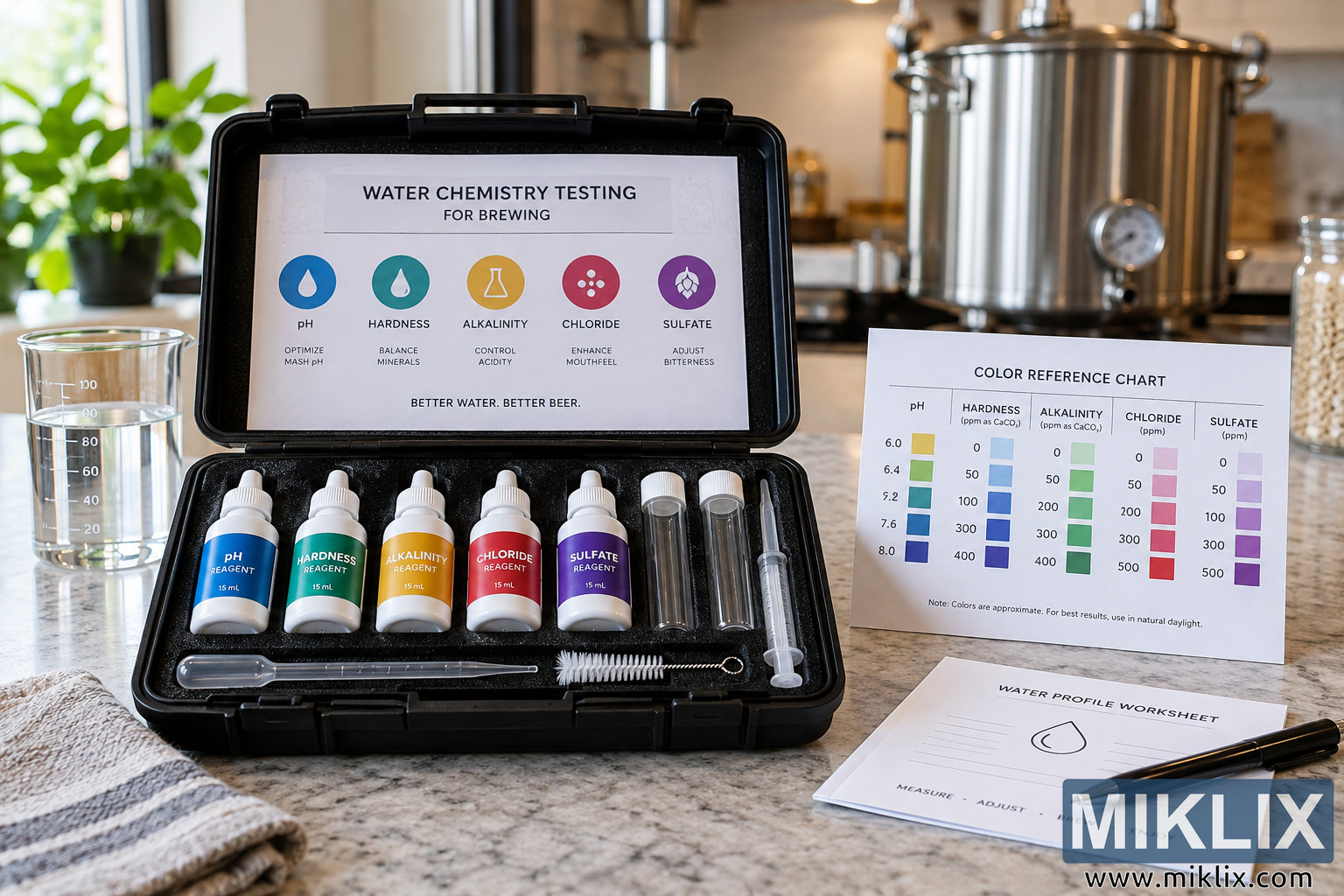
A wide, landscape-oriented, photorealistic product image presents a complete water chemistry testing kit designed for home brewing. The scene is arranged on a light gray and cream stone kitchen countertop in a clean, contemporary brewing environment. The primary subject is an open, rugged black plastic carrying case positioned prominently in the center-left foreground. The case has a molded handle, sturdy latches, a dark foam interior, and fitted compartments that organize the individual testing components. The open lid stands upright and contains a large white informational panel headed "WATER CHEMISTRY TESTING FOR BREWING." Beneath the heading are five circular, color-coded symbols representing pH, hardness, alkalinity, chloride, and sulfate. Short explanatory phrases underneath the symbols indicate the brewing-related purpose of each measurement, while a small line near the bottom of the panel emphasizes the relationship between water quality and brewing results. The overall presentation resembles a professionally assembled but completely generic laboratory-style brewing accessory, with no visible commercial brand names or recognizable brand logos.
Inside the lower half of the black carrying case are five small white reagent bottles with dropper-style caps. Each bottle has a brightly colored generic label that corresponds to a particular water parameter. From left to right, the labels identify pH reagent in blue, hardness reagent in teal-green, alkalinity reagent in yellow-orange, chloride reagent in red, and sulfate reagent in purple. Each bottle is marked as containing 15 mL. The bottles sit upright in individual foam cutouts, producing an orderly and practical laboratory appearance. To their right are two transparent cylindrical test tubes with pale caps, followed by a clear plastic syringe or graduated dosing tool. Along the bottom of the case are additional testing accessories, including a transparent transfer pipette or dropper, a long slender measuring implement, and small cleaning brushes with white bristles. Every component has its own fitted space, reinforcing the impression of a portable kit intended for careful, repeatable water analysis.
To the left of the open case is a clear glass laboratory beaker containing transparent water. White measurement markings are printed vertically along the side of the beaker, and the water level sits around the middle-to-upper portion of the vessel. Reflections and refractions through the glass give the water a convincing, realistic appearance. The beaker suggests that a brewing-water sample has been prepared for testing and helps connect the laboratory components in the case with their practical use. In the extreme lower-left foreground, a folded cream-colored kitchen or brewing towel with dark horizontal stripes rests casually on the countertop. Its woven texture provides a soft visual contrast to the hard plastic case, glassware, and polished stone surface.
On the right side of the composition, a freestanding white color reference chart is angled slightly toward the viewer. The heading reads "COLOR REFERENCE CHART." The chart is divided into columns for pH, hardness, alkalinity, chloride, and sulfate. Each column contains a sequence of colored squares in graduated shades alongside numerical reference values. The pH section progresses through yellow, green, turquoise, and blue hues, while the other sections use coordinated blue, green, pink-red, and purple scales. This chart visually communicates how test results could be compared with reference colors to estimate the chemistry of a brewing-water sample. Small explanatory text appears near the bottom of the card, maintaining the appearance of an instructional laboratory reference without introducing a real-world brand.
In the lower-right foreground is a white water profile worksheet lying flat on the countertop at a slight diagonal. Its heading identifies it as a worksheet for recording a water profile, and faint horizontal lines provide areas for notes or measurements. A simple outlined water-drop symbol appears near the center. Along the bottom is a short sequence of brewing-related actions suggesting a workflow of measuring, adjusting, brewing, and enjoying the finished result. A sleek black pen with metallic accents rests diagonally across the worksheet, implying that the brewer can record measurements and formulate water adjustments while performing the tests.
The background establishes the brewing context without distracting from the testing kit. On the right, slightly out of focus because of the shallow depth of field, is a large stainless-steel brewing kettle or vessel with a polished metallic surface, fittings, handles, and a round analog gauge mounted on its front. Warm indoor light reflects softly from the steel. A transparent jar containing pale brewing grain is partially visible near the far-right edge, further suggesting beer production. On the left side of the background, natural daylight enters through a large window. A leafy green houseplant in a dark pot sits near the window, introducing a fresh organic element and a touch of green to the otherwise neutral kitchen and laboratory palette.
The lighting is bright, soft, and naturalistic, combining daylight from the left with warm ambient illumination from the brewing area in the background. Subtle highlights appear on the glass beaker, reagent bottles, test tubes, black plastic case, and stainless-steel kettle. Shadows are gentle and realistic rather than dramatic. The countertop has a lightly mottled stone texture that reflects small amounts of light without becoming glossy enough to compete with the equipment. The camera is positioned approximately at countertop height with a slightly elevated viewing angle, allowing the viewer to see both the contents of the open case and the surrounding reference materials clearly. The composition uses moderate depth of field: the testing equipment, chart, beaker, and worksheet in the foreground are crisp and detailed, while the plant, kitchen fixtures, and brewing kettle become progressively softer in the background.
Overall, the image communicates precision, cleanliness, organization, and practical home-brewing science. It visually explains the concept of testing brewing water for important chemical characteristics such as pH, hardness, alkalinity, chloride, and sulfate. The combination of laboratory tools and recognizable brewing equipment makes the intended application immediately understandable even without a person demonstrating the process. The carefully organized kit and educational reference materials suggest a systematic workflow in which a brewer collects a water sample, applies appropriate reagents, observes the resulting colors or measurements, compares them with reference values, records the results, and then uses the information to adjust the water profile before brewing. The photograph has the polished appearance of professional product photography while remaining generic and brand-neutral throughout.
The image is related to: Hops in Beer Brewing: Mount Rainier