
Image: Hop Breeding Research in an Oregon State University Experimental Field
Published: October 11, 2026 at 7:07:47 PM UTC
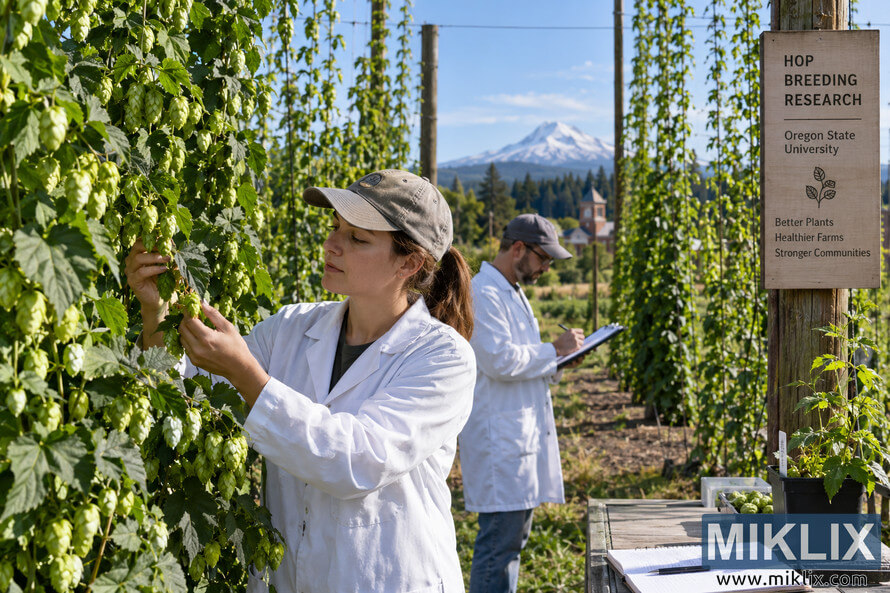
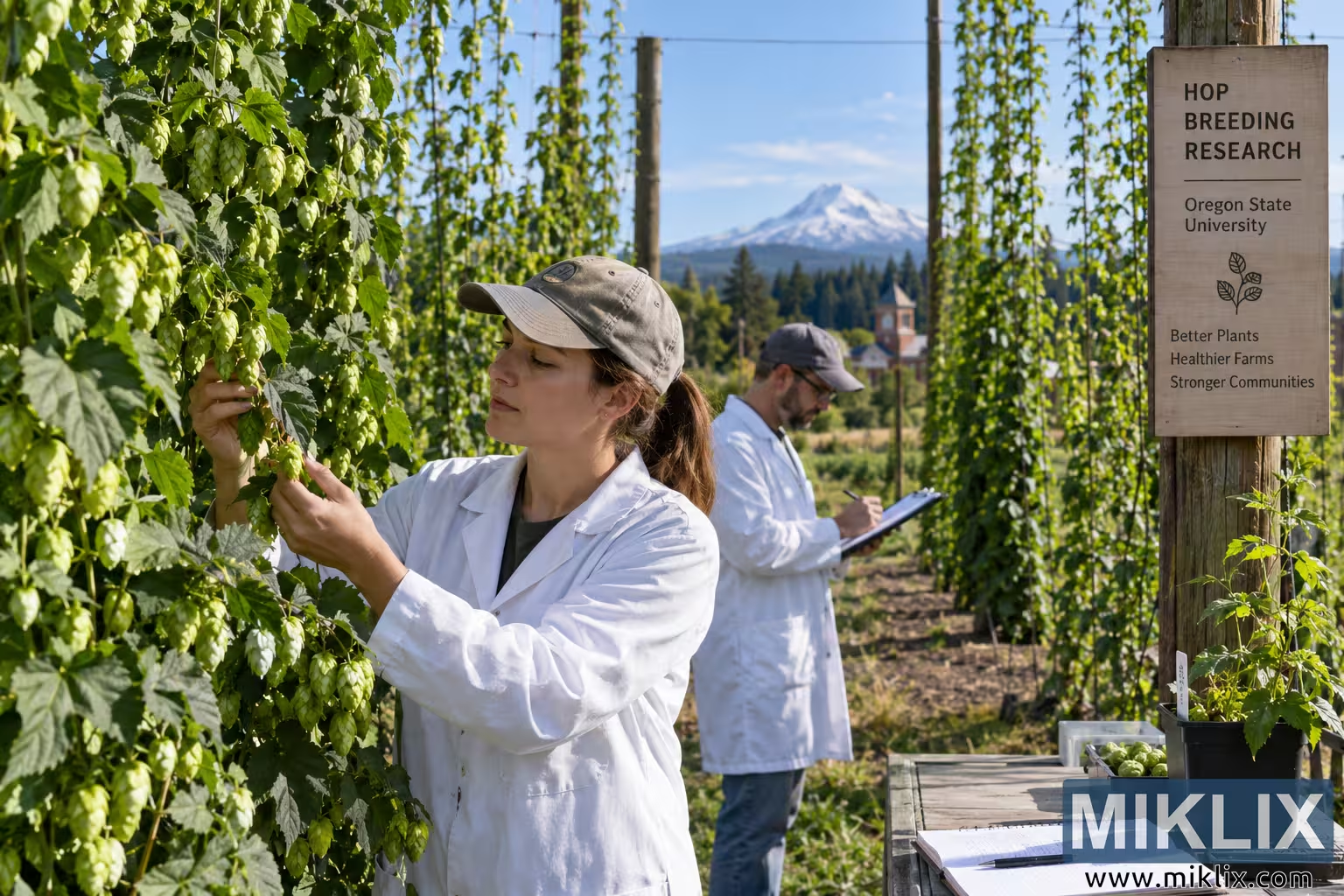
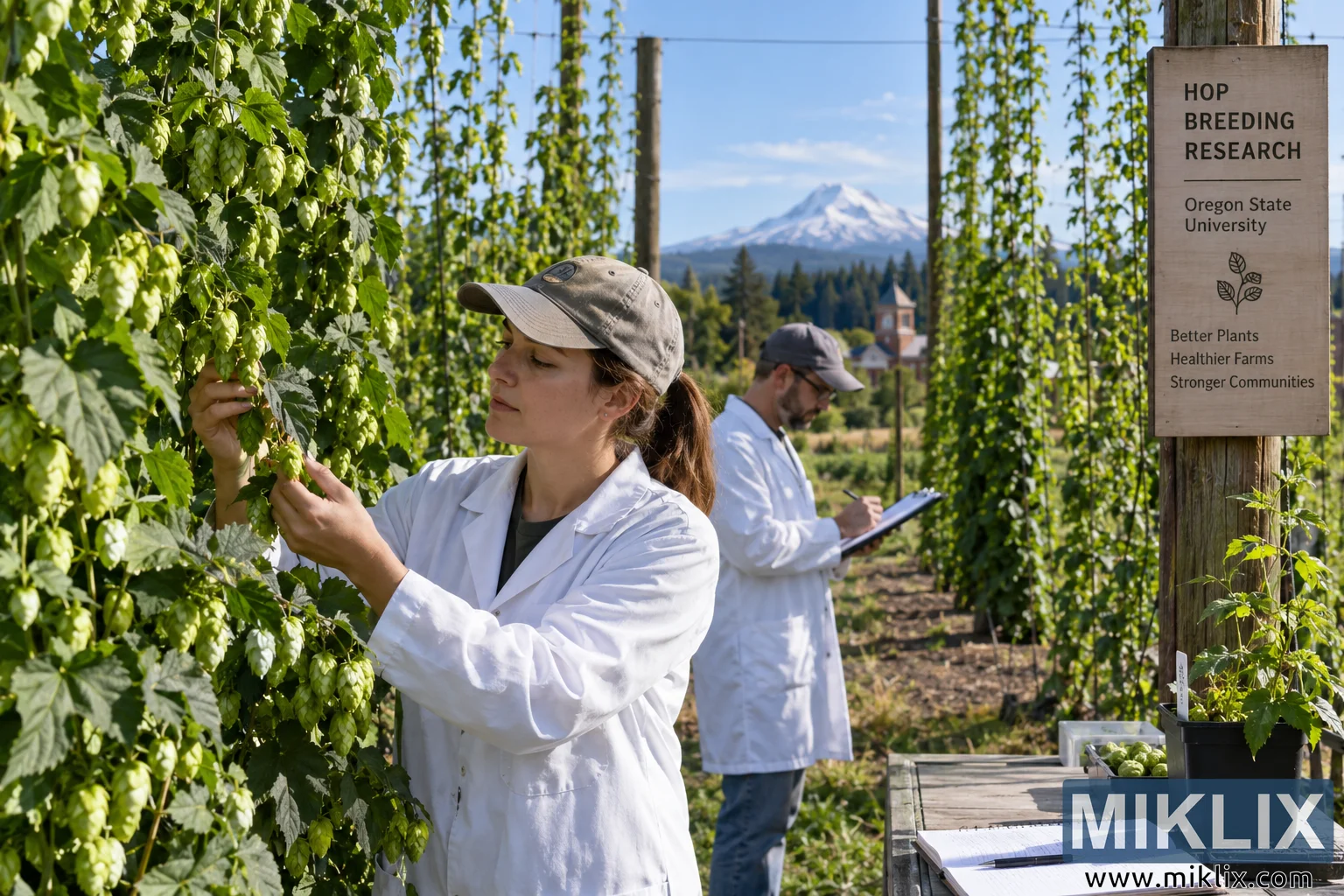
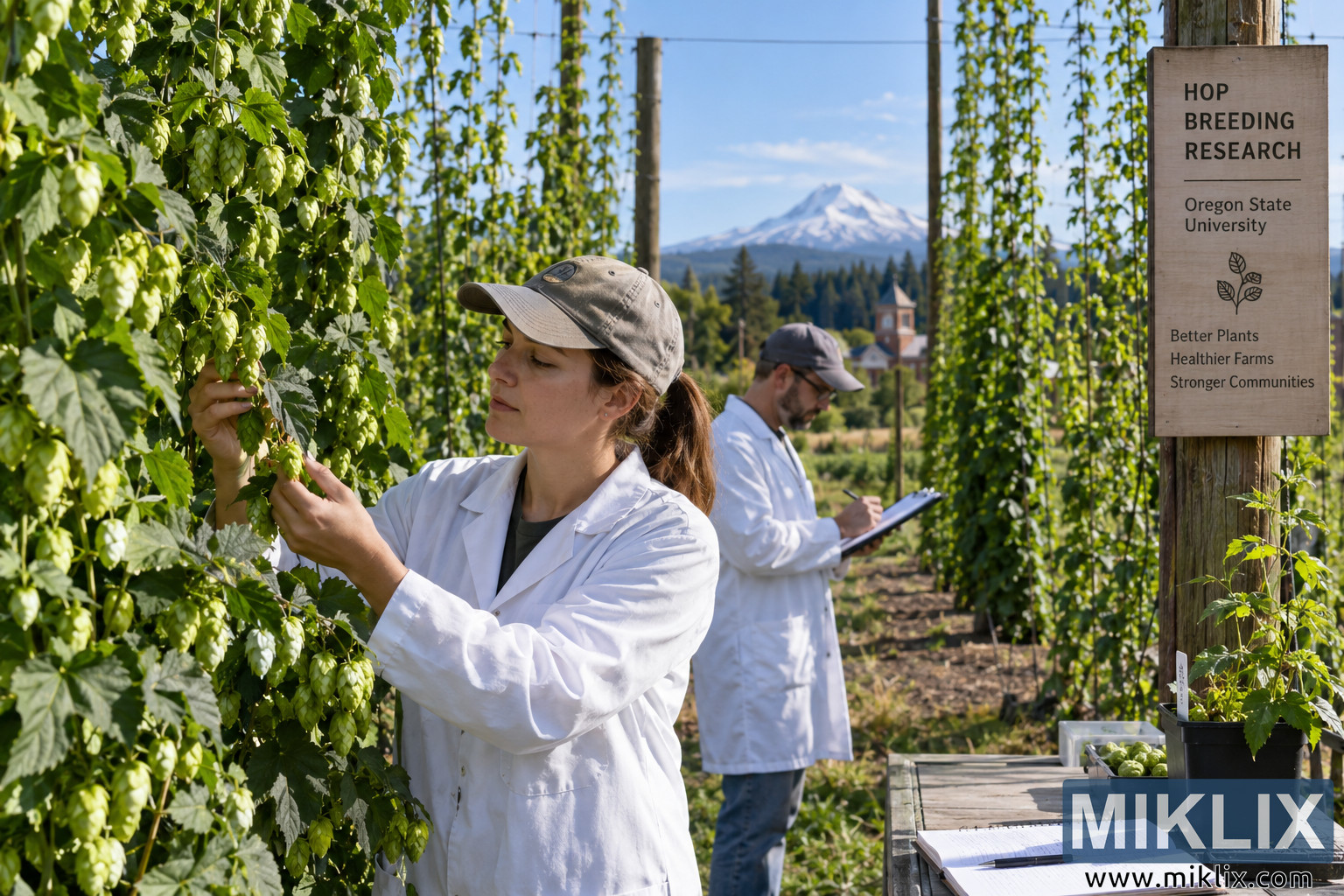
High-resolution landscape image of hop breeding research at Oregon State University, showing researchers examining trellised hop plants, recording field data, and working with plant samples in a scenic Pacific Northwest agricultural setting.
Available versions of this image
The image files available for download below are less compressed and higher resolution - and as a result of that, higher quality - than the images embedded in articles and pages on this website, which are more optimized for file size in order to reduce bandwidth consumption.
Regular size (1,536 x 1,024)
Large size (3,072 x 2,048)
Very large size (4,608 x 3,072)
Extra large size (6,144 x 4,096)
Comically large size (1,048,576 x 699,051)
- Still uploading... ;-)
Image description
A high-resolution, landscape-oriented photograph depicts an agricultural research scene centered on hop breeding in a lush experimental hop field associated with Oregon State University. The composition is illuminated by bright, clear daylight, giving the image the crisp appearance of a professionally photographed university agricultural research project. Tall rows of hop plants dominate the scene, climbing vertically along an extensive trellis system of wooden poles, wires, and supports. The vigorous plants have dense green foliage and numerous pale green hop cones, emphasizing that the research is taking place during an active stage of plant development and evaluation.
In the foreground on the left side of the image, a female agricultural researcher is carefully examining a mature hop plant. She wears a light-colored baseball cap, a white laboratory coat, and a dark shirt underneath. Her brown hair is pulled back into a ponytail. Standing close to the dense wall of foliage, she uses both hands to inspect a cluster of hop cones and surrounding leaves. Her focused expression and careful posture suggest that she is evaluating characteristics such as cone development, plant health, maturity, structure, or other traits that could be important in a hop breeding program. The abundance of cones surrounding her hands makes the crop itself one of the strongest visual elements in the photograph.
A second researcher stands farther back in the central portion of the image. He wears a dark cap, glasses, a white laboratory coat, jeans, and casual footwear. He has a short beard and is looking downward while writing observations on a clipboard. His presence reinforces the systematic research context of the scene, suggesting that observations from individual plants or breeding lines are being recorded as part of a field trial. The two researchers are positioned at different depths within the composition, which creates a natural sense of scale and gives the viewer the impression of an active research plot rather than a staged portrait.
The hop field itself extends into the background in organized rows. Long vertical vines rise toward overhead trellis wires, forming narrow green corridors between the researchers and the distant landscape. The wooden poles and suspended wires illustrate the specialized infrastructure commonly used to support tall-growing hop plants. Sunlight passes through the foliage, producing bright highlights on leaves and cones as well as deeper areas of shadow within the vines. The soil between the rows is visible and appears dry and well maintained, further contributing to the realistic agricultural field setting.
On the right side of the foreground is a rustic wooden research table or workbench. Several objects associated with field research are arranged on its surface, including an open notebook or data sheet with handwritten entries, a pen, containers holding harvested hop cones or samples, and small potted hop plants. These materials visually connect field observation with sample collection and documentation. The potted plants appear to have identification markers inserted into their growing medium, suggesting that individual experimental plants or selections are being tracked. The combination of notebooks, samples, containers, and living plant material conveys the practical, hands-on nature of crop breeding and agricultural research.
Mounted prominently on a wooden post at the right edge of the image is a simple rectangular wooden sign. It reads 'HOP BREEDING RESEARCH' followed by 'Oregon State University.' Beneath this text is a small botanical-style illustration and the phrases 'Better Plants,' 'Healthier Farms,' and 'Stronger Communities.' The sign uses a restrained, natural-looking design that complements the wood and agricultural surroundings. It serves as an explicit visual identifier for the research theme while remaining integrated into the field environment rather than appearing like a commercial advertisement.
Beyond the hop plots, the background opens onto a scenic Pacific Northwest landscape. Evergreen trees form a dark green band behind the field, while several university-like or agricultural buildings are visible among the vegetation. One building includes a tower or cupola that rises above the surrounding structures. Farther in the distance, a large snow-covered mountain stands prominently beneath a clear blue sky. Its white summit contrasts strongly with the green hop plants and forest, creating depth and giving the research environment a distinctly northwestern character. Thin white clouds are scattered across the otherwise bright blue sky.
The photograph uses a wide landscape composition to balance scientific activity, agricultural detail, and environmental context. The female researcher and heavily laden hop vines form the principal foreground focal point, while the second researcher, workbench, research sign, trellised rows, campus-like buildings, forest, and mountain progressively lead the viewer deeper into the scene. The depth of field keeps the main subjects sharply recognizable while preserving substantial detail throughout the background. Natural sunlight, realistic textures, and carefully rendered plant structures give the photograph an authentic documentary quality.
Overall, the image presents hop breeding as a combination of plant science, field observation, data collection, and practical agricultural experimentation. Rather than focusing on finished beverages or commercial hop products, it emphasizes the crop itself and the researchers studying it. The abundant hop cones communicate productivity and genetic diversity, while the researchers' inspection and note-taking suggest the process of identifying useful plant characteristics for future varieties. The workbench and samples add a laboratory-like element to the outdoor setting, illustrating how agricultural research moves between observation, measurement, selection, and documentation. The expansive field and mountain landscape provide a strong sense of place and connect the scientific activity with the broader agricultural environment of Oregon and the Pacific Northwest.
The image is related to: Hops in Beer Brewing: Mount Rainier