
Image: Homebrewer Adding Hops to a Brewing Kettle
Published: October 14, 2026 at 3:37:39 PM UTC
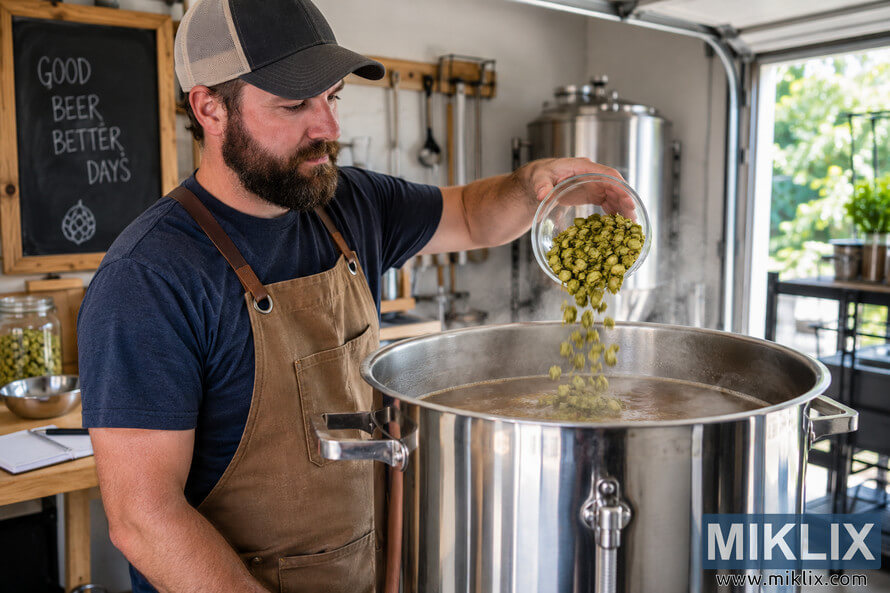
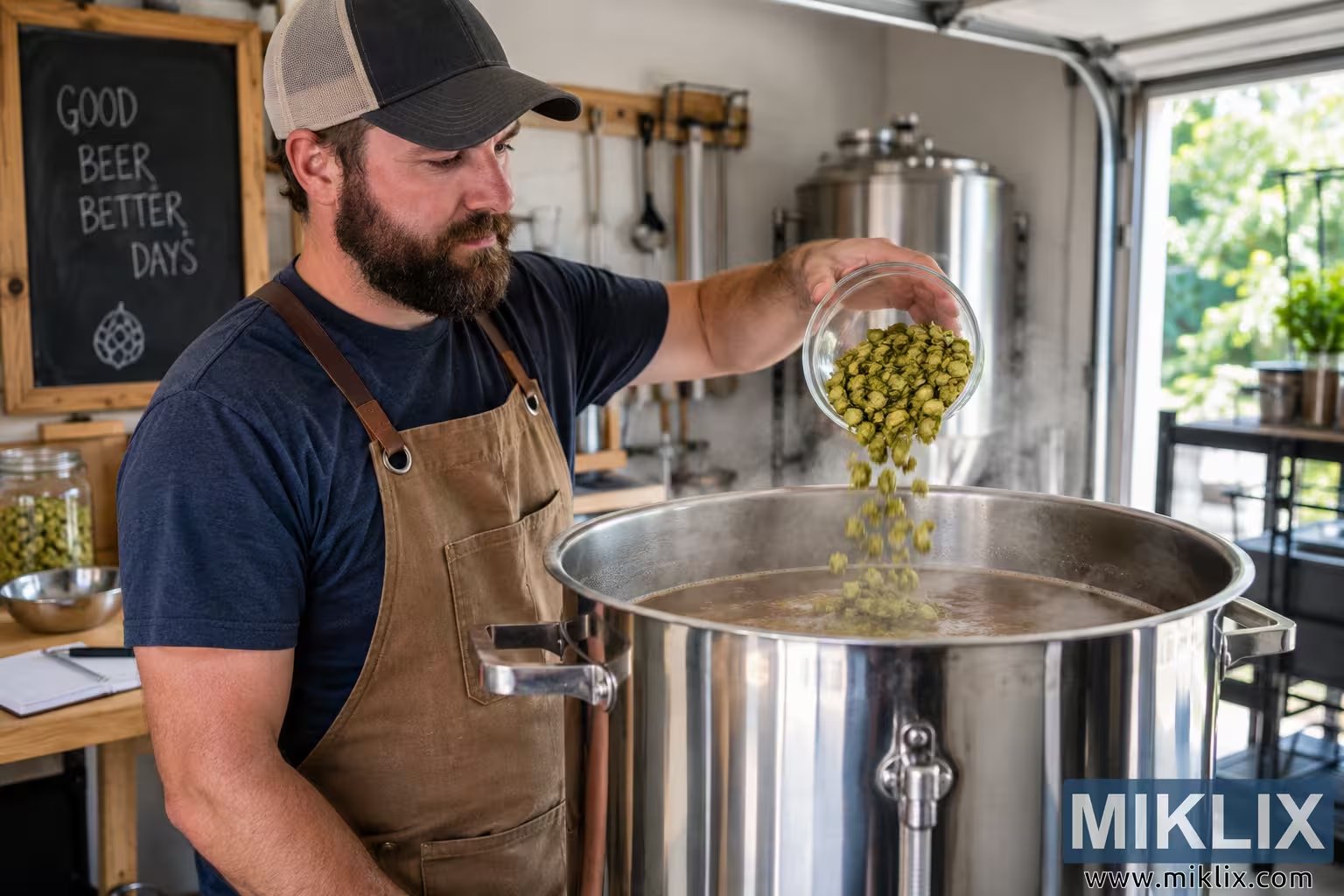
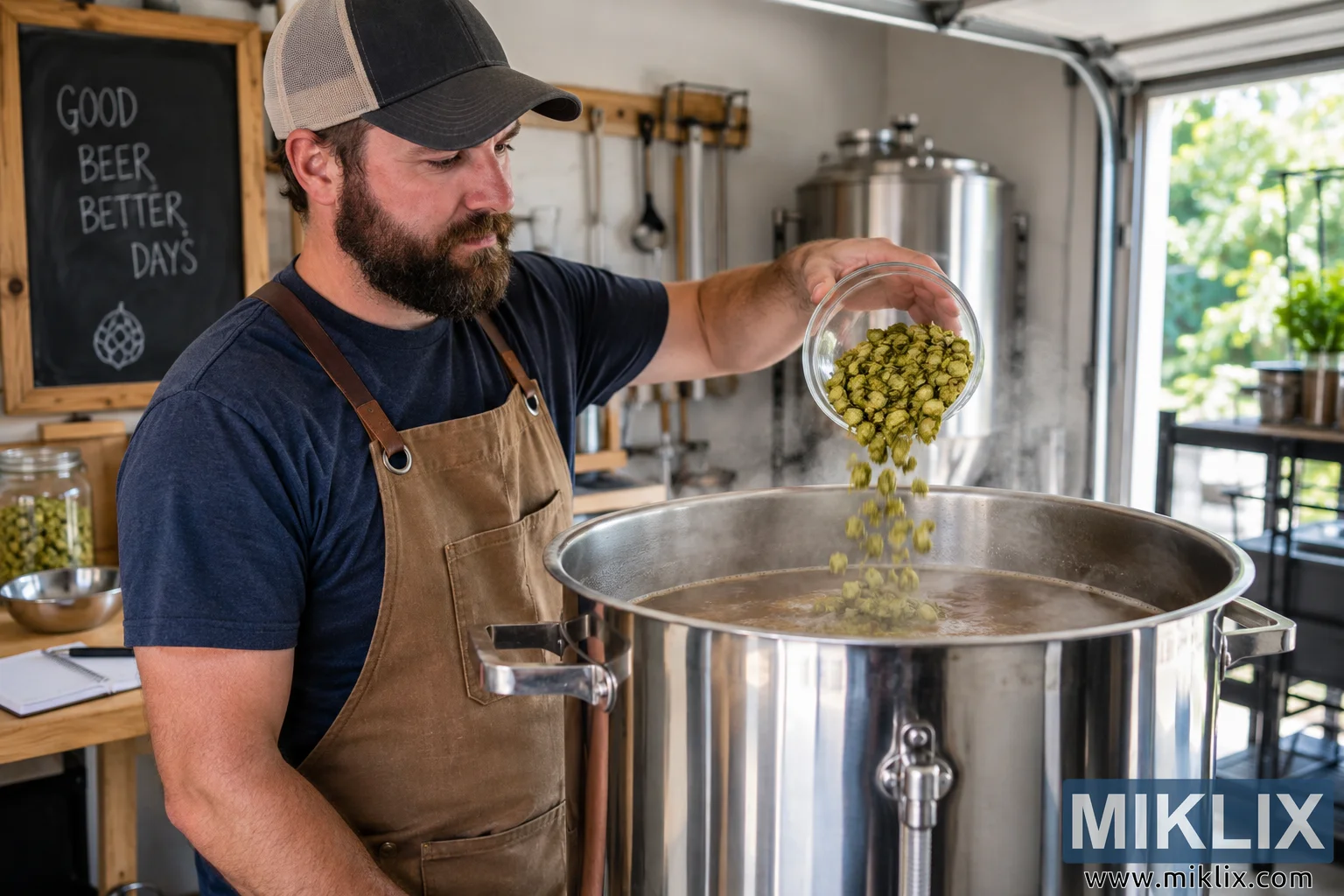
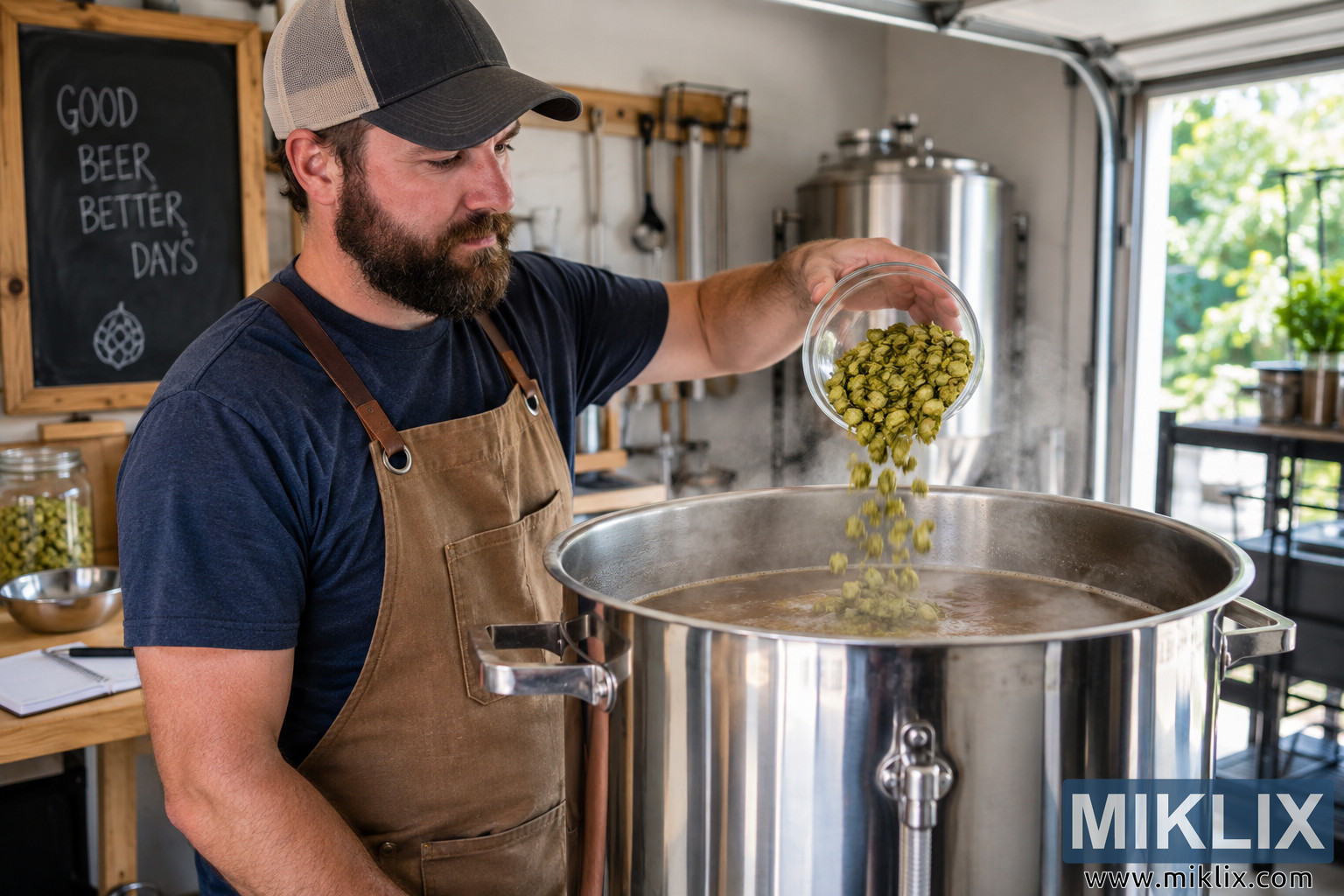
Realistic landscape photo of a homebrewer adding green hops to a steaming stainless-steel brewing kettle in a bright, organized garage brewery.
Available versions of this image
The image files available for download below are less compressed and higher resolution - and as a result of that, higher quality - than the images embedded in articles and pages on this website, which are more optimized for file size in order to reduce bandwidth consumption.
Regular size (1,536 x 1,024)
Large size (3,072 x 2,048)
Very large size (4,608 x 3,072)
Extra large size (6,144 x 4,096)
Comically large size (1,048,576 x 699,051)
- Still uploading... ;-)
Image description
A realistic, high-resolution landscape photograph shows a homebrewer adding hops to a large stainless-steel brewing kettle in a bright, well-organized garage brewing space. The composition centers on an adult man standing on the left side of the frame beside the open kettle, which occupies much of the foreground and lower-right portion of the image. He has a full dark brown beard and wears a dark navy short-sleeved shirt, a brown work apron with leather-like shoulder straps, and a dark trucker-style baseball cap with a light mesh back. His clothing and equipment are deliberately generic, with no visible commercial branding or recognizable brand logos. The brewer looks downward toward the kettle with a focused, attentive expression, suggesting that he is carefully monitoring an important stage of the brewing process. With his raised right hand, he tips a clear glass container over the open kettle. A stream of green hop cones falls from the container toward the hot liquid below. Individual hops can be seen suspended in midair between the container and the surface of the wort, capturing the addition at precisely the moment it takes place. Several hops have already reached the liquid, where they gather near the center of the kettle. The visible hops are natural-looking, textured, leafy green cones rather than packaged or branded ingredients. Steam rises softly from the kettle, particularly around the falling hops and along the back edge of the vessel, giving the scene a warm, active atmosphere and clearly communicating that the brewing liquid is hot. The stainless-steel kettle is substantial and professional-looking while remaining plausible for an ambitious homebrewing setup. Its broad circular rim reflects the surrounding light, and its polished metal sides contain subtle reflections from the room. A sturdy rectangular handle projects from the kettle on the left, while another handle is visible on the right. Near the lower front of the kettle is a metal valve and fitting connected to brewing hardware, reinforcing the practical, functional character of the equipment. The wort visible inside the kettle is a warm brown-golden color with a lightly agitated surface. Behind the brewer and kettle, the garage has been arranged as a dedicated brewing workshop. A second tall cylindrical stainless-steel brewing vessel stands against the back wall, partially softened by the rising steam. Various brewing and kitchen tools hang neatly from a wooden rail on the wall, including long-handled utensils that appear suitable for stirring, transferring, or handling ingredients. The neutral wall and simple wooden fixtures contribute to the handcrafted workshop aesthetic without distracting from the main brewing action. On the far left, a wooden work surface holds additional homebrewing items. A clear glass jar containing more green hops sits toward the back of the counter, providing visual context for the ingredient being added to the kettle. A small stainless-steel bowl rests nearby, and an open notebook or brewing log lies closer to the front edge of the workbench with a pen placed beside or across it. These details suggest a methodical brewing session in which ingredients and process notes are being carefully tracked. Mounted above this work area is a black chalkboard in a natural wooden frame. Handwritten white chalk lettering reads “GOOD BEER BETTER DAYS,” accompanied by a simple chalk illustration resembling a hop cone beneath the words. The chalkboard has the informal personality of a home workshop rather than the polished appearance of commercial advertising. It does not display a real-world company name or product brand. The right side of the photograph opens toward a large garage doorway or broad exterior opening, allowing abundant daylight to enter the brewing space. Outside, softly blurred green foliage creates a fresh contrast with the industrial stainless steel of the brewing equipment. The greenery and bright natural light suggest a pleasant warm-weather brewing day. Near the opening, a dark shelving unit or narrow worktable holds a few generic containers and a small leafy plant. The outdoor background remains intentionally out of focus, keeping visual attention on the brewer, the hops, and the kettle. Lighting throughout the image is natural and balanced. Daylight from the right illuminates the brewer's face, forearms, apron, the green hops, and the reflective kettle, while softer indoor light preserves detail in the background. The photograph has a documentary or lifestyle-photography quality, with realistic skin texture, fabric, wood, glass, metal, steam, and plant material. The shallow-to-moderate depth of field gives the scene dimensionality without making the brewing environment unrecognizable. The brewer and the cascade of hops are particularly sharp, emphasizing the central action. The image communicates hands-on homebrewing, craftsmanship, experimentation, and enthusiasm for making beer at home. The brewer appears experienced and comfortable with his equipment, and the orderly surroundings imply a dedicated hobbyist workspace rather than a commercial brewery. The combination of the apron, notebook, ingredient jars, brewing utensils, polished kettle, steam, and fresh hops creates a convincing narrative of a carefully managed brew day. The decisive visual moment is the hop addition: the brewer's arm extends across the frame toward the kettle, the tilted glass container leads the viewer's eye downward, and the falling green cones form a visible bridge between the person and the brewing liquid. No actual commercial hop variety, manufacturer, brewery, or other brand is identified visually in the scene. Although the conceptual subject is a homebrewer adding hops to a brewing kettle, the photograph presents the ingredient generically, without branded packaging or trademarked visual elements. Overall, the landscape image depicts an inviting and highly detailed homebrewing environment, balancing the warm, handcrafted character of wood, canvas, hops, and handwritten notes with the clean industrial appearance of stainless-steel brewing equipment. The result is a believable photographic portrayal of a homebrewer adding a measured portion of hops to steaming wort during an active brewing session.
The image is related to: Hops in Beer Brewing: MultiHead