
Image: Laboratory Analysis of Hop Alpha and Beta Acids
Published: October 14, 2026 at 3:37:39 PM UTC
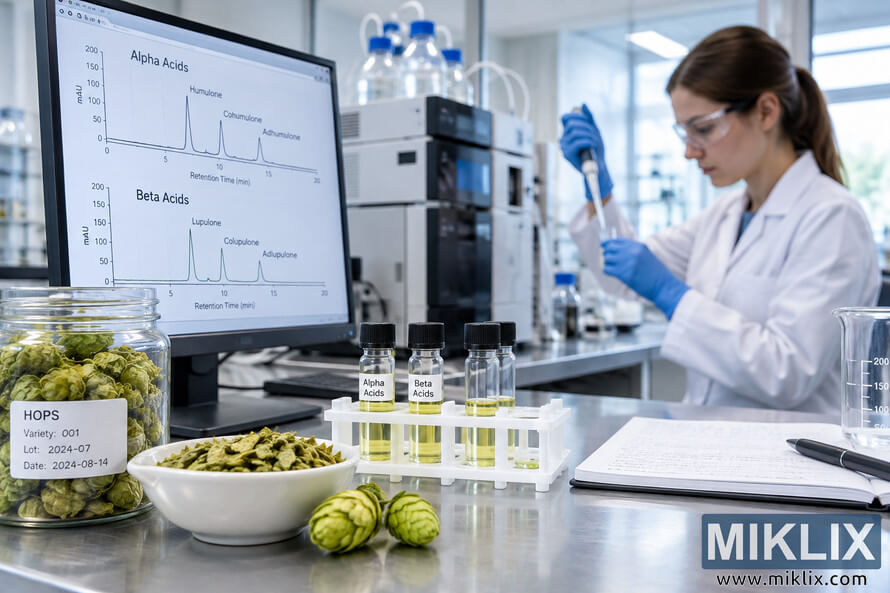
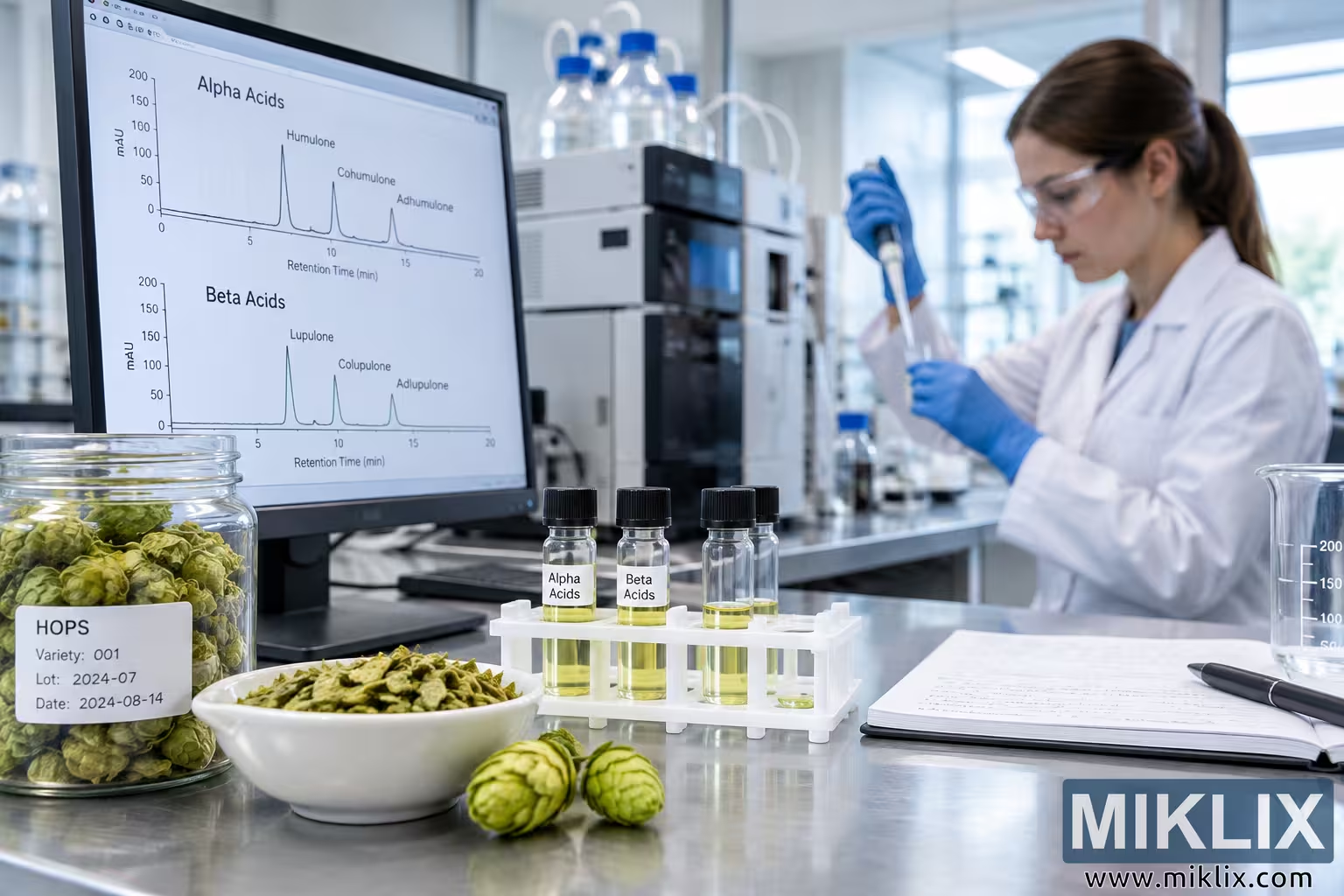
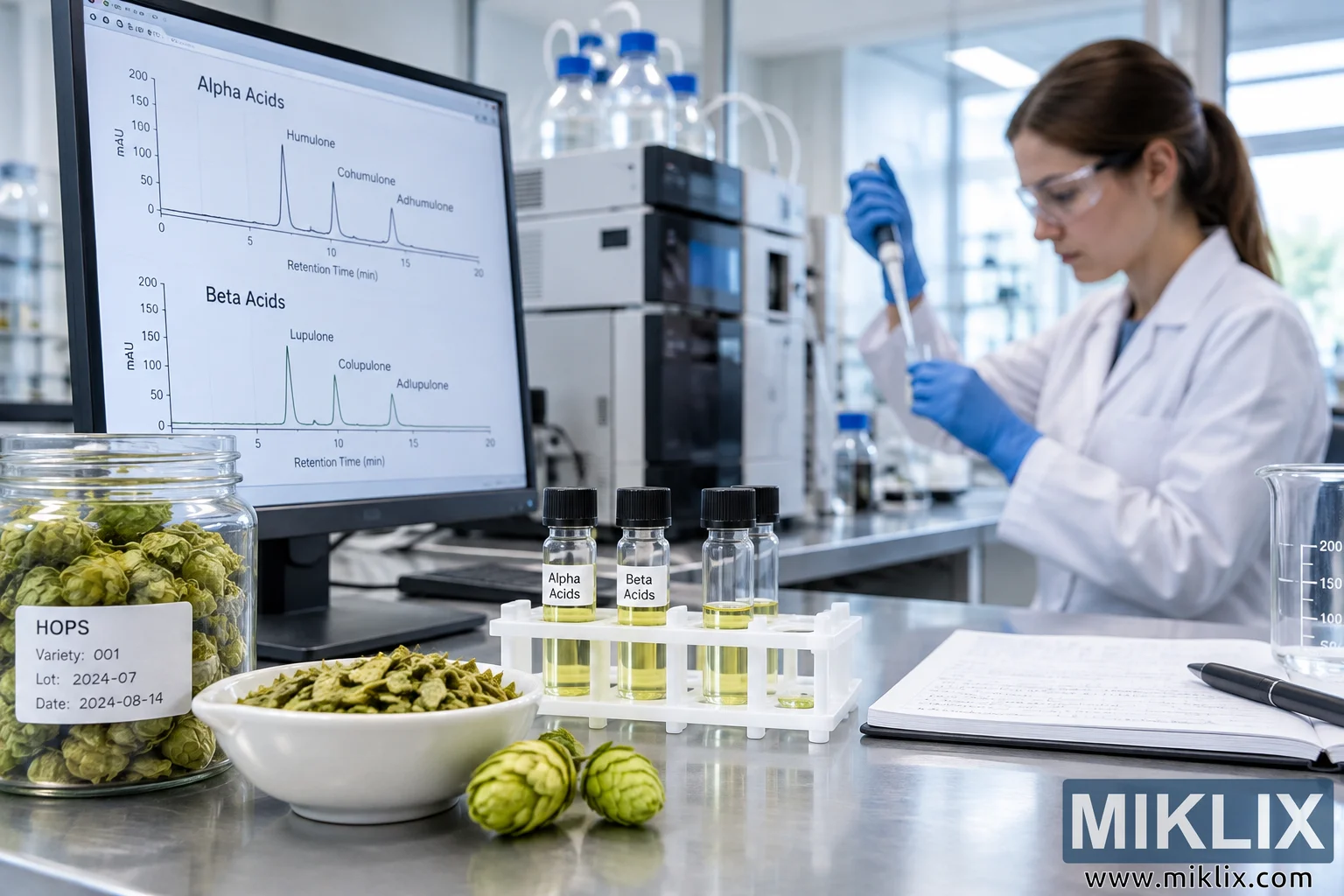
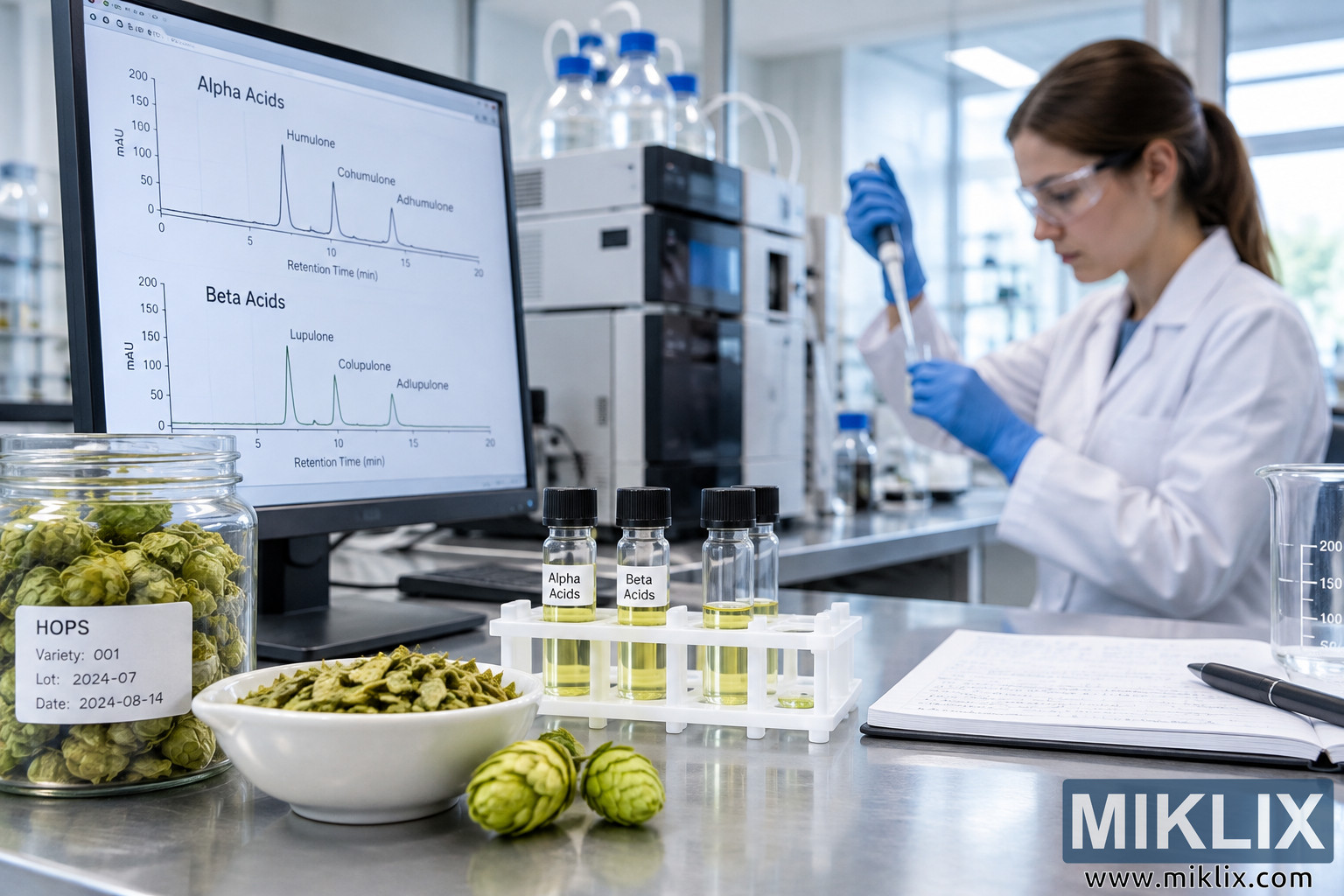
Laboratory analysis of hop alpha and beta acids with hop samples, chemical extracts, chromatography equipment, analytical graphs, and a scientist preparing samples.
Available versions of this image
The image files available for download below are less compressed and higher resolution - and as a result of that, higher quality - than the images embedded in articles and pages on this website, which are more optimized for file size in order to reduce bandwidth consumption.
Regular size (1,536 x 1,024)
Large size (3,072 x 2,048)
Very large size (4,608 x 3,072)
Extra large size (6,144 x 4,096)
Comically large size (1,048,576 x 699,051)
- Still uploading... ;-)
Image description
A bright, photorealistic laboratory scene depicts the analytical testing of hop alpha and beta acids in a modern quality-control or brewing-science environment. The composition is presented in a wide landscape format and combines recognizable hop samples, laboratory glassware, analytical instrumentation, chromatography results, and a scientist performing careful sample preparation. The overall setting is clean, organized, professional, and illuminated by abundant cool daylight, creating the appearance of a contemporary research or industrial analysis laboratory.
On the left side of the foreground stands a large transparent glass jar filled with dried green hop cones. A simple white laboratory label on the jar identifies the contents as hops and includes generic sample information such as a variety number, lot designation, and date. No commercial branding or company identity is visible. The hop cones inside the jar display their characteristic layered, leafy structure and muted yellow-green coloration. In front of the jar is a white ceramic laboratory-style bowl containing additional dried and fragmented hop material. Several intact hop cones are arranged on the stainless-steel work surface nearby, providing a clear visual connection between the natural plant material and the analytical procedure being carried out in the laboratory.
Near the center foreground is a white sample rack containing several small transparent glass vials. The vials hold pale yellow-green liquid extracts, suggesting prepared hop samples or analytical standards. Two of the most prominent vials have plain labels reading “Alpha Acids” and “Beta Acids,” immediately establishing the subject of the analysis. Additional unlabeled or generically presented vials sit alongside them. Their clear glass, dark screw caps, and carefully measured liquid levels reinforce the impression of controlled chemical analysis. The rack and samples rest on a reflective stainless-steel laboratory bench, where subtle reflections of the glassware and hop material contribute to the realistic photographic appearance.
Dominating the left and central background is a large computer monitor displaying analytical chromatograms. The upper graph is titled “Alpha Acids” and contains several distinct peaks labeled with representative hop alpha-acid compounds, including humulone, cohumulone, and adhumulone. The lower graph is titled “Beta Acids” and similarly displays peaks associated with beta-acid components such as lupulone, colupulone, and adlupulone. Both plots use retention time in minutes along the horizontal axis and an analytical detector-response scale on the vertical axis. The sharp peaks and orderly graph layout visually communicate chromatographic separation and quantitative laboratory measurement. The display is generic and scientific rather than associated with any identifiable commercial software or instrument manufacturer.
Behind the monitor and sample rack is a substantial piece of analytical laboratory equipment resembling a high-performance liquid chromatography system. The instrument consists of stacked modular units with tubing, solvent lines, and transparent laboratory bottles positioned above it. Its neutral white, gray, and dark surfaces fit naturally into the clean laboratory environment. No manufacturer logos or recognizable brand marks are present. The positioning of the chromatography instrument directly beside the displayed chromatograms makes the analytical workflow visually understandable: hop samples are prepared, introduced into the laboratory system, chemically separated, detected, and interpreted through chromatographic data.
On the right side of the image, a laboratory scientist is shown working with a handheld micropipette. She wears a clean white laboratory coat, transparent protective safety glasses, and blue disposable gloves. Her brown hair is pulled back into a practical ponytail, keeping it away from the work area. She is concentrating on transferring a liquid sample into a small container, with one gloved hand operating the pipette and the other stabilizing the receiving vessel. Her posture and focused expression suggest careful, precise laboratory technique rather than a staged portrait. She is positioned slightly behind the principal foreground objects, producing a modest depth-of-field effect that keeps the hop samples, analytical vials, and chromatographic results visually prominent while still clearly showing the human laboratory activity.
The right foreground contains an open laboratory notebook or record sheet resting on the bench. Fine handwritten or printed entries cover the pages, suggesting that measurements, sample identifiers, preparation details, or analytical results are being documented as part of the testing procedure. A dark pen lies across or immediately beside the notebook, reinforcing the theme of scientific record keeping. At the extreme right edge, part of a transparent graduated glass vessel is visible, with measurement markings indicating its laboratory function. These supporting details give the scene the appearance of an active analytical workstation rather than a purely decorative laboratory setup.
The laboratory itself is spacious, bright, and contemporary. White surfaces, stainless-steel benches, glass containers, clean instrumentation, and large windows create a hygienic and technically sophisticated atmosphere. The background is softly blurred, but additional bottles, laboratory fixtures, and equipment can be seen, adding depth without distracting from the central subject. Cool white and pale blue tones dominate the laboratory environment, while the natural greens and yellow-greens of the hops and liquid extracts provide contrasting organic color. Reflections on the metal worktop, transparent glass surfaces, realistic highlights, and natural depth of field contribute to the high-resolution photographic style.
Conceptually, the image illustrates the laboratory determination of alpha and beta acids in hops, an important form of chemical analysis associated with hop characterization and brewing quality control. The intact and processed hop samples represent the raw botanical material, the vials represent prepared extracts or standards, the pipetting scientist represents sample preparation, the chromatography equipment represents instrumental separation and measurement, and the graphs represent the resulting analytical data. Alpha acids and beta acids are visually treated as separate analytical groups, making the image suitable for educational, scientific, technical, agricultural, brewing, or quality-assurance contexts. The composition communicates precision, traceability, controlled sample handling, instrumental analysis, and documentation. There are no visible commercial brands, promotional elements, or manufacturer identities; all labels and scientific interfaces are generic and directly related to the laboratory subject.
The image is related to: Hops in Beer Brewing: MultiHead