
Image: Brewing Troubleshooting Analysis in a Professional Brew Workspace
Published: October 14, 2026 at 3:37:39 PM UTC
Photorealistic brewing troubleshooting scene showing a brewer reviewing batch measurements, possible causes, process documentation, grains, hops, beer, and professional brewing equipment.

Available versions of this image
The image files available for download below are less compressed and higher resolution - and as a result of that, higher quality - than the images embedded in articles and pages on this website, which are more optimized for file size in order to reduce bandwidth consumption.
Regular size (1,536 x 1,024)


Large size (3,072 x 2,048)
Very large size (4,608 x 3,072)
Extra large size (6,144 x 4,096)
Comically large size (1,048,576 x 699,051)
- Still uploading... ;-)
Image description
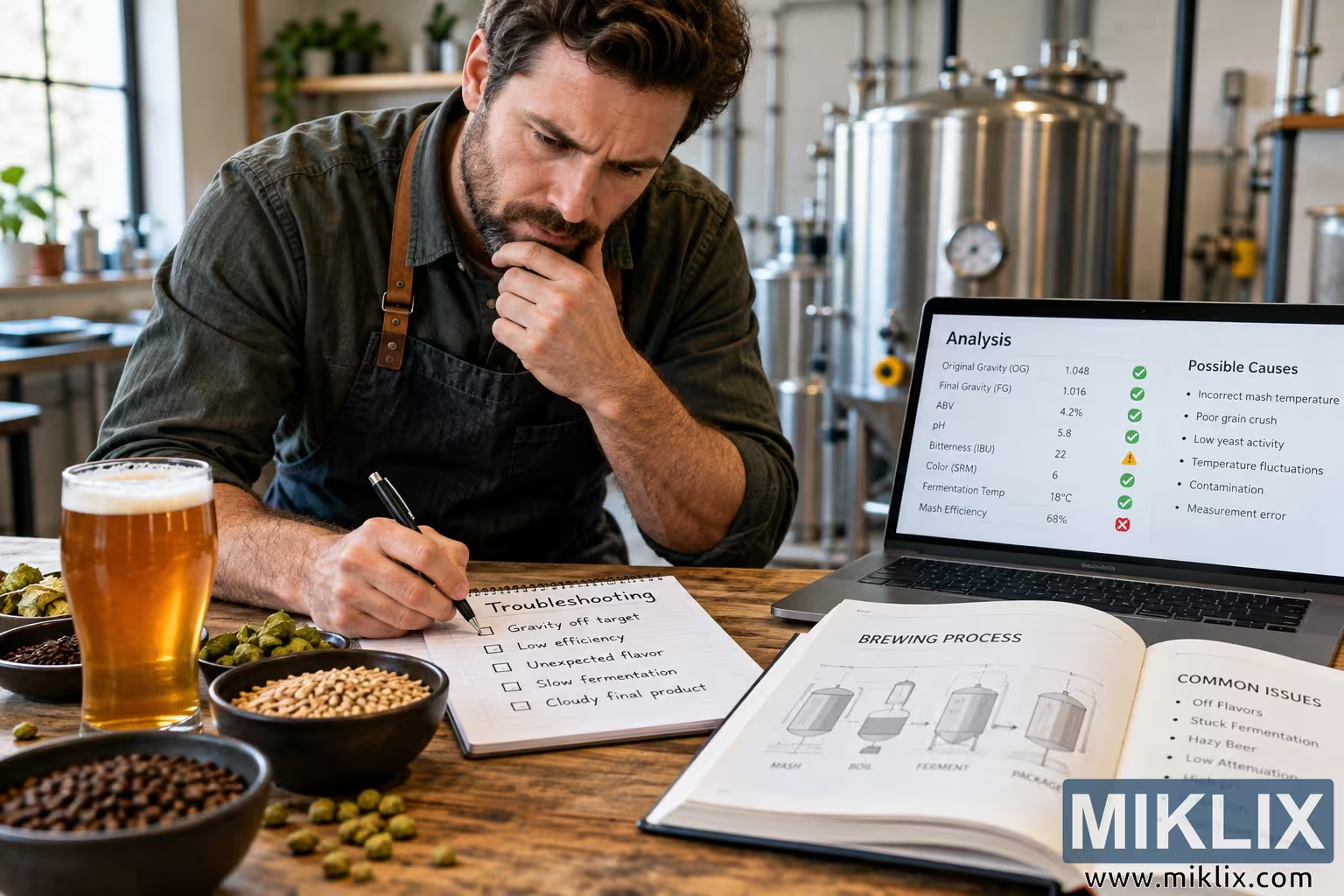
A wide, landscape-oriented photorealistic image depicts a brewing professional carrying out a detailed troubleshooting analysis in a bright, rustic-modern brewing workspace. The scene combines the atmosphere of a small craft brewery, laboratory-style process evaluation, and hands-on technical problem solving. The central figure is a bearded adult man with dark, slightly wavy hair, wearing a dark olive-green work shirt and a charcoal-colored apron with brown leather-style straps. He is seated or leaning forward at a substantial wooden worktable. His posture and facial expression communicate concentration: one hand supports his chin while the other holds a black pen over a spiral-bound notebook. His eyes are directed downward toward his notes, suggesting that he is carefully considering measurements, symptoms, and possible causes rather than simply observing the brewing equipment.
The notebook in front of him is headed “Troubleshooting” and contains a checklist of common brewing problems. Visible entries include gravity being off target, low efficiency, unexpected flavor, slow fermentation, and a cloudy final product. Several empty checkboxes accompany these entries, reinforcing the idea of a systematic diagnostic workflow in which individual symptoms can be reviewed and investigated. The notebook occupies the central foreground and visually connects the brewer’s practical observations with the analytical information displayed elsewhere in the scene.
To the right of the brewer is an open laptop positioned at an angle that makes its screen clearly visible. The laptop displays a clean analytical dashboard headed “Analysis.” A table presents brewing measurements including Original Gravity (OG), Final Gravity (FG), ABV, pH, Bitterness (IBU), Color (SRM), fermentation temperature, and mash efficiency. Most measurements are accompanied by green status symbols, while bitterness is marked with a yellow warning symbol and mash efficiency is highlighted with a red problem indicator. Alongside the measurements is a section titled “Possible Causes,” listing potential explanations such as incorrect mash temperature, poor grain crush, low yeast activity, temperature fluctuations, contamination, and measurement error. This display establishes the image’s main theme of evidence-based brewing troubleshooting by showing how measured values can be compared with expected process performance.
An open brewing reference manual lies prominently across the lower-right foreground. One page is titled “BREWING PROCESS” and contains simplified technical illustrations representing major stages such as mashing, boiling, fermentation, and packaging. The facing page is headed “COMMON ISSUES” and lists brewing faults such as off flavors, stuck fermentation, hazy beer, low attenuation, high pH, infection, and poor head retention. The manual adds an educational dimension to the composition, implying that the brewer is consulting process documentation while diagnosing the batch. Its white pages contrast strongly with the darker wood of the table and the stainless-steel equipment in the background.
The foreground contains several physical brewing ingredients and sensory cues. On the left is a clear pint glass filled with bright amber-golden beer topped by a thin layer of pale foam. Nearby are small dark bowls containing pale malted grains, darker roasted grains, and other brewing ingredients. Green hop cones are scattered naturally across the tabletop and gathered near the notebook and bowls. These ingredients provide visual context for the brewing process while emphasizing the relationship between raw materials, process variables, analytical measurements, and the finished beverage. No recognizable commercial branding is visible on the ingredients, glassware, equipment, clothing, computer, or other objects.
Behind the brewer, large cylindrical stainless-steel brewing vessels dominate the background. The largest tank has a polished metallic surface, a circular pressure or temperature gauge, pipes, valves, fittings, and a lid assembly. Additional stainless-steel vessels and vertical pipework extend farther into the room. Their reflective surfaces reinforce the professional brewing environment while remaining softly out of focus enough to keep attention on the troubleshooting activity in the foreground. The equipment appears clean and functional, giving the space the character of a compact professional brewery or sophisticated pilot brewing facility rather than a generic kitchen.
The room itself combines industrial equipment with warm, approachable interior details. Large windows on the left allow natural daylight to enter, producing soft highlights on the brewer, beer glass, wooden table, and stainless-steel tanks. Shelving in the background contains small plants and neutral objects, introducing greenery and a relaxed workshop quality. The warm brown table, amber beer, green hops, dark clothing, and cool metallic brewing vessels create a balanced natural color palette. Lighting is bright but soft, with realistic shadows and a shallow-to-moderate depth of field that gives the image a polished editorial-photography appearance.
Compositionally, the image is arranged around three connected sources of diagnostic information: the brewer’s handwritten troubleshooting checklist in the center, the laptop’s numerical analysis on the right, and the brewing-process reference manual in the lower-right foreground. The brewer forms the human focal point, while the beer, grains, hops, and brewing vessels establish the physical process being investigated. Together these elements communicate a structured approach to identifying brewing problems: observe the finished product, examine raw materials, review process documentation, compare measured values with targets, identify abnormal results, consider possible causes, and record findings. The overall mood is thoughtful, technical, methodical, and professional, presenting brewing not merely as beverage production but as a process that can be measured, analyzed, diagnosed, and improved.
The image is related to: Hops in Beer Brewing: MultiHead