
Image: Macro Close-Up of a Hop Cone with Golden Lupulin Glands
Published: October 15, 2026 at 7:40:36 PM UTC
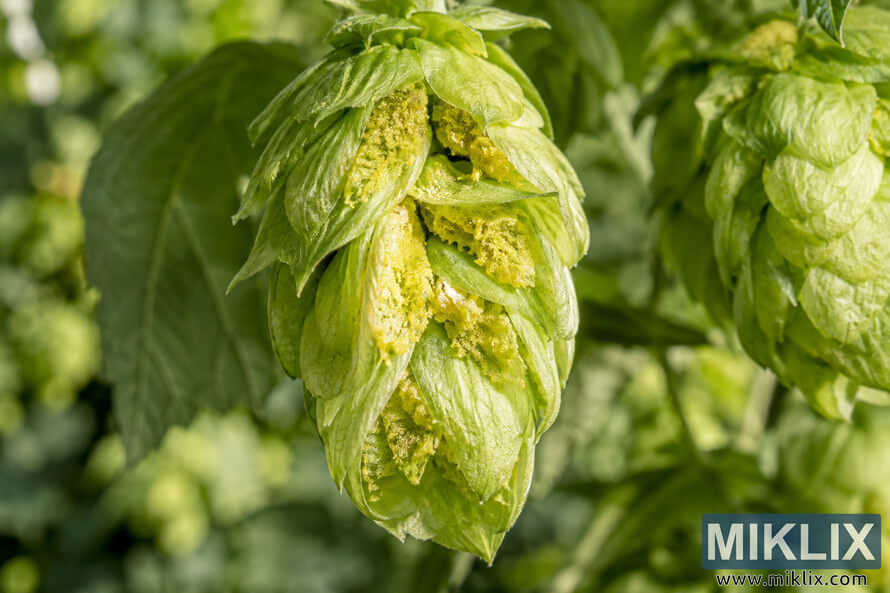
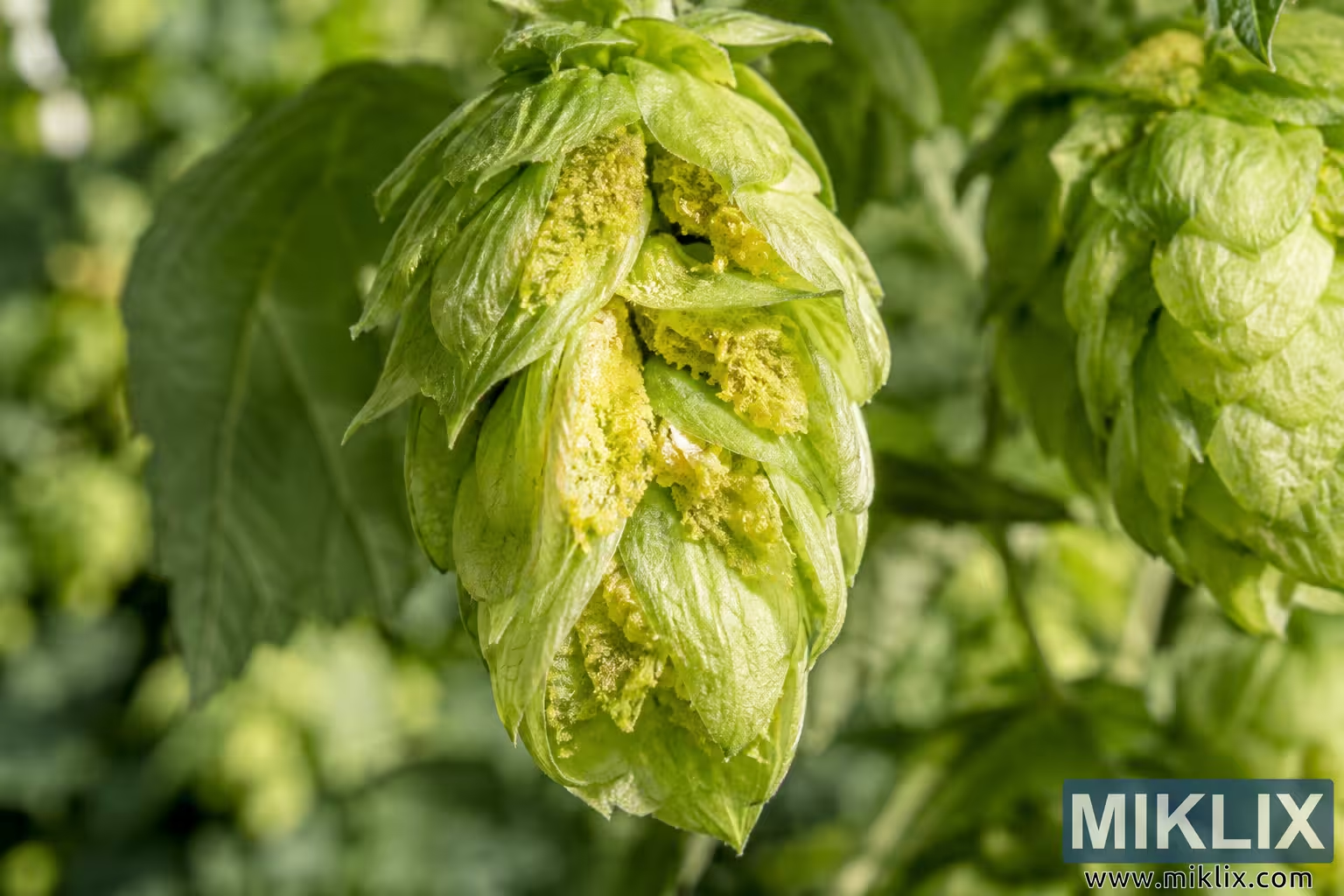
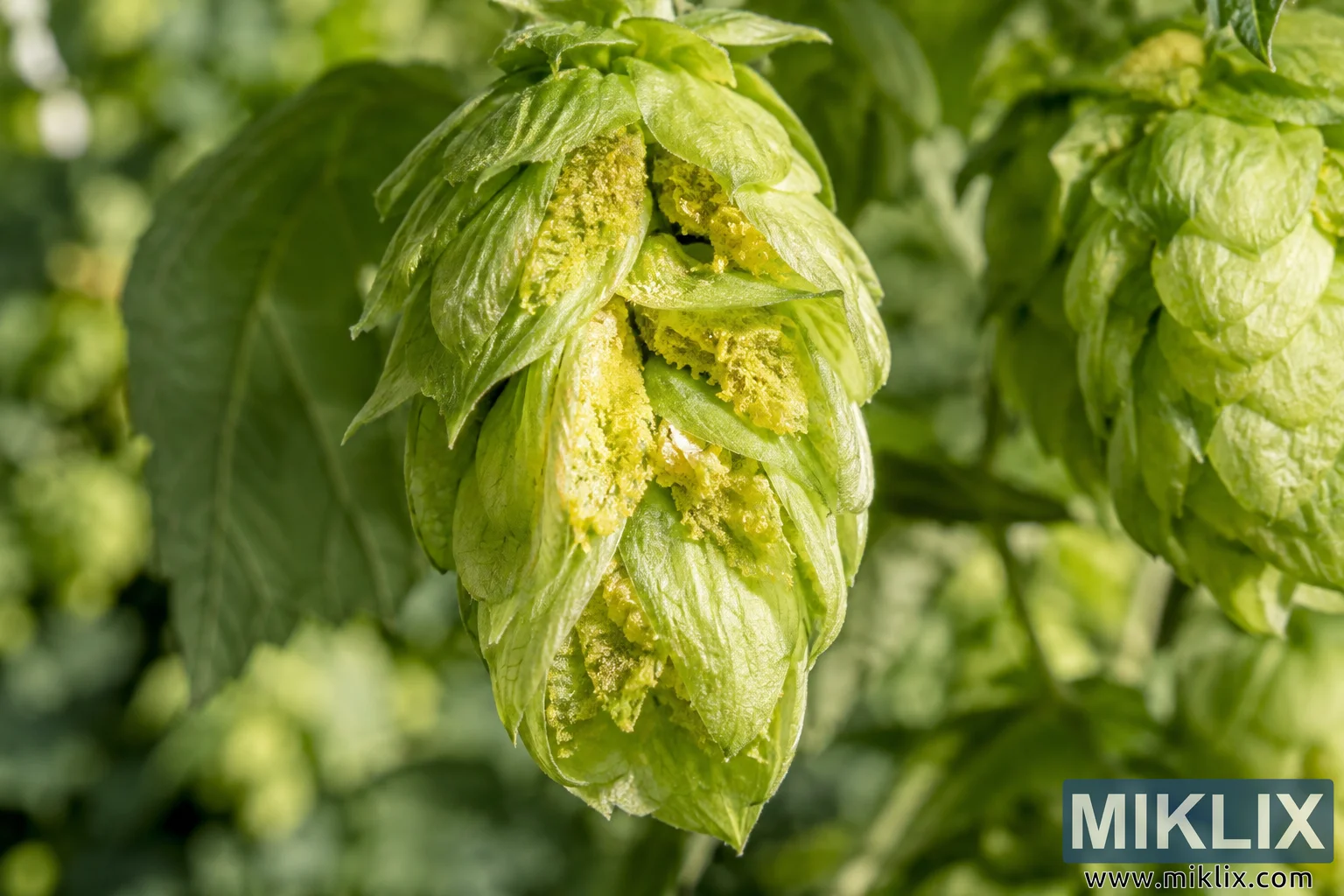
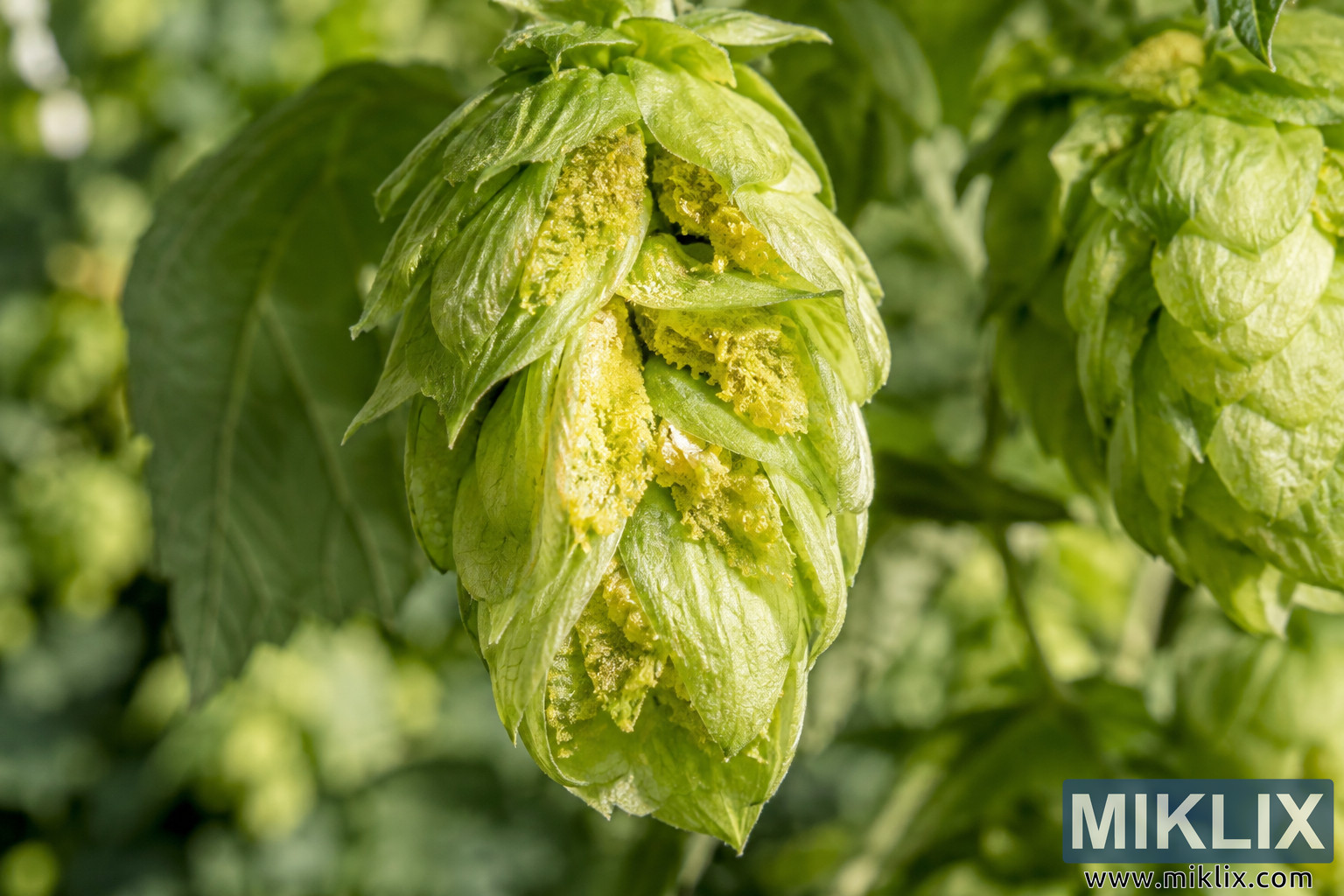
Close-up macro photograph of a fresh hop cone revealing golden lupulin glands, delicate green bracts, fine botanical textures, and natural hop plant structure.
Available versions of this image
The image files available for download below are less compressed and higher resolution - and as a result of that, higher quality - than the images embedded in articles and pages on this website, which are more optimized for file size in order to reduce bandwidth consumption.
Regular size (1,536 x 1,024)
Large size (3,072 x 2,048)
Very large size (4,608 x 3,072)
Extra large size (6,144 x 4,096)
Comically large size (1,048,576 x 699,051)
- Still uploading... ;-)
Image description
A highly detailed landscape-oriented macro photograph presents a fresh hop cone at extremely close range, emphasizing the intricate botanical structure of the cone and the golden-yellow lupulin glands hidden among its overlapping green bracts. The main hop cone occupies the central and slightly left-of-center portion of the composition, hanging naturally from the plant and filling much of the frame. Its elongated, tapered form is constructed from numerous thin, leaf-like bracts that overlap one another in layers from the top of the cone toward its pointed lower end. These bracts range in color from bright yellow-green where direct sunlight reaches them to deeper, richer green in shaded areas, creating a strong sense of depth and three-dimensional structure.
Several of the outer bracts are naturally separated or curled away from the center of the cone, allowing the interior to become visible. Between these layers are concentrated deposits of golden-yellow lupulin. The lupulin appears as a fine, granular, resinous material distributed along the inner surfaces and bases of the bracts. In the strongest areas of illumination, the glands have a warm yellow to amber-gold appearance and stand out distinctly against the surrounding green plant tissue. Their densely textured surface contrasts with the smoother, papery character of the hop bracts. Some deposits appear almost powdery, while others have a slightly glossy or resinous quality where the sunlight catches their surface. This combination of color and texture makes the lupulin one of the most visually prominent features of the image.
The bracts themselves display extensive fine detail. Their surfaces contain subtle ridges, veins, wrinkles, folds, and irregular edges. Some are thin enough for sunlight to pass partially through them, producing areas of luminous, translucent green. Others overlap more densely and therefore appear darker and more opaque. The natural variation between individual bracts prevents the cone from appearing geometrically uniform; instead, it has the complex, organic construction characteristic of a mature hop flower. Small bends and curled tips contribute additional texture, while the arrangement of the layers clearly communicates how the cone is assembled around its central axis.
Natural sunlight enters the scene strongly from above and toward the front, illuminating the main cone and creating crisp highlights on its upper and outward-facing surfaces. The lighting accentuates both the delicate veins in the green bracts and the granular structure of the yellow lupulin. Shadows form beneath overlapping layers, giving the cone substantial visual depth and helping separate individual bracts from one another. The overall lighting has the appearance of bright outdoor daylight rather than artificial studio illumination, reinforcing the impression that the hop cone is being observed directly on a living plant.
Behind the primary cone, a large hop leaf occupies much of the left and central background. Although it is less sharply focused than the main subject, its broad shape and visible vein structure provide botanical context and frame the cone without distracting from it. Additional green leaves and stems extend throughout the background. On the right side of the image, another hop cone hangs from the plant. This secondary cone remains recognizable but is softer in focus, allowing it to establish the surrounding growing environment while preserving the visual dominance of the central specimen. Smaller, more distant hop cones and foliage can also be perceived as diffuse green shapes deeper in the scene.
The photograph uses a shallow depth of field typical of macro photography. The primary hop cone, particularly its exposed bracts and lupulin deposits, receives the greatest degree of sharpness, while the vegetation behind it gradually dissolves into soft green bokeh. This selective focus isolates the detailed botanical subject from the busy natural background. The resulting contrast between sharply resolved foreground textures and softly blended background foliage directs attention immediately toward the lupulin-bearing interior of the cone.
The color palette is overwhelmingly natural and botanical, dominated by fresh greens ranging from pale lime and yellow-green to darker forest tones. Against this green environment, the warm yellow and golden coloration of the lupulin creates a clear visual accent. Bright highlights, deep green shadows, and softly blurred foliage combine to produce a vivid outdoor atmosphere. No labels, logos, packaging, text, or recognizable commercial branding appear anywhere in the image.
Overall, the image functions as both a visually engaging nature photograph and a detailed botanical study of a hop cone. Rather than showing only the familiar exterior silhouette, the close perspective reveals the layered construction of the cone and exposes the lupulin-bearing surfaces within it. The combination of macro-scale detail, natural sunlight, shallow depth of field, visible glandular material, and surrounding hop foliage provides a clear visual representation of the relationship between the cone's green bracts and its yellow resin-producing lupulin glands.
The image is related to: Hops in Beer Brewing: Neo1