
Image: Laboratory Analysis of Neo1 Hops Alpha Acid Content
Published: October 15, 2026 at 7:40:36 PM UTC
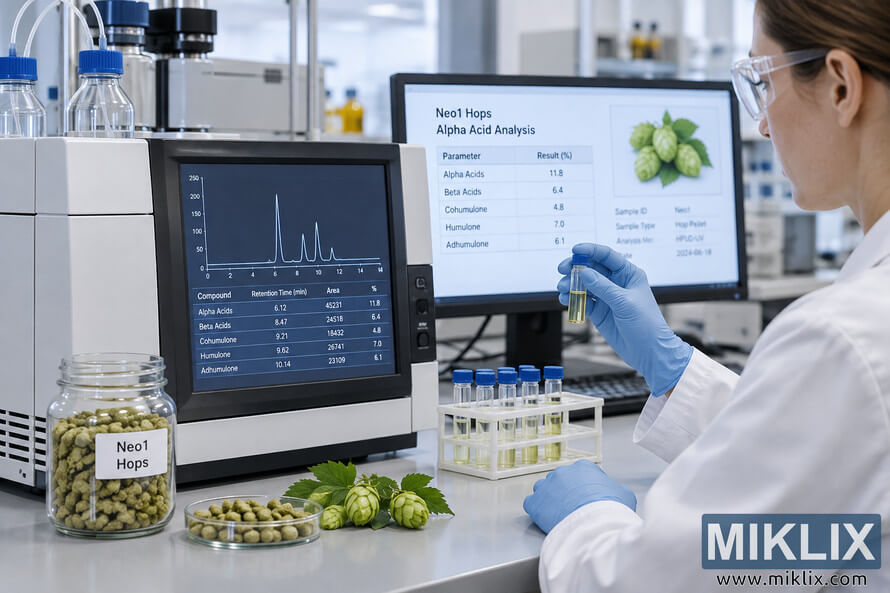
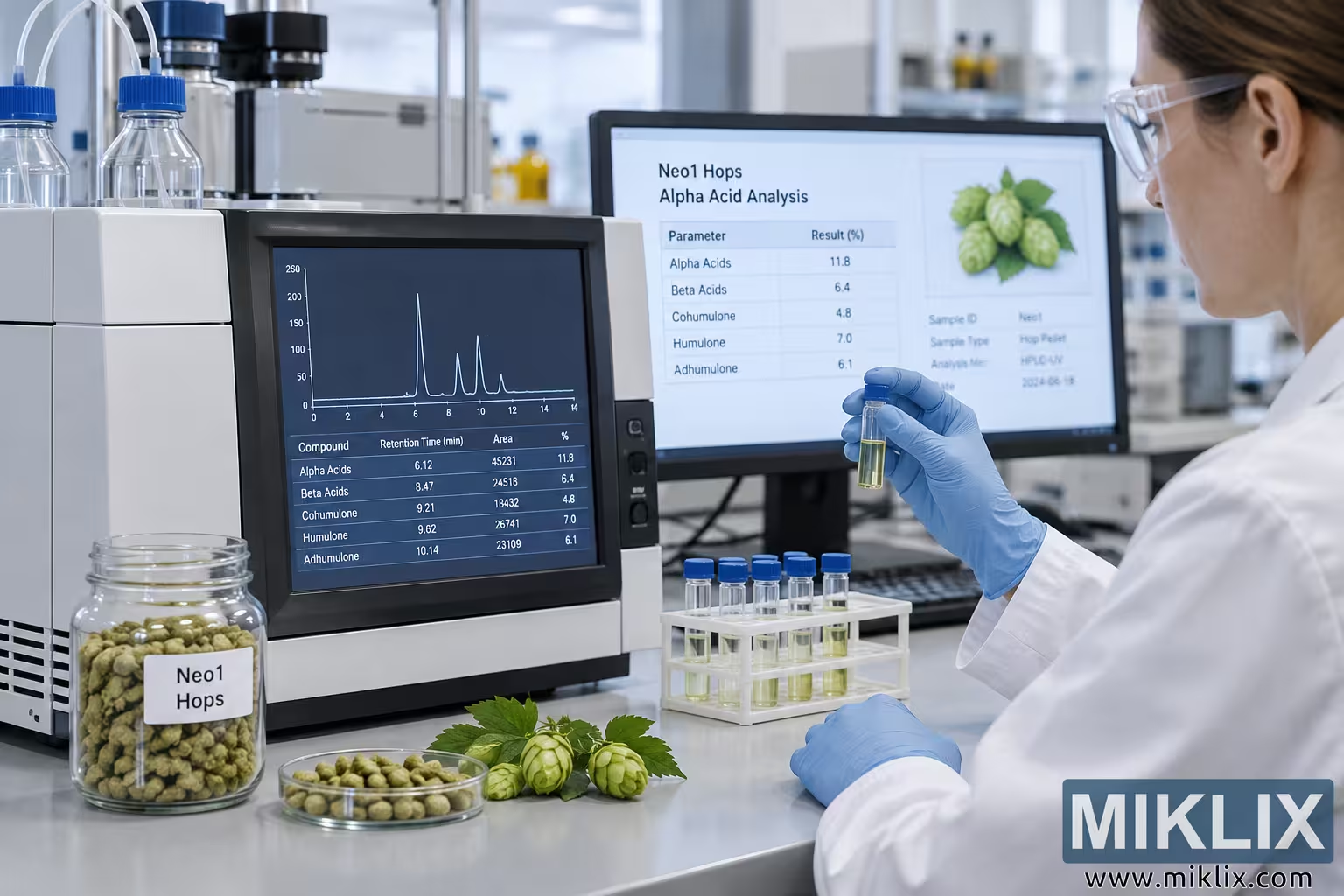
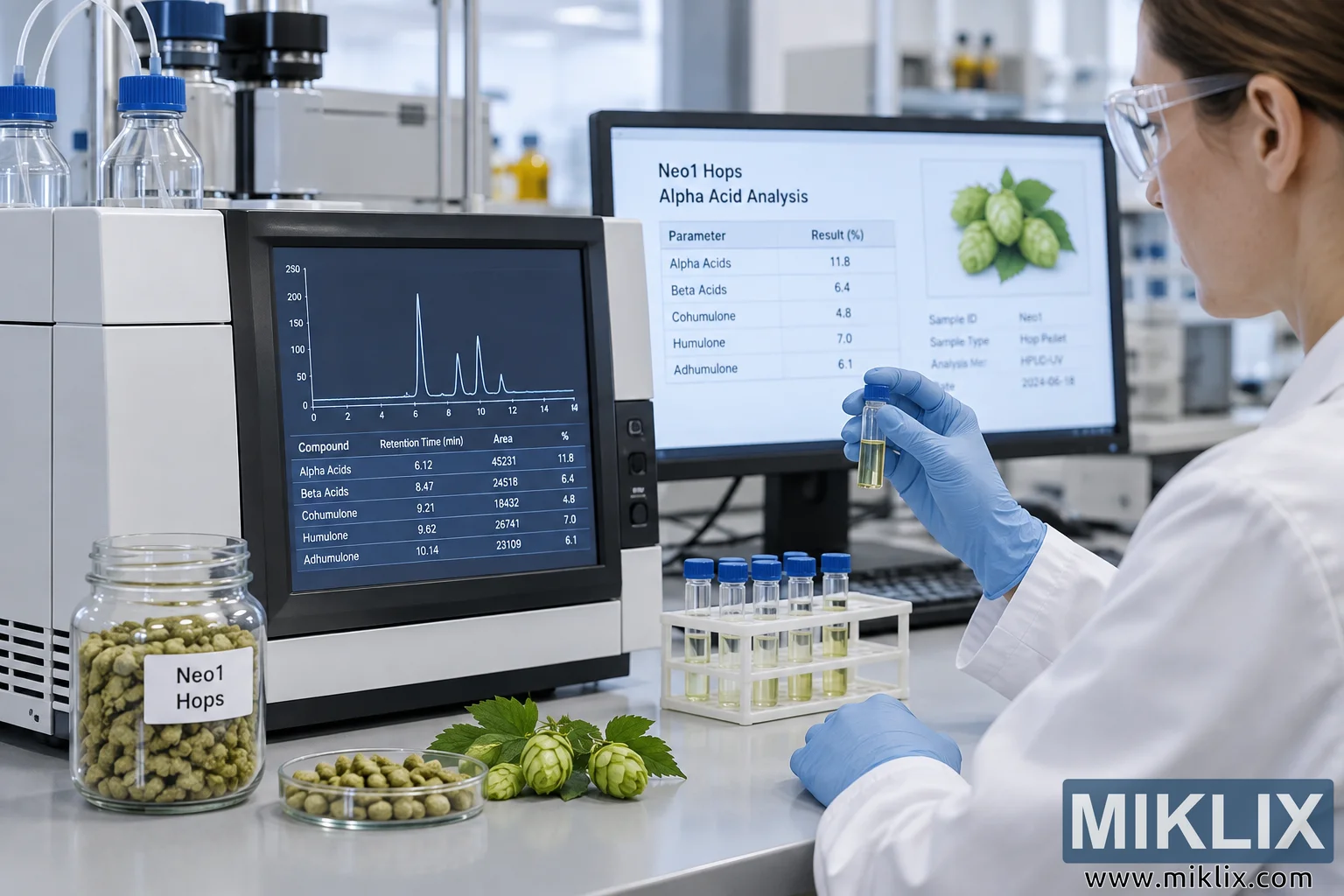
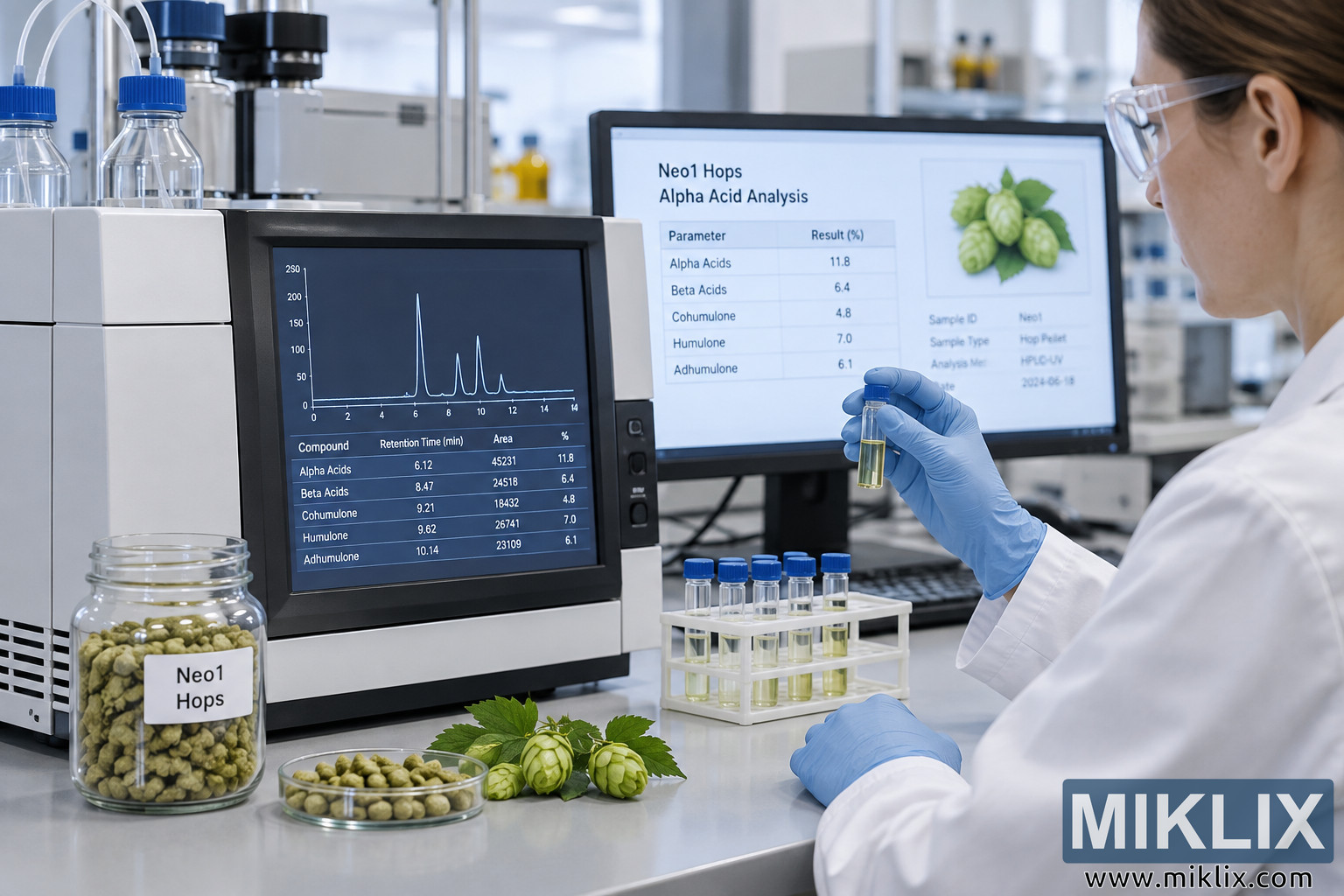
Laboratory testing of Neo1 hops for alpha acid content, showing a scientist, hop samples, prepared vials, chromatography equipment, and analytical results.
Available versions of this image
The image files available for download below are less compressed and higher resolution - and as a result of that, higher quality - than the images embedded in articles and pages on this website, which are more optimized for file size in order to reduce bandwidth consumption.
Regular size (1,536 x 1,024)
Large size (3,072 x 2,048)
Very large size (4,608 x 3,072)
Extra large size (6,144 x 4,096)
Comically large size (1,048,576 x 699,051)
- Still uploading... ;-)
Image description
A high-resolution landscape-oriented photograph depicts a clean, modern analytical laboratory where specialized scientific equipment is being used to evaluate the alpha acid content of a hop sample identified as Neo1 hops. The scene is brightly illuminated with soft, neutral laboratory lighting and has a crisp, professional appearance. The composition combines laboratory instrumentation, hop samples, analytical data, glassware, and a scientist at work, visually connecting agricultural hop material with precise chemical analysis.
On the right side of the image, a laboratory scientist is shown from the side while seated or positioned at the laboratory bench. The scientist wears a clean white laboratory coat, transparent protective safety glasses, and blue disposable gloves. Brown hair is pulled neatly back, helping create the appearance of a controlled professional laboratory environment. The scientist is holding a small transparent sample vial between the fingers of one gloved hand and examining it carefully. The vial contains a small quantity of pale yellow liquid, suggesting a prepared hop extract or analytical sample. The scientist's posture and gaze are directed toward the vial and nearby instrumentation, conveying concentration and careful inspection rather than casual observation.
The central and left portions of the scene are dominated by large pieces of analytical laboratory equipment. A substantial gray instrument occupies much of the left side and resembles chromatography equipment used for quantitative chemical analysis. Transparent solvent bottles with blue screw caps and flexible tubing are positioned on top of the equipment. In front of the instrument is a dark display showing a chromatogram. Several narrow peaks rise from a baseline across the graph, visually representing separated chemical components detected during the analysis. Beneath the graph is a structured results table containing analytical categories such as alpha acids, beta acids, cohumulone, humulone, and adhumulone, together with retention-time, area, and percentage-style numerical information. The display reinforces the impression that the laboratory is measuring individual hop acid components rather than simply performing a visual quality inspection.
Behind the foreground instrument, a larger computer monitor presents a clean analytical report headed 'Neo1 Hops Alpha Acid Analysis.' The report contains a parameter-and-results table, with alpha acids prominently included among the measured characteristics. Other hop-related acid components are also displayed. A photograph or illustration of green hop cones appears on the right side of the report, providing an immediate visual connection between the numerical laboratory data and the botanical material being tested. Additional sample information is arranged beneath the hop image in smaller text, giving the screen the appearance of a formal laboratory analysis interface or generated test report.
On the laboratory bench in front of the scientist is a white rack holding multiple small transparent sample vials. The vials have blue caps and contain varying amounts of pale yellow or nearly transparent liquid. Their orderly arrangement suggests that several prepared extracts, standards, or sample fractions are being handled as part of the testing workflow. The vial being held by the scientist matches the general appearance of those in the rack, making it appear to be one sample from the analytical sequence.
Physical hop material is prominently displayed across the foreground. At the lower left is a clear glass jar filled with dried green hop pellets and carrying a simple white label reading 'Neo1 Hops.' Immediately beside it is a shallow transparent laboratory dish containing additional hop pellets. Fresh green hop cones and leafy stems are arranged near the center of the work surface. Their layered, cone-shaped structures and vivid green color contrast with the muted gray laboratory equipment and the processed pellet material. Together, the fresh cones and dried pellets illustrate different physical forms in which hops may be encountered before laboratory preparation and chemical analysis.
The background is softly out of focus, revealing additional laboratory surfaces, bottles, equipment, shelving, and structural elements without distracting from the primary testing activity. The shallow depth of field keeps attention on the scientist, sample vial, analytical instruments, results displays, and hops. The overall environment appears sterile, organized, technologically advanced, and suitable for analytical chemistry or brewing-science research.
The image communicates the process of scientifically determining hop chemistry, with particular emphasis on alpha acid analysis. Alpha acids are represented visually through the chromatographic data and the analytical report rather than through an abstract graphic. The juxtaposition of whole green hop cones, processed hop pellets, extracted liquid samples, chromatography equipment, and numerical results creates a clear visual progression from agricultural material to laboratory measurement. No recognizable commercial branding or manufacturer logos are visible on the laboratory instruments or other objects. The only prominent identifying wording relates to the sample itself, Neo1 hops, and the analytical subject matter. Overall, the photograph presents a realistic, technically focused interpretation of laboratory testing equipment analyzing Neo1 hops for alpha acid content, with a professional scientist actively examining a prepared sample while quantitative analytical results are displayed nearby.
The image is related to: Hops in Beer Brewing: Neo1