
Image: Measuring and Adding Neo1 Hop Pellets to Boiling Wort
Published: October 15, 2026 at 7:40:36 PM UTC
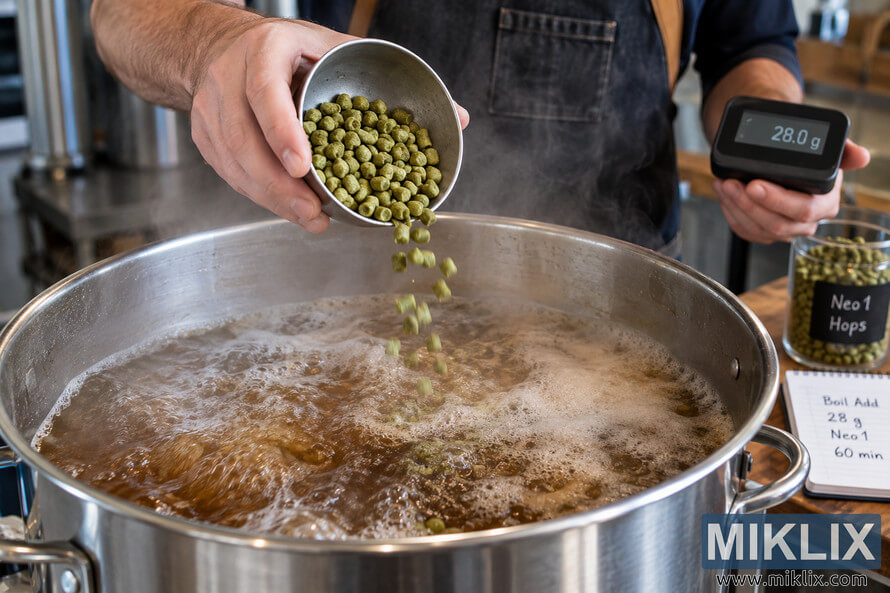
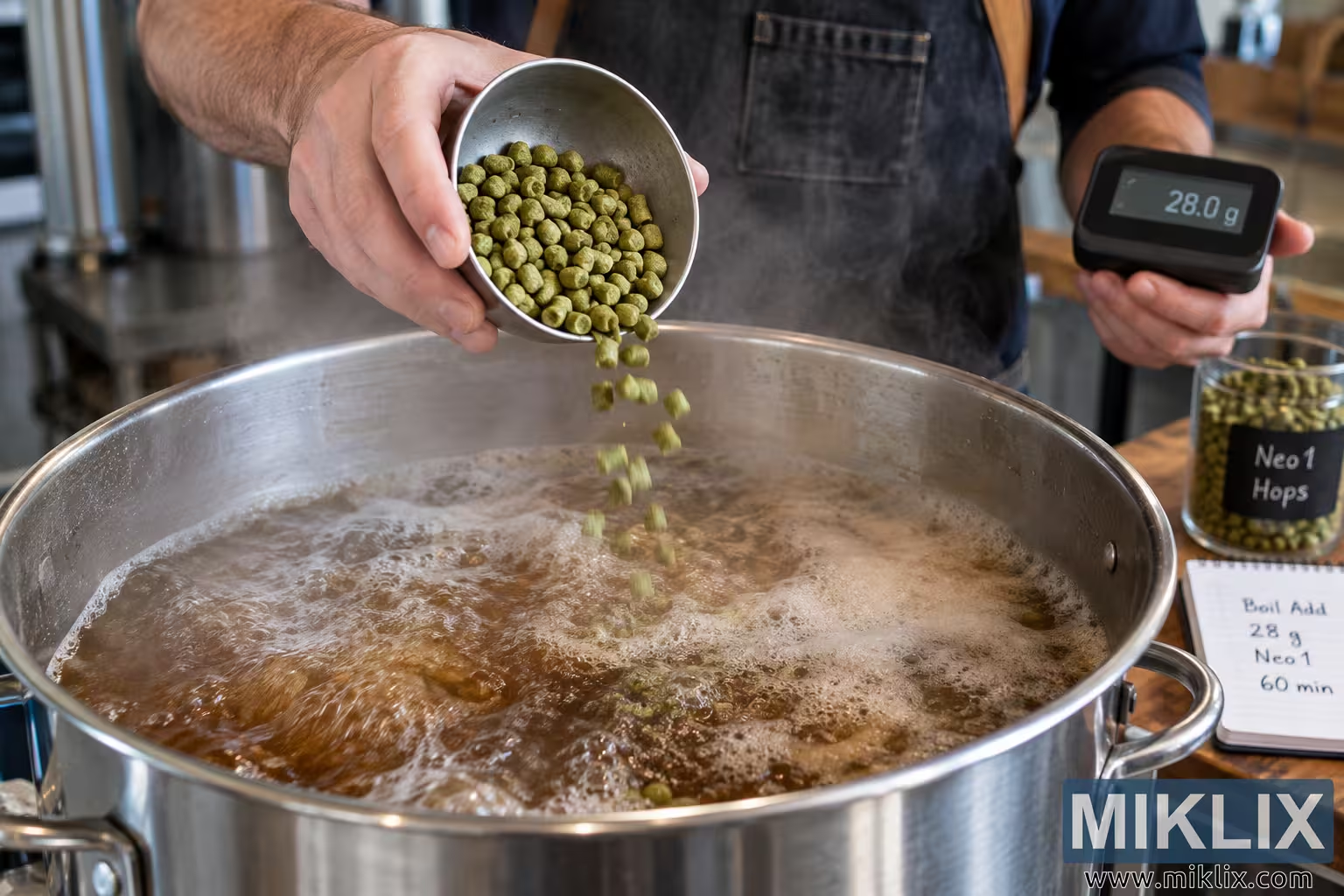
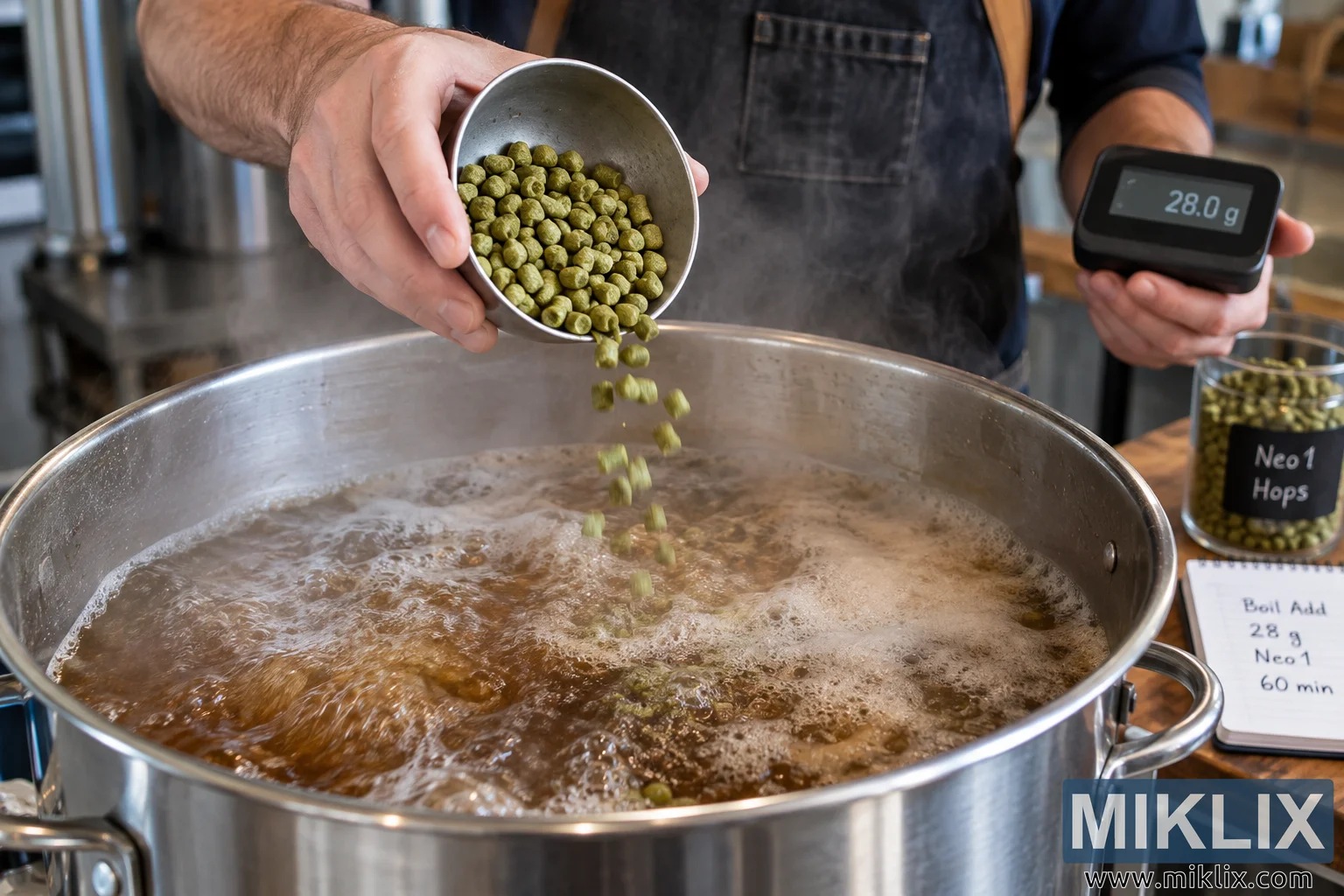
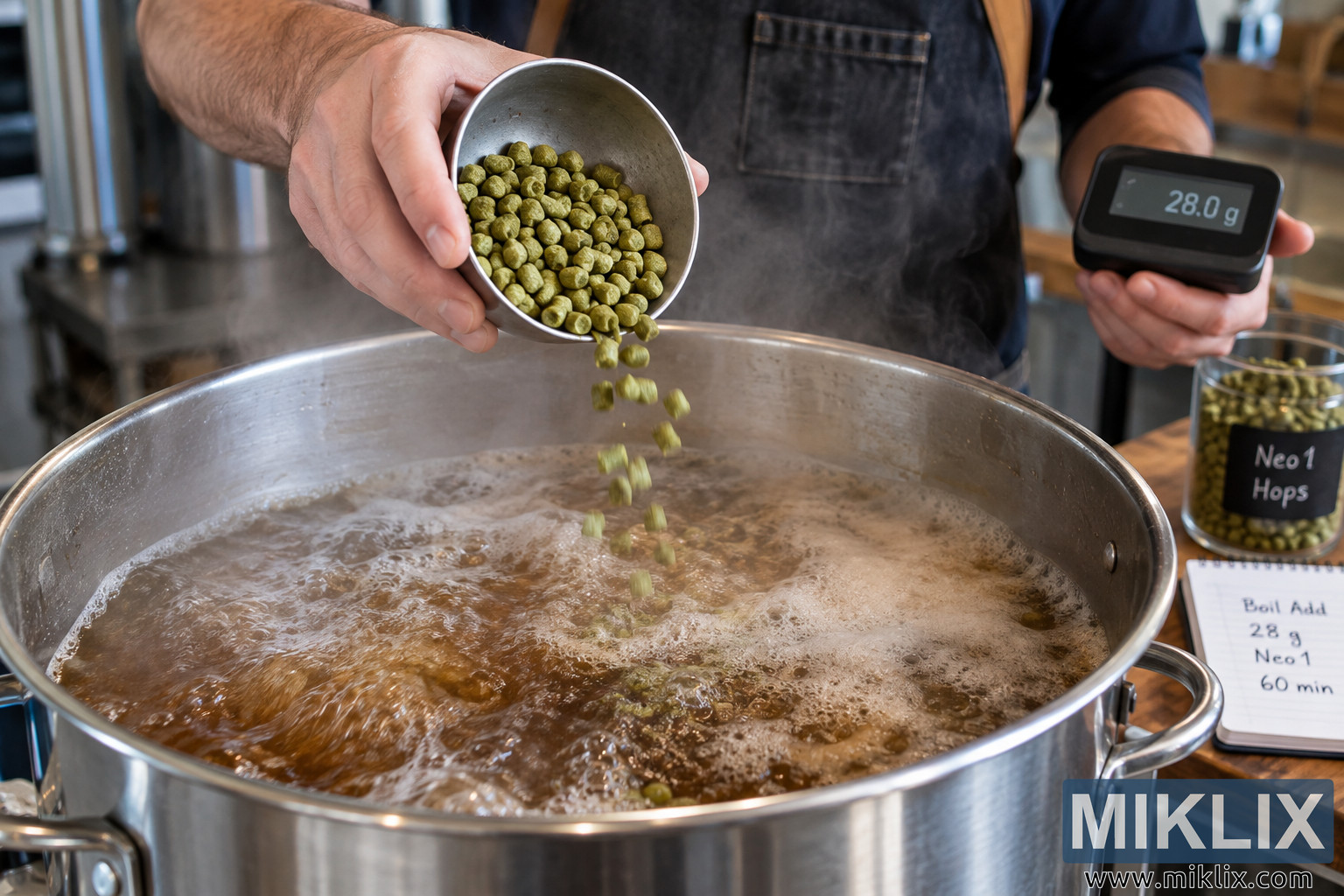
High-resolution brewing image showing 28 g of Neo1 hop pellets being measured and added to boiling wort in a stainless-steel brew kettle.
Available versions of this image
The image files available for download below are less compressed and higher resolution - and as a result of that, higher quality - than the images embedded in articles and pages on this website, which are more optimized for file size in order to reduce bandwidth consumption.
Regular size (1,536 x 1,024)
Large size (3,072 x 2,048)
Very large size (4,608 x 3,072)
Extra large size (6,144 x 4,096)
Comically large size (1,048,576 x 699,051)
- Still uploading... ;-)
Image description
A realistic, high-resolution landscape photograph captures an active stage of the beer-brewing process as hop pellets are measured and added to boiling wort in a large stainless-steel brew kettle. The composition is centered on the wide, open kettle, which occupies most of the lower half of the image and immediately establishes the scene as a hands-on brewing environment. Inside the vessel, amber-brown wort is at a vigorous rolling boil. The liquid churns across the surface with visible waves, bubbles, foam, and patches of pale froth, conveying heat and continuous movement. Wisps of steam rise naturally from the kettle, softening portions of the background and reinforcing the impression that the wort is extremely hot and actively boiling.
Above the kettle, a brewer is shown from approximately the chest downward, keeping attention on the brewing action rather than on the person's identity. The brewer wears a dark shirt and a dark work apron with a practical front pocket. One hand holds a small stainless-steel measuring cup filled with compact green hop pellets. The cup is tilted toward the kettle, and several pellets are captured in midair as they fall from the container into the boiling wort. This suspended motion creates a clear visual narrative: the hops have been measured and are now being introduced to the boil. Some pellets are still clustered inside the metal cup, while others form an irregular stream between the cup and the surface of the wort. A few pellets can also be seen reaching or entering the foamy liquid below.
The brewer's other hand holds a compact digital scale or weighing device. Its illuminated display clearly reads 28.0 g, visually communicating the measured quantity associated with the hop addition. The device is plain and functional, without visible commercial branding. The simultaneous presence of the measured hops, the numerical weight display, and the boiling kettle makes the brewing procedure easy to understand at a glance. Rather than depicting hops merely as an ingredient, the photograph emphasizes accurate measurement and timing as part of a controlled brewing process.
On the wooden work surface to the right of the kettle sits a transparent container filled with additional green hop pellets. A simple dark handwritten-style label identifies the contents as Neo1 Hops. The container has no recognizable manufacturer logo, trademarked packaging, or other actual brand identity. Beside it is a small notebook or brewing log containing handwritten process notes. The visible notes indicate a boil addition of 28 g of Neo1 hops at 60 minutes. These details give the scene the feeling of a carefully documented brewing session and provide useful context for the action occurring in the center of the frame. The notebook, hop container, measuring vessel, and digital scale together suggest an organized workflow in which ingredients are weighed, recorded, and added according to a brewing schedule.
The kettle itself has a clean but realistically used stainless-steel finish, with subtle reflections, minor surface marks, sturdy side handles, and a broad rolled rim. Its metallic surface catches the ambient light and contrasts with the warm amber color of the wort and the muted green of the hop pellets. The polished metal measuring cup echoes the kettle's material, visually connecting the tools used during the brewing process. The wooden counter introduces a warmer natural texture that balances the industrial appearance of the stainless steel equipment.
The background is intentionally less prominent and slightly out of focus. It suggests a well-equipped brewing or kitchen workspace with additional stainless-steel vessels, counters, and equipment, but no specific commercial location or branded machinery is identifiable. This shallow depth of field keeps the viewer's attention on the important foreground elements: the falling hop pellets, the brewer's hands, the boiling wort, and the weight shown on the scale. Natural-looking indoor illumination creates soft highlights on the metal surfaces and realistic shadows around the hands and equipment. The lighting also makes the steam, foam, hop pellets, and turbulent liquid clearly visible without giving the photograph an overly staged or artificial appearance.
The image uses a landscape orientation and a close, slightly elevated viewpoint that allows the viewer to look directly into the brew kettle while still seeing the brewer's hands and measuring equipment. The perspective creates the impression of standing beside the brewer during the hop addition. The kettle dominates the foreground, while the brewer's hands form a visual bridge between the ingredients and the boiling wort. The falling pellets provide the strongest sense of motion and act as the focal point of the photograph. Their green color stands out against both the stainless-steel cup and the warm brown wort beneath them.
Overall, the photograph depicts the practical process of measuring and adding Neo1 hop pellets during the wort boil. It combines recognizable brewing equipment, a precise 28.0-gram measurement, an active rolling boil, brewing notes, and a visible hop addition into a single instructional yet natural-looking scene. The image communicates precision, craftsmanship, and hands-on beer production without displaying any actual commercial brands. It would be suitable as an illustrative image for educational material about homebrewing, hop additions, wort boiling, recipe formulation, brewing ingredients, or the timed stages of beer production.
The image is related to: Hops in Beer Brewing: Neo1