
Image: Organized Homebrewing Workspace with Neo1 Hops and Brewing Notes
Published: October 15, 2026 at 7:40:36 PM UTC
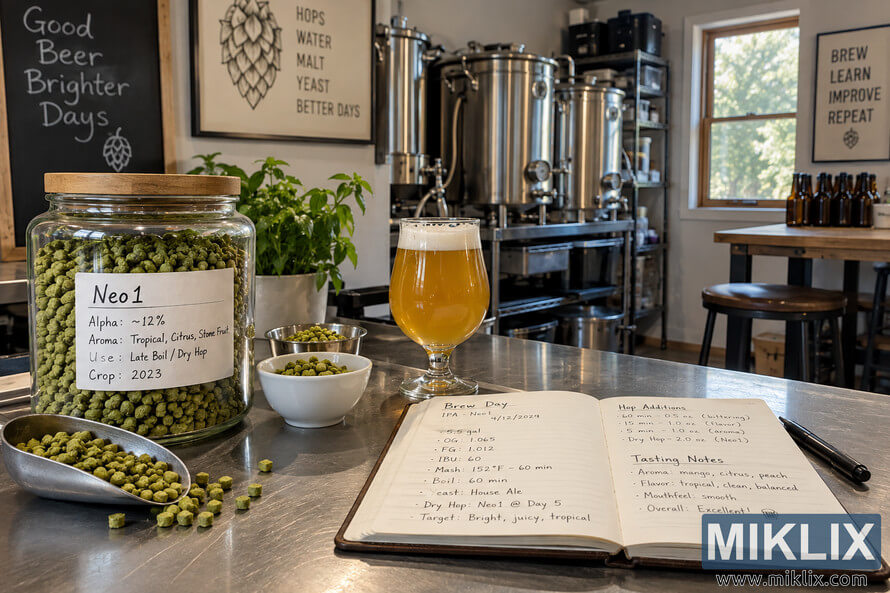
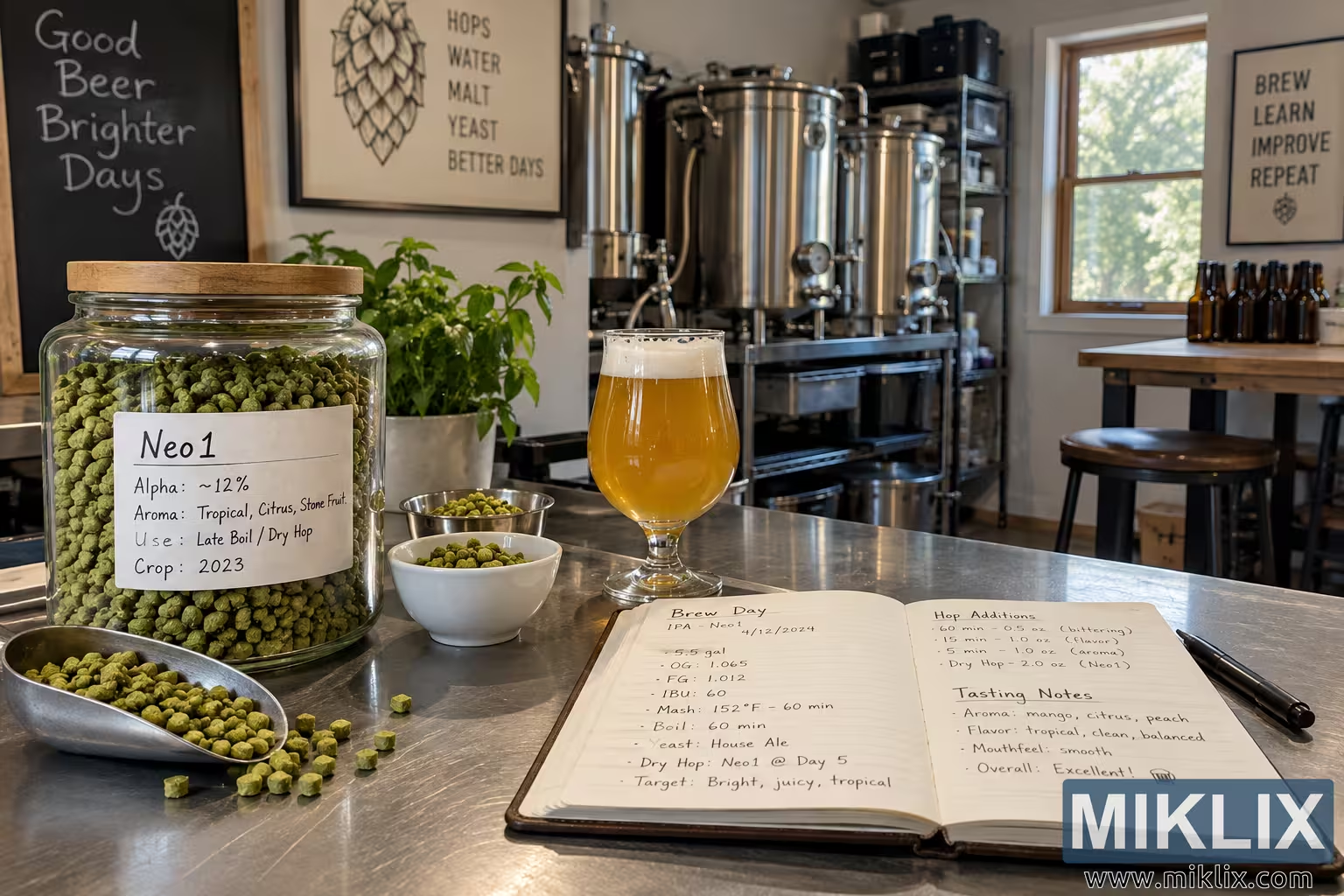
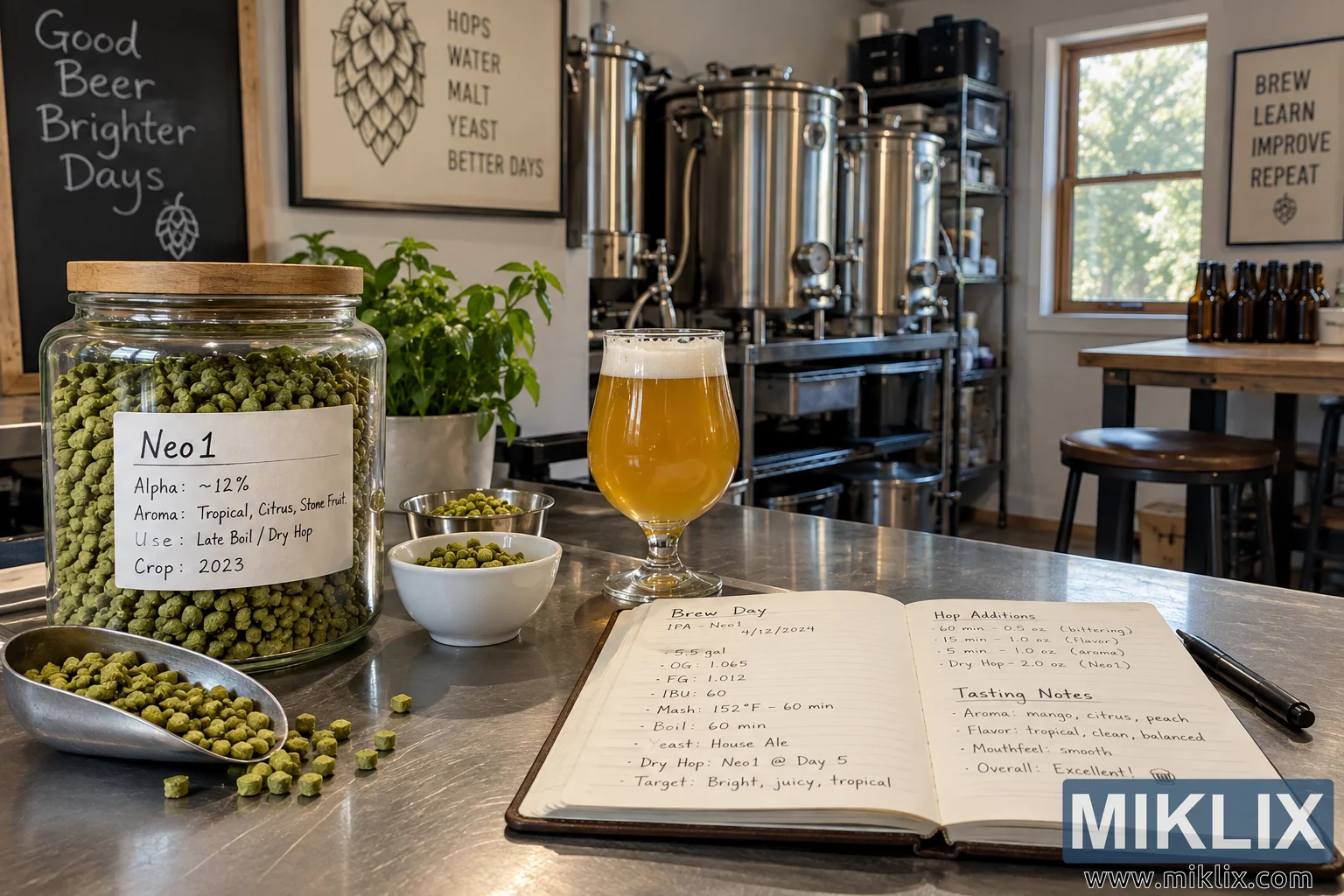
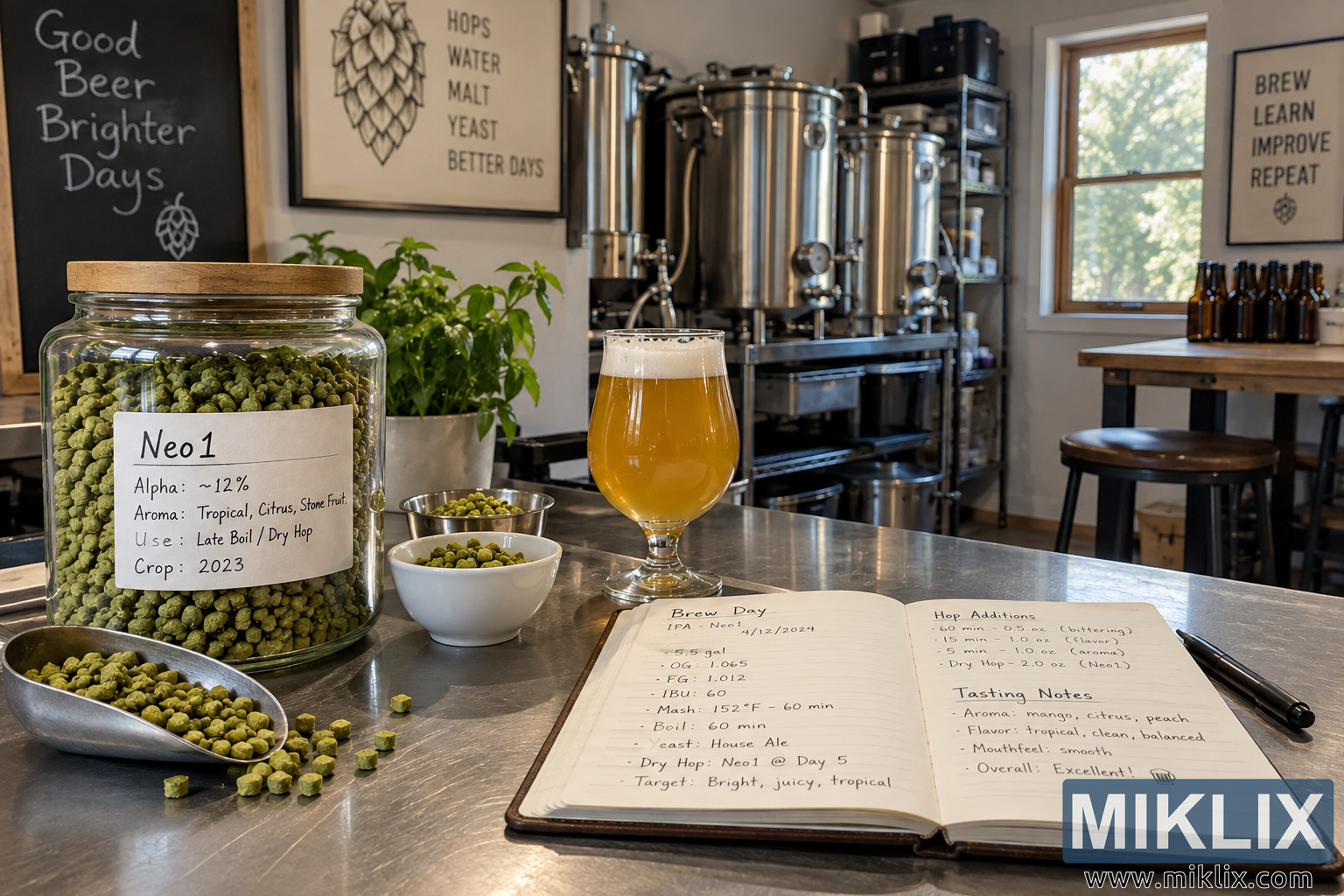
Organized homebrewing workspace featuring Neo1 hop pellets, handwritten brew-day and tasting notes, a glass of hazy golden beer, and stainless-steel brewing equipment.
Available versions of this image
The image files available for download below are less compressed and higher resolution - and as a result of that, higher quality - than the images embedded in articles and pages on this website, which are more optimized for file size in order to reduce bandwidth consumption.
Regular size (1,536 x 1,024)
Large size (3,072 x 2,048)
Very large size (4,608 x 3,072)
Extra large size (6,144 x 4,096)
Comically large size (1,048,576 x 699,051)
- Still uploading... ;-)
Image description
A wide, landscape-oriented photograph depicts a warm, carefully organized homebrewing workspace that combines the practical character of a small craft brewery with the inviting atmosphere of a well-kept home workshop. The scene is viewed across a large stainless-steel work surface, which fills much of the foreground and provides a clean, reflective foundation for the brewing ingredients, equipment, drink, and handwritten notes. Natural daylight enters through a rectangular window on the right side of the room, while soft interior illumination adds warmth to the neutral walls, wood accents, stainless-steel vessels, and green hop pellets.
The most prominent object on the left side of the foreground is a large cylindrical glass storage jar with a thick wooden lid. It is filled almost to the top with compact green hop pellets. A simple handwritten paper label attached to the front identifies the contents as Neo1 and includes several brewing details. The label notes an alpha value of approximately twelve percent and describes aromatic characteristics associated with tropical fruit, citrus, and stone fruit. It also suggests late-boil and dry-hop use and lists a crop year. The handwritten presentation makes the container feel like part of an active brewer's ingredient library rather than a commercial retail package. There are no visible commercial logos or recognizable brand identities anywhere in the scene.
In front of and beside the jar are several additional portions of hop pellets. A shallow metal scoop rests diagonally near the lower-left corner, filled with pellets, with a handful spilling naturally onto the stainless-steel counter. Two small bowls behind the scoop contain additional measured quantities of hops. These neatly arranged ingredients reinforce the impression that the brewer is preparing, documenting, or evaluating a hop addition rather than simply storing equipment. The rich olive-green color of the pellets contrasts with the silver worktop and the warm amber tones elsewhere in the photograph.
Near the center of the composition stands a clear stemmed tasting glass filled with hazy golden beer. A pale, creamy foam cap sits at the top of the liquid, and the glass catches highlights from the window and surrounding room. Its golden-orange color provides a visual connection between the raw brewing ingredients on the left and the finished beverage in the center. The glass is positioned directly in front of the larger brewing vessels in the background, subtly illustrating the progression from ingredient selection and brewing to the finished drink.
An open brewing notebook dominates the lower-right foreground. Its cream-colored lined pages contain extensive handwritten brew-day information, including recipe measurements, original and final gravity figures, bitterness information, mash and boil notes, yeast details, dry-hop timing, hop additions, and tasting observations. The notes reference Neo1 and describe a bright, juicy, tropical target profile. On the facing page, the tasting section records aromatic and flavor impressions associated with mango, citrus, peach, and tropical qualities, along with observations about mouthfeel and overall balance. A dark pen rests immediately to the right of the notebook, suggesting that the brewer has just been writing or is ready to add further observations. The notebook, pen, measured hops, and tasting glass together create the impression of a methodical brewing session in progress.
The middle and rear portions of the room contain substantial stainless-steel brewing equipment. Several tall cylindrical kettles or fermenting vessels stand on a dark metal support structure. Their polished surfaces, lids, fittings, valves, gauges, and connecting components give the workspace a serious but approachable technical character. Additional metal vessels and brewing accessories are stored underneath the main equipment. Behind and beside the brewing system, open shelving holds dark storage containers and smaller supplies, all arranged in a relatively orderly fashion. The equipment looks clean and maintained, reinforcing the overall theme of organization and careful brewing practice.
Decorative details soften the industrial appearance of the stainless steel. A healthy green potted plant sits behind the hop jar, bringing a fresh botanical element into the workspace and visually echoing the green color of the hops. On the back wall, brewing-themed artwork includes a stylized hop illustration and typography referencing the fundamental brewing ingredients of hops, water, malt, and yeast. A dark chalkboard on the far left carries an upbeat handwritten beer-related message accompanied by a small hop drawing. Another framed piece on the right presents a simple sequence about brewing, learning, improving, and repeating. These decorations communicate enthusiasm for experimentation and continual refinement without introducing recognizable commercial branding.
On the right side of the background, the window reveals softly blurred green foliage outside, indicating a bright daytime setting. Beneath and near the window is a simple wooden worktable holding a tidy row of unlabeled brown glass bottles. A dark round stool sits in front of the table. Cardboard storage boxes and additional practical workshop items are visible closer to the floor, adding realism without making the room feel cluttered. The combination of wood, dark metal, glass, stainless steel, greenery, and neutral wall colors gives the room a rustic-industrial aesthetic that remains comfortable and domestic.
The photographic composition uses depth effectively. The hop jar, scoop, notebook, and tasting glass are sharply emphasized in the foreground, while the larger brewing equipment remains clearly recognizable farther back. The window and rear furnishings provide additional depth and environmental context. Reflections across the stainless-steel counter enhance the sense of cleanliness and dimensionality, while the balanced distribution of objects prevents either side of the landscape frame from feeling empty. Warm natural tones and restrained highlights create a welcoming atmosphere rather than the stark appearance of a commercial production facility.
Overall, the image presents homebrewing as an organized, thoughtful, hands-on craft. Raw Neo1 hop pellets, carefully recorded brewing notes, measured ingredients, substantial brewing equipment, and a freshly poured glass of hazy golden beer all occupy the same coherent workspace. The visual story emphasizes preparation, experimentation, documentation, tasting, and refinement. Despite the amount of equipment and information present, the environment remains tidy and approachable, conveying the feeling of an experienced homebrewer's dedicated brewing room where ingredients and observations are systematically managed while the pleasure and creativity of making beer remain central to the scene.
The image is related to: Hops in Beer Brewing: Neo1