
Image: Water Chemistry Testing Kit and Brewing Water Minerals
Published: October 15, 2026 at 7:40:36 PM UTC
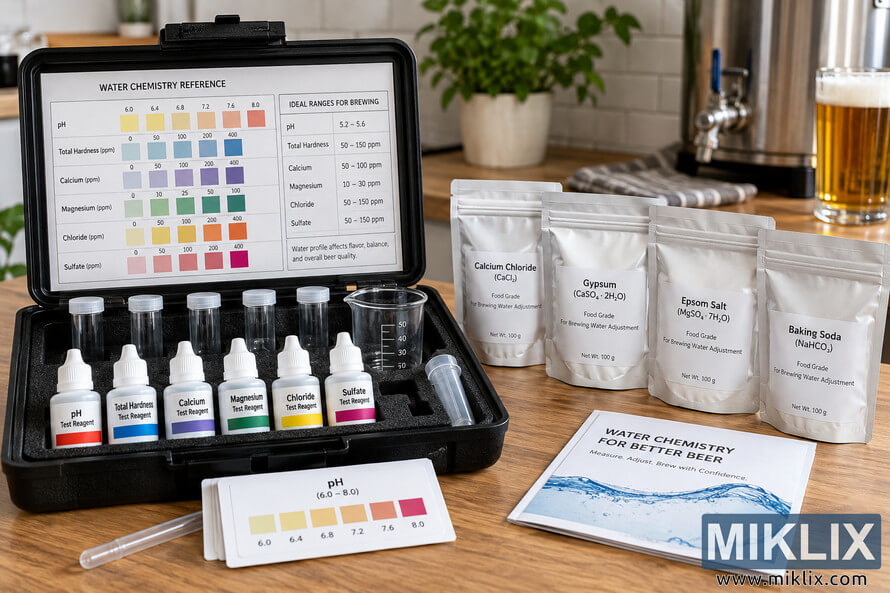
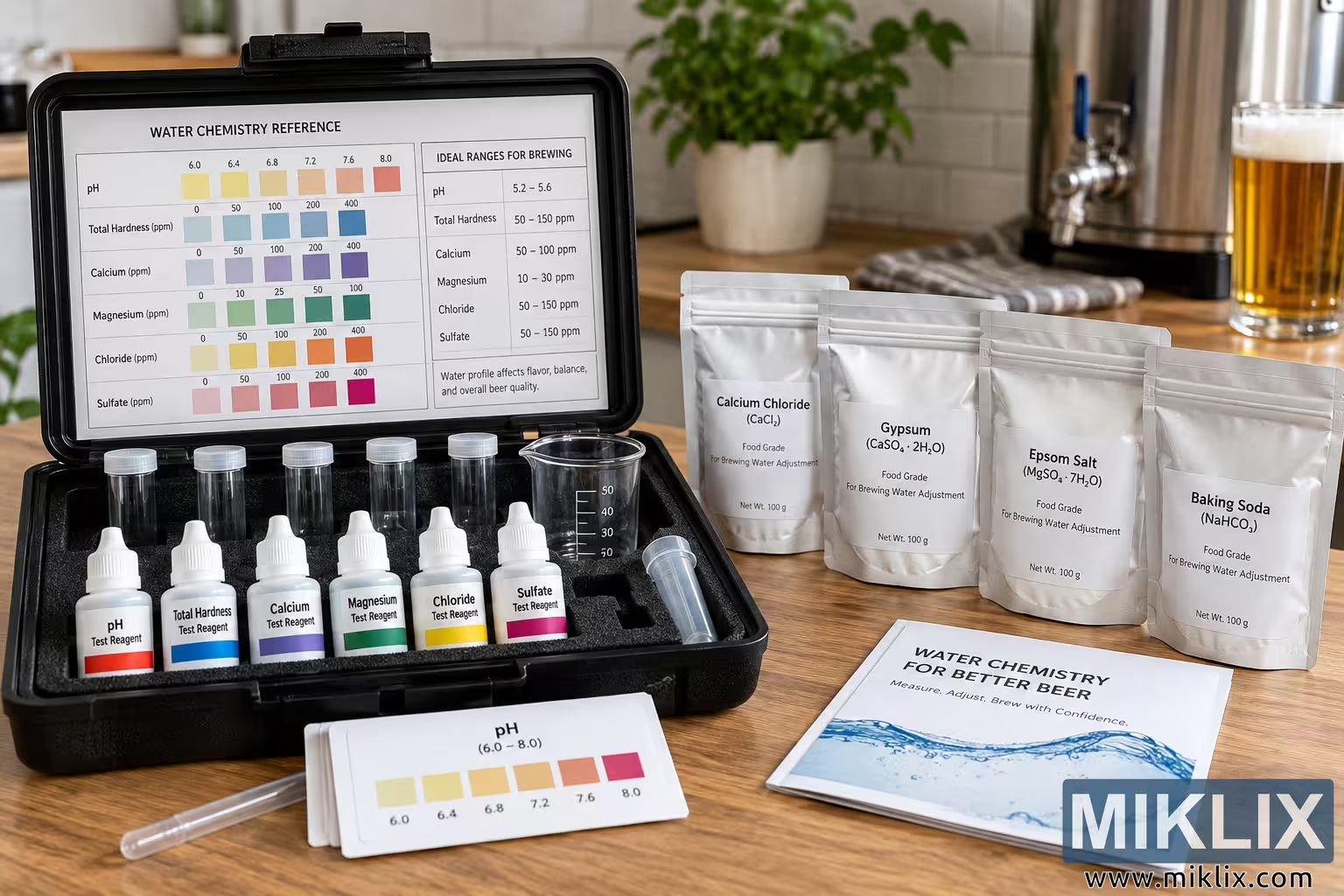
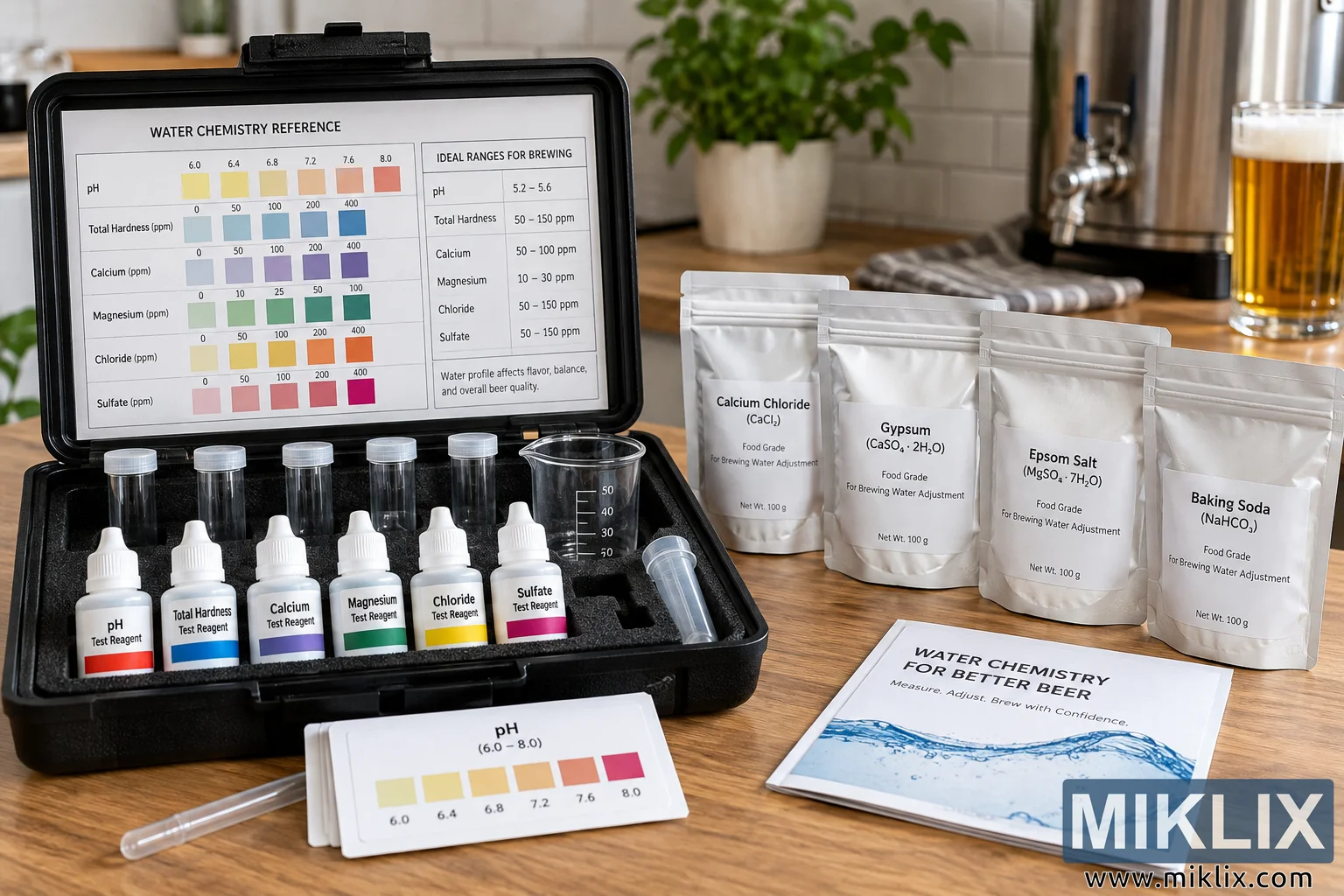
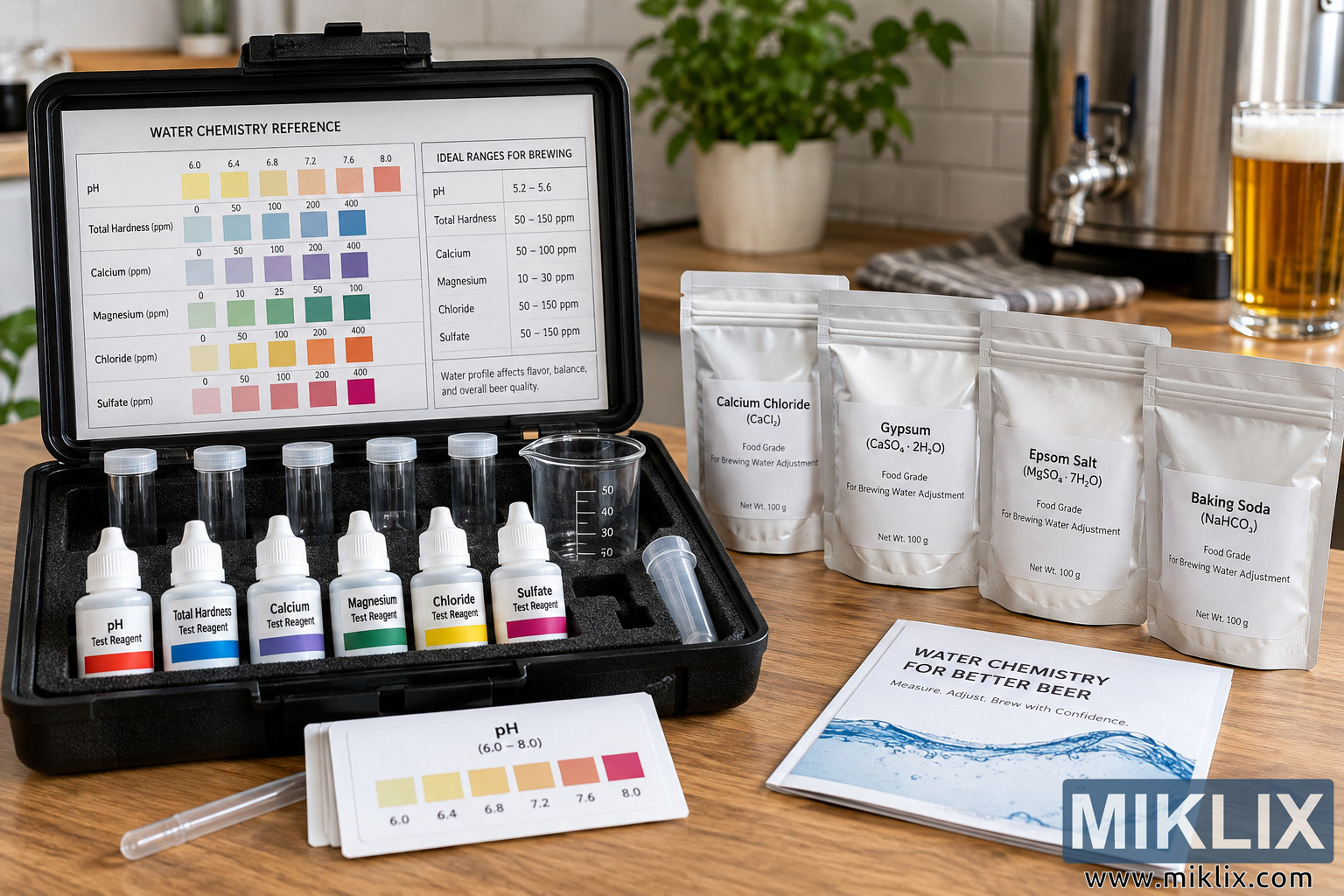
Water chemistry testing kit with reagents, reference charts, measuring tools, and brewing minerals for testing and adjusting a beer brewing water profile.
Available versions of this image
The image files available for download below are less compressed and higher resolution - and as a result of that, higher quality - than the images embedded in articles and pages on this website, which are more optimized for file size in order to reduce bandwidth consumption.
Regular size (1,536 x 1,024)
Large size (3,072 x 2,048)
Very large size (4,608 x 3,072)
Extra large size (6,144 x 4,096)
Comically large size (1,048,576 x 699,051)
- Still uploading... ;-)
Image description
A wide, landscape-oriented product-style photograph presents a comprehensive water chemistry testing and mineral adjustment kit arranged on a warm wooden countertop in a clean home-brewing environment. The composition is brightly and naturally illuminated, with the main testing equipment occupying the left half of the frame and a collection of mineral additives arranged across the center and right. The background is softly out of focus, creating a shallow depth-of-field effect that keeps attention on the equipment while still establishing a practical brewing setting. No recognizable commercial branding or company logos are visible anywhere in the scene.
The dominant object is a sturdy black hard-shell carrying case positioned open on the left side of the countertop. Its interior is fitted with precisely cut black foam that holds a series of small laboratory-style components. Mounted inside the raised lid is a large water chemistry reference chart. The chart contains several horizontal color scales for common brewing-water measurements, including pH, total hardness, calcium, magnesium, chloride, and sulfate. Each scale progresses through a range of colored squares accompanied by numerical reference values. A separate table on the right side of the chart indicates example ideal ranges for brewing and reinforces the analytical, technical character of the kit. The reference material is cleanly designed with black typography on a white background, allowing the colored testing scales to stand out clearly.
Inside the lower section of the case are several transparent sample tubes with screw-on caps arranged in a row toward the back. In front of them is a matching row of compact white reagent bottles with pointed dispensing caps. The bottles are generically labeled according to the measurements they are intended to test, such as pH, total hardness, calcium, magnesium, chloride, and sulfate. Each reagent bottle has a simple colored band near the bottom of its label to help visually distinguish one test from another. The colors correspond broadly with those used on the reference chart in the lid. A small transparent measuring beaker sits toward the right side of the open case and includes visible graduated measurement markings. Another clear sample tube rests diagonally nearby, partially outside its foam compartment, adding a subtle sense that the kit is ready for active use rather than merely being displayed.
In front of the case, on the wooden work surface, lies a clear plastic transfer pipette oriented diagonally from the lower left toward the center. Next to it is a small stack of rectangular pH reference cards. The upper card shows a sequence of colored blocks ranging from pale yellow through warm orange and into deeper pink-red tones, accompanied by representative pH values. These accessories reinforce the impression of a complete manual testing system designed for measuring and adjusting brewing water before or during the brewing process.
The center-right portion of the photograph features four upright, resealable white pouches containing common brewing-water minerals. The bags are deliberately generic and carry no commercial branding. Their straightforward labels identify calcium chloride, gypsum, Epsom salt, and baking soda, along with chemical formulas and simple indications that the materials are intended for brewing-water adjustment. The bags vary slightly in position and overlap naturally, producing a visually pleasing progression across the countertop. Their matte white surfaces contrast with the black testing case and the rich brown wood beneath them. The visible powders are contained securely inside the opaque packages, giving the arrangement the appearance of an organized brewing workspace rather than a loose collection of chemicals.
At the lower right is a small generic educational booklet about water chemistry for brewing. Its white cover includes bold dark lettering and a blue illustration of a flowing wave of water. The booklet visually connects the testing equipment and mineral additions with their intended purpose: measuring a source-water profile, understanding its mineral composition, and making controlled adjustments for brewing. Its placement at a slight angle prevents the arrangement from feeling overly rigid while maintaining the polished aesthetic of a professional product photograph.
The surrounding environment subtly establishes a home or small-scale craft brewing context. Behind the mineral bags is a leafy green plant in a light-colored ceramic pot, introducing a natural accent and balancing the otherwise technical equipment. The rear wall is covered with clean white rectangular tiles. On the right side of the background stands a large stainless-steel brewing vessel with a metal spigot. A folded striped kitchen or brewing towel rests on the countertop nearby. At the far right edge is a tall clear glass filled with golden amber beer and topped with a soft layer of pale foam. The glass is intentionally secondary to the testing equipment and slightly separated from the central composition, serving as a visual reminder of the finished beverage that careful water chemistry can help produce.
The photograph combines laboratory precision with the approachable atmosphere of home brewing. Transparent tubes, reagent bottles, measuring equipment, mineral salts, reference charts, and educational material communicate systematic water analysis, while the wooden countertop, plant, brewing vessel, and finished beer make the scene feel practical and inviting. Lighting is soft and directional, producing gentle highlights on the plastic containers, white mineral pouches, glassware, and stainless steel without harsh reflections. Shadows are restrained and realistic. The image uses a broad horizontal composition suitable for editorial, educational, e-commerce, or brewing-related web content, with crisp foreground detail and a softly blurred background. Overall, the scene communicates the process of testing brewing water, evaluating key chemical characteristics, and making measured mineral additions to create a desired water profile for beer brewing.
The image is related to: Hops in Beer Brewing: Neo1