
Image: Yeast Starter Preparation for Neo1 Hopped Beer Fermentation
Published: October 15, 2026 at 7:40:36 PM UTC
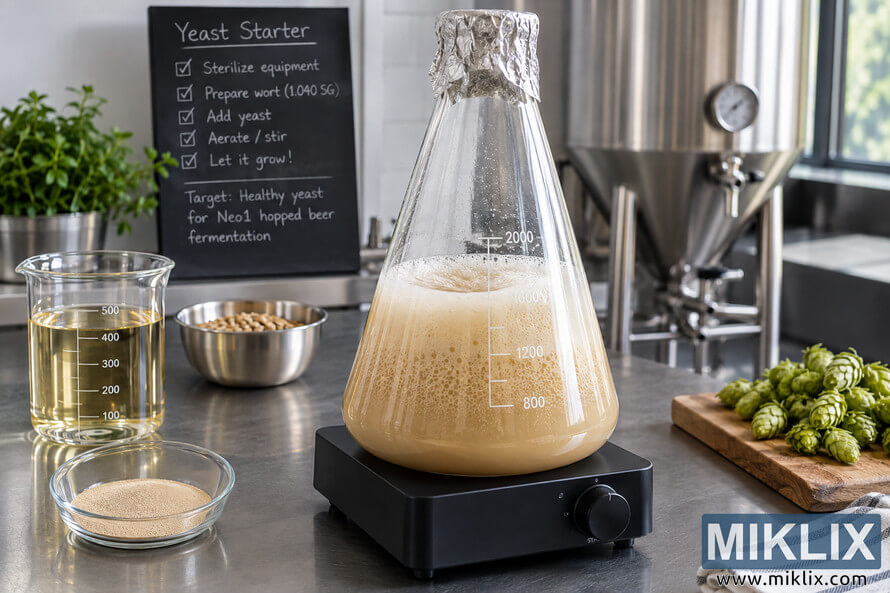
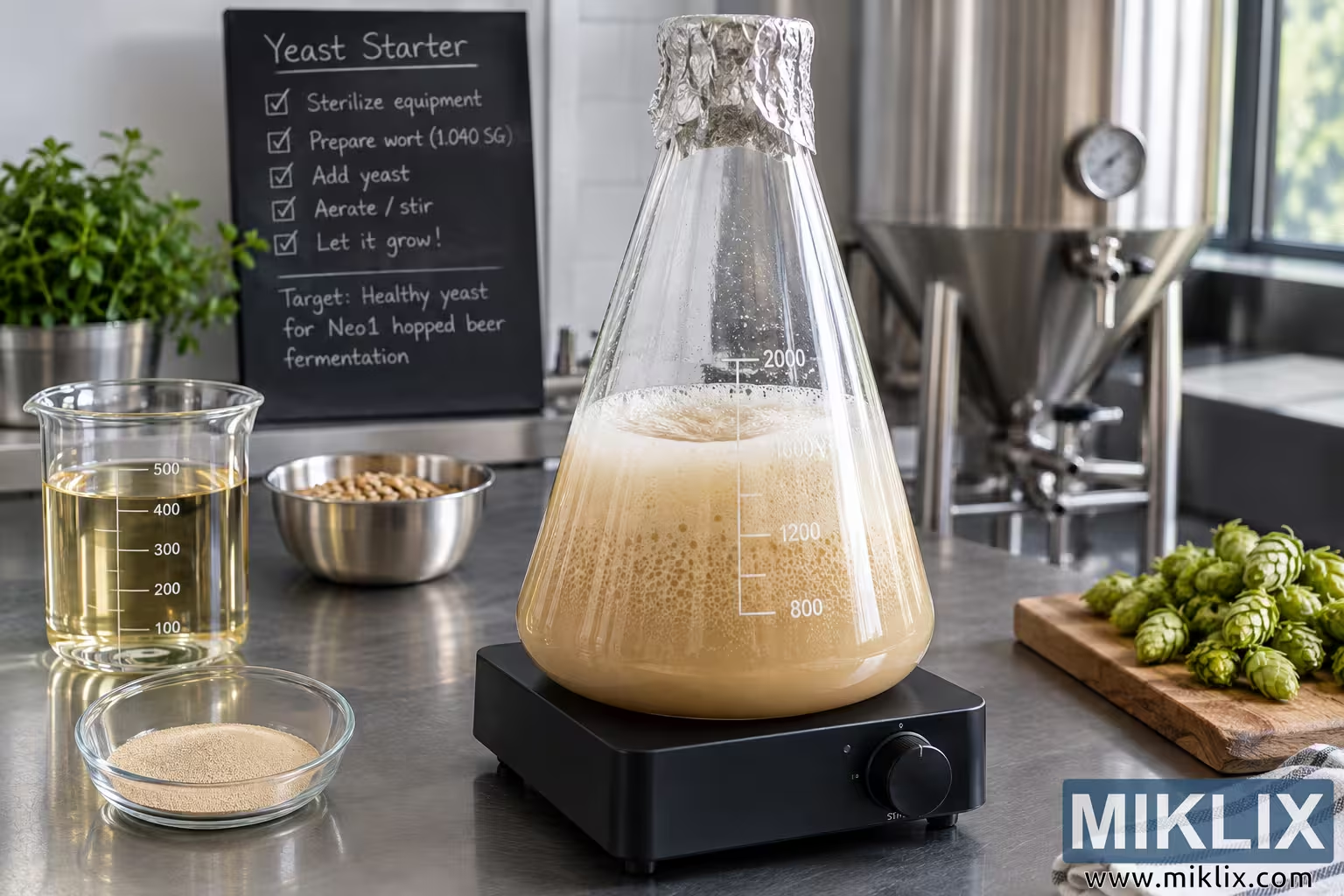
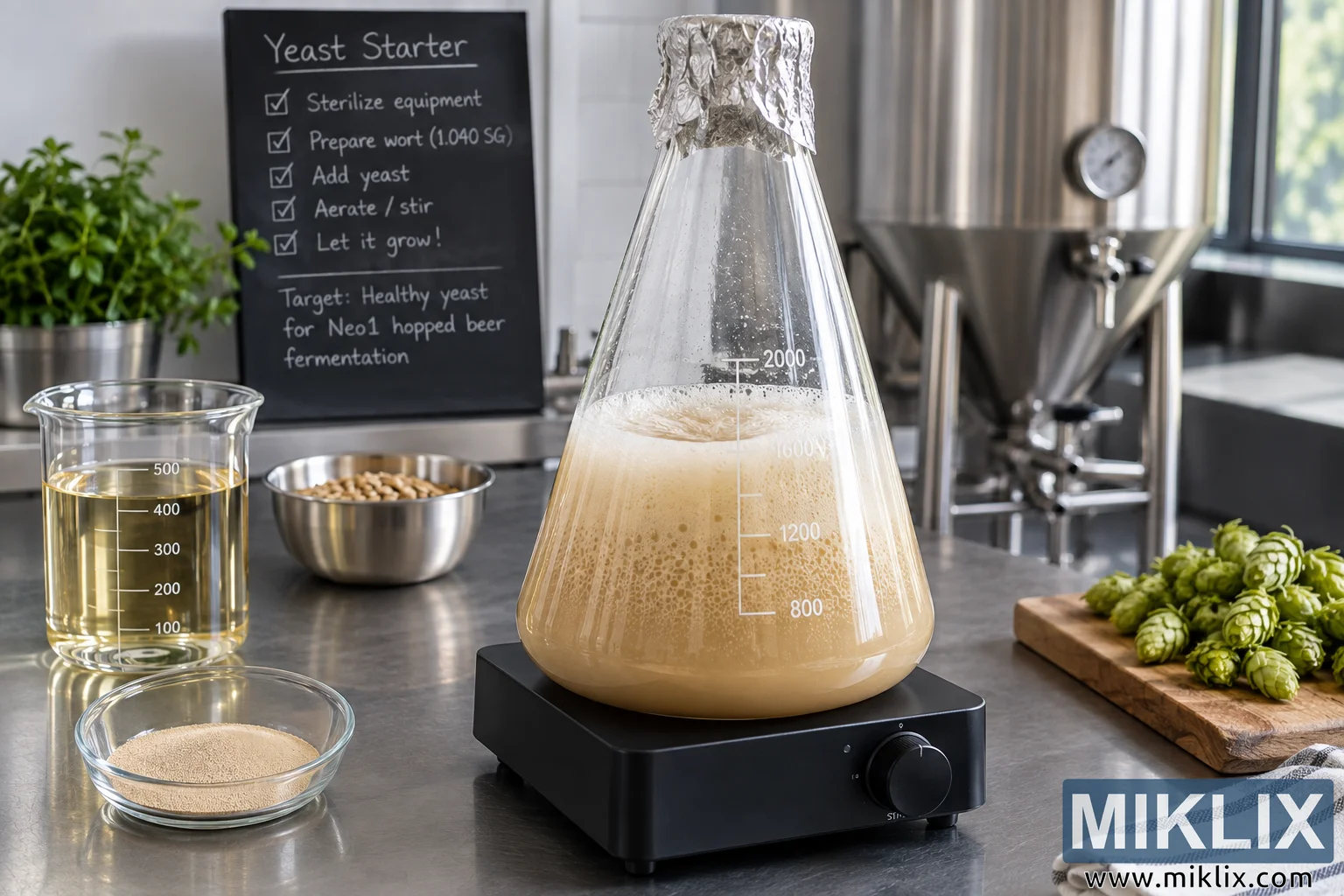
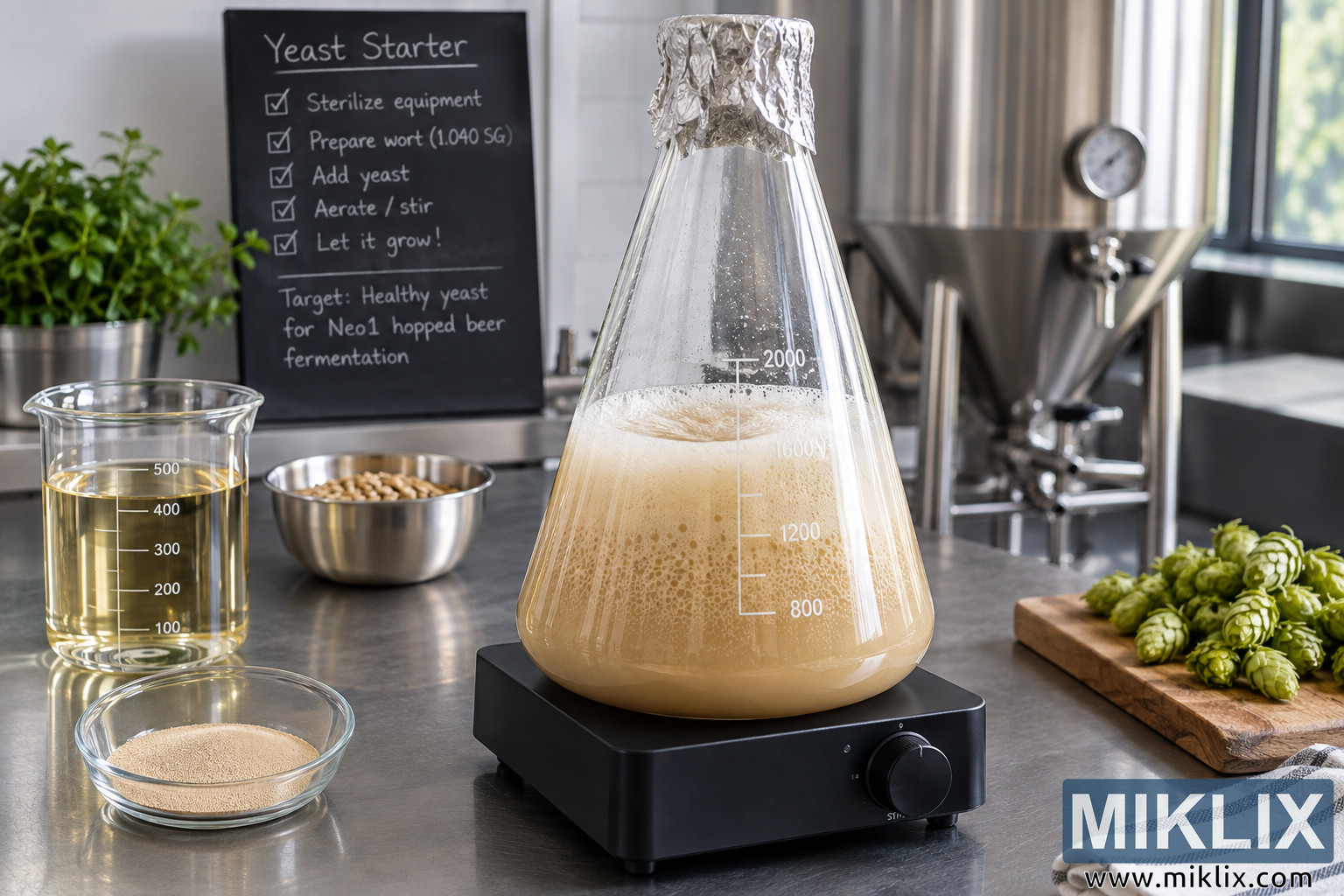
Photorealistic view of yeast starter preparation for Neo1 hopped beer fermentation, featuring an active starter flask, stir plate, brewing ingredients, fresh hops, and professional fermentation equipment.
Available versions of this image
The image files available for download below are less compressed and higher resolution - and as a result of that, higher quality - than the images embedded in articles and pages on this website, which are more optimized for file size in order to reduce bandwidth consumption.
Regular size (1,536 x 1,024)
Large size (3,072 x 2,048)
Very large size (4,608 x 3,072)
Extra large size (6,144 x 4,096)
Comically large size (1,048,576 x 699,051)
- Still uploading... ;-)
Image description
A crisp, photorealistic landscape image depicts the preparation of a yeast starter for hopped beer fermentation in a clean, modern brewing workspace that combines the visual character of a professional laboratory with a small-scale craft brewery. The composition is centered on a large transparent Erlenmeyer flask positioned prominently in the foreground. The flask contains a substantial volume of pale beige to light golden yeast starter, with visible suspended yeast and a thick, creamy layer of foam forming across the surface. Numerous tiny bubbles and irregular trails along the inside of the glass suggest active biological fermentation and vigorous mixing. The liquid has a naturally cloudy appearance, communicating the presence of yeast in suspension rather than a finished or clarified beverage. White volume graduations printed on the flask provide a technical laboratory character and reinforce the impression that the starter is being carefully prepared and monitored.
The neck of the Erlenmeyer flask is loosely covered with a piece of crinkled aluminum foil. The foil functions visually as a simple sanitary cover while still giving the setup the practical appearance commonly associated with small-scale brewing and yeast propagation. Beneath the flask is a compact black magnetic stir plate with a large adjustment knob on its front face. The understated equipment design has no visible commercial branding. The stir plate and flask together form the central focal point of the scene, suggesting that the yeast starter is being continuously agitated to encourage aeration and yeast growth before it is introduced into a larger fermentation vessel.
To the left of the main flask is a transparent laboratory-style beaker containing a clear, pale golden liquid. White measurement markings are visible on the beaker, further emphasizing the controlled and methodical nature of the preparation process. In front of it sits a shallow transparent glass dish filled with fine beige granules resembling brewing yeast. Slightly farther back, a small stainless-steel bowl contains pale malted grain. These ingredients visually communicate several stages and components associated with brewing, from preparing nutrient-rich wort to introducing yeast for propagation. Their orderly arrangement on the stainless-steel work surface gives the scene an instructional quality without making it feel artificially staged.
On the right side of the image, a wooden cutting board holds a generous collection of fresh green hop cones. Their layered, leafy structure and vivid natural texture provide an organic contrast to the smooth glass and brushed stainless steel surrounding them. The hops visually establish the intended connection to hopped beer fermentation. A neatly folded white kitchen or brewery towel with narrow dark stripes rests near the lower-right edge of the frame. Its presence adds a practical working-brewery detail and softens the otherwise predominantly metallic environment.
Behind the primary equipment, a black chalkboard-style sign provides contextual information about the yeast starter procedure. Written in white chalk-like lettering is the heading 'Yeast Starter,' followed by a checklist describing key preparation stages such as sterilizing equipment, preparing wort, adding yeast, aerating or stirring, and allowing the culture to grow. A final note identifies the objective as producing healthy yeast for Neo1 hopped beer fermentation. The handwritten presentation gives the otherwise precise laboratory setting a welcoming craft-brewing character. The text is secondary to the physical brewing equipment but makes the purpose of the scene immediately understandable.
The background contains a large cylindrical stainless-steel fermentation or brewing vessel. Its polished metallic body, conical lower section, fittings, valve hardware, and round gauge suggest professional brewing equipment. The vessel is intentionally rendered with a softer focus than the foreground flask, creating depth while establishing that the yeast starter is part of a larger brewing workflow. A bright window on the right allows natural daylight into the room. Outside the window, softly blurred greenery can be seen, contributing fresh green tones that complement the hop cones. On the far left, leafy green plants in metal containers add another natural element and help balance the composition.
Lighting is bright, soft, and predominantly natural, with highlights reflecting across the stainless-steel counter, glass laboratory vessels, brewing tank, and aluminum foil. The reflections are controlled rather than harsh, giving the environment a clean and hygienic appearance. The image uses a moderately shallow depth of field: the yeast starter flask, foam, stir plate, nearby ingredients, and hops are rendered with strong clarity, while the larger fermentation equipment and architectural details become progressively softer toward the background. This directs attention immediately to yeast propagation as the principal subject.
The overall color palette consists primarily of neutral silver, black, white, warm beige, pale gold, natural wood, and fresh green. The beige yeast starter and grain provide warm tones against the cool stainless-steel surroundings, while the green hops and plants introduce freshness and a clear agricultural connection. The wooden board adds another warm organic texture. No actual commercial brands or recognizable brand logos appear anywhere in the image, allowing the scene to function as a generic educational or editorial representation of yeast starter preparation for hopped beer fermentation.
The landscape composition presents the brewing process as controlled, sanitary, technical, and approachable. Laboratory glassware and measurement markings communicate precision, while hops, grain, yeast, wood, and the handwritten checklist communicate traditional craft brewing. The actively foaming starter at the center visually conveys yeast vitality and preparation before fermentation. Taken as a whole, the photograph illustrates a dedicated yeast propagation stage in which a healthy starter culture is prepared and stirred in anticipation of pitching it into a larger batch of hopped beer.
The image is related to: Hops in Beer Brewing: Neo1