
Image: Multiple Hop Varieties Mixed for a Blended Hop Addition
Published: October 15, 2026 at 7:40:36 PM UTC
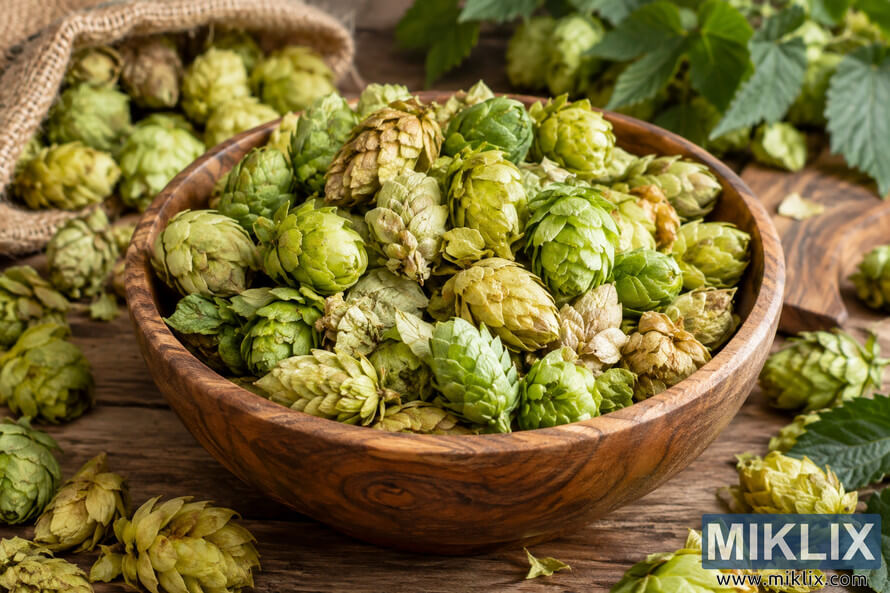
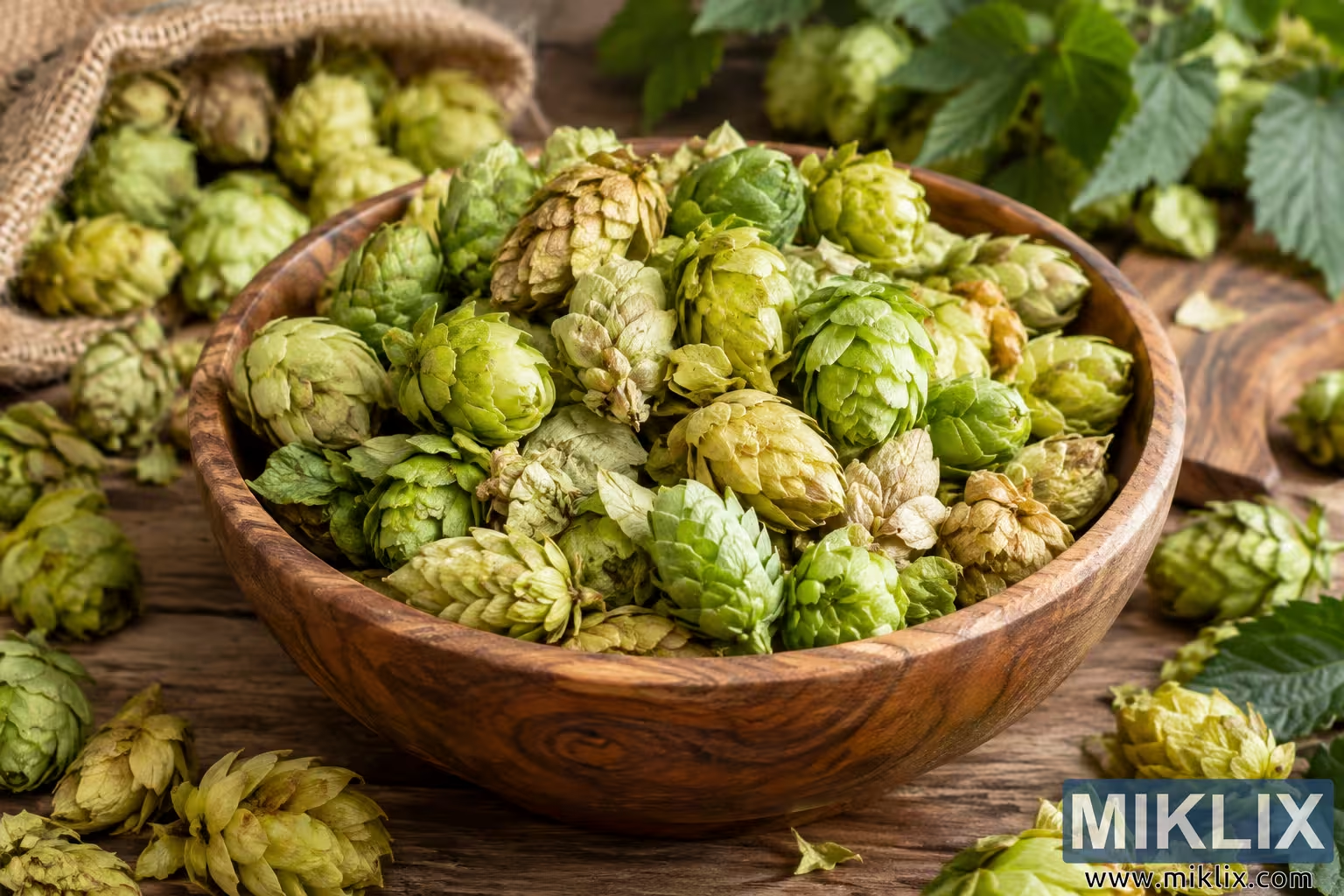
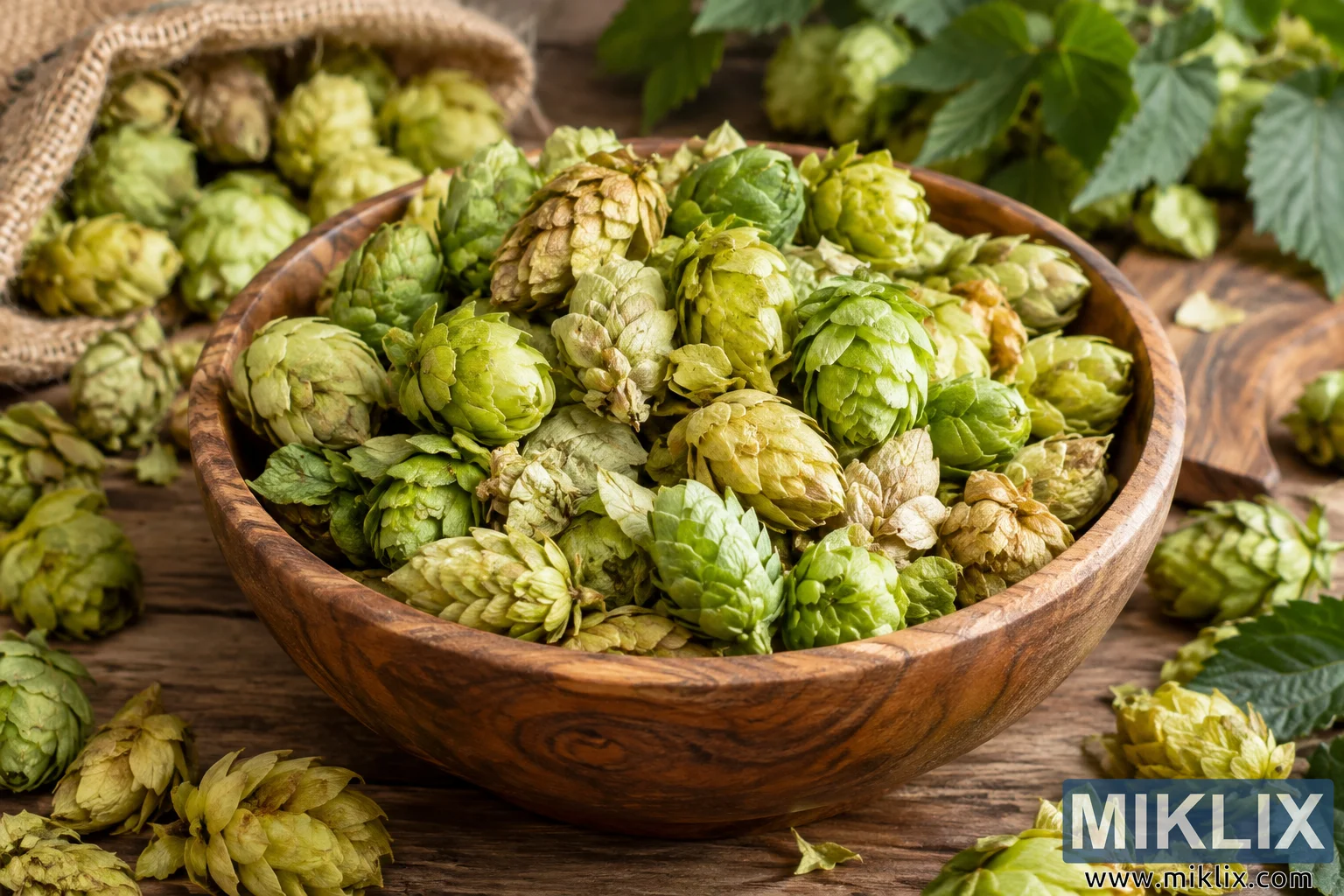
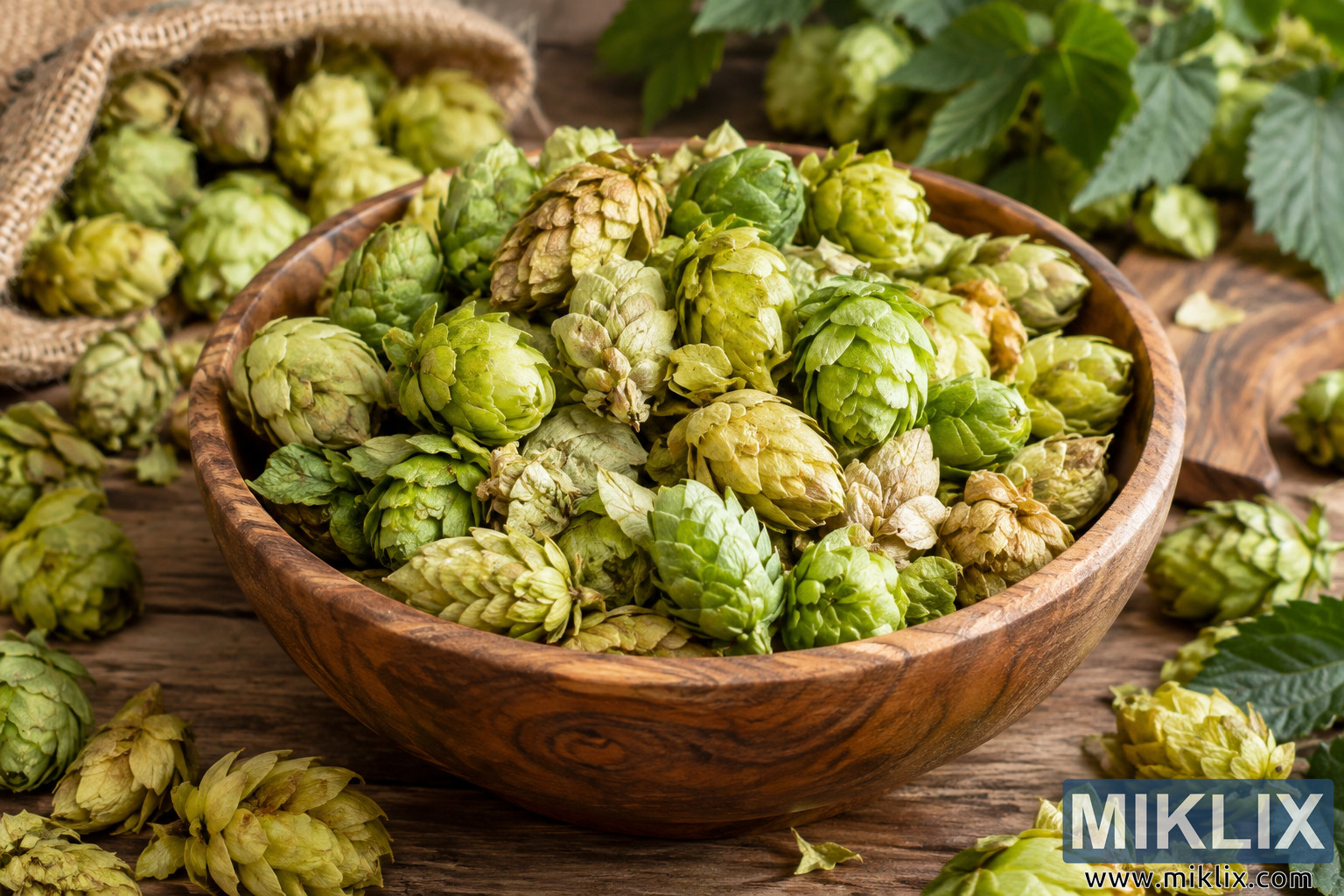
High-resolution landscape image showing a natural mixture of multiple hop varieties in a wooden bowl, illustrating the concept of a blended hop addition with rustic brewing and botanical textures.
Available versions of this image
The image files available for download below are less compressed and higher resolution - and as a result of that, higher quality - than the images embedded in articles and pages on this website, which are more optimized for file size in order to reduce bandwidth consumption.
Regular size (1,536 x 1,024)
Large size (3,072 x 2,048)
Very large size (4,608 x 3,072)
Extra large size (6,144 x 4,096)
Comically large size (1,048,576 x 699,051)
- Still uploading... ;-)
Image description
A high-resolution landscape still-life photograph presents a generous wooden bowl filled with a diverse mixture of hop cones, visually representing multiple hop varieties combined for a blended hop addition. The bowl occupies the central foreground and is positioned on a rustic wooden tabletop with pronounced natural grain, knots, subtle scratches, and warm earthy tones. Inside the bowl, numerous hop cones overlap in a dense, organic arrangement, creating a rich sense of depth and abundance. The cones vary noticeably in color, shape, size, texture, maturity, and visual character, ranging from fresh leafy greens and yellow-greens to pale lime, muted olive, creamy yellow, and lightly tan shades. Their layered papery bracts are clearly visible, with individual scales forming intricate overlapping patterns that give each cone a distinctive tactile appearance. Some cones are compact and tightly formed, while others appear fuller, softer, or slightly elongated, reinforcing the impression that several different hop varieties have been brought together rather than presented as a uniform crop. The mixture is intentionally natural and heterogeneous, communicating the idea of blending different hops into a single addition without identifying or depicting any specific commercial variety.
The central bowl is made from richly colored natural wood with a thick, rounded rim and a substantial handcrafted appearance. Its curved surface displays detailed grain patterns and tonal variation, adding warmth and visual contrast to the predominantly green hop cones. Several loose hop cones are scattered around the bowl across the tabletop, extending the composition beyond the main container and making the scene feel abundant and authentic. In the lower foreground, individual cones and small pieces of hop material sit partially out of focus, while additional cones appear around the left and right edges of the frame. A coarse burlap or woven natural-fiber sack is visible in the upper-left background, partially filled with more hop cones. The texture of the fabric provides a rustic agricultural element and reinforces the impression of freshly gathered botanical ingredients.
Behind the bowl, softly blurred green hop foliage and additional cones create a natural background. The leaves have recognizable serrated edges and layered surfaces, while the shallow depth of field keeps them secondary to the sharply rendered hops in the bowl. The background greenery is softly diffused rather than distracting, providing contextual evidence of the plant source while maintaining emphasis on the blended collection of cones. A wooden board or surface appears toward the right side of the background, contributing another warm, organic texture. The entire scene has a handcrafted, farm-to-brewing aesthetic, with natural materials and botanical ingredients arranged in an appealing but believable way.
Lighting is warm and natural, resembling soft daylight entering from one side of the scene. Highlights gently reveal the fine structure of the hop bracts, while subtle shadows between the cones emphasize their depth and layered construction. The lighting also brings out the polished grain and curved contours of the wooden bowl without making the image feel artificially staged. Fine details are preserved across the foreground, including the papery edges of individual hop scales, slight variations in coloration, tiny pieces of detached plant material, and the rough fibers of the surrounding burlap. The overall color palette is dominated by natural greens, yellow-greens, pale golds, warm browns, and muted tan tones, creating a cohesive visual relationship between the botanical ingredients and the rustic setting.
The composition is horizontal and landscape-oriented, with the bowl positioned prominently near the center and slightly toward the foreground. The perspective is close enough to make the hop cones the primary subject while still revealing the surrounding agricultural context. The shallow depth of field produces a photographic look in which the most important central cones are crisp and richly detailed, while peripheral objects gradually soften into the background. The image contains no people, labels, packaging, logos, text, recognizable commercial branding, or branded brewing equipment. Nothing identifies a particular hop producer or commercial product. Instead, the scene focuses entirely on the visual concept of multiple hop varieties being mixed together for a blended hop addition.
The photograph communicates variety through visible differences among the cones rather than through written labels. Some hops are bright and fresh-looking, others have slightly warmer or more muted tones, and the mixture includes a broad range of natural forms. The arrangement suggests that different batches or varieties have been intentionally brought together before being used in brewing. Loose cones surrounding the bowl further reinforce the idea of an active blending process, while the bowl itself serves as a simple, neutral vessel for the combined ingredients. The result is an evocative botanical still life suitable for illustrating a brewing concept, ingredient guide, educational material, recipe context, or editorial discussion about blended hop additions.
The visual style is photorealistic, detailed, warm, organic, and tactile. The image avoids artificial graphics and instead resembles a professionally photographed collection of brewing ingredients arranged in a rustic natural environment. Fine surface detail, realistic shadows, subtle imperfections, natural color variation, and convincing depth give the scene a tangible photographic quality. The overall mood is earthy, fresh, artisanal, and ingredient-focused, with the varied hop cones serving as the unmistakable visual focal point. The composition is intentionally free of actual brands and commercial identifiers, allowing the image to communicate the general concept of multiple hop varieties mixed together without implying any particular supplier, product, or branded brewing recipe.
The image is related to: Hops in Beer Brewing: Neo1